

Effects of food waste compost on the shift of microbial community in water saturated and unsaturated soil condition
Open accessThe DOI matches its Crossref record; 36 of the 36 references it cites were found in a registry or an index.
Abstract
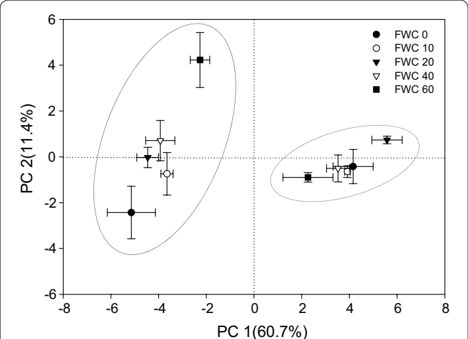
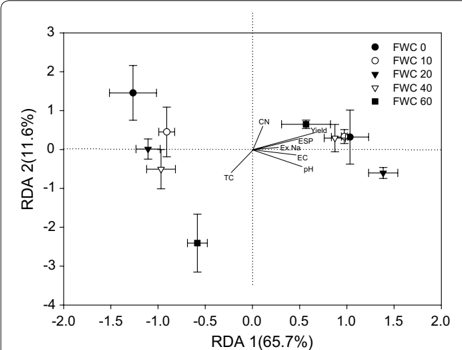
Despite the widespread use of food waste compost as a soil organic amendment, there is limited information on how it affects the composition of the microbial community as well as its relationship on soil environmental factors. This study investigated the effects of food waste compost on soil microbial-community composition by using FAME analysis. It was established that the application of food waste composts in water saturated paddy and unsaturated upland soils increased pH levels, electrical conductivity (EC) values, total carbon (TC), and ESP contents. It also increased the total phospholipid fatty acid (T-PLFA) and fungi resulting in a significant rise in the fungi to bacterial ratio. Furthermore, microbial community composition shifted depending on the quantity of food waste compost applied after crop harvest in both paddy and upland soils. Also, a positive correlation was found between changes in soil microbial community and changes in TC, EC, and water availability for crop growth. These results suggest that soil fertility and its microbial composition depends on the amount of food waste compost applied in both water saturated the paddy and unsaturated upland soils.
Overview
The claims and statistics of this paper haven’t been checked yet.
Free: it reads the open-access text and checks the first 5 claims that cite a source we can check. Create a free account to check every claim.
Integrity signals
Registry
Cites
Statistics
Figures
Verification
Claims the paper makes
The claims and statistics of this paper haven’t been checked yet.
Free: it reads the open-access text and checks the first 5 claims that cite a source we can check. Create a free account to check every claim.
Claims other papers make about this one
Each is checked against this paper’s own text: does it say what the citing paper says it does?
In the citing paper
“In a water saturated system with rice, however, compost significantly decreased AMF and yield (Lee et al., 2019).”
From Comparing straw, compost, and biochar regarding their suitability as agricultural soil amendments to affect soil structure, nutrient leaching, microbial communities, and the fate of pesticides (2021) · cites this paper as Lee et al., 2019
In the citing paper
“In another pot experiment conducted with pepper, increasing food waste compost application rates (0-60 t ha -1 ) significantly increased pH, total C, total N, total bacteria, total fungi, ratio of fungi to bacteria, AMF (highest at 20 t ha -1 and declined at 60 t ha -1 ) and yield (highest at 40 t ha -1 and declined at 60 t ha -1 ).”
From Comparing straw, compost, and biochar regarding their suitability as agricultural soil amendments to affect soil structure, nutrient leaching, microbial communities, and the fate of pesticides (2021) · cites this paper as Lee et al., 2019
Self-check
Percentages, sums and reported differences re-computed from the paper’s own numbers.
The self-check needs the paper’s full text.
Citations
Cites
Randomization, Bootstrap and Monte Carlo Methods in Biology
Manly, B. F. J. (2018) · Chapman & Hall/CRC eBooks · doi:10.1201/9781315273075 · Cited by 4,194
Mechanisms of Salt Tolerance in Nonhalophytes
Greenway, H., & Munns, R. (1980) · Annual Review of Plant Physiology · doi:10.1146/annurev.pp.31.060180.001053 · Cited by 4,003 · cited 1×
“Besides soil pH and EC contents could also affect crop growth by inhibiting water uptake and inducing ion toxicity around the rhizosphere [21].”
BackgroundFierer, N., Lauber, C. L., Ramirez, K. S., Zaneveld, J., Bradford, M. A., & Knight, R. (2012) · The ISME Journal · doi:10.1038/ismej.2011.159 · Cited by 1,866
Frostegård, Å., Tunlid, A., & Bååth, E. (1993) · Applied and Environmental Microbiology · doi:10.1128/aem.59.11.3605-3617.1993 · Cited by 1,348 · cited 2×
“[27] and, Bååth and Anderson [28] that have reported high fungal-to-bacterial PLFA ratios due to the higher SOC levels in agricultural soils.”
BackgroundPotential benefits and risks of land application of sewage sludge
Singh, R. P., & Agrawal, M. (2008) · Waste Management · doi:10.1016/j.wasman.2006.12.010 · Cited by 1,136
Hodge, A., Campbell, C. D., & Fitter, A. H. (2001) · Nature · doi:10.1038/35095041 · Cited by 1,129
Bååth, E., & Anderson, T.-H. (2003) · Soil Biology and Biochemistry · doi:10.1016/s0038-0717(03)00154-8 · Cited by 1,109
Structure and function of the soil microbial community in a long-term fertilizer experiment
Marschner, P. (2003) · Soil Biology and Biochemistry · doi:10.1016/s0038-0717(02)00297-3 · Cited by 944
Rhizodeposition shapes rhizosphere microbial community structure in organic soil
Paterson, E., Gebbing, T., Abel, C., Sim, A., & Telfer, G. (2007) · New Phytologist · doi:10.1111/j.1469-8137.2006.01931.x · Cited by 524
Grayston, S. J., Campbell, C. D., Bardgett, R. D., Mawdsley, J. L., Clegg, C. D., Ritz, K., Griffiths, B. S., Rodwell, J. S., Edwards, S. J., Davies, W. J., et al. (2004) · Applied Soil Ecology · doi:10.1016/s0929-1393(03)00098-2 · Cited by 386
Research works printed but not linked: 3
- Shen YY, Chen H (2009) The progress of study on soil improvement research with straw stalk. Chin Agric Sci Bull 25:291-294 (in Chinese)
- Kazuyki I, Wada H, Takai Y (1983) Easily decomposition organic matter in paddy soil. Soil Sci Plant Nutr 30(2):189-198
- Zhang TL, Li ZP, Wang XX (2006) Soil degradation and its eco-environ- mental impact under highly-intensified agriculture. Acta Pedol Sin 34:843-850 (in Chinese)
Cited by
Siedt, M., Schäffer, A., Smith, K. E. C., Nabel, M., Roß-Nickoll, M., & van Dongen, J. T. (2021) · Science of The Total Environment · doi:10.1016/j.scitotenv.2020.141607 · Cited by 563
Raza, T., Qadir, M. F., Khan, K. S., Eash, N. S., Yousuf, M., Chatterjee, S., Manzoor, R., Rehman, S. U., & Oetting, J. N. (2023) · Journal of Environmental Management · doi:10.1016/j.jenvman.2023.118529 · Cited by 293
Ma, J., Jiang, C., Tao, X.-H., Sheng, J.-L., Sun, X.-Z., Zhang, T.-Z., & Zhang, Z. (2022) · Waste Management · doi:10.1016/j.wasman.2022.01.034 · Cited by 66
Mandal, M., Roy, A., Das, S., Rakwal, R., Agrawal, G. K., Singh, P., Awasthi, A., & Sarkar, A. (2024) · Chemosphere · doi:10.1016/j.chemosphere.2024.141539 · Cited by 51
Yan, B., Deng, T., & Shi, L. (2024) · Plants · doi:10.3390/plants13202885 · Cited by 44
Biochar-amended food waste compost: A review of properties
Ebrahimi, M., Gholipour, S., Mostafaii, G. R., & Yousefian, F. (2024) · Results in Engineering · doi:10.1016/j.rineng.2024.103118 · Cited by 44
Essential recycling and repurposing of food waste for environment and sustainability
Rai, N., Pavankumar, T. L., Ghotra, B., Dhillon, S., Juneja, V. K., Amaly, N., & Pandey, P. K. (2025) · Frontiers in Sustainable Food Systems · doi:10.3389/fsufs.2025.1575113 · Cited by 35
Japakumar, J., Abdullah, R., & Rosli, N. S. M. (2021) · AGRIVITA Journal of Agricultural Science · doi:10.17503/agrivita.v43i3.2751 · Cited by 22
“The study by Lee et al. (2019) stated that the usage of composts sourced from food waste escalated the values of pH, total carbon (TC), the electrical conductivity of soil and the exchangeable sodium percentage (ESP) contents in unsaturated soils from highlands and water saturated paddy.”
BackgroundBuates, J., Sun, Y., He, M., Mohanty, S. K., Khan, E., & Tsang, D. C. W. (2024) · Environmental Pollution · doi:10.1016/j.envpol.2024.123767 · Cited by 13
Yang, J.-W., Luyima, D., Park, S., Kim, S., & Oh, T. (2021) · Sustainability · doi:10.3390/su132313223 · Cited by 12
Self-citationImpacts of Compost Amendment Type and Application Frequency on a Fire-Impacted Grassland Ecosystem
Anthony, T. L., Stover, H. J., James, J. J., & Silver, W. L. (2024) · Ecosystems · doi:10.1007/s10021-024-00925-w · Cited by 10
VIBRANT-WALK: An algorithm to detect plagiarism of figures in academic papers
Parmar, S., & Jain, B. (2024) · Expert Systems with Applications · doi:10.1016/j.eswa.2024.124251 · Cited by 10
Soong, W. S., Chew, J. W., & Gew, L. T. (2024) · International Journal of Environmental Science and Technology · doi:10.1007/s13762-024-05898-w · Cited by 9
Food Wastes for Enhancing Soil and Crop Productivity in Tropical Acid Soils
Ariffin, H., Ahmed, O. H., & Marsal, C. J. (2025) · Pertanika journal of tropical agricultural science · doi:10.47836/pjtas.48.2.10 · Cited by 7
Cho, S. R., Lee, Y., Lee, C.-W., Hyun, B.-G., Song, Y., Ryu, C.-H., Kim, Y. M., & Lee, S.-B. (2021) · 한국토양비료학회지 · doi:10.7745/kjssf.2021.54.4.558 · Cited by 7
“식물체를 건조 (80°C, 48 시간)하여 마쇄한 후, 식물체 분석 시료 0.5 g을 식물체 분해액 (377 mM H2SO4 + 36% HClO4)으로 습식분해하여 Whatman No.6에 여과하였다 (Lee et al., 2019).”
InfluentialSelf-citationKhan, M. A., Kalsoom, K., Imran, M., Lubna, Shaffique, S., Kwon, E., Kang, S., Kim, S., Hamayun, M., & Lee, I. (2022) · Horticulturae · doi:10.3390/horticulturae8010049 · Cited by 5
Self-citationElgala, A. M., & Abd-Elrahman, S. (2021) · Acta agriculturae Slovenica · doi:10.14720/aas.2021.117.3.1874 · Cited by 4
“…and crop productivity (Adugna, 2016), remediating polluted environment, recycling agricultural wastes (Taiwo, 2011), reducing the phytotoxicity of heavy metals (Huang et al., 2016), increasing water use efficiency (Adugna, 2016), and microbial activity (Huang et al., 2016; Lee et al., 2019).”
BackgroundJeong, Y.-J., Vyavahare, G. D., Kim, S., Jeon, S.-H., Roh, A.-S., Yun, J.-J., & Shim, J.-H. (2025) · Applied Biological Chemistry · doi:10.1186/s13765-025-01044-3 · Cited by 3
“Lee et al. [17] also showed that applying FWC eventually increases soil pH, which is allied with our findings.”
InfluentialSelf-citationJat, O. P., & Das, P. (2026) · Next Sustainability · doi:10.1016/j.nxsust.2026.100394 · Cited by 3
Jeon, Y.-J., Hwang, H.-C., Eun, J.-A., Jung, S., & Oh, T. (2020) · Korean Journal of Agricultural Science · doi:10.7744/kjoas.2020011 · Cited by 3
Self-citationKim, S., Shim, J.-H., Park, S. J., Hwang, H. Y., & Lee, C. H. (2021) · 한국토양비료학회지 · doi:10.7745/kjssf.2021.54.1.096 · Cited by 3
“EC는 퇴비의 염류 함량으로 인해 토양 EC가 증가하며 (Yoo et al., 2018; Kim et al., 2019; Lee et al., 2019) 사용량이 증가할수록 비례하여 증가한다고 알려져 있다 (Hwang et al., 2002).”
Self-citationAssessing Food Waste Compost as a Substrate Amendment for Tomato and Watermelon Seedlings
Hamilton, A. N., Bertucci, M. B., Gibson, K. E., Savin, M. C., Kirkpatrick, D. E., & Woody‐Pumford, R. C. (2025) · HortTechnology · doi:10.21273/horttech05559-24 · Cited by 2
Mahawar, H., Choudhary, J., & Narwal, E. (2024) · Springer eBooks · doi:10.1007/978-3-031-70569-4_15 · Cited by 2
"APPLICATIONS AND IMPLICATION OF MICROBIAL COMMUNITIES IN COMPOST "
Sarwari, A., Guljamal, A., Hejran, A. B., & Hassand, M. H. (2024) · Bulletin of Toraighyrov University Chemistry & Biology series · doi:10.48081/pelq6897 · Cited by 2
Amat, D., Thakur, J. K., Mandal, A., Reddy, K. K. K., Das, A., & Patra, A. K. (2024) · Elsevier eBooks · doi:10.1016/b978-0-323-98394-5.00011-0 · Cited by 1
Salinity drives bacterial community shift in paddy soils applied with perishable waste compost
Chen, X., Wang, Y., Guo, B., Qiu, G., Liu, J., Jin, J., Zhang, J., & Li, H. (2026) · Archives of Agronomy and Soil Science · doi:10.1080/03650340.2026.2629064 · Cited by 1
Effect of soil organic carbon on unsaturated earth properties
Hugar, G. M. (2020) · Environmental Sustainability · doi:10.1007/s42398-020-00113-1 · Cited by 1
Greenhouse gas and ammonia emissions from co-composting of green waste and food waste
Song, B., Li, S., Sun, X., Gu, J., Wang, D., Li, Y., & Wang, H. (2026) · Journal of Material Cycles and Waste Management · doi:10.1007/s10163-026-02630-3
“Excessive accumu - lation of these ions elevates salinity within the compost matrix, suppresses microbial activity, disrupts organic mat - ter degradation, and increases the risk of salinity-related phytotoxicity in the final product, potentially limiting its safe application in agriculture [73].”
Effects of food waste sandwiched compost on Bok Choy seeds, plants and soil properties
Phooi, C. L. (2023) · Universiti Putra Malaysia Institutional Repository (Universiti Putra Malaysia)
Sung, J., Kim, W., & Kim, G. (2022) · 한국토양비료학회지 · doi:10.7745/kjssf.2022.55.4.369
“…biomass production in rice (Cho et al., 2021), red pepper (Kim et al., 2020) and Chinese cabbage (Kim et al., 2018, 2021) although greater and longer input could lead to the enhancement of soil EC to cause unfavorable crop production (Yoo et al., 2018; Kim et al., 2019, 2021; Lee et al., 2019).”
BackgroundNormi, S. S. M., & Baidurah, S. (2025) · Malaysian Journal of Microbiology · doi:10.21161/mjm.240801
Metadata
- Authors
- Lee, C. H., Park, S. J., Hwang, H. Y., Kim, M. S., Jung, H. I., Luyima, D., Hong, S. Y., Oh, T. K., & Kim, S. H.
- Affiliations
- Korea National College of Agriculture and Fisheries (KR)
- Rural Development Administration (KR)
- Chungnam National University (KR)
- Corresponding author
- Oh, Taek Keun
- Kim, Seong Heon
- ORCID
- Venue
- Applied Biological Chemistry
- Published
- 2019-07-19
- Volume
- 62
- Issue
- 1
- ISSN
- 0368-2897 (ISSN-L)
- 2468-0834
- 2468-0842
- OpenAlex
- W2963950098
- Cited by
- 29
- References
- 36
- Citations by year
- 2026: 3 · 2025: 3 · 2024: 9 · 2023: 1 · 2022: 6 · 2021: 5 · 2020: 2
- FWCI
- 2.58
- Type
- journal article
- Language
- en
- Open access
- gold
- doi.org
- Licence
- cc-by
- creativecommons.org/licenses/by/4.0 (tdm)
- creativecommons.org/licenses/by/4.0 (vor)
- Locations
- Applied Biological Chemistry (publishedVersion, cc-by)
- Funders
- Rural Development Administration (PJ010925)
- Topics
- Life Sciences › Agricultural and Biological Sciences › Soil Science › Soil Carbon and Nitrogen Dynamics
- Life Sciences › Agricultural and Biological Sciences › Soil Science › Composting and Vermicomposting Techniques
- Life Sciences › Agricultural and Biological Sciences › Soil Science › Agricultural Science and Fertilization
- Keywords
- food waste compost, soil microbial communities, paddy soil, upland soil, soil saturation, organic amendments, phospholipid fatty acids, fungal to bacterial ratio, soil fertility, soil water availability, soil pH, electrical conductivity, exchangeable sodium percentage
About these checks
Registry, retraction, Cites and statistics results are computed, not judged, with one exception: a printed reference that no index lists is read once by a model before it counts as a citation error. Claims are extracted by a model and kept only when their quote appears verbatim in the text; each cited source is then checked, with a model’s help, for whether it says what the claim relies on. Those verdicts can be wrong — read the claim’s quote and the cited source before relying on one.
Statistics and arithmetic are recomputed, not judged.
Confidence bands are shown only for fields calibrated on our annotated test set. None is calibrated yet, so no band is shown.
What counts as a claim ›How we measure confidence ›How we check this ›
Are you an author, or do you see a problem with this page? Request a review
Data sources
Bibliographic data: Semantic Scholar, OpenAlex, Crossref.
Contains information from the Semantic Scholar Academic Graph Datasets, made available under the ODC Attribution License (ODC-BY 1.0).
Semantic Scholar’s data is described in: Kinney, R., et al. (2023). The Semantic Scholar Open Data Platform. arXiv:2301.10140.
