

Effects of food waste compost on the shift of microbial community in water saturated and unsaturated soil condition
Open accessThe DOI matches its Crossref record; 36 of the 36 references it cites were found in a registry or an index.
Abstract
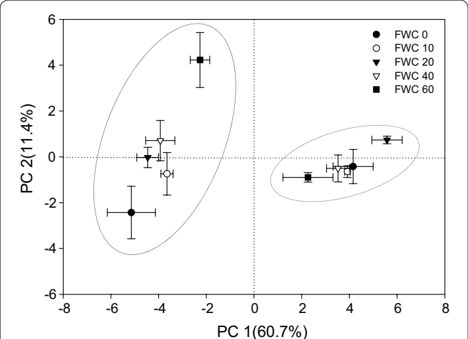
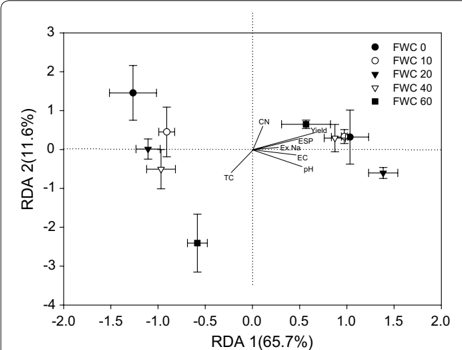
Despite the widespread use of food waste compost as a soil organic amendment, there is limited information on how it affects the composition of the microbial community as well as its relationship on soil environmental factors. This study investigated the effects of food waste compost on soil microbial-community composition by using FAME analysis. It was established that the application of food waste composts in water saturated paddy and unsaturated upland soils increased pH levels, electrical conductivity (EC) values, total carbon (TC), and ESP contents. It also increased the total phospholipid fatty acid (T-PLFA) and fungi resulting in a significant rise in the fungi to bacterial ratio. Furthermore, microbial community composition shifted depending on the quantity of food waste compost applied after crop harvest in both paddy and upland soils. Also, a positive correlation was found between changes in soil microbial community and changes in TC, EC, and water availability for crop growth. These results suggest that soil fertility and its microbial composition depends on the amount of food waste compost applied in both water saturated the paddy and unsaturated upland soils.
Overview
The claims and statistics of this paper haven’t been checked yet.
Free: it reads the open-access text and checks the first 5 claims that cite a source we can check. Create a free account to check every claim.
Integrity signals
Registry
Cites
Statistics
Figures
Verification
Claims the paper makes
The claims and statistics of this paper haven’t been checked yet.
Free: it reads the open-access text and checks the first 5 claims that cite a source we can check. Create a free account to check every claim.
Claims other papers make about this one
Each is checked against this paper’s own text: does it say what the citing paper says it does?
In the citing paper
“In a water saturated system with rice, however, compost significantly decreased AMF and yield (Lee et al., 2019).”
From Comparing straw, compost, and biochar regarding their suitability as agricultural soil amendments to affect soil structure, nutrient leaching, microbial communities, and the fate of pesticides (2021) · cites this paper as Lee et al., 2019
In the citing paper
“In another pot experiment conducted with pepper, increasing food waste compost application rates (0-60 t ha -1 ) significantly increased pH, total C, total N, total bacteria, total fungi, ratio of fungi to bacteria, AMF (highest at 20 t ha -1 and declined at 60 t ha -1 ) and yield (highest at 40 t ha -1 and declined at 60 t ha -1 ).”
From Comparing straw, compost, and biochar regarding their suitability as agricultural soil amendments to affect soil structure, nutrient leaching, microbial communities, and the fate of pesticides (2021) · cites this paper as Lee et al., 2019
Self-check
Percentages, sums and reported differences re-computed from the paper’s own numbers.
The self-check needs the paper’s full text.
Citations
Cites
Randomization, Bootstrap and Monte Carlo Methods in Biology
Manly, B. F. J. (2018) · Chapman & Hall/CRC eBooks · doi:10.1201/9781315273075 · Cited by 4,194
Mechanisms of Salt Tolerance in Nonhalophytes
Greenway, H., & Munns, R. (1980) · Annual Review of Plant Physiology · doi:10.1146/annurev.pp.31.060180.001053 · Cited by 4,003 · cited 1×
“Besides soil pH and EC contents could also affect crop growth by inhibiting water uptake and inducing ion toxicity around the rhizosphere [21].”
BackgroundFierer, N., Lauber, C. L., Ramirez, K. S., Zaneveld, J., Bradford, M. A., & Knight, R. (2012) · The ISME Journal · doi:10.1038/ismej.2011.159 · Cited by 1,866
Frostegård, Å., Tunlid, A., & Bååth, E. (1993) · Applied and Environmental Microbiology · doi:10.1128/aem.59.11.3605-3617.1993 · Cited by 1,348 · cited 2×
“[27] and, Bååth and Anderson [28] that have reported high fungal-to-bacterial PLFA ratios due to the higher SOC levels in agricultural soils.”
BackgroundPotential benefits and risks of land application of sewage sludge
Singh, R. P., & Agrawal, M. (2008) · Waste Management · doi:10.1016/j.wasman.2006.12.010 · Cited by 1,136
Hodge, A., Campbell, C. D., & Fitter, A. H. (2001) · Nature · doi:10.1038/35095041 · Cited by 1,129
Bååth, E., & Anderson, T.-H. (2003) · Soil Biology and Biochemistry · doi:10.1016/s0038-0717(03)00154-8 · Cited by 1,109
Structure and function of the soil microbial community in a long-term fertilizer experiment
Marschner, P. (2003) · Soil Biology and Biochemistry · doi:10.1016/s0038-0717(02)00297-3 · Cited by 944
Rhizodeposition shapes rhizosphere microbial community structure in organic soil
Paterson, E., Gebbing, T., Abel, C., Sim, A., & Telfer, G. (2007) · New Phytologist · doi:10.1111/j.1469-8137.2006.01931.x · Cited by 524
Grayston, S. J., Campbell, C. D., Bardgett, R. D., Mawdsley, J. L., Clegg, C. D., Ritz, K., Griffiths, B. S., Rodwell, J. S., Edwards, S. J., Davies, W. J., et al. (2004) · Applied Soil Ecology · doi:10.1016/s0929-1393(03)00098-2 · Cited by 386
Flooding effects on soil microbial communities
Unger, I. M., Kennedy, A. C., & Muzika, R.-M. (2009) · Applied Soil Ecology · doi:10.1016/j.apsoil.2009.01.007 · Cited by 306 · cited 1×
“an important factor for soil microbial community due to nutrient availability such as carbon substrates [11, 32, 33].”
BackgroundCrecchio, C., Curci, M., Mininni, R., Ricciuti, P., & Ruggiero, P. (2001) · Biology and Fertility of Soils · doi:10.1007/s003740100413 · Cited by 245
Alteration of soil microbial communities and water quality in restored wetlands
Bossio, D. A., Fleck, J. A., Scow, K. M., & Fujii, R. (2006) · Soil Biology and Biochemistry · doi:10.1016/j.soilbio.2005.09.027 · Cited by 188 · cited 1×
“an important factor for soil microbial community due to nutrient availability such as carbon substrates [11, 32, 33].”
BackgroundCayuela, M. L., Sinicco, T., & Mondini, C. (2009) · Applied Soil Ecology · doi:10.1016/j.apsoil.2008.10.001 · Cited by 179
Lee, S. B., Lee, C. H., Jung, K. Y., Park, K. D., Lee, D., & Kim, P. J. (2009) · Soil and Tillage Research · doi:10.1016/j.still.2009.02.007 · Cited by 168
Self-citationZornoza, R., Guerrero, C., Mataix-Solera, J., Scow, K. M., Arcenegui, V., & Mataix-Beneyto, J. (2009) · Applied Soil Ecology · doi:10.1016/j.apsoil.2009.05.011 · Cited by 147
Cao, Y., Fu, S., Zou, X., Cao, H., Shao, Y., & Zhou, L. (2009) · European Journal of Soil Biology · doi:10.1016/j.ejsobi.2009.12.006 · Cited by 141 · cited 1×
“Vectors of greater magnitude and forming smaller angles with an axis were more strongly correlated with that axis [13, 14].”
BackgroundLeroy, B. L. M., Herath, H. M. S. K., Sleutel, S., De Neve, S., Gabriels, D., Reheul, D., & Moens, M. (2008) · Soil Use and Management · doi:10.1111/j.1475-2743.2008.00142.x · Cited by 103
Microbial response to rhizodeposition depending on water regimes in paddy soils
Tian, J., Dippold, M. A., Pausch, J., Blagodatskaya, E. V., Fan, M., Li, X., & Kuzyakov, Y. V. (2013) · Soil Biology and Biochemistry · doi:10.1016/j.soilbio.2013.05.021 · Cited by 101
Inubushi, K., Wada, H., & Takai, Y. (1984) · Soil Science & Plant Nutrition · doi:10.1080/00380768.1984.10434682 · Cited by 100
Review of the use of aerobic thermophilic bioprocesses for the treatment of swine waste
Juteau, P. (2006) · Livestock Science · doi:10.1016/j.livsci.2006.03.016 · Cited by 79
Tian, J., Fan, M., Guo, J., Marschner, P., Li, X., & Kuzyakov, Y. V. (2012) · European Journal of Soil Biology · doi:10.1016/j.ejsobi.2012.07.002 · Cited by 79
Straw coverage alleviates seasonal variability of the topsoil microbial biomass and activity
Lou, Y., Liang, W., Xu, M., He, X., Wang, Y., & Zhao, K. (2011) · CATENA · doi:10.1016/j.catena.2011.03.006 · Cited by 68
Lagomarsino, A., Agnelli, A., Pastorelli, R., Pallara, G., Rasse, D. P., & Silvennoinen, H. (2015) · Soil Biology and Biochemistry · doi:10.1016/j.soilbio.2015.10.016 · Cited by 65
Agricultural use of sewage sludge : a literature review
Kelley, W. D., Martens, D. C., Reneau, R. B., & Simpson, T. (1984) · VTechWorks (Virginia Tech) · Cited by 40
Shaukat, A. A., Xiaohong, T., Wang, X., Fa-qi, W., & Jumoke, E. K. (2011) · AFRICAN JOURNAL OF BIOTECHNOLOGY · doi:10.5897/ajb10.2261 · Cited by 35
Meharg, A. A., & Killham, K. (1990) · Soil Biology and Biochemistry · doi:10.1016/0038-0717(90)90010-w · Cited by 29
Arbuscular mycorrhizal fungi as bio-indicators in Swiss agricultural soils.
Oehl, F., van der Heijden, M. G. A., Jansa, J., Ineichen, K., & Mader, P. M. (2011) · Agrarforschung Schweiz · Cited by 22
Arbuskuläre Mykorrhizapilze als Bioindikatorenin Schweizer Landwirtschaftsböden
Oehl, F., Jansa, J., Ineichen, K., Mader, P. M., & van der Heijden, M. G. A. (2011) · Agrarforschung Schweiz · Cited by 18
Study on the inhibition of methane production from anaerobic digestion of biodegradable solid waste
Zhao, T., Zhang, L., & Zhao, Y. (2009) · Waste Management & Research The Journal for a Sustainable Circular Economy · doi:10.1177/0734242x09351180 · Cited by 18
Characteristics of compost produced in food waste processing facility
Lee, C.-H., Park, S.-J., Kim, M.-S., Yun, S.-G., Ko, B.-G., Lee, D.-B., Kim, S., & Oh, T. (2015) · Korean Journal of Agricultural Science · doi:10.7744/cnujas.2015.42.3.177 · Cited by 18
Self-citationLee, C. H., Ko, B.-G., Kim, M., Park, S.-J., Yun, S.-G., & Oh, T. (2016) · 한국토양비료학회지 · doi:10.7745/kjssf.2016.49.6.682 · Cited by 17
Self-citation윤홍배, Hyun, B.-K., Lee, Y., Yu, C.-Y., 이상민, & 이용복 (2007) · 한국토양비료학회지 · Cited by 6
Arbuscular mycorrhiza fungi as an ecology indicator for evaluating desert soil conditions
Wu, Y., Jiang, J., Shen, W., & He, X. (2010) · Frontiers of Agriculture in China · doi:10.1007/s11703-010-0096-9 · Cited by 6
Effects of Heavy Metal and pH on Bacterial Growth Isolated from the Contaminated Smelter Soil
Keum, M.-J., Yoon, M.-H., & Nam, I.-H. (2015) · Journal of Soil and Groundwater Environment · doi:10.7857/jsge.2015.20.4.113 · Cited by 2
Lee, G.-J., King, B.-G., & Kim, K.-S. (2015) · Journal of the Korean Society of International Agriculture · doi:10.12719/ksia.2015.27.2.226 · Cited by 1 · cited 1×
“These shifts are induced alongside changes in water contents, carbon substrate, and soil pH depending on the crop cultivation condition such as fertilization and irrigation [7], which also can in turn alter soil fertility and crop production [8, 9].”
Background
Research works printed but not linked: 3
- Shen YY, Chen H (2009) The progress of study on soil improvement research with straw stalk. Chin Agric Sci Bull 25:291-294 (in Chinese)
- Kazuyki I, Wada H, Takai Y (1983) Easily decomposition organic matter in paddy soil. Soil Sci Plant Nutr 30(2):189-198
- Zhang TL, Li ZP, Wang XX (2006) Soil degradation and its eco-environ- mental impact under highly-intensified agriculture. Acta Pedol Sin 34:843-850 (in Chinese)
Cited by
Siedt, M., Schäffer, A., Smith, K. E. C., Nabel, M., Roß-Nickoll, M., & van Dongen, J. T. (2021) · Science of The Total Environment · doi:10.1016/j.scitotenv.2020.141607 · Cited by 563
Raza, T., Qadir, M. F., Khan, K. S., Eash, N. S., Yousuf, M., Chatterjee, S., Manzoor, R., Rehman, S. U., & Oetting, J. N. (2023) · Journal of Environmental Management · doi:10.1016/j.jenvman.2023.118529 · Cited by 293
Ma, J., Jiang, C., Tao, X.-H., Sheng, J.-L., Sun, X.-Z., Zhang, T.-Z., & Zhang, Z. (2022) · Waste Management · doi:10.1016/j.wasman.2022.01.034 · Cited by 66
Mandal, M., Roy, A., Das, S., Rakwal, R., Agrawal, G. K., Singh, P., Awasthi, A., & Sarkar, A. (2024) · Chemosphere · doi:10.1016/j.chemosphere.2024.141539 · Cited by 51
Yan, B., Deng, T., & Shi, L. (2024) · Plants · doi:10.3390/plants13202885 · Cited by 44
Metadata
- Authors
- Lee, C. H., Park, S. J., Hwang, H. Y., Kim, M. S., Jung, H. I., Luyima, D., Hong, S. Y., Oh, T. K., & Kim, S. H.
- Affiliations
- Korea National College of Agriculture and Fisheries (KR)
- Rural Development Administration (KR)
- Chungnam National University (KR)
- Corresponding author
- Oh, Taek Keun
- Kim, Seong Heon
- ORCID
- Venue
- Applied Biological Chemistry
- Published
- 2019-07-19
- Volume
- 62
- Issue
- 1
- ISSN
- 0368-2897 (ISSN-L)
- 2468-0834
- 2468-0842
- OpenAlex
- W2963950098
- Cited by
- 29
- References
- 36
- Citations by year
- 2026: 3 · 2025: 3 · 2024: 9 · 2023: 1 · 2022: 6 · 2021: 5 · 2020: 2
- FWCI
- 2.58
- Type
- journal article
- Language
- en
- Open access
- gold
- doi.org
- Licence
- cc-by
- creativecommons.org/licenses/by/4.0 (tdm)
- creativecommons.org/licenses/by/4.0 (vor)
- Locations
- Applied Biological Chemistry (publishedVersion, cc-by)
- Funders
- Rural Development Administration (PJ010925)
- Topics
- Life Sciences › Agricultural and Biological Sciences › Soil Science › Soil Carbon and Nitrogen Dynamics
- Life Sciences › Agricultural and Biological Sciences › Soil Science › Composting and Vermicomposting Techniques
- Life Sciences › Agricultural and Biological Sciences › Soil Science › Agricultural Science and Fertilization
- Keywords
- food waste compost, soil microbial communities, paddy soil, upland soil, soil saturation, organic amendments, phospholipid fatty acids, fungal to bacterial ratio, soil fertility, soil water availability, soil pH, electrical conductivity, exchangeable sodium percentage
About these checks
Registry, retraction, Cites and statistics results are computed, not judged, with one exception: a printed reference that no index lists is read once by a model before it counts as a citation error. Claims are extracted by a model and kept only when their quote appears verbatim in the text; each cited source is then checked, with a model’s help, for whether it says what the claim relies on. Those verdicts can be wrong — read the claim’s quote and the cited source before relying on one.
Statistics and arithmetic are recomputed, not judged.
Confidence bands are shown only for fields calibrated on our annotated test set. None is calibrated yet, so no band is shown.
What counts as a claim ›How we measure confidence ›How we check this ›
Are you an author, or do you see a problem with this page? Request a review
Data sources
Bibliographic data: Semantic Scholar, OpenAlex, Crossref.
Contains information from the Semantic Scholar Academic Graph Datasets, made available under the ODC Attribution License (ODC-BY 1.0).
Semantic Scholar’s data is described in: Kinney, R., et al. (2023). The Semantic Scholar Open Data Platform. arXiv:2301.10140.
