

Dancing cheek to cheek: Cryptococcus neoformans and phagocytes
Open accessThe DOI matches its Crossref record; 103 of the 103 references it cites were found in a registry or an index.
Abstract
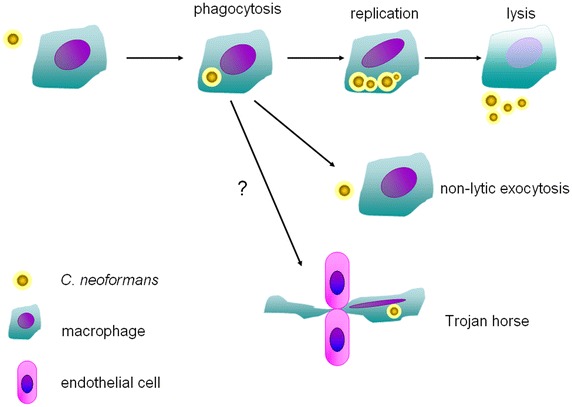
Meningoencephalitis caused by Cryptococcus neoformans (Cn) has become one of the leading causes of mortality in AIDS patients. Understanding the interactions between Cn and phagocytes is fundamental in exploring the pathogenicity of cryptococcal meningoencephalitis. Cn may be extracellular or contained in the monocytes, macrophages, neutrophils, dendritic cells and even endothelial cells. The internalized Cn may proliferate inside the host cells, or cause the lysis of host cells, or leave the host cells via non-lytic exocytosis, or even hijack the host cells (Trojan horse) for the brain dissemination, which are regulated by microbe factors and also immune molecules. Coexistence of protective and deleterious roles of phagocytes in the progression of cryptococcosis warrant further investigation.
Overview
The claims and statistics of this paper haven’t been checked yet.
Free: it reads the open-access text and checks the first 5 claims that cite a source we can check. Create a free account to check every claim.
Integrity signals
Registry
Cites
Statistics
Figures
Verification
Claims the paper makes
The claims and statistics of this paper haven’t been checked yet.
Free: it reads the open-access text and checks the first 5 claims that cite a source we can check. Create a free account to check every claim.
Claims other papers make about this one
Each is checked against this paper’s own text: does it say what the citing paper says it does?
In the citing paper
“Lastly, fungal cells can disseminate using numerous different mechanisms, namely Trojan horse crossing, transcytosis, paracellular crossing and passage through damaged tissues [232].”
From Mechanisms of fungal dissemination (2021) · cites this paper as [232]
Self-check
Percentages, sums and reported differences re-computed from the paper’s own numbers.
The self-check needs the paper’s full text.
Citations
Cites
Casadevall, A., & Perfect, J. R. (1998) · ASM Press eBooks · doi:10.1128/9781555818241 · Cited by 661
Cryptococcus neoformans Is a Facultative Intracellular Pathogen in Murine Pulmonary Infection
Feldmesser, M., Kress, Y., Novikoff, P., & Casadevall, A. (2000) · Infection and Immunity · doi:10.1128/iai.68.7.4225-4237.2000 · Cited by 423 · cited 1×
“Cn is a facultative intracellular pathogen in the macrophages (Feldmesser et al. 2000).”
BackgroundPhagosome Extrusion and Host-Cell Survival after Cryptococcus neoformans Phagocytosis by Macrophages
Alvarez, M., & Casadevall, A. (2006) · Current Biology · doi:10.1016/j.cub.2006.09.061 · Cited by 414 · cited 6×
“2008) but not the occurrence of non-lytic exocytosis (Alvarez and Casadevall 2006; Ma et al. 2006).”
BackgroundInfluentialSerologic Evidence for Cryptococcus neoformans Infection in Early Childhood
Goldman, D. L., Khine, H., Abadi, J., Lindenberg, D. J., Pirofski, L.-A., Niang, R., & Casadevall, A. (2001) · Pediatrics · doi:10.1542/peds.107.5.e66 · Cited by 413
Evidence of a Role for Monocytes in Dissemination and Brain Invasion by Cryptococcus neoformans
Charlier, C., Nielsen, K., Daou, S., Brigitte, M., Chretien, F., & Dromer, F. (2009) · Infection and Immunity · doi:10.1128/iai.01065-08 · Cited by 362 · cited 2×
“2014; Garcia-Rodas and Zaragoza 2012; Leopold Wager and Wormley 2014; McQuiston and Williamson 2012), implicating the existence of Trojan horse pathway for the brain dissemination (Casadevall 2010; Charlier et al. 2009) (Fig.”
BackgroundExpulsion of Live Pathogenic Yeast by Macrophages
Ma, H., Croudace, J. E., Lammas, D. A., & May, R. C. (2006) · Current Biology · doi:10.1016/j.cub.2006.09.032 · Cited by 310
Tucker, S. C., & Casadevall, A. (2002) · Proceedings of the National Academy of Sciences · doi:10.1073/pnas.052702799 · Cited by 306 · cited 2×
“Replication As a facultative intracellular pathogen, Cn replicates in and alkalifies the phagosome of macrophages, leading to phagosome breakage and macrophage lysis (Tucker and Casadevall 2002).”
BackgroundChang, Y. C., Stins, M. F., McCaffery, M. J., Miller, G. F., Pare, D. R., Dam, T., Paul-Satyasee, M., Kim, K. S., & Kwon-Chung, K. J. (2004) · Infection and Immunity · doi:10.1128/iai.72.9.4985-4995.2004 · Cited by 278
Means, T. K., Mylonakis, E. E., Tampakakis, E., Colvin, R. A., Seung, E., Puckett, L. L., Tai, M., Stewart, C. R., Pukkila-Worley, R., Hickman, S. E., et al. (2009) · The Journal of Experimental Medicine · doi:10.1084/jem.20082109 · Cited by 271
Fungal Invasion of Normally Non-Phagocytic Host Cells
Filler, S. G., & Sheppard, D. C. (2006) · PLoS Pathogens · doi:10.1371/journal.ppat.0020129 · Cited by 270 · cited 3×
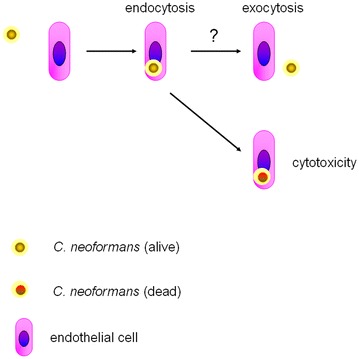
“Moreover, human brain endothelial cells (Filler and Sheppard 2006) but not human umbilical vein endothelial cells (Roseff and Levitz 1993) or mouse brain endothelial cells (Sabiiti”
BackgroundTampakakis, E., Puckett, L. L., Tai, M., Stewart, C. R., Hickman, S. E., Moore, K. J., El Khoury, J., Means, T. K., Mylonakis, E. E., Colvin, R. A., et al. (2009) · Digital Access to Scholarship at Harvard (DASH) (Harvard University) · Cited by 246
Casadevall, A., Steenbergen, J. N., & Nosanchuk, J. D. (2003) · Current Opinion in Microbiology · doi:10.1016/s1369-5274(03)00082-1 · Cited by 232 · cited 1×
“2010), or nematodes (Casadevall et al. 2003), for a long history.”
BackgroundShi, M., Li, S. S., Zheng, C., Jones, G. J., Kim, K. S., Zhou, H., Kubes, P., & Mody, C. H. (2010) · Journal of Clinical Investigation · doi:10.1172/jci41963 · Cited by 222
Self-citationFactors Influencing Killing of Cryptococcus neoformans by Human Leukocytes In Vitro
Diamond, R. D., Root, R. K., & Bennett, J. E. (1972) · Journal of Infectious Diseases · doi:10.1093/infdis/125.4.367 · Cited by 201
Pathogenesis of Cerebral Cryptococcus neoformans Infection after Fungemia
Chrétien, F., Lortholary, O., Kansau, I., Neuville, S., Gray, F., & Dromer, F. (2002) · The Journal of Infectious Diseases · doi:10.1086/341564 · Cited by 201 · cited 1×
“Besides, Cn also could be observed in macrophages in the leptomeningeal space, implying that monocytes and macrophages may play crucial roles in the pathogenesis of cryptococcal meningoencephalitis (Chretien et al. 2002).”
BackgroundOsterholzer, J. J., Surana, R., Milam, J. E., Montano, G. T., Chen, G.-H., Sonstein, J., Curtis, J. L., Huffnagle, G. B., Toews, G. B., & Olszewski, M. A. (2009) · American Journal Of Pathology · doi:10.2353/ajpath.2009.080673 · Cited by 180
Taborda, C. P., & Casadevall, A. (2002) · Immunity · doi:10.1016/s1074-7613(02)00328-x · Cited by 175 · cited 1×
“IgM and IgA specific to the capsular glucuronoxylomannan (GXM) promote complement-independent and CD18-dependent phagocytosis (Taborda and Casadevall 2002).”
BackgroundHuffnagle, G. B., Boyd, M. B., Street, N. E., & Lipscomb, M. F. (1998) · The Journal of Immunology · doi:10.4049/jimmunol.160.5.2393 · Cited by 174
Leopold Wager, C. M., & Wormley, F. L. (2014) · Mucosal Immunology · doi:10.1038/mi.2014.65 · Cited by 172
Vu, K., Tham, R., Uhrig, J. P., Thompson, G. R., Na Pombejra, S., Jamklang, M., Bautos, J. M., & Gelli, A. (2014) · mBio · doi:10.1128/mbio.01101-14 · Cited by 159 · cited 2×
“2010), plasmin (Stie and Fox 2012), or metalloprotease Mpr1 (Vu et al. 2014) promotes migration of Cn across the brain endothelium by facilitating attachment of cryptococci to the endothelial cells, which induces the cytoskeleton remodeling and internalization (Vu et al.”
BackgroundVoelz, K., Lammas, D. A., & May, R. C. (2009) · Infection and Immunity · doi:10.1128/iai.00297-09 · Cited by 155 · cited 1×
“Th1 and Th17 cytokines decrease the non-lytic exocytosis, while Th2 cytokines augment the extrusion of Cn out of macrophages (Voelz et al. 2009), which may contribute to the extravasation of Cn and the aggravation of the disease.”
BackgroundJohnston, S. A., & May, R. C. (2010) · PLoS Pathogens · doi:10.1371/journal.ppat.1001041 · Cited by 141
Efficient phagocytosis and laccase activity affect the outcome of HIV-associated cryptococcosis
Sabiiti, W., Robertson, E., Beale, M. A., Johnston, S. A., Brouwer, A. E., Loyse, A., Jarvis, J. N., Gilbert, A. S., Fisher, M. C., Harrison, T. S., et al. (2014) · Journal of Clinical Investigation · doi:10.1172/jci72950 · Cited by 137
Retini, C., Vecchiarelli, A., Monari, C., Tascini, C., Bistoni, F., & Kozel, T. R. (1996) · Infection and Immunity · doi:10.1128/iai.64.8.2897-2903.1996 · Cited by 135 · cited 1×
“Cn or the capsular polysaccharide glucuronoxylomannan (GXM) promotes the inflammatory cytokines (Retini et al. 1996) and chemokines (Lipovsky et al.”
BackgroundNicola, A. M., Robertson, E. J., Albuquerque, P., Derengowski, L. D. S., & Casadevall, A. (2011) · mBio · doi:10.1128/mbio.00167-11 · Cited by 135
Role of PLB1 in Pulmonary Inflammation and Cryptococcal Eicosanoid Production
Noverr, M. C., Cox, G. M., Perfect, J. R., & Huffnagle, G. B. (2003) · Infection and Immunity · doi:10.1128/iai.71.3.1538-1547.2003 · Cited by 133 · cited 1×
“In addition, Cn phospholipase B1 (PLB1) promotes the survival of fungi in the macrophages by facilitating fungal eicosanoid production (Noverr et al. 2003).”
BackgroundSyme, R. M., Spurrell, J. C. L., Amankwah, E. K., Green, F. H. Y., & Mody, C. H. (2002) · Infection and Immunity · doi:10.1128/iai.70.11.5972-5981.2002 · Cited by 132 · cited 1×
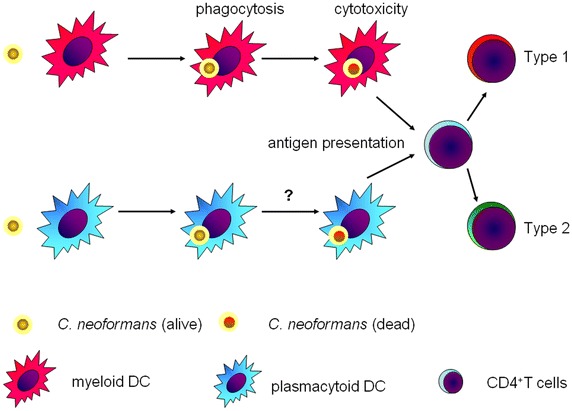
“As the most potent antigen presenting cells, DCs internalize Cn via mannose receptor and FcγR-II in vitro (Syme et al. 2002) and in vivo (Wozniak et al.”
BackgroundSerologic Evidence for Reactivation of Cryptococcosis in Solid-Organ Transplant Recipients
Saha, D. C., Goldman, D. L., Shao, X., Casadevall, A., Husain, S., Limaye, A. P., Lyon, M., Somani, J., Pursell, K., Pruett, T. L., et al. (2007) · Clinical and Vaccine Immunology · doi:10.1128/cvi.00242-07 · Cited by 132
The Intracellular Life of Cryptococcus neoformans
Coelho, C., Bocca, A. L., & Casadevall, A. (2014) · Annual Review of Pathology: Mechanisms of Disease · doi:10.1146/annurev-pathol-012513-104653 · Cited by 130
Mednick, A. J., Feldmesser, M., Rivera, J., & Casadevall, A. (2003) · European Journal of Immunology · doi:10.1002/eji.200323626 · Cited by 128 · cited 2×
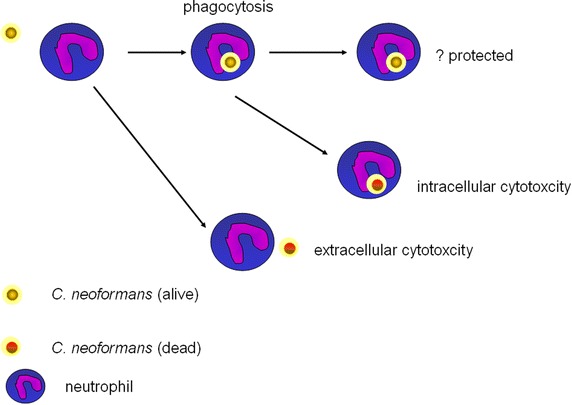
“Neutrophils recruitment into the lung is also observed at the early phase (Abe et al. 2000; Feldmesser et al. 2000; Herring et al. 2005; Kawakami et al. 1999; Mednick et al. 2003) of Cn airway infection, although it might not be as evident as mononuclear cells in the mice infected with low-virulence strain (Feldmesser…”
BackgroundO'Meara, T. R., Holmer, S. M., Selvig, K., Dietrich, F., & Alspaugh, J. A. (2013) · mBio · doi:10.1128/mbio.00522-12 · Cited by 124 · cited 1×
“Cn could also negatively regulate the influx of neutrophils into the lung (O’Meara et al. 2013), deliberately reflecting the paradoxically dual roles in the interaction between neutrophils and Cn.”
BackgroundRole of the Mannose Receptor in a Murine Model of Cryptococcus neoformans Infection
Dan, J. M., Kelly, R. M., Lee, C. K., & Levitz, S. M. (2008) · Infection and Immunity · doi:10.1128/iai.00095-08 · Cited by 122 · cited 1×
“In the CD206 deficient mice, maturation of dendritic cells upon mannoproteins, however, is not hampered (Dan et al. 2008).”
BackgroundMansour, M. K., Latz, E., & Levitz, S. M. (2006) · The Journal of Immunology · doi:10.4049/jimmunol.176.5.3053 · Cited by 121 · cited 2×
“In contrast, mannoproteins, interacting with CD206 and CD209 (Mansour et al.”
BackgroundOsterholzer, J. J., Chen, G.-H., Olszewski, M. A., Curtis, J. L., Huffnagle, G. B., & Toews, G. B. (2009) · The Journal of Immunology · doi:10.4049/jimmunol.0902823 · Cited by 121
Cryptococcal polysaccharides bind to CD18 on human neutrophils
Dong, Z. M., & Murphy, J. W. (1997) · Infection and Immunity · doi:10.1128/iai.65.2.557-563.1997 · Cited by 119 · cited 3×
“2004b), CD18 (Dong and Murphy 1997) on the neutrophils.”
Cryptococcus neoformans Host Adaptation: Toward Biological Evidence of Dormancy
Alanio, A., Vernel-Pauillac, F., Sturny-Leclère, A., & Dromer, F. (2015) · mBio · doi:10.1128/mbio.02580-14 · Cited by 119 · cited 1×
“Therefore, in the host both Cn and phagocytes would survive, leading to a latent infection, as evidenced by the recent research (Alanio et al. 2015).”
BackgroundKilling of Cryptococcus neoformans strains by human neutrophils and monocytes
Miller, M. F., & Mitchell, T. G. (1991) · Infection and Immunity · doi:10.1128/iai.59.1.24-28.1991 · Cited by 117 · cited 2×
“2003), most research focused on the killing of Cn (Miller and Mitchell 1991), which might happen intracellularly or extracellularly (Qureshi et al.”
BackgroundOsterholzer, J. J., Curtis, J. L., Polak, T., Ames, T., Chen, G.-H., McDonald, R., Huffnagle, G. B., & Toews, G. B. (2008) · The Journal of Immunology · doi:10.4049/jimmunol.181.1.610 · Cited by 115 · cited 1×
“2009a), which differentiate into dendritic cells (DCs) and contribute to the Th1 response (Osterholzer et al. 2008).”
BackgroundMacrophage Autophagy in Immunity to Cryptococcus neoformans and Candida albicans
Nicola, A. M., Albuquerque, P., Martinez, L. R., Dal-Rosso, R. A., Saylor, C., De Jesus, M., Nosanchuk, J. D., & Casadevall, A. (2012) · Infection and Immunity · doi:10.1128/iai.00358-12 · Cited by 115
Dong, Z. M., & Murphy, J. W. (1996) · Journal of Clinical Investigation · doi:10.1172/jci118466 · Cited by 114 · cited 2×
“Paradoxically, GXM inhibits neutrophil migration or infiltration (Dong and Murphy 1995b), partially by reducing the L-selectin (Dong and Murphy 1996), E-selectin (Ellerbroek et al.”
BackgroundJong, A., Wu, C.-H., Shackleford, G. M., Kwon-Chung, K. J., Chang, Y. C., Chen, H.-M., Ouyang, Y., & Huang, S.-H. (2008) · Cellular Microbiology · doi:10.1111/j.1462-5822.2008.01128.x · Cited by 112
Alanio, A., Desnos-Ollivier, M., & Dromer, F. (2011) · mBio · doi:10.1128/mbio.00158-11 · Cited by 112 · cited 1×
“Interestingly, a recent study on the dynamics of interactions between Cn and macrophages suggested that fungal background influences outcome during cryptococcal meningoencephalitis in humans (Alanio et al. 2011).”
BackgroundSubramaniam, K. S., Datta, K., Quintero, E., Manix, C., Marks, M. S., & Pirofski, L.-A. (2010) · The Journal of Immunology · doi:10.4049/jimmunol.0901638 · Cited by 112
Vecchiarelli, A., Pietrella, D., Lupo, P., Bistoni, F., McFadden, D. C., & Casadevall, A. (2003) · Journal of Leukocyte Biology · doi:10.1189/jlb.1002476 · Cited by 110
Dong, Z. M., & Murphy, J. W. (1995) · Infection and Immunity · doi:10.1128/iai.63.7.2632-2644.1995 · Cited by 103 · cited 2×
“1998), thus displaying chemotactic activity on the neutrophils (Dong and Murphy 1993, 1995a).”
BackgroundMannoproteins from Cryptococcus neoformans Promote Dendritic Cell Maturation and Activation
Pietrella, D., Corbucci, C., Perito, S., Bistoni, G., & Vecchiarelli, A. (2005) · Infection and Immunity · doi:10.1128/iai.73.2.820-827.2005 · Cited by 102 · cited 1×
“2006), promote the maturation of dendritic cells (Pietrella et al. 2005).”
BackgroundDong, Z. M., & Murphy, J. W. (1995) · Infection and Immunity · doi:10.1128/iai.63.3.770-778.1995 · Cited by 102 · cited 2×
“1998), thus displaying chemotactic activity on the neutrophils (Dong and Murphy 1993, 1995a).”
BackgroundJong, A., Wu, C.-H., Gonzales-Gomez, I., Kwon-Chung, K. J., Chang, Y. C., Tseng, H.-K., Cho, W.-L., & Huang, S.-H. (2012) · Journal of Biological Chemistry · doi:10.1074/jbc.m112.353375 · Cited by 100
Chayakulkeeree, M., Johnston, S. A., Oei, J. B., Lev, S., Williamson, P. R., Wilson, C. F., Zuo, X., Leal, A. L., Vainstein, M. H., Meyer, W., et al. (2011) · Molecular Microbiology · doi:10.1111/j.1365-2958.2011.07632.x · Cited by 100
Kozel, T. R., Highison, B., & Stratton, C. J. (1984) · Infection and Immunity · doi:10.1128/iai.43.2.574-579.1984 · Cited by 95
Catch me if you can: phagocytosis and killing avoidance by Cryptococcus neoformans
García-Rodas, R., & Zaragoza, O. (2012) · FEMS Immunology & Medical Microbiology · doi:10.1111/j.1574-695x.2011.00871.x · Cited by 94 · cited 2×
“interacting with macrophages include at least phagocytosis, replication, and non-lytic exocytosis (Coelho et al. 2014; Garcia-Rodas and Zaragoza 2012; Leopold Wager and Wormley 2014; McQuiston and Williamson 2012), implicating the existence of Trojan horse pathway for the brain dissemination (Casadevall 2010; Charlier…”
BackgroundCryptococci at the brain gate: break and enter or use a Trojan horse?
Casadevall, A. (2010) · Journal of Clinical Investigation · doi:10.1172/jci42949 · Cited by 89 · cited 4×
“As Cn is a facultative intracellular pathogen, it is speculated that the transmigrating Cn might be extracellular or within some phagocytes, thereby invading the central nervous system (CNS) via a transcellular pathway or Trojan horse pathway (Casadevall 2010).”
BackgroundInfluentialIn Vivo Role of Dendritic Cells in a Murine Model of Pulmonary Cryptococcosis
Wozniak, K. L., Vyas, J. M., & Levitz, S. M. (2006) · Infection and Immunity · doi:10.1128/iai.00317-06 · Cited by 88
Coffey, M. J., Phare, S. M., George, S., Peters-Golden, M., & Kazanjian, P. H. (1998) · Journal of Clinical Investigation · doi:10.1172/jci2117 · Cited by 85
Opsonic Requirements for Dendritic Cell-Mediated Responses to Cryptococcus neoformans
Kelly, R. M., Chen, J., Yauch, L. E., & Levitz, S. M. (2005) · Infection and Immunity · doi:10.1128/iai.73.1.592-598.2005 · Cited by 85 · cited 1×
“Complements and specific antibodies promote the phagocytosis of Cn by dendritic cells (Kelly et al. 2005).”
BackgroundVecchiarelli, A., Monari, C., Baldelli, F., Pietrella, D., Retini, C., Tascini, C., Francisci, D., & Bistoni, F. (1995) · Journal of Infectious Diseases · doi:10.1093/infdis/171.6.1448 · Cited by 84
Wozniak, K. L., & Levitz, S. M. (2008) · Infection and Immunity · doi:10.1128/iai.00660-08 · Cited by 79 · cited 1×
“Following phagocytosis, DCs kill the intracellular Cn via the fusion of endosome and lysosome and present antigens to T cells (Wozniak and Levitz 2008).”
BackgroundWozniak, K. L., Kolls, J. K., & Wormley, F. L. (2012) · BMC Immunology · doi:10.1186/1471-2172-13-65 · Cited by 77 · cited 1×
“To add complexity more, neutrophil depletion in the mice infected with Cn expressing IFN-γ results in increased IL-17A production from γδT cells, but has no role on the fungus burden (Wozniak et al. 2012) (Fig.”
BackgroundInitiation of T-Helper Cell Immunity to Candida albicans by IL-12: The Role of Neutrophils
Romani, L., Bistoni, F., & Puccetti, P. (1997) · Chemical Immunology and Allergy · doi:10.1159/000058688 · Cited by 76
Bauman, S. K., Huffnagle, G. B., & Murphy, J. W. (2003) · Infection and Immunity · doi:10.1128/iai.71.1.68-74.2003 · Cited by 74
Lipovsky, M. M., Gekker, G., Hu, S., Ehrlich, L. C., Hoepelman, A. I. M., & Peterson, P. K. (1998) · The Journal of Infectious Diseases · doi:10.1086/517368 · Cited by 74 · cited 1×
“1996) and chemokines (Lipovsky et al. 1998), thus displaying chemotactic activity on the neutrophils (Dong and Murphy 1993, 1995a).”
BackgroundVu, K., Eigenheer, R. A., Phinney, B. S., & Gelli, A. (2013) · Infection and Immunity · doi:10.1128/iai.00554-13 · Cited by 73 · cited 1×
“2014) promotes migration of Cn across the brain endothelium by facilitating attachment of cryptococci to the endothelial cells, which induces the cytoskeleton remodeling and internalization (Vu et al. 2013).”
BackgroundPhagocytosis of Cryptococcus neoformans by, and Nonlytic Exocytosis from,Acanthamoeba castellanii
Chrisman, C. J., Alvarez, M., & Casadevall, A. (2010) · Applied and Environmental Microbiology · doi:10.1128/aem.00812-10 · Cited by 73 · cited 1×
“As mammalian phagocytes may originate from the common ancestors, it is plausible to speculate that roles of host phagocytes against Cn manifest the complex interactions between fungi and phagocyte predators (Chrisman et al. 2010).”
BackgroundBauman, S. K., Nichols, K. L., & Murphy, J. W. (2000) · The Journal of Immunology · doi:10.4049/jimmunol.165.1.158 · Cited by 70 · cited 1×
“Compared with myeloid DCs, plasmacytoid DCs induce non-protective immune response against Cn (Bauman et al. 2000; Siegemund and Alber 2008).”
BackgroundHuang, S.-H., Long, M., Wu, C.-H., Kwon-Chung, K. J., Chang, Y. C., Chi, F., Lee, S., & Jong, A. (2011) · Journal of Biological Chemistry · doi:10.1074/jbc.m111.219378 · Cited by 69 · cited 1×
“2012) and promoting the lipid raft-dependent endocytosis (Huang et al. 2011).”
BackgroundHerring, A. C., Falkowski, N. R., Chen, G.-H., McDonald, R. A., Toews, G. B., & Huffnagle, G. B. (2005) · Infection and Immunity · doi:10.1128/iai.73.1.39-49.2005 · Cited by 69
Aratani, Y., Kura, F., Watanabe, H., Akagawa, H., Takano, Y., Ishida-Okawara, A., Suzuki, K., Maeda, N., & Koyama, H. (2006) · Journal of Medical Microbiology · doi:10.1099/jmm.0.46620-0 · Cited by 65 · cited 2×
“In contrast to the protective role of neutrophil depletion, mice defective in neutrophil-specific enzyme MPO are hyper-susceptible to Cn, which might result from higher level of IL-4 and reduced production of IL-12, IFN-γ in the lung (Aratani et al. 2006).”
BackgroundEllerbroek, P. M., Lefeber, D. J., van Veghel, R., Scharringa, J., Brouwer, E., Gerwig, G. J., Janbon, G., Hoepelman, A. I. M., & Coenjaerts, F. E. J. (2004) · The Journal of Immunology · doi:10.4049/jimmunol.173.12.7513 · Cited by 65
Long, M., Huang, S.-H., Wu, C.-H., Shackleford, G. M., & Jong, A. (2012) · Journal of Biomedical Science · doi:10.1186/1423-0127-19-19 · Cited by 64
Paradoxical roles of alveolar macrophages in the host response to Cryptococcus neoformans
McQuiston, T. J., & Williamson, P. R. (2012) · Journal of Infection and Chemotherapy · doi:10.1007/s10156-011-0306-2 · Cited by 62 · cited 2×
“interacting with macrophages include at least phagocytosis, replication, and non-lytic exocytosis (Coelho et al. 2014; Garcia-Rodas and Zaragoza 2012; Leopold Wager and Wormley 2014; McQuiston and Williamson 2012), implicating the existence of Trojan horse pathway for the brain dissemination (Casadevall 2010; Charlier…”
BackgroundFc Gamma Receptor 3A Polymorphism and Risk for HIV-Associated Cryptococcal Disease
Rohatgi, S., Gohil, S., Kuniholm, M. H., Schultz, H., Dufaud, C., Armour, K. L., Badri, S., Mailliard, R. B., & Pirofski, L.-A. (2013) · mBio · doi:10.1128/mbio.00573-13 · Cited by 61
App1: An Antiphagocytic Protein That Binds to Complement Receptors 3 and 2
Stano, P., Williams, V., Villani, M., Cymbalyuk, E. S., Qureshi, A., Huang, Y., Morace, G., Luberto, C., Tomlinson, S., & Del Poeta, M. (2009) · The Journal of Immunology · doi:10.4049/jimmunol.182.1.84 · Cited by 60 · cited 1×
“In contrast, antiphagocytic protein 1 (App1) from Cn, binding with CR2/CR3, inhibits the phagocytosis of macrophages (Stano et al. 2009; Williams and Del Poeta 2011).”
BackgroundMechanisms of Dendritic Cell Lysosomal Killing of Cryptococcus
Hole, C. R., Bui, H. Q., Wormley, F. L., & Wozniak, K. L. (2012) · Scientific Reports · doi:10.1038/srep00739 · Cited by 56 · cited 1×
“The direct cytotoxicity of DCs against Cn is further confirmed in a recent study showing that purified lysosomal enzymes, specifically cathepsin B, inhibit cryptococcal growth in vitro (Hole et al. 2012).”
BackgroundStie, J., & Fox, D. (2012) · Microbiology · doi:10.1099/mic.0.051524-0 · Cited by 55 · cited 2×
“2010), plasmin (Stie and Fox 2012), or metalloprotease Mpr1 (Vu et al.”
BackgroundGeunes-Boyer, S., Oliver, T. N., Janbon, G., Lodge, J. K., Heitman, J., Perfect, J. R., & Wright, J. R. (2009) · Infection and Immunity · doi:10.1128/iai.00088-09 · Cited by 55
Dong, Z. M., & Murphy, J. W. (1993) · Infection and Immunity · doi:10.1128/iai.61.12.5067-5077.1993 · Cited by 53 · cited 1×
“1998), thus displaying chemotactic activity on the neutrophils (Dong and Murphy 1993, 1995a).”
BackgroundLiu, T.-B., & Xue, C. (2014) · Infection and Immunity · doi:10.1128/iai.00994-13 · Cited by 52 · cited 1×
“Replication of Cn inside the macrophages requires F-box protein 1 and its substrate inositol phosphosphingo lipid-phospholipase C1 (Liu and Xue 2014).”
BackgroundAlvarez, M., Saylor, C., & Casadevall, A. (2008) · Cellular Microbiology · doi:10.1111/j.1462-5822.2008.01152.x · Cited by 49 · cited 1×
“Antibody or complement, which mediates the phagocytosis, affects the outcome (Alvarez et al. 2008) but not the occurrence of non-lytic exocytosis (Alvarez and Casadevall 2006; Ma et al.”
BackgroundSaylor, C., Dadachova, E., & Casadevall, A. (2009) · The Journal of Immunology · doi:10.4049/jimmunol.0902752 · Cited by 48
Lovchik, J. A., & Lipscomb, M. F. (1993) · American Journal of Respiratory Cell and Molecular Biology · doi:10.1165/ajrcmb/9.6.617 · Cited by 48 · cited 1×
“Nevertheless, inoculation of Cn intravenously recruits neutrophils accumulated in pulmonary vessels, which is dependent on the complement 5a (C5a) (Lovchik and Lipscomb 1993).”
BackgroundLuo, Y., Tucker, S. C., & Casadevall, A. (2005) · The Journal of Immunology · doi:10.4049/jimmunol.174.11.7226 · Cited by 46
Guillot, L., Carroll, S. F., Badawy, M., & Qureshi, S. T. (2008) · Respiratory Research · doi:10.1186/1465-9921-9-9 · Cited by 44
Ellerbroek, P. M., Ulfman, L. H., Hoepelman, A. I., & Coenjaerts, F. E. J. (2004) · Cellular Microbiology · doi:10.1111/j.1462-5822.2004.00384.x · Cited by 42
Ellerbroek, P. M., Hoepelman, A. I. M., Wolbers, F., Zwaginga, J. J., & Coenjaerts, F. E. J. (2002) · Infection and Immunity · doi:10.1128/iai.70.9.4762-4771.2002 · Cited by 42
Qureshi, A., Subathra, M., Grey, A., Schey, K., Del Poeta, M., & Luberto, C. (2010) · PLoS ONE · doi:10.1371/journal.pone.0015587 · Cited by 41 · cited 1×
“Inhibition of sphingomyelin synthase (SMS) also profoundly impairs the ability of neutrophils to kill Cn, which are independent of phagocytosis (Qureshi et al. 2010).”
BackgroundChiller, T. M., Farrokhshad, K., Brummer, E., & Stevens, D. A. (2002) · Medical Mycology · doi:10.1080/mmy.40.1.21.26 · Cited by 40
Granulocyte colony stimulating factor therapy of experimental cryptococcal meningitis
Graybill, J. R., Bocanegra, R., Lambros, C., & Luther, M. F. (1997) · Medical Mycology · doi:10.1080/02681219780001221 · Cited by 38
Abe, K., Kadota, J., Ishimatsu, Y., Iwashita, T., Tomono, K., Kawakami, K., & Kohno, S. (2000) · Microbiology and Immunology · doi:10.1111/j.1348-0421.2000.tb02573.x · Cited by 38
Surfactant Protein D Facilitates Cryptococcus neoformans Infection
Geunes-Boyer, S., Beers, M. F., Perfect, J. R., Heitman, J., & Wright, J. R. (2012) · Infection and Immunity · doi:10.1128/iai.05613-11 · Cited by 35
Role of Glucose in the Expression of Cryptococcus neoformans Antiphagocytic Protein 1, App1
Williams, V., & Poeta, M. D. (2011) · Eukaryotic Cell · doi:10.1128/ec.00252-10 · Cited by 32
Kozel, T. R., Pfrommer, G. S., & Redelman, D. D. (1987) · PubMed Central · Cited by 31
Sabiiti, W., & May, R. C. (2012) · PLoS ONE · doi:10.1371/journal.pone.0035455 · Cited by 31
Effect of endothelial cells on phagocyte-mediated anticryptococcal activity
Roseff, S. A., & Levitz, S. M. (1993) · Infection and Immunity · doi:10.1128/iai.61.9.3818-3824.1993 · Cited by 30 · cited 2×
“Moreover, human brain endothelial cells (Filler and Sheppard 2006) but not human umbilical vein endothelial cells (Roseff and Levitz 1993) or mouse brain endothelial cells (Sabiiti”
BackgroundKawakami, K., Shibuya, K., Qureshi, M. H., Zhang, T., Koguchi, Y., Tohyama, M., Xie, Q., Naoe, S., & Saitô, A. (1999) · FEMS Immunology & Medical Microbiology · doi:10.1111/j.1574-695x.1999.tb01365.x · Cited by 28 · cited 2×
“Neutrophils recruitment into the lung is also observed at the early phase (Abe et al. 2000; Feldmesser et al. 2000; Herring et al. 2005; Kawakami et al. 1999; Mednick et al. 2003) of Cn airway infection, although it might not be as evident as mononuclear cells in the mice infected with low-virulence strain (Feldmesser…”
BackgroundSiegemund, S., & Alber, G. (2008) · FEMS Immunology & Medical Microbiology · doi:10.1111/j.1574-695x.2008.00391.x · Cited by 28 · cited 2×
“Compared with myeloid DCs, plasmacytoid DCs induce non-protective immune response against Cn (Bauman et al. 2000; Siegemund and Alber 2008).”
BackgroundFungicidal Components of Mammalian Granulocytes Active against Cryptococcus neoformans
Lehrer, R. I., & Ladra, K. M. (1977) · The Journal of Infectious Diseases · doi:10.1093/infdis/136.1.96 · Cited by 23 · cited 2×
“1972; Lehrer and Ladra 1977).”
BackgroundCryptococcus Neoformans Modulates Extracellular Killing by Neutrophils
Qureshi, A., Grey, A., Rose, K. L., Schey, K. L., & Del Poeta, M. (2011) · Frontiers in Microbiology · doi:10.3389/fmicb.2011.00193 · Cited by 20
Coelho, C., Tesfa, L., Zhang, J., Rivera, J., Gonçalves, T., & Casadevall, A. (2012) · Infection and Immunity · doi:10.1128/iai.06332-11 · Cited by 20
Luo, Y., Isaac, B. M., Casadevall, A., & Cox, D. (2009) · Infection and Immunity · doi:10.1128/iai.00530-09 · Cited by 16 · cited 2×
“Phagocytosis of Cn inhibits the chemotaxis of macrophages stimulated by CX3CL1 and CSF-1 (Luo et al.”
BackgroundParameciumspecies ingest and kill the cells of the human pathogenic fungusCryptococcus neoformans
Frager, S. Z., Chrisman, C. J., Shakked, R. J., & Casadevall, A. (2010) · Medical Mycology · doi:10.3109/13693780903451810 · Cited by 15 · cited 1×
“2010), paramecium (Frager et al. 2010), or nematodes (Casadevall et al.”
BackgroundRichardson, M. D., White, L. J., McKay, I. C., & Shankland, G. S. (1993) · Medical Mycology · doi:10.1080/02681219380000241 · Cited by 8
Chiller, T., Farrokhshad, K., Brummer, E., et al. (2002) · Medical Mycology · doi:10.1080/714031074 · Cited by 4
[Purification and antimicrobial activity of human neutrophil defensins].
Qu, X., & Wang, A. (1991) · PubMed · Cited by 2
Cited by
Mechanisms of fungal dissemination
Strickland, A. B., & Shi, M. (2021) · Cellular and Molecular Life Sciences · doi:10.1007/s00018-020-03736-z · Cited by 127
Self-citationNutritional Requirements and Their Importance for Virulence of Pathogenic Cryptococcus Species
Watkins, R. A., King, J., & Johnston, S. A. (2017) · Microorganisms · doi:10.3390/microorganisms5040065 · Cited by 53
Macrophage Mediated Immunomodulation During Cryptococcus Pulmonary Infection
Wang, Y., Pawar, S., Dutta, O., Wang, K., Rivera, A., & Xue, C. (2022) · Frontiers in Cellular and Infection Microbiology · doi:10.3389/fcimb.2022.859049 · Cited by 52
Al-Huthaifi, A. M., Radman, B. A., Al-Alawi, A. A., Mahmood, F., & Liu, T. (2024) · Journal of Fungi · doi:10.3390/jof10080586 · Cited by 46
“Additionally, the researchers observed that phagocytes traveled from the bloodstream to the brain through a structure known as a “donut hole,” which may impede the movement of C. neoformans -containing macrophages along the cerebral vasculature, facilitating the transport of C. neoformans [97].”
BackgroundSun, D., Zhang, M., Liu, G., Wu, H., Zhu, X., Zhou, H., & Shi, M. (2016) · Infection and Immunity · doi:10.1128/iai.01197-15 · Cited by 39
“neoformans (3, 4) and that the antifungal capability of neutrophils is usually greater than that of monocytes (1, 5).”
BackgroundSelf-citation
Metadata
- Authors
- Zhang, M., Sun, D., & Shi, M.
- Affiliations
- Virginia–Maryland College of Veterinary Medicine (US)
- Corresponding author
- Shi, Meiqing
- Venue
- SpringerPlus
- Published
- 2015-08-12
- Volume
- 4
- Issue
- 1
- Pages
- 410-410
- ISSN
- 2193-1801 (ISSN-L)
- PMC
- PMC4531118
- OpenAlex
- W1906404558
- Cited by
- 19
- References
- 101
- Citations by year
- 2026: 1 · 2025: 1 · 2024: 3 · 2023: 1 · 2022: 2 · 2021: 2 · 2019: 3 · 2018: 1 · 2017: 3 · 2016: 1 · 2015: 1
- FWCI
- 0.26
- Type
- journal article
- Language
- en
- Open access
- diamond
- doi.org
- Locations
- SpringerPlus (publishedVersion, cc-by)
- PubMed Central (publishedVersion, cc-by)
- PubMed (publishedVersion)
- Funders
- start-package fund of University of Maryland
- key project of Nanjing Medical University (2014NJMUZD010)
- Topics
- Health Sciences › Medicine › Infectious Diseases › Fungal Infections and Studies
- Life Sciences › Immunology and Microbiology › Microbiology › Bacterial Infections and Vaccines
- Health Sciences › Medicine › Infectious Diseases › Infectious Diseases and Tuberculosis
- Keywords
- Cryptococcus neoformans, phagocytes, cryptococcal meningoencephalitis, cryptococcosis, host-pathogen interaction, monocytes, macrophages, neutrophils, dendritic cells, endothelial cells, Trojan horse, host cell hijacking, AIDS, pathogenicity
About these checks
Registry, retraction, Cites and statistics results are computed, not judged, with one exception: a printed reference that no index lists is read once by a model before it counts as a citation error. Claims are extracted by a model and kept only when their quote appears verbatim in the text; each cited source is then checked, with a model’s help, for whether it says what the claim relies on. Those verdicts can be wrong — read the claim’s quote and the cited source before relying on one.
Statistics and arithmetic are recomputed, not judged.
Confidence bands are shown only for fields calibrated on our annotated test set. None is calibrated yet, so no band is shown.
What counts as a claim ›How we measure confidence ›How we check this ›
Are you an author, or do you see a problem with this page? Request a review
Data sources
Bibliographic data: Semantic Scholar, OpenAlex, Crossref.
Contains information from the Semantic Scholar Academic Graph Datasets, made available under the ODC Attribution License (ODC-BY 1.0).
Semantic Scholar’s data is described in: Kinney, R., et al. (2023). The Semantic Scholar Open Data Platform. arXiv:2301.10140.
