

Production of mixed fruit (pawpaw, banana and watermelon) wine using Saccharomyces cerevisiae isolated from palm wine
Open accessThe DOI matches its Crossref record; 50 of the 53 references it cites were found in a registry or an index, and 2 are not checked yet; 2 of the 16 sources its claims cite were checked for support.
Abstract
Mixed-fruit fermentation study involving banana, with pH, acidity, alcohol, and sensory evaluation tracked.
Verified 2026-11-22 · 2 references not checked yet
Overview
CoChat Summary
## TL;DR
This paper reports that mixed wines made from pawpaw, banana, and watermelon could be produced successfully using Saccharomyces cerevisiae isolated from palm wine, with acceptable chemical and sensory properties. The final wines had 16.00–18.50% alcohol, 2.5–3.8 pH, and total acidity within the paper’s stated acceptable range.
## Key findings
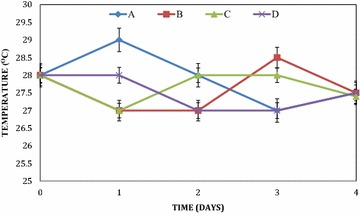
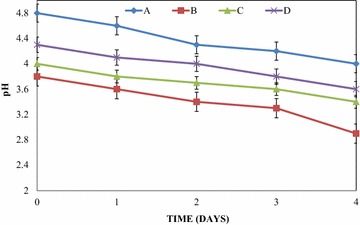
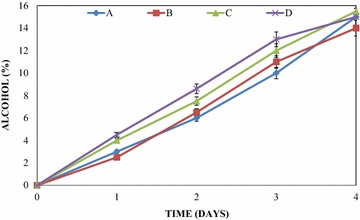
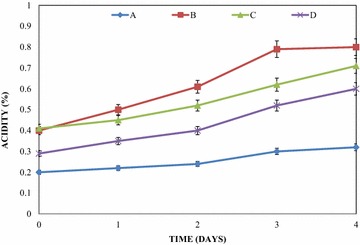
- During primary fermentation, alcohol increased from 0.0 to 15.0%, total acidity from 0.20 to 0.80%, specific gravity decreased from 1.060 to 0.9800, and temperature stayed between 27°C and 29°C.
- Final alcohol contents were 17.50 ± 0.02% (pawpaw + watermelon), 16.00 ± 0.02% (pawpaw + banana), 18.50 ± 0.02% (banana + watermelon), and 18.00 ± 0.02% (pawpaw + banana + watermelon); the paper says these did not differ significantly (p > 0.05).
- Final pH values were acidic, ranging from 2.5 ± 0.01 to 3.8 ± 0.01, and final acidity ranged from 0.35 ± 0.02 to 0.88 ± 0.01%; the paper says these were within acceptable limits and not significantly different.
- Sensory ranking of acceptability was pawpaw and banana wine > pawpaw and watermelon > pawpaw, banana and watermelon > banana and watermelon wine; the paper says sensory differences were not significant (P > 0.05).
## Methods
- Experimental wine production from mixed fruit musts using pawpaw, banana, and watermelon in two- and three-fruit combinations; the fruits were mixed with water (1:1 w/v), sugar (0.656 kg), and sodium metabisulphite before fermentation.
- Saccharomyces cerevisiae was isolated from fresh palm wine: 19 isolates were obtained, 6 were identified as *S. cerevisiae*, and the isolate with the highest sugar and alcohol tolerance was selected as the starter.
- Primary fermentation lasted 4 days, secondary fermentation 21 days, and the wines were then clarified, filtered, and matured for 6 months; analysis included chemical tests, microbial isolation, sensory evaluation by 20 judges, and ANOVA with P < 0.05 as the significance threshold.
## Limitations
- The paper does not report a control treatment using a commercial wine yeast or a non-inoculated fermentation for direct comparison; this is evident from the text.
- The sensory evaluation was done by 20 judges on a seven-point hedonic scale, which is a relatively small panel; this is evident from the text.
- The paper states some results were based on “did not differ significantly,” but it does not provide detailed statistical outputs beyond that; this is evident from the text.
Model-written summary. Check it against the paper before relying on it.
Integrity signals
Registry
Cites
Statistics
Figures
Verification
Claims the paper makes
2 Valid · 0 Not valid · 9 Not checked · 32 Own results and interpretations
A result the paper reports from its own data — it cites no other source for it, so there is none to check. The quote shows it is in the paper.
In the paper
“The alcoholic content of the final wines were 17.50 ± 0.02 % (pawpaw and watermelon), 16.00 ± 0.02 % (pawpaw and banana), 18.50 ± 0.02 % (banana and watermelon wine) and 18.00 ± 0.02 % (pawpaw, banana and watermelon).”
- Also stated in: § Results · hedged
“The result indicated that the final alcohol concentration of pawpaw and watermelon wine, pawpaw and banana wine, pawpaw, banana and watermelon wine, and banana and watermelon wine, were 17.50 ± 0.02, 16.00 ± 0.02, 18.00 ± 0.02 and 18.50 ± 0.02 % respectively (Table 3).”
§ Production of mixed fruit (pawpaw, banana and watermelon) wine using Saccharomyces cerevisiae isolated from palm wine > Abstract
plain- Asserted: passes — The authors put it forward as true.
- Checkable: passes — It can be checked against evidence.
- Load-bearing: unclear — It is unclear whether the paper’s conclusions depend on it.
- Based: passes — The paper gives a reason why it holds.
- Also stated in: § Results · hedged
A result the paper reports from its own data — it cites no other source for it, so there is none to check. The quote shows it is in the paper.
In the paper
“During primary fermentation, consistent increases in alcohol contents (ranging from 0.0 to 15.0 %) and total acidities (ranging from 0.20 to 0.80 %) were observed with gradual decrease in specific gravities (ranging from 1.060 to 0.9800) and pH (ranging from 4.80 to 2.90).”
§ Production of mixed fruit (pawpaw, banana and watermelon) wine using Saccharomyces cerevisiae isolated from palm wine > Abstract
plainstates a cause- Asserted: passes — The authors put it forward as true.
- Checkable: passes — It can be checked against evidence.
- Load-bearing: unclear — It is unclear whether the paper’s conclusions depend on it.
- Based: passes — The paper gives a reason why it holds.
A result the paper reports from its own data — it cites no other source for it, so there is none to check. The quote shows it is in the paper.
In the paper
“The alcoholic content of the final wines were 17.50 ± 0.02 % (pawpaw and watermelon), 16.00 ± 0.02 % (pawpaw and banana), 18.50 ± 0.02 % (banana and watermelon wine) and 18.00 ± 0.02 % (pawpaw, banana and watermelon).”
- Also stated in: § Results · hedged
“The result indicated that the final alcohol concentration of pawpaw and watermelon wine, pawpaw and banana wine, pawpaw, banana and watermelon wine, and banana and watermelon wine, were 17.50 ± 0.02, 16.00 ± 0.02, 18.00 ± 0.02 and 18.50 ± 0.02 % respectively (Table 3).”
§ Production of mixed fruit (pawpaw, banana and watermelon) wine using Saccharomyces cerevisiae isolated from palm wine > Abstract
plain- Asserted: passes — The authors put it forward as true.
- Checkable: passes — It can be checked against evidence.
- Load-bearing: unclear — It is unclear whether the paper’s conclusions depend on it.
- Based: passes — The paper gives a reason why it holds.
- Also stated in: § Results · hedged
A result the paper reports from its own data — it cites no other source for it, so there is none to check. The quote shows it is in the paper.
In the paper
“The acid concentration (residual and volatile acidity) were within the acceptable limit and ranged from 0.35 ± 0.02 to 0.88 ± 0.01 % (p > 0.05).”
- Also stated in: § Discussion · plain
“ranging from 0.35 ± 0.02 to 0.88 ± 0.01 %.”
§ Production of mixed fruit (pawpaw, banana and watermelon) wine using Saccharomyces cerevisiae isolated from palm wine > Abstract
plain- Asserted: passes — The authors put it forward as true.
- Checkable: passes — It can be checked against evidence.
- Load-bearing: passes — The paper’s conclusions depend on it.
- Based: passes — The paper gives a reason why it holds.
- Also stated in: § Discussion · plain
A result the paper reports from its own data — it cites no other source for it, so there is none to check. The quote shows it is in the paper.
In the paper
“The alcoholic content of the final wines were 17.50 ± 0.02 % (pawpaw and watermelon), 16.00 ± 0.02 % (pawpaw and banana), 18.50 ± 0.02 % (banana and watermelon wine) and 18.00 ± 0.02 % (pawpaw, banana and watermelon).”
- Also stated in: § Results · hedged
“The result indicated that the final alcohol concentration of pawpaw and watermelon wine, pawpaw and banana wine, pawpaw, banana and watermelon wine, and banana and watermelon wine, were 17.50 ± 0.02, 16.00 ± 0.02, 18.00 ± 0.02 and 18.50 ± 0.02 % respectively (Table 3).”
§ Production of mixed fruit (pawpaw, banana and watermelon) wine using Saccharomyces cerevisiae isolated from palm wine > Abstract
plain- Asserted: passes — The authors put it forward as true.
- Checkable: passes — It can be checked against evidence.
- Load-bearing: unclear — It is unclear whether the paper’s conclusions depend on it.
- Based: passes — The paper gives a reason why it holds.
- Also stated in: § Results · hedged
21 more claims
Create a free account to see all 43 claims and every source verdict.
- It may state two separate claims as one. 12
- Probably not a substantial claim. 4
- The quote only partly states this claim. 1
Citations
Cites
Belle, G. V., Fisher, L. D., Heagerty, P. J., & Lumley, T. (1958) · Wiley eBooks · doi:10.1002/0471602396.ch1 · Cited by 1,861
Yeast interactions and wine flavour
Fleet, G. (2003) · International Journal of Food Microbiology · doi:10.1016/s0168-1605(03)00245-9 · Cited by 1,020 · cited 5×
“Also, because different fruits have different composition, there is the need for yeast strains to adapt to different environments, such as sugar composition and concentration of acetic acid (Fleet 2003; Chilaka et al.”
BackgroundMethodInfluentialBread, beer and wine: Saccharomyces cerevisiae diversity reflects human history
LEGRAS, J., MERDINOGLU, D., CORNUET, J., & KARST, F. (2007) · Molecular Ecology · doi:10.1111/j.1365-294x.2007.03266.x · Cited by 548
Wall, M. M. (2006) · Journal of Food Composition and Analysis · doi:10.1016/j.jfca.2006.01.002 · Cited by 429
Westermann, B., & Neupert, W. (2000) · Yeast · doi:10.1002/1097-0061(200011)16:15<1421::aid-yea624>3.0.co;2-u · Cited by 401
Fermentation of pomegranate juice by probiotic lactic acid bacteria
Mousavi, Z. E., Mousavi, S. M., Razavi, S. H., Emam-Djomeh, Z., & Kiani, H. (2011) · World Journal of Microbiology and Biotechnology · doi:10.1007/s11274-010-0436-1 · Cited by 293
Characterization of different fruit wines made from cacao, cupuassu, gabiroba, jaboticaba and umbu
Duarte, W. F., Dias, D. R., Oliveira, J. M., Teixeira, J. A., de Almeida e Silva, J. B., & Schwan, R. F. (2010) · LWT - Food Science and Technology · doi:10.1016/j.lwt.2010.03.010 · Cited by 213
Influence of sequential yeast mixtures on wine fermentation
Clemente-Jimenez, J. M., Mingorance-Cazorla, L., Martínez-Rodríguez, S., Las Heras-Vázquez, F. J., & Rodríguez-Vico, F. (2005) · International Journal of Food Microbiology · doi:10.1016/j.ijfoodmicro.2004.06.007 · Cited by 173
Oms-Oliu, G., Odriozola-Serrano, I., Soliva-Fortuny, R., & Martín-Belloso, O. (2009) · Food Chemistry · doi:10.1016/j.foodchem.2009.01.049 · Cited by 171
Banana improvement : cellular, molecular biology, and induced mutations
Jain, S. M., & Swennen, R. L. (2004) · Science Publishers eBooks · Cited by 163
Laboratory Manual of Microbiology
Cheever, F. S. (1950) · American Journal of Public Health and the Nations Health · doi:10.2105/ajph.40.9.1151-b · Cited by 159
Flesh quality and lycopene stability of fresh-cut watermelon
Perkins-Veazie, P. M., & Collins, J. K. (2003) · Postharvest Biology and Technology · doi:10.1016/j.postharvbio.2003.08.005 · Cited by 155
Amoa-Awua, W. K., Sampson, E., & Tano-Debrah, K. (2007) · Journal of Applied Microbiology · doi:10.1111/j.1365-2672.2006.03074.x · Cited by 151
Phytochemical and nutrient evaluation of Carica papaya (pawpaw) leaves.
(2010) · Cited by 150
Modern Industrial Microbiology and Biotechnology
Okafor, N. (2016) · CRC Press eBooks · doi:10.1201/b21298 · Cited by 143
Effects of processing methods on the quality and acceptability of melon milk
Akubor, P. I., & Ogbadu, R. L. (2003) · Plant Foods for Human Nutrition · doi:10.1023/a:1024063105507 · Cited by 136
Laboratory Manual for Microbiology
(1956) · doi:10.2307/3461117 · Cited by 129
Production and Characterization of Wine from Mango Fruit (Mangifera indica L)
Reddy, L. V. A., & Reddy, O. V. S. (2005) · World Journal of Microbiology and Biotechnology · doi:10.1007/s11274-005-4416-9 · Cited by 117 · cited 4×
“2011), mango (Reddy and Reddy 2005), guava (Kocher and Pooja 2011) can be used in wine production, the combination of these fruits in wine production is not readily available in literature.”
BackgroundInfluentialPhysical properties of watermelon seed as a function of moisture content and variety
(2007) · Cited by 104
Characterisation and functional properties of watermelon ( Citrullus lanatus ) seed proteins
Wani, A. A., Sogi, D. S., Singh, P., et al. (2010) · Journal of the Science of Food and Agriculture · doi:10.1002/jsfa.4160 · Cited by 83
Production and quality evaluation of banana wine
Akubor, P. I., Obio, S. O., Nwadomere, K. A., & Obiomah, E. (2003) · Plant Foods for Human Nutrition · doi:10.1023/b:qual.0000041138.29467.b6 · Cited by 80
Bio-processing of bael [Aegle marmelos L.] fruits into wine with antioxidants
Panda, S. K., Sahu, U. C., Behera, S. K., & Ray, R. C. (2013) · Food Bioscience · doi:10.1016/j.fbio.2013.10.005 · Cited by 65
Ray, R. C., Panda, S. K., Swain, M. R., & Sivakumar, P. S. (2012) · International Journal of Food Science & Technology · doi:10.1111/j.1365-2621.2011.02861.x · Cited by 55 · cited 1×
“2012), sweet potato wine (Ray et al. 2011), sapota fruit wine (Panda et al.”
BackgroundOkoro, C. (2010) · Nigerian Food Journal · doi:10.4314/nifoj.v25i2.50854 · Cited by 48
Souza, L. M. D., Ferreira, K. S., Chaves, J. B. P., & Teixeira, S. L. (2008) · Scientia Agricola · doi:10.1590/s0103-90162008000300004 · Cited by 47
Ayogu, T. E. (1999) · Bioresource Technology · doi:10.1016/s0960-8524(99)00162-5 · Cited by 45
Fermentation of sapota (Achras sapota Linn.) fruits to functional wine
Panda, S. K., Sahu, U. C., Behera, S. K., & Ray, R. C. (2014) · Nutrafoods · doi:10.1007/s13749-014-0034-1 · Cited by 41
Characteristics of Coloured Wine Produced from Roselle (Hibiscus sabdariffa) Calyx Extract
Alobo, A. P., & Offonry, S. U. (2009) · Journal of the Institute of Brewing · doi:10.1002/j.2050-0416.2009.tb00351.x · Cited by 41 · cited 2×
“The production of wine from common fruits could help reduce the level of post-harvest losses and increases the variety of wines (Okoro 2007; Alobo and Offonry 2009).”
BackgroundExtraction of juice from some tropical fruits using a small scale multi-fruit juice extractor.
Oyeleke, F. I., Olaniyan, A. M., & Ahmed, K. Z. (2007) · 8th African Crop Science Society Conference, El-Minia, Egypt, 27-31 October 2007 · Cited by 40
Status of wine production from guava (Psidium guajava L.): A traditional fruit of India
Kocher, G. S. (2011) · African Journal of Food Science · doi:10.5897/ajfsx11.008 · Cited by 38
Erukainure, O. L., Oke, O. V., Daramola, A. O., Adenekan, S. O., & Umanhonlen, E. (2010) · Pakistan Journal of Nutrition · doi:10.3923/pjn.2010.806.809 · Cited by 35
Ezeronye, O. U. (2004) · Antonie van Leeuwenhoek · doi:10.1023/b:anto.0000047927.59792.d4 · Cited by 35
Evaluation of the efficiency of yeast isolates from palm wine in diverse fruit wine production.
(2010) · African Journal of Food Science · doi:10.5897/ajfs.9000132 · Cited by 32
Novel method of wine production from banana (Musa acuminata) and pineapple (Ananas comosus) wastes
Isitua, C, C., Ibeh, & I, N. (2010) · African Journal of Biotechnology · doi:10.5897/ajb10.999 · Cited by 31 · cited 3×
“2010; Awe 2011) and several other fruits including, pineapple (Isitua and Ibeh 2010), carrot Monsavi et al.”
Background(2012) · International Journal of Food and Fermentation Technology · Cited by 23
Production, optimization and characterization of wine from mango (Mangifera indica Linn.).
Lebaka, V. R., Obulam, V. S. R., & Joshi, V. K. (2009) · Cited by 22
SENSORY EVALUATION OF LOW SUGAR WATERMELON BY CONSUMERS
Collins, J. K., Davis, A. R., Adams, A., & Perkins-Veazie, P. M. (2005) · HortScience · doi:10.21273/hortsci.40.3.883e · Cited by 21
The Wines of West Africa: History, Technology and Tasting Notes
Noll, R. G. (2008) · Journal of Wine Economics · doi:10.1017/s1931436100000572 · Cited by 17 · cited 5×
“2007; Noll 2008).”
BackgroundInfluentialHigh level ethanol-tolerant Saccharomyces from Nigerian palm wine
Ezeogu, L. I., & Emeruwa, A. C. (1993) · Biotechnology Letters · doi:10.1007/bf00131558 · Cited by 14
Molecular characterization of genomes in Musa and its applications.
(2004) · Cited by 11
Production and Microbiology of Pawpaw (Carica papaya L) Wine
(2011) · Cited by 11
Ugbogu, O. C., & Ogodo, A. C. (2015) · International Journal of Chemical Engineering and Applications · doi:10.7763/ijcea.2015.v6.526 · Cited by 9
Self-citationWinner, L. (2004) · Cited by 8
Antimicrobial property of palm wine
(2025) · doi:10.5281/zenodo.17874343 · Cited by 7
Lannes, S. C. D. S. (2010) · Ciência e Tecnologia de Alimentos · doi:10.1590/s0101-20612010000500001 · Cited by 4
(2007) · doi:10.5897/ajb2007.000-2250
Pillay, M., & Tripathi, L. (n.d.) · Genome Mapping and Molecular Breeding in Plants · doi:10.1007/978-3-540-34533-6_15
Research works printed but not linked: 9
- Awe S Production and microbiology of pawpaw (Caricapapaya L) wine Curr Res J Biol Sci 2011 3 5 443 447
- Barnett JA Payne RW Yarrow D Yeast characterization and identification 2000 3 Cambridge Cambridge University Press
- Kerje T Grum M The origin of watermelon (Cucumismelo): a review of the literature Pak J Nutr 2003 9 8 647 654
- McClements JD Analysis of food products Food Sci 2003 581 1 57
- Obaedo ME Ikenebomeh MJ Microbiology and production of banana (Musasapientum) wine Niger J Microbiol 2009 23 1 1886 1891
- OECD Consensus document on compositional considerations for new varieties of papaya (Caricapapaya L.): key food and feed nutrients, antinutrients, toxicant and allergens series of the safety of novel foods and feed Organ Econ Cooperation Dev 2010 28 21 1 40
- Okoro CE Production of red wine from roselle (Hibiscussabdariffa) and pawpaw (caricapapaya) using palm-wine yeast (S. cerevisiae) Niger Food J 2007 25 2 158 164
- Pillay M Tripathi L Kole C Banana Genome mapping and molecular breeding in plants, fruits and nuts 2007 Varlay Berlin Springer 281 301
- Reddy LV Reddy OVS Production, optimization and characterization of wine from mango Mangiferaindica L.) Nat Prod Radiance 2009 8 4 426 435
Cited by
Strategies to Improve the Potential Functionality of Fruit-Based Fermented Beverages
Keșa, A.-L., Pop, C. R., Mudura, E., Salanță, L. C., Pasqualone, A., Dărab, C. P., Burja-Udrea, C., Zhao, H., & Coldea, T. E. (2021) · Plants · doi:10.3390/plants10112263 · Cited by 77
“These types of wines are made from blackberry (representing a traditional Croatian alcoholic beverage, a source of minerals and polyphenolics) [70], mulberry [71], pineapple and passion fruit [72], mango [73], and mixtures of banana, pawpaw, and watermelon [74].”
BackgroundEnzymatic treatment, unfermented and fermented fruit-based products: current state of knowledge
Toy, J. Y. H., Lu, Y., Huang, D., Matsumura, K., & Liu, S. (2020) · Critical Reviews in Food Science and Nutrition · doi:10.1080/10408398.2020.1848788 · Cited by 50
“Other than banana juice, bananas have also been fermented into alcoholic beverages, wines, or vinegars (Ogodo et al. 2015; Qamar and Shaikh 2018).”
BackgroundTsegay, Z. T. (2020) · Food Science & Nutrition · doi:10.1002/fsn3.1745 · Cited by 68
“Similar situation was observed during the production of mixed fruits wine (pawpaw, watermelon, and pawpaw fruits wine) (Ogodo et al., 2015).”
BackgroundResultInfluentialAdvances in the Quality Improvement of Fruit Wines: A Review
He, L., Yan, Y., Min, W., & Ke, L. (2024) · Horticulturae · doi:10.3390/horticulturae10010093 · Cited by 39
“The Saccharomyces cerevisiae strain can also produce a mixed fruit wine from pawpaw, banana, and watermelon, which was acceptable by consumers [46].”
Background
Metadata
- Authors
- Ogodo, A. C., Ugbogu, O. C., Ugbogu, A. E., & Ezeonu, C. S.
- Affiliations
- Federal University Wukari (NG)
- Corresponding author
- Ogodo, Alloysius Chibuike
- Venue
- SpringerPlus
- Published
- 2015-11-09
- Volume
- 4
- Issue
- 1
- Pages
- 683-683
- ISSN
- 2193-1801 (ISSN-L)
- PMC
- PMC4639538
- OpenAlex
- W2145831852
- Cited by
- 64
- References
- 50
- Citations by year
- 2026: 5 · 2025: 8 · 2024: 9 · 2023: 8 · 2022: 11 · 2021: 3 · 2020: 8 · 2019: 9 · 2018: 2 · 2016: 1
- FWCI
- 1.34
- Type
- journal article
- Language
- en
- Open access
- diamond
- doi.org
- Locations
- SpringerPlus (publishedVersion, cc-by)
- Europe PMC (PubMed Central) (publishedVersion, cc-by)
- PubMed Central (publishedVersion, cc-by)
- PubMed (publishedVersion)
- Topics
- Life Sciences › Agricultural and Biological Sciences › Food Science › Fermentation and Sensory Analysis
- Physical Sciences › Engineering › Biomedical Engineering › Biofuel production and bioconversion
- Life Sciences › Agricultural and Biological Sciences › Food Science › Advanced Scientific Research Methods
- Keywords
- Saccharomyces cerevisiae, alcohol content, total acidity, volatile acidity, sensory evaluation, post-harvest loss reduction, shelf life extension, pH, relative density
About these checks
Registry, retraction, Cites and statistics results are computed, not judged, with one exception: a printed reference that no index lists is read once by a model before it counts as a citation error. Claims are extracted by a model and kept only when their quote appears verbatim in the text; each cited source is then checked, with a model’s help, for whether it says what the claim relies on. Those verdicts can be wrong — read the claim’s quote and the cited source before relying on one.
The claim verdicts this report counts are experimental: their accuracy is not yet measured.
A language model drew the claims from the paper on 2026-10-10, under version 3 of the claim definition (model deepseek-v4.1-flash, prompt extract-v3).
A second model labelled each claim on 2026-10-10 (model jev-1.13-20260917, definition revision gold-guideline-v0.2).
Statistics and arithmetic are recomputed, not judged.
Confidence bands are shown only for fields calibrated on our annotated test set. None is calibrated yet, so no band is shown.
What counts as a claim ›How we measure confidence ›How we check this ›
Are you an author, or do you see a problem with this page? Request a review
Data sources
Bibliographic data: Semantic Scholar, OpenAlex, Crossref.
Contains information from the Semantic Scholar Academic Graph Datasets, made available under the ODC Attribution License (ODC-BY 1.0).
Semantic Scholar’s data is described in: Kinney, R., et al. (2023). The Semantic Scholar Open Data Platform. arXiv:2301.10140.
