

The microbiota in bronchoalveolar lavage from young children with chronic lung disease includes taxa present in both the oropharynx and nasopharynx
Open accessThe DOI matches its Crossref record; 53 of the 56 references it cites were found in a registry or an index.
Abstract
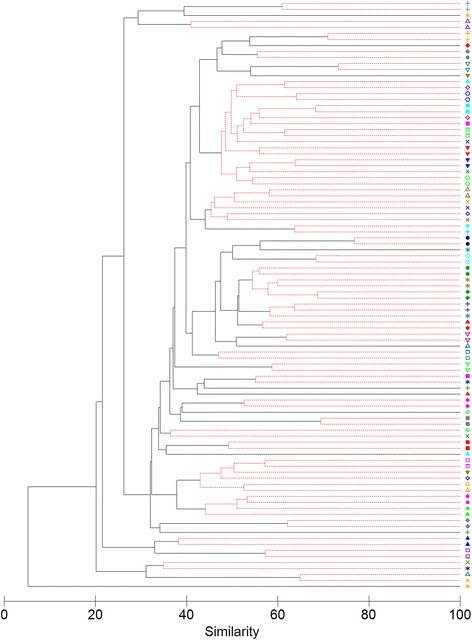
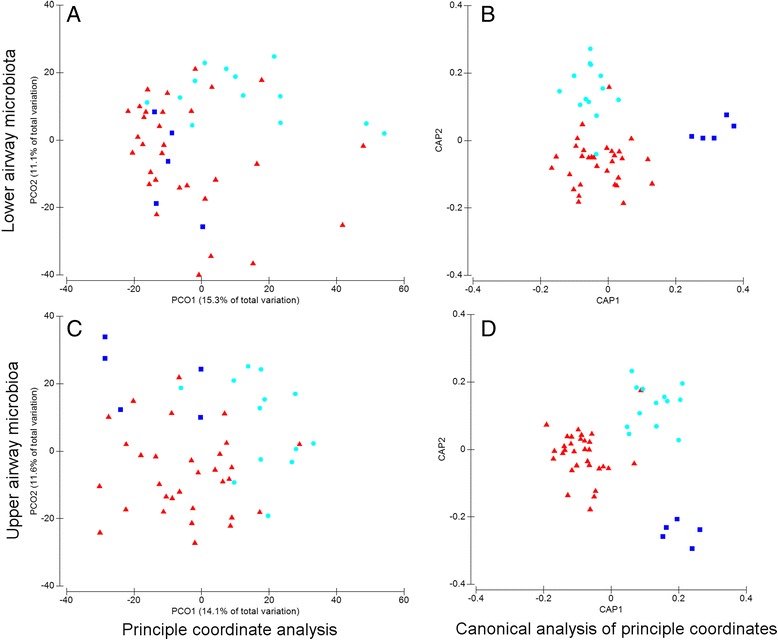
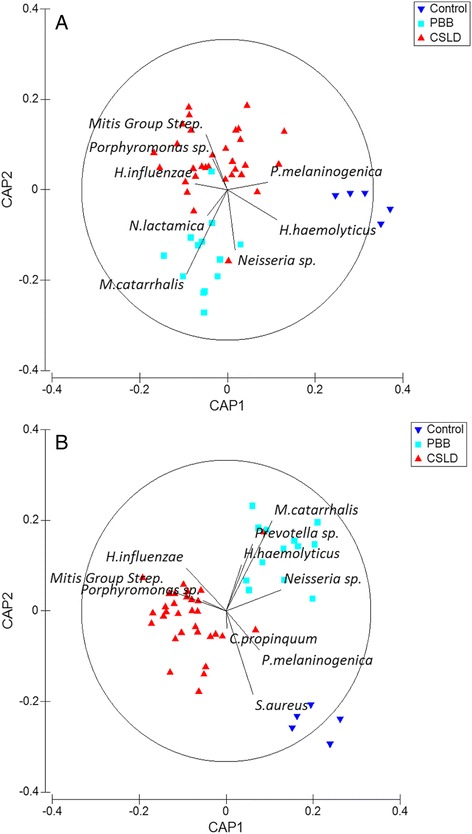
BACKGROUND: Invasive methods requiring general anaesthesia are needed to sample the lung microbiota in young children who do not expectorate. This poses substantial challenges to longitudinal study of paediatric airway microbiota. Non-invasive upper airway sampling is an alternative method for monitoring airway microbiota; however, there are limited data describing the relationship of such results with lung microbiota in young children. In this study, we compared the upper and lower airway microbiota in young children to determine whether non-invasive upper airway sampling procedures provide a reliable measure of either lung microbiota or clinically defined differences. RESULTS: The microbiota in oropharyngeal (OP) swabs, nasopharyngeal (NP) swabs and bronchoalveolar lavage (BAL) from 78 children (median age 2.2 years) with and without lung disease were characterised using 16S rRNA gene sequencing. Permutational multivariate analysis of variance (PERMANOVA) detected significant differences between the microbiota in BAL and those in both OP swabs (p = 0.0001, Pseudo-F = 12.2, df = 1) and NP swabs (p = 0.0001; Pseudo-F = 21.9, df = 1) with the NP and BAL microbiota more different than the OP and BAL, as indicated by a higher Pseudo-F value. The microbiota in combined OP and NP data (upper airways) provided a more comprehensive representation of BAL microbiota, but significant differences between the upper airway and BAL microbiota remained, albeit with a considerably smaller Pseudo-F (PERMANOVA p = 0.0001; Pseudo-F = 4.9, df = 1). Despite this overall difference, paired BAL and upper airway (OP and NP) microbiota were >50 % similar among 69 % of children. Furthermore, canonical analysis of principal coordinates (CAP analysis) detected significant differences between the microbiota from clinically defined groups when analysing either BAL (eigenvalues >0.8; misclassification rate 26.5 %) or the combined OP and NP data (eigenvalues >0.8; misclassification rate 12.2 %). CONCLUSIONS: Upper airway sampling provided an imperfect, but reliable, representation of the BAL microbiota for most children in this study. We recommend inclusion of both OP and NP specimens when non-invasive upper airway sampling is needed to assess airway microbiota in young children who do not expectorate. The results of the CAP analysis suggest lower and upper airway microbiota profiles may differentiate children with chronic suppurative lung disease from those with persistent bacterial bronchitis; however, further research is needed to confirm this observation.
Overview
The claims and statistics of this paper haven’t been checked yet.
Free: it reads the open-access text and checks the first 5 claims that cite a source we can check. Create a free account to check every claim.
Integrity signals
Registry
Cites
Statistics
Figures
Verification
Claims the paper makes
The claims and statistics of this paper haven’t been checked yet.
Free: it reads the open-access text and checks the first 5 claims that cite a source we can check. Create a free account to check every claim.
Claims other papers make about this one
Each is checked against this paper’s own text: does it say what the citing paper says it does?
The source backs part of the claim, not all of it — or backs it for a different population, condition or comparison.
In the citing paper
“Culture-independent microbiota studies have confirmed that the lung microbiota largely resembles the URT microbiota when studied in healthy individuals74,75,76.”
From The microbiota of the respiratory tract: gatekeeper to respiratory health (2017) · cites this paper as [76]
Experimental — accuracy not yet measuredThe source backs part of the claim, not all of it — or backs it for a different population, condition or comparison.
In the citing paper
“The oropharynx seems to be the main source of the lung microbiota in adults74, whereas in children the source is more likely to be both the nasopharynx and oropharynx76.”
From The microbiota of the respiratory tract: gatekeeper to respiratory health (2017) · cites this paper as [76]
Experimental — accuracy not yet measuredThe source backs part of the claim, not all of it — or backs it for a different population, condition or comparison.
In the citing paper
“A study in young children reported that although the lung microbiota was distinct from the microbiota of the URT, it was dominated by species that are also present in the URT, including Moraxella spp., Haemophilus spp., Staphylococcus spp. and Streptococcus spp., but lacked other typical URT species, such as Corynebacterium spp. and Dolosigranulum spp.76.”
From The microbiota of the respiratory tract: gatekeeper to respiratory health (2017) · cites this paper as [76]
Experimental — accuracy not yet measured
Self-check
Percentages, sums and reported differences re-computed from the paper’s own numbers.
The self-check needs the paper’s full text.
Citations
Cites
Schloss, P. D., Westcott, S. L., Ryabin, T., Hall, J. R., Hartmann, M., Hollister, E. B., Lesniewski, R. A., Oakley, B. B., Parks, D. H., Robinson, C. J., et al. (2009) · Applied and Environmental Microbiology · doi:10.1128/aem.01541-09 · Cited by 19,549 · cited 1×
“3) [51] according to the 454-SOP [52, 53] with the following modifications: the sff.”
Methodggplot2: Elegant Graphics for Data Analysis
Wickham, H. (2009) · doi:10.1007/978-0-387-98141-3 · Cited by 14,447
Reagent and laboratory contamination can critically impact sequence-based microbiome analyses
Salter, S. J., Cox, M. J., Turek, E. M., Calus, S. T., Cookson, W. O., Moffatt, M. F., Turner, P., Parkhill, J., Loman, N. J., & Walker, A. W. (2014) · BMC Biology · doi:10.1186/s12915-014-0087-z · Cited by 3,463 · cited 8×
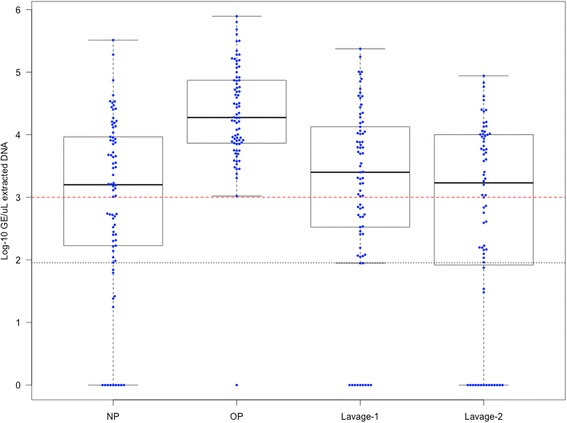
“Low bacterial load was defined as <10(3) GE/μL extracted DNA, as this level was recommended previously for 16S rRNA gene sequencing analyses [24, 25].”
BackgroundMethodResultInfluentialReducing the Effects of PCR Amplification and Sequencing Artifacts on 16S rRNA-Based Studies
Schloss, P. D., Gevers, D., & Westcott, S. L. (2011) · PLoS ONE · doi:10.1371/journal.pone.0027310 · Cited by 2,112 · cited 1×
“3) [51] according to the 454-SOP [52, 53] with the following modifications: the sff.”
MethodNadkarni, M. A., Martin, F. E., Jacques, N. A., & Hunter, N. (2002) · Microbiology · doi:10.1099/00221287-148-1-257 · Cited by 1,938
Teo, S. M., Mok, D., Pham, K., Kusel, M., Serralha, M., Troy, N., Holt, B. J., Hales, B. J., Walker, M. L., Hollams, E., et al. (2015) · Cell Host & Microbe · doi:10.1016/j.chom.2015.03.008 · Cited by 953 · cited 2×
“Several studies have reported associations between NP microbiota and lower airway diseases including pneumonia [17], bronchiolitis [33] and asthma [18].”
BackgroundBassis, C. M., Erb-Downward, J. R., Dickson, R. P., Freeman, C. M., Schmidt, T. M., Young, V. B., Beck, J. M., Curtis, J. L., & Huffnagle, G. B. (2015) · mBio · doi:10.1128/mbio.00037-15 · Cited by 839 · cited 9×
“In recent years, studies comparing upper and lower airway specimens have reported that the lower airway microbiota is more similar to that of the oropharynx than that in the nose or nasopharynx [1, 12, 13]; however, these studies have been limited to adults [1, 12]”
BackgroundResultInfluentialBiesbroek, G., Tsivtsivadze, E., Sanders, E. A. M., Montijn, R., Veenhoven, R. H., Keijser, B. J. F., & Bogaert, D. (2014) · American Journal of Respiratory and Critical Care Medicine · doi:10.1164/rccm.201407-1240oc · Cited by 572 · cited 5×
“It is unclear if these data can be extrapolated to other paediatric populations, especially as the nasopharynx is an important reservoir of lower respiratory pathogens in young children [14, 15].”
BackgroundResultInfluentialThe Lung Microbiome: New Principles for Respiratory Bacteriology in Health and Disease
Dickson, R. P., & Huffnagle, G. B. (2015) · PLOS Pathogens · doi:10.1371/journal.ppat.1004923 · Cited by 563 · cited 1×
“Seeding of the lower airways by NP microbiota during episodes of rhinorrhoea has been suggested [28], but there have been limited data to date to support this hypothesis.”
BackgroundThe role of the microbiome in exacerbations of chronic lung diseases
Dickson, R. P., Martinez, F. J., & Huffnagle, G. B. (2014) · The Lancet · doi:10.1016/s0140-6736(14)61136-3 · Cited by 495 · cited 1×
“efficiently clear or contain the microbes to prevent infection [2].”
Background
Research works printed but not linked: 3
- Anderson M Gorley R Clarke K PERMANOVA+ for PRIMER: guide to software and statistical methods 2008
- BLASTn. http://blast.ncbi.nlm.nih.gov/Blast.cgi. Accessed Sept 2015.
- Clarke K Gorley R PRIMER v6: user manual/tutorial 2006 Plymouth PRIMER-E
Cited by
Items 101–181 of 181
Realising respiratory microbiomic meta-analyses: time for a standardised framework
Broderick, D. T. J., Marsh, R. L., Waite, D. W., Pillarisetti, N., Chang, A. B., & Taylor, M. W. (2023) · Microbiome · doi:10.1186/s40168-023-01499-w · Cited by 16
Self-citationInnovative engineering approaches to model host-microbiome interactions in vitro
Azamar, K. M. M., Sudi, S. D., Mohammadalizadeh, Z., Coffin, C., Parker, I., & Porras, A. M. (2025) · Advanced Drug Delivery Reviews · doi:10.1016/j.addr.2025.115677 · Cited by 15
Protoblock - A biological standard for formalin fixed samples
Bueso, Y. F., Walker, S. P., Hogan, G. E., Claesson, M. J., & Tangney, M. (2020) · Microbiome · doi:10.1186/s40168-020-00901-1 · Cited by 15
Respiratory Tract Microecology and Bronchopulmonary Dysplasia in Preterm Infants
Sun, T., Yu, H., & Fu, J. (2021) · Frontiers in Pediatrics · doi:10.3389/fped.2021.762545 · Cited by 16
Do combined upper airway cultures identify lower airway infections in children with chronic cough?
Hare, K. M., Chang, A. B., Smith‐Vaughan, H., Bauert, P., Spain, B., Beissbarth, J., & Grimwood, K. (2019) · Pediatric Pulmonology · doi:10.1002/ppul.24336 · Cited by 15
“Recently, microbiome studies concluded that, although imperfect, combined nasopharyngeal and oropharyngeal data were more reflective of BAL microbiota in children with chronic lung disease than either alone.(11) However, 16S rRNA sequencing methods are robust only to the genus level for bacteria, including streptococc…”
BackgroundMethodResultSelf-citationCulture-Independent Analysis of Pediatric Bronchoalveolar Lavage Specimens
Zachariah, P., Ryan, C., Nadimpalli, S. S., Coscia, G., Kolb, M., Smith, H., Foca, M. D., Saiman, L. M., & Planet, P. J. (2018) · Annals of the American Thoracic Society · doi:10.1513/annalsats.201802-146oc · Cited by 14
Mapping bacterial diversity and metabolic functionality of the human respiratory tract microbiome
Mancabelli, L., Milani, C., Fontana, F., Lugli, G. A., Tarracchini, C., Turroni, F., van Sinderen, D., & Ventura, M. (2022) · Journal of Oral Microbiology · doi:10.1080/20002297.2022.2051336 · Cited by 14
“Microbiota-based studies targeting healthy individuals based on culture-independent methods has revealed that the LRT microbiota shares microbial colonizers with the URT microbiota [32,33] and that the oropharynx appeared to be the major bacterial source of the whole lung microbiota in adults”
BackgroundXia, Y., Wang, L., Zheng, X., Wen, Y., Zhang, Z., Fan, L., Zhou, Q., Yang, X., Xue, B., & Lin, Y. (2022) · Microbial Pathogenesis · doi:10.1016/j.micpath.2022.105685 · Cited by 14
“reported fewer respiratory infections in children with nasopharyngeal colonisation by Moraxella [18,19].”
BackgroundThe Respiratory Microbiome in Paediatric Chronic Wet Cough: What Is Known and Future Directions
Atto, B., Anteneh, Y., Bialasiewicz, S., Binks, M., Hashemi, M., Hill, J. E., Thornton, R. B., Westaway, J. A. F., & Marsh, R. L. (2023) · Journal of Clinical Medicine · doi:10.3390/jcm13010171 · Cited by 13
“BAL and protected brushes have been used to sample the lower airways of children with PBB and bronchiectasis [28,30]; however, these techniques require general anaesthesia, and, thus, do not support longitudinal analyses.”
BackgroundResultSelf-citationUpper respiratory tract mycobiome alterations in different kinds of pulmonary disease
Xu, X., Ding, F., Hu, X., Yang, F., Zhang, T., Dong, J., Xue, Y. W., Liu, T., Wang, J., & Jin, Q. (2023) · Frontiers in Microbiology · doi:10.3389/fmicb.2023.1117779 · Cited by 13
“First, our study used noninvasive upper airway OS samples to illustrate the airway fungal composition, which is an alternative method for monitoring airway microbiota (Marsh et al., 2016).”
BackgroundMethodFine particulate matter alters the microecology of the murine respiratory tract
Yang, B., Zhang, Y., Li, B., Zou, Y., & Xiao, C. (2019) · Environmental Science and Pollution Research · doi:10.1007/s11356-019-04372-2 · Cited by 12
Respiratory Tract Oncobiome in Lung Carcinogenesis: Where Are We Now?
Czarnecka, K. H., Kordiak, J., Brzeziańska‐Lasota, E., & Pastuszak‐Lewandoska, D. (2023) · Cancers · doi:10.3390/cancers15204935 · Cited by 12
“…reflux and microaspiration); (2) microbial removal by mucociliary clearance and coughing; (3) host immune defense mechanisms (both adaptive and innate); and (4) pH, oxygen tension, temperature, and the concentration of nutrients, which may favor the growth of various microbes [25,26,28].”
BackgroundZomuansangi, R., Lalbiaktluangi, C., Gupta, V. K., Medders, A. A., Vidal, J. E., Singh, B. P., Song, J., Singh, P. K., Singh, A., Vellingiri, B., et al. (2023) · Atmospheric Pollution Research · doi:10.1016/j.apr.2023.102012 · Cited by 13
The airway microbiota in children newly diagnosed with bronchiectasis largely retains its diversity
Pillarisetti, N., Broderick, D. T. J., Ainsworth, A., Mulholland, A., Mackenzie, B. W., Middleton, D., Byrnes, C. A., & Taylor, M. W. (2019) · European Respiratory Journal · doi:10.1183/13993003.00704-2019 · Cited by 12
The Airway Microbiome and Childhood Asthma – What Is the Link?
Dick, F. D., & Turner, S. (2020) · Acta Medica Academica · doi:10.5644/ama2006-124.294 · Cited by 12
Emerging cellular and molecular interactions between the lung microbiota and lung diseases
Li, X., & Meng, X. (2021) · Critical Reviews in Microbiology · doi:10.1080/1040841x.2021.1992345 · Cited by 11
“With advancing age, the microbial diversity, biomass, and complexity of the lung microbiota increase and tend to be in dynamic equilibrium (Hilty et al. 2010; Charlson et al. 2011; ErbDownward et al. 2011; Charlson et al. 2012; Morris et al. 2013; Segal et al. 2013; Dickson et al. 2015; Sze et al. 2015a; Marsh et al.…”
BackgroundInfluentialMicrobiome of Barrier Organs in Allergy: Who Runs the World? Germs!
Schwierzeck, V., Hülpüsch, C., & Reiger, M. (2021) · Handbook of experimental pharmacology · doi:10.1007/164_2021_478 · Cited by 11
Aerodigestive dysbiosis in children with chronic cough
Kazachkov, M. Y., Kapoor, B. C., Malecha, P. W., Wu, B. G., Li, Y., Levine, J. J., Erkman, J. L., Fitzgerald, K. C., Moy, L. C., & Segal, L. N. (2018) · Pediatric Pulmonology · doi:10.1002/ppul.24115 · Cited by 11
Song, Y., Hou, J., Kwok, J. S. L., Weng, H., Tang, M. F., Wang, M. H., Leung, A. S. Y., Tao, K. P., Wong, G., Chan, R. W. Y., et al. (2022) · Frontiers in Microbiology · doi:10.3389/fmicb.2021.792556 · Cited by 10
“This observation was consistent with a previous study that upper airway microbiota in young children was generally representative for lung disease-related microbial patterns in the lower airway (Marsh et al., 2016).”
ResultVital Members in the More Dysbiotic Oropharyngeal Microbiotas in H7N9-Infected Patients
Zha, H., Lu, H., Wu, J., Chang, K., Wang, Q., Zhang, H., Li, J., Luo, Q., Lu, Y., & Li, L. (2020) · Frontiers in Medicine · doi:10.3389/fmed.2020.00396 · Cited by 9
“Oropharyngeal microbiota was believed as an important source of lung microbiota in human adults and children (11, 44, 45).”
BackgroundThe Upper Respiratory Tract Microbiome Network Impacted by SARS-CoV-2
Li, W., & Ma, Z. S. (2022) · Microbial Ecology · doi:10.1007/s00248-022-02148-9 · Cited by 9
“URT microbiome, as gatekeeper of the respiratory sys-tem, is one of the most important sources of lower respiratory tract and lung microbiome [2, 32, 35, 45].”
Lindon, S., Shah, S., Gifford, D. R., Lood, C., Gomis-Font, M. A., Kaur, D., Oliver, A., MacLean, R. C., & Wheatley, R. M. (2024) · Evolution Letters · doi:10.1093/evlett/qrae030 · Cited by 8
“…microbiome include Streptococcus , Staphylococcus , Prevotella , Veillonella , and Rothia species (Dickson et al., 2016; Narendrakumar & Ray, 2022), and the lung microbiota largely resembles the upper respiratory tract microbiota, but at lower densities (Bassis et al., 2015; Marsh et al., 2016).”
A comprehensive insight of complex interplay of microbiota in pulmonary diseases
Yu, J., Li, P., Yu, Y., Ma, Y., Zuo, S., Chen, H., Guo, F., & Sun, Y. (2024) · Discover Medicine · doi:10.1007/s44337-024-00063-1 · Cited by 8
“Intriguingly, a combined sampling approach, encompassing both oropharyngeal and nasopharyngeal microbiota, better reflects the bronchoalveolar lavage microbiota for most individuals, surpassing the analysis of either upper respiratory tract location alone[80].”
AlKhater, S. A. (2020) · Journal of Asthma and Allergy · doi:10.2147/jaa.s272705 · Cited by 8
Asseri, A. A., Khattab, N., Ezmigna, D. R., Awadalla, N. J., Daines, C. L., & Morgan, W. J. (2021) · Children · doi:10.3390/children8121161 · Cited by 8
Hodge, S. J., Macowan, M. G., Liu, H., Hamon, R., Chen, A. C. –., Marchant, J. M., Pizzutto, S. J., Upham, J. W., & Chang, A. B. (2020) · Pediatric Pulmonology · doi:10.1002/ppul.24728 · Cited by 8
Self-citationNasopharyngeal Microbiome‐Epigenome‐Wide Association Analysis in Infants With Severe Bronchiolitis
Shibata, R., Li, Y., Meir, A. Y., Cregeen, S. J., Ross, M. C., Espinola, J. A., Sullivan, A. F., Liang, L., Hasegawa, K., Camargo, C. A., et al. (2025) · Allergy · doi:10.1111/all.70102 · Cited by 7
The nasal microbiota is a potential diagnostic biomarker for sepsis in critical care units
Tan, X., Liu, H., Qiu, W., Li, Z., Ge, S., Luo, Y., Zeng, N., Chen, M., Zhou, Q., Cai, S., et al. (2024) · Microbiology Spectrum · doi:10.1128/spectrum.03441-23 · Cited by 7
“Recent studies have indicated that the nasal microbial community can reflect the status of deep pulmonary infection due to the similarity in microbial community compositions between the upper and lower airways (19–21).”
BackgroundNon-cystic fibrosis bronchiectasis: The long road to multidrug resistant bacteria
Menéndez, R., Sahuquillo-Arce, J. M., Méndez, R., & Hernández-Cabezas, A. (2016) · Community Acquired Infection · doi:10.4103/2225-6482.198491 · Cited by 7
Zhao, M., Tian, J., Hou, W., Yin, L., & Li, W. (2024) · Frontiers in Microbiology · doi:10.3389/fmicb.2024.1416385 · Cited by 6
Validation of nasal tracheal aspiration in children with lung disease
Andersen, L., Olesen, H. V., Spannow, A. H., & Rubak, S. (2022) · BMC Pulmonary Medicine · doi:10.1186/s12890-022-01992-2 · Cited by 6
Makrinioti, H., Zhu, Z., Saglani, S., Camargo, C. A., & Hasegawa, K. (2024) · Archivos de Bronconeumología · doi:10.1016/j.arbres.2024.02.009 · Cited by 6
Huang, Y., Zong, S., Xu, D., He, J., Zhang, Y., Qian, M., Li, Y., Guo, B., Han, J., & Qu, D. (2025) · The Science of The Total Environment · doi:10.1016/j.scitotenv.2025.179519 · Cited by 5
Nasopharyngeal fungal subtypes of infant bronchiolitis and disease severity risk
Shibata, R., Zhu, Z., Kyo, M., Ooka, T., Freishtat, R. J., Mansbach, J. M., Pérez‐Losada, M., Camargo, C. A., & Hasegawa, K. (2023) · EBioMedicine · doi:10.1016/j.ebiom.2023.104742 · Cited by 5
Fujiogi, M., Camargo, C. A., Raita, Y., Toivonen, L., Freishtat, R. J., Mansbach, J. M., Piedra, P. A., & Hasegawa, K. (2020) · Pediatric Research · doi:10.1038/s41390-020-01154-2 · Cited by 5
Metagenomic sequencing and evaluation of the host response in the pediatric aerodigestive population
Gatcliffe, C., Rao, A., Brigger, M. T., Dimmock, D., Hansen, C., Montgomery, J., Schlaberg, R., Coufal, N. G., & Farnaes, L. (2020) · Pediatric Pulmonology · doi:10.1002/ppul.25198 · Cited by 5
Lung microbiome quantification and bacterial density as prognostic markers in lung transplantation
Santilli, J., Reguera-Nuñez, E., Armstrong, E., Wijesinha, Z., Levy, L., Schneeberger, P. H. H., Ramendra, R., Zhang, C. Y. K., Huszti, E., Martinu, T., et al. (2025) · The Journal of Heart and Lung Transplantation · doi:10.1016/j.healun.2025.12.017 · Cited by 4
Endotypes of Paediatric Cough—Do They Exist and Finding New Techniques to Improve Clinical Outcomes
O’Farrell, H. E., Kok, H. C., Goel, S., Chang, A. B., & Yerkovich, S. T. (2024) · Journal of Clinical Medicine · doi:10.3390/jcm13030756 · Cited by 4
“For example, in the field of chronic cough in children, cross-sectional data have described that airway microbiota could discriminate diagnostic groups (controls, children with protracted bacterial bronchitis [PBB] or bronchiectasis) [6].”
BackgroundSelf-citationJian, L., He, X., Yang, K.-L., Zhao, Y., Dai, E., Chen, W.-J., Raj, A. K., Li, D., Zhuang, M., Yin, X., et al. (2024) · Microbiology Spectrum · doi:10.1128/spectrum.00216-24 · Cited by 4
“High-throughput studies have confirmed that the lung microbiome in healthy individuals closely resembles the URT (5–7).”
[Progress of Research on the Relationship between Lung Microbiome and Lung Cancer].
Su, Z., Jia, X., Fan, Y., Zhao, F., & Qiao, Y. (2022) · PubMed Central · doi:10.3779/j.issn.1009-3419.2021.102.53 · Cited by 4
'Suppurative lung disease' in children
Everard, M. L. (2018) · Pediatric Respirology and Critical Care Medicine · doi:10.4103/prcm.prcm_6_18 · Cited by 4
The early-life microbiome: the key to respiratory health?
de Koff, E. M., Pattaroni, C., Marsland, B. J., & Bogaert, D. (2019) · European Respiratory Society eBooks · doi:10.1183/2312508x.10015818 · Cited by 3
Airway microbiota in patients with paediatric cystic fibrosis: Relationship with clinical status
Sánchez-Bautista, A., Rodríguez, J. C., García-Heredia, I., Luna‐Paredes, C., & Minagorre, P. J. A. (2018) · Enfermedades Infecciosas y Microbiología Clínica · doi:10.1016/j.eimc.2018.05.010 · Cited by 3
Complete Genome Sequence of Ornithobacterium hominis Type Strain MSHR-COH1 (ATCC TSD-185)
Salter, S. J., Marsh, R. L., & Parkhill, J. (2023) · Microbiology Resource Announcements · doi:10.1128/mra.00379-23 · Cited by 3
“The first cultured isolates were recovered from Australia (2), including type strain MSHR-COH1 from a nasopharyngeal swab sample collected in 2009 from an infant with chronic suppurative lung disease (3).”
BackgroundSelf-citationTahmasebi, Z., Asadollahi, P., Sadeghifard, N., Ghafourian, S., Kalani, B. S., Kalaei, E. G. P., & Pakzad, I. (2022) · GERMS · doi:10.18683/germs.2022.1337 · Cited by 3
Growing up with your airway microbiota: a risky business
Ahmed, B., Cox, M. J., & Cuthbertson, L. (2019) · Thorax · doi:10.1136/thoraxjnl-2019-213162 · Cited by 3
Microbiota diversity and differences in the respiratory tract of children with pneumonia
Ge, D., Hou, L., Guo, J., Lv, X., & Yang, Y. (2025) · Pediatric Investigation · doi:10.1002/ped4.12466 · Cited by 2
“22 Firmicutes and Proteobacteria were the most dominant phyla in children with nonmycoplasma pneumonia.”
Thomsen, C. M. K., Kromann-Thomsen, S., Thim, S. B., & Rubak, S. (2026) · European Respiratory Review · doi:10.1183/16000617.0071-2025 · Cited by 2
“Two studies have characterised the lower airway microbiota in children with NCFB using BAL fluid, in cohorts of 32 – 40 children [48, 60].”
The role of the respiratory microbiome in acute and chronic respiratory diseases
Heinzinger, L. R., Segal, L. N., & Dickson, R. P. (2026) · Nature Reviews Microbiology · doi:10.1038/s41579-026-01377-w · Cited by 3
Identifying the Risk of Acute Exacerbation in Idiopathic Pulmonary Fibrosis: A Step Forward
Vancheri, C., & Luppi, F. (2022) · American Journal of Respiratory and Critical Care Medicine · doi:10.1164/rccm.202110-2244ed · Cited by 2
“microbiota (5), was performed during the course of an AE-IPF.”
BackgroundRole of microbiome in drug metabolism
Juan, M. E. S., Galia, L. M., Ofima, L. J., Alcano, J. C., & Espanola, E. (2024) · Elsevier eBooks · doi:10.1016/b978-0-443-15435-5.00016-5 · Cited by 1
Wei, Y., Wang, Y., Sun, S., Zhao, Z., Lu, W., Ma, Y., Chen, J., Xu, L., & Li, K. (2025) · Frontiers in Cellular and Infection Microbiology · doi:10.3389/fcimb.2025.1562791 · Cited by 1
Li, Y., Zhang, J., Liu, H., Noman, M., Rizwan, M. A., Isiaka, I. D., Chen, H. G., Li, W., Zhao, N., Li, Y., et al. (2026) · Virologica Sinica · doi:10.1016/j.virs.2026.05.002 · Cited by 1
“…from the pharyngeal compartment, which is ethically and practically preferable in young infants and has been shown to reflect key aspects of airway immune and microbial states (Poole et al., 2014; Marsh et al., 2016), but may not fully capture immune-microbial interactions in the lower air-ways.”
Bronchoalveolar Lavage: Microbial Evaluation
Downes, K. J., Bouso, J. M., & Planet, P. J. (2020) · Respiratory medicine · doi:10.1007/978-3-030-54924-4_9 · Cited by 1
Protracted Bacterial Bronchitis in Children
Karakoç, F., Can, D., & Chang, A. B. (2023) · Springer eBooks · doi:10.1007/978-3-031-22483-6_110-1 · Cited by 1
Self-citationHare, K. M., Grimwood, K., & Chang, A. B. (2018) · European Journal of Pediatrics · doi:10.1007/s00431-018-3176-0 · Cited by 1
Self-citationRespiratory Microbiome in Children
Kim, D. H. (2019) · Pediatric Infection & Vaccine · doi:10.14776/piv.2019.26.e24
Lee, S. Y. (2020) · DR-NTU (Nanyang Technological University) · doi:10.32657/10356/136835
The development of the respiratory microbiota in infants and children
Powell, E. A. (2019) · doi:10.25560/82376
Фесенко, М. Є., Kozakevich, V. K., Калюжка, О. О., Фастовець, М. М., & Zhuk, L. A. (2022) · Актуальні проблеми сучасної медицини Вісник Української медичної стоматологічної академії · doi:10.31718/2077-1096.22.1.55
“З огляду на вищесказане: зростання частоти, тяжкості перебігу та прогнозу захворювання і труднощі діагностики різних клінічних форм бронхітів у дітей раннього віку обумовили проведення даного дослідження [5, 6, 8, 9, 10].”
Airway microbiota in patients with paediatric cystic fibrosis: Relationship with clinical status
Sánchez-Bautista, A., Rodríguez, J. C., García-Heredia, I., Luna‐Paredes, C., & Minagorre, P. J. A. (2019) · Enfermedades infecciosas y microbiologia clinica (English ed ) · doi:10.1016/j.eimce.2018.05.011
Dumas, O., Toivonen, L., Li, Z., Hasegawa, K., & Camargo, C. A. (2022) · Elsevier eBooks · doi:10.1016/b978-0-323-85419-1.00006-2
Microbial Communities in the Lungs of Bats in China
Zhao, N., Ren, H., Jiang, Y., Li, Y., Lian, X., & Qin, T. (2022) · Zoonoses · doi:10.15212/zoonoses-2022-0033
Javed, U., PODURY, S., Kwon, S., Liu, M., Kim, D. H., Fallahzadeh, A., Li, Y., Khan, A., François, F., Schwartz, T. M., et al. (2024) · BMC Gastroenterology · doi:10.1186/s12876-024-03294-9
“Noninvasively collected oropharyngeal and naso-pharyngeal swabs in conjunction could approximate the lung microbiome [114].”
BackgroundNovel bacterial species in the human nasal microbiome
Ismail, N. A., Azab, M., Enany, S., & Hanora, A. (2024) · Records of Pharmaceutical and Biomedical Sciences/Records of Pharmaceutical & Biomedical Sciences · doi:10.21608/rpbs.2024.312355.1318
Dynamic microbiotal changes in the human lung
Zhang, C., Georgian, E. M., & Pinkerton, K. E. (2024) · Elsevier eBooks · doi:10.1016/b978-0-323-91824-4.00018-6
Bibi, N., & Yasmin, A. (2024) · Springer eBooks · doi:10.1007/978-981-97-6948-3_3
覃, 欣. (2025) · Advances in Clinical Medicine · doi:10.12677/acm.2025.153733
Pattaroni, C., Macowan, M. G., Chatzis, R., Daunt, C., Čustović, A., Shields, M. D., Power, U. F., Grigg, J., Roberts, G., Ghazal, P., et al. (2022) · Figshare · doi:10.6084/m9.figshare.19211675
Caratterizzazione del microbioma delle prime vie aeree di vitelli piemontesi: risultati preliminari.
Nicola, I., Grego, E., Bertone, I., Cagnasso, A., D’Angelo, A., Bellino, C., Francesco, C., & Peletto, S. (2016) · Institutional Research Information System University of Turin (University of Turin)
Ornithobacterium hominis isolates from a South African birth cohort
De Allende, C. (2025) · Open University of Cape Town (University of Cape Town)
Çırak, S., Grieshaber, V., Müller, P., & Chao, C. (2026) · Molecular and Cellular Pediatrics · doi:10.1186/s40348-026-00261-0
“…select for Proteobac-teria-dominated states; repeated episodes in the setting of impaired clearance may bias community trajectories toward persistent pathobiont dominance including Moraxella, Haemophilus, Staphylococcus, Streptococcus, Neisseria, Prevotella and Corynebacterium species [11, 12].”
InfluentialCARBONE, M. (n.d.) · Institutional Research Information System University of Turin (University of Turin)
BOLALARDA CHOZILUVCHAN SURUNKALI BRONXIT
Karimdjanov, I. A., Rakhmanova, L. K., & Karimdjanov, I. A. (2023) · Eurasian Journal of Medical and Natural Sciences · doi:10.70413/ejmns-v03-i06-s9633
Camargo, C. A. (2022) · ImmPort · doi:10.21430/m3yr3w2eba
Ma, R., Cheng, L., Song, Y., Sun, Y., Gui, W., Deng, Y., Xie, C., & Liu, M. (2022) · doi:10.3389/fmed.2022.940784.s002
Xu, X., Ding, F., Hu, X., Yang, F., Zhang, T., Dong, J., Xue, Y., Liu, T., Wang, J., & Jin, Q. (2023) · doi:10.3389/fmicb.2023.1117779.s004
Song, Y., Hou, J., Kwok, J. S. L., Weng, H., Tang, M. F., Wang, M. H., Leung, A. S. Y., Tao, K. P., Wong, G. W. K., Chan, R. W. Y., et al. (2022) · doi:10.3389/fmicb.2021.792556.s001
Metadata
- Authors
- Marsh, R. L., Kaestli, M., Chang, A. B., Binks, M. J., Pope, C. E., Hoffman, L. R., & Smith-Vaughan, H. C.
- Affiliations
- Charles Darwin University (AU)
- Queensland University of Technology (AU)
- University of Washington (US)
- Corresponding author
- Marsh, R. L.
- Venue
- Microbiome
- Published
- 2016-07-07
- Volume
- 4
- Issue
- 1
- Pages
- 37-37
- ISSN
- 2049-2618 (ISSN-L)
- PMC
- PMC4936249
- OpenAlex
- W2462090727
- Cited by
- 171
- References
- 56
- Citations by year
- 2026: 4 · 2025: 8 · 2024: 14 · 2023: 12 · 2022: 22 · 2021: 16 · 2020: 29 · 2019: 23 · 2018: 22 · 2017: 18 · 2016: 2
- FWCI
- 17.42
- Type
- journal article
- Language
- en
- Open access
- gold
- doi.org
- Licence
- cc-by
- Locations
- Microbiome (publishedVersion, cc-by)
- PubMed Central (publishedVersion, cc-by)
- PubMed (publishedVersion)
- QUT ePrints (Queensland University of Technology) (submittedVersion, cc-by)
- Griffith Research Online (submittedVersion, cc-by)
- Funders
- National Health and Medical Research Council (AU) (1040830)
- Channel 7 Children's Research Foundation (AU) (12500)
- Topics
- Health Sciences › Medicine › Pulmonary and Respiratory Medicine › Asthma and respiratory diseases
- Life Sciences › Biochemistry, Genetics and Molecular Biology › Molecular Biology › Gut microbiota and health
- Health Sciences › Dentistry › Periodontics › Oral microbiology and periodontitis research
- Keywords
- lung microbiome, bronchoalveolar lavage, oropharyngeal microbiota, nasopharyngeal microbiota, non-invasive sampling, chronic lung disease, preterm infants, young children, 16S rRNA gene sequencing, nasopharyngeal swab
- MeSH terms
- Bacteria, Bacterial Infections, Bronchoalveolar Lavage Fluid, Child, Preschool, DNA, Bacterial, DNA, Ribosomal, Female, Humans, Infant, Longitudinal Studies, Lung Diseases, Male, Nasopharynx, Oropharynx, Phylogeny, RNA, Ribosomal, 16S, Sequence Analysis, DNA, Microbiota
About these checks
Registry, retraction, Cites and statistics results are computed, not judged, with one exception: a printed reference that no index lists is read once by a model before it counts as a citation error. Claims are extracted by a model and kept only when their quote appears verbatim in the text; each cited source is then checked, with a model’s help, for whether it says what the claim relies on. Those verdicts can be wrong — read the claim’s quote and the cited source before relying on one.
Statistics and arithmetic are recomputed, not judged.
Confidence bands are shown only for fields calibrated on our annotated test set. None is calibrated yet, so no band is shown.
What counts as a claim ›How we measure confidence ›How we check this ›
Are you an author, or do you see a problem with this page? Request a review
Data sources
Bibliographic data: Semantic Scholar, OpenAlex, Crossref.
Contains information from the Semantic Scholar Academic Graph Datasets, made available under the ODC Attribution License (ODC-BY 1.0).
Semantic Scholar’s data is described in: Kinney, R., et al. (2023). The Semantic Scholar Open Data Platform. arXiv:2301.10140.
