

The lung tissue microbiota of mild and moderate chronic obstructive pulmonary disease
Open accessThe DOI matches its Crossref record; 39 of the 40 references it cites were found in a registry or an index.
Abstract
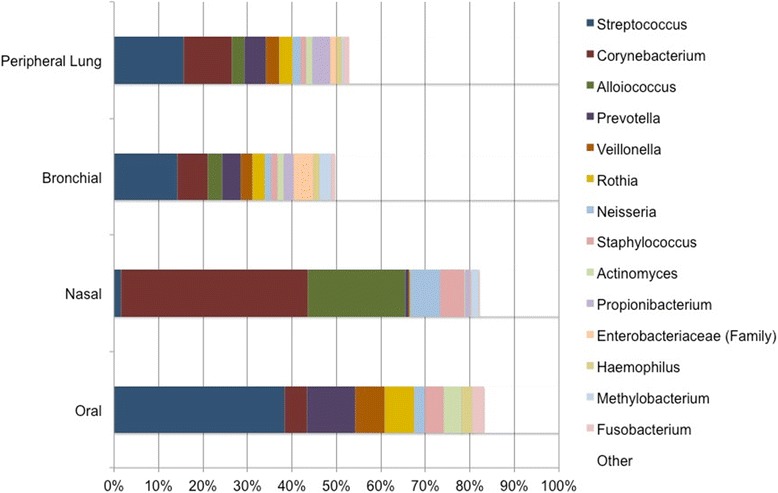
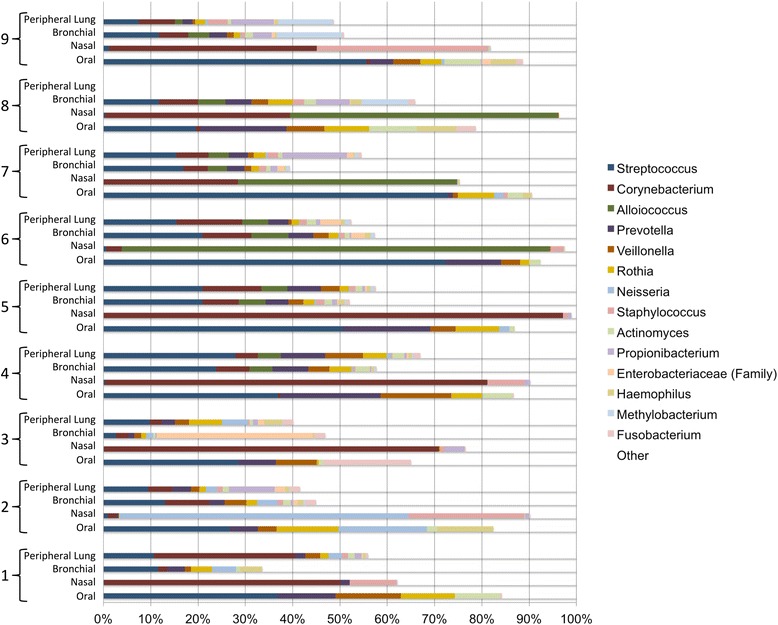
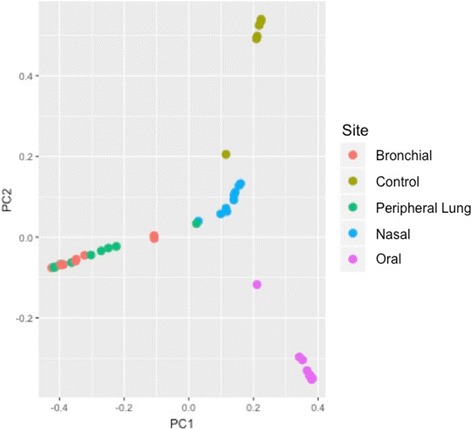
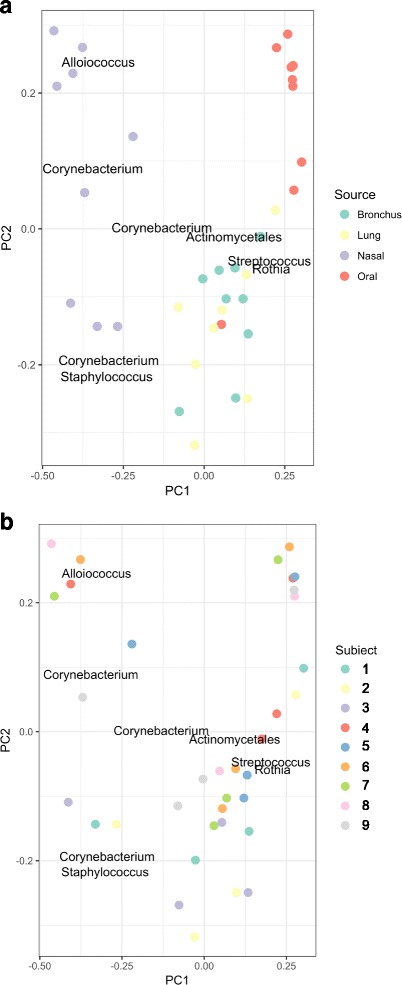
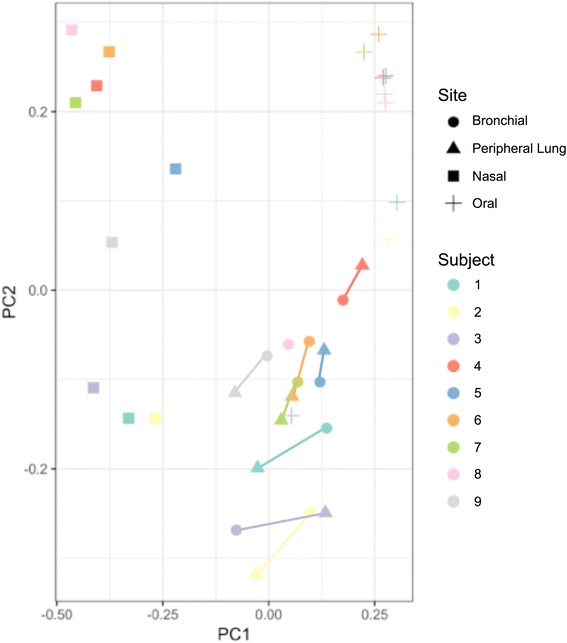
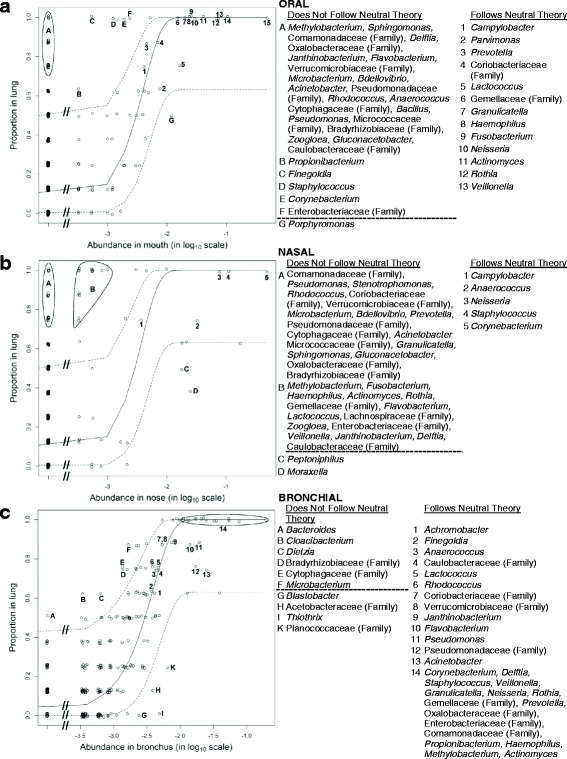
BACKGROUND: Oral taxa are often found in the chronic obstructive pulmonary disease (COPD) lung microbiota, but it is not clear if this is due to a physiologic process such as aspiration or experimental contamination at the time of specimen collection. METHODS: Microbiota samples were obtained from nine subjects with mild or moderate COPD by swabbing lung tissue and upper airway sites during lung lobectomy. Lung specimens were not contaminated with upper airway taxa since they were obtained surgically. The microbiota were analyzed with 16S rRNA gene qPCR and 16S rRNA gene hypervariable region 3 (V3) sequencing. Data analyses were performed using QIIME, SourceTracker, and R. RESULTS: Streptococcus was the most common genus in the oral, bronchial, and lung tissue samples, and multiple other taxa were present in both the upper and lower airways. Each subject's own bronchial and lung tissue microbiota were more similar to each other than were the bronchial and lung tissue microbiota of two different subjects (permutation test, p = 0.0139), indicating more within-subject similarity than between-subject similarity at these two lung sites. Principal coordinate analysis of all subject samples revealed clustering by anatomic sampling site (PERMANOVA, p = 0.001), but not by subject. SourceTracker analysis found that the sources of the lung tissue microbiota were 21.1% (mean) oral microbiota, 8.7% nasal microbiota, and 70.1% unknown. An analysis using the neutral theory of community ecology revealed that the lung tissue microbiota closely reflects the bronchial, oral, and nasal microbiota (immigration parameter estimates 0.69, 0.62, and 0.74, respectively), with some evidence of ecologic drift occurring in the lung tissue. CONCLUSION: This is the first study to evaluate the mild-moderate COPD lung tissue microbiota without potential for upper airway contamination of the lung samples. In our small study of subjects with COPD, we found oral and nasal bacteria in the lung tissue microbiota, confirming that aspiration is a source of the COPD lung microbiota.
Overview
The claims and statistics of this paper haven’t been checked yet.
Free: it reads the open-access text and checks the first 5 claims that cite a source we can check. Create a free account to check every claim.
Integrity signals
Registry
Cites
Statistics
Figures
Verification
Claims the paper makes
The claims and statistics of this paper haven’t been checked yet.
Free: it reads the open-access text and checks the first 5 claims that cite a source we can check. Create a free account to check every claim.
Claims other papers make about this one
Each is checked against this paper’s own text: does it say what the citing paper says it does?
In the citing paper
“Analyzing lung microbiota remains a technical challenge, since it is difficult to avoid aspiration or experimental contamination when identifying the “true” inhabitants of the lung (549).”
From Aspergillus fumigatus and Aspergillosis in 2019 (2019) · cites this paper as [549]
In the citing paper
“Mounting evidence suggests that oral streptococci can be detected from the lungs of COPD patients (Pragman et al., 2018) with increased levels of P. gingivalis detected in the subgingival plaque (Tan et al., 2019).”
From Oral Microbiome and SARS-CoV-2: Beware of Lung Co-infection (2020) · cites this paper as Pragman et al., 2018
Self-check
Percentages, sums and reported differences re-computed from the paper’s own numbers.
The self-check needs the paper’s full text.
Citations
Cites
Trimmomatic: a flexible trimmer for Illumina sequence data
Bolger, A. M., Lohse, M., & Usadel, B. (2014) · Bioinformatics · doi:10.1093/bioinformatics/btu170 · Cited by 65,548 · cited 1×
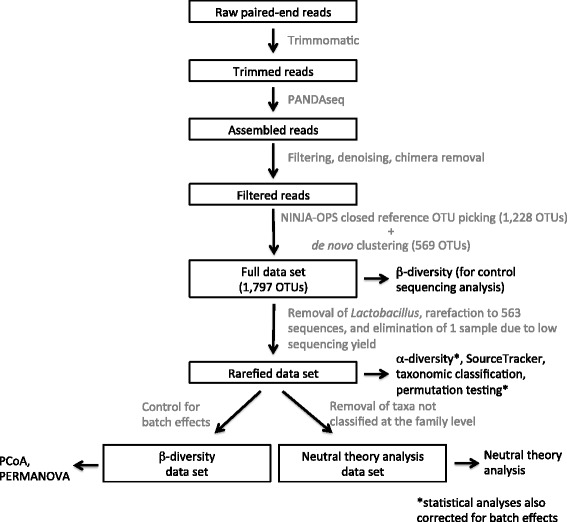
“Paired-end reads were trimmed using trimmomatic [25], assembled together using PANDAseq [26], and the resulting sequences were subjected to filtering, denoising, and chimera removal within QIIME [27].”
MethodQIIME allows analysis of high-throughput community sequencing data
Caporaso, J. G., Kuczynski, J., Stombaugh, J., Bittinger, K., Bushman, F. D., Costello, E. K., Fierer, N., Peña, A. G., Goodrich, J. K., Gordon, J. I., et al. (2010) · Nature Methods · doi:10.1038/nmeth.f.303 · Cited by 34,887 · cited 6×
“PCoA of the β-diversity data set using Bray-Curtis distance was performed using QIIME and R following batch-effect correction.”
MethodInfluentialDewhirst, F. E., Chen, T., Izard, J., Paster, B. J., Tanner, A. C. R., Yu, W.-H., Lakshmanan, A., & Wade, W. G. (2010) · Journal of Bacteriology · doi:10.1128/jb.00542-10 · Cited by 3,352
PANDAseq: paired-end assembler for Illumina sequences
Masella, A. P., Bartram, A. K., Truszkowski, J. M., Brown, D. G., & Neufeld, J. D. (2012) · BMC Bioinformatics · doi:10.1186/1471-2105-13-31 · Cited by 2,132 · cited 2×
“Masella AP, Bartram AK, Truszkowski JM, Brown DG, Neufeld JD. PANDAseq: paired-end assembler for illumina sequences.”
MethodNormalization and microbial differential abundance strategies depend upon data characteristics
Weiss, S., Xu, Z. Z., Peddada, S., Amir, A., Bittinger, K., Gonzalez, A., Lozupone, C., Zaneveld, J. R., Vázquez-Baeza, Y., Birmingham, A., et al. (2017) · Microbiome · doi:10.1186/s40168-017-0237-y · Cited by 2,051 · cited 1×
“Subsampling down to 563 sequences per sample [32] necessitated the removal of one peripheral lung sample (subject 8) from analysis due to low yield.”
BackgroundBayesian community-wide culture-independent microbial source tracking
Knights, D., Kuczynski, J., Charlson, E. S., Zaneveld, J., Mozer, M. C., Collman, R. G., Bushman, F. D., Knight, R., & Kelley, S. T. (2011) · Nature Methods · doi:10.1038/nmeth.1650 · Cited by 1,856 · cited 12×
“These two analyses are modeling similar but distinct phenomena: SourceTracker models the composition of the microbiota at one time point, while the neutral theory models replacement of “dead” microbiota over time.”
MethodInfluentialDisordered Microbial Communities in Asthmatic Airways
Hilty, M., Burke, C., Pedro, H., Cardenas, P., Bush, A., Bossley, C., Davies, J., Ervine, A., Poulter, L., Pachter, L., et al. (2010) · PLoS ONE · doi:10.1371/journal.pone.0008578 · Cited by 1,824 · cited 3×
“Of the six most common bacteria identified by Hilty et al., we also identified three taxa (Streptococcus, Veillonella, Neisseria) [4].”
BackgroundResultTopographical Continuity of Bacterial Populations in the Healthy Human Respiratory Tract
Charlson, E. S., Bittinger, K., Haas, A. R., Fitzgerald, A. S., Frank, I., Yadav, A., Bushman, F. D., & Collman, R. G. (2011) · American Journal of Respiratory and Critical Care Medicine · doi:10.1164/rccm.201104-0655oc · Cited by 1,144 · cited 1×
“analyzed BAL fluid from healthy volunteers using a 2-scope technique and compared the lung microbiota to the nasal and oral microbiota [2].”
MethodAnalysis of the lung microbiome in the “healthy” smoker and in COPD.
Erb-Downward, J. R., Thompson, D. L., Han, M. K., Freeman, C. M., McCloskey, L., Schmidt, L. A., Young, V. B., Toews, G. B., Curtis, J. L., Sundaram, B., et al. (2011) · PLoS ONE · doi:10.1371/journal.pone.0016384 · Cited by 973 · cited 4×
“Two prior studies have analyzed the lung tissue microbiota of end-stage COPD at the time of lung transplantation [3, 21].”
BackgroundResultInfluentialBassis, C. M., Erb-Downward, J. R., Dickson, R. P., Freeman, C. M., Schmidt, T. M., Young, V. B., Beck, J. M., Curtis, J. L., & Huffnagle, G. B. (2015) · mBio · doi:10.1128/mbio.00037-15 · Cited by 839 · cited 1×
“, in their study of healthy lung using BAL samples, concluded that the healthy lung is able to selectively eliminate Prevotella aspirated from the oropharynx [14].”
Background
Cited by
Items 101–165 of 165
Odendaal, M.-L., Taenzer, J., de Rooij, M. M. T., Kuiling, S., Bogaert, D., Franz, E., & Smit, L. A. M. (2025) · Scientific Reports · doi:10.1038/s41598-025-00242-9 · Cited by 4
“Specifically, the upper respiratory tract (URT) microbiome acts as a gatekeeper, preventing harmful pathogens from entering the lower airways and maintaining respiratory health 19,22–24 .”
Lyu, L., Zhou, X., Zhang, M., Liu, L., Niu, H., Zhang, J., Chen, S., Gong, P., Jiang, S., Pan, J., et al. (2021) · Frontiers in Microbiology · doi:10.3389/fmicb.2021.626144 · Cited by 4
Wang, Y., Zhou, Y., Huang, Y., Li, X., Zhang, J., Gao, Y., Qin, F., Fu, H., Wang, S., Niu, A., et al. (2024) · Microbiology Spectrum · doi:10.1128/spectrum.03472-23 · Cited by 3
“Numerous studies have confirmed that the microbial composition varies in different disease states such as bronchial asthma (3), chronic obstructive pulmonary disease (COPD) (4), and lung cancer (5).”
BackgroundAirflow limitation and tongue microbiota in community-dwelling elderly individuals
Takeshita, T., Matsumoto, K., Furuta, M., Fukuyama, S., Takeuchi, K., Ogata, H., Asakawa, M., Kageyama, S., Hata, J., Ninomiya, T., et al. (2021) · ERJ Open Research · doi:10.1183/23120541.00616-2020 · Cited by 3
Hazra, D., Fayaz, S. M., Chawla, K., Sintchenko, V., Martínez, E., Magazine, R., & Siddalingaiah, N. (2023) · F1000Research · doi:10.12688/f1000research.132220.3 · Cited by 3
Tiew, P. Y., & Chotirmall, S. H. (2024) · European Respiratory Society eBooks · doi:10.1183/2312508x.10006823 · Cited by 3
Exploring the Potency of Lower Respiratory Tract Microbiomeas Biomarkers for Lung Cancer
Rasheed, S. K., & Al-Khafaji, A. S. (2024) · Iraqi Journal of Science · doi:10.24996/ijs.2024.65.11.12 · Cited by 2
Microbiota diversity and differences in the respiratory tract of children with pneumonia
Ge, D., Hou, L., Guo, J., Lv, X., & Yang, Y. (2025) · Pediatric Investigation · doi:10.1002/ped4.12466 · Cited by 2
“14–16 The bacterial composition of the URT and LRTs belongs to the same species in healthy individuals, 17,18 with the abundance of microbiota being higher in the URT.”
The role of the respiratory microbiome in acute and chronic respiratory diseases
Heinzinger, L. R., Segal, L. N., & Dickson, R. P. (2026) · Nature Reviews Microbiology · doi:10.1038/s41579-026-01377-w · Cited by 3
The Cellular Microbiome of Visceral Organs: An Inherent Inhabitant of Parenchymal Cells
Sun, X., Zhang, H., Zhang, X., gao, W., Zhou, C., Kou, X. X., Deng, J.-X., & Zhang, J. G. (2024) · Microorganisms · doi:10.3390/microorganisms12071333 · Cited by 2
Koyama, T., Shimizu, K., Mishima, S., Matsuoka, S., Takeda, T., Miura, K., Agatsuma, H., Eguchi, T., Hamanaka, K., & Yoshida, K. (2024) · Journal of Thoracic Disease · doi:10.21037/jtd-24-933 · Cited by 2
“However, oral microbiota genera, such as Desulfobulbus , Abiotrophia , and Selenomanas (11), were not detected in large proportions in our study, suggesting the efficiency of our method in analyzing pure lung microbiota.”
Exploration du microbiote respiratoire humain
Fonkou, M. D. M. (2018) · theses.fr (ABES) · doi:10.70675/3fe24a46z4373z44faza62fz68c810682d4b · Cited by 2
Pragman, A. A., Hodgson, S. W., Wu, T., Zank, A., Kelly, R. F., Reilly, C. S., & Wendt, C. H. (2024) · Respiratory Research · doi:10.1186/s12931-024-02750-0 · Cited by 1
“Both the adapted island model of biogeography and the neutral theory of community ecology have been used to model the relationship between the lung microbiome and its predominant source, the oral microbiome [1–4].”
MethodSelf-citationThe Lung Microbiome and Its Impact on Obstructive Sleep Apnea: A Diagnostic Frontier
Karkala, A., Kotoulas, S., Tzinas, A., Massa, E., Mouloudi, E. K., Gkakou, F., & Pataka, A. (2025) · Diagnostics · doi:10.3390/diagnostics15111431 · Cited by 1
An, Y., Xu, M., Kang, Y., Fang, J., & Zhang, X. (2025) · Frontiers in Microbiology · doi:10.3389/fmicb.2025.1588029 · Cited by 1
The Gut Microbiota: A Critical Mediator in Particulate Matter-Induced Health Risks
Ma, H., Wang, C., Guo, C., Li, X., Qiao, J., Zhang, S., & Liu, S. (2026) · Environment & Health · doi:10.1021/envhealth.5c00867 · Cited by 2
Liu, C., He, L., & Zheng, X. (2024) · Shock · doi:10.1097/shk.0000000000002358 · Cited by 1
“32,33 COPD is characterized by chronic systemic inflammation, recurrent airway epithelial injury, impaired mucociliary clearance, 34 altered lung microbiota, 35 and immune dysfunction, 36 all of which contribute to the development of sepsis and sepsis-related mortality.”
Fang, A., Li, B., & Chen, S. (2025) · Combinatorial Chemistry & High Throughput Screening · doi:10.2174/0113862073349683241226100233 · Cited by 1
Infectious and Immunological Links Between Periodontitis and COVID-19: A Review.
Alkharaan, H. (2025) · PubMed Central · doi:10.12659/msm.948069 · Cited by 1
“…within periodontal tissues, characterized by the release of potent immunoinflammatory mediators, such as interleukin (IL)-1 a , IL-1 b , IL-6, IL-8, and tumor necrosis factor (TNF)- a , is implicated in the pathogenesis of chronic pulmonary diseases, including COPD and asthma [16,19,21,22].”
Oral microbiota dysbiosis and the oral-X axis in chronic diseases
Li, E., Huang, J., Yao, J., Lei, M., & Wu, M. (2026) · Genes & Diseases · doi:10.1016/j.gendis.2026.102274 · Cited by 3
Microbiome Therapeutics in Respiratory Illnesses
Shariff, M., & Aditi (2020) · Elsevier eBooks · doi:10.1016/b978-0-12-819265-8.00002-4 · Cited by 1
Wei, Z., Wuzhang, J.-P., Huang, Y.-T., Li, H., & Chen, J. (2026) · Journal of Asthma · doi:10.1080/02770903.2026.2647919 · Cited by 1
The lung microbiome in obstructive airways disease: potential pathogenetic roles
Chung, K. F., Huffnagle, G. B., & Huang, Y. J. (2019) · European Respiratory Society eBooks · doi:10.1183/2312508x.10016118 · Cited by 1
Research Article: Are COPD and Periodontal Diseases Associated with Each Other?
Afşin, E. (2022) · Oral Health and Dentistry Case Reports · doi:10.31579/2835-9259/005 · Cited by 1
Kelly, N., Winning, L., Irwin, C., Lundy, F. T., Linden, D. A., McGarvey, L. P., Linden, G. J., & Karim, I. A. E. (2021) · doi:10.21203/rs.3.rs-138210/v1 · Cited by 1
Guo, R., Wang, Y., Wu, S., Guo, R., Zhang, J., Chen, X., & Ti, X. (2025) · Research Square · doi:10.21203/rs.3.rs-5768682/v1 · Cited by 1
Sampling of the Lung Microbiome in Patients Undergoing Lung ResectionPreprint
Pohlman, A. W., Marten, A. D., Noronha, M. F., Khemmani, M., Wolfe, A. J., & Abdelsattar, Z. M. (2026) · medRxiv · doi:10.64898/2026.08.22.26360295 · Cited by 1
The Relationship Between Oral Health and Chronic Obstructive Pulmonary Disease Exacerbations
Baldomero, A. K. (2019) · University of Minnesota Digital Conservancy (University of Minnesota)
THE MICROBIOTA OF LOWER AIRWAYS IN PATIENTS WITH CHRONIC OBSTRUCTIVE LUNG DISEASES
Александровна, М. С., Danilina, G. А., Smirnova, M. Y., Osipova, G. L., Gervazieva, V. B., Konischeva, A. Y., & Оspelnikova, Т. P. (2018) · Journal of microbiology epidemiology immunobiology · doi:10.36233/0372-9311-2018-5-53-60
Biomarkers in Obstructive Airway Diseases
Kelly, R. S., Stringer, K. A., & Wendt, C. H. (2020) · Respiratory medicine · doi:10.1007/978-3-030-31507-8_10
Self-citationChai, J. (2020) · Journal of the Arkansas Academy of Science
Mechanical ventilation affects the microecology of the rat respiratory tractPreprint
Xue-Meng, C., Liu, G.-W., Xiao-Mei, L., Fan-Fang, Z., & Xiao, J.-F. (2021) · bioRxiv (Cold Spring Harbor Laboratory) · doi:10.1101/2021.12.07.471701
Hazra, D., Fayaz, S. M., Chawla, K., Sintchenko, V., Martínez, E., Magazine, R., & Siddalingaiah, N. (2023) · F1000Research · doi:10.12688/f1000research.132220.1
Effet de la prophylaxie orale individuelle sur l'inflammation interdentaire
Saliasi, I. (2020) · theses.fr (ABES) · doi:10.70675/e1f6b965z319dz4eeaz93dfzf68c6bf84e43
Marushko, Y. V., Yesipova, S. I., & Bovkun, O. А. (2024) · Modern pediatrics Ukraine · doi:10.15574/sp.2024.137.58
Assessment of lower respiratory tract microbiota associated with pulmonary tuberculosis in children
Yang, X., Jiao, W., Zeng, X., Yu, J., Xiao, J., Jiang, T., Tang, H., Bi, J., Chen, Y., Li, X., et al. (2024) · Pediatric Pulmonology · doi:10.1002/ppul.27253
“7 The states of these diseases can dramatically influence the ecological determinants of the lung microbiome — immigration, elimination, and regional growth conditions — leading to substantial shifts in microbial communities.”
The respiratory microbiota in patients with undifferentiated pathological changes in the lungs
Majseenko, V. I., Буйневич, И. В., Воропаев, Е. В., Осипкина, О. В., Ковалев, А. А., Шафорост, А. С., & Ziatskov, A. A. (2024) · Health and Ecology Issues · doi:10.51523/2708-6011.2024-21-3-17
(2024) · Elsevier eBooks · doi:10.1016/b978-0-443-13922-2.16001-x
Antil, M., Kapoor, M., Gupta, K., Sapra, D., & Gupta, V. (2025) · International Research Journal of Multidisciplinary Scope · doi:10.47857/irjms.2025.v06i02.02594
“(31).”
Fedotov, V. D., Zhestkov, A. V., Lyamin, A. V., Lavrenyuk, N. A., Сергеевна, Д. И., & FALALEEVA, E. A. (2025) · Clinical Microbiology and Antimicrobial Chemotherapy · doi:10.36488/cmac.2025.1.111-120
Zhang, T., Zhang, L., He, Y., Hou, J., & Tao, H. (2025) · Journal of Thoracic Disease · doi:10.21037/jtd-2025-278
“Microorganisms such as Corynebacterium , Alloiococcus , Prevotella , Veillonella , Rothia , Neisseria , and Staphylococcus are also commonly detected in patients with COPD (43).”
Yang, C.-Y., Li, S.-W., Chin, C.-Y., Hsu, C.-W., Lee, C.-C., Yeh, Y.-M., & Wu, K.-A. (2021) · Figshare · doi:10.6084/m9.figshare.14274780
Konovalovas, A., Armalytė, J., Klimkaitė, L., Liveikis, T., Jonaitytė, B., Danila, E., Bironaitė, D., Mieliauskaitė, D., Bagdonas, E., & Aldonytė, R. (2024) · Figshare · doi:10.6084/m9.figshare.25708957
Konovalovas, A., Armalytė, J., Klimkaitė, L., Liveikis, T., Jonaitytė, B., Danila, E., Bironaitė, D., Mieliauskaitė, D., Bagdonas, E., & Aldonytė, R. (2024) · Figshare · doi:10.6084/m9.figshare.26713541
Drengenes, C., Eagan, T., Haaland, I., Wiker, H. G., & Nielsen, R. (2021) · Figshare · doi:10.6084/m9.figshare.13520725
Drengenes, C., Eagan, T., Haaland, I., Wiker, H. G., & Nielsen, R. (2021) · Figshare · doi:10.6084/m9.figshare.13520710
Drengenes, C., Eagan, T., Haaland, I., Wiker, H. G., & Nielsen, R. (2021) · Figshare · doi:10.6084/m9.figshare.13520728
Pragman, A. A., Hodgson, S. W., Wu, T., Zank, A., Kelly, R. F., Reilly, C. S., & Wendt, C. H. (2024) · Figshare · doi:10.6084/m9.figshare.25434187
Self-citationDrengenes, C., Eagan, T., Haaland, I., Wiker, H. G., & Nielsen, R. (2021) · Figshare · doi:10.6084/m9.figshare.13520734
Drengenes, C., Eagan, T., Haaland, I., Wiker, H. G., & Nielsen, R. (2021) · Figshare · doi:10.6084/m9.figshare.13520731
Expanding the limits of Scale and sensitivity in microbial genomics
Lagoudas, G. (2018) · DSpace@MIT (Massachusetts Institute of Technology)
Investigation of diabetes-induced changes in the lung microbiome
Vasiljevs, S. (2022) · City Research Online (City University London)
Regard, L. (2019) · theses.fr (ABES) · doi:10.70675/0fc2d43fz2ce6z48b6za17bz193a5ee24f49
Bronchial and Systemic Relationships of Haemophilus in Chronic Obstructive Pulmonary Disease
Monsó, E., Casadevall, C., Quero, S., Pascual-Guàrdia, S., Enríquez-Rodríguez, C. J., Millares, L., Montón, C., Faner, R., Capilla, S., Seijo, L. M., et al. (2026) · International Journal of Molecular Sciences · doi:10.3390/ijms27083416
Association between Asthma and Periodontitis: A Literature Review
Kadhim, H. S., & Mohammed, A. N. (2026) · Archives of Dentistry · doi:10.33696/dentistry.7.032
Comparative analysis of the sputum microbiota in different COPD clinical states
Galal, L., Eltokhy, M. A., Abostate, H. M., Omran, M. E., & Radwan, S. M. R. (2026) · Scientific Reports · doi:10.1038/s41598-026-53780-1
“This finding was consistent with those of other studies 23,29 45,46 .”
Hajjar, C., Saint‐Criq, V., Thomas, M., Butel, M., Bazarbachi, A. A., & Abifadel, M. (2026) · Respiratory Medicine · doi:10.1016/j.rmed.2026.109004
Jabbar, S. (2025) · Archives of Medical Reports · doi:10.26524/amr.2026.2.3
Zhong, Y., Wang, M., & Zhu, Q. (2026) · Chronic Obstructive Pulmonary Diseases Journal of the COPD Foundation · doi:10.15326/jcopdf.2026.0799
The Composition of Dental Plaque in Patients With Pulmonary Hypertension
Song, J., Xing, Y., Liu, C., Yi, X., Hu, L., Hong, R., Luo, X., Jiang, C., Zhou, S., Hu, X., et al. (2026) · Comprehensive physiology · doi:10.1002/cph4.70238
The Role of Respiratory Microbiome in Chronic Obstructive Pulmonary Disease
Teixeira, P. M. D. S. (2020) · Portuguese National Funding Agency for Science, Research and Technology (RCAAP Project by FCT)
Song, X., Liu, B., Zhao, G., Pu, X., Liu, B., Ding, M., & Xue, Y. (2022) · doi:10.3389/fmicb.2022.1046226.s002
Qian, K., Deng, Y., Krimsky, W. S., Feng, Y.-G., Peng, J., Tai, Y.-H., Peng, H., & Jiang, L.-H. (2022) · doi:10.3389/fonc.2022.811279.s003
Metadata
- Authors
- Pragman, A. A., Lyu, T., Baller, J. A., Gould, T. J., Kelly, R. F., Reilly, C. S., Isaacson, R. E., & Wendt, C. H.
- Affiliations
- University of Minnesota (US)
- Corresponding author
- Pragman, Alexa A.
- ORCID
- Venue
- Microbiome
- Published
- 2018-01-09
- Volume
- 6
- Issue
- 1
- Pages
- 7-7
- ISSN
- 2049-2618 (ISSN-L)
- PMC
- PMC5759273
- OpenAlex
- W2784301535
- Cited by
- 150
- References
- 40
- Citations by year
- 2026: 10 · 2025: 16 · 2024: 21 · 2023: 11 · 2022: 17 · 2021: 30 · 2020: 18 · 2019: 16 · 2018: 10
- FWCI
- 13.94
- Type
- journal article
- Language
- en
- Open access
- gold
- doi.org
- Licence
- cc-by
- creativecommons.org/licenses/by/4.0/ (tdm)
- creativecommons.org/licenses/by/4.0/ (vor)
- Locations
- Microbiome (publishedVersion, cc-by)
- PubMed Central (publishedVersion, cc-by)
- PubMed (publishedVersion)
- DOAJ (DOAJ: Directory of Open Access Journals) (submittedVersion, cc-by-sa)
- Funders
- National Center for Advancing Translational Sciences (8UL1TR000114)
- National Institute of Allergy and Infectious Diseases (5T32AI055433)
- U.S. Department of Veterans Affairs (1IK2CX001095)
- American Lung Association (348261)
- Minnesota Veterans Medical Research and Education Foundation (NA)
- Topics
- Health Sciences › Medicine › Pulmonary and Respiratory Medicine › Chronic Obstructive Pulmonary Disease (COPD) Research
- Health Sciences › Dentistry › Periodontics › Oral microbiology and periodontitis research
- Life Sciences › Biochemistry, Genetics and Molecular Biology › Molecular Biology › Gut microbiota and health
- Keywords
- chronic obstructive pulmonary disease, oral microbiota, nasal microbiota, aspiration, Streptococcus, microbial source tracking, neutral community model, pulmonary lobectomy
- MeSH terms
- Aged, Aged, 80 and over, Animals, Bacteria, DNA, Bacterial, DNA, Ribosomal, Female, Humans, Lung, Male, Middle Aged, Moths, Nose, RNA, Ribosomal, 16S, Sequence Analysis, DNA, Pulmonary Disease, Chronic Obstructive, Microbiota
About these checks
Registry, retraction, Cites and statistics results are computed, not judged, with one exception: a printed reference that no index lists is read once by a model before it counts as a citation error. Claims are extracted by a model and kept only when their quote appears verbatim in the text; each cited source is then checked, with a model’s help, for whether it says what the claim relies on. Those verdicts can be wrong — read the claim’s quote and the cited source before relying on one.
Statistics and arithmetic are recomputed, not judged.
Confidence bands are shown only for fields calibrated on our annotated test set. None is calibrated yet, so no band is shown.
What counts as a claim ›How we measure confidence ›How we check this ›
Are you an author, or do you see a problem with this page? Request a review
Data sources
Bibliographic data: Semantic Scholar, OpenAlex, Crossref.
Contains information from the Semantic Scholar Academic Graph Datasets, made available under the ODC Attribution License (ODC-BY 1.0).
Semantic Scholar’s data is described in: Kinney, R., et al. (2023). The Semantic Scholar Open Data Platform. arXiv:2301.10140.
