

The DOI matches its Crossref record; 78 of the 78 references it cites were found in a registry or an index.
RapidAIM: a culture- and metaproteomics-based Rapid Assay of Individual Microbiome responses to drugs
Open accessPublished version of a preprint
Abstract
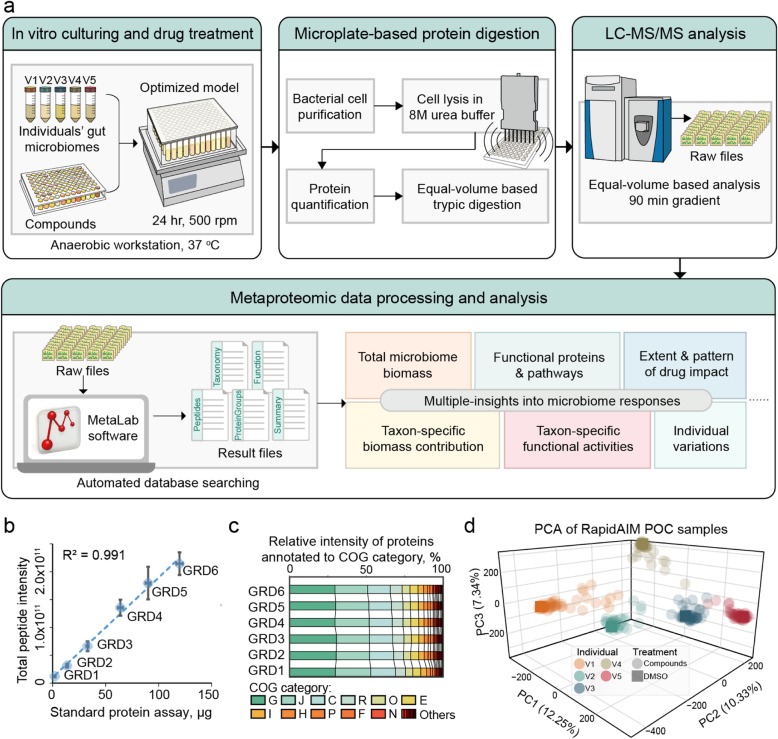
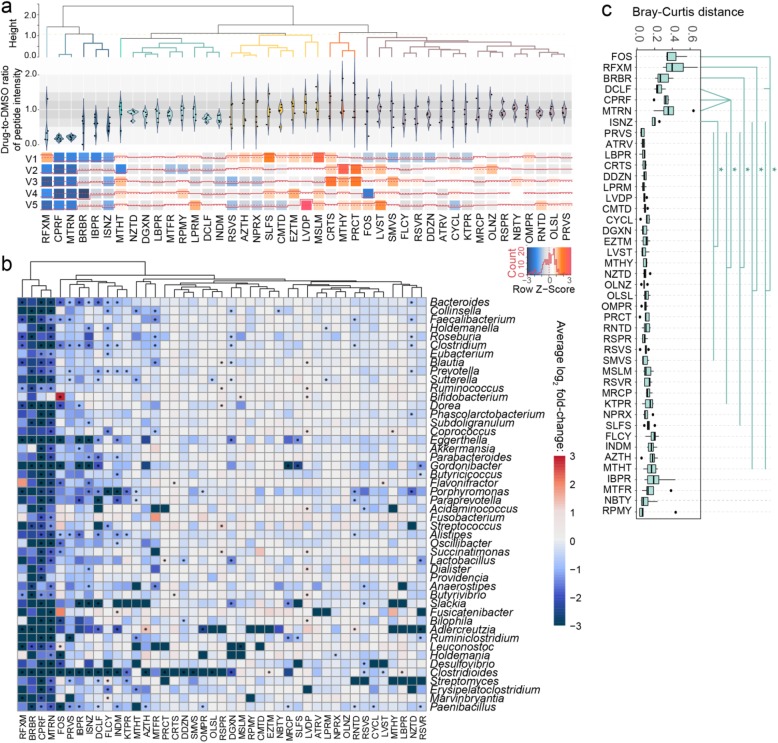
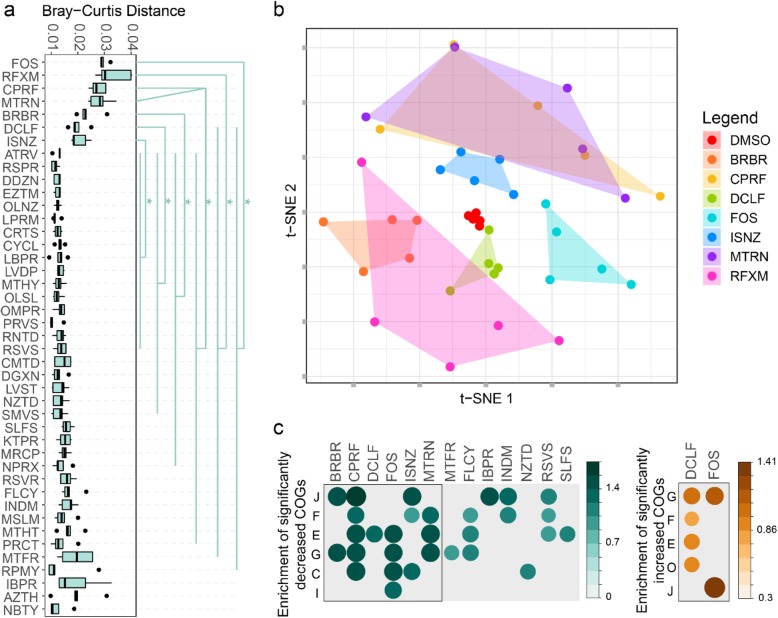
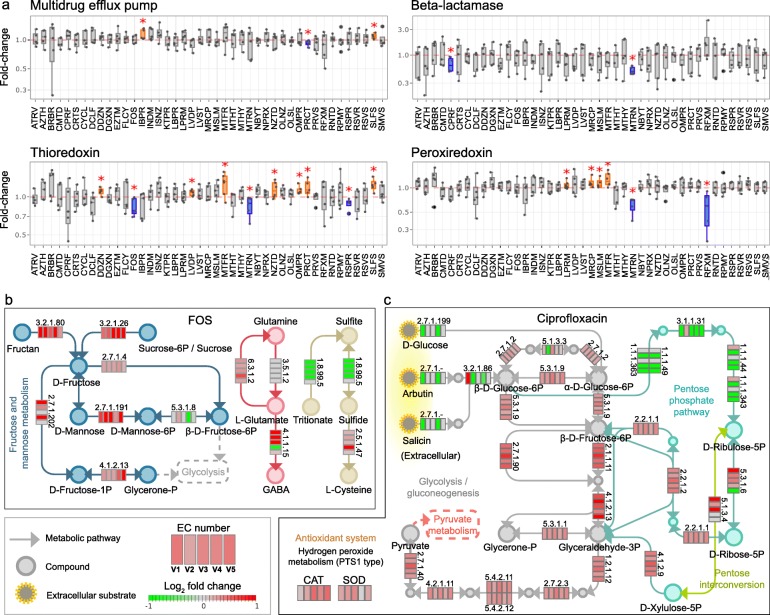
Background: Human-targeted drugs may exert off-target effects or can be repurposed to modulate the gut microbiota. However, our understanding of such effects is limited due to a lack of rapid and scalable assay to comprehensively assess microbiome responses to drugs. Drugs and other compounds can drastically change the overall abundance, taxonomic composition, and functions of a gut microbiome. Results: Here, we developed an approach to screen compounds against individual microbiomes in vitro, using metaproteomics to both measure absolute bacterial abundances and to functionally profile the microbiome. Our approach was evaluated by testing 43 compounds (including 4 antibiotics) against 5 individual microbiomes. The method generated technically highly reproducible readouts, including changes of overall microbiome abundance, microbiome composition, and functional pathways. Results show that besides the antibiotics, the compounds berberine and ibuprofen inhibited the accumulation of biomass during in vitro growth of the microbiota. By comparing genus and species level-biomass contributions, selective antibacterial-like activities were found with 35 of the 39 non-antibiotic compounds. Seven of the compounds led to a global alteration of the metaproteome, with apparent compound-specific patterns of functional responses. The taxonomic distributions of altered proteins varied among drugs, i.e., different drugs affect functions of different members of the microbiome. We also showed that bacterial function can shift in response to drugs without a change in the abundance of the bacteria. Conclusions: Current drug-microbiome interaction studies largely focus on relative microbiome composition and microbial drug metabolism. In contrast, our workflow enables multiple insights into microbiome absolute abundance and functional responses to drugs. The workflow is robust, reproducible, and quantitative and is scalable for personalized high-throughput drug screening applications.
Overview
The claims and statistics of this paper haven’t been checked yet.
Run the check — free, no account needed. It reads the open-access text and checks the sources it cites.
Integrity signals
Registry
Cites
Statistics
Figures
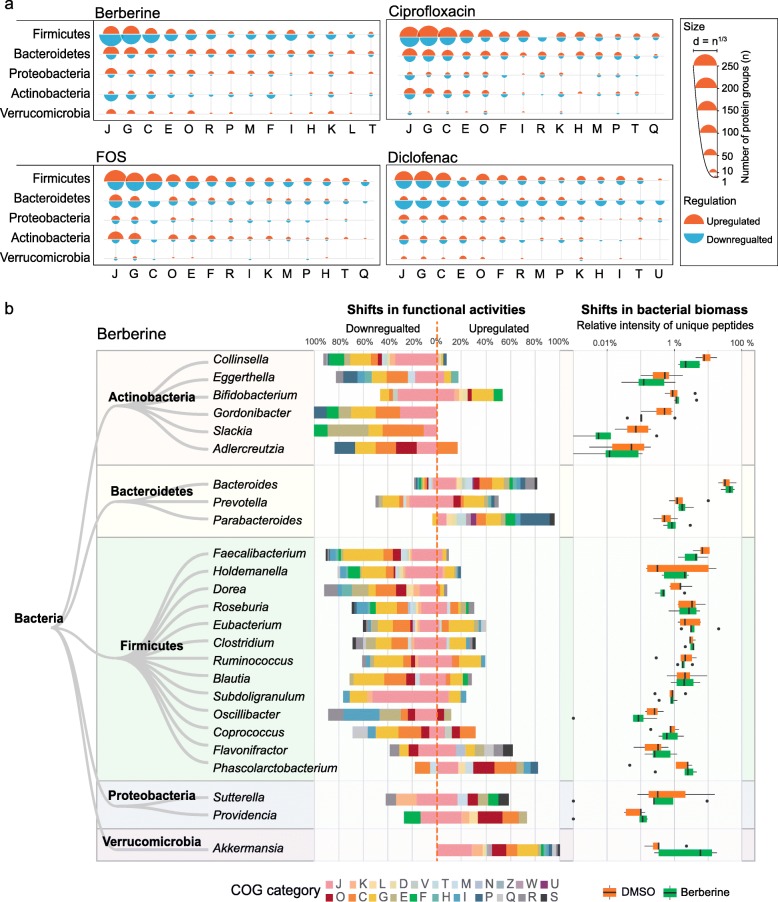
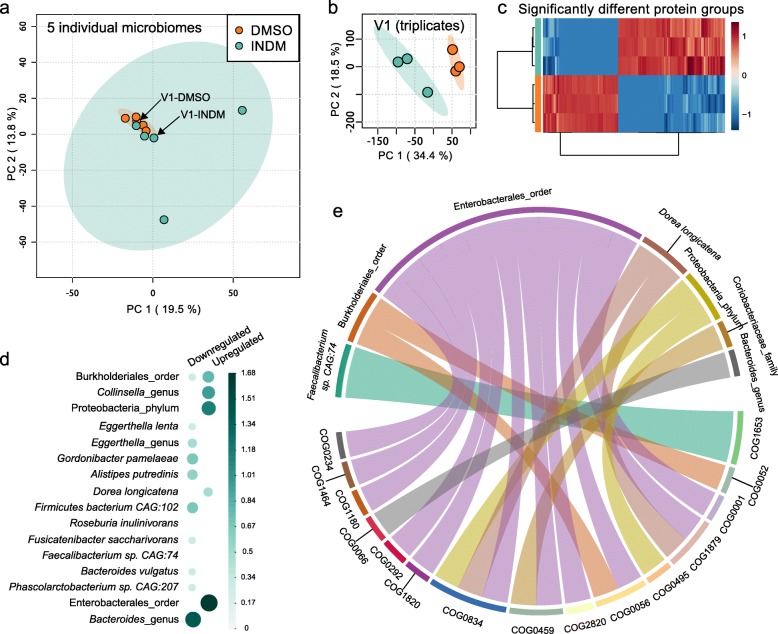
Verification
Claims the paper makes
The claims and statistics of this paper haven’t been checked yet.
Run the check — free, no account needed. It reads the open-access text and checks the sources it cites.
Self-check
Percentages, sums and reported differences re-computed from the paper’s own numbers.
The self-check needs the paper’s full text.
Citations
Cites
Controlling the False Discovery Rate: A Practical and Powerful Approach to Multiple Testing
Benjamini, Y., & Hochberg, Y. (1995) · Journal of the Royal Statistical Society Series B: Statistical Methodology · doi:10.1111/j.2517-6161.1995.tb02031.x · Cited by 109,482
(2008) · Journal of Machine Learning Research · Cited by 33,051
Structure, function and diversity of the healthy human microbiome
The Human Microbiome Project Consortium (2012) · Nature · doi:10.1038/nature11234 · Cited by 11,726
Mind-altering microorganisms: the impact of the gut microbiota on brain and behaviour
Cryan, J. F., & Dinan, T. G. (2012) · Nature Reviews Neuroscience · doi:10.1038/nrn3346 · Cited by 4,572
Kanehisa, M. I., Sato, Y., & Morishima, K. (2015) · Journal of Molecular Biology · doi:10.1016/j.jmb.2015.11.006 · Cited by 4,106
MetaboAnalyst 4.0: towards more transparent and integrative metabolomics analysis
Chong, J., Soufan, O., Li, C., Caraus, I., Li, S., Bourque, G., Wishart, D. S., & Xia, J. (2018) · Nucleic Acids Research · doi:10.1093/nar/gky310 · Cited by 3,637
The Human Intestinal Microbiome in Health and Disease
Lynch, S. V., & Pedersen, O. (2016) · New England Journal of Medicine · doi:10.1056/nejmra1600266 · Cited by 3,637
On the Dependency of Cellular Protein Levels on mRNA Abundance
Liu, Y., Beyer, A., & Aebersold, R. (2016) · Cell · doi:10.1016/j.cell.2016.03.014 · Cited by 3,221
The re-emergence of natural products for drug discovery in the genomics era
Harvey, A. L., Edrada‐Ebel, R., & Quinn, R. J. (2015) · Nature Reviews Drug Discovery · doi:10.1038/nrd4510 · Cited by 2,654
Thompson, A., Schäfer, J., Kuhn, K., Kienle, S., Schwarz, J., Schmidt, G., Neumann, T., & Hamon, C. (2003) · Analytical Chemistry · doi:10.1021/ac0262560 · Cited by 2,425
Extensive impact of non-antibiotic drugs on human gut bacteria
Maier, L., Pruteanu, M., Kuhn, M., Zeller, G., Telzerow, A., Anderson, E. E., Brochado, A. R., Fernandez, K. C., Dose, H., Mori, H., et al. (2018) · Nature · doi:10.1038/nature25979 · Cited by 1,905
Permutational Multivariate Analysis of Variance ( PERMANOVA )
Anderson, M. J. (2017) · Wiley StatsRef: Statistics Reference Online · doi:10.1002/9781118445112.stat07841 · Cited by 1,867
Shin, N.-R., Lee, J.-C., Lee, H.-Y., Kim, M.-S., Whon, T. W., Lee, M.-S., & Bae, J.-W. (2014) · Gut · doi:10.1136/gutjnl-2012-303839 · Cited by 1,550
Faecalibacterium prausnitzii and human intestinal health
Miquel, S., Martín, R., Rossi, O., Bermúdez‐Humarán, L. G., Chatel, J., Sokol, H., Thomas, M., Wells, J. M., & Langella, P. (2013) · Current Opinion in Microbiology · doi:10.1016/j.mib.2013.06.003 · Cited by 1,282
Harper's Illustrated Biochemistry
Murray, R. K. (1988) · Repository of the University of Ljubljana (University of Ljubljana) · Cited by 1,223
Analysis of the microbiome: Advantages of whole genome shotgun versus 16S amplicon sequencing
Ranjan, R., Rani, A., Metwally, A., McGee, H. S., & Perkins, D. L. (2016) · Biochemical and Biophysical Research Communications · doi:10.1016/j.bbrc.2015.12.083 · Cited by 981
Burokas, A., Arboleya, S., Moloney, R. D., Peterson, V. L., Murphy, K., Clarke, G., Stanton, C., Dinan, T. G., & Cryan, J. F. (2017) · Biological Psychiatry · doi:10.1016/j.biopsych.2016.12.031 · Cited by 952
A complex human gut microbiome cultured in an anaerobic intestine-on-a-chip
Jalili-Firoozinezhad, S., Gazzaniga, F. S., Calamari, E. L., Camacho, D. M., Fadel, C. W., Bein, A., Swenor, B., Nestor, B., Cronce, M. J., Tovaglieri, A., et al. (2019) · Nature Biomedical Engineering · doi:10.1038/s41551-019-0397-0 · Cited by 855
A microfluidics-based in vitro model of the gastrointestinal human–microbe interface
Shah, P., Fritz, J. V., Glaab, E., Desai, M. S., Greenhalgh, K., Frachet, A., Niegowska, M., Estes, M., Jäger, C., Seguin-Devaux, C., et al. (2016) · Nature Communications · doi:10.1038/ncomms11535 · Cited by 660
den Abbeele, P. V., Belzer, C., Goossens, M., Kleerebezem, M., de Vos, W. M., Thas, O., Weirdt, R. D., Kerckhof, F., & de Wiele, T. V. (2012) · The ISME Journal · doi:10.1038/ismej.2012.158 · Cited by 656
Zhang, X., Zhao, Y., Zhang, M., Pang, X., Xu, J., Kang, C., Li, M., Zhang, C., Zhang, Z., Zhang, Y., et al. (2012) · PLoS ONE · doi:10.1371/journal.pone.0042529 · Cited by 615
Self-citationMilo, R. (2013) · BioEssays · doi:10.1002/bies.201300066 · Cited by 614 · cited 1×
“Notably, different microbial members can differ by several orders of magnitude in biomass [18].”
BackgroundChen, C., Grennan, K. S., Badner, J. A., Zhang, D., Gershon, E. S., Li, J., & Liu, C. (2011) · PLoS ONE · doi:10.1371/journal.pone.0017238 · Cited by 560
Use of Metatranscriptomics in Microbiome Research
Bashiardes, S., Zilberman-Schapira, G., & Elinav, E. (2016) · Bioinformatics and Biology Insights · doi:10.4137/bbi.s34610 · Cited by 496
Gut microbiota: a potential new territory for drug targeting
Jia, W. P., Li, H., Zhao, L., & Nicholson, J. K. (2008) · Nature Reviews Drug Discovery · doi:10.1038/nrd2505 · Cited by 478
Pathview Web: user friendly pathway visualization and data integration
Luo, W., Pant, G., Bhavnasi, Y. K., Blanchard, S. G., & Brouwer, C. (2017) · Nucleic Acids Research · doi:10.1093/nar/gkx372 · Cited by 446
Separating host and microbiome contributions to drug pharmacokinetics and toxicity
Zimmermann, M., Zimmermann‐Kogadeeva, M., Wegmann, R., & Goodman, A. L. (2019) · Science · doi:10.1126/science.aat9931 · Cited by 431
Absolute quantification of microbial taxon abundances
Props, R., Kerckhof, F., Rubbens, P., Vrieze, J. D., Hernandez‐Sanabria, E., Waegeman, W., Monsieurs, P., Hammes, F., & Boon, N. (2016) · The ISME Journal · doi:10.1038/ismej.2016.117 · Cited by 384
Quantitative PCR provides a simple and accessible method for quantitative microbiota profiling
Jian, C., Luukkonen, P., Yki-Järvinen, H., Salonen, A., & Korpela, K. (2020) · PLOS ONE · doi:10.1371/journal.pone.0227285 · Cited by 384
iPath2.0: interactive pathway explorer
Yamada, T., Letunić, I., Okuda, S., Kanehisa, M. I., & Peer Bork, B. (2011) · Nucleic Acids Research · doi:10.1093/nar/gkr313 · Cited by 292
Assessing species biomass contributions in microbial communities via metaproteomics
Kleiner, M., Thorson, E., Sharp, C. E., Dong, X., Liu, D., Li, C., & Strous, M. (2017) · Nature Communications · doi:10.1038/s41467-017-01544-x · Cited by 291
Zhang, X., Deeke, S. A., Ning, Z., Starr, A. E., Butcher, J., Li, J. S. Y., Mayne, J., Cheng, K., Liao, B., Li, L., et al. (2018) · Nature Communications · doi:10.1038/s41467-018-05357-4 · Cited by 263
Self-citationSystematic review: human gut dysbiosis induced by non-antibiotic prescription medications
Le Bastard, Q., Al‐Ghalith, G. A., Grégoire, M., Chapelet, G., Javaudin, F., Dailly, E., Batard, E., Knights, D., & Montassier, E. (2018) · Alimentary Pharmacology & Therapeutics · doi:10.1111/apt.14451 · Cited by 263
Zhu, L., Zhang, D., Zhu, H., Zhu, J., Weng, S., Dong, L., Liu, T., Hu, Y., & Shen, X. (2017) · Atherosclerosis · doi:10.1016/j.atherosclerosis.2017.11.023 · Cited by 243
Multidrug efflux pumps and resistance: regulation and evolution
Paulsen, I. T. (2003) · Current Opinion in Microbiology · doi:10.1016/j.mib.2003.08.005 · Cited by 220
Hustoft, T. N., Hausken, T., Ystad, S. O., Valeur, J., Brokstad, K. A., Hatlebakk, J. G., & Lied, G. A. (2016) · Neurogastroenterology & Motility · doi:10.1111/nmo.12969 · Cited by 220
Oxidative stress involved in the antibacterial action of different antibiotics
Albesa, I., Becerra, M. C., Battán, P. C., & Páez, P. L. (2004) · Biochemical and Biophysical Research Communications · doi:10.1016/j.bbrc.2004.03.085 · Cited by 216
Metaproteomics: Much More than Measuring Gene Expression in Microbial Communities
Kleiner, M. (2019) · mSystems · doi:10.1128/msystems.00115-19 · Cited by 215
Swanson, K. S., Grieshop, C. M., Flickinger, E. A., Bauer, L. L., Chow, J., Wolf, B. W., Garleb, K. A., & Fahey, G. C., Jr. (2002) · Journal of Nutrition · doi:10.1093/jn/132.12.3721 · Cited by 212
Collective antibiotic resistance: mechanisms and implications
Vega, N. M., & Gore, J. (2014) · Current Opinion in Microbiology · doi:10.1016/j.mib.2014.09.003 · Cited by 206
Modulation of the gut microbiota by metformin improves metabolic profiles in aged obese mice
Lee, H., Lee, Y., Kim, J., An, J., Lee, S., Kong, H., Song, Y., Lee, C.-K., & Kim, K. (2018) · Gut Microbes · doi:10.1080/19490976.2017.1405209 · Cited by 203
MetaPro-IQ: a universal metaproteomic approach to studying human and mouse gut microbiota
Zhang, X., Ning, Z., Mayne, J., Moore, J. I., Li, J. S. Y., Butcher, J., Deeke, S. A., Chen, R., Chiang, C., Wen, M., et al. (2016) · Microbiome · doi:10.1186/s40168-016-0176-z · Cited by 200
Self-citationThe Simulator of the Human Intestinal Microbial Ecosystem (SHIME®)
de Wiele, T. V., den Abbeele, P. V., Ossieur, W., Possemiers, S., & Marzorati, M. (2015) · Springer eBooks · doi:10.1007/978-3-319-16104-4_27 · Cited by 185
Lu, J., Vlamis‐Gardikas, A., Kandasamy, K., Zhao, R., Gustafsson, T. N., Engstrand, L. G., Hoffner, S., Engman, L., & Holmgren, A. (2012) · The FASEB Journal · doi:10.1096/fj.12-223305 · Cited by 183
McDonald, J. A. K., Schroeter, K., Fuentes, S., Jong, I. H., Khursigara, C. M., de Vos, W. M., & Allen‐Vercoe, E. (2013) · Journal of Microbiological Methods · doi:10.1016/j.mimet.2013.08.008 · Cited by 178
Auchtung, J. M., Robinson, C. D., & Britton, R. A. (2015) · Microbiome · doi:10.1186/s40168-015-0106-5 · Cited by 165
Namasivayam, S., Maïga, M., Yuan, W., Thovarai, V., Costa, D. L., Mittereder, L. R., Wipperman, M. F., Glickman, M. S., Dzutsev, A., Trinchieri, G., et al. (2017) · Microbiome · doi:10.1186/s40168-017-0286-2 · Cited by 162
MetaLab: an automated pipeline for metaproteomic data analysis
Cheng, K., Ning, Z., Zhang, X., Li, L., Liao, B., Mayne, J., Stintzi, A., & Figeys, D. (2017) · Microbiome · doi:10.1186/s40168-017-0375-2 · Cited by 153
Self-citationCefoxitin, a Semisynthetic Cephamycin Antibiotic: Resistance to Beta-Lactamase Inactivation
Onishi, H. R., Daoust, D. R., ZIMMERMAN, S. B., Hendlin, D., & STAPLEY, E. O. (1974) · Antimicrobial Agents and Chemotherapy · doi:10.1128/aac.5.1.38 · Cited by 152
Oxidative stress induced by ciprofloxacin in Staphylococcus aureus
Becerra, M. C., & Albesa, I. (2002) · Biochemical and Biophysical Research Communications · doi:10.1016/s0006-291x(02)02331-8 · Cited by 151
An in vitro model maintaining taxon-specific functional activities of the gut microbiome
Li, L., Abou-Samra, E., Ning, Z., Zhang, X., Mayne, J., Wang, J., Cheng, K., Walker, K., Stintzi, A., & Figeys, D. (2019) · Nature Communications · doi:10.1038/s41467-019-12087-8 · Cited by 135
Self-citationEffect of bran particle size on stool weight.
Brodribb, A. J., & Groves, C. (1978) · Gut · doi:10.1136/gut.19.1.60 · Cited by 128
Assessing the impact of protein extraction methods for human gut metaproteomics
Zhang, X., Li, L., Mayne, J., Ning, Z., Stintzi, A., & Figeys, D. (2017) · Journal of Proteomics · doi:10.1016/j.jprot.2017.07.001 · Cited by 123
Self-citationRole of a Cysteine Synthase in Staphylococcus aureus
Lithgow, J. K., Hayhurst, E. J., Cohen, G., Aharonowitz, Y., & Foster, S. J. (2004) · Journal of Bacteriology · doi:10.1128/jb.186.6.1579-1590.2004 · Cited by 110
Deep Metaproteomics Approach for the Study of Human Microbiomes
Zhang, X., Chen, W., Ning, Z., Mayne, J., Mack, D. R., Stintzi, A., Tian, R., & Figeys, D. (2017) · Analytical Chemistry · doi:10.1021/acs.analchem.7b02224 · Cited by 109
Self-citationBidirectional interactions between indomethacin and the murine intestinal microbiota
Liang, X., Bittinger, K. L., Li, X., Abernethy, D. R., Bushman, F. D., & FitzGerald, G. A. (2015) · eLife · doi:10.7554/elife.08973 · Cited by 103
Chaperonins in disease: mechanisms, models, and treatments: Figure 1
Ranford, J. C., & Henderson, B. E. (2002) · Molecular Pathology · doi:10.1136/mp.55.4.209 · Cited by 100
Perspective and Guidelines for Metaproteomics in Microbiome Studies
Zhang, X., & Figeys, D. (2019) · Journal of Proteome Research · doi:10.1021/acs.jproteome.9b00054 · Cited by 98
Self-citationTablets of multi-unit pellet system for controlled drug delivery
Chen, T., Li, J., Chen, T., Sun, C. C., & Zheng, Y. (2017) · Journal of Controlled Release · doi:10.1016/j.jconrel.2017.07.043 · Cited by 96
Charteris, W. P., Kelly, K., Morelli, L., & Collins (1998) · Letters in Applied Microbiology · doi:10.1046/j.1472-765x.1998.00342.x · Cited by 95
Antimicrobial activity of ibuprofen: New perspectives on an “Old” non-antibiotic drug
Obad, J., Šušković, J., & Kos, B. (2015) · European Journal of Pharmaceutical Sciences · doi:10.1016/j.ejps.2015.02.011 · Cited by 91
Chemistry of the Ansamycin Antibiotics
Rinehart, K. L., & Shield, L. S. (1976) · Fortschritte der Chemie Organischer Naturstoffe/Fortschritte der Chemie organischer Naturstoffe/Progress in the chemistry of organic natural products · doi:10.1007/978-3-7091-3262-3_3 · Cited by 88
Laue, H., Friedrich, M., Ruff, J., & Cook, A. M. (2001) · Journal of Bacteriology · doi:10.1128/jb.183.5.1727-1733.2001 · Cited by 87
Alternative Binding of Two Sequential Glycolytic Enzymes to Microtubules
Vértessy, B. G., Orosz, F., Kovács, J., & Ovádi, J. (1997) · Journal of Biological Chemistry · doi:10.1074/jbc.272.41.25542 · Cited by 76
Kim, H. J., Lee, J., Choi, J., Bahinski, A., & Ingber, D. E. (2016) · Journal of Visualized Experiments · doi:10.3791/54344 · Cited by 75
Mills, R. H., Vázquez‐Baeza, Y., Zhu, Q., Jiang, L., Gaffney, J., Humphrey, G. C., Smarr, L. L., Knight, R. D., & Gonzalez, D. J. (2019) · mSystems · doi:10.1128/msystems.00337-18 · Cited by 61
Mao, L., Chen, Q., Gong, K., Xu, X., Xie, Y., Zhang, W., Cao, H., Hu, T., Hong, X., & Zhan, Y.-Y. (2018) · Oncology Reports · doi:10.3892/or.2018.6318 · Cited by 60
Becerra, M. C., Páez, P. L., Laróvere, L. E., & Albesa, I. (2006) · Molecular and Cellular Biochemistry · doi:10.1007/s11010-005-9051-0 · Cited by 60
A Novel Statistical Method to Diagnose, Quantify and Correct Batch Effects in Genomic Studies
Nyamundanda, G., Poudel, P., Patil, Y., & Sadanandam, A. (2017) · Scientific Reports · doi:10.1038/s41598-017-11110-6 · Cited by 56
Li, L., Zhang, X., Ning, Z., Mayne, J., Moore, J. I., Butcher, J., Chiang, C., Mack, D. R., Stintzi, A., & Figeys, D. (2017) · Journal of Proteome Research · doi:10.1021/acs.jproteome.7b00461 · Cited by 46
Self-citationGuirro, M., Costa, A., Gual‐Grau, A., Mayneris‐Perxachs, J., Torrell-Galceran, H., Herrero, P., Canela-Canela, N., & Arola, L. (2018) · Electrophoresis · doi:10.1002/elps.201700476 · Cited by 43
iMetaLab 1.0: a web platform for metaproteomics data analysis
Liao, B., Ning, Z., Cheng, K., Zhang, X., Li, L., Mayne, J., & Figeys, D. (2018) · Bioinformatics · doi:10.1093/bioinformatics/bty466 · Cited by 41
Self-citationIn Vitro Metabolic Labeling of Intestinal Microbiota for Quantitative Metaproteomics
Zhang, X., Ning, Z., Mayne, J., Deeke, S. A., Li, J. S. Y., Starr, A. E., Chen, R., Singleton, R., Butcher, J., Mack, D. R., et al. (2016) · Analytical Chemistry · doi:10.1021/acs.analchem.6b01412 · Cited by 36
Self-citationMayer, F. (2006) · Microbial Physiology · doi:10.1159/000094057 · Cited by 28
Translation Elongation Factor EF-Tu Modulates Filament Formation of Actin-Like MreB Protein In Vitro
Soufo, H. J. D., Reimold, C., Breddermann, H., Mannherz, H. G., & Graumann, P. L. (2015) · Journal of Molecular Biology · doi:10.1016/j.jmb.2015.01.025 · Cited by 25
Kawaguchi, M., TASHIRO, Y., Adachi, T., & Tamura, Z. (1993) · Bifidobacteria and Microflora · doi:10.12938/bifidus1982.12.2_57 · Cited by 25
Lei, X. J., Cheong, J. Y., Park, J. H., & Kim, I. H. (2017) · Animal Science Journal · doi:10.1111/asj.12849 · Cited by 24
FDA new drug approvals in Q2 2018
Urquhart, L. (2018) · Nature Reviews Drug Discovery · doi:10.1038/nrd.2018.126 · Cited by 8
Research works printed but not linked: 1
- Maier L, Pruteanu M, Kuhn M, Zeller G, Telzerow A, Anderson EE, Brochado AR, Fernandez KC, Dose H, Mori H, et al. Extensive impact of non-antibiotic drugs on human gut bacteria. Nature. 2018;555:623. · DOI · Paper page
Cited by
Sorted by citations
Advancing functional and translational microbiome research using meta-omics approaches
Zhang, X., Li, L., Butcher, J., Stintzi, A., & Figeys, D. (2019) · Microbiome · doi:10.1186/s40168-019-0767-6 · Cited by 357
Self-citationCo-selection for antibiotic resistance by environmental contaminants
Murray, L. M., Hayes, A., Snape, J., Kasprzyk‐Hordern, B., Gaze, W. H., & Murray, A. K. (2024) · npj Antimicrobials and Resistance · doi:10.1038/s44259-024-00026-7 · Cited by 366
Multimodal interactions of drugs, natural compounds and pollutants with the gut microbiota
Lindell, A. E., Zimmermann‐Kogadeeva, M., & Patil, K. R. (2022) · Nature Reviews Microbiology · doi:10.1038/s41579-022-00681-5 · Cited by 239
Seed microbiota revealed by a large‐scale meta‐analysis including 50 plant species
Simonin, M., Briand, M., Chesneau, G., Rochefort, A., Marais, C., Sarniguet, A., & Barret, M. (2022) · New Phytologist · doi:10.1111/nph.18037 · Cited by 213
Resistant starch, microbiome, and precision modulation
Dobranowski, P., & Stintzi, A. (2021) · Gut Microbes · doi:10.1080/19490976.2021.1926842 · Cited by 168
Self-citation
Metadata
- Authors
- Li, L., Ning, Z., Zhang, X., Mayne, J., Cheng, K., Stintzi, A., & Figeys, D.
- Affiliations
- University of Ottawa (CA)
- Canadian Institute for Advanced Research (CA)
- Corresponding author
- Stintzi, Alain
- Figeys, Daniel
- Venue
- Microbiome
- Published
- 2020-03-11
- Volume
- 8
- Issue
- 1
- Pages
- 33-33
- ISSN
- 2049-2618 (ISSN-L)
- PMC
- PMC7066843
- OpenAlex
- W3010746544
- Cited by
- 328
- References
- 78
- Citations by year
- 2026: 28 · 2025: 60 · 2024: 60 · 2023: 60 · 2022: 53 · 2021: 49 · 2020: 14
- FWCI
- 14.28
- Type
- journal article
- Language
- en
- Open access
- gold
- doi.org
- Locations
- Microbiome (publishedVersion, cc-by)
- bioRxiv (Cold Spring Harbor Laboratory) (acceptedVersion)
- Europe PMC (PubMed Central) (publishedVersion, cc-by)
- PubMed Central (publishedVersion, cc-by)
- PubMed (publishedVersion)
- UEA Digital Repository (University of East Anglia) (acceptedVersion)
- uO Research (University of Ottawa) (submittedVersion, public-domain)
- DOAJ (DOAJ: Directory of Open Access Journals) (submittedVersion, cc-by-sa)
- Funders
- Genome Canada (OGI-114 and OGI-149)
- Canadian Institutes of Health Research (ECD-144627)
- Natural Sciences and Engineering Research Council of Canada (210034)
- Ontario Ministry of Economic Development and Innovation (REG1-4450)
- Topics
- Life Sciences › Biochemistry, Genetics and Molecular Biology › Molecular Biology › Gut microbiota and health
- Physical Sciences › Environmental Science › Ecology › Microbial Community Ecology and Physiology
- Health Sciences › Dentistry › Periodontics › Oral microbiology and periodontitis research
- Keywords
- gut microbiota, drug-microbiome interactions, metaproteomics, antibiotic effects on microbiota, selective antibacterial activity, bacterial biomass, berberine, ibuprofen, drug repurposing, personalized drug screening
- MeSH terms
- Proof of Concept Study, Adult, Anti-Bacterial Agents, Bacteria, Nonprescription Drugs, Feces, Female, Humans, Male, RNA, Ribosomal, 16S, Colony Count, Microbial, Proteomics, Prescription Drugs, Microbiota
About these checks
Registry, retraction, Cites and statistics results are computed, not judged, with one exception: a printed reference that no index lists is read once by a model before it counts as a citation error. Claims are extracted by a model and kept only when their quote appears verbatim in the text; each cited source is then checked, with a model’s help, for whether it says what the claim relies on. Those verdicts can be wrong — read the claim’s quote and the cited source before relying on one.
Statistics and arithmetic are recomputed, not judged.
Confidence bands are shown only for fields calibrated on our annotated test set. None is calibrated yet, so no band is shown.
What counts as a claim ›How we measure confidence ›How we check this ›
Are you an author, or do you see a problem with this page? Request a review
