

The DOI matches its Crossref record; 78 of the 78 references it cites were found in a registry or an index.
RapidAIM: a culture- and metaproteomics-based Rapid Assay of Individual Microbiome responses to drugs
Open accessPublished version of a preprint
Abstract
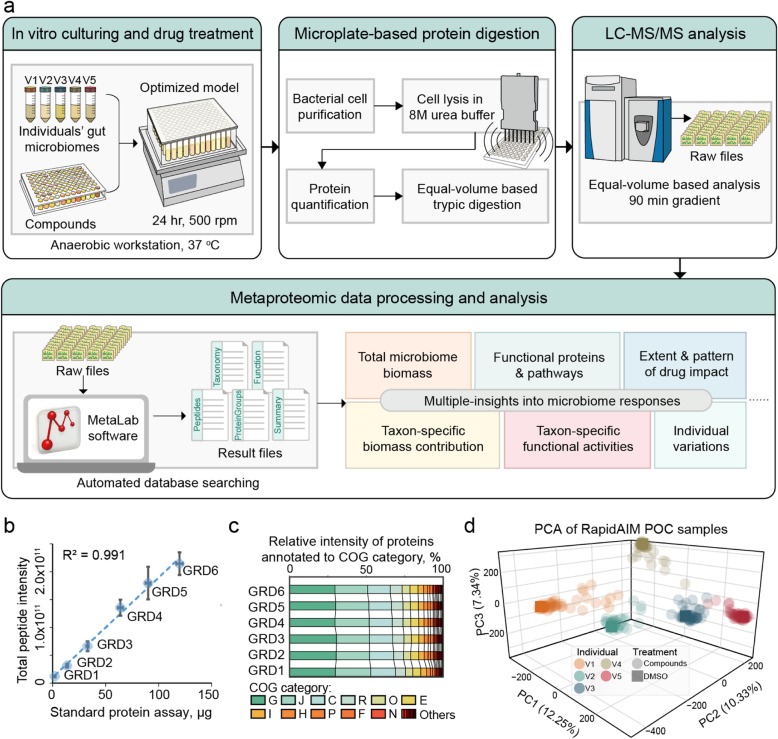
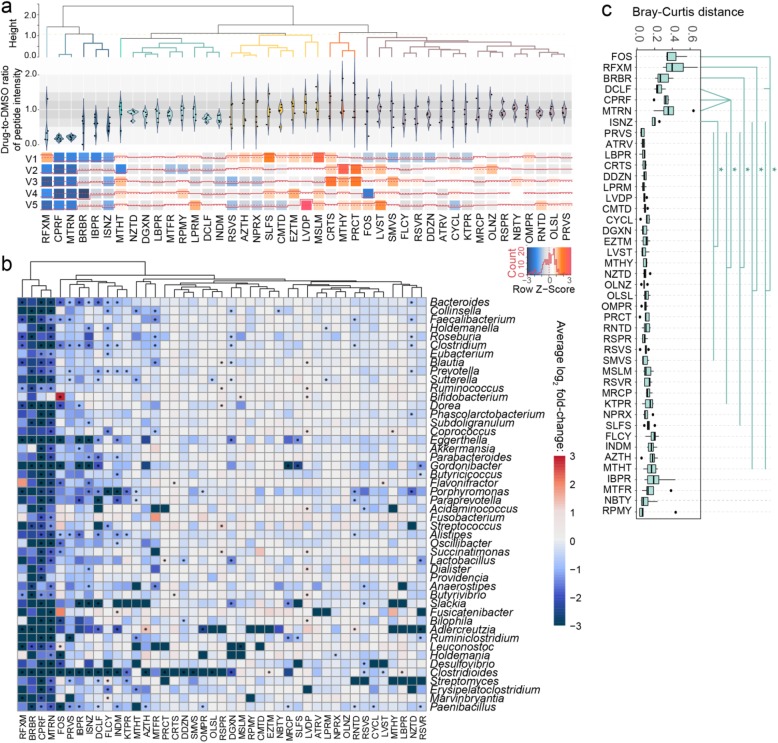
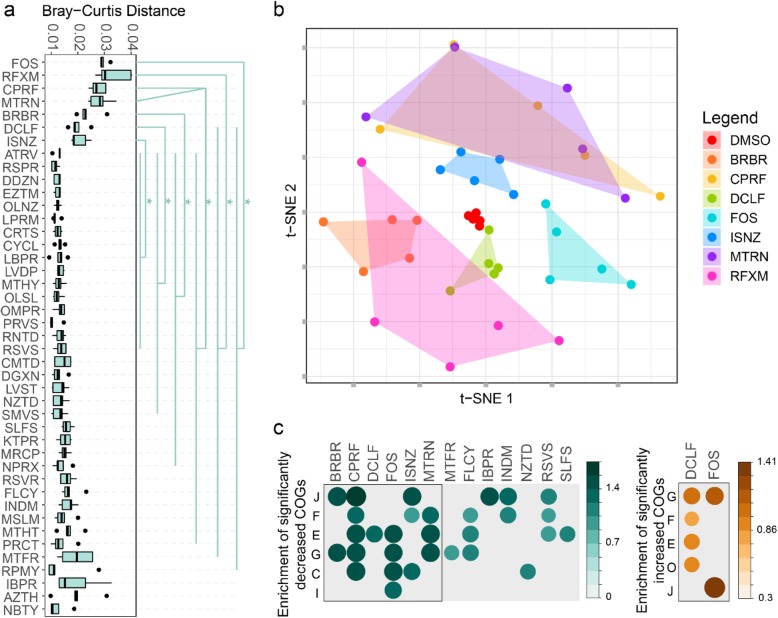
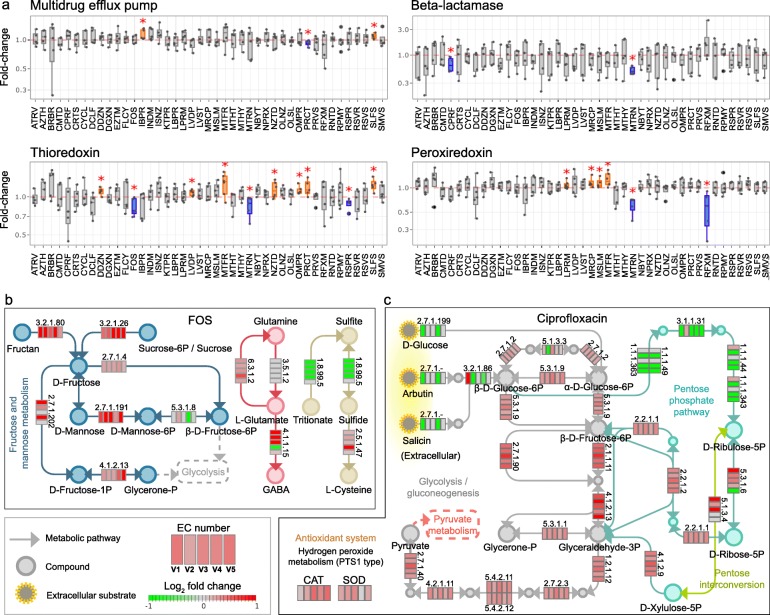
Background: Human-targeted drugs may exert off-target effects or can be repurposed to modulate the gut microbiota. However, our understanding of such effects is limited due to a lack of rapid and scalable assay to comprehensively assess microbiome responses to drugs. Drugs and other compounds can drastically change the overall abundance, taxonomic composition, and functions of a gut microbiome. Results: Here, we developed an approach to screen compounds against individual microbiomes in vitro, using metaproteomics to both measure absolute bacterial abundances and to functionally profile the microbiome. Our approach was evaluated by testing 43 compounds (including 4 antibiotics) against 5 individual microbiomes. The method generated technically highly reproducible readouts, including changes of overall microbiome abundance, microbiome composition, and functional pathways. Results show that besides the antibiotics, the compounds berberine and ibuprofen inhibited the accumulation of biomass during in vitro growth of the microbiota. By comparing genus and species level-biomass contributions, selective antibacterial-like activities were found with 35 of the 39 non-antibiotic compounds. Seven of the compounds led to a global alteration of the metaproteome, with apparent compound-specific patterns of functional responses. The taxonomic distributions of altered proteins varied among drugs, i.e., different drugs affect functions of different members of the microbiome. We also showed that bacterial function can shift in response to drugs without a change in the abundance of the bacteria. Conclusions: Current drug-microbiome interaction studies largely focus on relative microbiome composition and microbial drug metabolism. In contrast, our workflow enables multiple insights into microbiome absolute abundance and functional responses to drugs. The workflow is robust, reproducible, and quantitative and is scalable for personalized high-throughput drug screening applications.
Overview
The claims and statistics of this paper haven’t been checked yet.
Run the check — free, no account needed. It reads the open-access text and checks the sources it cites.
Integrity signals
Registry
Cites
Statistics
Figures
Verification
Claims the paper makes
The claims and statistics of this paper haven’t been checked yet.
Run the check — free, no account needed. It reads the open-access text and checks the sources it cites.
Self-check
Percentages, sums and reported differences re-computed from the paper’s own numbers.
The self-check needs the paper’s full text.
Citations
Cites
Controlling the False Discovery Rate: A Practical and Powerful Approach to Multiple Testing
Benjamini, Y., & Hochberg, Y. (1995) · Journal of the Royal Statistical Society Series B: Statistical Methodology · doi:10.1111/j.2517-6161.1995.tb02031.x · Cited by 109,482
(2008) · Journal of Machine Learning Research · Cited by 33,051
Structure, function and diversity of the healthy human microbiome
The Human Microbiome Project Consortium (2012) · Nature · doi:10.1038/nature11234 · Cited by 11,726
Mind-altering microorganisms: the impact of the gut microbiota on brain and behaviour
Cryan, J. F., & Dinan, T. G. (2012) · Nature Reviews Neuroscience · doi:10.1038/nrn3346 · Cited by 4,572
Kanehisa, M. I., Sato, Y., & Morishima, K. (2015) · Journal of Molecular Biology · doi:10.1016/j.jmb.2015.11.006 · Cited by 4,106
MetaboAnalyst 4.0: towards more transparent and integrative metabolomics analysis
Chong, J., Soufan, O., Li, C., Caraus, I., Li, S., Bourque, G., Wishart, D. S., & Xia, J. (2018) · Nucleic Acids Research · doi:10.1093/nar/gky310 · Cited by 3,637
The Human Intestinal Microbiome in Health and Disease
Lynch, S. V., & Pedersen, O. (2016) · New England Journal of Medicine · doi:10.1056/nejmra1600266 · Cited by 3,637
On the Dependency of Cellular Protein Levels on mRNA Abundance
Liu, Y., Beyer, A., & Aebersold, R. (2016) · Cell · doi:10.1016/j.cell.2016.03.014 · Cited by 3,221
The re-emergence of natural products for drug discovery in the genomics era
Harvey, A. L., Edrada‐Ebel, R., & Quinn, R. J. (2015) · Nature Reviews Drug Discovery · doi:10.1038/nrd4510 · Cited by 2,654
Thompson, A., Schäfer, J., Kuhn, K., Kienle, S., Schwarz, J., Schmidt, G., Neumann, T., & Hamon, C. (2003) · Analytical Chemistry · doi:10.1021/ac0262560 · Cited by 2,425
Research works printed but not linked: 1
- Maier L, Pruteanu M, Kuhn M, Zeller G, Telzerow A, Anderson EE, Brochado AR, Fernandez KC, Dose H, Mori H, et al. Extensive impact of non-antibiotic drugs on human gut bacteria. Nature. 2018;555:623. · DOI · Paper page
Cited by
Sorted by citations
Advancing functional and translational microbiome research using meta-omics approaches
Zhang, X., Li, L., Butcher, J., Stintzi, A., & Figeys, D. (2019) · Microbiome · doi:10.1186/s40168-019-0767-6 · Cited by 357
Self-citationCo-selection for antibiotic resistance by environmental contaminants
Murray, L. M., Hayes, A., Snape, J., Kasprzyk‐Hordern, B., Gaze, W. H., & Murray, A. K. (2024) · npj Antimicrobials and Resistance · doi:10.1038/s44259-024-00026-7 · Cited by 366
Multimodal interactions of drugs, natural compounds and pollutants with the gut microbiota
Lindell, A. E., Zimmermann‐Kogadeeva, M., & Patil, K. R. (2022) · Nature Reviews Microbiology · doi:10.1038/s41579-022-00681-5 · Cited by 239
Seed microbiota revealed by a large‐scale meta‐analysis including 50 plant species
Simonin, M., Briand, M., Chesneau, G., Rochefort, A., Marais, C., Sarniguet, A., & Barret, M. (2022) · New Phytologist · doi:10.1111/nph.18037 · Cited by 213
Resistant starch, microbiome, and precision modulation
Dobranowski, P., & Stintzi, A. (2021) · Gut Microbes · doi:10.1080/19490976.2021.1926842 · Cited by 168
Self-citationAn in vitro model maintaining taxon-specific functional activities of the gut microbiome
Li, L., Abou-Samra, E., Ning, Z., Zhang, X., Mayne, J., Wang, J., Cheng, K., Walker, K., Stintzi, A., & Figeys, D. (2019) · Nature Communications · doi:10.1038/s41467-019-12087-8 · Cited by 135
Self-citationTowards a mechanistic understanding of reciprocal drug–microbiome interactions
Zimmermann, M., Patil, K. R., Typas, A., & Maier, L. (2021) · Molecular Systems Biology · doi:10.15252/msb.202010116 · Cited by 124
Targeting gut microbiota for precision medicine: Focusing on the efficacy and toxicity of drugs
Feng, W., Liu, J., Ao, H., Yue, S., & Peng, C. Y. (2020) · Theranostics · doi:10.7150/thno.47289 · Cited by 131
Gobbi, A., Acedo, A., Imam, N., Santini, R. G., Ortiz‐Álvarez, R., Ellegaard‐Jensen, L., Belda, I., & Hansen, L. H. (2022) · Communications Biology · doi:10.1038/s42003-022-03202-5 · Cited by 141
Nishijima, S., Nagata, N., Kiguchi, Y., Kojima, Y., Miyoshi‐Akiyama, T., Kimura, M., Ohsugi, M., Ueki, K., Oka, S., Mizokami, M., et al. (2022) · Nature Communications · doi:10.1038/s41467-022-32832-w · Cited by 120
Tumorigenic bacteria in colorectal cancer: mechanisms and treatments
Li, S., Liu, J., Zheng, X., Ren, L., Yang, Y., Li, W., Fu, W., Wang, J., & Du, G. (2021) · Cancer Biology and Medicine · doi:10.20892/j.issn.2095-3941.2020.0651 · Cited by 116
Interrogating the viral dark matter of the rumen ecosystem with a global virome database
Yan, M., Pratama, A. A., Somasundaram, S., Li, Z., Jiang, Y., Sullivan, M. B., & Yu, Z. (2023) · Nature Communications · doi:10.1038/s41467-023-41075-2 · Cited by 109
In vitro human gut microbiota fermentation models: opportunities, challenges, and pitfalls
Isenring, J., Bircher, L., Geirnaert, A., & Lacroix, C. (2023) · Microbiome Research Reports · doi:10.20517/mrr.2022.15 · Cited by 109
The role of iron-oxidizing bacteria in biocorrosion: a review
Emerson, D. (2018) · Biofouling · doi:10.1080/08927014.2018.1526281 · Cited by 102
Interpretation of network-based integration from multi-omics longitudinal data
Bodein, A., Scott‐Boyer, M., Périn, O., Cao, K. L., & Droit, A. (2021) · Nucleic Acids Research · doi:10.1093/nar/gkab1200 · Cited by 96
Bacterial tolerance to host-exuded specialized metabolites structures the maize root microbiome
Thoenen, L., Giroud, C., Kreuzer, M., Waelchli, J., Gfeller, V., Deslandes‐Hérold, G., Mateo, P., Robert, C. A. M., Ahrens, C. H., Rubio‐Somoza, I., et al. (2023) · Proceedings of the National Academy of Sciences · doi:10.1073/pnas.2310134120 · Cited by 95
Pharmacogenomics of NSAID-Induced Upper Gastrointestinal Toxicity
McEvoy, L., Carr, D. F., & Pirmohamed, M. (2021) · Frontiers in Pharmacology · doi:10.3389/fphar.2021.684162 · Cited by 84
Li, L., Wang, T., Ning, Z., Zhang, X., Butcher, J., Serrana, J. M., Simopoulos, C. M. A., Mayne, J., Stintzi, A. P., Mack, D. R., et al. (2023) · Nature Communications · doi:10.1038/s41467-023-39149-2 · Cited by 82
Self-citationThe microbiologist's guide to metaproteomics
Bossche, T. V. D., Armengaud, J., Benndorf, D., Blakeley‐Ruiz, J. A., Brauer, M., Cheng, K., Creskey, M., Figeys, D., Grenga, L., Griffin, T. J., et al. (2025) · iMeta · doi:10.1002/imt2.70031 · Cited by 82
Self-citationForry, S. P., Servetas, S. L., Kralj, J. G., Soh, K., Hadjithomas, M., Cano, R. J., Carlin, M. R., de Amorim, M. G., Auch, B., Bakker, M. G., et al. (2024) · Scientific Reports · doi:10.1038/s41598-024-57981-4 · Cited by 92
Puente‐Sánchez, F., Pascual‐García, A., Bastolla, U., Pedrós‐Alió, C., & Tamames, J. (2024) · Communications Biology · doi:10.1038/s42003-024-06616-5 · Cited by 75
Emergence of community behaviors in the gut microbiota upon drug treatment
García‐Santamarina, S., Kuhn, M., Devendran, S., Maier, L., Driessen, M., Mateus, A., Mastrorilli, E., Brochado, A. R., Savitski, M. M., Patil, K. R., et al. (2024) · Cell · doi:10.1016/j.cell.2024.08.037 · Cited by 59
Whokaryote: distinguishing eukaryotic and prokaryotic contigs in metagenomes based on gene structure
Pronk, L. J. U., & Medema, M. H. (2022) · Microbial Genomics · doi:10.1099/mgen.0.000823 · Cited by 55
Ruan, X., Luo, J., Zhang, P., & Howell, K. S. (2022) · npj Biofilms and Microbiomes · doi:10.1038/s41522-022-00343-7 · Cited by 58
Li, L., Lu, C., Zhang, X., Ning, Z., Mayne, J., Ye, Y., Stintzi, A., Liu, J., & Figeys, D. (2020) · Gut Microbes · doi:10.1080/19490976.2020.1755413 · Cited by 53
Self-citationBacteriophages playing nice: Lysogenic bacteriophage replication stable in the human gut microbiota
Sutcliffe, S. G., Reyes, A., & Maurice, C. F. (2023) · iScience · doi:10.1016/j.isci.2023.106007 · Cited by 51
Hugerth, L. W., Krog, M. C., Vomstein, K., Du, J., Bashir, Z., Kaldhusdal, V., Fransson, E., Engstrand, L. G., Nielsen, H. S., & Schuppe‐Koistinen, I. (2024) · Microbiome · doi:10.1186/s40168-024-01870-5 · Cited by 60
Synthetic gut microbiome: Advances and challenges
Mabwi, H. A., Kim, E., Song, D., Yoon, H. S., Pan, C., Komba, E. V. G., Ko, G., & Cha, K. H. (2020) · Computational and Structural Biotechnology Journal · doi:10.1016/j.csbj.2020.12.029 · Cited by 54
Expanding Asgard members in the domain of Archaea sheds new light on the origin of eukaryotes
Xie, R., Wang, Y., Huang, D., Hou, J., Li, L., Hu, H., Zhao, X., & Wang, F. (2021) · Science China Life Sciences · doi:10.1007/s11427-021-1969-6 · Cited by 54
Self-citationA data-driven approach for predicting the impact of drugs on the human microbiome
Algavi, Y. M., & Borenstein, E. (2023) · Nature Communications · doi:10.1038/s41467-023-39264-0 · Cited by 54
Becker, H. E. F., Jamin, C., Bervoets, L., Boleij, A., Xu, P., Pierik, M. J., Stassen, F. R. M., Savelkoul, P. H. M., Penders, J., & Jonkers, D. M. A. E. (2021) · Frontiers in Microbiology · doi:10.3389/fmicb.2021.598232 · Cited by 50
Durham, D. M., Sieradzki, E. T., ter Horst, A. M., Santos‐Medellín, C., Bess, C. W., Geonczy, S. E., & Emerson, J. (2022) · ISME Communications · doi:10.1038/s43705-022-00171-y · Cited by 47
Hoque, M. N., Rahman, M. S., Ahmed, R., Hossain, M. S., Islam, M. S., Crandall, K. A., Islam, T., Hossain, M. A., & Siddiki, A. Z. (2021) · Gene Reports · doi:10.1016/j.genrep.2021.101200 · Cited by 46
Data-driven prediction of colonization outcomes for complex microbial communities
Wu, L., Wang, X.-W., Tao, Z., Wang, T., Zuo, W., Zeng, Y., Liu, Y.-Y., & Dai, L. (2024) · Nature Communications · doi:10.1038/s41467-024-46766-y · Cited by 44
Becker, H. E. F., Demers, K., Derijks, L. J. J., Jonkers, D. M. A. E., & Penders, J. (2023) · Frontiers in Microbiology · doi:10.3389/fmicb.2023.1107976 · Cited by 45
Yan, M., & Yu, Z. (2024) · Microbiome · doi:10.1186/s40168-024-01791-3 · Cited by 46
Rahman, M. S., Hoque, M. N., Puspo, J. A., Islam, M. R., Das, N. C., Siddique, M. A., Hossain, M. A., & Sultana, M. (2021) · Scientific Reports · doi:10.1038/s41598-021-99104-3 · Cited by 43
Inflammatory Bowel Disease-Associated Gut Commensals Degrade Components of the Extracellular Matrix
Porras, A. M., Zhou, H., Shi, Q., Xiao, X., Bank, J. L. C., Longman, R., & Brito, I. (2022) · mBio · doi:10.1128/mbio.02201-22 · Cited by 39
Devarakonda, S. L. S., Superdock, D. K., Ren, J., Johnson, L. M., Loinard-González, A. P., & Poole, A. C. (2024) · Gut Microbes · doi:10.1080/19490976.2024.2367301 · Cited by 40
Heyse, J., Props, R., Kongnuan, P., Schryver, P. D., Rombaut, G., Defoirdt, T., & Boon, N. (2020) · Environmental Microbiology · doi:10.1111/1462-2920.15310 · Cited by 41
Application of emerging technologies for gut microbiome research
Kwa, W. T., Sundarajoo, S., Toh, K. Y., & Lee, J. W. J. (2023) · Singapore Medical Journal · doi:10.4103/singaporemedj.smj-2021-432 · Cited by 40
Cazzaniga, S. G., Braat, L., van den Elsen, S. J. J., Lombaers, C., Visser, J. H. M., Obinu, L., Maciá‐Vicente, J. G., Postma, J., Mommer, L., & Helder, J. (2022) · Applied Soil Ecology · doi:10.1016/j.apsoil.2023.105012 · Cited by 38
Pharmacomicrobiomics: The Role of the Gut Microbiome in Immunomodulation and Cancer Therapy
Bolte, L. A., Björk, J. R., Gaćeša, R., & Weersma, R. K. (2025) · Gastroenterology · doi:10.1053/j.gastro.2025.04.025 · Cited by 39
Hegarty, B., Dai, Z., Raskin, L. M., Pinto, A. J., Wigginton, K. R., & Duhaime, M. B. (2022) · Water Research · doi:10.1016/j.watres.2022.118484 · Cited by 39
Exploring the role of gut microbiome in autoimmune diseases: A comprehensive review
Wang, H., Cai, Y., Wu, W. ‐., Zhang, M., Dai, Y., & Wang, Q. (2024) · Autoimmunity Reviews · doi:10.1016/j.autrev.2024.103654 · Cited by 42
Microbiota-directed biotherapeutics: considerations for quality and functional assessment
Fekete, E. E. F., Figeys, D., & Zhang, X. (2023) · Gut Microbes · doi:10.1080/19490976.2023.2186671 · Cited by 36
Self-citationRelationships between pond water and tilapia skin microbiomes in aquaculture ponds in Malawi
McMurtrie, J., Alathari, S., Chaput, D. L., Bass, D., Ghambi, C., Nagoli, J., Delamare‐Deboutteville, J., Mohan, C. V., Cable, J., Temperton, B., et al. (2022) · Aquaculture · doi:10.1016/j.aquaculture.2022.738367 · Cited by 38
Cheng, K., Ning, Z., Li, L., Zhang, X., Serrana, J. M., Mayne, J., & Figeys, D. (2022) · Journal of Proteome Research · doi:10.1021/acs.jproteome.2c00554 · Cited by 51
Self-citationResponse, resistance, and recovery of gut bacteria to human-targeted drug exposure
de la Cuesta‐Zuluaga, J., Boldt, L., & Maier, L. (2024) · Cell Host & Microbe · doi:10.1016/j.chom.2024.05.009 · Cited by 32
Wirth, R., Bagi, Z., Shetty, P., Szuhaj, M., Cheung, T. T. S., Kovács, K. L., & Maróti, G. (2023) · The ISME Journal · doi:10.1038/s41396-023-01448-3 · Cited by 33
ViraLM: empowering virus discovery through the genome foundation model
Peng, C., Shang, J., Guan, J., Wang, D., & Sun, Y. (2024) · Bioinformatics · doi:10.1093/bioinformatics/btae704 · Cited by 37
ProkBERT family: genomic language models for microbiome applications
Ligeti, B., Szepesi-Nagy, I., Bodnár, B., Ligeti-Nagy, N., & Juhász, J. (2024) · Frontiers in Microbiology · doi:10.3389/fmicb.2023.1331233 · Cited by 30
Edwards, R. J., Dong, C., Park, R., & Tobias, P. A. (2022) · bioRxiv (Cold Spring Harbor Laboratory) · doi:10.1101/2022.04.22.489119 · Cited by 31
Minor, N. R., Ramuta, M. D., Stauss, M. R., Harwood, O. E., Brakefield, S. F., Alberts, A. J., Vuyk, W. C., Bobholz, M. J., Rosinski, J. R., Wolf, S., et al. (2023) · Scientific Reports · doi:10.1038/s41598-023-48352-6 · Cited by 29
Occurrence of “under-the-radar” antibiotic resistance in anthropogenically affected produce
Davidovich, C., Erokhina, K., Gupta, C. L., Zhu, Y., Su, J., Djordjevic, S. P., Wyrsch, E. R., Blum, S. E., & Cytryn, E. J. (2025) · The ISME Journal · doi:10.1093/ismejo/wrae261 · Cited by 28
Zünd, J. N., Plüss, S., Mujezinovic, D., Menzi, C., von Bieberstein, P. R., de Wouters, T., Lacroix, C., Leventhal, G. E., & Pugin, B. (2024) · ISME Communications · doi:10.1093/ismeco/ycae035 · Cited by 29
Detection of interphylum transfers of the magnetosome gene cluster in magnetotactic bacteria
Uzun, M., Koziaeva, V. V., Dziuba, M. V., Leão, P., Krutkina, M. S., & Grouzdev, D. S. (2022) · Frontiers in Microbiology · doi:10.3389/fmicb.2022.945734 · Cited by 27
Fierer, N., Holland-Moritz, H. E., Alexiev, A., Batther, H., Dragone, N. B., Friar, L., Gebert, M. J., Gering, S. M., Henley, J. B., Jech, S. D., et al. (2022) · mSystems · doi:10.1128/msystems.00651-22 · Cited by 27
Defaix, R., Lokesh, J., Ghislain, M., Béchec, M. L., Marchand, M., Véron, V., Surget, A., Biasutti, S., Terrier, F., Pigot, T., et al. (2023) · Aquaculture · doi:10.1016/j.aquaculture.2023.740049 · Cited by 27
The Parkinson’s disease drug entacapone disrupts gut microbiome homeostasis via iron sequestration
Pereira, F. C., Ge, X., Kristensen, J. M., Kirkegaard, R. H., Maritsch, K., Szamosvári, D., Imminger, S., Seki, D., Shazzad, J. B., Zhu, Y., et al. (2024) · Nature Microbiology · doi:10.1038/s41564-024-01853-0 · Cited by 28
Ariaee, A., Koentgen, S., Wardill, H. R., Hold, G. L., Prestidge, C. A., Armstrong, H., & Joyce, P. (2024) · eGastroenterology · doi:10.1136/egastro-2023-100055 · Cited by 27
Li, L., Ryan, J., Ning, Z., Zhang, X., Mayne, J., Lavallée‐Adam, M., Stintzi, A., & Figeys, D. (2020) · Computational and Structural Biotechnology Journal · doi:10.1016/j.csbj.2020.10.042 · Cited by 23
Self-citationMicrobiota and stress: a loop that impacts memory
Kraïmi, N., Lormant, F., Calandreau, L., Kempf, F., Zemb, O., Lemarchand, J., Constantin, P., Parias, C., Germain, K., Dupont, C., et al. (2021) · Psychoneuroendocrinology · doi:10.1016/j.psyneuen.2021.105594 · Cited by 28
Identification of bacteriophage genome sequences with representation learning
Bai, Z., Zhang, Y., Miyano, S., Yamaguchi, R., Fujimoto, K., Uematsu, S., & Imoto, S. (2022) · Bioinformatics · doi:10.1093/bioinformatics/btac509 · Cited by 27
Giez, C., Pinkle, D., Giencke, Y., Wittlieb, J., Herbst, E., Spratte, T., Lachnit, T., Klimovich, A. V., Selhuber‐Unkel, C., & Bosch, T. C. G. (2023) · Current Biology · doi:10.1016/j.cub.2023.10.038 · Cited by 29
Microbial Functional Responses Explain Alpine Soil Carbon Fluxes under Future Climate Scenarios
Qi, Q., Yue, H., Zhang, Z., Nostrand, J. D. V., Wu, L., Guo, X. Y., Feng, J., Wang, M., Yang, S., Zhao, J., et al. (2021) · mBio · doi:10.1128/mbio.00761-20 · Cited by 25
Sáenz, J. S., Kurz, A., Ruczizka, U., Bünger, M., Dippel, M., Nagl, V., Grenier, B., Ladinig, A., Seifert, J., & Selberherr, E. (2021) · Toxins · doi:10.3390/toxins13080583 · Cited by 24
Evaluating live microbiota biobanking using an ex vivo microbiome assay and metaproteomics
Zhang, X., Walker, K., Mayne, J., Li, L., Ning, Z., Stintzi, A. P., & Figeys, D. (2022) · Gut Microbes · doi:10.1080/19490976.2022.2035658 · Cited by 24
Self-citationCreskey, M., Li, L., Ning, Z., Fekete, E. E. F., Mayne, J., Walker, K., Ampaw, A. A., Ben, R. N., Zhang, X., & Figeys, D. (2022) · PROTEOMICS · doi:10.1002/pmic.202200116 · Cited by 24
Self-citationAbbondio, M., Tanca, A., Diego, L. D., Sau, R., Bibbò, S., Pes, G. M., Dore, M. P., & Uzzau, S. (2023) · Gut Microbes · doi:10.1080/19490976.2023.2291170 · Cited by 24
Ha, A. D., & Aylward, F. O. (2024) · npj Viruses · doi:10.1038/s44298-024-00021-9 · Cited by 23
DNase Treatment Improves Viral Enrichment in Agricultural Soil Viromes
Sorensen, J. W., Zinke, L., ter Horst, A. M., Santos‐Medellín, C., Schroeder, A. L., & Emerson, J. (2021) · mSystems · doi:10.1128/msystems.00614-21 · Cited by 25
Quorum sensing-based interactions among drugs, microbes, and diseases
Wu, S., Yang, S., Wang, M., Song, N., Feng, J., Wu, H., Yang, A., Liu, C., Li, Y., Guo, F., et al. (2022) · Science China Life Sciences · doi:10.1007/s11427-021-2121-0 · Cited by 23
Recovery of high-qualitied Genomes from a deep-inland Salt Lake Using BASALTPreprint
Yu, K., Qiu, Z. G., Mu, R., Qiao, X., Zhang, L., Lian, C., Deng, C., Wu, Y., Xu, Z., Li, B. J., et al. (2021) · bioRxiv (Cold Spring Harbor Laboratory) · doi:10.1101/2021.03.05.434042 · Cited by 22
Training Compute-Optimal Protein Language ModelsPreprint
Cheng, X., Chen, B., Li, P., Gong, J., Tang, J., & Song, L. (2024) · bioRxiv (Cold Spring Harbor Laboratory) · doi:10.1101/2024.06.06.597716 · Cited by 28
Santiago-Rodríguez, T. M., & Hollister, E. B. (2020) · Applied and Environmental Microbiology · doi:10.1128/aem.01794-20 · Cited by 22
Heyse, J., Schattenberg, F., Rubbens, P., Müller, S., Waegeman, W., Boon, N., & Props, R. (2021) · mSystems · doi:10.1128/msystems.00551-21 · Cited by 24
iMetaLab Suite: A one‐stop toolset for metaproteomics
Li, L., Ning, Z., Cheng, K., Zhang, X., Simopoulos, C. M. A., & Figeys, D. (2022) · iMeta · doi:10.1002/imt2.25 · Cited by 22
Self-citationSun, Z.-Z., Wang, W., Li, L., Zhang, X., Ning, Z., Mayne, J., Walker, K., Stintzi, A. P., & Figeys, D. (2022) · Microbiology Spectrum · doi:10.1128/spectrum.00412-22 · Cited by 22
Self-citationMAGNETO: An Automated Workflow for Genome-Resolved Metagenomics
Churcheward, B., Millet, M., Bihouée, A., Fertin, G., & Chaffron, S. (2022) · mSystems · doi:10.1128/msystems.00432-22 · Cited by 23
Mining bacterial NGS data vastly expands the complete genomes of temperate phages
Zhang, X., Wang, R., Xie, X., Hu, Y., Wang, J., Sun, Q., Feng, X., Lin, W., Tong, S., Yan, W., et al. (2022) · NAR Genomics and Bioinformatics · doi:10.1093/nargab/lqac057 · Cited by 22
Self-citationDeng, L., Meile, C. D., Fiskal, A., Bölsterli, D., Han, X., Gajendra, N., Dubois, N., Bernasconi, S. M., & Lever, M. A. (2022) · PNAS Nexus · doi:10.1093/pnasnexus/pgac146 · Cited by 22
Qiu, Z. G., Zhu, Y., Zhang, Q., Qiao, X., Mu, R., Xu, Z., Yan, Y., Wang, F., Zhang, T., Zhuang, W., et al. (2023) · Environmental Science and Ecotechnology · doi:10.1016/j.ese.2023.100359 · Cited by 22
Wasmund, K., Singleton, C. M., Dueholm, M. S., Wagner, M., & Nielsen, P. H. (2024) · mSystems · doi:10.1128/msystems.00301-24 · Cited by 22
Potgieter, S. C., Dai, Z., Havenga, M., Vosloo, S., Sigudu, M., Pinto, A. J., & Venter, S. N. (2021) · ACS ES&T Water · doi:10.1021/acsestwater.1c00093 · Cited by 21
Costantini, M. S., Medeiros, M. C. I., Crampton, L. H., & Reed, F. A. (2021) · PeerJ · doi:10.7717/peerj.12291 · Cited by 21
Mutation-induced infections of phage-plasmids
Shan, X., Szabo, R. E., & Cordero, O. X. (2023) · Nature Communications · doi:10.1038/s41467-023-37512-x · Cited by 21
Kosmopoulos, J. C., Campbell, D. E., Whitaker, R. J., & Wilbanks, E. G. (2023) · Applied and Environmental Microbiology · doi:10.1128/aem.00177-23 · Cited by 19
miniBUSCO: a faster and more accurate reimplementation of BUSCOPreprint
Huang, N., & Li, H. (2023) · bioRxiv (Cold Spring Harbor Laboratory) · doi:10.1101/2023.06.03.543588 · Cited by 21
Advances in the clinical use of metaproteomics
Wolf, M., Schallert, K., Knipper, L., Sickmann, A., Sczyrba, A., Benndorf, D., & Heyer, R. (2023) · Expert Review of Proteomics · doi:10.1080/14789450.2023.2215440 · Cited by 21
Zea mays genotype influences microbial and viral rhizobiome community structure
Yadav, P., Quattrone, A. C., Yang, Y., Owens, J., Kiat, R., Kuppusamy, T., Russo, S. E., & Weber, K. A. (2023) · ISME Communications · doi:10.1038/s43705-023-00335-4 · Cited by 20
Tutorial: Microbiome studies in drug metabolism
Dodd, D., & Cann, I. (2022) · Clinical and Translational Science · doi:10.1111/cts.13416 · Cited by 17
DSS treatment does not affect murine colonic microbiota in absence of the host
Krause, J. L., Engelmann, B., Schäpe, S. S., Rolle-Kampczyk, U. E., Jehmlich, N., Chang, H., Slanina, U., Hoffman, M., Lehmann, J., Zenclussen, A. C., et al. (2024) · Gut Microbes · doi:10.1080/19490976.2023.2297831 · Cited by 17
Terrazas, R. A., Robertson-Albertyn, S., Corral, A. M., Escudero-Martinez, C., Kapadia, R., Balbirnie-Cumming, K., Morris, J., Hedley, P. E., Barret, M., Torres, G., et al. (2019) · bioRxiv (Cold Spring Harbor Laboratory) · doi:10.1101/605204 · Cited by 17
Plant genotype influence the structure of cereal seed fungal microbiome
Malacrinò, A., Abdelfattah, A., Belgacem, I., & Schena, L. (2023) · Frontiers in Microbiology · doi:10.3389/fmicb.2022.1075399 · Cited by 16
Hribovšek, P., Denny, E. O., Dahle, H., Mall, A., Viflot, T. Ø., Boonnawa, C., Reeves, E. P., Steen, I. H., & Stokke, R. (2023) · mSystems · doi:10.1128/msystems.00543-23 · Cited by 16
A new and widespread group of fish apicomplexan parasites
Bonacolta, A. M., Krause‐Massaguer, J., Smit, N. J., Sikkel, P. C., & del Campo, J. (2024) · Current Biology · doi:10.1016/j.cub.2024.04.084 · Cited by 16
Zhao, J., Both, J. P., Rodriguez‐R, L. M., & Konstantinidis, K. T. (2024) · Nucleic Acids Research · doi:10.1093/nar/gkae609 · Cited by 16
Hernández‐Terán, A., Vega-Sánchez, Á. E., Mejía-Nepomuceno, F., Serna-Muñoz, R., Rodríguez‐Llamazares, S., Salido-Guadarrama, I., Romero-Espinoza, J. A., Guadarrama-Pérez, C., Sandoval-Gutiérrez, J. L., Campos, F., et al. (2023) · Virology Journal · doi:10.1186/s12985-023-01979-3 · Cited by 15
Prophages in the infant gut are largely induced, and may be functionally relevant to their hostsPreprint
Redgwell, T. A., Thorsen, J., Petit, M., Deng, L., Vestergaard, G., Russel, J., Bisgaard, H. F., Nielsen, D. S., Sørensen, S. J., Stokholm, J., et al. (2021) · bioRxiv (Cold Spring Harbor Laboratory) · doi:10.1101/2021.06.25.449885 · Cited by 16
Metadata
- Authors
- Li, L., Ning, Z., Zhang, X., Mayne, J., Cheng, K., Stintzi, A., & Figeys, D.
- Affiliations
- University of Ottawa (CA)
- Canadian Institute for Advanced Research (CA)
- Corresponding author
- Stintzi, Alain
- Figeys, Daniel
- Venue
- Microbiome
- Published
- 2020-03-11
- Volume
- 8
- Issue
- 1
- Pages
- 33-33
- ISSN
- 2049-2618 (ISSN-L)
- PMC
- PMC7066843
- OpenAlex
- W3010746544
- Cited by
- 328
- References
- 78
- Citations by year
- 2026: 28 · 2025: 60 · 2024: 60 · 2023: 60 · 2022: 53 · 2021: 49 · 2020: 14
- FWCI
- 14.28
- Type
- journal article
- Language
- en
- Open access
- gold
- doi.org
- Locations
- Microbiome (publishedVersion, cc-by)
- bioRxiv (Cold Spring Harbor Laboratory) (acceptedVersion)
- Europe PMC (PubMed Central) (publishedVersion, cc-by)
- PubMed Central (publishedVersion, cc-by)
- PubMed (publishedVersion)
- UEA Digital Repository (University of East Anglia) (acceptedVersion)
- uO Research (University of Ottawa) (submittedVersion, public-domain)
- DOAJ (DOAJ: Directory of Open Access Journals) (submittedVersion, cc-by-sa)
- Funders
- Genome Canada (OGI-114 and OGI-149)
- Canadian Institutes of Health Research (ECD-144627)
- Natural Sciences and Engineering Research Council of Canada (210034)
- Ontario Ministry of Economic Development and Innovation (REG1-4450)
- Topics
- Life Sciences › Biochemistry, Genetics and Molecular Biology › Molecular Biology › Gut microbiota and health
- Physical Sciences › Environmental Science › Ecology › Microbial Community Ecology and Physiology
- Health Sciences › Dentistry › Periodontics › Oral microbiology and periodontitis research
- Keywords
- gut microbiota, drug-microbiome interactions, metaproteomics, antibiotic effects on microbiota, selective antibacterial activity, bacterial biomass, berberine, ibuprofen, drug repurposing, personalized drug screening
- MeSH terms
- Proof of Concept Study, Adult, Anti-Bacterial Agents, Bacteria, Nonprescription Drugs, Feces, Female, Humans, Male, RNA, Ribosomal, 16S, Colony Count, Microbial, Proteomics, Prescription Drugs, Microbiota
About these checks
Registry, retraction, Cites and statistics results are computed, not judged, with one exception: a printed reference that no index lists is read once by a model before it counts as a citation error. Claims are extracted by a model and kept only when their quote appears verbatim in the text; each cited source is then checked, with a model’s help, for whether it says what the claim relies on. Those verdicts can be wrong — read the claim’s quote and the cited source before relying on one.
Statistics and arithmetic are recomputed, not judged.
Confidence bands are shown only for fields calibrated on our annotated test set. None is calibrated yet, so no band is shown.
What counts as a claim ›How we measure confidence ›How we check this ›
Are you an author, or do you see a problem with this page? Request a review
