

The DOI matches its Crossref record; 54 of the 55 references it cites were found in a registry or an index.
Psychological resilience and positive coping styles among Chinese undergraduate students: a cross-sectional study
Open accessAbstract
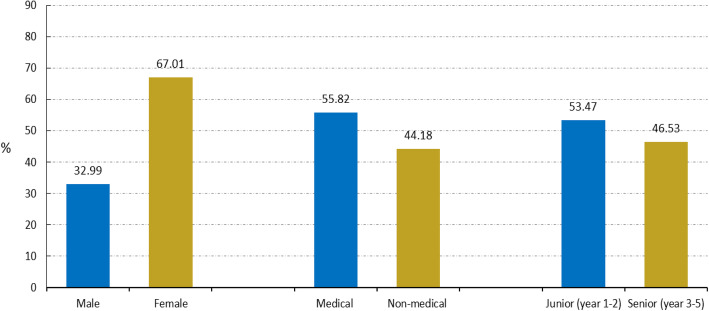
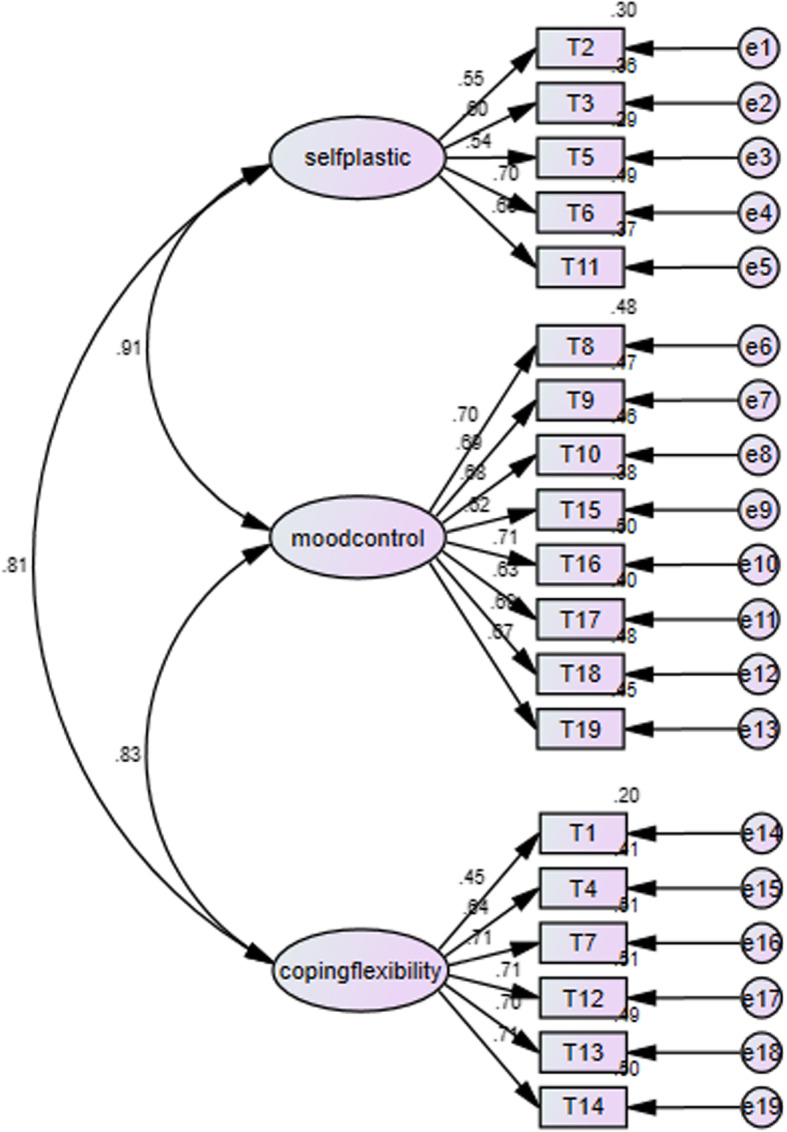
Background: Psychological resilience and coping strategies have been found to be related to various psychological and mental health problems. Evaluations of the relationship between resilience and coping style among university students are important for developing effective health promotion strategies focused on resilience intervention to benefit students’ health and well-being. The relationship between psychological resilience and coping styles has usually been examined among adults and patients. Very few studies have investigated the relationship between resilience and coping style in university students. The present study aimed to investigate the associations between psychological resilience, students’ characteristics (gender, major and grade) and coping styles among undergraduate students. Methods: A cross-sectional survey was conducted among undergraduate students in Shandong Province, China. Undergraduate students were randomly selected from 6 universities in 3 cities of the province using a stratified random sampling method. The questionnaire included questions on the participants’ demographic information, including gender, grade and major, measures of psychological resilience and coping style. Coping style was measured by the Simplified Coping Style Questionnaire (SCSQ). The Asian Resilience Scale (ARS) was applied to evaluate undergraduates’ psychological resilience. Multivariable regression analysis was used to examine the relationships between resilience, students’ characteristics and positive coping styles. Results: A sample of 1743 undergraduates was analysed. The mean psychological resilience score was 70.41. The mean score for positive coping style was 24.72. Multiple regression analysis showed that three factors of psychological resilience, mood control, self-plasticity and coping flexibility, were all significant factors for positive coping styles (regression coefficient = 0.34, 0.35, 0.14, p < 0.01 for the three factors, respectively). Medical students and females had higher scores for positive coping styles than non-medical students and males ( p < 0.01). Conclusions: The research revealed that females and medical students are more likely than males and non-medical students to adopt positive coping styles. Higher psychological resilience is associated with a better positive coping style. The findings suggest that psychological education and health promotion programmes that target strengthening psychological resilience among undergraduate students may help foster positive coping styles to benefit their mental health and psychological well-being.
Overview
The claims and statistics of this paper haven’t been checked yet.
Run the check — free, no account needed. It reads the open-access text and checks the sources it cites.
Integrity signals
Registry
Cites
Statistics
Figures
Verification
Claims the paper makes
The claims and statistics of this paper haven’t been checked yet.
Run the check — free, no account needed. It reads the open-access text and checks the sources it cites.
Claims other papers make about this one
Each is checked against this paper’s own text: does it say what the citing paper says it does?
The cited source says what the claim attributes to it.
In the citing paper
“The SCSQ demonstrates good internal consistency and reliability [68].”
From Effects of mindfulness-based cognitive therapy for Chinese adults with PTSD symptoms: protocol for a randomised controlled trial (2024) · cites this paper as [68]
Self-check
Percentages, sums and reported differences re-computed from the paper’s own numbers.
The self-check needs the paper’s full text.
Citations
Cites
Development of a new resilience scale: The Connor-Davidson Resilience Scale (CD-RISC)
Connor, K. M., & Davidson, J. R. T. (2003) · Depression and Anxiety · doi:10.1002/da.10113 · Cited by 11,793
Structural Equation Modelling: Guidelines for Determining Model Fit
Hooper, D., Coughlan, J., & Mullen, M. R. (2008) · Dublin Institute of Technology · doi:10.21427/d7cf7r · Cited by 8,746
The American Psychological Association
Langfeld, H. S. (1919) · Science · doi:10.1126/science.49.1254.51 · Cited by 7,453
Folkman, S., & Lazarus, R. S. (1985) · Journal of Personality and Social Psychology · doi:10.1037/0022-3514.48.1.150 · Cited by 4,845
Folkman, S., & Moskowitz, J. T. (2004) · Annual Review of Psychology · doi:10.1146/annurev.psych.55.090902.141456 · Cited by 3,485
Auerbach, R. P., Collaborators, W. W.-I., Mortier, P., Bruffaerts, R., Alonso, J., Benjet, C., Cuijpers, P., Demyttenaere, K., Ebert, D. D., Green, J. G., et al. (2018) · Journal of Abnormal Psychology · doi:10.1037/abn0000362 · Cited by 2,522
Gender differences in stress and coping styles
Aznar, M. P. M. (2004) · Personality and Individual Differences · doi:10.1016/j.paid.2004.01.010 · Cited by 2,139
Sex Differences in Coping Behavior: A Meta-Analytic Review and an Examination of Relative Coping
Tamres, L. K., Janicki, D., & Helgeson, V. S. (2002) · Personality and Social Psychology Review · doi:10.1207/s15327957pspr0601_1 · Cited by 2,044
Relationship of resilience to personality, coping, and psychiatric symptoms in young adults
Campbell‐Sills, L., Cohan, S. L., & Stein, M. B. (2005) · Behaviour Research and Therapy · doi:10.1016/j.brat.2005.05.001 · Cited by 1,410
The role of coping responses and social resources in attenuating the stress of life events
Billings, A., & Moos, R. (1981) · Journal of behavioral medicine · doi:10.1007/bf00844267 · Cited by 1,311
Steinhardt, M., & Dolbier, C. (2008) · Journal of American College Health · doi:10.3200/jach.56.44.445-454 · Cited by 759
Twenge, J. M., Gentile, B., DeWall, C. N., Ma, D., Lacefield, K., & Schurtz, D. R. (2009) · Clinical Psychology Review · doi:10.1016/j.cpr.2009.10.005 · Cited by 606
Liu, C. H., Stevens, C., Wong, S. H. M., Yasui, M., & Chen, J. A. (2019) · Depression and Anxiety · doi:10.1002/da.22830 · Cited by 603
Dray, J., Bowman, J., Campbell, E., Freund, M., Wolfenden, L., Hodder, R. K., McElwaine, K., Tremain, D., Bartlem, K., Bailey, J., et al. (2017) · Journal of the American Academy of Child & Adolescent Psychiatry · doi:10.1016/j.jaac.2017.07.780 · Cited by 566
Are we in crisis? National mental health and treatment trends in college counseling centers.
Xiao, H., Carney, D. M., Youn, S. J., Janis, R. A., Castonguay, L. G., Hayes, J. A., & Locke, B. D. (2017) · Psychological Services · doi:10.1037/ser0000130 · Cited by 493
LIFE EVENT STRESS, SOCIAL SUPPORT, COPING STYLE, AND RISK OF PSYCHOLOGICAL IMPAIRMENT
Andrews, G., Tennant, C., Hewson, D., & Vaillant, G. E. (1978) · The Journal of Nervous and Mental Disease · doi:10.1097/00005053-197805000-00001 · Cited by 455
Resilience in response to life stress: the effects of coping style and cognitive hardiness
Beasley, M., Thompson, T., & Davidson, J. (2003) · Personality and Individual Differences · doi:10.1016/s0191-8869(02)00027-2 · Cited by 429
Hartley, M. T. (2011) · Journal of American College Health · doi:10.1080/07448481.2010.515632 · Cited by 384
Sex differences in the use of coping strategies: predictors of anxiety and depressive symptoms
Kelly, M. M., Tyrka, A. R., Price, L. H., & Carpenter, L. L. (2007) · Depression and Anxiety · doi:10.1002/da.20341 · Cited by 350
Depression and suicide ideation among students accessing campus health care
Mackenzie, S., Wiegel, J. R., Mundt, M., Brown, D., Saewyc, E., Heiligenstein, E., Harahan, B., & Fleming, M. (2011) · American Journal of Orthopsychiatry · doi:10.1111/j.1939-0025.2010.01077.x · Cited by 323
Fenwick-Smith, A., Dahlberg, E. E., & Thompson, S. (2018) · BMC Psychology · doi:10.1186/s40359-018-0242-3 · Cited by 315
Prevalence of Depression among Chinese University Students: A Meta-Analysis
Lei, X.-Y., Xiao, L.-M., Liu, Y.-N., & Li, Y.-M. (2016) · PLOS ONE · doi:10.1371/journal.pone.0153454 · Cited by 300
Medical student resilience and stressful clinical events during clinical training
Houpy, J. C., Lee, W. W., Woodruff, J. N., & Pincavage, A. T. (2017) · Medical Education Online · doi:10.1080/10872981.2017.1320187 · Cited by 239
Resilience and well-being of university nursing students in Hong Kong: a cross-sectional study
Chow, K. M., Tang, F. W. K., Wing Han Carmen, C. H. A. N., Sit, J. W. H., Choi, K. C., & Chan, S. W. (2018) · BMC Medical Education · doi:10.1186/s12909-018-1119-0 · Cited by 217
Sagone, E., & Caroli, M. E. D. (2014) · American Journal of Educational Research · doi:10.12691/education-2-7-5 · Cited by 195
The Role of Resilience and Coping Styles in Subjective Well-Being Among Chinese University Students
Chen, C. (2016) · The Asia-Pacific Education Researcher · doi:10.1007/s40299-016-0274-5 · Cited by 159
Monteiro, N. M., Balogun, S. K., & Oratile, K. N. (2014) · International Journal of Adolescence and Youth · doi:10.1080/02673843.2014.908784 · Cited by 148
Gender and coping: Use of distinct strategies and associations with stress and depression
Felsten, G. (1998) · Anxiety Stress & Coping · doi:10.1080/10615809808248316 · Cited by 142
Associations between impulsivity, aggression, and suicide in Chinese college students
Wang, L., He, C. Z., Yu, Y. M., Qiu, X. H., Yang, X. X., Zheng, Q., Sui, H., Zhu, X. Z., & Yang, Y. J. (2014) · BMC Public Health · doi:10.1186/1471-2458-14-551 · Cited by 106
Liu, F., Zhou, N., Cao, H., Fang, X., Deng, L., Chen, W., Lin, X., Liu, L., & Zhao, H. (2017) · PLoS ONE · doi:10.1371/journal.pone.0185531 · Cited by 102
Nursing students' understanding and enactment of resilience: a grounded theory study
Reyes, A. T., Andrusyszyn, M., Iwasiw, C., Forchuk, C., & Babenko‐Mould, Y. (2015) · Journal of Advanced Nursing · doi:10.1111/jan.12730 · Cited by 92
Han, L., Zhao, S.-Y., Pan, X.-Y., & Liao, C. (2017) · International Journal of Social Psychiatry · doi:10.1177/0020764017739332 · Cited by 92
Resilience and associated factors among Chinese patients diagnosed with oral cancer
Gao, Y., Yuan, L., Pan, B., & Wang, L. (2019) · BMC Cancer · doi:10.1186/s12885-019-5679-0 · Cited by 82
Nurturing resiliency in medical trainees
Dyrbye, L. N., & Shanafelt, T. D. (2012) · Medical Education · doi:10.1111/j.1365-2923.2011.04206.x · Cited by 77
Coping flexibility in college students with depressive symptoms
Zong, J.-G., Cao, X., Cao, Y., Shi, Y., Wang, Y., Yan, C., Abela, J. R. Z., Gan, Y., Gong, Q., & Chan, R. C. K. (2010) · Health and Quality of Life Outcomes · doi:10.1186/1477-7525-8-66 · Cited by 77
Self-citationDevelopment and validation of a Body Image Guilt and Shame Scale
Thompson, T., Dinnel, D. L., & Dill, N. J. (2003) · Personality and Individual Differences · doi:10.1016/s0191-8869(02)00026-0 · Cited by 72
Effects of perceived stress and resilience on suicidal behaviors in early adolescents
Chen, Y.-L., & Kuo, P.-H. (2019) · European Child and Adolescent Psychiatry · doi:10.1007/s00787-019-01401-w · Cited by 71
Li, M., & Nishikawa, T. (2012) · Journal of College Counseling · doi:10.1002/j.2161-1882.2012.00013.x · Cited by 60
Hong, S., Cao, J., Zhou, Y., Wang, L., & Xing, L. (2018) · Archives of Gerontology and Geriatrics · doi:10.1016/j.archger.2018.01.004 · Cited by 54
Nakazawa, K., Noda, T., Ichikura, K., Okamoto, T., Takahashi, Y., Yamamura, T., & Nakagome, K. (2018) · Multiple Sclerosis and Related Disorders · doi:10.1016/j.msard.2018.08.023 · Cited by 50
Chen, H., Xu, J., Mao, Y., Sun, L., Sun, Y., & Zhou, Y. (2019) · Frontiers in Psychiatry · doi:10.3389/fpsyt.2019.00641 · Cited by 48
Chiang, H., Chen, K., & Yang, C.-C. (2018) · Journal of Medical Sciences · doi:10.4103/jmedsci.jmedsci_60_17 · Cited by 44
Zamirinejad, S., Hojjat, S. K., Golzari, M., Borjali, A., & Akaberi, A. (2014) · Issues in Mental Health Nursing · doi:10.3109/01612840.2013.879628 · Cited by 43
Psychological Distress and its Correlates among University Students: A Cross-Sectional Study
Delara, M., & Woodgate, R. L. (2014) · Journal of Pediatric and Adolescent Gynecology · doi:10.1016/j.jpag.2014.08.012 · Cited by 41
Gustems-Carnicer, J., Calderón, C., Batalla, A., & Bara, F. E. (2018) · Psychological Reports · doi:10.1177/0033294118758904 · Cited by 40
Tang, F., Xue, F., & Qin, P. (2015) · BMC Psychiatry · doi:10.1186/s12888-015-0575-x · Cited by 35
Pinto, M. C. M., Solano, J. P. C., Boff, M. S., Filho, W. J., & Ashmawi, H. A. (2018) · Journal of Pain Research · doi:10.2147/jpr.s166625 · Cited by 30
Greek College Students and Psychopathology: New Insights
Kontoangelos, K. A., Tsiori, S., Koundi, K. L., Pappa, X., Sakkas, P. N., & Papageorgiou, C. (2015) · International Journal of Environmental Research and Public Health · doi:10.3390/ijerph120504709 · Cited by 27
Zhen, R., & Zhou, X. (2016) · PubMed Central · Cited by 11
Psychopathological Symptoms and Psychological Well-being in Mexican Undergraduates
Contreras, M., de León, A. M., Martínez, E., Peña, E. M., Marques, L. M., & Gallegos, J. (2017) · International Journal of Social Science Studies · doi:10.11114/ijsss.v5i6.2287 · Cited by 11
Falout, J., Murphey, T., Fukuda, T., & Fukada, Y. (2015) · The Asia-Pacific Education Researcher · doi:10.1007/s40299-015-0227-4 · Cited by 7
Review of Theories on the Development of Mental Illness Stigma
Li, Q., Gao, W., & Xu, D. (2008) · Cited by 3
Asian Resilience Scale’s Preliminary Revision, Reliability and Validity in Chinese College Students
Lu, G. (2010) · Zhongguo linchuang xinlixue zazhi · Cited by 2
Self-citationA cross-sectional comparative study of coping distress in medical and non-medical students
Shiva Kumar, B. K., Jibin Babu, K., & Krishnamurthy, C. (2018) · Open Journal of Psychiatry & Allied Sciences · doi:10.5958/2394-2061.2018.00022.8 · Cited by 2
Research works printed but not linked: 12
- Sha T. College students’ adaptation from the whole concept of life development theory. Beijing Normal Univ Acad J. 2000;2:81–7.
- Jiao L, Zhang H. Analysis of mental health status and personality of medical college students. Chin J Health Psychol. 2007;15:231–4.
- Liu J. Overview on study progress of college students’ mental health in recent 20 years. Career Horizon. 2009(10):168–9.
- Sun W, Wei G. Study and analysis on undergraduates’ mental health status from 2007 to. Popular Literature (Academic Version). 2009;2010:195–6.
- Zhu H, Lu G, Liu H. Explore the correlations among resilience, stress and school adjustment of middle school students. Med Soc. 2012;5:71–3.
- Wan H, Wang Y, Lu G, University WM. The relationship between psychological stress and psychological harmony of medical students: mediation role of resilience. Chin J Health Psychol. 2015;10:1516–20.
- Xie Y. Reliability and validity of the simplified coping style questionnaire. Chin J Clin Psych. 1998;2:53–4.
- Poursardar F, Abbaspour Z, Abdi Zarrin S, Sangari AA. The effect of resiliency on mental health and life satisfaction: a psychological pattern of well-being. J Lorestan Univ Med Sci. 2012;14:81–9.
- Chen LX, Yao Y. Influential factors on mental health of the elderly people–analysis of two factors by personal characteristics and coping styles. Market Demographic Analysis. 2006;12:63–4.
- Fu Y, Yin K, Wang J. Survey on the status of mental health education services in 6 areas of China. China J Health Educ. 2017;4:295–8.
- Zhang Y. The function and realization of mental health education in ideological and political education of college studentsPhD thesis. Hebei Normal University, China; 2018.
- Huang X, Yong Z, Bi C, Chen Y. Problems about the construction of the mental health service system in China. Psychol Sci. 2007;1:2–5.
Cited by
Sorted by citations
González-Martín, A., Aibar-Almazán, A., Rivas-Campo, Y., Castellote-Caballero, Y., & Carcelén-Fraile, M. D. C. (2023) · Frontiers in Public Health · doi:10.3389/fpubh.2023.1284632 · Cited by 88
Liu, M., Liu, H., Qin, Z., Tao, Y., Ye, W., & Liu, R. (2024) · Frontiers in Psychology · doi:10.3389/fpsyg.2024.1396795 · Cited by 111
High prevalence and risk factors of dropout intention among Chinese medical postgraduates
Peng, P., Yang, W. F. Z., Liu, Y., Chen, S., Wang, Y., Yang, Q., Wang, X., Li, M., Wang, Y., Hao, Y., et al. (2022) · Medical Education Online · doi:10.1080/10872981.2022.2058866 · Cited by 63
Self-citationYan, S., Yang, J., Ye, M., Chen, S., Xie, C.-Y., Huang, J., & Liu, H. (2021) · Frontiers in Psychology · doi:10.3389/fpsyg.2021.658307 · Cited by 64
Erdiaw‐Kwasie, M. O., Abunyewah, M., Yusif, S., & Arhin, P. (2023) · Heliyon · doi:10.1016/j.heliyon.2023.e20352 · Cited by 80
Metadata
- Authors
- Wu, Y., Yu, W., Wu, X., Wan, H., Wang, Y., & Lu, G.
- Affiliations
- Weifang Medical University (CN)
- Corresponding author
- Wang, Ying
- Lu, Guohua
- Venue
- BMC Psychology
- Published
- 2020-08-06
- Volume
- 8
- Issue
- 1
- Pages
- 79-79
- ISSN
- 2050-7283 (ISSN-L)
- PMC
- PMC7406959
- OpenAlex
- W3047541612
- Cited by
- 269
- References
- 55
- Citations by year
- 2026: 36 · 2025: 63 · 2024: 65 · 2023: 57 · 2022: 33 · 2021: 13 · 2020: 1
- FWCI
- 10.38
- Type
- journal article
- Language
- en
- Open access
- gold
- doi.org
- Locations
- BMC Psychology (publishedVersion, cc-by)
- PubMed Central (publishedVersion, cc-by)
- PubMed (publishedVersion)
- DOAJ (DOAJ: Directory of Open Access Journals) (submittedVersion, cc-by-sa)
- Funders
- Department of Education of Shandong Province (Grant number: J17RA137 & J13WH08)
- Topics
- Social Sciences › Psychology › Clinical Psychology › Resilience and Mental Health
- Social Sciences › Psychology › Developmental and Educational Psychology › Student Stress and Coping
- Social Sciences › Psychology › Applied Psychology › Optimism, Hope, and Well-being
- Keywords
- psychological resilience, positive coping, undergraduate students, university students, gender differences, medical students, coping flexibility, student mental health, health promotion
- MeSH terms
- Adaptation, Psychological, Adolescent, China, Cross-Sectional Studies, Female, Humans, Male, Surveys and Questionnaires, Students, Asian People, Resilience, Psychological, Young Adult
About these checks
Registry, retraction, Cites and statistics results are computed, not judged, with one exception: a printed reference that no index lists is read once by a model before it counts as a citation error. Claims are extracted by a model and kept only when their quote appears verbatim in the text; each cited source is then checked, with a model’s help, for whether it says what the claim relies on. Those verdicts can be wrong — read the claim’s quote and the cited source before relying on one.
Statistics and arithmetic are recomputed, not judged.
Confidence bands are shown only for fields calibrated on our annotated test set. None is calibrated yet, so no band is shown.
What counts as a claim ›How we measure confidence ›How we check this ›
Are you an author, or do you see a problem with this page? Request a review
