

Dipeptidyl peptidase 4 (DPP-4) inhibitors and cardiovascular outcomes in patients with type 2 diabetes mellitus (T2DM): a systematic review and meta-analysis
Open accessThe DOI matches its Crossref record; 16 of the 16 references it cites were found in a registry or an index.
Abstract
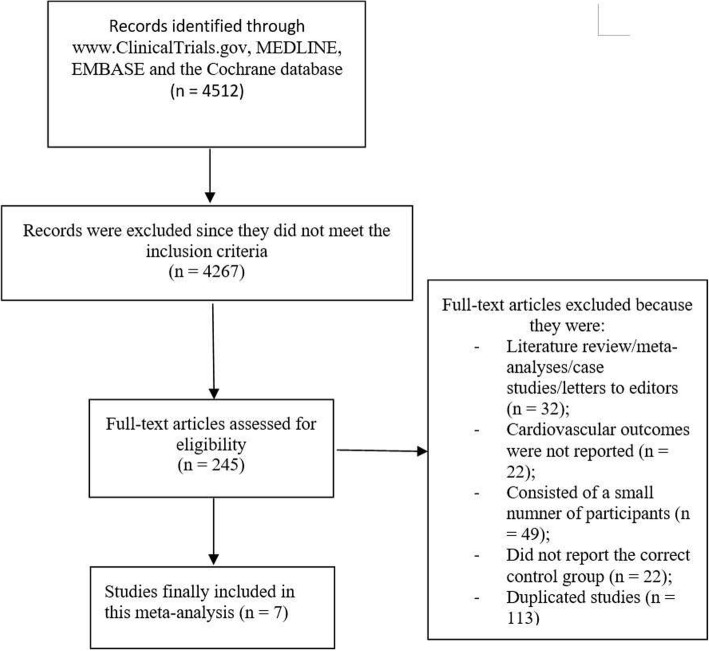
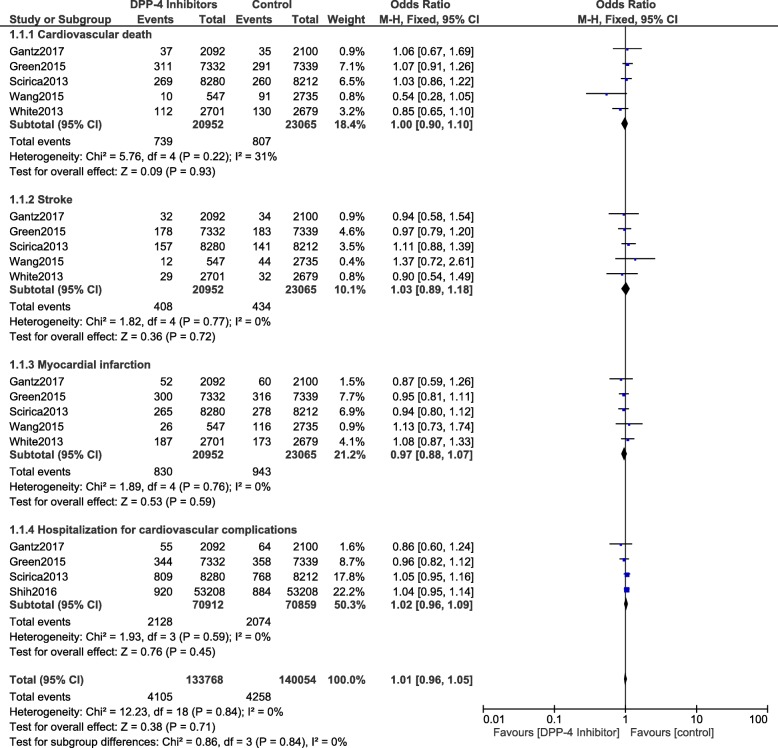
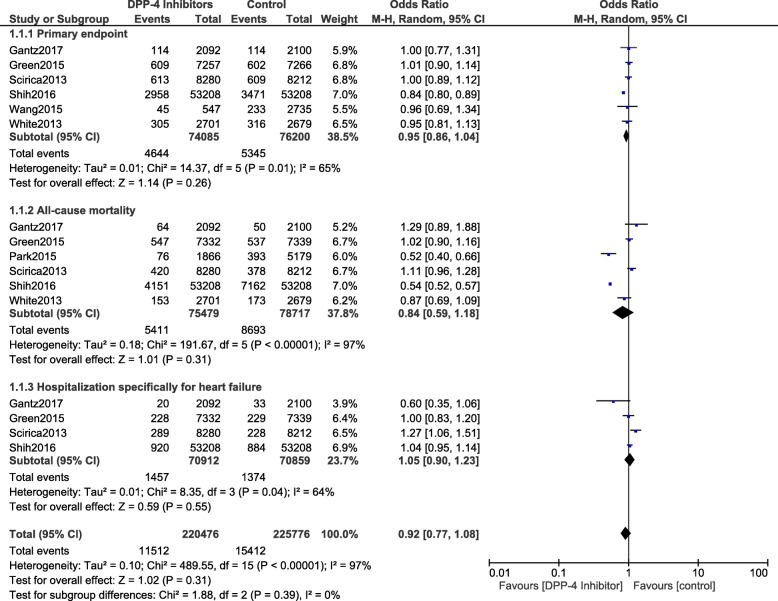
BACKGROUND: Dipeptidyl peptidase 4 (DPP-4) inhibitors are newer oral anti-diabetic agents which have been approved by the Food and Drug Administration for the treatment of patients with type 2 diabetes mellitus (T2DM). In this analysis, we aimed to systematically compare the cardiovascular outcomes associated with DPP-4 inhibitors versus non-DPP-4 inhibitor users. METHODS: All English publications that compared the use of DPP-4 inhibitors and that reported cardiovascular outcomes in patients with T2DM were searched using specific terms. Studies were included if they satisfied the following inclusion criteria: They were randomized trials or observation cohorts/registries comparing DPP-4 inhibitors use in patients with T2DM; The studies included a large sample size of participants; And they reported cardiovascular outcomes as their main endpoints. RevMan 5.3 was used to analyze the data, and odds ratios (OR) with 95% confidence intervals (CI) were used to represent the results. RESULTS: A total number of 157,478 participants with T2DM were included. Seventy-six thousand and twenty six patients were assigned to the DPP-4 inhibitor group whereas 81,452 patients were assigned to the control group. Results of the current analysis showed that during a mean follow-up time period ranging from 52 to 152 weeks, the primary endpoint (cardiovascular death/non-fatal myocardial infarction (MI)/non-fatal stroke) was not significantly different in the treatment of T2DM patients with versus without DPP-4 inhibitors (OR: 0.95, 95% CI: 0.86-1.04; P = 0.26). Cardiovascular death (OR: 1.00, 95% CI: 0.90-1.10; P = 0.93), stroke (OR: 1.03, 95% CI: 0.89-1.18; P = 0.72), MI (OR: 0.97, 95% CI: 0.88-1.07; P = 0.59), all-cause mortality (OR: 0.84, 95% CI: 0.59-1.18; P = 0.31), hospitalization for cardiovascular complications (OR: 1.02, 95% CI: 0.96-1.09; P = 0.45) and hospitalization specifically for heart failure (OR: 1.05, 95% CI: 0.90-1.23; P = 0.55) were also similarly manifested in both groups. CONCLUSION: The current analysis showed that treatment with DPP-4 inhibitors did not significantly increase cardiovascular outcomes in these patients with T2DM indicating that those drugs might be safe to use in terms of cardiovascular events.
Overview
The claims and statistics of this paper haven’t been checked yet.
Free: it reads the open-access text and checks the first 5 claims that cite a source we can check. Create a free account to check every claim.
Integrity signals
Registry
Cites
Statistics
Figures
Verification
Claims the paper makes
The claims and statistics of this paper haven’t been checked yet.
Free: it reads the open-access text and checks the first 5 claims that cite a source we can check. Create a free account to check every claim.
Claims other papers make about this one
Each is checked against this paper’s own text: does it say what the citing paper says it does?
The source backs part of the claim, not all of it — or backs it for a different population, condition or comparison.
In the citing paper
“Subsequent observational studies, CVOTs, and meta-analyses have not shown an excess heart failure risk with DPP4 inhibitors.”
From Clinical management of stable coronary artery disease in patients with type 2 diabetes mellitus: a scientific statement from the American Heart Association (2020) · cites this paper as [217]
Experimental — accuracy not yet measured
Self-check
Percentages, sums and reported differences re-computed from the paper’s own numbers.
The self-check needs the paper’s full text.
Citations
Cites
Liberati, A., Altman, D. G., Tetzlaff, J., Mulrow, C., Gotzsche, P. C., Ioannidis, J. P. A., Clarke, M., Devereaux, P. J., Kleijnen, J., & Moher, D. (2009) · BMJ · doi:10.1136/bmj.b2700 · Cited by 17,648
Heart Disease and Stroke Statistics—2017 Update: A Report From the American Heart Association
Benjamin, E. J., Blaha, M. J., Chiuve, S. E., Cushman, M., Das, S. R., Deo, R., de Ferranti, S. D., Floyd, J., Fornage, M., Gillespie, C., et al. (2017) · Circulation · doi:10.1161/cir.0000000000000485 · Cited by 12,591
Saxagliptin and cardiovascular outcomes in patients with type 2 diabetes mellitus
Scirica, B. M., Bhatt, D. L., Braunwald, E., Steg, P. G., Davidson, J., Hirshberg, B., Ohman, P., Frederich, R., Wiviott, S. D., Hoffman, E. B., et al. (2013) · New England Journal of Medicine · doi:10.1056/nejmoa1307684 · Cited by 3,470 · cited 1×
“…patients assigned to control group (n) Gantz2017 [7] RCT 2012–2017 2092 2100 Green2015 [8] RCT 2008–2015 7332 7339 Park2015 [9] OS 2007–2011 1866 5179 Scirica2013 [10] RCT 2010–2011 8280 8212 Shih2016 [11] OS 2009–2013 53,208 53,208 Wang2015 [12] OS 2009–2011 547 2735 White2013 [13] RCT…”
Assessing Risk of Bias in Included Studies
Higgins, J. P., & Altman, D. G. (2008) · Cochrane Handbook for Systematic Reviews of Interventions · doi:10.1002/9780470712184.ch8 · Cited by 3,396
Effect of Sitagliptin on Cardiovascular Outcomes in Type 2 Diabetes
Green, J. B., Bethel, M. A., Armstrong, P. W., Buse, J. B., Engel, S. S., Garg, J., Josse, R., Kaufman, K. D., Koglin, J., Korn, S., et al. (2015) · New England Journal of Medicine · doi:10.1056/nejmoa1501352 · Cited by 2,577 · cited 2×
“When study Green2015 was excluded, results for primary endpoint (OR: 0.93, 95% CI: 0.84–1.02; P = 0.14), cardiovascular death (OR: 0.95, 95% CI: 0.83–1.08; P = 0.42), stroke (OR: 1.07, 95% CI: 0.89–1.28; P = 0.48), MI (OR: 0.99, 95% CI: 0.88–1.12; P = 0.86), hospitalization for cardiovascular…”
InfluentialAlogliptin after acute coronary syndrome in patients with type 2 diabetes
White, W. B., Cannon, C. P., Heller, S. R., Nissen, S. E., Bergenstal, R. M., Bakris, G. L., Perez, A. T., Fleck, P. R., Mehta, C. R., Kupfer, S., et al. (2013) · New England Journal of Medicine · doi:10.1056/nejmoa1305889 · Cited by 2,502 · cited 1×
“…[9] OS 2007–2011 1866 5179 Scirica2013 [10] RCT 2010–2011 8280 8212 Shih2016 [11] OS 2009–2013 53,208 53,208 Wang2015 [12] OS 2009–2011 547 2735 White2013 [13] RCT 2009–2013 2701 2679 Total no of patients (n) 76,026 81,452 Abbreviations: RCT Randomized controlled trials, OS…”
Lago, R. M., Singh, P. P., & Nesto, R. W. (2007) · The Lancet · doi:10.1016/s0140-6736(07)61514-1 · Cited by 710
The cardiovascular safety of diabetes drugs–insights from the rosiglitazone experience
Hiatt, W. R., Kaul, S., & Smith, R. J. (2013) · New England Journal of Medicine · doi:10.1056/nejmp1309610 · Cited by 204
Zhong, J., Maiseyeu, A., Davis, S. N., & Rajagopalan, S. (2015) · Circulation Research · doi:10.1161/circresaha.116.305665 · Cited by 189 · cited 1×
“Dipeptidyl peptidase 4 (DPP-4) inhibitors are newer anti-diabetic agents which have shown to well maintain blood glucose level over the long-term (decent glycated hemoglobin [HbA1c]), and were not associated with hypoglycemia or weight gain in comparison to other similar drugs [4].”
BackgroundGantz, I., Chen, M., Suryawanshi, S., Ntabadde, C., Shah, S., O’Neill, E. A., Engel, S. S., Kaufman, K. D., & Lai, E. (2017) · Cardiovascular Diabetology · doi:10.1186/s12933-017-0593-8 · Cited by 108 · cited 2×
“…of study Time period of patients’ enrollment Total no of patients assigned to DPP-4 inhibitors (n) Total no of patients assigned to control group (n) Gantz2017 [7] RCT 2012–2017 2092 2100 Green2015 [8] RCT 2008–2015 7332 7339 Park2015 [9] OS 2007–2011 1866 5179 Scirica2013 [10] RCT 2010–2011 8280…”
BackgroundInfluential
Cited by
Arnold, S. V., Bhatt, D. L., Barsness, G. W., Beatty, A. L., Deedwania, P. C., Inzucchi, S. E., Kosiborod, M., Leiter, L. A., Lipska, K. J., Newman, J. D., et al. (2020) · Circulation · doi:10.1161/cir.0000000000000766 · Cited by 304
C-reactive protein: a target for therapy to reduce inflammation
Rizo-Téllez, S. A., Sekheri, M., & Filep, J. G. (2023) · Frontiers in Immunology · doi:10.3389/fimmu.2023.1237729 · Cited by 182
Moon, J. S., Kang, S., Choi, J. H., Lee, K. A., Moon, J. H., Chon, S., Kim, D. J., Kim, H. J., Seo, J. A., Kim, M. K., et al. (2024) · Diabetes & Metabolism Journal · doi:10.4093/dmj.2024.0249 · Cited by 90
Patoulias, D. I., Boulmpou, A., Teperikidis, E., Katsimardou, A., Siskos, F., Doumas, M., Papadopoulos, C. E., & Vassilikos, V. (2021) · World Journal of Cardiology · doi:10.4330/wjc.v13.i10.585 · Cited by 70
Seidu, S., Cos, X., Brunton, S., Harris, S. B., Jansson, S. P. O., Mata-Cases, M., Neijens, A. M. J., Topsever, P., & Khunti, K. (2022) · Primary Care Diabetes · doi:10.1016/j.pcd.2022.02.002 · Cited by 48
Mannucci, E., Nreu, B., Montereggi, C., Ragghianti, B., Gallo, M., Giaccari, A., Monami, M., Candido, R., Pintaudi, B., Targher, G., et al. (2021) · Nutrition Metabolism and Cardiovascular Diseases · doi:10.1016/j.numecd.2021.06.002 · Cited by 53
Kang, S., Kang, S. M., Choi, J. H., Ko, S., Koo, B. K., Kwon, H.-S., Kim, M. K., Kim, S. Y., Kim, S., Kim, Y., et al. (2025) · Diabetes & Metabolism Journal · doi:10.4093/dmj.2025.0469 · Cited by 85
Sim, R., Chong, C. W., Loganadan, N. K., Fong, A. Y. Y., Navaravong, L., Hussein, Z. B., Khunti, K., & Lee, S. W. H. (2022) · Diabetic Medicine · doi:10.1111/dme.14780 · Cited by 40
Mechanisms and pharmacotherapy of hypertension associated with type 2 diabetes
Kamalumpundi, V., Shams, E., Tucker, C., Cheng, L., Peterson, J., Thangavel, S., Ofori, O., & Correia, M. (2022) · Biochemical Pharmacology · doi:10.1016/j.bcp.2022.115304 · Cited by 39
Nagao, M., Sasaki, J., Tanimura‐Inagaki, K., Sakuma, I., Sugihara, H., Oikawa, S., & on behalf of the SUCRE Study Investigators (2024) · Cardiovascular Diabetology · doi:10.1186/s12933-024-02149-7 · Cited by 31
“DPP4 inhibitors have a neutral influence on body weight, minimal risk of hypoglycemia [6], and safety in terms of major cardiovascular outcomes [7], excluding heart failure with saxagliptin [8] and possibly alogliptin [9].”
BackgroundAbdullah, A. R., Seliem, M. A., Khidr, E. G., Sobhy, A. M., El‐Shiekh, R. A., Hafeez, M. S. A. E., & El-Husseiny, A. A. (2025) · Naunyn-Schmiedeberg s Archives of Pharmacology · doi:10.1007/s00210-025-03980-9 · Cited by 41
“According to data, TMAO causes vascular endothelial cells to undergo pyroptosis by generating reactive oxygen species (ROS), which ultimately results in atherosclerosis (Liu et al. 2019b).”
Steven, S., Kuntić, M., Münzel, T. F., & Daiber, A. (2025) · Pharmacological Reviews · doi:10.1016/j.pharmr.2025.100082 · Cited by 26
“…Cheng et al 27 for rosiglitazone versus no medication or other antidiabetics, from Zhang et al 28 for DPP-4i or glucagon-like peptide 1 analogs (GLP-1a) versus placebo (or other antidiabetics), from Liu et al 29 versus DPP-4i versus no DPP-4i and from Toyama et al 30 for SGLT2i versus no SGLT2i.”
How to Reduce Cardiovascular Risk in Nonalcoholic Fatty Liver Disease
Ismaiel, A., & Dumitrascu, D. L. (2020) · American Journal of Therapeutics · doi:10.1097/mjt.0000000000001174 · Cited by 16
Xu, J., Ling, H., Geng, J., Investigators, Huang, Y., Xie, Y., Zheng, H., Niu, H., Zhang, T., Yuan, J., et al. (2022) · Diabetes Obesity and Metabolism · doi:10.1111/dom.14810 · Cited by 11
From Current Therapeutics to Multitarget Ligands: A Review of Diabetes Pharmacological Treatments
Cabré, F., Centelles, J. J., & Cascante, M. (2025) · Pharmaceutics · doi:10.3390/pharmaceutics17091125 · Cited by 16
“…for heart failure was observed in the group treated with the drug compared to the placebo group, and although the mechanism of heart failure with these drugs is unclear, the FDA suggests avoiding medications containing saxagliptin or alogliptin in patients with heart failure (Table 8) [58,81,82].”
Diallo, A., Villard, O., Carlos‐Bolumbu, M., Duc, P., & Galtier, F. (2025) · Diabetes Obesity and Metabolism · doi:10.1111/dom.16561 · Cited by 9
Extra-Glycemic Effects of Anti-Diabetic Medications: Two Birds with One Stone?
Rhee, E. (2022) · Endocrinology and Metabolism · doi:10.3803/enm.2022.304 · Cited by 12
Seo, D. H., Ha, K. H., Kim, S. H., & Kim, D. J. (2021) · Endocrinology and Metabolism · doi:10.3803/enm.2020.777 · Cited by 6
Ou, S., Chen, H., Fang, N., Yin, C.-H., Chen, C., & Chen, J. (2021) · Cardiovascular Diabetology · doi:10.1186/s12933-021-01364-w · Cited by 8
“In addition, DPP-4 inhibitors resulted in fewer weight gain side effects, more protective of pancreatic beta-cell function and volume, and better tolerability [30].”
BackgroundHeart Failure in Diabetes Mellitus: An Updated Review
Sohrabi, C., Saberwal, B., Lim, W. Y., Tousoulis, D., Ahsan, S., & Παπαγεωργίου, Ν. (2020) · Current Pharmaceutical Design · doi:10.2174/1381612826666201118091659 · Cited by 5
Zeng, L., Chan, G. C., Ng, J. K., Fung, W. W., Chow, K. M., & Szeto, C. (2023) · Medicine · doi:10.1097/md.0000000000034538 · Cited by 4
“[23] It is important to note that our study hypothesis was that DPP-4 inhibitor prevents the decline in hemoglobin level in DKD patients.”
Prakash, V., Goel, N., & Verma, S. (2020) · Indian Journal of Pharmacy and Pharmacology · doi:10.18231/j.ijpp.2020.006 · Cited by 3
Glucose lowering does not necessarily reduce cardiovascular risk in type 2 diabetes
Bourazana, A., Giamouzis, G., Skoularigis, J. S., Triposkiadis, F. K., & Xanthopoulos, A. V. (2022) · World Journal of Cardiology · doi:10.4330/wjc.v14.i4.266 · Cited by 4
Jawad, A. N., Kadhim, K. A., Alzajaji, Q. B., & Al-Neshmi, H. (2024) · Al Mustansiriyah Journal of Pharmaceutical Sciences · doi:10.32947/ajps.v24i3.1082 · Cited by 2
The mineralocorticoid receptor: a new chapter for therapeutic regulation of diabetic cardiomyopathy
Kanki, M., & Young, M. J. (2026) · Journal of Molecular and Cellular Cardiology · doi:10.1016/j.yjmcc.2026.01.004 · Cited by 3
The roles of NLRP3 inflammasome in diabetic cardiomyopathy and potential targeted therapeutics
Zhang, M., & Liu, Y. (2026) · Genes & Diseases · doi:10.1016/j.gendis.2026.102140 · Cited by 3
Adherencia terapéutica en pacientes con diabetes tipo 2 en tratamiento con metformina y sitagliptina
Ramos-Mejía, A. K., & Alvarado-Gutiérrez, T. (2024) · Atención Familiar · doi:10.22201/fm.14058871p.2024.287956 · Cited by 5
Prognosis of patients with coronary artery disease and diabetes — what to look for
Nekrasov, A. A., Тимощенко, Е. С., Анатольевна, Н. Т., & Bakhrak, E. V. (2024) · Russian Journal of Cardiology · doi:10.15829/1560-4071-2024-6030 · Cited by 2
Amini‐Salehi, E., Hasanpour, M., Alotaibi, A. S., Rashidian, P., Hashemi, S. M. H., Nasrollahizadeh, A., Letafatkar, N., Saberian, P., Amani‐Beni, R., & Shanbehzadeh, N. (2025) · Annals of Medicine and Surgery · doi:10.1097/ms9.0000000000003089 · Cited by 4
“For instance, the study conducted by Liu, et al (2019) [ 79 ] found that the use of DPP-4 inhibitors in patients with T2DM does not significantly increase CVOs.”
Implications of the recent CVOTs in type 2 diabetes: The right place for DPP-IV inhibitors today
Bloomgarden, Z. T. (2019) · Diabetes Research and Clinical Practice · doi:10.1016/j.diabres.2019.107906 · Cited by 2
Rhee, E. (2021) · Journal of Korean Diabetes · doi:10.4093/jkd.2021.22.1.12 · Cited by 2
Treatment of Patients Chronic Coronary Heart Disease and Type 2 Diabetes Mellitus
Shchukina, E. V. S., Приколота, О. А., Bagriy, V. A., Андрусяк, А. Ю., Gs, R., Shesterina, Y. B., & Stefano, E. (2023) · The Russian Archives of Internal Medicine · doi:10.20514/2226-6704-2023-13-2-97-109 · Cited by 3
Metformin, Sulfonylureas, DPP-4 Inhibitors and Cardiovascular Outcomes in Type 2 DM
Scheen, A. J. (2023) · Contemporary cardiology · doi:10.1007/978-3-031-13177-6_32 · Cited by 2
No pleotropic effects of linagliptin on atherosclerotic plaques: Case closed
Al-Mallah, M. H., Hyafil, F., & Santulli, G. (2020) · Atherosclerosis · doi:10.1016/j.atherosclerosis.2020.05.009 · Cited by 2
Qarni, A. A. A., AlSubaiee, M., Husain, M., Alkhazmari, G., AlQahtani, A., Aldossary, I., Gado, W., Albahrani, Z., AlMukhaylid, S., Alarfaj, A., et al. (2023) · Series of Endocrinology Diabetes and Metabolism · doi:10.54178/jsedmv5i2004 · Cited by 2
Expert Consensus Statement on Simplified Glycemic Care in Patients With Type 2 Diabetes Mellitus
Sethi, B. K., Chowdhury, S., Jain, S. M., Zargar, A. H., Chadha, M. D., Bhattacharyya, A., Shaikh, S. S., Makkar, B. M., Chawla, M. S., Kalra, P., et al. (2025) · Cureus · doi:10.7759/cureus.87002 · Cited by 1
“Evidence for DPP-4 inhibitors: A systematic review and meta-analysis by Liu et al. [80] reported that DPP-4 inhibitors are safe and do not increase any cardiovascular outcomes.”
Jing Hua, H. U., & Chen, L. (2020) · Primary care diabetes · doi:10.1016/j.pcd.2020.08.012 · Cited by 1
SAFETY PROFILE OF DIPEPTIDYL PEPTIDASE-4 INHIBITORS
Ganeva, M. G. (2023) · Trakia Journal of Sciences · doi:10.15547/tjs.2023.01.009 · Cited by 2
Vikhrova, I., Loboda, A., & Zmyslia, I. (2024) · Eastern Ukrainian Medical Journal · doi:10.21272/eumj.2024;12(4):808-817 · Cited by 5
Tuersun, A., Hou, G., & Cheng, G. (2023) · SSRN Electronic Journal · doi:10.2139/ssrn.4657441 · Cited by 1
Bailey, C. J., & Krentz, A. J. (2024) · Wiley eBooks · doi:10.1002/9781119697473.ch35 · Cited by 2
Current Advancements in Anti-Diabetic Drugs
Verma, G., & Sharma, A. K. (2018) · Journal of Emerging Technologies and Innovative Research
SGLT2-inhibitor and its place in Contemporary Diabetes Management
Khoo, C. M. (2020) · The Singapore Family Physician · doi:10.33591/sfp.46.6.u2
DYDA 2TM trial: unveil the linagliptin innocence
Badran, H. M. (2020) · European Journal of Preventive Cardiology · doi:10.1093/eurjpc/zwaa019
Shi, H., Peng, M., Liu, Y., Kan, Z., Li, W., & Yang, T. (2021) · International Journal of Clinical Practice · doi:10.1111/ijcp.14213
RetractedSłomińska, D., Manikowska, K., Hoszman, M., Mikołajczak, P. Ł., & Winiarska, H. (2021) · Pharmacotherapy in Psychiatry and Neurology · doi:10.33450/fpn.2021.02.003 · Cited by 1
Rhee, E. (2021) · Cardiovascular Prevention and Pharmacotherapy · doi:10.36011/cpp.2021.3.e4
Dipeptidyl Peptidase 4 Inhibitor, an Update
Lee, J. H. (2021) · Journal of Korean Diabetes · doi:10.4093/jkd.2021.22.2.91
The Potential for Multi-Disease Treatment: Applications of Dipeptidyl Peptidase-4 Inhibitors
李, 甜. (2024) · Advances in Clinical Medicine · doi:10.12677/acm.2024.1472169
Tuersun, A., Cui, S., Li, H., Aikebaier, A., Shi, Y., Cheng, G., Cheng, L., & Ma, G. (2025) · Current Therapeutic Research · doi:10.1016/j.curtheres.2025.100804 · Cited by 2
Chen, C.-K., Kuo, C., Chang, Y.-J., Zhang, W., Doherty, M., Chang, M., & Chen, T. (2025) · International Journal of Endocrinology · doi:10.1155/ije/2357272
“Moreover, two meta-analyses presented varied conclusions on the correlation between DPP4 inhibitors and CVD manifestation [13, 14].”
Nagao, M., Sasaki, J., Tanimura‐Inagaki, K., Sakuma, I., Sugihara, H., & Oikawa, S. (2024) · Figshare · doi:10.6084/m9.figshare.25194755
Ou, S.-H., Chen, H.-Y., Fang, N.-W., Yin, C.-H., Chen, C.-L., & Chen, J.-S. (2021) · Figshare · doi:10.6084/m9.figshare.16590915
Foundations of Diabetes Technology
Joshi, D. M., Bhatt, H., & Patel, H. K. (2026) · BENTHAM SCIENCE PUBLISHERS eBooks · doi:10.2174/9798898813635126010006
Mavridis, A., Abzhandadze, T., Buvarp, D., Simons, K., Eliasson, B., von Euler, M., Viktorisson, A., & Sunnerhagen, K. S. (2026) · EClinicalMedicine · doi:10.1016/j.eclinm.2026.104220
Роль ингибиторов ДИПЕПТИДИЛПЕПТИДАЗЫ-4 в управлении сахарным диабетом 2 типа
Ё.Х.Туракулова, Хужамуродова, М. А., & Алиханова, Н. М. (2022) · Innovative Research in the Modern World · doi:10.70413/zdit-v01-i12-s15087
Metadata
- Authors
- Liu, D., Jin, B., Chen, W., & Yun, P.
- Affiliations
- First People's Hospital of Jingzhou (CN)
- Corresponding author
- Liu, Dan
- Venue
- BMC Pharmacology and Toxicology
- Published
- 2019-03-04
- Volume
- 20
- Issue
- 1
- Pages
- 15-15
- ISSN
- 2050-6511 (ISSN-L)
- PMC
- PMC6399924
- OpenAlex
- W2918566284
- Cited by
- 56
- References
- 16
- Citations by year
- 2026: 4 · 2025: 9 · 2024: 9 · 2023: 7 · 2022: 6 · 2021: 11 · 2020: 8 · 2019: 1
- FWCI
- 1.00
- Type
- journal article
- Language
- en
- Open access
- gold
- doi.org
- Licence
- cc-by
- creativecommons.org/licenses/by/4.0/ (tdm)
- Locations
- BMC Pharmacology and Toxicology (publishedVersion, cc-by)
- Europe PMC (PubMed Central) (publishedVersion, cc-by)
- PubMed Central (publishedVersion, cc-by)
- PubMed (publishedVersion)
- DOAJ (DOAJ: Directory of Open Access Journals) (submittedVersion, cc-by-sa)
- Topics
- Health Sciences › Medicine › Endocrinology, Diabetes and Metabolism › Diabetes Treatment and Management
- Health Sciences › Medicine › Endocrinology, Diabetes and Metabolism › Diabetes, Cardiovascular Risks, and Lipoproteins
- Health Sciences › Medicine › Cardiology and Cardiovascular Medicine › Heart Failure Treatment and Management
- Keywords
- DPP-4 inhibitors, type 2 diabetes, cardiovascular outcomes, cardiovascular mortality, myocardial infarction, stroke, all-cause mortality, cardiovascular hospitalization, oral antidiabetic drugs, comparative effectiveness, cardiovascular safety, glycemic control, HbA1c, LDL cholesterol, blood pressure, body mass index, cardiovascular risk factors, cardiovascular risk stratification
- MeSH terms
- Cardiovascular Diseases, Diabetes Mellitus, Type 2, Odds Ratio, Randomized Controlled Trials as Topic, Dipeptidyl-Peptidase IV Inhibitors, Observational Studies as Topic
About these checks
Registry, retraction, Cites and statistics results are computed, not judged, with one exception: a printed reference that no index lists is read once by a model before it counts as a citation error. Claims are extracted by a model and kept only when their quote appears verbatim in the text; each cited source is then checked, with a model’s help, for whether it says what the claim relies on. Those verdicts can be wrong — read the claim’s quote and the cited source before relying on one.
Statistics and arithmetic are recomputed, not judged.
Confidence bands are shown only for fields calibrated on our annotated test set. None is calibrated yet, so no band is shown.
What counts as a claim ›How we measure confidence ›How we check this ›
Are you an author, or do you see a problem with this page? Request a review
Data sources
Bibliographic data: Semantic Scholar, OpenAlex, Crossref.
Contains information from the Semantic Scholar Academic Graph Datasets, made available under the ODC Attribution License (ODC-BY 1.0).
Semantic Scholar’s data is described in: Kinney, R., et al. (2023). The Semantic Scholar Open Data Platform. arXiv:2301.10140.
