

Glutamatergic medications as adjunctive therapy for moderate to severe obsessive-compulsive disorder in adults: a systematic review and meta-analysis
Open accessThe DOI matches its Crossref record; 50 of the 50 references it cites were found in a registry or an index.
Abstract
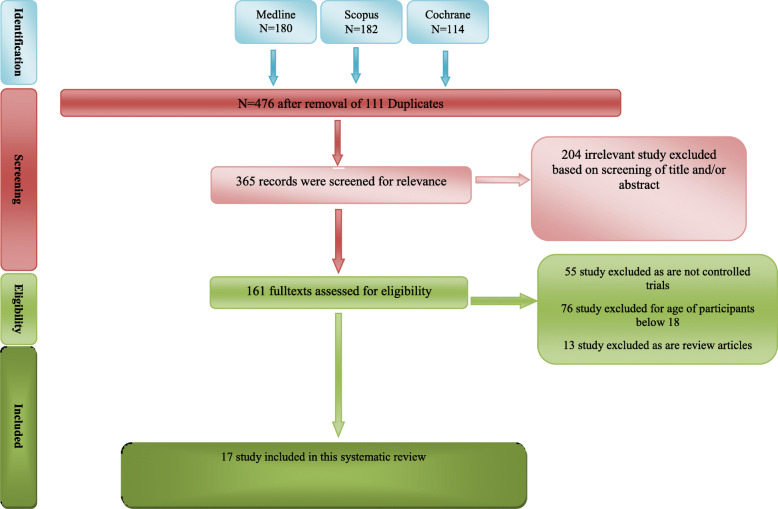
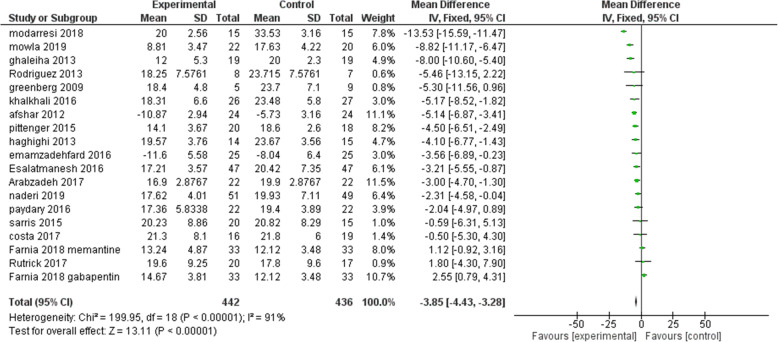
Background: Obsessive-compulsive disorder (OCD) is among the most disabling neuropsychiatric conditions characterized by the presence of repetitive intrusive thoughts, impulses, or images (obsessions) and/or ritualized mental or physical acts (compulsions). Serotonergic medications, particularly Selective Serotonin Reuptake Inhibitors (SSRIs), are the first-line treatments for patients with OCD. Recently, dysregulation of glutamatergic system has been proposed to be involved in the etiology of OCD. We designed this systematic review and meta-analysis to evaluate clinical efficacy of glutamatergic medications in patients with OCD, according to the guidelines of Cochrane collaboration. Method: We searched Medline, Scopus, and Cochrane library without applying any language filter. Two of the authors independently reviewed search results for irrelevant and duplicate studies and extracted data and assessed methodological quality of the studies. We transformed data into a common rubric and calculated a weighted treatment effect across studies using Review Manager. Results: We found 476 references in 3 databases, and after exclusion of irrelevant and duplicate studies, 17 studies with total number of 759 patients with OCD were included. In the present review we found evidence for several drugs such as memantine, N-acetylcysteine (NAC), Minocycline, L-carnosine and riluzole. Glutamaterigic drug plus SSRIs were superior to SSRI+ Placebo with regard to Y-BOCS scale [standardized mean difference (SMD = − 3.81 95% CI = − 4.4, − 3.23). Conclusion: Augmentation of glutamatergic medications with SSRIs are beneficial in obsessive-compulsive patients, no harmful significant differences in any safety outcome were found between the groups.
Overview
The claims and statistics of this paper haven’t been checked yet.
Free: it reads the open-access text and checks the first 5 claims that cite a source we can check. Create a free account to check every claim.
Integrity signals
Registry
Cites
Statistics
Figures
Verification
Claims the paper makes
The claims and statistics of this paper haven’t been checked yet.
Free: it reads the open-access text and checks the first 5 claims that cite a source we can check. Create a free account to check every claim.
Claims other papers make about this one
Each is checked against this paper’s own text: does it say what the citing paper says it does?
The source backs part of the claim, not all of it — or backs it for a different population, condition or comparison.
In the citing paper
“Thus, augmentation with glutamatergic modulating agents, such as memantine and lamotrigine, has demonstrated some evidence of adequate safety profiles and efficacy in open-label or small RCTs [34].”
From Clinical Advances in Treatment Strategies for Obsessive-compulsive Disorder in Adults (2023) · cites this paper as [34]
Experimental — accuracy not yet measured
Self-check
Percentages, sums and reported differences re-computed from the paper’s own numbers.
The self-check needs the paper’s full text.
Citations
Cites
Diagnostic and Statistical Manual of Mental Disorders
American Psychiatric Association (2013) · doi:10.1176/appi.books.9780890425596 · Cited by 116,369
The Cochrane Collaboration's tool for assessing risk of bias in randomised trials
Higgins, J. P. T., Altman, D. G., Gotzsche, P. C., Juni, P., Moher, D., Oxman, A. D., Savovic, J., Schulz, K. F., Weeks, L., Sterne, J. A. C., et al. (2011) · BMJ · doi:10.1136/bmj.d5928 · Cited by 33,817
Liberati, A., Altman, D. G., Tetzlaff, J., Mulrow, C., Gøtzsche, P. C., Ioannidis, J. P. A., Clarke, M., Devereaux, P. J., Kleijnen, J., & Moher, D. (2009) · PLoS Medicine · doi:10.1371/journal.pmed.1000100 · Cited by 28,164 · cited 1×
“and Meta-Analyses for Protocols guidelines [20].”
Dermyshi, E., Wang, Y., Yan, C., Hong, W., Qiu, G., Gong, X., & Zhang, T. (2017) · Neonatology · doi:10.1159/000454668 · Cited by 24,451
Liberati, A., Altman, D. G., Tetzlaff, J., Mulrow, C., Gøtzsche, P. C., Ioannidis, J. P. A., Clarke, M., Devereaux, P. J., Kleijnen, J., & Moher, D. (2009) · Journal of Clinical Epidemiology · doi:10.1016/j.jclinepi.2009.06.006 · Cited by 10,578
Riluzole for amyotrophic lateral sclerosis (ALS)/motor neuron disease (MND)
Miller, R., Mitchell, J., Lyon, M., & Moore, D. (2002) · Cochrane Database of Systematic Reviews · doi:10.1002/14651858.cd001447 · Cited by 909
N-acetylcysteine in psychiatry: current therapeutic evidence and potential mechanisms of action
Dean, O., Giorlando, F., & Berk, M. (2011) · Journal of Psychiatry and Neuroscience · doi:10.1503/jpn.100057 · Cited by 494
Pittenger, C., Bloch, M. H., & Williams, K. (2011) · Pharmacology & Therapeutics · doi:10.1016/j.pharmthera.2011.09.006 · Cited by 426
Women Are at Greater Risk of OCD Than Men: A Meta-Analytic Review of OCD Prevalence Worldwide
Fawcett, E. J., Power, H., & Fawcett, J. M. (2020) · The Journal of Clinical Psychiatry · doi:10.4088/jcp.19r13085 · Cited by 344 · cited 1×
“mately 1–2% of adult general population worldwide [2].”
BackgroundGlutamatergic Dysfunction in OCD
Chakrabarty, K., Bhattacharyya, S., Christopher, R., & Khanna, S. (2005) · Neuropsychopharmacology · doi:10.1038/sj.npp.1300733 · Cited by 344
Cited by
Akram, N., Faisal, Z., Irfan, R., Shah, Y. A., Batool, S. A., Zahid, T., Zulfiqar, A., Fatima, A., Jahan, Q., Tariq, H., et al. (2023) · Food Science & Nutrition · doi:10.1002/fsn3.3826 · Cited by 100
Panizzutti, B., Skvarc, D., Lin, S. C., Croce, S., Meehan, A., Bortolasci, C. C., Marx, W., Walker, A. J., Hasebe, K., Kavanagh, B. E., et al. (2023) · International Journal of Molecular Sciences · doi:10.3390/ijms24065250 · Cited by 75
Lee, D. K., & Lipner, S. R. (2022) · International Journal of Environmental Research and Public Health · doi:10.3390/ijerph19116370 · Cited by 47
“, depression, anxiety, and post-traumatic stress disorder (PTSD)) [12,21].”
Денисовна, Ш. А., Zharikova, T. S., Ковалева, О. Н., Luchina, A. M., Aktemirov, A. S., Olsufieva, A. V., Sinelnikov, M. Y., Pontes‐Silva, A., & Zharikov, Y. O. (2023) · Behavioural Brain Research · doi:10.1016/j.bbr.2023.114606 · Cited by 39
Coelho, D. R. A., Yang, C., Suriaga, A. A., Manasa, J., Bain, P. A., Vieira, W. F., Papatheodorou, S., & Salvi, J. D. (2025) · JAMA Network Open · doi:10.1001/jamanetworkopen.2024.52963 · Cited by 26
Metadata
- Authors
- Hadi, F., Kashefinejad, S., Kamalzadeh, L., Hoobehfekr, S., & Shalbafan, M.
- Affiliations
- Shahid Beheshti University (IR)
- Iran University of Medical Sciences (IR)
- Roozbeh Hospital (IR)
- Corresponding author
- Shalbafan, Mohammadreza
- Venue
- BMC Pharmacology and Toxicology
- Published
- 2021-11-04
- Volume
- 22
- Issue
- 1
- Pages
- 69-69
- ISSN
- 2050-6511 (ISSN-L)
- PMC
- PMC8569963
- OpenAlex
- W3210454838
- Cited by
- 36
- References
- 50
- Citations by year
- 2026: 6 · 2025: 6 · 2024: 10 · 2023: 11 · 2022: 3
- FWCI
- 0.80
- Type
- journal article
- Language
- en
- Open access
- gold
- doi.org
- Licence
- cc-by
- creativecommons.org/licenses/by/4.0 (tdm)
- creativecommons.org/licenses/by/4.0 (vor)
- Locations
- BMC Pharmacology and Toxicology (publishedVersion, cc-by)
- Europe PMC (PubMed Central) (publishedVersion, other-oa)
- PubMed Central (publishedVersion, cc-by)
- PubMed (publishedVersion)
- DOAJ (DOAJ: Directory of Open Access Journals) (submittedVersion, cc-by-sa)
- Topics
- Social Sciences › Psychology › Clinical Psychology › Obsessive-Compulsive Spectrum Disorders
- Social Sciences › Psychology › Experimental and Cognitive Psychology › Anxiety, Depression, Psychometrics, Treatment, Cognitive Processes
- Social Sciences › Psychology › Clinical Psychology › Psychoanalysis and Psychopathology Research
- Keywords
- obsessive-compulsive disorder, adjunctive therapy, memantine, N-acetylcysteine, minocycline, L-carnosine, riluzole, selective serotonin reuptake inhibitors, SSRI augmentation, glutamate dysregulation, drug safety
- MeSH terms
- Adult, Drug Therapy, Combination, Humans, Obsessive-Compulsive Disorder, Selective Serotonin Reuptake Inhibitors, Excitatory Amino Acid Agents
About these checks
Registry, retraction, Cites and statistics results are computed, not judged, with one exception: a printed reference that no index lists is read once by a model before it counts as a citation error. Claims are extracted by a model and kept only when their quote appears verbatim in the text; each cited source is then checked, with a model’s help, for whether it says what the claim relies on. Those verdicts can be wrong — read the claim’s quote and the cited source before relying on one.
Statistics and arithmetic are recomputed, not judged.
Confidence bands are shown only for fields calibrated on our annotated test set. None is calibrated yet, so no band is shown.
What counts as a claim ›How we measure confidence ›How we check this ›
Are you an author, or do you see a problem with this page? Request a review
How to cite
Cite CoChat for the checks on this page, and the paper for its own findings.
- This page
- CoChat. (2026). Citation check: Glutamatergic medications as adjunctive therapy for moderate to severe obsessive-compulsive disorder in adults: a systematic review and meta-analysis. https://app.cochat.ai/papers/10.1186/s40360-021-00534-6
- The paper
- Hadi, F., Kashefinejad, S., Kamalzadeh, L., Hoobehfekr, S., & Shalbafan, M. (2021). Glutamatergic medications as adjunctive therapy for moderate to severe obsessive-compulsive disorder in adults: a systematic review and meta-analysis. BMC Pharmacology and Toxicology. https://doi.org/10.1186/s40360-021-00534-6
Data sources
Bibliographic data: Semantic Scholar, OpenAlex, Crossref.
Contains information from the Semantic Scholar Academic Graph Datasets, made available under the ODC Attribution License (ODC-BY 1.0).
Semantic Scholar’s data is described in: Kinney, R., et al. (2023). The Semantic Scholar Open Data Platform. arXiv:2301.10140.
