

Updated efficacy of avelumab in patients with previously treated metastatic Merkel cell carcinoma after ≥1 year of follow-up: JAVELIN Merkel 200, a phase 2 clinical trial
Open accessThe DOI matches its Crossref record; 14 of the 14 references it cites were found in a registry or an index.
Abstract
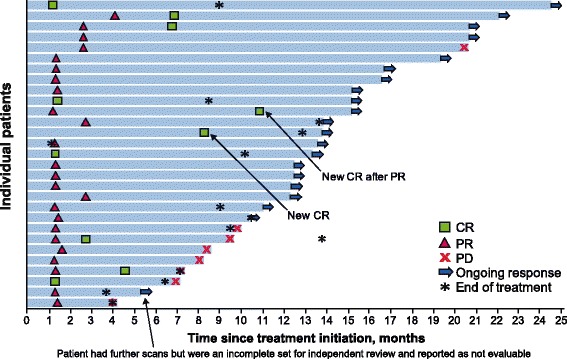
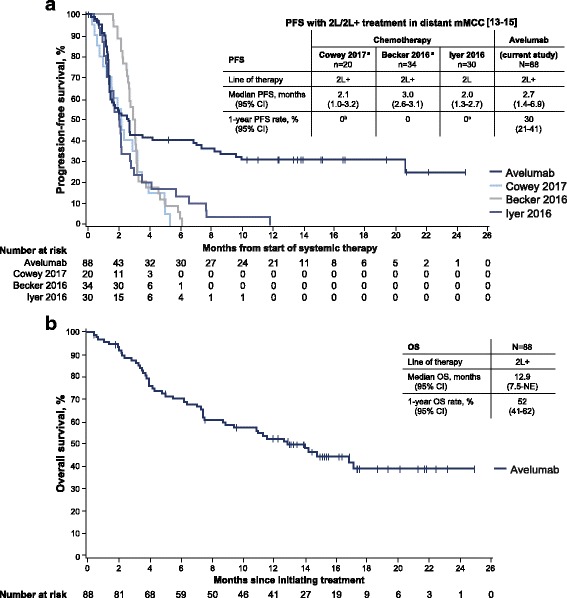
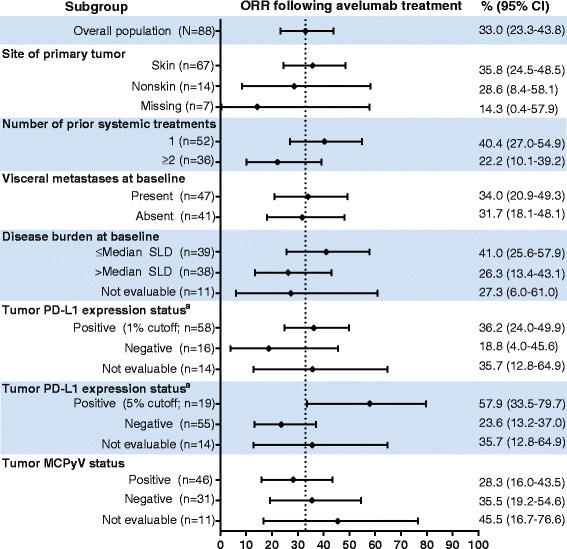
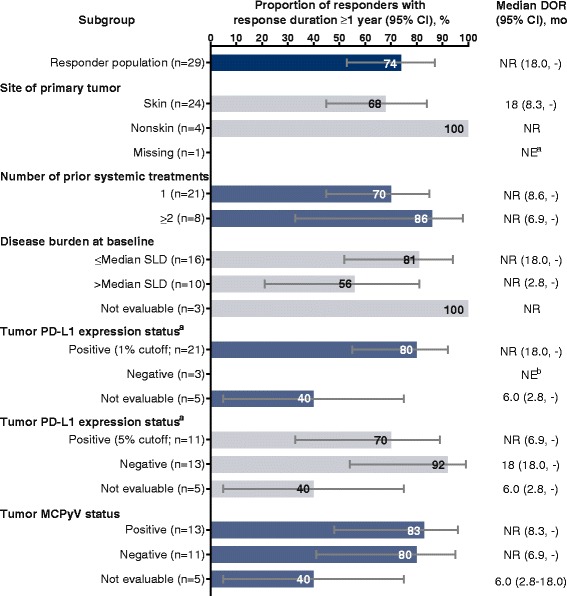
BACKGROUND: Merkel cell carcinoma (MCC) is a rare, aggressive skin cancer associated with poor survival outcomes in patients with distant metastatic disease (mMCC). In an initial analysis from JAVELIN Merkel 200, a phase 2, prospective, open-label, single-arm trial in mMCC, avelumab-a human anti-programmed death-ligand 1 (PD-L1) monoclonal antibody-showed promising efficacy and a safety profile that was generally manageable and tolerable. Here, we report the efficacy of avelumab after ≥1 year of follow-up in patients with distant mMCC that had progressed following prior chemotherapy for metastatic disease. PATIENTS AND METHODS: Patients received avelumab 10 mg/kg by 1-h intravenous infusion every 2 weeks until confirmed disease progression, unacceptable toxicity, or withdrawal. The primary endpoint was best overall response. Secondary endpoints included duration of response (DOR), progression-free survival (PFS), and overall survival (OS). RESULTS: Patients (N = 88) were followed for a minimum of 12 months. The confirmed objective response rate was 33.0% (95% CI, 23.3%-43.8%; complete response: 11.4%). An estimated 74% of responses lasted ≥1 year, and 72.4% of responses were ongoing at data cutoff. Responses were durable, with the median DOR not yet reached (95% CI, 18.0 months-not estimable), and PFS was prolonged; 1-year PFS and OS rates were 30% (95% CI, 21%-41%) and 52% (95% CI, 41%-62%), respectively. Median OS was 12.9 months (95% CI, 7.5-not estimable). Subgroup analyses suggested a higher probability of response in patients receiving fewer prior lines of systemic therapy, with a lower baseline disease burden, and with PD-L1-positive tumors; however, durable responses occurred irrespective of baseline factors, including tumor Merkel cell polyomavirus status. CONCLUSIONS: With longer follow-up, avelumab continues to show durable responses and promising survival outcomes in patients with distant mMCC whose disease had progressed after chemotherapy. TRIAL REGISTRATION: Clinicaltrials.gov identifier: NCT02155647.
Overview
The claims and statistics of this paper haven’t been checked yet.
Free: it reads the open-access text and checks the first 5 claims that cite a source we can check. Create a free account to check every claim.
Integrity signals
Registry
Cites
Statistics
Figures
Verification
Claims the paper makes
The claims and statistics of this paper haven’t been checked yet.
Free: it reads the open-access text and checks the first 5 claims that cite a source we can check. Create a free account to check every claim.
Claims other papers make about this one
Each is checked against this paper’s own text: does it say what the citing paper says it does?
The cited source says what the claim attributes to it.
In the citing paper
“anti-PD-L1 antibodies such as Atezolizumab, Avelumab, and Durvalumab, have been developed and proven effective for treatment of a variety of cancers including NSCLC, urothelial carcinoma, triple negative breast cancer (TNBC) and Merkel cell carcinoma (Iwata et al., 2019; Kaufman et al., 2018; Powles et al., 2018; Rittmeyer et al., 2017).”
From Hallmarks of response, resistance, and toxicity to immune checkpoint blockade (2021) · cites this paper as Kaufman et al., 2018
Self-check
Percentages, sums and reported differences re-computed from the paper’s own numbers.
The self-check needs the paper’s full text.
Citations
Cites
New response evaluation criteria in solid tumours: revised RECIST guideline (version 1.1)
Eisenhauer, E. A., Therasse, P., Bogaerts, J., Schwartz, L. H., Sargent, D., Ford, R., Dancey, J., Arbuck, S., Gwyther, S., Mooney, M., et al. (2009) · European Journal of Cancer · doi:10.1016/j.ejca.2008.10.026 · Cited by 29,534 · cited 1×
“1 [11], and adequate hematological, hepatic, and renal function.”
BackgroundPD-1 Blockade with pembrolizumab in advanced Merkel-cell carcinoma
Nghiem, P. T., Bhatia, S., Lipson, E. J., Kudchadkar, R. R., Miller, N. J., Annamalai, L., Berry, S., Chartash, E. K., Daud, A., Fling, S. P., et al. (2016) · New England Journal of Medicine · doi:10.1056/nejmoa1603702 · Cited by 1,258
Self-citationKaufman, H. L., Russell, J., Hamid, O., Bhatia, S., Terheyden, P., D'Angelo, S. P., Shih, K. C., Lebbé, C., Linette, G. P., Milella, M., et al. (2016) · The Lancet Oncology · doi:10.1016/s1470-2045(16)30364-3 · Cited by 1,236 · cited 10×
“Efficacy parameter ≥6 months of follow-up [8] ≥1 year of follow-up”
BackgroundMethodResultInfluentialSelf-citationMerkel Cell Carcinoma: Prognosis and Treatment of Patients From a Single Institution
Allen, P. J., Bowne, W. B., Jaques, D. P., Brennan, M. F., Busam, K., & Coit, D. G. (2005) · Journal of Clinical Oncology · doi:10.1200/jco.2005.02.329 · Cited by 739 · cited 1×
“Up to 12% of patients with MCC have distant metastatic disease (mMCC), which has a poor prognosis [1, 3], and progression to mMCC is frequent in patients with local or regional disease (up to 21%) [4].”
BackgroundLebbe, C., Becker, J. C., Grob, J.-J., Malvehy, J., del Marmol, V., Pehamberger, H., Peris, K., Saiag, P., Middleton, M. R., Bastholt, L., et al. (2015) · European Journal of Cancer · doi:10.1016/j.ejca.2015.06.131 · Cited by 500
Merkel cell carcinoma: Epidemiology, prognosis, therapy and unmet medical needs
Schadendorf, D., Lebbé, C., zur Hausen, A., Avril, M.-F., Hariharan, S., Bharmal, M., & Becker, J. C. (2017) · European Journal of Cancer · doi:10.1016/j.ejca.2016.10.022 · Cited by 397 · cited 1×
“Up to 12% of patients with MCC have distant metastatic disease (mMCC), which has a poor prognosis [1, 3], and progression to mMCC is frequent in patients with local or regional disease (up to 21%) [4].”
BackgroundMerkel Cell Carcinoma, Version 1.2018, NCCN Clinical Practice Guidelines in Oncology
Bichakjian, C. K., Olencki, T., Aasi, S. Z., Alam, M., Andersen, J. S., Blitzblau, R., Bowen, G. M., Contreras, C. M., Daniels, G. A., Decker, R., et al. (2018) · Journal of the National Comprehensive Cancer Network · doi:10.6004/jnccn.2018.0055 · Cited by 319
Iyer, J. G., Blom, A., Doumani, R., Lewis, C., Tarabadkar, E. S., Anderson, A., Ma, C., Bestick, A., Parvathaneni, U., Bhatia, S., et al. (2016) · Cancer Medicine · doi:10.1002/cam4.815 · Cited by 260
Nghiem, P., Kaufman, H. L., Bharmal, M. F., Mahnke, L. A., Phatak, H. M., & Becker, J. C. (2017) · Future Oncology · doi:10.2217/fon-2017-0072 · Cited by 156 · cited 1×
“Although no prospective clinical trials of chemotherapy have been conducted and no regimen has been specifically approved for mMCC treatment, platinum/etoposide combinations have been widely used and achieve relatively high objective response rates (ORRs); response duration, however, is short and no clear survival adv…”
BackgroundTopalian, S. L., Bhatia, S., Hollebecque, A., Awada, A., Boer, J. P. D., Kudchadkar, R. R., Goncalves, A., Delord, J.-P., Martens, U. M., Picazo, J. M. L., et al. (2017) · Cancer Research · doi:10.1158/1538-7445.am2017-ct074 · Cited by 151
Research works printed but not linked: 2
- Bavencio (avelumab) injection [package insert] 2017 Darmstadt Merck KGaA
- Becker J, Lorenz E, Haas G, Helwig C, Oksen D, Mahnke L, et al. Evaluation of real world treatment outcomes in patients with metastatic Merkel cell carcinoma (MCC) following second line chemotherapy. Ann Oncol 2016;26(Suppl 3 [Abstract 2602]). doi:10.1158/1538-7445.AM2017-CT074. · DOI · Paper page
Cited by
Items 101–200 of 334
Rokohl, A. C., Koch, K. R., Mor, J. M., Loreck, N., Schlaak, M. S., Mauch, C., Bechrakis, N. E., Mohi, A., Kakkassery, V., & Heindl, L. M. (2020) · Der Ophthalmologe · doi:10.1007/s00347-019-01034-z · Cited by 20
Immunobiology of Merkel cell carcinoma
Samimi, M., Kervarrec, T., & Touzé, A. (2020) · Current Opinion in Oncology · doi:10.1097/cco.0000000000000608 · Cited by 21
Gill, G. S., Kharb, S., Goyal, G., Das, P., Kurdia, K. C., Dhar, R., & Karmakar, S. (2025) · Immunopharmacology and Immunotoxicology · doi:10.1080/08923973.2025.2504906 · Cited by 24
Fojnica, A., Ljuca, K., Akhtar, S., Gatalica, Z., & Vranić, S. (2023) · Cancers · doi:10.3390/cancers15205084 · Cited by 26
Immunotherapy for Merkel Cell Carcinoma
Nagase, K., & NARISAWA, Y. (2018) · Current Treatment Options in Oncology · doi:10.1007/s11864-018-0574-5 · Cited by 24
An updated review of immune checkpoint inhibitors in cutaneous oncology: Beyond melanoma
Pham, J. P., Staeger, R., Joshua, A. M., Liu, J., da Silva, I. P., Dummer, R., & Goldinger, S. M. (2024) · European Journal of Cancer · doi:10.1016/j.ejca.2024.115121 · Cited by 21
Avelumab: A Review of Its Application in Metastatic Merkel Cell Carcinoma
Joseph, J., Zobniw, C. M., Davis, J. E., Anderson, J. E., & Trinh, V. A. (2018) · Annals of Pharmacotherapy · doi:10.1177/1060028018768809 · Cited by 20
Averbuch, I., Stoff, R., Miodovnik, M., Fenig, S., Bar‐Sela, G., Yakobson, A., Daliot, J., Asher, N., & Fenig, E. (2023) · Cancer Medicine · doi:10.1002/cam4.5890 · Cited by 18
Immune checkpoint blockade for Merkel cell carcinoma: actual findings and unanswered questions
NIKE Group, Gallo, M., Guarnotta, V., de Cicco, F., Rubino, M., Faggiano, A., & Colao, A. (2019) · Journal of Cancer Research and Clinical Oncology · doi:10.1007/s00432-019-02839-w · Cited by 16
Naseri, S., Steiniche, T., Georgsen, J. B., Thomsen, R., Ladekarl, M. B., Heje, M., Damsgaard, T. E., & Bønnelykke‐Behrndtz, M. L. (2020) · Cancers · doi:10.3390/cancers12040888 · Cited by 18
Lambert, J., Marrel, A., D’Angelo, S. P., Burgess, M. A., Chmielowski, B., Fazio, N., Gambichler, T., Grob, J., Lebbé, C., Robert, C., et al. (2020) · Patient · doi:10.1007/s40271-020-00428-5 · Cited by 17
Esnault, C., Leblond, V., Martin, C., Desgranges, A., Baltus, C. B., Aubrey, N., Lakhrif, Z., Lajoie, L., Lantier, L., Clemenceau, B., et al. (2021) · British Journal of Dermatology · doi:10.1111/bjd.20770 · Cited by 18
Strong, J., Hallaert, P., & Brownell, I. (2024) · Hematology/Oncology Clinics of North America · doi:10.1016/j.hoc.2024.05.013 · Cited by 20
Femia, D., Prinzi, N., Anichini, A., Mortarini, R., Nichetti, F., Corti, F., Torchio, M., Peverelli, G., Pagani, F., Maurichi, A., et al. (2018) · Targeted Oncology · doi:10.1007/s11523-018-0585-y · Cited by 17
Bullement, A., Willis, A., Amin, A., Schlichting, M., Hatswell, A. J., & Bharmal, M. F. (2020) · BMC Medical Research Methodology · doi:10.1186/s12874-020-00997-x · Cited by 21
Khaddour, K., Rosman, I. S., Dehdashti, F., & Ansstas, G. (2020) · The Journal of Dermatology · doi:10.1111/1346-8138.15621 · Cited by 16
Sow, H. S., Benonisson, H., Breukel, C., Visser, R., Verhagen, O. J. H. M., Bentlage, A. E. H., Brouwers, C. M., Claassens, J. W. C., Linssen, M. M. L., Camps, M. G. M., et al. (2018) · International Journal of Cancer · doi:10.1002/ijc.31899 · Cited by 20
“The objective response rate with approved anti-PDL1 mAb as monotherapy is ~20% in urothelial carcinomas,(6,33,34) ~15% in nonsmall-cell lung cancer (NSCLC)(35,36) and ~30% in Merkel cell carcinoma.(2,37) Anti-PD-L1 mAb therapy is very effective but so far has only be tested in a restricted number of specific cancer ty…”
BackgroundS2k‐Leitlinie Merkelzellkarzinom (MZK, MCC, neuroendokrines Karzinom der Haut) – Update 2018
Becker, J. C., Eigentler, T., Frerich, B., Gambichler, T., Grabbe, S., Höller, U., Klumpp, B. D., Loquai, C., Krause‐Bergmann, A., Müller-Richter, U. D. A., et al. (2019) · JDDG Journal der Deutschen Dermatologischen Gesellschaft · doi:10.1111/ddg.13841_g · Cited by 20
Role of tumor cell pyroptosis in anti-tumor immunotherapy
Zhang, L., Bai, H., Zhou, J., Ye, L., & Gao, L. (2024) · Cell Insight · doi:10.1016/j.cellin.2024.100153 · Cited by 17
Survival Analysis in Patients with Metastatic Merkel Cell Carcinoma Treated with Avelumab
Lanitis, T., Proskorovsky, I., Ambavane, A., Hünger, M., Zheng, Y., Bharmal, M. F., & Phatak, H. M. (2019) · Advances in Therapy · doi:10.1007/s12325-019-01034-0 · Cited by 16
Hunter, E., Dezfouli, M., Koutsothanasi, C., Wilson, A., Santos, F. C., Salter, M., Westra, J. W., Powell, R., Dring, A., Egan, B., et al. (2023) · Cancers · doi:10.3390/cancers15102696 · Cited by 19
Min, S. T., Nordman, I. I. C., & Tran, H. A. (2019) · Case Reports in Oncology · doi:10.1159/000502285 · Cited by 15
Taylor, M. H., Naing, A., Powderly, J. D., Woodard, P., Chung, L. E., Lin, W. H., Tian, H., Siemers, N. O., Xiang, H., Deng, R., et al. (2024) · Journal for ImmunoTherapy of Cancer · doi:10.1136/jitc-2024-010006 · Cited by 20
Next‐Generation Immune Checkpoints and Tumor Microenvironment Modulation in Cancer Immunotherapy
Bautista, J., Echeverría, C. E., Maldonado-Noboa, I., Adatty-Molina, J., Urresta, S. S., Coral-Riofrio, E. C., Araujo‐Abad, S., Kyriakidis, N. C., & López-Cortés, A. (2026) · Journal of Immunology Research · doi:10.1155/jimr/7864229 · Cited by 16
Rutkowski, P. L., Owczarek, W., Nejc, D., Jeziorski, A., Wysocki, W. M., Słowińska, M., Dudzisz‐Śledź, M., Wiśniewski, P., Koseła-Paterczyk, H., Kiprian, D., et al. (2020) · Oncology in Clinical Practice · doi:10.5603/ocp.2020.0018 · Cited by 15
Chang, J. H., Remulla, D. B., Wehrle, C. J., Woo, K. P., Dahdaleh, F. S., Joyce, D., & Naffouje, S. A. (2024) · Annals of Surgical Oncology · doi:10.1245/s10434-024-15478-4 · Cited by 16
Immune activity in Merkel cell carcinoma
Nakamura, M., & Morita, A. (2021) · The Journal of Dermatology · doi:10.1111/1346-8138.16232 · Cited by 15
Rosean, C. B., Leyder, E. C., Hamilton, J., Carter, J. J., Galloway, D. A., Koelle, D. M., Nghiem, P., & Heiland, T. (2023) · Frontiers in Immunology · doi:10.3389/fimmu.2023.1253568 · Cited by 15
Homsi, M. U. A., Mostafa, M., & Fahim, K. (2018) · Case Reports in Oncology · doi:10.1159/000490636 · Cited by 13
New perspectives in Merkel cell carcinoma
del Mármol, V., & Lebbé, C. (2019) · Current Opinion in Oncology · doi:10.1097/cco.0000000000000508 · Cited by 14
Young, S., Oh, J., Bukhari, H. A., Ng, T., Chau, N., & Tran, E. (2020) · Head and Neck Pathology · doi:10.1007/s12105-020-01164-w · Cited by 13
“demonstrated a 33% response rate to avelumab as salvage therapy for 88 patients, with the majority achieving sustained remission at 12 months following treatment.[25, 26] Our patient is now being considered for avelumab for salvage systemic treatment.”
BackgroundKnepper, T. C., Panchaud, R., Muradova, E., Cohen, L. S., DeCaprio, J. A., Khushalani, N. I., Tsai, K. Y., & Brohl, A. S. (2021) · Cancer Medicine · doi:10.1002/cam4.4138 · Cited by 12
Bryant, M. K., Ward, C., Gaber, C. E., Strassle, P. D., Ollila, D. W., & Laks, S. (2020) · Journal of Surgical Oncology · doi:10.1002/jso.26048 · Cited by 15
Weppler, A. M., Pattison, A., Bhave, P., Ieso, P. B. D., Raleigh, J., Hatzimihalis, A., Gill, A. J., Balachander, S., Callahan, J., Chua, M. S.-T., et al. (2020) · Journal for ImmunoTherapy of Cancer · doi:10.1136/jitc-2020-000700 · Cited by 14
Bjorn-Andtback, H., Björnhagen, V., Shi, H., Lui, W., Masucci, G. V., & Villabona, L. E. E. (2021) · Cancers · doi:10.3390/cancers13020265 · Cited by 13
“In recent years, with the birth of immune checkpoint inhibitors, a new treatment option was born for patients with MCC [19,20].”
BackgroundGehrcken, L., Sauerer, T., Schaft, N., & Dörrie, J. (2021) · International Journal of Molecular Sciences · doi:10.3390/ijms22168679 · Cited by 14
PD‐L1 in circulating exosomes of Merkel cell carcinoma
Zanella, A., Vautrot, V., Aubin, F., Avoscan, L., Samimi, M., Garrido, C., Gobbo, J., & Nardin, C. (2022) · Experimental Dermatology · doi:10.1111/exd.14520 · Cited by 13
Mittra, A., Takebe, N., Florou, V., Chen, A. P., & Naqash, A. R. (2020) · Human Vaccines & Immunotherapeutics · doi:10.1080/21645515.2020.1854604 · Cited by 18
Predictors of immunotherapy benefit in Merkel cell carcinoma
Kacew, A. J., Dharaneeswaran, H., Starrett, G. J., Thakuria, M., LeBoeuf, N. R., Silk, A. W., DeCaprio, J. A., & Hanna, G. J. (2020) · Oncotarget · doi:10.18632/oncotarget.27823 · Cited by 14
“These observations are largely in line with previous studies, which have demonstrated trends towards improved response in patients who have received fewer prior systemic agents, but not to a degree of statistical significance [4, 6, 19].”
Efficacy and safety profile of avelumab monotherapy
Zhao, B., Gao, M., Zhao, H., Zhao, J., & Shen, X. (2021) · Critical Reviews in Oncology/Hematology · doi:10.1016/j.critrevonc.2021.103464 · Cited by 12
Spada, F., Bossi, P., Caracò, C., Chiarion‐Sileni, V., Tos, A. P. D., Fazio, N., Grignani, G., Maio, M., Quaglino, P., Queirolo, P., et al. (2022) · Journal for ImmunoTherapy of Cancer · doi:10.1136/jitc-2022-004742 · Cited by 12
Steuten, L., Garmo, V., Phatak, H. M., Sullivan, S. D., Nghiem, P., & Ramsey, S. D. (2019) · Applied Health Economics and Health Policy · doi:10.1007/s40258-019-00492-5 · Cited by 12
“Part A of this trial showed that 33% of 88 previously-treated patients with metastatic MCC achieved objective response, with 93% of these responses lasting for at least 6 months [18].”
BackgroundStimulatory and Inhibitory Co-signals in Autoimmunity
Okazaki, T., & Okazaki, I. (2019) · Advances in experimental medicine and biology · doi:10.1007/978-981-32-9717-3_8 · Cited by 12
Hanna, G. J., Kacew, A. J., Tanguturi, A. R., Grote, H. J., Vergara, V., Brunkhorst, B. A., Rabinowits, G., Thakuria, M., LeBoeuf, N. R., Ihling, C. H., et al. (2020) · Frontiers in Medicine · doi:10.3389/fmed.2020.00198 · Cited by 12
Davies, S. I., Barrett, J. A., Wong, S. C., Chang, M. J., Muranski, P. J., & Brownell, I. (2020) · Frontiers in Immunology · doi:10.3389/fimmu.2020.592721 · Cited by 14
Immunotherapy and Gene Therapy for Oncoviruses Infections: A Review
de Almeida, N. A. A., Ribeiro, C. R. D. A., Raposo, J. V., & de Paula, V. S. (2021) · Viruses · doi:10.3390/v13050822 · Cited by 14
Ferini, G., Zagardo, V., Critelli, P., Santacaterina, A., Sava, S., Harikar, M. M., Venkataram, T., Umana, G. E., Viola, A., Valenti, V., et al. (2023) · Journal of Personalized Medicine · doi:10.3390/jpm13050841 · Cited by 13
“In the JAVELIN trial, the avelumab arm reported 1-year progression-free and overall survival (OS) rates of 30% and 52%, which are significantly better than historical controls, although still not satisfactory [5].”
Mortier, L., Blom, A., van Hille, B., Samimi, M., Luciani, L., Cahuzac, C., Robert, C., Quereux, G., Maubec, E., Miotti, H., et al. (2024) · European Journal of Cancer · doi:10.1016/j.ejca.2024.114261 · Cited by 12
Efficacy of Immune Checkpoint Inhibitors in Rare Tumours: A Systematic Review
Petrelli, F., Consoli, F., Ghidini, A., Perego, G., Luciani, A., Mercurio, P., Berruti, A., & Grisanti, S. (2021) · Frontiers in Immunology · doi:10.3389/fimmu.2021.720748 · Cited by 11
Ilyina, T. S., & Romanova, Y. M. (2021) · Molecular Genetics Microbiology and Virology · doi:10.3103/s0891416821020026 · Cited by 11
Safety and Efficacy of Avelumab in Small Bowel Adenocarcinoma
Cardin, D. B., Gilbert, J., Whisenant, J. G., Ayers, G. D., Jalikis, F. G., Dahlman, K. B., O’Neal, J. F., Revetta, F. L., Shi, C., & Berlin, J. D. (2022) · Clinical Colorectal Cancer · doi:10.1016/j.clcc.2022.03.003 · Cited by 15
Avelumab for Advanced Merkel Cell Carcinoma: Global Real-World Data on Patient Response and Survival
Lohray, R., Verma, K. K., Wang, L. L., Haynes, D., & Lewis, D. J. (2023) · Pragmatic and Observational Research · doi:10.2147/por.s398151 · Cited by 11
Combination Strategies and Targeted Radionuclide Therapies
Jewell, K. E., Kostos, L. K., Emmerson, B., & Hofman, M. S. (2024) · Seminars in Nuclear Medicine · doi:10.1053/j.semnuclmed.2024.05.011 · Cited by 14
Matusz‐Fisher, A., & Tan, A. R. (2021) · Expert Opinion on Biological Therapy · doi:10.1080/14712598.2021.1981284 · Cited by 16
Bartley, B., Moore, S. A., Doan, H. Q., Rady, P. L., & Tyring, S. K. (2022) · International Journal of Dermatology · doi:10.1111/ijd.16534 · Cited by 11
Trends in the Incidence and Morbidity of Merkel Cell Carcinoma in Brazil
de Melo, A. C., & Thuler, L. C. S. (2021) · Future Oncology · doi:10.2217/fon-2020-1313 · Cited by 12
Bhanegaonkar, A. J., Liu, F. X., Boyd, M., Fulcher, N. M., Kim, R., Krulewicz, S., Smith, J., & Cowey, C. L. (2021) · The Oncologist · doi:10.1002/onco.13845 · Cited by 11
Linge, A., Rauschenberg, R., Blum, S. F. U., Spornraft‐Ragaller, P., Meier, F. E., & Troost, E. G. C. (2018) · Clinical and Translational Radiation Oncology · doi:10.1016/j.ctro.2018.12.004 · Cited by 10
Oh, K. S., & Mahalingam, M. (2019) · American Journal of Dermatopathology · doi:10.1097/dad.0000000000001287 · Cited by 10
A Therapeutic and Diagnostic Multidisciplinary Pathway for Merkel Cell Carcinoma Patients
Rastrelli, M., Fiore, P. D., Buja, A., Vecchiato, A., Rossi, C. R., Chiarion‐Sileni, V., Tropea, S., Russano, F., Zorzi, M., Spina, R., et al. (2020) · Frontiers in Oncology · doi:10.3389/fonc.2020.00529 · Cited by 10
“Based on this study, in 2017 the FDA approved Avelumab for metastatic MCC regardless of the line of therapy (38).”
BackgroundChandra, S., Zheng, Y., Pandya, S., Yu, T., Kearney, M., Wang, L., Kim, R., & Phatak, H. M. (2020) · Future Oncology · doi:10.2217/fon-2020-0453 · Cited by 10
Drusbosky, L. M., Nangia, C. S., Nguyen, A., Szeto, C. W., Newton, Y., Spilman, P., & Reddy, S. B. (2020) · Journal for ImmunoTherapy of Cancer · doi:10.1136/jitc-2020-001098 · Cited by 11
S2k‐Leitlinie – Merkelzellkarzinom – Update 2022
Becker, J. C., Beer, A. J., DeTemple, V. K., Eigentler, T., Flaig, M. J., Gambichler, T., Grabbe, S., Höller, U., Klumpp, B. D., Lang, S., et al. (2023) · JDDG Journal der Deutschen Dermatologischen Gesellschaft · doi:10.1111/ddg.14930_g · Cited by 11
Rare epithelial gastric cancers: a review of the current treatment knowledge
Petrillo, A., Ottaviano, M., Pompella, L., Giunta, E. F., Pisapia, P., Marte, G., Tufo, A., Lorenzo, S. D., Orefice, J., Miceli, C. C., et al. (2025) · Therapeutic Advances in Medical Oncology · doi:10.1177/17588359241255628 · Cited by 10
Extracellular Vesicle-Based Strategies for Tumor Immunotherapy
Jiramonai, L., Liang, X.-J., & Zhu, M. (2025) · Pharmaceutics · doi:10.3390/pharmaceutics17020257 · Cited by 9
Avelumab as an Emerging Therapy for Eyelid and Periocular Merkel Cell Carcinoma
Garcia, G. A., & Kossler, A. L. (2020) · International Ophthalmology Clinics · doi:10.1097/iio.0000000000000306 · Cited by 10
ALK is frequently phosphorylated in Merkel cell carcinoma and associates with longer survival
Jaatinen, J., Veija, T., Salmikangas, M., Böhling, T., Sihto, H. J., & Koljonen, V. (2021) · PLoS ONE · doi:10.1371/journal.pone.0252099 · Cited by 9
“While new immunotherapy regimens, such as pembrolizumab and avelumab have been efficient in treating metastasized disease, they are ineffective against some MCC tumors and currently there is no adequate tool to identify the cases that could benefit from immunotherapy [4,5].”
BackgroundMartin, A., Hunt, M., Blommaert, S., Udayakumar, S., Lu, B., Chatterjee, S., Sathiyabalan, G., Brun, J., Kampman, M., Lambert, L., et al. (2024) · Canadian Journal of Health Technologies · doi:10.51731/cjht.2024.909 · Cited by 8
Moll, I. (2019) · Der Pathologe · doi:10.1007/s00292-019-00705-7 · Cited by 8
Immunonkologie bei Kopf-Hals-Tumoren
Dietz, A., Stöhr, M., Zebralla, V., Pirlich, M., Wichmann, G., & Wiegand, S. (2021) · Laryngo-Rhino-Otologie · doi:10.1055/a-1337-0882 · Cited by 8
“[28] Kaufman HL, Russell JS, Hamid O et al.”
BackgroundMerkel cell carcinoma (MCC) – neuroendocrine skin cancer
Dudzisz‐Śledź, M., Zdzienicki, M., & Rutkowski, P. L. (2019) · Nowotwory Journal of Oncology · doi:10.5603/njo.2019.0022 · Cited by 8
“No deaths connected with the treatment occurred [35, 36].”
BackgroundMarchand, A., Kervarrec, T., Bhatia, S., & Samimi, M. (2020) · Expert Review of Anticancer Therapy · doi:10.1080/14737140.2021.1835477 · Cited by 10
Immunotherapy in advanced Merkel cell carcinoma: Sydney west cancer network experience
Hasmat, S., Howle, J. R., Karikios, D. J., Carlino, M. S., & Veness, M. (2021) · Journal of Medical Imaging and Radiation Oncology · doi:10.1111/1754-9485.13243 · Cited by 8
“Durable response has been seen across all patient subgroups, irrespective of tumour PD-L1 expression and MCPyV status.(16) Our series included two patients who responded to anti-PD-L1/PD1 rechallenge following relapse after an initial response.”
BackgroundRamachandran, P., Erdinc, B., & Gotlieb, V. K. (2019) · Journal of Investigative Medicine High Impact Case Reports · doi:10.1177/2324709619836695 · Cited by 8
Merkel Cell Carcinoma: Current Treatment Landscape and Emerging Therapeutic Targets
Pan, K., Vromans, A. M., Cheng, L., Grant-Kels, J. M., Katz, S. C., & Hadfield, M. J. (2025) · Current Oncology Reports · doi:10.1007/s11912-025-01693-z · Cited by 9
“…NK cell antitumor responses), an RNA interference molecule targeting PD-1, and an oncolytic virus with genes encoding an antibody to CTLA-4 (Table 3). pembrolizumab to both virus-positive and virus-negative MCC patients in which durable responses were observed with fewer recurrences [ 12, 29, 31 ].”
Hooiveld-Noeken, J. S., Eggen, A. C., Rácz, E., de Vries, E. G. E., Reyners, A. K. L., & Jalving, M. (2022) · Critical Reviews in Oncology/Hematology · doi:10.1016/j.critrevonc.2022.103855 · Cited by 8
Avancées thérapeutiques récentes dans la prise en charge du carcinome à cellules de Merkel
Tétu, P., Baroudjian, B., Madelaine, I., Delyon, J., & Lebbé, C. (2018) · Bulletin du Cancer · doi:10.1016/j.bulcan.2018.11.009 · Cited by 9
Saddozai, U. A. K., Wang, F., Cheng, Y., Zhang, L., Akbar, M. U., Zhu, W., Li, Y., Ji, X., & Guo, X. (2020) · Translational Oncology · doi:10.1016/j.tranon.2020.100816 · Cited by 10
[Prominent ears: a simple ambulatory technique under local anesthetic].
Dechamboux, J., Sadek, H., & Raphaël, B. (2000) · PubMed · Cited by 7
Molecular and immune targets for Merkel cell carcinoma therapy and prevention
Cohen, L., & Tsai, K. Y. (2019) · Molecular Carcinogenesis · doi:10.1002/mc.23042 · Cited by 8
“Expansion of this trial to include treatment‐naive patients has a preliminary ORR of 62%.(2,18,19) A phase III trial investigating avelumab with or without radiation therapy is”
Merkel cell carcinoma: a case report and literature review
Mulchan, N., Cayton, A., Asarian, A., & Xiao, P. Q. (2019) · Journal of Surgical Case Reports · doi:10.1093/jscr/rjz322 · Cited by 7
“While the role of chemotherapy in MCC has not been established, Avelumab, a monoclonal antibody that binds PD-1 was approved by the FDA in 2017 as first-line for those with metastatic disease [4, 10].”
BackgroundYusuf, M. B., Gaskins, J., Wall, W. B., Tennant, P., Bumpous, J. M., & Dunlap, N. (2020) · Journal of Medical Imaging and Radiation Oncology · doi:10.1111/1754-9485.13039 · Cited by 7
“We performed an analysis of the National Cancer Database (NCDB) to determine the effects of immune status on the efficacy of adjuvant RT with regard to OS for patients with localized MCC. © 2020 The Royal Australian and New Zealand College of Radiologists 435 Jo ur na l o f M ed ic al Im ag in g an d”
BackgroundInfluentialImmunotherapy of cancer in the era of checkpoint inhibitor
Mehmi, I., & Hamid, O. (2021) · Clinical & Experimental Metastasis · doi:10.1007/s10585-021-10132-9 · Cited by 7
“Patients with previously treated MCC when treated with avelumab had response rate of 33% and 1 year overall survival of 52% [35, 36].”
BackgroundDuarte‐Bateman, D., Shen, A. S., Bullock, T., Sadeghi, P., Escandón, J. M., Dědková, E., & Gastman, B. (2022) · Molecular Carcinogenesis · doi:10.1002/mc.23483 · Cited by 7
“5 months.(29,30) Treatment‐related adverse events (TRAEs) occurred in 62 patients”
BackgroundImmune Checkpoint Inhibitors in Merkel Cell Carcinoma of the Skin: A 2025 Comprehensive Review
Tai, P., Alqaisi, O., Al‐Ghabeesh, S. H., Sijarina, L., Yu, E., Thachuthara, A. J., Assouline, A., Souied, O., Hagel, K. R., & Joseph, K. J. (2025) · Cancers · doi:10.3390/cancers17193272 · Cited by 10
Integrating the Management of Nodal Metastasis Into the Treatment of Nonmelanoma Skin Cancer
Yom, S. S. (2019) · Seminars in Radiation Oncology · doi:10.1016/j.semradonc.2018.11.012 · Cited by 6
Emerging Evidence for Infectious Causes of Cancer in the United States
Brown, H. E., Dennis, L. K., Lauro, P., Jain, P., Pelley, E., & Oren, E. (2019) · Epidemiologic Reviews · doi:10.1093/epirev/mxz003 · Cited by 8
Scientifically based combination therapies with immuno‐oncology checkpoint inhibitors
Chew, H. Y., Dolcetti, R., & Simpson, F. (2020) · British Journal of Clinical Pharmacology · doi:10.1111/bcp.14338 · Cited by 6
Prognostic prospect of soluble programmed cell death ligand-1 in cancer management
Anwar, N. A. K., Nazri, M. N. M., Murtadha, A. H., Adzemi, E. R. M., Balakrishnan, V., Mustaffa, K. M. F., Din, T. A. D. A. T., Yahya, M. M., Haron, J., & Mokshtar, N. F. (2021) · Acta Biochimica et Biophysica Sinica · doi:10.1093/abbs/gmab077 · Cited by 6
Vayntraub, A., Tayeb, N., Squires, B. S., Mehnert, J. M., Hassan, Q. N., Sebastian, N., Deryaniyagala, R., & Quinn, T. J. (2021) · Cureus · doi:10.7759/cureus.18276 · Cited by 7
Immuncheckpointinhibition beim Merkel-Zell-Karzinom
Terheyden, P. A. M., Mohr, A., & Langan, E. A. (2019) · Der Hautarzt · doi:10.1007/s00105-019-4465-x · Cited by 7
“Neue Nebenwirkungen ergaben sich auch unter der längeren Nachbeobachtungszeit nicht mehr [17].”
Björkström, K., Matikas, A., Svedman, F. C., Björgvinsson, E., Zupancic, M., Villabona, L. E. E., Eriksson, H., Skribek, M., Fernebro, J., Lindskog, M., et al. (2026) · Journal of Internal Medicine · doi:10.1111/joim.70073 · Cited by 10
Hu, P., Dai, H. I., Bourdage, J. S., Zhou, D., Trang, K., Kowalski, K., Bello, C. L., Hibma, J. E., Khandelwal, A., Cowan, K. J., et al. (2024) · Clinical and Translational Science · doi:10.1111/cts.13730 · Cited by 4
Kiyohara, T., Shijimaya, T., Miyamoto, M., Nagano, N., Nakamaru, S., Makimura, K., & Tanimura, H. (2019) · The Journal of Dermatology · doi:10.1111/1346-8138.14829 · Cited by 5
Place de la radiothérapie dans le traitement des carcinomes cutanés
Quéro, L., Fumagalli, I., Benadon, B., Mignot, F., Haberer-Guillerm, S., Labidi, M., & Hennequin, C. (2021) · Cancer/Radiothérapie · doi:10.1016/j.canrad.2021.07.006 · Cited by 5
Miao, R., Swank, J., Melzer, D., Ludlow, S. P., Clark, L., Finger, M., Reed, D. R., Druta, M., & Brohl, A. S. (2023) · Cancer Immunology Immunotherapy · doi:10.1007/s00262-023-03387-6 · Cited by 5
“Further, it is well-known that deferring checkpoint inhibitor therapy to later lines of therapy in other immunotherapy-responsive cutaneous malignancies is detrimental to outcomes for the general patient population, even when the alternative first line therapy has significant disease efficacy such as BRAF/MEK inhibito…”
BackgroundGelb, T., Garman, K. A., Urban, D. J., Coxon, A. B., Gryder, B. E., Hill, N. T., Miao, L., Lee, T. D., Lee, O. W., Chakka, S., et al. (2025) · Nature Communications · doi:10.1038/s41467-025-56504-7 · Cited by 6
Heart Block Caused by Cardiac Metastasis From Merkel Cell Carcinoma: A Case Report
Kazemi, N. Y., Jain, C. C., Bois, M. C., Behfar, A., Olivier, K. R., & Markovic, S. N. (2019) · Mayo Clinic Proceedings Innovations Quality & Outcomes · doi:10.1016/j.mayocpiqo.2019.09.005 · Cited by 5
Yusuf, M. B., Gaskins, J., May, M. E., Mandish, S. F., Wall, W. B., Fisher, W., Tennant, P., Jorgensen, J., Bumpous, J. M., & Dunlap, N. (2020) · Clinical & Translational Oncology · doi:10.1007/s12094-020-02338-2 · Cited by 5
“Further investigation comparing clinical outcomes for IS patients stratified by immunosuppressive etiology is needed for both improved prognostication and to help define subgroups which may benefit from altered therapy such as hypofractionation or the addition of immune modulating agents [15, 16].”
Primary Merkel Cell Carcinoma: A Retrospective Analysis of 31 Cases in Poland
Ciążyńska, M. A., Szczepaniak, K., Pabianek, M., Nejc, D., Reich, A., Ułańska, M., Owczarek, W. D., Skibińska, M., Narbutt, J., & Lesiak, A. (2020) · Dermatology and Therapy · doi:10.1007/s13555-020-00424-5 · Cited by 5
Metadata
- Authors
- Kaufman, H. L., Russell, J. S., Hamid, O., Bhatia, S., Terheyden, P., D’Angelo, S. P., Shih, K. C., Lebbé, C., Milella, M., Brownell, I., Lewis, K. D., Lorch, J. H., von Heydebreck, A., Hennessy, M., & Nghiem, P.
- Affiliations
- Rutgers Cancer Institute (US)
- Moffitt Cancer Center (US)
- Angeles Clinic and Research Institute (US)
- University of Washington Medical Center (US)
- University of Lübeck (DE)
- Memorial Sloan Kettering Cancer Center (US)
- Sarah Cannon Research Institute (GB)
- National Institutes of Health (US)
- University of Colorado Anschutz (US)
- Dana-Farber Cancer Institute (US)
- EMD Serono, Inc. (United States) (US)
- Corresponding author
- Kaufman, Howard L.
- ORCID
- Venue
- Journal for ImmunoTherapy of Cancer
- Publisher
- BMJ
- Published
- 2018-01-19
- Volume
- 6
- Issue
- 1
- Pages
- 7-7
- ISSN
- 2051-1426 (ISSN-L)
- PMC
- PMC5774167
- OpenAlex
- W2783234388
- Cited by
- 334
- References
- 14
- Citations by year
- 2026: 13 · 2025: 15 · 2024: 25 · 2023: 28 · 2022: 21 · 2021: 62 · 2020: 69 · 2019: 71 · 2018: 27
- FWCI
- 21.48
- Type
- journal article
- Language
- en
- Open access
- gold
- doi.org
- Licence
- cc-by
- Locations
- Journal for ImmunoTherapy of Cancer (publishedVersion, cc-by)
- PubMed Central (publishedVersion, cc-by)
- PubMed (publishedVersion)
- DOAJ (DOAJ: Directory of Open Access Journals) (submittedVersion, cc-by-sa)
- Funders
- Merck KGaA, Darmstadt, Germany
- Pfizer Inc.
- Topics
- Health Sciences › Medicine › Oncology › Polyomavirus and related diseases
- Health Sciences › Medicine › Dermatology › Nonmelanoma Skin Cancer Studies
- Health Sciences › Medicine › Oncology › Viral-associated cancers and disorders
- Keywords
- avelumab, Merkel cell carcinoma, metastatic Merkel cell carcinoma, PD-L1 blockade, immune checkpoint inhibitors, long-term follow-up, durable response, progression-free survival, overall survival, Merkel cell polyomavirus, prior chemotherapy, objective response rate, PD-L1 expression, safety and tolerability
- MeSH terms
- Aged, Antibodies, Monoclonal, Female, Follow-Up Studies, Humans, Male, Middle Aged, Neoplasm Metastasis, Skin Neoplasms, Time Factors, Carcinoma, Merkel Cell, Antibodies, Monoclonal, Humanized
About these checks
Registry, retraction, Cites and statistics results are computed, not judged, with one exception: a printed reference that no index lists is read once by a model before it counts as a citation error. Claims are extracted by a model and kept only when their quote appears verbatim in the text; each cited source is then checked, with a model’s help, for whether it says what the claim relies on. Those verdicts can be wrong — read the claim’s quote and the cited source before relying on one.
Statistics and arithmetic are recomputed, not judged.
Confidence bands are shown only for fields calibrated on our annotated test set. None is calibrated yet, so no band is shown.
What counts as a claim ›How we measure confidence ›How we check this ›
Are you an author, or do you see a problem with this page? Request a review
Data sources
Bibliographic data: Semantic Scholar, OpenAlex, Crossref.
Contains information from the Semantic Scholar Academic Graph Datasets, made available under the ODC Attribution License (ODC-BY 1.0).
Semantic Scholar’s data is described in: Kinney, R., et al. (2023). The Semantic Scholar Open Data Platform. arXiv:2301.10140.
