

Updated efficacy of avelumab in patients with previously treated metastatic Merkel cell carcinoma after ≥1 year of follow-up: JAVELIN Merkel 200, a phase 2 clinical trial
Open accessThe DOI matches its Crossref record; 14 of the 14 references it cites were found in a registry or an index.
Abstract
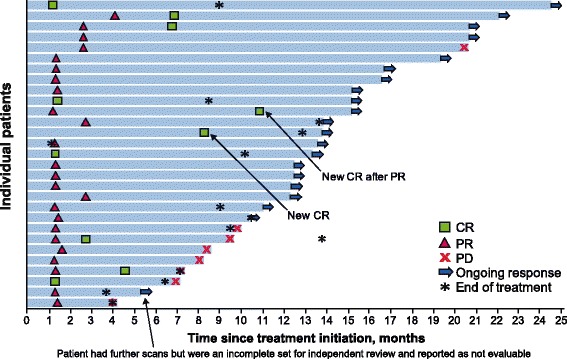
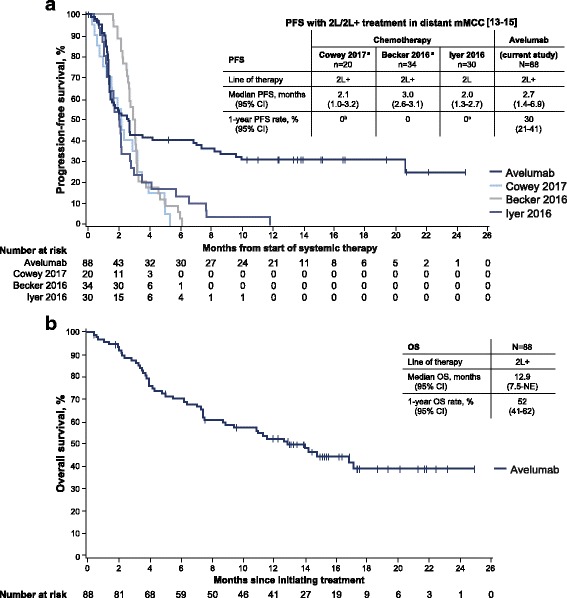
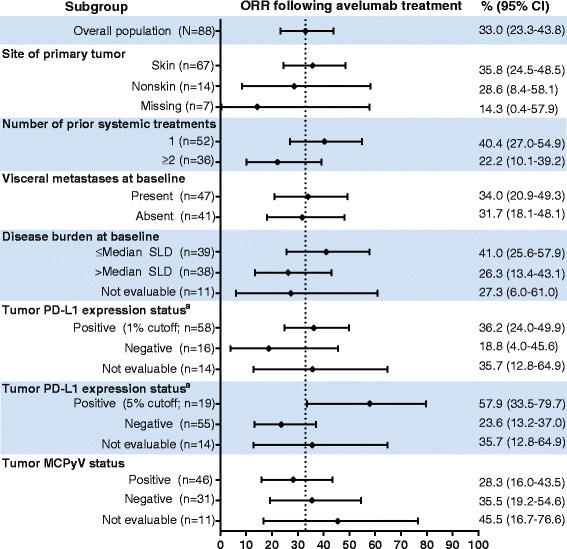
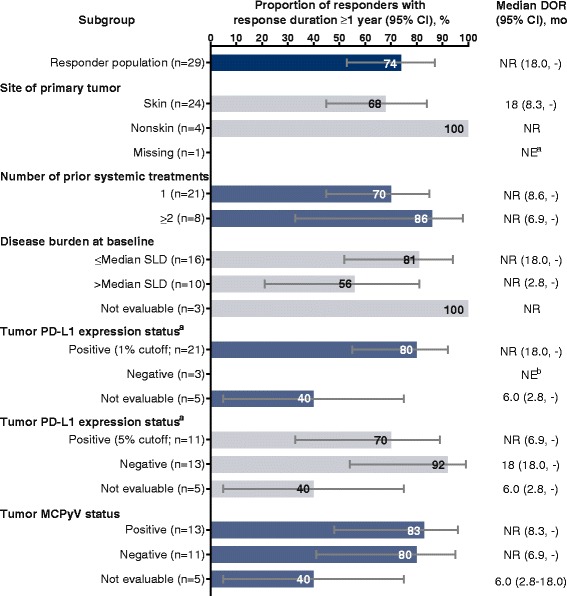
BACKGROUND: Merkel cell carcinoma (MCC) is a rare, aggressive skin cancer associated with poor survival outcomes in patients with distant metastatic disease (mMCC). In an initial analysis from JAVELIN Merkel 200, a phase 2, prospective, open-label, single-arm trial in mMCC, avelumab-a human anti-programmed death-ligand 1 (PD-L1) monoclonal antibody-showed promising efficacy and a safety profile that was generally manageable and tolerable. Here, we report the efficacy of avelumab after ≥1 year of follow-up in patients with distant mMCC that had progressed following prior chemotherapy for metastatic disease. PATIENTS AND METHODS: Patients received avelumab 10 mg/kg by 1-h intravenous infusion every 2 weeks until confirmed disease progression, unacceptable toxicity, or withdrawal. The primary endpoint was best overall response. Secondary endpoints included duration of response (DOR), progression-free survival (PFS), and overall survival (OS). RESULTS: Patients (N = 88) were followed for a minimum of 12 months. The confirmed objective response rate was 33.0% (95% CI, 23.3%-43.8%; complete response: 11.4%). An estimated 74% of responses lasted ≥1 year, and 72.4% of responses were ongoing at data cutoff. Responses were durable, with the median DOR not yet reached (95% CI, 18.0 months-not estimable), and PFS was prolonged; 1-year PFS and OS rates were 30% (95% CI, 21%-41%) and 52% (95% CI, 41%-62%), respectively. Median OS was 12.9 months (95% CI, 7.5-not estimable). Subgroup analyses suggested a higher probability of response in patients receiving fewer prior lines of systemic therapy, with a lower baseline disease burden, and with PD-L1-positive tumors; however, durable responses occurred irrespective of baseline factors, including tumor Merkel cell polyomavirus status. CONCLUSIONS: With longer follow-up, avelumab continues to show durable responses and promising survival outcomes in patients with distant mMCC whose disease had progressed after chemotherapy. TRIAL REGISTRATION: Clinicaltrials.gov identifier: NCT02155647.
Overview
The claims and statistics of this paper haven’t been checked yet.
Free: it reads the open-access text and checks the first 5 claims that cite a source we can check. Create a free account to check every claim.
Integrity signals
Registry
Cites
Statistics
Figures
Verification
Claims the paper makes
The claims and statistics of this paper haven’t been checked yet.
Free: it reads the open-access text and checks the first 5 claims that cite a source we can check. Create a free account to check every claim.
Claims other papers make about this one
Each is checked against this paper’s own text: does it say what the citing paper says it does?
The cited source says what the claim attributes to it.
In the citing paper
“anti-PD-L1 antibodies such as Atezolizumab, Avelumab, and Durvalumab, have been developed and proven effective for treatment of a variety of cancers including NSCLC, urothelial carcinoma, triple negative breast cancer (TNBC) and Merkel cell carcinoma (Iwata et al., 2019; Kaufman et al., 2018; Powles et al., 2018; Rittmeyer et al., 2017).”
From Hallmarks of response, resistance, and toxicity to immune checkpoint blockade (2021) · cites this paper as Kaufman et al., 2018
Self-check
Percentages, sums and reported differences re-computed from the paper’s own numbers.
The self-check needs the paper’s full text.
Citations
Cites
New response evaluation criteria in solid tumours: revised RECIST guideline (version 1.1)
Eisenhauer, E. A., Therasse, P., Bogaerts, J., Schwartz, L. H., Sargent, D., Ford, R., Dancey, J., Arbuck, S., Gwyther, S., Mooney, M., et al. (2009) · European Journal of Cancer · doi:10.1016/j.ejca.2008.10.026 · Cited by 29,534 · cited 1×
“1 [11], and adequate hematological, hepatic, and renal function.”
BackgroundPD-1 Blockade with pembrolizumab in advanced Merkel-cell carcinoma
Nghiem, P. T., Bhatia, S., Lipson, E. J., Kudchadkar, R. R., Miller, N. J., Annamalai, L., Berry, S., Chartash, E. K., Daud, A., Fling, S. P., et al. (2016) · New England Journal of Medicine · doi:10.1056/nejmoa1603702 · Cited by 1,258
Self-citationKaufman, H. L., Russell, J., Hamid, O., Bhatia, S., Terheyden, P., D'Angelo, S. P., Shih, K. C., Lebbé, C., Linette, G. P., Milella, M., et al. (2016) · The Lancet Oncology · doi:10.1016/s1470-2045(16)30364-3 · Cited by 1,236 · cited 10×
“Efficacy parameter ≥6 months of follow-up [8] ≥1 year of follow-up”
BackgroundMethodResultInfluentialSelf-citationMerkel Cell Carcinoma: Prognosis and Treatment of Patients From a Single Institution
Allen, P. J., Bowne, W. B., Jaques, D. P., Brennan, M. F., Busam, K., & Coit, D. G. (2005) · Journal of Clinical Oncology · doi:10.1200/jco.2005.02.329 · Cited by 739 · cited 1×
“Up to 12% of patients with MCC have distant metastatic disease (mMCC), which has a poor prognosis [1, 3], and progression to mMCC is frequent in patients with local or regional disease (up to 21%) [4].”
BackgroundLebbe, C., Becker, J. C., Grob, J.-J., Malvehy, J., del Marmol, V., Pehamberger, H., Peris, K., Saiag, P., Middleton, M. R., Bastholt, L., et al. (2015) · European Journal of Cancer · doi:10.1016/j.ejca.2015.06.131 · Cited by 500
Merkel cell carcinoma: Epidemiology, prognosis, therapy and unmet medical needs
Schadendorf, D., Lebbé, C., zur Hausen, A., Avril, M.-F., Hariharan, S., Bharmal, M., & Becker, J. C. (2017) · European Journal of Cancer · doi:10.1016/j.ejca.2016.10.022 · Cited by 397 · cited 1×
“Up to 12% of patients with MCC have distant metastatic disease (mMCC), which has a poor prognosis [1, 3], and progression to mMCC is frequent in patients with local or regional disease (up to 21%) [4].”
BackgroundMerkel Cell Carcinoma, Version 1.2018, NCCN Clinical Practice Guidelines in Oncology
Bichakjian, C. K., Olencki, T., Aasi, S. Z., Alam, M., Andersen, J. S., Blitzblau, R., Bowen, G. M., Contreras, C. M., Daniels, G. A., Decker, R., et al. (2018) · Journal of the National Comprehensive Cancer Network · doi:10.6004/jnccn.2018.0055 · Cited by 319
Iyer, J. G., Blom, A., Doumani, R., Lewis, C., Tarabadkar, E. S., Anderson, A., Ma, C., Bestick, A., Parvathaneni, U., Bhatia, S., et al. (2016) · Cancer Medicine · doi:10.1002/cam4.815 · Cited by 260
Nghiem, P., Kaufman, H. L., Bharmal, M. F., Mahnke, L. A., Phatak, H. M., & Becker, J. C. (2017) · Future Oncology · doi:10.2217/fon-2017-0072 · Cited by 156 · cited 1×
“Although no prospective clinical trials of chemotherapy have been conducted and no regimen has been specifically approved for mMCC treatment, platinum/etoposide combinations have been widely used and achieve relatively high objective response rates (ORRs); response duration, however, is short and no clear survival adv…”
BackgroundTopalian, S. L., Bhatia, S., Hollebecque, A., Awada, A., Boer, J. P. D., Kudchadkar, R. R., Goncalves, A., Delord, J.-P., Martens, U. M., Picazo, J. M. L., et al. (2017) · Cancer Research · doi:10.1158/1538-7445.am2017-ct074 · Cited by 151
Research works printed but not linked: 2
- Bavencio (avelumab) injection [package insert] 2017 Darmstadt Merck KGaA
- Becker J, Lorenz E, Haas G, Helwig C, Oksen D, Mahnke L, et al. Evaluation of real world treatment outcomes in patients with metastatic Merkel cell carcinoma (MCC) following second line chemotherapy. Ann Oncol 2016;26(Suppl 3 [Abstract 2602]). doi:10.1158/1538-7445.AM2017-CT074. · DOI · Paper page
Cited by
Bagchi, S., Yuan, R., & Engleman, E. G. (2021) · Annual Review of Pathology: Mechanisms of Disease · doi:10.1146/annurev-pathol-042020-042741 · Cited by 2,189
Hallmarks of response, resistance, and toxicity to immune checkpoint blockade
Morad, G., Helmink, B. A., Sharma, P., & Wargo, J. A. (2021) · Cell · doi:10.1016/j.cell.2021.09.020 · Cited by 1,648
Hiam-Galvez, K. J., Allen, B. M., & Spitzer, M. H. (2021) · Nature Reviews Cancer · doi:10.1038/s41568-021-00347-z · Cited by 1,400
Becker, J. C., Stang, A., DeCaprio, J. A., Cerroni, L., Lebbé, C., Veness, M., & Nghiem, P. (2017) · Nature Reviews Disease Primers · doi:10.1038/nrdp.2017.77 · Cited by 645
Maleki Vareki, S. (2018) · Journal for ImmunoTherapy of Cancer · doi:10.1186/s40425-018-0479-7 · Cited by 569
“Another example of this phenomenon is the high ORR among Merkel Cell Carcinoma (MCC) patients with Merkel cell polyomavirus (MCPyV) positive tumors in response to treatment with avelumab (an anti-PD-L1 antibody) despite the relatively low mutation burden in this tumor type [14].”
Nghiem, P., Bhatia, S., Lipson, E. J., Sharfman, W. H., Kudchadkar, R. R., Brohl, A. S., Friedlander, P. A., Daud, A., Kluger, H. M., Reddy, S. A., et al. (2019) · Journal of Clinical Oncology · doi:10.1200/jco.18.01896 · Cited by 396
Self-citationD’Angelo, S. P., Russell, J., Lebbé, C., Chmielowski, B., Gambichler, T., Grob, J.-J., Kiecker, F., Rabinowits, G., Terheyden, P., Zwiener, I., et al. (2018) · JAMA Oncology · doi:10.1001/jamaoncol.2018.0077 · Cited by 377
PD-1 Blockade in Anaplastic Thyroid Carcinoma
Capdevila, J., Wirth, L. J., Ernst, T., Ponce Aix, S., Lin, C.-C., Ramlau, R., Butler, M. O., Delord, J.-P., Gelderblom, H., Ascierto, P. A., et al. (2020) · Journal of Clinical Oncology · doi:10.1200/jco.19.02727 · Cited by 353
Merkel Cell Carcinoma, Version 1.2018, NCCN Clinical Practice Guidelines in Oncology
Bichakjian, C. K., Olencki, T., Aasi, S. Z., Alam, M., Andersen, J. S., Blitzblau, R., Bowen, G. M., Contreras, C. M., Daniels, G. A., Decker, R., et al. (2018) · Journal of the National Comprehensive Cancer Network · doi:10.6004/jnccn.2018.0055 · Cited by 319
Neoadjuvant nivolumab for patients with resectable merkel cell carcinoma in the CheckMate 358 trial
Topalian, S. L., Bhatia, S., Amin, A., Kudchadkar, R. R., Sharfman, W. H., Lebbé, C., Delord, J.-P., Dunn, L. A., Shinohara, M. M., Kulikauskas, R., et al. (2020) · Journal of Clinical Oncology · doi:10.1200/jco.20.00201 · Cited by 280
“Several unidimensional markers have been explored in advanced unresectable MCC; anti–PD-(L) 1 efficacy did not correlate with baseline tumor viral status or infiltrating T-cell receptor diversity, although some studies showed a trend toward improved outcomes with PD-L1–positive tumors.(8,11,37,38) In CheckMate 358, th…”
ResultSelf-citationCombination therapy with immune checkpoint inhibitors (ICIs); a new frontier
Vafaei, S., Zekiy, A. O., Khanamir, R. A., Zaman, B. A., Ghayourvahdat, A., Azimizonuzi, H., & Zamani, M. (2022) · Cancer Cell International · doi:10.1186/s12935-021-02407-8 · Cited by 270
Hudson, K., Cross, N., Jordan-Mahy, N., & Leyland, R. (2020) · Frontiers in Immunology · doi:10.3389/fimmu.2020.568931 · Cited by 243
Efficacy of PD-1/PD-L1 blockade monotherapy in clinical trials
Zhao, B., Zhao, H., & Zhao, J. (2020) · Therapeutic Advances in Medical Oncology · doi:10.1177/1758835920937612 · Cited by 207
D'Angelo, S. P., Bhatia, S., Brohl, A. S., Hamid, O., Mehnert, J. M., Terheyden, P., Shih, K. C., Brownell, I., Lebbé, C., Lewis, K. D., et al. (2020) · Journal for ImmunoTherapy of Cancer · doi:10.1136/jitc-2020-000674 · Cited by 203
“9 10 The primary endpoint was confirmed best overall response per RECIST 1.1 by IRC.”
InfluentialNon-Melanoma Skin Cancers: Biological and Clinical Features
Cives, M., Mannavola, F., Lospalluti, L., Sergi, M. C., Cazzato, G., Filoni, E., Cavallo, F., Giudice, G., Stucci, L. S., Porta, C., et al. (2020) · International Journal of Molecular Sciences · doi:10.3390/ijms21155394 · Cited by 202
Gauci, M.-L., Aristei, C., Becker, J. C., Blom, A., Bataille, V., Dreno, B., Del Marmol, V., Forsea, A. M., Fargnoli, M. C., Grob, J.-J., et al. (2022) · European Journal of Cancer · doi:10.1016/j.ejca.2022.03.043 · Cited by 192
Endocytosis Inhibition in Humans to Improve Responses to ADCC-Mediating Antibodies
Chew, H. Y., De Lima, P. O., Gonzalez Cruz, J. L., Banushi, B., Echejoh, G., Hu, L., Joseph, S. R., Lum, B., Rae, J., O’Donnell, J. S., et al. (2020) · Cell · doi:10.1016/j.cell.2020.02.019 · Cited by 186
Immune checkpoint inhibitors: Key trials and an emerging role in breast cancer
Gaynor, N., Crown, J., & Collins, D. M. (2022) · Seminars in Cancer Biology · doi:10.1016/j.semcancer.2020.06.016 · Cited by 182
Amin, A., Plimack, E. R., Ernstoff, M. S., Lewis, L. D., Bauer, T. M., McDermott, D. F., Carducci, M., Kollmannsberger, C., Rini, B. I., Heng, D. Y. C., et al. (2018) · Journal for ImmunoTherapy of Cancer · doi:10.1186/s40425-018-0420-0 · Cited by 180
Knepper, T. C., Montesion, M., Russell, J. S., Sokol, E. S., Frampton, G. M., Miller, V. A., Albacker, L. A., McLeod, H. L., Eroglu, Z., Khushalani, N. I., et al. (2019) · Clinical Cancer Research · doi:10.1158/1078-0432.ccr-18-4159 · Cited by 168
“Updated avelumab efficacy analysis showed that responses were durable, with an estimated 74% of responses lasting 1 year (median duration not reached), and with 1-year PFS and overall survival (OS) rates of 30% and 52% respectively, for the entire cohort (23).”
BackgroundResultSow, H., Ren, J., Camps, M., Ossendorp, F., & ten Dijke, P. (2019) · Cells · doi:10.3390/cells8040320 · Cited by 112
“The objective response rate with approved anti-PD-L1 mAb as monotherapy is ~20% in urothelial carcinomas [58–60], ~15% in non-small-cell lung cancer (NSCLC) [61,62], and ~30% in Merkel cell carcinoma [5,6].”
Immunotherapy for Non-melanoma Skin Cancer
Shalhout, S. Z., Emerick, K. S., Kaufman, H. L., & Miller, D. M. (2021) · Current Oncology Reports · doi:10.1007/s11912-021-01120-z · Cited by 108
Bhatia, S., Longino, N. V., Miller, N. J., Kulikauskas, R. M., Iyer, J. G., Ibrani, D., Blom, A., Byrd, D. R., Parvathaneni, U., Twitty, C., et al. (2020) · Clinical Cancer Research · doi:10.1158/1078-0432.ccr-19-0972 · Cited by 103
“MCC is considered immunogenic, with reports of spontaneous regression and responsiveness to immunotherapy (22-27).”
BackgroundMutational and Antigenic Landscape in Tumor Progression and Cancer Immunotherapy
Vitale, I., Sistigu, A., Manic, G., Rudqvist, N.-P., Trajanoski, Z., & Galluzzi, L. (2019) · Trends in Cell Biology · doi:10.1016/j.tcb.2019.01.003 · Cited by 94
Immune checkpoint inhibitors to treat cutaneous malignancies
M.S, D. M. B., Do, M. H., Phillips, G. S., Postow, M. A., Akaike, T., Nghiem, P., & Lacouture, M. E. (2020) · Journal of the American Academy of Dermatology · doi:10.1016/j.jaad.2020.03.131 · Cited by 104
Kelly, K., Infante, J. R., Taylor, M. H., Patel, M. R., Wong, D. J., Iannotti, N., Mehnert, J. M., Loos, A. H., Koch, H., Speit, I., et al. (2018) · Cancer · doi:10.1002/cncr.31293 · Cited by 92
Product review: Avelumab, an anti-PD-L1 antibody
Collins, J. M., & Gulley, J. L. (2019) · Human Vaccines & Immunotherapeutics · doi:10.1080/21645515.2018.1551671 · Cited by 91
“JAVELIN Merkel 200 part A In part A of JAVELIN Merkel 200, 88 patients with stage IV chemotherapy-refractory MCC were treated with avelumab.(20,48) Patients were unselected for MCPyV and were followed for ≥ 12 months.”
MethodSystematic Review of PD-1/PD-L1 Inhibitors in Oncology: From Personalized Medicine to Public Health
Chang, E., Pelosof, L. C., Lemery, S. J., Gong, Y. U. T., Goldberg, K. B., Farrell, A. T., Keegan, P., Veeraraghavan, J., Wei, G., Blumenthal, G. M., et al. (2021) · The Oncologist · doi:10.1002/onco.13887 · Cited by 100
Ugurel, S., Spassova, I., Wohlfarth, J., Drusio, C., Cherouny, A., Melior, A., Sucker, A., Zimmer, L., Ritter, C., Schadendorf, D., et al. (2019) · Cancer Immunology Immunotherapy · doi:10.1007/s00262-019-02341-9 · Cited by 91
Alard, E. L., Butnariu, A.-B., Grillo, M., Kirkham, C., Zinovkin, D. A., Newnham, L. J., Macciochi, J., & Pranjol, M. Z. I. (2020) · Cancers · doi:10.3390/cancers12071826 · Cited by 102
Walker, J. W. T., Lebbé, C., Grignani, G., Nathan, P., Dirix, L. Y., Fenig, E., Ascierto, P. A., Sandhu, S. K., Munhoz, R. R., Benincasa, E., et al. (2020) · Journal for ImmunoTherapy of Cancer · doi:10.1136/jitc-2019-000313 · Cited by 85
Wilkins, J. J., Brockhaus, B., Dai, H. I., Vugmeyster, Y., White, J. T., Brar, S. S., Bello, C. L., Neuteboom, B., Wade, J. R., Girard, P., et al. (2019) · CPT Pharmacometrics & Systems Pharmacology · doi:10.1002/psp4.12406 · Cited by 84
Ferroptosis and tumor immunotherapy: A promising combination therapy for tumors
Cai, H., Ren, Y., Chen, S., Wang, Y., & Chu, L. (2023) · Frontiers in Oncology · doi:10.3389/fonc.2023.1119369 · Cited by 80
Paulson, K. G., Lahman, M. C., Chapuis, A. G., & Brownell, I. (2019) · International Immunology · doi:10.1093/intimm/dxz012 · Cited by 75
Yang, F., Wang, J., Wang, Y., Liu, B., & Molina, J. R. (2021) · Cancers · doi:10.3390/cancers14010109 · Cited by 85
“JAVELIN Merkel 200 [91] 2 Merkel cell carcinoma 73-10 TC 1% 36 (21/58) 18 (3/16) 0.”
Immunologic Characteristics of Nonmelanoma Skin Cancers: Implications for Immunotherapy
Hall, E. T., Fernandez-Lopez, E., Silk, A. W., Dummer, R., & Bhatia, S. (2020) · American Society of Clinical Oncology Educational Book · doi:10.1200/edbk_278953 · Cited by 69
From Merkel Cell Polyomavirus Infection to Merkel Cell Carcinoma Oncogenesis
Krump, N. A., & You, J. (2021) · Frontiers in Microbiology · doi:10.3389/fmicb.2021.739695 · Cited by 70
“While the durability of responses varied, they could last well over a year (Kaufman et al., 2018; Nghiem et al., 2019).”
BackgroundMerkel cell carcinoma: An updated review of pathogenesis, diagnosis, and treatment options
Hernandez, L. E. D. L. C., Mohsin, N., Yaghi, M., Frech, F. S., Dreyfuss, I., & Nouri, K. (2022) · Dermatologic Therapy · doi:10.1111/dth.15292 · Cited by 78
“Responses were shown to be durable in subsequent longevity studies.(86,87,95,96)”
BackgroundXue, Y., & Thakuria, M. (2018) · Hematology/Oncology Clinics of North America · doi:10.1016/j.hoc.2018.08.002 · Cited by 62
Cancer Biomarkers and Precision Oncology: A Review of Recent Trends and Innovations
AlDoughaim, M., Alsuhebany, N., Alzahrani, M., Alqahtani, T., Alghamdi, S. S., Badreldin, H. A., & Alshaykh, H. A. (2024) · Clinical Medicine Insights Oncology · doi:10.1177/11795549241298541 · Cited by 87
NCCN Guidelines® Insights: Merkel Cell Carcinoma, Version 1.2024
Schmults, C. D., Blitzblau, R. C., Aasi, S. Z., Alam, M., Amini, A., Bibee, K., Bolotin, D., Bordeaux, J. S., Chen, P.-L., Contreras, C. M., et al. (2024) · Journal of the National Comprehensive Cancer Network · doi:10.6004/jnccn.2024.0002 · Cited by 83
Avelumab: A Review in Metastatic Merkel Cell Carcinoma
Shirley, M. (2018) · Targeted Oncology · doi:10.1007/s11523-018-0571-4 · Cited by 54
Tetzlaff, M. T., & Harms, P. W. (2019) · Modern Pathology · doi:10.1038/s41379-019-0394-6 · Cited by 58
Impact of Tumor and Immunological Heterogeneity on the Anti-Cancer Immune Response
Shembrey, C., Huntington, N. D., & Hollande, F. (2019) · Cancers · doi:10.3390/cancers11091217 · Cited by 56
LoPiccolo, J., Schollenberger, M. D., Dakhil, S., Rosner, S., Ali, O., Sharfman, W. H., Silk, A. W., Bhatia, S., & Lipson, E. J. (2019) · Journal for ImmunoTherapy of Cancer · doi:10.1186/s40425-019-0661-6 · Cited by 53
Ricci, C., Righi, A., Ambrosi, F., Gibertoni, D., Maletta, F., Uccella, S., Sessa, F., Asioli, S., Pellilli, M., Maragliano, R., et al. (2019) · Endocrine Pathology · doi:10.1007/s12022-019-09601-5 · Cited by 52
Samimi, M. (2019) · American Journal of Clinical Dermatology · doi:10.1007/s40257-019-00427-9 · Cited by 51
Cornejo, C. M., & Miller, C. J. (2019) · Dermatologic Clinics · doi:10.1016/j.det.2019.03.001 · Cited by 48
"Present and future of immunotherapy in Neuroendocrine Tumors"
Albertelli, M., Dotto, A., Nista, F., Veresani, A., Patti, L., Gay, S., Sciallero, S., Boschetti, M., & Ferone, D. (2021) · Reviews in Endocrine and Metabolic Disorders · doi:10.1007/s11154-021-09647-z · Cited by 52
“[98, 99] As expected, patients with PD-L1 expressing neoplasms had better response [100].”
ResultPD-L1 inhibition with avelumab for metastatic Merkel cell carcinoma
Gaiser, M. R., Bongiorno, M. A., & Brownell, I. (2018) · Expert Review of Clinical Pharmacology · doi:10.1080/17512433.2018.1445966 · Cited by 53
Soluble immune checkpoint molecules: Serum markers for cancer diagnosis and prognosis
Chakrabarti, R., Kapse, B., & Mukherjee, G. (2019) · Cancer Reports · doi:10.1002/cnr2.1160 · Cited by 53
Updates on the Systemic Treatment of Advanced Non-melanoma Skin Cancer
Tanese, K., Nakamura, Y., Hirai, I., & Funakoshi, T. (2019) · Frontiers in Medicine · doi:10.3389/fmed.2019.00160 · Cited by 50
“2 months), including a CR rate of 11% (10/88 cases) (97, 98).”
Patel, P. B., & Hussain, K. (2020) · Clinical and Experimental Dermatology · doi:10.1111/ced.14530 · Cited by 47
Choi, F. D., Kraus, C. N., Elsensohn, A. N., Carley, S. K., Lehmer, L. M., Nguyen, R., Linden, K. G., & Shiu, J. (2019) · Journal of the American Academy of Dermatology · doi:10.1016/j.jaad.2019.05.077 · Cited by 49
Merkel cell polyomavirus and associated Merkel cell carcinoma
Yang, J. F., & You, J. (2021) · Tumour Virus Research · doi:10.1016/j.tvr.2021.200232 · Cited by 54
Song, L., Bretz, A. C., Gravemeyer, J., Spassova, I., Muminova, S., Gambichler, T., Sriram, A., Ferrone, S., & Becker, J. C. (2020) · Journal of Investigative Dermatology · doi:10.1016/j.jid.2020.08.023 · Cited by 46
“…changed with the introduction of immunotherapy by immune checkpoint inhibitors, i.e., antibodies blocking programmed cell death protein 1 (PD-1) or programmed cell death protein ligand 1 (PD-L1), which demonstrate remarkable clinical activity (Kaufman et al., 2018; Nghiem et al., 2019).”
BackgroundS2k guidelines for Merkel cell carcinoma (MCC, neuroendocrine carcinoma of the skin) – update 2018
Becker, J. C., Eigentler, T., Frerich, B., Gambichler, T., Grabbe, S., Höller, U., Klumpp, B. D., Loquai, C., Krause‐Bergmann, A., Müller-Richter, U. D. A., et al. (2019) · JDDG Journal der Deutschen Dermatologischen Gesellschaft · doi:10.1111/ddg.13841 · Cited by 43
Aung, P. P., Parra, E. R., Barua, S., Sui, D., Ning, J., Mino, B., Ledesma, D. A., Curry, J. L., Nagarajan, P., Torres-Cabala, C. A., et al. (2019) · Clinical Cancer Research · doi:10.1158/1078-0432.ccr-18-2355 · Cited by 44
“More importantly, though these responses have proven to be largely durable (15), clinical response in an individual patient is difficult to predict, and biomarkers of response and/or resistance (including MCPyV nor PD-L1 status) remain elusive.”
BackgroundMerkel cell carcinoma: epidemiology, clinical features, diagnosis and treatment of a rare disease
Siqueira, S. M., Campos‐do‐Carmo, G., dos Santos, A. L. S., Martins, C. L. C. D. S., & de Melo, A. C. (2023) · Anais Brasileiros de Dermatologia · doi:10.1016/j.abd.2022.09.003 · Cited by 46
Anti-PD-1 and Anti-PD-L1 Monoclonal Antibodies in People Living with HIV and Cancer
Lurain, K. A., Ramaswami, R., Yarchoan, R., & Uldrick, T. S. (2020) · Current HIV/AIDS Reports · doi:10.1007/s11904-020-00525-y · Cited by 43
Bhatia, S., Nghiem, P., Veeranki, S. P., Vanegas, A., Lachance, K., Tachiki, L. M. L., Chiu, K., Boller, E., & Bharmal, M. F. (2022) · Journal for ImmunoTherapy of Cancer · doi:10.1136/jitc-2022-004904 · Cited by 42
Merkel Cell Carcinoma from Molecular Pathology to Novel Therapies
Stachyra, K., Dudzisz‐Śledź, M., Bylina, E., Szumera‐Ciećkiewicz, A., Spalek, M. J., Bartnik, E., Rutkowski, P. L., & Czarnecka, A. M. (2021) · International Journal of Molecular Sciences · doi:10.3390/ijms22126305 · Cited by 43
Advances in Immunotherapy for Metastatic Merkel Cell Carcinoma: A Clinician's Guide
Paulson, K. G., & Bhatia, S. (2018) · Journal of the National Comprehensive Cancer Network · doi:10.6004/jnccn.2018.7049 · Cited by 40
Jie, C., Li, R., Cheng, Y., Wang, Z., Wu, Q., & Xie, C. (2023) · Frontiers in Immunology · doi:10.3389/fimmu.2023.1122352 · Cited by 40
Bradford, D., Demko, S., Jin, S., Mishra-Kalyani, P. S., Beckles, A. R., Goldberg, K. B., Lemery, S. J., Ward, A., Keegan, P., & Pazdur, R. (2020) · The Oncologist · doi:10.1634/theoncologist.2020-0184 · Cited by 41
Landscape and Future Perspectives of Immunotherapy in Neuroendocrine Neoplasia
Maggio, I., Manuzzi, L., Lamberti, G., Ricci, A. D., Tober, N., & Campana, D. (2020) · Cancers · doi:10.3390/cancers12040832 · Cited by 36
“However, there is still limited evidence of the efficacy of immune checkpoint inhibition in many types of NENs, while it proved effective in other difficult-to-treat NENs, such as SCLC and MCC [20,22,23,37].”
BackgroundInfluentialSilk, A. W., Barker, C. A., Bhatia, S., Bollin, K. B., Chandra, S., Eroglu, Z., Gastman, B., Kendra, K. L., Kluger, H. M., Lipson, E. J., et al. (2022) · Journal for ImmunoTherapy of Cancer · doi:10.1136/jitc-2021-004434 · Cited by 41
Dermatology today and tomorrow: from symptom control to targeted therapy
Blume‐Peytavi, U., Bagot, M., Tennstedt, D., Aroman, M. S., Stockfleth, E., Zlotogorski, A., Mengeaud, V., Schmitt, A.-M., Paul, C. F., Lim, H. W., et al. (2018) · Journal of the European Academy of Dermatology and Venereology · doi:10.1111/jdv.15335 · Cited by 41
MicroRNAs as Potential Biomarkers in Merkel Cell Carcinoma
Konstantinell, A., Coucheron, D. H., Sveinbjørnsson, B., & Moens, U. L. (2018) · International Journal of Molecular Sciences · doi:10.3390/ijms19071873 · Cited by 35
Recent Therapeutic Advances and Change in Treatment Paradigm of Patients with Merkel Cell Carcinoma
García‐Carbonero, R., Márquez‐Rodas, I., de la Cruz‐Merino, L., Martínez‐Trufero, J., Cabrera, M. A., Piulats, J. M., Capdevila, J., Grande, E., Martín‐Algarra, S., & Berrocal, A. (2019) · The Oncologist · doi:10.1634/theoncologist.2018-0718 · Cited by 34
Ricci, C., Morandi, L., Righi, A., Gibertoni, D., Maletta, F., Ambrosi, F., Agostinelli, C., Uccella, S., Asioli, S., Sessa, F., et al. (2019) · Modern Pathology · doi:10.1038/s41379-019-0261-5 · Cited by 33
Avelumab for advanced Merkel cell carcinoma in the Netherlands: a real-world cohort
Levy, S., Aarts, M. J. B., Eskens, F. A. L. M., Keymeulen, K., Been, L. B., Grünhagen, D. J., van Akkooi, A. C. J., Jalving, M., & Tesselaar, M. E. T. (2020) · Journal for ImmunoTherapy of Cancer · doi:10.1136/jitc-2020-001076 · Cited by 33
Immune Checkpoint Inhibitors: Fundamental Mechanisms, Current Status and Future Directions
Younis, A., & Gribben, J. G. (2024) · Immuno · doi:10.3390/immuno4030013 · Cited by 43
Systemic Treatment of Gastroenteropancreatic Neuroendocrine Carcinoma
Mollazadegan, K., Welin, S., & Crona, J. (2021) · Current Treatment Options in Oncology · doi:10.1007/s11864-021-00866-9 · Cited by 32
Merkel Cell Carcinoma: An Immunotherapy Fairy-Tale?
Tanda, E. T., D’Amato, A. L., Rossi, G., Croce, E., Boutros, A., Cecchi, F., Spagnolo, F., & Queirolo, P. (2021) · Frontiers in Oncology · doi:10.3389/fonc.2021.739006 · Cited by 32
NK Cell-Fc Receptors Advance Tumor Immunotherapy
Sanseviero, E. (2019) · Journal of Clinical Medicine · doi:10.3390/jcm8101667 · Cited by 34
Zelin, E., Maronese, C. A., Dri, A., Toffoli, L., di Meo, N., Nazzaro, G., & Zalaudek, I. (2022) · Journal of Clinical Medicine · doi:10.3390/jcm11123364 · Cited by 33
“More data were collected in the JAVELIN Merkel 200 trial, a phase II prospective, open-label, multicenter study (NCT02155647) [20,98], which was conducted on 88 subjects with previously treated m-MCC (part A) and 116 subjects with naïve m-MCC (part B) [99,100].”
MethodResultAscierto, P. A., Bifulco, C. B., Buonaguro, L., Emens, L. A., Ferris, R. L., Fox, B. A., Delgoffe, G. M., Galon, J., Gridelli, C., Merlano, M. C., et al. (2019) · Journal for ImmunoTherapy of Cancer · doi:10.1186/s40425-019-0798-3 · Cited by 31
“In subsequent follow-up, 1year PFS rate was 30% and 1-year OS rate was 52% [55].”
BackgroundBloom, B. C., Augustyn, A., Pezzi, T. A., Menon, H., Mayo, L. L., Shah, S. J., Schwartz, D. L., Chmura, S. J., Johnson, F. M., Welsh, J. W., et al. (2019) · Frontiers in Oncology · doi:10.3389/fonc.2019.00223 · Cited by 30
van Veenendaal, L. M., Bertolli, E., Korse, C. M., Klop, W. M. C., Tesselaar, M. E. T., & van Akkooi, A. C. J. (2020) · Annals of Surgical Oncology · doi:10.1245/s10434-020-08656-7 · Cited by 28
Bacterial biofilms: their role in chronical infection processes and the means to combat them
Ilyina, T. S., & Romanova, Y. M. (2021) · Molecular Genetics Microbiology and Virology (Russian) · doi:10.17116/molgen20213902114 · Cited by 42
Weppler, A. M., Meda, L. D., da Silva, I. P., Xu, W., Grignani, G., Menzies, A. M., Carlino, M. S., Long, G. V., Lo, S., Nordman, I. I. C., et al. (2023) · European Journal of Cancer · doi:10.1016/j.ejca.2023.01.016 · Cited by 26
Kaufman, B., Abu-Ahmad, M., Radinsky, O., Gharra, E., Manko, T., Bhattacharya, B., Gologan, D., Erlichman, N., Meshel, T., Nuta, Y., et al. (2025) · Molecular Cancer · doi:10.1186/s12943-025-02330-w · Cited by 38
Roviello, G., D’Angelo, A., Generali, D., Pittacolo, M., Ganzinelli, M., Iezzi, G., de Manzini, N., & Sobhani, N. (2019) · Immunotherapy · doi:10.2217/imt-2019-0011 · Cited by 29
Abdel-Rahman, O. M., Oweira, H., & Giryes, A. (2018) · Expert Review of Anticancer Therapy · doi:10.1080/14737140.2018.1528146 · Cited by 26
Artesunate Affects T Antigen Expression and Survival of Virus-Positive Merkel Cell Carcinoma
Sarma, B., Willmes, C., Angerer, L., Adam, C., Becker, J. C., Kervarrec, T., Schrama, D., & Houben, R. (2020) · Cancers · doi:10.3390/cancers12040919 · Cited by 26
“However, despite this encouraging progress, many patients do not respond and a substantial number of patients develop early secondary resistance [18,20].”
BackgroundThe Current Landscape of Immune Checkpoint Inhibition for Solid Malignancies
Keung, E. Z.-Y., & Wargo, J. A. (2019) · Surgical Oncology Clinics of North America · doi:10.1016/j.soc.2019.02.008 · Cited by 24
Management Recommendations for Merkel Cell Carcinoma—A Danish Perspective
Naseri, S., Steiniche, T., Ladekarl, M. B., Bønnelykke‐Behrndtz, M. L., Hölmich, L. R., Langer, S. W., Venzo, A., Tabaksblat, E. M., Klausen, S., Larsen, M. S., et al. (2020) · Cancers · doi:10.3390/cancers12030554 · Cited by 25
Recent progress in therapeutic antibodies for cancer immunotherapy
Lee, A., Sun, S. W., Sandler, A. B., & HOANG, T. N. (2018) · Current Opinion in Chemical Biology · doi:10.1016/j.cbpa.2018.05.006 · Cited by 27
S2k Guideline – Merkel cell carcinoma (MCC, neuroendocrine carcinoma of the skin) – Update 2022
Becker, J. C., Beer, A. J., DeTemple, V. K., Eigentler, T., Flaig, M. J., Gambichler, T., Grabbe, S., Höller, U., Klumpp, B. D., Lang, S., et al. (2023) · JDDG Journal der Deutschen Dermatologischen Gesellschaft · doi:10.1111/ddg.14930 · Cited by 35
Bhatia, S., Topalian, S. L., Sharfman, W. H., Meyer, T., Steven, N. M., Lao, C. D., Fariñas-Madrid, L., Devriese, L. A., Moore, K. N., Ferris, R. L., et al. (2025) · Journal of Clinical Oncology · doi:10.1200/jco-24-02138 · Cited by 26
Merkel Cell Carcinoma – Current Controversies and Future Directions
Steven, N. M., Lawton, P. A., & Poulsen, M. G. (2019) · Clinical Oncology · doi:10.1016/j.clon.2019.08.012 · Cited by 23
Cowey, C. L., Liu, F. X., Kim, R., Boyd, M., Fulcher, N. M., Krulewicz, S., Kasturi, V., & Bhanegaonkar, A. J. (2021) · Future Oncology · doi:10.2217/fon-2020-1250 · Cited by 22
Goff, P. H., Bhakuni, R., Pulliam, T. H., Lee, J. H., Hall, E. T., & Nghiem, P. (2021) · Cancers · doi:10.3390/cancers13143415 · Cited by 25
“Avelumab (anti-PD-L1) [23,24] and pembrolizumab [25,26] were approved for Merkel cell carcinoma (MCC) in 2017 and 2018, respectively.”
BackgroundJahangir, M., Yazdani, O., Kahrizi, M. S., Soltanzadeh, S., Javididashtbayaz, H., Mivefroshan, A., Ilkhani, S., & Esbati, R. (2022) · Cancer Cell International · doi:10.1186/s12935-022-02816-3 · Cited by 23
An update on Merkel cell carcinoma
Sergi, M. C., Lauricella, E., Porta, C., Tucci, M., & Cives, M. (2023) · Biochimica et Biophysica Acta (BBA) - Reviews on Cancer · doi:10.1016/j.bbcan.2023.188880 · Cited by 27
Trends in the incidence of Merkel cell carcinoma in Victoria, Australia, between 1986 and 2016
Garbutcheon‐Singh, K. B., Curchin, D. J., McCormack, C. J., & Smith, S. D. (2019) · Australasian Journal of Dermatology · doi:10.1111/ajd.13131 · Cited by 27
“at one year of 30% and an overall survival of 52% in patients with stage IV disease who have received one or more lines of chemotherapy in a phase 2 trial.(29) Pembrolizumab has”
BackgroundGujar, H., Mehta, A., Li, H., Tsai, Y., Qiu, X., Weisenberger, D. J., Jasiulionis, M. G., In, G. K., & Liang, G. (2021) · Genome Medicine · doi:10.1186/s13073-021-00946-3 · Cited by 24
Glycogen synthase 3 (GSK-3) regulation of PD-1 expression and and its therapeutic implications
Krueger, J., Rudd, C. E., & Taylor, A. (2019) · Seminars in Immunology · doi:10.1016/j.smim.2019.101295 · Cited by 23
Combined Anti-Cancer Strategies Based on Anti-Checkpoint Inhibitor Antibodies
Golay, J., & Andrea, A. E. (2020) · Antibodies · doi:10.3390/antib9020017 · Cited by 25
Metadata
- Authors
- Kaufman, H. L., Russell, J. S., Hamid, O., Bhatia, S., Terheyden, P., D’Angelo, S. P., Shih, K. C., Lebbé, C., Milella, M., Brownell, I., Lewis, K. D., Lorch, J. H., von Heydebreck, A., Hennessy, M., & Nghiem, P.
- Affiliations
- Rutgers Cancer Institute (US)
- Moffitt Cancer Center (US)
- Angeles Clinic and Research Institute (US)
- University of Washington Medical Center (US)
- University of Lübeck (DE)
- Memorial Sloan Kettering Cancer Center (US)
- Sarah Cannon Research Institute (GB)
- National Institutes of Health (US)
- University of Colorado Anschutz (US)
- Dana-Farber Cancer Institute (US)
- EMD Serono, Inc. (United States) (US)
- Corresponding author
- Kaufman, Howard L.
- ORCID
- Venue
- Journal for ImmunoTherapy of Cancer
- Publisher
- BMJ
- Published
- 2018-01-19
- Volume
- 6
- Issue
- 1
- Pages
- 7-7
- ISSN
- 2051-1426 (ISSN-L)
- PMC
- PMC5774167
- OpenAlex
- W2783234388
- Cited by
- 334
- References
- 14
- Citations by year
- 2026: 13 · 2025: 15 · 2024: 25 · 2023: 28 · 2022: 21 · 2021: 62 · 2020: 69 · 2019: 71 · 2018: 27
- FWCI
- 21.48
- Type
- journal article
- Language
- en
- Open access
- gold
- doi.org
- Licence
- cc-by
- Locations
- Journal for ImmunoTherapy of Cancer (publishedVersion, cc-by)
- PubMed Central (publishedVersion, cc-by)
- PubMed (publishedVersion)
- DOAJ (DOAJ: Directory of Open Access Journals) (submittedVersion, cc-by-sa)
- Funders
- Merck KGaA, Darmstadt, Germany
- Pfizer Inc.
- Topics
- Health Sciences › Medicine › Oncology › Polyomavirus and related diseases
- Health Sciences › Medicine › Dermatology › Nonmelanoma Skin Cancer Studies
- Health Sciences › Medicine › Oncology › Viral-associated cancers and disorders
- Keywords
- avelumab, Merkel cell carcinoma, metastatic Merkel cell carcinoma, PD-L1 blockade, immune checkpoint inhibitors, long-term follow-up, durable response, progression-free survival, overall survival, Merkel cell polyomavirus, prior chemotherapy, objective response rate, PD-L1 expression, safety and tolerability
- MeSH terms
- Aged, Antibodies, Monoclonal, Female, Follow-Up Studies, Humans, Male, Middle Aged, Neoplasm Metastasis, Skin Neoplasms, Time Factors, Carcinoma, Merkel Cell, Antibodies, Monoclonal, Humanized
About these checks
Registry, retraction, Cites and statistics results are computed, not judged, with one exception: a printed reference that no index lists is read once by a model before it counts as a citation error. Claims are extracted by a model and kept only when their quote appears verbatim in the text; each cited source is then checked, with a model’s help, for whether it says what the claim relies on. Those verdicts can be wrong — read the claim’s quote and the cited source before relying on one.
Statistics and arithmetic are recomputed, not judged.
Confidence bands are shown only for fields calibrated on our annotated test set. None is calibrated yet, so no band is shown.
What counts as a claim ›How we measure confidence ›How we check this ›
Are you an author, or do you see a problem with this page? Request a review
Data sources
Bibliographic data: Semantic Scholar, OpenAlex, Crossref.
Contains information from the Semantic Scholar Academic Graph Datasets, made available under the ODC Attribution License (ODC-BY 1.0).
Semantic Scholar’s data is described in: Kinney, R., et al. (2023). The Semantic Scholar Open Data Platform. arXiv:2301.10140.
