

Secondary resistance to immunotherapy associated with β-catenin pathway activation or PTEN loss in metastatic melanoma
Open accessThe DOI matches its Crossref record; 35 of the 35 references it cites were found in a registry or an index.
Abstract
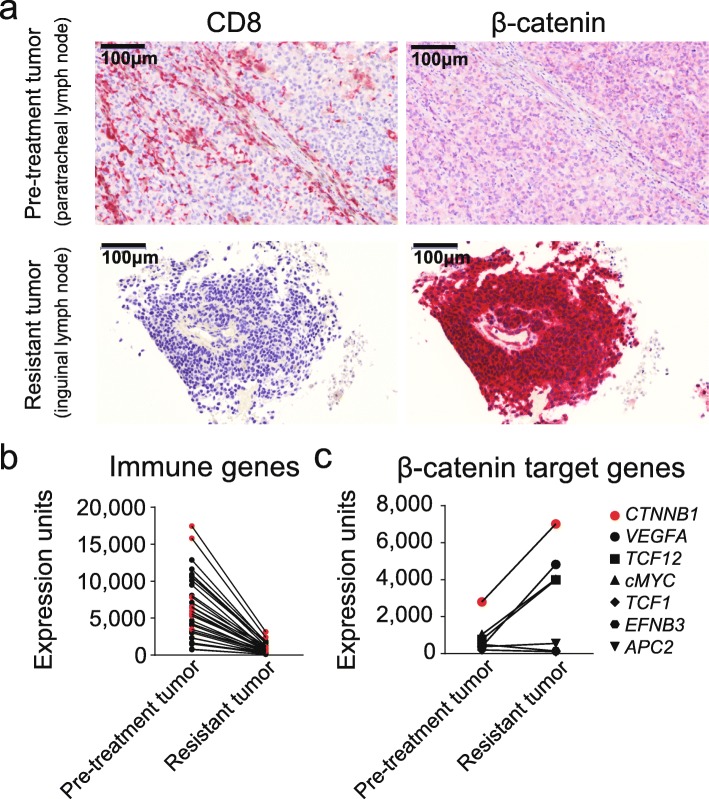
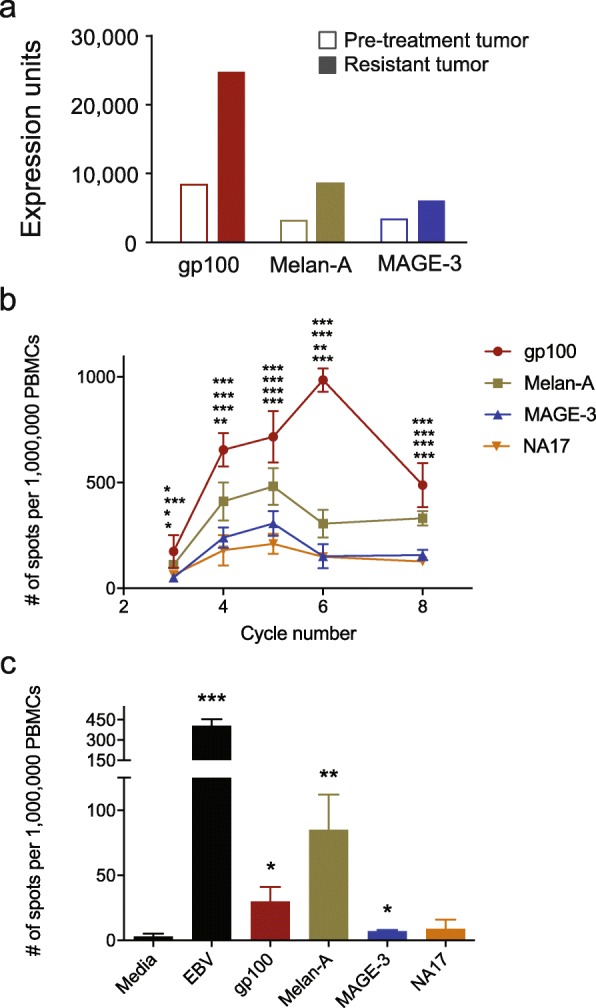
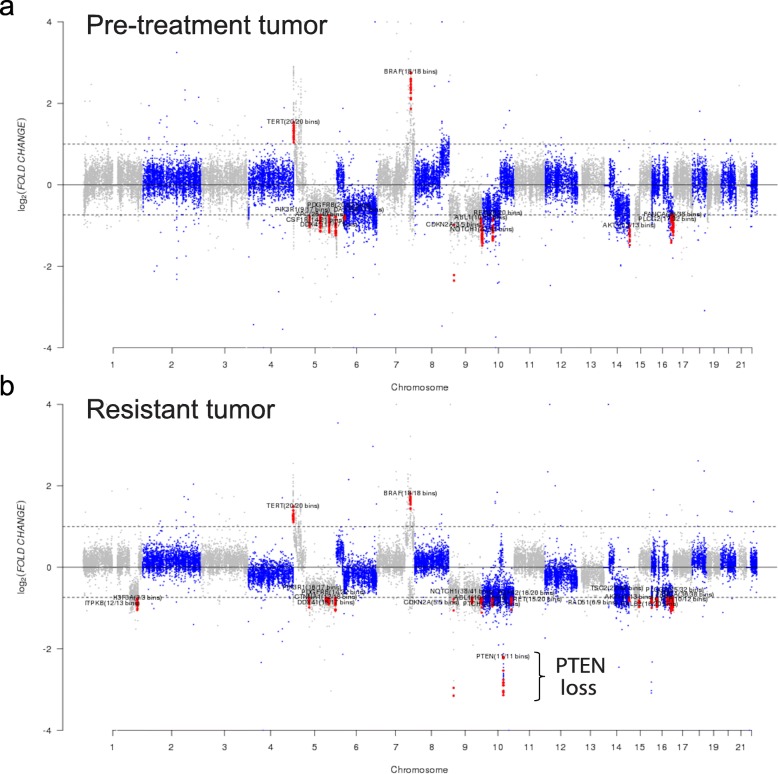
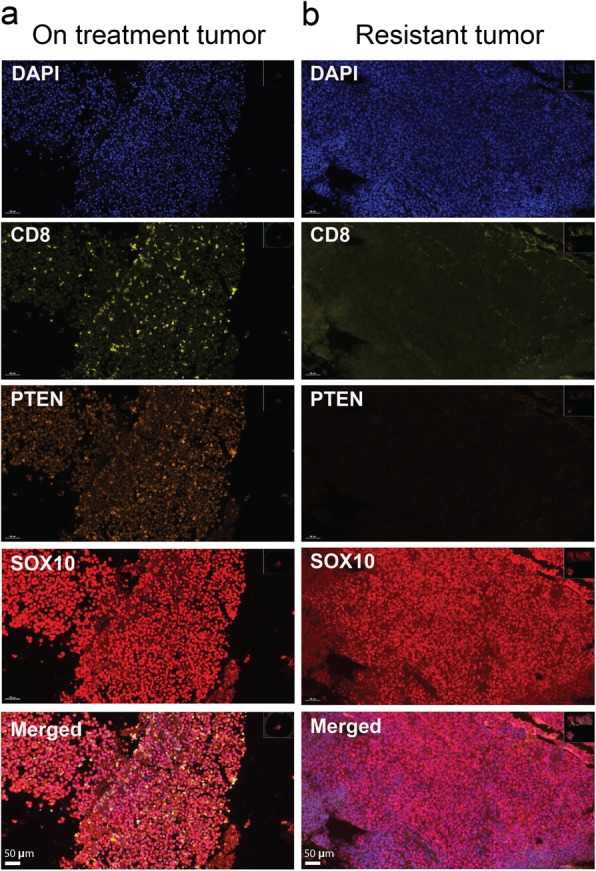
BACKGROUND: While cancer immunotherapies including checkpoint blockade antibodies, adoptive T cell therapy, and even some vaccines have given rise to major clinical responses with durability in many cases, a subset of patients who initially respond subsequently develop secondary resistance to therapy. Tumor-intrinsic mechanisms of acquired immunotherapy resistance are incompletely understood. METHODS: Baseline and treatment-resistant tumors underwent molecular analysis via transcriptional profiling or genomic sequencing for oncogenic alterations and histologic analysis for T cell infiltration to investigate mechanisms contributing to T cell exclusion and acquired resistance to immunotherapy. RESULTS: We describe two patients with metastatic melanoma who initially showed a durable partial response to either a melanoma-peptide/interleukin-12 vaccine or combined anti-CTLA-4 + anti-PD-1 therapy, but subsequently developed new treatment-resistant metastases. In the first case, the recurrent tumor showed new robust tumor expression of β-catenin, whereas in the second case genomic sequencing revealed acquired PTEN loss. Both cases were associated with loss of T cell infiltration, and both pathways have been mechanistically linked to immune resistance preclinically. CONCLUSION: Our results suggest that secondary resistance to immunotherapies can arise upon selection for new oncogenic variants that mediate T cell exclusion. To identify the spectrum of underlying mechanisms of therapeutic resistance, similar evaluation for the emergence of tumor-intrinsic alterations in resistant lesions should be done prospectively at the time of relapse in a range of additional patients developing secondary resistance.
Overview
The claims and statistics of this paper haven’t been checked yet.
Free: it reads the open-access text and checks the first 5 claims that cite a source we can check. Create a free account to check every claim.
Integrity signals
Registry
Cites
Statistics
Figures
Verification
Claims the paper makes
The claims and statistics of this paper haven’t been checked yet.
Free: it reads the open-access text and checks the first 5 claims that cite a source we can check. Create a free account to check every claim.
Claims other papers make about this one
Each is checked against this paper’s own text: does it say what the citing paper says it does?
In the citing paper
“For example, tumor cell-intrinsic WNT/β-catenin activation has been shown to lead to exclusion of T cells within the TME (123, 155, 156).”
From The Next Decade of Immune Checkpoint Therapy (2021) · cites this paper as [156]
Self-check
Percentages, sums and reported differences re-computed from the paper’s own numbers.
The self-check needs the paper’s full text.
Citations
Cites
Mismatch repair deficiency predicts response of solid tumors to PD-1 blockade
Le, D. T., Durham, J. N., Smith, K. N., Wang, H., Bartlett, B. R., Aulakh, L. K., Lu, S., Kemberling, H., Wilt, C., Luber, B. S., et al. (2017) · Science · doi:10.1126/science.aan6733 · Cited by 6,645
PD-1 blockade induces responses by inhibiting adaptive immune resistance
Tumeh, P. C., Harview, C. L., Yearley, J. H., Shintaku, I. P., Taylor, E. J. M., Robert, L., Chmielowski, B., Spasic, M., Henry, G., Ciobanu, V., et al. (2014) · Nature · doi:10.1038/nature13954 · Cited by 6,609
Overall Survival with Combined Nivolumab and Ipilimumab in Advanced Melanoma
Wolchok, J. D., Chiarion-Sileni, V., Gonzalez, R., Rutkowski, P., Grob, J.-J., Cowey, C. L., Lao, C. D., Wagstaff, J., Schadendorf, D., Ferrucci, P. F., et al. (2017) · New England Journal of Medicine · doi:10.1056/nejmoa1709684 · Cited by 5,357
IFN-γ–related mRNA profile predicts clinical response to PD-1 blockade
Ayers, M., Lunceford, J., Nebozhyn, M., Murphy, E., Loboda, A., Kaufman, D. R., Albright, A., Cheng, J. D., Kang, S. P., Shankaran, V., et al. (2017) · Journal of Clinical Investigation · doi:10.1172/jci91190 · Cited by 3,788
Five-Year Survival with Combined Nivolumab and Ipilimumab in Advanced Melanoma
Larkin, J., Chiarion-Sileni, V., Gonzalez, R., Grob, J.-J., Rutkowski, P., Lao, C. D., Cowey, C. L., Schadendorf, D., Wagstaff, J., Dummer, R., et al. (2019) · New England Journal of Medicine · doi:10.1056/nejmoa1910836 · Cited by 3,723
Mutations Associated with Acquired Resistance to PD-1 Blockade in Melanoma
Zaretsky, J. M., Garcia-Diaz, A., Shin, D. S., Escuin-Ordinas, H., Hugo, W., Hu-Lieskovan, S., Torrejon, D. Y., Abril-Rodriguez, G., Sandoval, S., Barthly, L., et al. (2016) · New England Journal of Medicine · doi:10.1056/nejmoa1604958 · Cited by 3,237
Melanoma-intrinsic β-catenin signalling prevents anti-tumour immunity
Spranger, S., Bao, R., & Gajewski, T. F. (2015) · Nature · doi:10.1038/nature14404 · Cited by 2,830
Self-citationTopalian, S. L., Sznol, M., McDermott, D. F., Kluger, H. M., Carvajal, R. D., Sharfman, W. H., Brahmer, J. R., Lawrence, D. P., Atkins, M. B., Powderly, J. D., et al. (2014) · Journal of Clinical Oncology · doi:10.1200/jco.2013.53.0105 · Cited by 2,222
CTLA-4 and PD-1 Receptors Inhibit T-Cell Activation by Distinct Mechanisms
Parry, R. V., Chemnitz, J. M., Frauwirth, K. A., Lanfranco, A. R., Braunstein, I., Kobayashi, S. V., Linsley, P. S., Thompson, C. B., & Riley, J. L. (2005) · Molecular and Cellular Biology · doi:10.1128/mcb.25.21.9543-9553.2005 · Cited by 1,931
Loss of PTEN Promotes Resistance to T Cell–Mediated Immunotherapy
Peng, W., Chen, J. Q., Liu, C., Malu, S., Creasy, C., Tetzlaff, M. T., Xu, C., McKenzie, J. A., Zhang, C., Liang, X., et al. (2016) · Cancer Discovery · doi:10.1158/2159-8290.cd-15-0283 · Cited by 1,539
Self-citation
Cited by
Saxena, M., van der Burg, S. H., Melief, C. J. M., & Bhardwaj, N. (2021) · Nature reviews. Cancer · doi:10.1038/s41568-021-00346-0 · Cited by 1,581
Acquired Resistance to Immune Checkpoint Inhibitors
Schoenfeld, A. J., & Hellmann, M. D. (2020) · Cancer Cell · doi:10.1016/j.ccell.2020.03.017 · Cited by 955
“Similarly, in a report of two patients with melanoma who developed acquired resistance to immune therapies, one patient also developed biallelic PTEN loss (Trujillo et al., 2019).”
BackgroundThe Next Decade of Immune Checkpoint Therapy
Sharma, P., Siddiqui, B. A., Anandhan, S., Yadav, S. S., Subudhi, S. K., Gao, J., Goswami, S., & Allison, J. P. (2021) · Cancer Discovery · doi:10.1158/2159-8290.cd-20-1680 · Cited by 750
Zhu, A. X., Abbas, A. R., de Galarreta, M. R., Guan, Y., Lu, S., Koeppen, H., Zhang, W., Hsu, C.-H., He, A. R., Ryoo, B.-Y., et al. (2022) · Nature Medicine · doi:10.1038/s41591-022-01868-2 · Cited by 652
Resistance Mechanisms to Anti-PD Cancer Immunotherapy
Vesely, M. D., Zhang, T., & Chen, L. (2022) · Annual Review of Immunology · doi:10.1146/annurev-immunol-070621-030155 · Cited by 468
Matson, V., Chervin, C. S., & Gajewski, T. F. (2021) · Gastroenterology · doi:10.1053/j.gastro.2020.11.041 · Cited by 385
Self-citationOvercoming resistance to tumor-targeted and immune-targeted therapies
Aldea, M., Andre, F., Marabelle, A., Dogan, S., Barlesi, F., & Soria, J.-C. (2021) · Cancer Discovery · doi:10.1158/2159-8290.cd-20-1638 · Cited by 311
Defining clinically useful biomarkers of immune checkpoint inhibitors in solid tumours
Holder, A. M., Dedeilia, A., Sierra-Davidson, K., Cohen, S., Liu, D., Parikh, A., & Boland, G. M. (2024) · Nature Reviews Cancer · doi:10.1038/s41568-024-00705-7 · Cited by 298
“…have expanded our understanding of the biology that underpins response or resistance to ICIs in multiple solid tumour types, implicating a broad range of factors that include molecular pathways of immune evasion, components of the tumour micro-environment (TME) and the gut microbiome 16–22 .”
The cutting-edge progress of immune-checkpoint blockade in lung cancer
Zhou, F., Qiao, M., & Zhou, C. (2021) · Cellular & Molecular Immunology · doi:10.1038/s41423-020-00577-5 · Cited by 231
Pérez-Ruiz, E., Melero, I., Kopecka, J., Sarmento-Ribeiro, A. B., García-Aranda, M., & De Las Rivas, J. (2020) · Drug Resistance Updates · doi:10.1016/j.drup.2020.100718 · Cited by 196
Tumor immunotherapy resistance: Revealing the mechanism of PD-1 / PD-L1-mediated tumor immune escape
Cui, J.-W., Li, Y., Yang, Y., Yang, H.-K., Dong, J.-M., Xiao, Z.-H., He, X., Guo, J.-H., Wang, R.-Q., Dai, B., et al. (2024) · Biomedicine & Pharmacotherapy · doi:10.1016/j.biopha.2024.116203 · Cited by 184
Cancer Immunoediting in the Era of Immuno-oncology
Gubin, M. M., & Vesely, M. D. (2022) · Clinical Cancer Research · doi:10.1158/1078-0432.ccr-21-1804 · Cited by 184
Immune checkpoint proteins: Signaling mechanisms and molecular interactions in cancer immunotherapy
Gaikwad, S. R., Agrawal, M. Y., Kaushik, I., Ramachandran, S., & Srivastava, S. (2022) · Seminars in Cancer Biology · doi:10.1016/j.semcancer.2022.03.014 · Cited by 175
Tumor Plasticity and Resistance to Immunotherapy
Horn, L. A., Fousek, K., & Palena, C. (2020) · Trends in cancer · doi:10.1016/j.trecan.2020.02.001 · Cited by 158
“A recent study also demonstrated the upregulation of β-catenin or acquired PTEN loss as being responsible for recurrence in metastatic melanoma patients who initially responded to ICB [41].”
BackgroundCancer vaccines: current status and future directions
Zhou, Y., Wei, Y., Tian, X., & Wei, X. (2025) · Journal of Hematology & Oncology · doi:10.1186/s13045-025-01670-w · Cited by 135
“Examples include IFN signaling mutation, WNT/β-catenin activation, and the loss of phosphatase and ten-sin homolog [262–265].”
Wang, M. M., Coupland, S. E., Aittokallio, T. A., & Figueiredo, C. R. (2023) · British Journal of Cancer · doi:10.1038/s41416-023-02361-4 · Cited by 123
“T-cell exclusion WNT/β-catenin upregulation Anti‐CTLA-4, anti-PD-1/PD-L1 [42, 43, 46, 47]”
BackgroundSchoenfeld, A. J., Antonia, S. J., Awad, M. M., Felip, E., Gainor, J. F., Gettinger, S. N., Hodi, F. S., Johnson, M. L., Leighl, N. B., Lovly, C. M., et al. (2021) · Annals of Oncology · doi:10.1016/j.annonc.2021.08.2151 · Cited by 107
PTEN loss correlates with T cell exclusion across human cancers
Lin, Z., Huang, L., Li, S. L., Gu, J., Cui, X., & Zhou, Y. (2021) · BMC Cancer · doi:10.1186/s12885-021-08114-x · Cited by 106
Expósito, F., Redrado, M., Houry, M., Hastings, K., Molero-Abraham, M., Lozano, T., Solórzano, J. L., Sanz‐Ortega, J., Adradas, V., Amat, R., et al. (2023) · Cancer Research · doi:10.1158/0008-5472.can-22-3023 · Cited by 102
Zhou, B., Gao, Y., Zhang, P., & Chu, Q. (2021) · Frontiers in Immunology · doi:10.3389/fimmu.2021.693609 · Cited by 91
“They also reported a patient with melanoma receiving melanoma-peptide/ interleukin-12 vaccine, the resistant sample of which was detected with b-catenin activation (94).”
BackgroundBao, R., Stapor, D. C., & Luke, J. J. (2020) · Genome Medicine · doi:10.1186/s13073-020-00787-6 · Cited by 88
Self-citationImmune Therapy Resistance and Immune Escape of Tumors
Seliger, B., & Massa, C. (2021) · Cancers · doi:10.3390/cancers13030551 · Cited by 86
“Whereas in most studies β-catenin hyperactivity has been found as a primary, innate resistance mechanism, it was recently described in a patient in which the only non-regressing metastasis displayed an enhanced β-catenin signaling and was consequently not infiltrated by antigen-specific CD8+ T cells that were still pr…”
BackgroundAlmawash, S. (2025) · Cancers · doi:10.3390/cancers17050880 · Cited by 80
Hilke, F. J., Sinnberg, T. W., Gschwind, A., Niessner, H., Demidov, G. M., Amaral, T. M. S., Ossowski, S., Bonzheim, I., Röcken, M., Rieß, O., et al. (2020) · Cancers · doi:10.3390/cancers12092359 · Cited by 74
Piazza, G. A., Ward, A., Chen, X., Maxuitenko, Y. Y., Coley, A. B., Aboelella, N. S., Buchsbaum, D. J., Boyd, M. R., Keeton, A. B., & Zhou, G. (2020) · Drug Discovery Today · doi:10.1016/j.drudis.2020.06.008 · Cited by 73
Ballotti, R., Chéli, Y., & Bertolotto, C. (2020) · Molecular Cancer · doi:10.1186/s12943-020-01290-7 · Cited by 67
Current status and perspectives of immune checkpoint inhibitors for colorectal cancer
Hirano, H., Takashima, A., Hamaguchi, T., Shida, D., & Kanemitsu, Y. (2020) · Japanese Journal of Clinical Oncology · doi:10.1093/jjco/hyaa200 · Cited by 67
WNT/β-catenin regulatory roles on PD-(L)1 and immunotherapy responses
Mortezaee, K. (2024) · Clinical and Experimental Medicine · doi:10.1007/s10238-023-01274-z · Cited by 65
“…and noticed a robust tumoral expression of β-catenin in a one and acquired PTEN loss in another, with both evolving loss of T cell infiltration [72]. β-catenin also cooperate with prostaglandin E2 (PGE2) in cancer [73], and the release of PGE2 from M2 TAMs induces PD-L1 on tumor cells [74].”
BackgroundTumor Mutational Burden in Breast Cancer: Current Evidence, Challenges, and Opportunities
Barroso‐Sousa, R., Pacifico, J. P. M., Sammons, S. L., & Tolaney, S. M. (2023) · Cancers · doi:10.3390/cancers15153997 · Cited by 58
“by disrupting MHC class I [58,59]; JAK1/2 [59] and STK11 [60] mutations; WNT/b-catenin pathway alterations [61,62]; and PTEN loss [63].”
BackgroundMechanisms of drug resistance to immune checkpoint inhibitors in non-small cell lung cancer
Zhou, K., Li, S., Zhao, Y., & Cheng, K. (2023) · Frontiers in Immunology · doi:10.3389/fimmu.2023.1127071 · Cited by 56
“PTEN is a negative regulator of the PI3K/AKT pathway, and PTEN loss leading to anti-PD1 resistance has been reported in various cancers, such as lung cancer and melanoma (70, 73).”
BackgroundCancer Cell Phenotype Plasticity as a Driver of Immune Escape in Melanoma
Benboubker, V., Boivin, F., Dalle, S., & Caramel, J. (2022) · Frontiers in Immunology · doi:10.3389/fimmu.2022.873116 · Cited by 56
Zhao, H., Li, D., Liu, J., Zhou, X., Han, J., Wang, L., Fan, Z., Feng, L., Zuo, J., & Wang, Y. (2023) · Cancer Medicine · doi:10.1002/cam4.5312 · Cited by 49
“Exclusion criteria: (1) patients with known autoimmune diseases; (2) previously received immune checkpoint inhibitor therapy (such as PD- 1/PD- L1/CTLA- 1) or tumor vaccines; (3) Patients with active pulmonary tuberculosis (4) need high- dose hormone treatment recently; (5) active brain metastases need treatment; (6)…”
BackgroundKlein, O., Senko, C., Carlino, M. S., Markman, B., Jackett, L. A., Gao, B., Lum, C., Kee, D., Behren, A., Palmer, J., et al. (2021) · OncoImmunology · doi:10.1080/2162402x.2021.1908771 · Cited by 51
“primary resistance to anti-PD-1 therapy in patients with melanoma and non-small cell lung cancer respectively suggesting that combination immunotherapy may overcome this resistance.(24,25)”
BackgroundWedding of Molecular Alterations and Immune Checkpoint Blockade: Genomics as a Matchmaker
Fountzilas, E., Kurzrock, R., Vo, H. H., & Tsimberidou, A. M. (2021) · JNCI Journal of the National Cancer Institute · doi:10.1093/jnci/djab067 · Cited by 50
Biological Factors behind Melanoma Response to Immune Checkpoint Inhibitors
Olbryt, M., Rajczykowski, M., & Widłak, W. (2020) · International Journal of Molecular Sciences · doi:10.3390/ijms21114071 · Cited by 48
“presented a case report of a patient who developed resistance to a multi-peptide vaccine combined with interleukin-12 (which is known to stimulate the production of IFNγ) due to the absence of CD8+ T cells infiltration which was linked to the activation of β-catenin pathway [80].”
BackgroundResisting Resistance to Immune Checkpoint Therapy: A Systematic Review
Haibe, Y., Husseini, Z. E., Sayed, R. E., & Shamseddine, A. I. (2020) · International Journal of Molecular Sciences · doi:10.3390/ijms21176176 · Cited by 48
Chen, X., Zhang, W., Yang, W., Zhou, M., & Liu, F. (2022) · Aging · doi:10.18632/aging.203833 · Cited by 47
“In addition, a previous study reported that activation of the β-catenin signaling pathway or PTEN gene deletion were two oncogenic aberrations linked to ineffective T cell infiltration into tumor sites that promoted acquired resistance for patients with metastatic melanoma following combination with anti-CTLA-4 and an…”
BackgroundConciatori, F., Bazzichetto, C., Falcone, I., Ciuffreda, L., Ferretti, G., Vari, S., Ferraresi, V., Cognetti, F., & Milella, M. (2020) · International Journal of Molecular Sciences · doi:10.3390/ijms21155337 · Cited by 46
“, loss of antigens expression); (ii) overcoming of a specific memory-response against tumor cells, due to biallelic PTEN mutation and poor T cells infiltration [130].”
BackgroundAdvances and clinical applications of immune checkpoint inhibitors in hematological malignancies
Sun, W., Hu, S., & Wang, X. (2024) · 癌症:英文版 · doi:10.1002/cac2.12587 · Cited by 44
“Thirdly, the absence of the tumor suppressor phosphatase and tensin homolog ( PTEN ), which regulated phosphatidylinositol 3-kinase (PI3K) activity, had also been observed in cases of acquired resistance to ICIs [146–148].”
BackgroundMechanisms of Pharmaceutical Therapy and Drug Resistance in Esophageal Cancer
Mao, C., Zeng, X., Zhang, C., Yang, Y., Xiao, X., Luan, S., Zhang, Y., & Yuan, Y. (2021) · Frontiers in Cell and Developmental Biology · doi:10.3389/fcell.2021.612451 · Cited by 42
Overcoming Resistance to Immune Checkpoint Inhibitors in Head and Neck Squamous Cell Carcinomas
dos Santos, L. V., Abrahão, C. M., & William, W. N. (2021) · Frontiers in Oncology · doi:10.3389/fonc.2021.596290 · Cited by 44
Prognostic and Predictive Biomarkers in the Era of Immunotherapy for Lung Cancer
Pabst, L., Lopes, S., Bertrand, B., Creusot, Q., Kotovskaya, M., Pencreach, E., Beau‐Faller, M., & Mascaux, C. (2023) · International Journal of Molecular Sciences · doi:10.3390/ijms24087577 · Cited by 42
Update on Biology and Genomics of Adrenocortical Carcinomas: Rationale for Emerging Therapies
Lerário, A. M., Mohan, D. R., & Hammer, G. D. (2022) · Endocrine Reviews · doi:10.1210/endrev/bnac012 · Cited by 41
Singh, D., & Siddique, H. R. (2023) · Cancer and Metastasis Reviews · doi:10.1007/s10555-023-10141-y · Cited by 41
“…to a study, patients with metastatic melanoma primarily responding to melanoma-peptide/ IL-12 vaccine-based immunotherapy or anti-CTLA-4 (ipili-mumab) and anti-PD-1 (nivolumab) combination therapy experienced cancer recurrence due to activated β-catenin and acquired PTEN loss over time [27].”
Samant, C., Kale, R. R., Pai, K. S. R., Nandakumar, K., & Bhonde, M. (2024) · Biochemical and Biophysical Research Communications · doi:10.1016/j.bbrc.2024.150348 · Cited by 39
Tran, K. B., Kolekar, S., Jabed, A., Jaynes, P. W., Shih, J., Wang, Q., Flanagan, J. U., Rewcastle, G. W., Baguley, B. C., & Shepherd, P. R. (2021) · BMC Cancer · doi:10.1186/s12885-021-07826-4 · Cited by 39
“Signalling requiring the PI3K pathway and the activation of the PI3K pathway itself have both also been implicated in the development of melanoma’s resistance to BRAF/MEK inhibitors [13, 14, 17, 18] and immune checkpoint inhibitors [19, 20].”
BackgroundWang, Q., Shen, X., Chen, G., & Du, J. (2023) · International Journal of Cancer · doi:10.1002/ijc.34464 · Cited by 38
“Similarly, biallelic PTEN loss was also observed in a melanoma patient with acquired resistance to ICIs and was associated with loss of T-cell infiltration.(109) Likewise, clinical reports of these alterations in CRC patients are lacking, and further clinical reports are needed to assess the impact of oncogenic pathwa…”
BackgroundMechanisms underlying response and resistance to immune checkpoint blockade in cancer immunotherapy
Lee, J., & Kim, E. H. (2023) · Frontiers in Oncology · doi:10.3389/fonc.2023.1233376 · Cited by 39
“Similarly, a separate study identified a patient with metastatic melanoma who demonstrated a partial response to the combination of anti-PD-1 and anti-CTLA-4 therapy but later developed treatment-resistant metastasis with acquired PTEN loss (69).”
BackgroundFriedman, C. F., Manning‐Geist, B. L., Zhou, Q. C., Soumerai, T. E., Holland, A., Paula, A. D. C., Green, H., Ozsoy, M. A., Iasonos, A. E., Hollmann, T. J., et al. (2024) · Nature Medicine · doi:10.1038/s41591-024-02942-7 · Cited by 36
“In the overall cohort, somatic mutations affecting the PI3K signaling pathway, including PTEN (76”
Hargadon, K. M. (2023) · Cellular and Molecular Life Sciences · doi:10.1007/s00018-023-04689-9 · Cited by 36
miRNA as a Modulator of Immunotherapy and Immune Response in Melanoma
Nguyen, M.-H. T., Luo, Y.-H., Li, A.-L., Tsai, J.-C., Wu, K., Chung, P., & Ma, N. J.-L. (2021) · Biomolecules · doi:10.3390/biom11111648 · Cited by 33
“The lack of T cell infiltration and activation of the WNT/β-catenin pathway was involved in the resistance to anti-PD-L1/anti-CTLA-4 antibody therapy in a melanoma mouse model [25,26].”
BackgroundInfluentialAcquired resistance to immunotherapy in solid tumors
Verdys, P., Johansen, A. Z., Gupta, A. K., Presti, M., Dionisio, E., Madsen, D. H., Fontecedro, A. C., & Donia, M. (2025) · Trends in Molecular Medicine · doi:10.1016/j.molmed.2025.03.010 · Cited by 32
Combination therapy with nivolumab (anti-PD-1 monoclonal antibody): A new era in tumor immunotherapy
Kiasari, B. A., Abbasi, A., Darestani, N. G., Adabi, N., Moradian, A., Yazdani, Y., Hosseini, G. S., Gholami, N., & Janati, S. (2022) · International Immunopharmacology · doi:10.1016/j.intimp.2022.109365 · Cited by 31
Navigating the Immune Maze: Pioneering Strategies for Unshackling Cancer Immunotherapy Resistance
Yao, L., Wang, Q., & Ma, W. (2023) · Cancers · doi:10.3390/cancers15245857 · Cited by 32
“This form of resistance revitalizes tumor growth even after an initial successful response to immunotherapy including nivolumab (a PD-1 inhibitor) and ipilimumab (a CTLA-4 inhibitor) [30].”
BackgroundGe, Y., Zhou, Q., Pan, F., & Wang, R. (2025) · International Journal of Nanomedicine · doi:10.2147/ijn.s505539 · Cited by 30
“47 Abnormal IFN-γ signaling also affects T cell migration to the TME.”
Mechanistic rationales for combining immunotherapy with radiotherapy
Chi, A., & Nguyen, N. P. (2023) · Frontiers in Immunology · doi:10.3389/fimmu.2023.1125905 · Cited by 29
The premise of personalized immunotherapy for cancer dormancy
Manjili, M. H. (2020) · Oncogene · doi:10.1038/s41388-020-1295-3 · Cited by 28
Resistance mechanisms to checkpoint inhibitors
Weiss, S. A., & Sznol, M. (2021) · Current Opinion in Immunology · doi:10.1016/j.coi.2021.02.001 · Cited by 27
Gong, J., Shen, Y., Jiang, F., Wang, Y., Chu, L., Sun, J., Shen, P., & Chen, M. (2022) · Oncology Letters · doi:10.3892/ol.2022.13269 · Cited by 25
“A previous study showed that active Wnt/β‐catenin signal transduction could lead to T cell rejection and resistance to the treatment of anti‐PD‐L1/anti‐CTLA‐4 monoclonal anti‐ bodies in melanoma (37).”
The Emerging Roles of Human Gut Microbiota in Gastrointestinal Cancer
Guo, Q., Qin, H., Liu, X., Zhang, X., Chen, Z., Qin, T., Chang, L., & Zhang, W. (2022) · Frontiers in Immunology · doi:10.3389/fimmu.2022.915047 · Cited by 25
A Highlight of the Mechanisms of Immune Checkpoint Blocker Resistance
Huang, Q., Lei, Y., Li, X., Guo, F., & Liu, M. (2020) · Frontiers in Cell and Developmental Biology · doi:10.3389/fcell.2020.580140 · Cited by 25
“In patients with melanoma, PTEN deletion in tumor cells increases the expression of immunosuppressive cytokines and reduces the infiltration of T cells, which likely accounts for the dismal outcomes of Anti-PD-1 therapy (Trujillo et al., 2019).”
BackgroundEpigenetic Mechanisms Underlying Melanoma Resistance to Immune and Targeted Therapies
Rubanov, A., Berico, P., & Hernando, E. (2022) · Cancers · doi:10.3390/cancers14235858 · Cited by 26
Seyhan, A. A., & Carini, C. (2022) · International Journal of Molecular Sciences · doi:10.3390/ijms24010041 · Cited by 24
Overcoming Resistance to Immunotherapy in Advanced Cutaneous Squamous Cell Carcinoma
García‐Sancha, N., Corchado‐Cobos, R., Bellido-Hernández, L., Román‐Curto, C., Álvarez, E. C., Pérez‐Losada, J., Órfão, A., & Cañueto, J. (2021) · Cancers · doi:10.3390/cancers13205134 · Cited by 23
The therapeutic potential of targeting minimal residual disease in melanoma
Patel, R. P., Somasundram, P. M., Smith, L. K., Sheppard, K. E., & McArthur, G. A. (2023) · Clinical and Translational Medicine · doi:10.1002/ctm2.1197 · Cited by 23
Hassel, J. C., Zimmer, L., Sickmann, T., Eigentler, T., Meier, F. E., Mohr, P., Pukrop, T., Roesch, A., Vordermark, D., Wendl, C. M., et al. (2023) · Cancers · doi:10.3390/cancers15133448 · Cited by 24
“[31].”
Morante, M., Pandiella, A., Crespo, P., & Herrero, A. (2022) · Biomolecules · doi:10.3390/biom12111562 · Cited by 23
Zhu, D., Li, Z., Feng, H., Zheng, J., Xiao, X., Huang, Z., Zheng, L., Guo, J., Ling, F., Li, Y., et al. (2025) · Journal for ImmunoTherapy of Cancer · doi:10.1136/jitc-2025-011650 · Cited by 21
Aqbi, H. F., Coleman, C. L., Zarei, M., Manjili, S. H., Graham, L., Koblinski, J. E., Guo, C., Xie, Y., Guruli, G., Bear, H. D., et al. (2020) · Breast Cancer Research · doi:10.1186/s13058-020-01357-9 · Cited by 21
Acquired Resistance to Immune Checkpoint Blockade Therapies
Zhao, X., Wangmo, D., Robertson, M. J., & Subramanian, S. (2020) · Cancers · doi:10.3390/cancers12051161 · Cited by 21
“Additionally, the possible activation of specific oncogenic pathways in tumors that have acquired ICBT resistance [45] raises the prospect for administering inhibitors of these pathways to restore T-cell infiltration and cancer cell depletion.”
BackgroundInfluentialThe recent progress of peptide regulators for the Wnt/β-catenin signaling pathway
Zhang, N., Shen, H., Chen, B., Hu, H., Liu, C., Chen, Y., & Cong, W. (2023) · Frontiers in Medicine · doi:10.3389/fmed.2023.1164656 · Cited by 19
“Therefore, the peptides in the vaccine are considered to be closely related to β-catenin (58).”
BackgroundGan, C. P., Lee, B. K. B., Lau, S. H., Kallarakkal, T. G., Zaini, Z. M., Lye, B. K. W., Zain, R. B., Sathasivam, H. P., Yeong, J. P.-S., Savelyeva, N., et al. (2022) · Frontiers in Immunology · doi:10.3389/fimmu.2022.954567 · Cited by 19
Lotsberg, M. L., Rayford, A. J., Thiery, J. P., Belleggia, G., Peters, S. D., Lorens, J. B., Chouaïb, S., Terry, S., & Engelsen, A. S. T. (2020) · Cancer Drug Resistance · doi:10.20517/cdr.2020.41 · Cited by 19
“, acquired loss of the tumor suppressor protein phosphatase PTEN, have both been shown to regulate EMT, and both signaling pathways have been mechanistically linked to immune resistance in preclinical studies([140-144]).”
BackgroundMethodUrsino, C., Mouric, C., Gros, L., Bonnefoy, N., & Faget, J. (2023) · Frontiers in Immunology · doi:10.3389/fimmu.2023.1170321 · Cited by 18
Barroso‐Sousa, R., Zañudo, J. G. T., Li, T., Reddy, S. M., Emens, L. A., Kuntz, T. M., Silva, C. A. C., AlDubayan, S. H., Chu, H., Overmoyer, B. A., et al. (2025) · Nature Communications · doi:10.1038/s41467-025-59695-1 · Cited by 18
Hernandezine Regulates Proliferation and Autophagy-Induced Apoptosis in Melanoma Cells
Wang, X., Li, X., Xia, Y., Wang, D., Li, X., Liu, L., Zheng, Q., Li, D., & Jiang, Q. (2022) · Journal of Natural Products · doi:10.1021/acs.jnatprod.2c00098 · Cited by 18
The head and neck cancer genome in the era of immunotherapy
Wijetunga, N. A., Yu, Y., Morris, L. G. T., Lee, N. Y., & Riaz, N. (2020) · Oral Oncology · doi:10.1016/j.oraloncology.2020.105040 · Cited by 19
Mapping intratumor heterogeneity across layers for advancing immunotherapy
Marine, J., Bartok, O., Sagie, S., Vitiello, P. P., Bardelli, A., Weller, C., Chang, T., Tonelli, C., Spranger, S., Ruppin, E., et al. (2026) · Cell · doi:10.1016/j.cell.2026.03.025 · Cited by 16
“152,153 Similarly to the CTNNB1 pathway, KEAP1 alterations, COX1/2 signaling, and MYC amplification likewise show reduced DC infiltration.”
Self-citationKasperek, A., Béguin, A., Bawa, O., de Azevedo, K., Job, B., Massard, C., Scoazec, J., Heidmann, T., & Heidmann, O. (2021) · Molecular Oncology · doi:10.1002/1878-0261.13069 · Cited by 16
Loosen, S. H., Gorgulho, J., Jördens, M. S., Schulze-Hagen, M. F., Beier, F., Vucur, M., Schneider, A. T., Koppe, C., Mertens, A., Kather, J. N., et al. (2021) · Frontiers in Oncology · doi:10.3389/fonc.2021.646883 · Cited by 16
“Moreover, as it was recently shown that uPAR and suPAR can down-regulate the tumor suppressor phosphatase and tension homologue (PTEN) (34), novel data suggesting that a loss of PTEN promotes resistance to T-cellmediated immunotherapy are of particular relevance (35, 36).”
BackgroundChen, Y., Chen, D., Liang, Z., Yu, H., Sun, H., Hu, Y., Jiang, P., Zhang, M., Ye, L., & Li, H. (2025) · Cancer Drug Resistance · doi:10.20517/cdr.2025.120 · Cited by 16
Du, H., Wang, F., Zhang, R., Yan, X., Zheng, J., Zhou, T., Wang, X., Zhang, G., & Zhang, Z. (2024) · Biomacromolecules · doi:10.1021/acs.biomac.4c00415 · Cited by 15
Atkins, M. B., Abu‐Sbeih, H., Ascierto, P. A., Bishop, M., Chen, D. S., Dhodapkar, M. V., Emens, L. A., Ernstoff, M. S., Ferris, R. L., Greten, T. F., et al. (2022) · Journal for ImmunoTherapy of Cancer · doi:10.1136/jitc-2022-005413 · Cited by 16
Zou, Y., & Yaguchi, T. (2023) · Experimental Dermatology · doi:10.1111/exd.14750 · Cited by 15
Clerick, J., Oosterwyck, A. V., & Carton, S. (2024) · Cancer Treatment and Research Communications · doi:10.1016/j.ctarc.2024.100807 · Cited by 15
Preclinical Models of Solid Cancers for Testing Cancer Immunotherapies
Expósito, F., Connolly, K. A., Tang, T., Chiorazzi, M., Hunt, B. G., Cardenas, J. J., Nguyen, D. X., Joshi, N. S., & Politi, K. A. (2025) · Annual Review of Cancer Biology · doi:10.1146/annurev-cancerbio-062822-024810 · Cited by 13
Advances in predictive biomarkers for melanoma immunotherapy
Ma, W., Liu, W., Zhong, J., Zou, Z., Lin, X., Sun, W., Hu, T., Xu, Y., & Chen, Y. (2024) · Holistic Integrative Oncology · doi:10.1007/s44178-024-00121-9 · Cited by 13
“Taking PTEN as an example, several studies [32–34] have confirmed that low expression levels of PTEN are associated with poor prognosis in melanoma.”
A comprehensive review of mechanisms underlying resistance to immune checkpoint inhibitors
Bertucci, A., -, T. K., Billon, E., Fernez, T., & Rochigneux, P. (2026) · Frontiers in Immunology · doi:10.3389/fimmu.2026.1735741 · Cited by 13
Olbryt, M., Rajczykowski, M., Bal, W., Fiszer-Kierzkowska, A., Cortez, A. J., Mazur, M., Suwiński, R., & Widłak, W. (2021) · Genes · doi:10.3390/genes12071080 · Cited by 12
Wispelaere, W. D., Annibali, D., Tuyaerts, S., Lambrechts, D., & Amant, F. C. (2021) · Cancers · doi:10.3390/cancers13092040 · Cited by 11
“This indicates that in addition to its oncogenic role, constitutive Wnt signaling also plays a role in mediating ICB resistance through tumor immune cell exclusion [67,68].”
BackgroundPattern of disease and response to pembrolizumab in recurrent cervical cancer
Miller, K., Filippova, O. T., Hayes, S. A., Abu‐Rustum, N. R., Aghajanian, C. A., Broach, V. A., Ellenson, L. H., Selenica, P., Jewell, E. L., Kyi, C., et al. (2021) · Gynecologic Oncology Reports · doi:10.1016/j.gore.2021.100831 · Cited by 11
Ulcerated melanoma: Systems biology evidence of inflammatory imbalance towards pro‐tumourigenicity
Davies, J., Muralidhar, S., Randerson‐Moor, J. A., Harland, M., O'Shea, S. J., Diaz, J. M. S., Walker, C., Nsengimana, J., Laye, J. P., Mell, T., et al. (2021) · Pigment Cell & Melanoma Research · doi:10.1111/pcmr.13023 · Cited by 11
“This pathway plays a significant role in cell proliferation in melanoma and immunosuppression (Trujillo et al., 2019) and is modified by vitamin D/vitamin D receptor signalling (Muralidhar et al., 2019), and it is of note that it is also reported to activate the inflammasome (Huang et al., 2020).”
BackgroundCampbell, K. M., Thaker, M., Medina, E., Kalbasi, A. K., Singh, A. S., Ribas, A., & Nowicki, T. S. (2022) · Journal for ImmunoTherapy of Cancer · doi:10.1136/jitc-2021-004190 · Cited by 11
Wang, R., Chen, Y., Xie, Y., Ma, X., & Liu, Y. (2024) · International Immunopharmacology · doi:10.1016/j.intimp.2024.111989 · Cited by 10
Immune checkpoint inhibitors in women with gynecologic cancers: Practical considerations
Kurnit, K. C., Reid, P. D., Moroney, J. W., & Fleming, G. F. (2020) · Gynecologic Oncology · doi:10.1016/j.ygyno.2020.06.499 · Cited by 9
Karachaliou, G. S., Alkallas, R., Carroll, S. B., Caressi, C., Zakria, D., Patel, N. M., Trembath, D. G., Ezzell, J. A., Pegna, G. J., Googe, P. B., et al. (2022) · BMC Cancer · doi:10.1186/s12885-021-08908-z · Cited by 9
“Despite solid preclinical evidence about the immunomodulatory role of the Wnt/β-catenin pathway, little is known about the association of genetic aberrations in the APC and CTNNB1 genes with response to immunotherapies and prognosis in patients with MM [13].”
BackgroundSandhu, S. K., Atkinson, V. G., Cao, M. G., Medina, T. M., Rivas, A. S., Menzies, A. M., Caro, I., Roberts, L., Song, Y., Yan, Y., et al. (2022) · European Journal of Cancer · doi:10.1016/j.ejca.2022.10.019 · Cited by 9
Mucosal Melanoma: Mechanisms of Its Etiology, Progression, Resistance and Therapy
Hassan, S.-Y., Flanagan, T. W., Hassan, S.-L., Facca, S., Haïkel, Y., & Hassan, M. (2025) · Cells · doi:10.3390/cells14231884 · Cited by 8
The science of tumor-infiltrating lymphocytes (TIL): perspectives from the SITC Surgery Committee
Coukos, G., Donia, M., Gastman, B., Goff, S. L., Gros, A., Harari, A., Hernandez, S., Ito, F., Maker, A. V., Mullinax, J. E., et al. (2025) · Journal for ImmunoTherapy of Cancer · doi:10.1136/jitc-2025-013420 · Cited by 8
Zervanos, D.-I., Galatou, E., Miliotou, Α. N., Theodoroula, N. F., Grigoriadis, N., & Vizirianakis, I. S. (2025) · Future Pharmacology · doi:10.3390/futurepharmacol5030043 · Cited by 8
Metadata
- Authors
- Trujillo, J. A., Luke, J. J., Zha, Y., Segal, J. P., Ritterhouse, L. L., Spranger, S., Matijevich, K., & Gajewski, T. F.
- Affiliations
- University of Chicago (US)
- Corresponding author
- Gajewski, Thomas F.
- ORCID
- Venue
- Journal for ImmunoTherapy of Cancer
- Publisher
- BMJ
- Published
- 2019-11-08
- Volume
- 7
- Issue
- 1
- Pages
- 295-295
- ISSN
- 2051-1426 (ISSN-L)
- PMC
- PMC6839232
- OpenAlex
- W2983934251
- Cited by
- 159
- References
- 35
- Citations by year
- 2026: 11 · 2025: 20 · 2024: 20 · 2023: 18 · 2022: 25 · 2021: 35 · 2020: 30
- FWCI
- 10.22
- Type
- journal article
- Language
- en
- Open access
- gold
- doi.org
- Licence
- cc-by
- creativecommons.org/licenses/by/4.0/ (tdm)
- Locations
- Journal for ImmunoTherapy of Cancer (publishedVersion, cc-by)
- PubMed Central (publishedVersion, cc-by)
- PubMed (publishedVersion)
- DOAJ (DOAJ: Directory of Open Access Journals) (submittedVersion, cc-by-sa)
- DSpace@MIT (Massachusetts Institute of Technology) (submittedVersion, cc-by-nc)
- Funders
- National Institutes of Health (2T32CA009566-31)
- National Cancer Institute (R00CA204595, R35CA210098)
- Topics
- Health Sciences › Medicine › Oncology › Cancer Immunotherapy and Biomarkers
- Life Sciences › Immunology and Microbiology › Immunology › Immunotherapy and Immune Responses
- Life Sciences › Biochemistry, Genetics and Molecular Biology › Molecular Biology › Melanoma and MAPK Pathways
- Keywords
- metastatic melanoma, PTEN loss, T-cell exclusion, anti-CTLA-4, anti-PD-1, adoptive T cell therapy, T cell infiltration
- MeSH terms
- Antineoplastic Agents, Immunological, Ipilimumab, Nivolumab, Adult, Humans, Immunotherapy, Male, Melanoma, Middle Aged, Signal Transduction, Interleukin-12, Drug Resistance, Neoplasm, Cancer Vaccines, PTEN Phosphohydrolase, beta Catenin, Young Adult, High-Throughput Nucleotide Sequencing, Transcriptome, CTLA-4 Antigen, Programmed Cell Death 1 Receptor
About these checks
Registry, retraction, Cites and statistics results are computed, not judged, with one exception: a printed reference that no index lists is read once by a model before it counts as a citation error. Claims are extracted by a model and kept only when their quote appears verbatim in the text; each cited source is then checked, with a model’s help, for whether it says what the claim relies on. Those verdicts can be wrong — read the claim’s quote and the cited source before relying on one.
Statistics and arithmetic are recomputed, not judged.
Confidence bands are shown only for fields calibrated on our annotated test set. None is calibrated yet, so no band is shown.
What counts as a claim ›How we measure confidence ›How we check this ›
Are you an author, or do you see a problem with this page? Request a review
Data sources
Bibliographic data: Semantic Scholar, OpenAlex, Crossref.
Contains information from the Semantic Scholar Academic Graph Datasets, made available under the ODC Attribution License (ODC-BY 1.0).
Semantic Scholar’s data is described in: Kinney, R., et al. (2023). The Semantic Scholar Open Data Platform. arXiv:2301.10140.
