

Secondary resistance to immunotherapy associated with β-catenin pathway activation or PTEN loss in metastatic melanoma
Open accessThe DOI matches its Crossref record; 35 of the 35 references it cites were found in a registry or an index.
Abstract
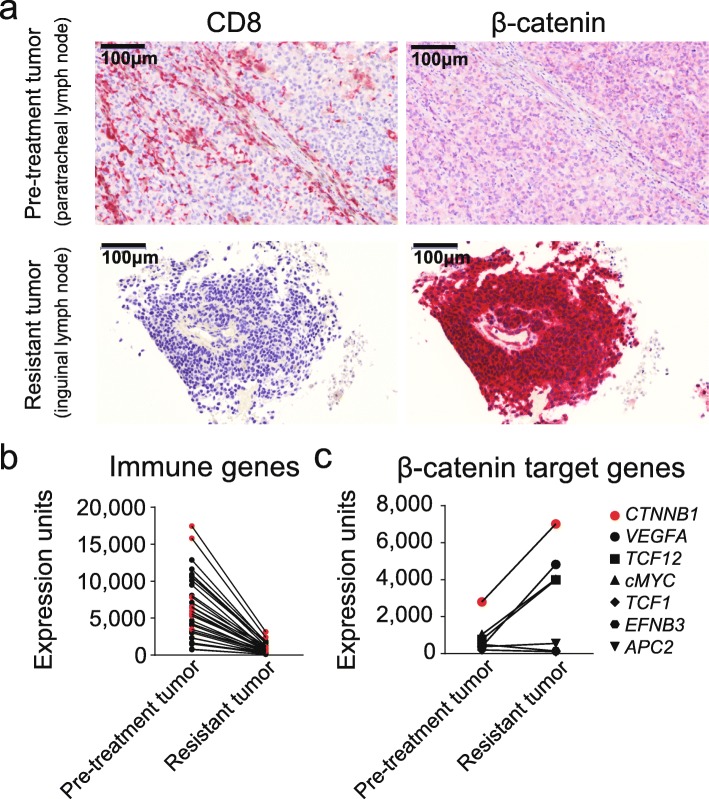
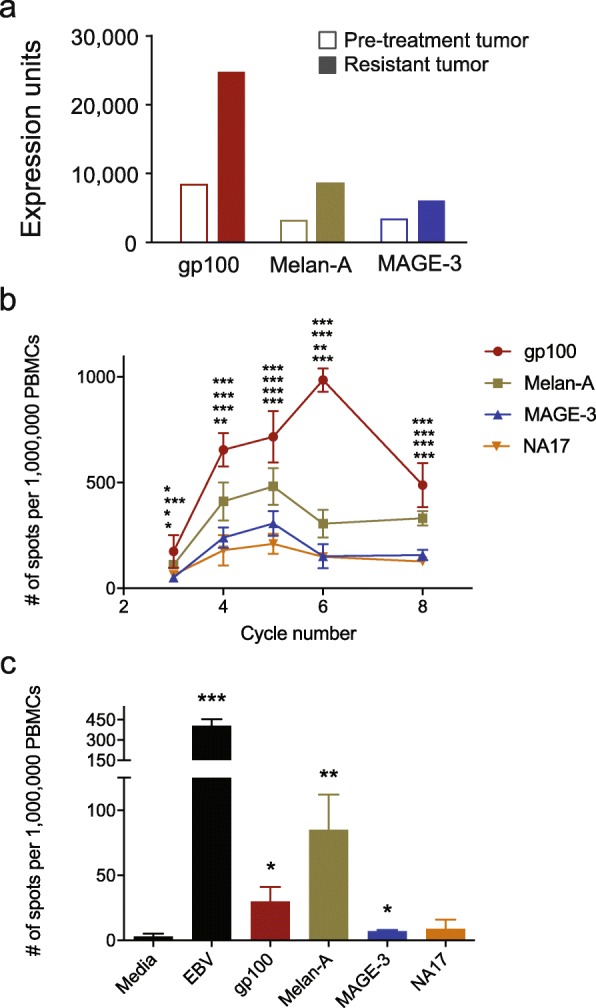
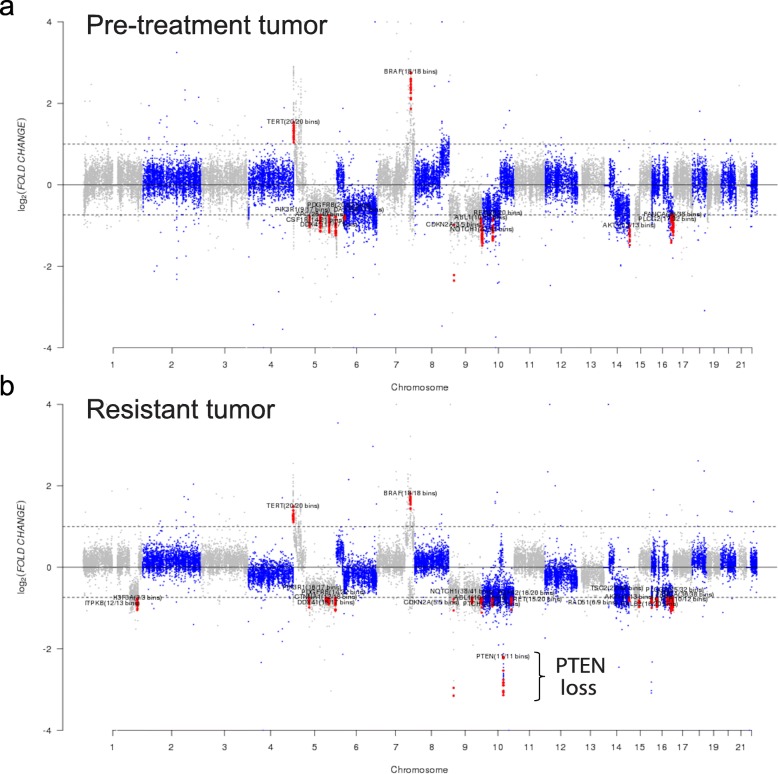
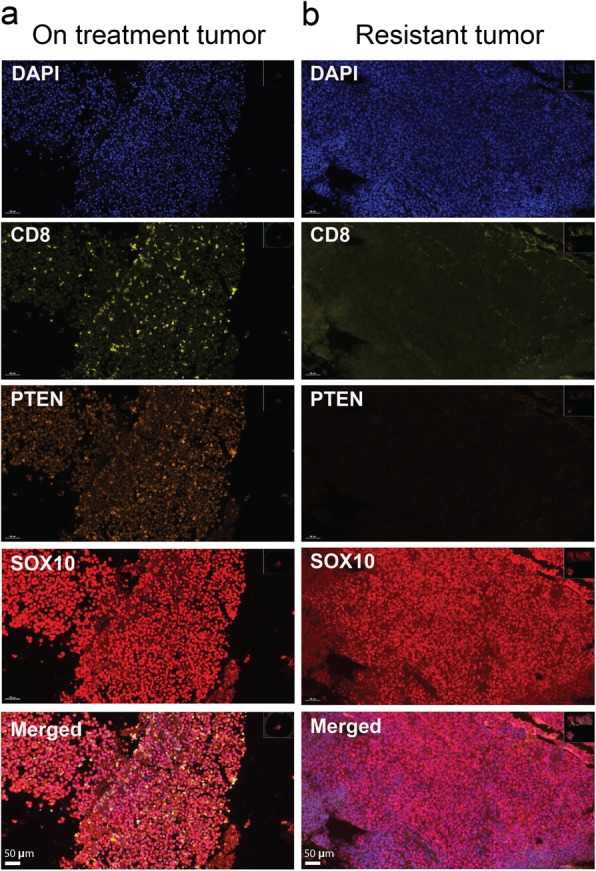
BACKGROUND: While cancer immunotherapies including checkpoint blockade antibodies, adoptive T cell therapy, and even some vaccines have given rise to major clinical responses with durability in many cases, a subset of patients who initially respond subsequently develop secondary resistance to therapy. Tumor-intrinsic mechanisms of acquired immunotherapy resistance are incompletely understood. METHODS: Baseline and treatment-resistant tumors underwent molecular analysis via transcriptional profiling or genomic sequencing for oncogenic alterations and histologic analysis for T cell infiltration to investigate mechanisms contributing to T cell exclusion and acquired resistance to immunotherapy. RESULTS: We describe two patients with metastatic melanoma who initially showed a durable partial response to either a melanoma-peptide/interleukin-12 vaccine or combined anti-CTLA-4 + anti-PD-1 therapy, but subsequently developed new treatment-resistant metastases. In the first case, the recurrent tumor showed new robust tumor expression of β-catenin, whereas in the second case genomic sequencing revealed acquired PTEN loss. Both cases were associated with loss of T cell infiltration, and both pathways have been mechanistically linked to immune resistance preclinically. CONCLUSION: Our results suggest that secondary resistance to immunotherapies can arise upon selection for new oncogenic variants that mediate T cell exclusion. To identify the spectrum of underlying mechanisms of therapeutic resistance, similar evaluation for the emergence of tumor-intrinsic alterations in resistant lesions should be done prospectively at the time of relapse in a range of additional patients developing secondary resistance.
Overview
The claims and statistics of this paper haven’t been checked yet.
Free: it reads the open-access text and checks the first 5 claims that cite a source we can check. Create a free account to check every claim.
Integrity signals
Registry
Cites
Statistics
Figures
Verification
Claims the paper makes
The claims and statistics of this paper haven’t been checked yet.
Free: it reads the open-access text and checks the first 5 claims that cite a source we can check. Create a free account to check every claim.
Claims other papers make about this one
Each is checked against this paper’s own text: does it say what the citing paper says it does?
In the citing paper
“For example, tumor cell-intrinsic WNT/β-catenin activation has been shown to lead to exclusion of T cells within the TME (123, 155, 156).”
From The Next Decade of Immune Checkpoint Therapy (2021) · cites this paper as [156]
Self-check
Percentages, sums and reported differences re-computed from the paper’s own numbers.
The self-check needs the paper’s full text.
Citations
Cites
Mismatch repair deficiency predicts response of solid tumors to PD-1 blockade
Le, D. T., Durham, J. N., Smith, K. N., Wang, H., Bartlett, B. R., Aulakh, L. K., Lu, S., Kemberling, H., Wilt, C., Luber, B. S., et al. (2017) · Science · doi:10.1126/science.aan6733 · Cited by 6,645
PD-1 blockade induces responses by inhibiting adaptive immune resistance
Tumeh, P. C., Harview, C. L., Yearley, J. H., Shintaku, I. P., Taylor, E. J. M., Robert, L., Chmielowski, B., Spasic, M., Henry, G., Ciobanu, V., et al. (2014) · Nature · doi:10.1038/nature13954 · Cited by 6,609
Overall Survival with Combined Nivolumab and Ipilimumab in Advanced Melanoma
Wolchok, J. D., Chiarion-Sileni, V., Gonzalez, R., Rutkowski, P., Grob, J.-J., Cowey, C. L., Lao, C. D., Wagstaff, J., Schadendorf, D., Ferrucci, P. F., et al. (2017) · New England Journal of Medicine · doi:10.1056/nejmoa1709684 · Cited by 5,357
IFN-γ–related mRNA profile predicts clinical response to PD-1 blockade
Ayers, M., Lunceford, J., Nebozhyn, M., Murphy, E., Loboda, A., Kaufman, D. R., Albright, A., Cheng, J. D., Kang, S. P., Shankaran, V., et al. (2017) · Journal of Clinical Investigation · doi:10.1172/jci91190 · Cited by 3,788
Five-Year Survival with Combined Nivolumab and Ipilimumab in Advanced Melanoma
Larkin, J., Chiarion-Sileni, V., Gonzalez, R., Grob, J.-J., Rutkowski, P., Lao, C. D., Cowey, C. L., Schadendorf, D., Wagstaff, J., Dummer, R., et al. (2019) · New England Journal of Medicine · doi:10.1056/nejmoa1910836 · Cited by 3,723
Mutations Associated with Acquired Resistance to PD-1 Blockade in Melanoma
Zaretsky, J. M., Garcia-Diaz, A., Shin, D. S., Escuin-Ordinas, H., Hugo, W., Hu-Lieskovan, S., Torrejon, D. Y., Abril-Rodriguez, G., Sandoval, S., Barthly, L., et al. (2016) · New England Journal of Medicine · doi:10.1056/nejmoa1604958 · Cited by 3,237
Melanoma-intrinsic β-catenin signalling prevents anti-tumour immunity
Spranger, S., Bao, R., & Gajewski, T. F. (2015) · Nature · doi:10.1038/nature14404 · Cited by 2,830
Self-citationTopalian, S. L., Sznol, M., McDermott, D. F., Kluger, H. M., Carvajal, R. D., Sharfman, W. H., Brahmer, J. R., Lawrence, D. P., Atkins, M. B., Powderly, J. D., et al. (2014) · Journal of Clinical Oncology · doi:10.1200/jco.2013.53.0105 · Cited by 2,222
CTLA-4 and PD-1 Receptors Inhibit T-Cell Activation by Distinct Mechanisms
Parry, R. V., Chemnitz, J. M., Frauwirth, K. A., Lanfranco, A. R., Braunstein, I., Kobayashi, S. V., Linsley, P. S., Thompson, C. B., & Riley, J. L. (2005) · Molecular and Cellular Biology · doi:10.1128/mcb.25.21.9543-9553.2005 · Cited by 1,931
Loss of PTEN Promotes Resistance to T Cell–Mediated Immunotherapy
Peng, W., Chen, J. Q., Liu, C., Malu, S., Creasy, C., Tetzlaff, M. T., Xu, C., McKenzie, J. A., Zhang, C., Liang, X., et al. (2016) · Cancer Discovery · doi:10.1158/2159-8290.cd-15-0283 · Cited by 1,539
Self-citation
Cited by
Items 101–185 of 185
Ascierto, P. A., Puzanov, I. J., Agarwala, S. S., Blank, C. U., Carvajal, R. D., Demaria, S., Dummer, R., Ernstoff, M. S., Ferrone, S., Fox, B. A., et al. (2020) · Journal of Translational Medicine · doi:10.1186/s12967-020-02482-x · Cited by 8
Self-citationSanchez‐Pupo, R. E., Finch, G. A., Johnston, D. E., Craig, H. C., Abdo, R., Barr, K., Kerfoot, S. M., Dagnino, L., & Peñuela, S. (2024) · Molecular Oncology · doi:10.1002/1878-0261.13596 · Cited by 8
The Roles of PTEN in Melanoma Suppression
Parkman, G. L., Xu, X., Holmen, S. L., & Karreth, F. A. (2025) · Pigment Cell & Melanoma Research · doi:10.1111/pcmr.70054 · Cited by 7
“…patient who developed resistance to combined anti- CTLA-4 and anti- PD-1 therapy, acquired PTEN loss was associated with the loss of T cell infiltration in the resistant tumor, highlighting PTEN inactivation as a potential driver of immune evasion through T cell exclusion (Trujillo et al. 2019).”
Li, X., Wang, Z., Mao, S., Zhao, Y., Ye, J., Liang, B., Peng, J., Xie, X., Pan, J., Xiao, C., et al. (2026) · iScience · doi:10.1016/j.isci.2025.114607 · Cited by 7
“44 Mechanistically, Wnt/ β -catenin activation induces activating Yang et al. 12 Elevated itaconate (induced by PD-1 inhibitor-triggered IFN-γ ) impairing dendritic cell function.”
Overcoming melanoma resistance to immune checkpoint blockade therapy using nano-strategies
Ding, Y., Liu, C., Wu, Y., & Fu, F. (2023) · Biomedical Technology · doi:10.1016/j.bmt.2023.03.003 · Cited by 7
Li, F., Wang, J., Liu, T., Yang, W., Li, Y., Sun, Q., Yan, J., & He, W. (2024) · Small · doi:10.1002/smll.202404892 · Cited by 7
Cosgrove, C. M., Zamarin, D., Conejo-Garcia, J. R., Hacker, K., Vargas, R., Konstantinopoulos, P. A., Mahdi, H., Gaillard, S. L., Markovina, S. T., Kohn, E. C., et al. (2025) · JNCI Journal of the National Cancer Institute · doi:10.1093/jnci/djaf089 · Cited by 7
Yang, J., Zeng, L., Chen, R., Huang, L., Wu, Z. K., Yu, M., Zhou, Y., & Chen, R. (2023) · Cancers · doi:10.3390/cancers15051442 · Cited by 7
A combined opposite targeting of p110δ PI3K and RhoA abrogates skin cancer
Tzenaki, N., Xenou, L., Goulielmaki, E., Tsapara, A., Voudouri, I., Antoniou, A., Valianatos, G., Tzardi, M. N., de Bree, E., Berdiaki, A., et al. (2024) · Communications Biology · doi:10.1038/s42003-023-05639-8 · Cited by 6
“…various evidence have suggested that some melanomas have intrinsic activation of the PI3K pathway 44 whereas the activated PI3K pathway has also been implicated in the development of resistance of melanoma tumours to BRAF/MEK inhibitors 45 – 48 and to immune checkpoint inhibitors 49,50 .”
Zhou, M., Wang, Y., Cui, H., Geng, H., Ruan, L., Zhao, Y., Zhou, C., Dai, W., Chen, J., Yu, J., et al. (2025) · Frontiers in Pharmacology · doi:10.3389/fphar.2025.1624109 · Cited by 6
Targeting tumor-draining lymph node to overcome resistance to cancer immunotherapy: an update
Lu, J., Yu, J., Xu, T., Li, Y., Chen, S., Zhou, Q., & Wang, L. (2025) · Cancer Drug Resistance · doi:10.20517/cdr.2025.126 · Cited by 6
Acquired resistance of cancer therapies: Mechanisms and perspectives
Wang, M., Zhai, X., Li, J., Chen, J., Gai, X., Liu, X., Liu, Y., Zhou, Q., & Chen, C. (2026) · Chinese Medical Journal · doi:10.1097/cm9.0000000000004048 · Cited by 8
“[77] Aberrant activation of the Wnt/ β -catenin pathway leads to the formation of an immunosuppressive TME through a variety of mechanisms, including promoting immunosuppressive cytokine production, inhibiting the recruitment of dendritic cells (DCs), reducing CD8 + T cell infiltration, and…”
Tumor characteristics of dissociated response to immune checkpoint inhibition in advanced melanoma
Versluis, J. M., Hoefsmit, E. P., Shehwana, H., Dimitriadis, P., Sanders, J., Broeks, A., & Blank, C. U. (2024) · Cancer Immunology Immunotherapy · doi:10.1007/s00262-023-03581-6 · Cited by 7
“PTEN loss has been previously described in one patient with melanoma who developed acquired resistance to ICI [36].”
BackgroundAbdulrahman, Z., Kortekaas, K. E., Welters, M. J. P., van Poelgeest, M. I. E., & van der Burg, S. H. (2024) · Cancer Immunology Immunotherapy · doi:10.1007/s00262-024-03755-w · Cited by 6
LoRusso, P. M., Sekulić, A., Sosman, J. A., Liang, W. S., Carpten, J. D., Craig, D. W., Solit, D. B., Bryce, A. H., Kiefer, J., Aldrich, J., et al. (2021) · PLoS ONE · doi:10.1371/journal.pone.0248097 · Cited by 6
Ad-SGE-DKK3 Gene Therapy Overcomes Resistance to Immune Checkpoint Blockade in Pleural Mesothelioma
Jang, H.-J., Patel, M., Wang, D. Y., Kang, S. W., Choi, J. M., Lee, C., Vilchis, M., Shim, J. S., Mitra, S., Ranchod, P., et al. (2025) · Clinical Cancer Research · doi:10.1158/1078-0432.ccr-24-4024 · Cited by 5
Gajón, J. A., Juárez-Flores, Á., Mendoza-Roldan, F., Hernández-Aceves, J. A., Muñoz-Cruz, S., Pérez‐Torres, A., Fuentes‐Pananá, E. M., & Bonifaz, L. C. (2025) · OncoImmunology · doi:10.1080/2162402x.2025.2595360 · Cited by 5
“45,46,61 Interestingly, Kolb et al. also reported that CXCL9/10 expression was markedly reduced in their resistance model, 74 pointing to a major CSC-driven disruption of CXCL9/10-mediated T cell recruitment downstream of stemness-associated pathways.”
Strong PD-L1 affect clinical outcomes in advanced NSCLC treated with third-generation EGFR-TKIs
Niu, J., Jing, X., Xu, Q., Liu, H., Tian, Y., Yang, Z., Zhu, H., & Sun, Y. (2024) · Future Oncology · doi:10.1080/14796694.2024.2385290 · Cited by 5
Prognostic and predictive role of the tumor immune landscape
Haanen, J. B. A. G., & Blank, C. U. (2020) · The Quarterly Journal of Nuclear Medicine and Molecular Imaging · doi:10.23736/s1824-4785.20.03255-0 · Cited by 5
Yang, Y., Liu, T., Mi, S., Liu, X., Jabbour, S. K., Liang, N. N., Deng, G., Hu, P., & Zhang, J. (2025) · Translational Lung Cancer Research · doi:10.21037/tlcr-2025-57 · Cited by 4
Epigenetics of Malignant Melanoma: Mechanisms, Diagnostic Approaches and Therapeutic Applications
Hong, S. G., Murphy, G. F., & Lian, C. G. (2026) · Oncology Research Featuring Preclinical and Clinical Cancer Therapeutics · doi:10.32604/or.2026.073894 · Cited by 3
Inducing tumor-intrinsic innate immune response to break cancer immunotherapy resistance
Blandino, J. A., & Murayama, T. (2026) · Frontiers in Medicine · doi:10.3389/fmed.2026.1892906 · Cited by 3
“Elevated TGF-β is associated with poor prognosis; however several preclinical studies and clinical observations in melanoma have shown that TGF-β blockade within the TME increases T cell infiltration and enhances anti-PD-1 efficacy (30, 31).”
Zefferino, R., & Conese, M. (2023) · Vaccines · doi:10.3390/vaccines11111701 · Cited by 3
Cryoablation for Malignant Bone and Soft Tissue Tumors and Histological Assessment of Ablated Tumors
Asanuma, K., Nakatsuka, A., Nakamura, T., Fujimori, M., Yamanaka, T., Hagi, T., Matsuyama, Y., Iino, T., & Hasegawa, M. (2024) · Anticancer Research · doi:10.21873/anticanres.17372 · Cited by 3
“From two case analyses of recurrent melanoma after adaptive immune therapy, resistance to immune checkpoint inhibitors was attributed to T-cell exclusion with involvement of the WNT-beta-catenin pathway (40).”
Perspectives in Melanoma: meeting report from the Melanoma Bridge (December 3rd–5th, 2020, Italy)
Ascierto, P. A., Blank, C. U., Dummer, R., Ernstoff, M. S., Ferrone, S., Fox, B. A., Gajewski, T. F., Garbe, C., Hwu, P., Kaliński, P., et al. (2021) · Journal of Translational Medicine · doi:10.1186/s12967-021-02951-x · Cited by 3
Self-citationEnhancer Reprogramming in Melanoma Immune Checkpoint Therapy ResistancePreprint
Maitituoheti, M., Shi, A., Tang, M., Ho, L., Terranova, C. J., Galani, K., Keung, E. Z.-Y., Creasy, C. A., Wu, M., Chen, J., et al. (2022) · bioRxiv (Cold Spring Harbor Laboratory) · doi:10.1101/2022.08.31.506051 · Cited by 3
Keddar, M. R., Pro, S. C., Rabbie, R., Atak, Z. K., Muyas, F., Stewart, A. C., Hammond, S. A., Palmer, D. C., Stewart, R. A., Carey, M., et al. (2026) · Journal for ImmunoTherapy of Cancer · doi:10.1136/jitc-2025-014321 · Cited by 2
Persico, I., Doro, M. G., Frogheri, L., Sini, M. C., Maestrale, G. B., Manca, A., Mallardo, D., Ascierto, P. A., & Palmieri, G. (2026) · Cells · doi:10.3390/cells15110986 · Cited by 2
“Loss of PTEN protein, which is secondary to gene deletions and loss-of-function mutations, leads to activation of the PI3K-AKT pathway and has been associated with decreased infiltration by CD8 + T-cells in the TME of metastatic melanoma, as well as resistance to anti-PD-1/PD-L1 treatments [62,64].”
New approaches to vaccines for cancer
Chavda, V. P., Acharya, D., Malla, S., Ashby, C. R., & Tiwari, A. K. (2024) · Elsevier eBooks · doi:10.1016/b978-0-443-18564-9.00009-6 · Cited by 2
Combinatorial Strategies for T Lymphocyte-Based Cancer Immunotherapy
Hargadon, K. M., & Wall, J. B. (2022) · Springer eBooks · doi:10.1007/978-3-030-80962-1_211-1 · Cited by 2
Tumor Microenvironment: Immune Effector and Suppressor Imbalance
Sheehan, K., & Schalper, K. A. (2021) · Current cancer research · doi:10.1007/978-3-030-74028-3_1 · Cited by 1
Qiu, Y.-Y., Wang, Z., He, L., Shi, G.-G., Li, Z.-Z., Ma, S.-X., Yu, D. N., Du, H., Xie, F., Zhang, C., et al. (2025) · Journal of Pharmaceutical Analysis · doi:10.1016/j.jpha.2025.101511 · Cited by 1
“Single immune checkpoint therapies often fail to effectively control tumor growth, as tumor cells frequently exploit multiple inhibitory pathways to evade immune detection and clearance [4,5].”
The critical role of homing in TIL therapy success: From biology to clinical application
Mohammadi, Y., Khorramdelazad, H., Soleimanifar, N., Badalzadeh, M., Nicknam, M. H., & Kardar, G. A. (2025) · Critical Reviews in Oncology/Hematology · doi:10.1016/j.critrevonc.2025.104930 · Cited by 1
Combinatorial Strategies for T Lymphocyte-Based Cancer Immunotherapy
Hargadon, K. M., & Wall, J. B. (2025) · Springer eBooks · doi:10.1007/978-3-032-00767-4_211 · Cited by 1
Kött, J., Geidel, G., Roeper, C. M. T., Ačkar, L., Siebels, B., Voß, H., Schlüter, H., Schweizer, M., Müller, K., Rünger, A., et al. (2026) · International Journal of Cancer · doi:10.1002/ijc.70650 · Cited by 1
“This may result from adaptive changes such as proteomic or transcriptomic alterations, tumor-intrinsic adaptations, or clonal selection [5, 8, 9].”
GRP78 Drives NSCLC Stemness and EMT via a SIX1/β‐Catenin Signaling Axis
Tong, G., & Qi, H. (2026) · Drug Development Research · doi:10.1002/ddr.70359 · Cited by 1
“Additionally, β‐catenin activation is linked to immunotherapy resistance in NSCLC (Trujillo et al. 2019), suggesting GRP78 inhibition might sensitize tumors to immune checkpoint blockers, a hypothesis warranting future investigation.”
Asl, A. S., Davari, M., Ghorbani, A., Seddighi, N., Arabi, K., & Saburi, E. (2024) · International Immunopharmacology · doi:10.1016/j.intimp.2024.113790 · Cited by 1
Exploring the Molecular Landscape of Cutaneous Melanoma
Mitra, S. (2020) · Lund University Publications (Lund University) · Cited by 1
Melanoma Markers and New Treatment Perspectives
Teras, M. (2020) · TUTL Collection · doi:10.23658/taltech.16/2020 · Cited by 1
Mechanisms of Resistance to Immunotherapy in Cutaneous Melanoma
Anichini, A., & Mortarini, R. (2021) · Springer eBooks · doi:10.1007/978-3-030-64009-5_19
Immune Therapy: What Can We Learn From Acquired Resistance?
Grant, M. J., Politi, K. A., & Gettinger, S. N. (2021) · Current cancer research · doi:10.1007/978-3-030-74028-3_5
Multipe drugs: Acquired drug resistance: 2 case reports
(2020) · Reactions Weekly · doi:10.1007/s40278-020-82177-6
Biomarqueurs en immunothérapie, signatures moléculaires, radiomique : avons-nous avancé ?
Pabst, L., Lopes, S., Kotovskaya, M., Bertrand, B., & Mascaux, C. (2022) · Revue des Maladies Respiratoires Actualités · doi:10.1016/s1877-1203(22)00122-7
Precision Medicine in Oncology Drug Development
Tsimberidou, A. M., Fountzilas, E., & Kurzrock, R. (2022) · Wiley eBooks · doi:10.1002/9781119000822.hfcm052.pub3
Checkpoint on I–O resistance: lessons learnt & future perspectives
Stewart, R. A., Miller, M. L., Camelo, A., & Barrett, J. C. (2023) · Immuno Oncology Insights · doi:10.18609/ioi.2023.023
Therapeutic Implications of PTEN Loss in Patients with Cowden Syndrome and Renal Cell Cancer
Lanzafame, K., Inzerilli, N., Carciotto, R., Longhitano, C., Stella, S., Salvatore, L. B., Rossi, L., & Vigneri, P. G. (2023) · Surgery Gastroenterology and Oncology · doi:10.21614/sgo-588
Targeting transcriptional addiction in cutaneous melanoma
Cigrang, M. (2023) · theses.fr (ABES) · doi:10.70675/32a61798z3cd7z4cd8za2acza750367acaf5
Tran, K. B., Kolekar, S., Jabed, A., Jaynes, P. W., Shih, J., Wang, Q., Flanagan, J. U., Rewcastle, G. W., Baguley, B. C., & Shepherd, P. R. (2021) · Figshare · doi:10.6084/m9.figshare.13727560
Tran, K. B., Kolekar, S., Jabed, A., Jaynes, P. W., Shih, J., Wang, Q., Flanagan, J. U., Rewcastle, G. W., Baguley, B. C., & Shepherd, P. R. (2021) · Figshare · doi:10.6084/m9.figshare.13727542
Tran, K. B., Kolekar, S., Jabed, A., Jaynes, P. W., Shih, J., Wang, Q., Flanagan, J. U., Rewcastle, G. W., Baguley, B. C., & Shepherd, P. R. (2021) · Figshare · doi:10.6084/m9.figshare.13727554
Tran, K. B., Kolekar, S., Jabed, A., Jaynes, P. W., Shih, J., Wang, Q., Flanagan, J. U., Rewcastle, G. W., Baguley, B. C., & Shepherd, P. R. (2021) · Figshare · doi:10.6084/m9.figshare.13727557
Tran, K. B., Kolekar, S., Jabed, A., Jaynes, P. W., Shih, J., Wang, Q., Flanagan, J. U., Rewcastle, G. W., Baguley, B. C., & Shepherd, P. R. (2021) · Figshare · doi:10.6084/m9.figshare.13727563
Tran, K. B., Kolekar, S., Jabed, A., Jaynes, P. W., Shih, J., Wang, Q., Flanagan, J. U., Rewcastle, G. W., Baguley, B. C., & Shepherd, P. R. (2021) · Figshare · doi:10.6084/m9.figshare.13727551
Tran, K. B., Kolekar, S., Jabed, A., Jaynes, P. W., Shih, J., Wang, Q., Flanagan, J. U., Rewcastle, G. W., Baguley, B. C., & Shepherd, P. R. (2021) · Figshare · doi:10.6084/m9.figshare.13727545
Tran, K. B., Kolekar, S., Jabed, A., Jaynes, P. W., Shih, J., Wang, Q., Flanagan, J. U., Rewcastle, G. W., Baguley, B. C., & Shepherd, P. R. (2021) · Figshare · doi:10.6084/m9.figshare.13727548
Aqbi, H. F., Coleman, C., Zarei, M., Manjili, S. H., Graham, L., Koblinski, J. E., Guo, C., Xie, Y., Guruli, G., Bear, H. D., et al. (2020) · Figshare · doi:10.6084/m9.figshare.13161722
Aqbi, H. F., Coleman, C., Zarei, M., Manjili, S. H., Graham, L., Koblinski, J. E., Guo, C., Xie, Y., Guruli, G., Bear, H. D., et al. (2020) · Figshare · doi:10.6084/m9.figshare.13161707
Aqbi, H. F., Coleman, C., Zarei, M., Manjili, S. H., Graham, L., Koblinski, J. E., Guo, C., Xie, Y., Guruli, G., Bear, H. D., et al. (2020) · Figshare · doi:10.6084/m9.figshare.13161713
Tran, K. B., Kolekar, S., Jabed, A., Jaynes, P., Shih, J.-H., Wang, Q., Flanagan, J. U., Rewcastle, G. W., Baguley, B. C., & Shepherd, P. R. (2021) · Figshare · doi:10.6084/m9.figshare.13727527
Tran, K. B., Kolekar, S., Jabed, A., Jaynes, P., Shih, J.-H., Wang, Q., Flanagan, J. U., Rewcastle, G. W., Baguley, B. C., & Shepherd, P. R. (2021) · Figshare · doi:10.6084/m9.figshare.13727539
Tran, K. B., Kolekar, S., Jabed, A., Jaynes, P., Shih, J.-H., Wang, Q., Flanagan, J. U., Rewcastle, G. W., Baguley, B. C., & Shepherd, P. R. (2021) · Figshare · doi:10.6084/m9.figshare.13727566
Karachaliou, G. S., Alkallas, R., Carroll, S. B., Caressi, C., Zakria, D., Patel, N. M., Trembath, D. G., Ezzell, J. A., Pegna, G. J., Googe, P. B., et al. (2022) · Figshare · doi:10.6084/m9.figshare.17913218
Tran, K. B., Kolekar, S., Jabed, A., Jaynes, P., Shih, J.-H., Wang, Q., Flanagan, J. U., Rewcastle, G. W., Baguley, B. C., & Shepherd, P. R. (2021) · Figshare · doi:10.6084/m9.figshare.13727530
Tran, K. B., Kolekar, S., Jabed, A., Jaynes, P., Shih, J.-H., Wang, Q., Flanagan, J. U., Rewcastle, G. W., Baguley, B. C., & Shepherd, P. R. (2021) · Figshare · doi:10.6084/m9.figshare.13727533
Aqbi, H. F., Coleman, C., Zarei, M., Manjili, S. H., Graham, L., Koblinski, J. E., Guo, C., Xie, Y., Guruli, G., Bear, H. D., et al. (2020) · Figshare · doi:10.6084/m9.figshare.13161716
Aqbi, H. F., Coleman, C., Zarei, M., Manjili, S. H., Graham, L., Koblinski, J. E., Guo, C., Xie, Y., Guruli, G., Bear, H. D., et al. (2020) · Figshare · doi:10.6084/m9.figshare.13161719
Bao, R., Stapor, D., & Luke, J. J. (2020) · Figshare · doi:10.6084/m9.figshare.13147225
Self-citationTran, K. B., Kolekar, S., Jabed, A., Jaynes, P., Shih, J.-H., Wang, Q., Flanagan, J. U., Rewcastle, G. W., Baguley, B. C., & Shepherd, P. R. (2021) · Figshare · doi:10.6084/m9.figshare.13727536
The regulation of Pannexin1 and Pannexin2 in the skin in health and disease
Sanchez‐Pupo, R. E. (2021) · Scholarship@Western (Western University)
Martignier, C. (2021) · IRIS
Kasperek, A. (2021) · theses.fr (ABES) · doi:10.70675/f96fee43zb045z4ccfzb58ez3d30fdfae1d4
Immunosénescence, inflammation et immunothérapies
Naigeon, M. (2022) · theses.fr (ABES) · doi:10.70675/f0b0b5e9zc57dz4931z82c0z1510abbc8c2c
Béguin, A. (2024) · theses.fr (ABES) · doi:10.70675/91026eb5zf996z44a3zad54z8065cd33958b
Costantini, A. (2024) · theses.fr (ABES) · doi:10.70675/18b594afz8a7bz41cbz8586z1508dff5f192
The resilient subset: cancer stem cells at the core of immunotherapy resistance
Gajón, J. A., Esperante, D., Ko, N., Jimenez-Miranda, A., Muñoz-Cruz, S., Fuentes‐Pananá, E. M., & Bonifaz, L. C. (2025) · Immunotherapy Advances · doi:10.1093/immadv/ltag006
“Across cancer types, stemness-associated transcriptional programs are consistently linked to poor response to ICB, reduced overall survival, and increased relapse rates, positioning CSC-related pathways as both predictive biomarkers and rational therapeutic targets [,139,172,239,257–272].”
Molecular Biomarkers Applied to Treatment of Melanoma Patients
Seervai, R. N. H., Cho, W. C., & Curry, J. L. (2026) · Molecular pathology library · doi:10.1007/978-3-032-18222-7_12
Makki, R., Kim, H., Aoun, M., & Shekhar, M. P. V. (2026) · Molecular and Digital Medicine · doi:10.1016/j.mdmed.2026.100009
Spatial ecotype in tumor immune exclusion: from spatial architecture to therapeutic strategies
Ying, M., Zhang, L., Jia, M., Sun, X., Su, Y., Liu, C., Gong, M., Sun, T., & Zhang, B. (2026) · Molecular Cancer · doi:10.1186/s12943-026-02766-8 · Cited by 1
“…KRAS [72], TP53 [73], and isocitrate dehydrogenase (IDH) [74–76]), and loss of tumor suppressors (e.g., phosphatase and tensin homolog (PTEN) [77–80], STK11 [81, 82], and KEAP1 [83, 84]) promote immune exclusion and immunotherapy resistance via multiple mechanisms: (i) downregulating MHC-I…”
Gan, C. P., Lee, B. K. B., Lau, S. H., Kallarakkal, T. G., Zaini, Z. M., Lye, B. K. W., Zain, R. B., Sathasivam, H. P., Yeong, J. P. S., Savelyeva, N., et al. (2022) · doi:10.3389/fimmu.2022.954567.s003
Metadata
- Authors
- Trujillo, J. A., Luke, J. J., Zha, Y., Segal, J. P., Ritterhouse, L. L., Spranger, S., Matijevich, K., & Gajewski, T. F.
- Affiliations
- University of Chicago (US)
- Corresponding author
- Gajewski, Thomas F.
- ORCID
- Venue
- Journal for ImmunoTherapy of Cancer
- Publisher
- BMJ
- Published
- 2019-11-08
- Volume
- 7
- Issue
- 1
- Pages
- 295-295
- ISSN
- 2051-1426 (ISSN-L)
- PMC
- PMC6839232
- OpenAlex
- W2983934251
- Cited by
- 159
- References
- 35
- Citations by year
- 2026: 11 · 2025: 20 · 2024: 20 · 2023: 18 · 2022: 25 · 2021: 35 · 2020: 30
- FWCI
- 10.22
- Type
- journal article
- Language
- en
- Open access
- gold
- doi.org
- Licence
- cc-by
- creativecommons.org/licenses/by/4.0/ (tdm)
- Locations
- Journal for ImmunoTherapy of Cancer (publishedVersion, cc-by)
- PubMed Central (publishedVersion, cc-by)
- PubMed (publishedVersion)
- DOAJ (DOAJ: Directory of Open Access Journals) (submittedVersion, cc-by-sa)
- DSpace@MIT (Massachusetts Institute of Technology) (submittedVersion, cc-by-nc)
- Funders
- National Institutes of Health (2T32CA009566-31)
- National Cancer Institute (R00CA204595, R35CA210098)
- Topics
- Health Sciences › Medicine › Oncology › Cancer Immunotherapy and Biomarkers
- Life Sciences › Immunology and Microbiology › Immunology › Immunotherapy and Immune Responses
- Life Sciences › Biochemistry, Genetics and Molecular Biology › Molecular Biology › Melanoma and MAPK Pathways
- Keywords
- metastatic melanoma, PTEN loss, T-cell exclusion, anti-CTLA-4, anti-PD-1, adoptive T cell therapy, T cell infiltration
- MeSH terms
- Antineoplastic Agents, Immunological, Ipilimumab, Nivolumab, Adult, Humans, Immunotherapy, Male, Melanoma, Middle Aged, Signal Transduction, Interleukin-12, Drug Resistance, Neoplasm, Cancer Vaccines, PTEN Phosphohydrolase, beta Catenin, Young Adult, High-Throughput Nucleotide Sequencing, Transcriptome, CTLA-4 Antigen, Programmed Cell Death 1 Receptor
About these checks
Registry, retraction, Cites and statistics results are computed, not judged, with one exception: a printed reference that no index lists is read once by a model before it counts as a citation error. Claims are extracted by a model and kept only when their quote appears verbatim in the text; each cited source is then checked, with a model’s help, for whether it says what the claim relies on. Those verdicts can be wrong — read the claim’s quote and the cited source before relying on one.
Statistics and arithmetic are recomputed, not judged.
Confidence bands are shown only for fields calibrated on our annotated test set. None is calibrated yet, so no band is shown.
What counts as a claim ›How we measure confidence ›How we check this ›
Are you an author, or do you see a problem with this page? Request a review
Data sources
Bibliographic data: Semantic Scholar, OpenAlex, Crossref.
Contains information from the Semantic Scholar Academic Graph Datasets, made available under the ODC Attribution License (ODC-BY 1.0).
Semantic Scholar’s data is described in: Kinney, R., et al. (2023). The Semantic Scholar Open Data Platform. arXiv:2301.10140.
