

Building an Otoscopic screening prototype tool using deep learning
Open accessThe DOI matches its Crossref record; 14 of the 14 references it cites were found in a registry or an index.
Abstract
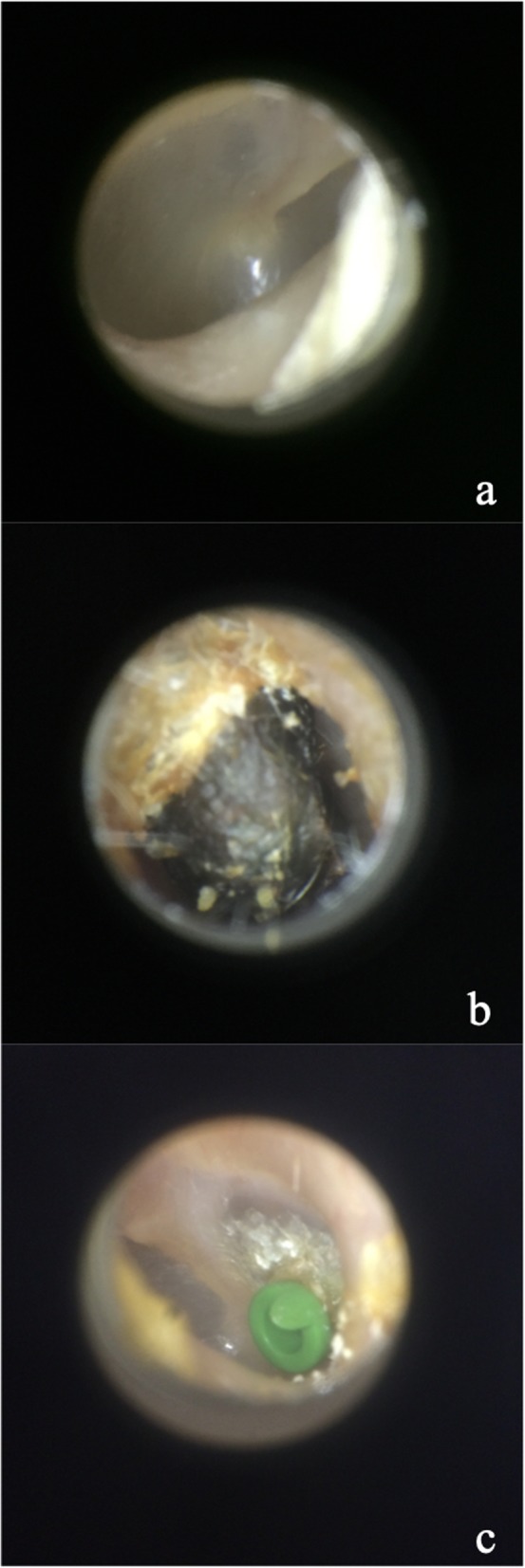
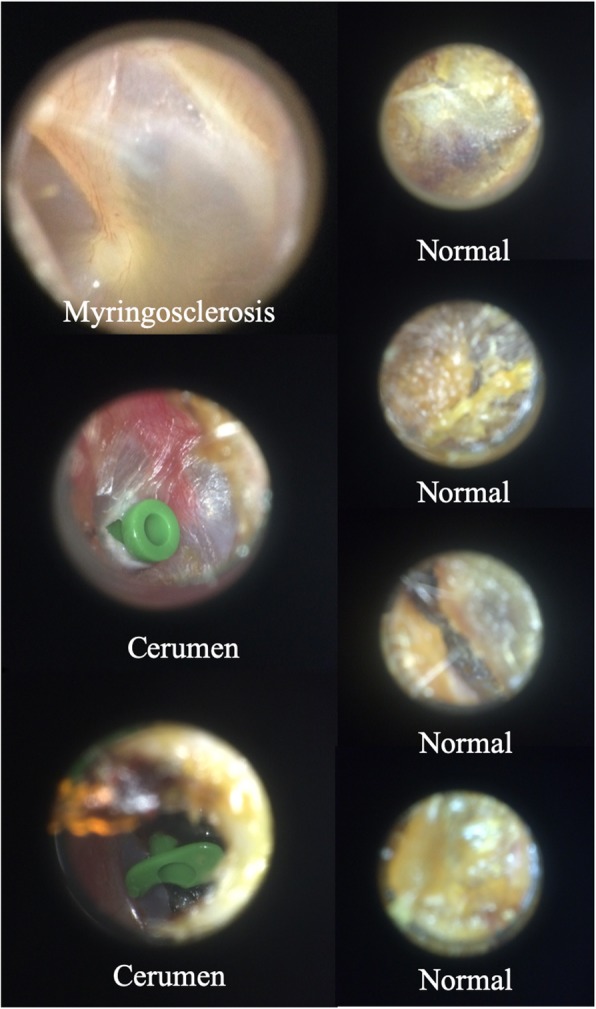
Background: Otologic diseases are often difficult to diagnose accurately for primary care providers. Deep learning methods have been applied with great success in many areas of medicine, often outperforming well trained human observers. The aim of this work was to develop and evaluate an automatic software prototype to identify otologic abnormalities using a deep convolutional neural network. Material and methods: A database of 734 unique otoscopic images of various ear pathologies, including 63 cerumen impactions, 120 tympanostomy tubes, and 346 normal tympanic membranes were acquired. 80% of the images were used for the training of a convolutional neural network and the remaining 20% were used for algorithm validation. Image augmentation was employed on the training dataset to increase the number of training images. The general network architecture consisted of three convolutional layers plus batch normalization and dropout layers to avoid over fitting. Results: The validation based on 45 datasets not used for model training revealed that the proposed deep convolutional neural network is capable of identifying and differentiating between normal tympanic membranes, tympanostomy tubes, and cerumen impactions with an overall accuracy of 84.4%. Conclusion: Our study shows that deep convolutional neural networks hold immense potential as a diagnostic adjunct for otologic disease management.
Overview
The claims and statistics of this paper haven’t been checked yet.
Free: it reads the open-access text and checks the first 5 claims that cite a source we can check. Create a free account to check every claim.
Integrity signals
Registry
Cites
Statistics
Figures
Verification
Claims the paper makes
The claims and statistics of this paper haven’t been checked yet.
Free: it reads the open-access text and checks the first 5 claims that cite a source we can check. Create a free account to check every claim.
Claims other papers make about this one
Each is checked against this paper’s own text: does it say what the citing paper says it does?
In the citing paper
“For instance, in otolaryngology, CNNs can be used to help primary care physicians manage patients' ears, nose, and throat 40 , through mountable devices attached to smartphones 41 .”
From Deep learning-enabled medical computer vision (2021) · cites this paper as [41]
Self-check
Percentages, sums and reported differences re-computed from the paper’s own numbers.
The self-check needs the paper’s full text.
Citations
Cites
Gulshan, V., Peng, L., Coram, M., Stumpe, M. C., Wu, D., Narayanaswamy, A., Venugopalan, S., Widner, K., Madams, T., Cuadros, J., et al. (2016) · JAMA · doi:10.1001/jama.2016.17216 · Cited by 7,697
Artificial intelligence in cardiology
Johnson, K. W., Torres Soto, J., Glicksberg, B. S., Shameer, K., Miotto, R., Ali, M., Ashley, E., & Dudley, J. T. (2018) · Journal of the American College of Cardiology · doi:10.1016/j.jacc.2018.03.521 · Cited by 1,202
Smith, L. N. (2018) · arXiv · doi:10.48550/arxiv.1803.09820 · Cited by 790 · cited 1×
“20% of the overall training datasets were used as a validation set in order to optimize the CNN’s hyperparameters via the so-called babysitting approach [15].”
MethodTan, J. H., Hagiwara, Y., Pang, W., Lim, I., Oh, S. L., Adam, M., Tan, R. S., Chen, M., & Acharya, U. R. (2018) · Computers in Biology and Medicine · doi:10.1016/j.compbiomed.2017.12.023 · Cited by 355
Assessing Diagnostic Accuracy and Tympanocentesis Skills in the Management of Otitis Media
Pichichero, M. E., & Poole, M. D. (2001) · Archives of Pediatrics & Adolescent Medicine · doi:10.1001/archpedi.155.10.1137 · Cited by 205
Automated Dermatological Diagnosis: Hype or Reality?
Navarrete-Dechent, C., Dusza, S. W., Liopyris, K., Marghoob, A. A., Halpern, A. C., & Marchetti, M. A. (2018) · Journal of Investigative Dermatology · doi:10.1016/j.jid.2018.04.040 · Cited by 129 · cited 1×
“In this context, CNNs are an emerging adjunct to medical diagnosis and there is a large body of scientific literature devoted to their use for numerous medical applications [8, 9, 12, 13].”
BackgroundOtitis Media Diagnosis for Developing Countries Using Tympanic Membrane Image-Analysis
Myburgh, H. C., van Zijl, W. H., Swanepoel, D. W., Hellström, S., & Laurent, C. (2016) · EBioMedicine · doi:10.1016/j.ebiom.2016.02.017 · Cited by 116
Pichichero, M. E., & Poole, M. D. (2004) · International Journal of Pediatric Otorhinolaryngology · doi:10.1016/j.ijporl.2004.10.013 · Cited by 111
Clinical qualitative evaluation of the diagnosis of acute otitis media in general practice
Legros, J.-M., Hitoto, H., Garnier, F., Dagorne, C., Parot‐Schinkel, E., & Fanello, S. (2007) · International Journal of Pediatric Otorhinolaryngology · doi:10.1016/j.ijporl.2007.09.010 · Cited by 43
Recognition of paediatric otopathology by General Practitioners
Buchanan, C. M., & Pothier, D. D. (2008) · International Journal of Pediatric Otorhinolaryngology · doi:10.1016/j.ijporl.2008.01.030 · Cited by 43
Cited by
Deep learning-enabled medical computer vision
Esteva, A., Chou, K., Yeung, S., Naik, N., Madani, A., Mottaghi, A., Liu, Y., Topol, E., Dean, J., & Socher, R. (2021) · npj Digital Medicine · doi:10.1038/s41746-020-00376-2 · Cited by 1,406
Shinde, R., Patil, S., Kotecha, K. V., Potdar, V. M., Selvachandran, G., & Abraham, A. (2023) · Transactions on Emerging Telecommunications Technologies · doi:10.1002/ett.4884 · Cited by 181
“Deep convolutional neural networks provide a significant opportunity as a diagnostic tool for otologic prognosis based on otoscopic ear images [86].”
BackgroundSupervised machine learning tools: a tutorial for clinicians
Lo Vercio, L., Amador, K., Bannister, J. J., Crites, S., Gutierrez, A., MacDonald, M. E., Moore, J., Mouches, P., Rajashekar, D., Schimert, S., et al. (2020) · Journal of Neural Engineering · doi:10.1088/1741-2552/abbff2 · Cited by 166
“Since then, CNNs have been successfully used for other tasks such as the detection of otologic diseases [88] and patch-based segmentation for digital pathology analysis [89].”
MethodSelf-citationBasic of machine learning and deep learning in imaging for medical physicists
Manco, L., Maffei, N., Strolin, S., Vichi, S., Bottazzi, L., & Strigari, L. (2021) · Physica Medica · doi:10.1016/j.ejmp.2021.03.026 · Cited by 84
“…physical activity recognition [85], or fear level classification based on emotional dimensions or also building an otoscopic screening prototype [86]. classifier algorithms have been also used for the classification of potential coronavirus treatments on a single human cell [87]. regarding…”
MethodTama, B. A., Kim, D. H., Kim, G., Kim, S. W., & Lee, S. (2020) · Clinical and Experimental Otorhinolaryngology · doi:10.21053/ceo.2020.00654 · Cited by 83
Metadata
- Authors
- Livingstone, D., Talai, A. S., Chau, J., & Forkert, N. D.
- Affiliations
- University of Calgary (CA)
- Corresponding author
- Livingstone, Devon
- Venue
- Journal of Otolaryngology - Head & Neck Surgery
- Publisher
- SAGE Publications
- Published
- 2019-01
- Volume
- 48
- Issue
- 1
- Pages
- 66-66
- ISSN
- 1916-0208 (ISSN-L)
- 1916-0216
- PMC
- PMC6880418
- OpenAlex
- W2991130772
- Cited by
- 42
- References
- 14
- Citations by year
- 2026: 1 · 2025: 3 · 2024: 7 · 2023: 8 · 2022: 11 · 2021: 7 · 2020: 5
- FWCI
- 4.84
- Type
- journal article
- Language
- en
- Open access
- gold
- doi.org
- Locations
- Journal of Otolaryngology - Head and Neck Surgery (publishedVersion, cc-by)
- PubMed Central (publishedVersion, cc-by)
- PubMed (publishedVersion)
- DOAJ (DOAJ: Directory of Open Access Journals) (submittedVersion, cc-by-sa)
- Informationszentrum Lebenswissenschaften (ZB MED) (submittedVersion)
- Libraries and Cultural Resources (University of Calgary) (submittedVersion)
- Funders
- University of Calgary
- Topics
- Health Sciences › Medicine › Otorhinolaryngology › Ear Surgery and Otitis Media
- Health Sciences › Health Professions › Health Information Management › Artificial Intelligence in Healthcare
- Physical Sciences › Computer Science › Artificial Intelligence › AI in cancer detection
- Keywords
- deep convolutional neural networks, tympanic membrane abnormalities, cerumen impaction, tympanostomy tubes, automated screening tool, image augmentation, primary care diagnosis
- MeSH terms
- Deep Learning, Algorithms, Ear Diseases, Humans, Mass Screening, Reproducibility of Results, Databases, Factual, Neural Networks, Computer, Otoscopy
About these checks
Registry, retraction, Cites and statistics results are computed, not judged, with one exception: a printed reference that no index lists is read once by a model before it counts as a citation error. Claims are extracted by a model and kept only when their quote appears verbatim in the text; each cited source is then checked, with a model’s help, for whether it says what the claim relies on. Those verdicts can be wrong — read the claim’s quote and the cited source before relying on one.
Statistics and arithmetic are recomputed, not judged.
Confidence bands are shown only for fields calibrated on our annotated test set. None is calibrated yet, so no band is shown.
What counts as a claim ›How we measure confidence ›How we check this ›
Are you an author, or do you see a problem with this page? Request a review
How to cite
Cite CoChat for the checks on this page, and the paper for its own findings.
- This page
- CoChat. (2026). Citation check: Building an Otoscopic screening prototype tool using deep learning. https://app.cochat.ai/papers/10.1186/s40463-019-0389-9
- The paper
- Livingstone, D., Talai, A. S., Chau, J., & Forkert, N. D. (2019). Building an Otoscopic screening prototype tool using deep learning. Journal of Otolaryngology - Head & Neck Surgery. https://doi.org/10.1186/s40463-019-0389-9
Data sources
Bibliographic data: Semantic Scholar, OpenAlex, Crossref.
Contains information from the Semantic Scholar Academic Graph Datasets, made available under the ODC Attribution License (ODC-BY 1.0).
Semantic Scholar’s data is described in: Kinney, R., et al. (2023). The Semantic Scholar Open Data Platform. arXiv:2301.10140.
