

Multidimensional scaling of diffuse gliomas: application to the 2016 World Health Organization classification system with prognostically relevant molecular subtype discovery
Open accessThe DOI matches its Crossref record; 45 of the 46 references it cites were found in a registry or an index.
Abstract
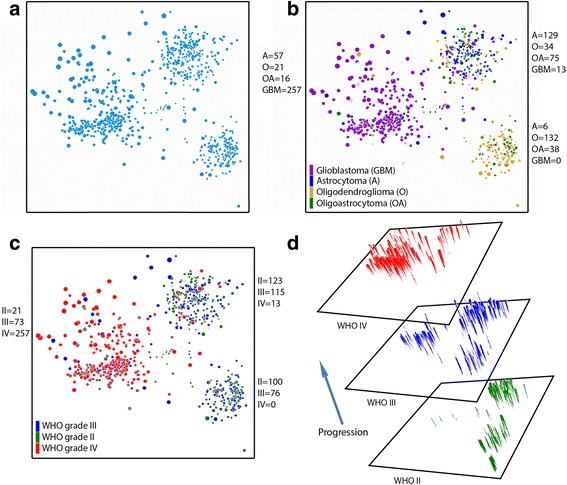
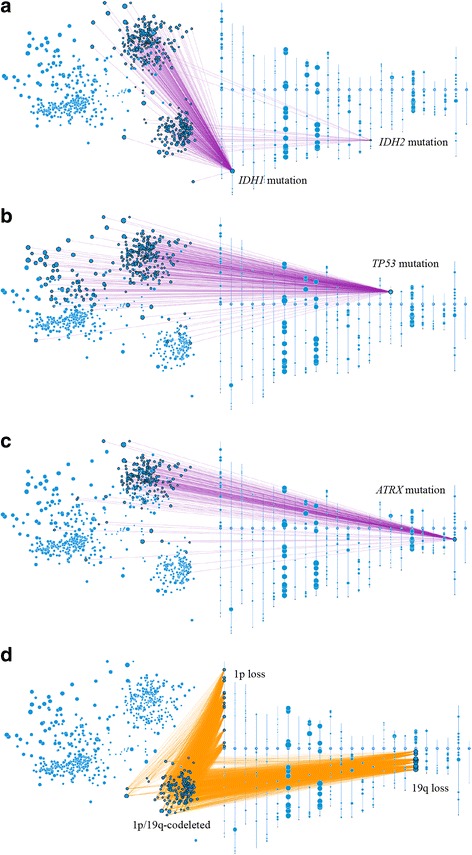
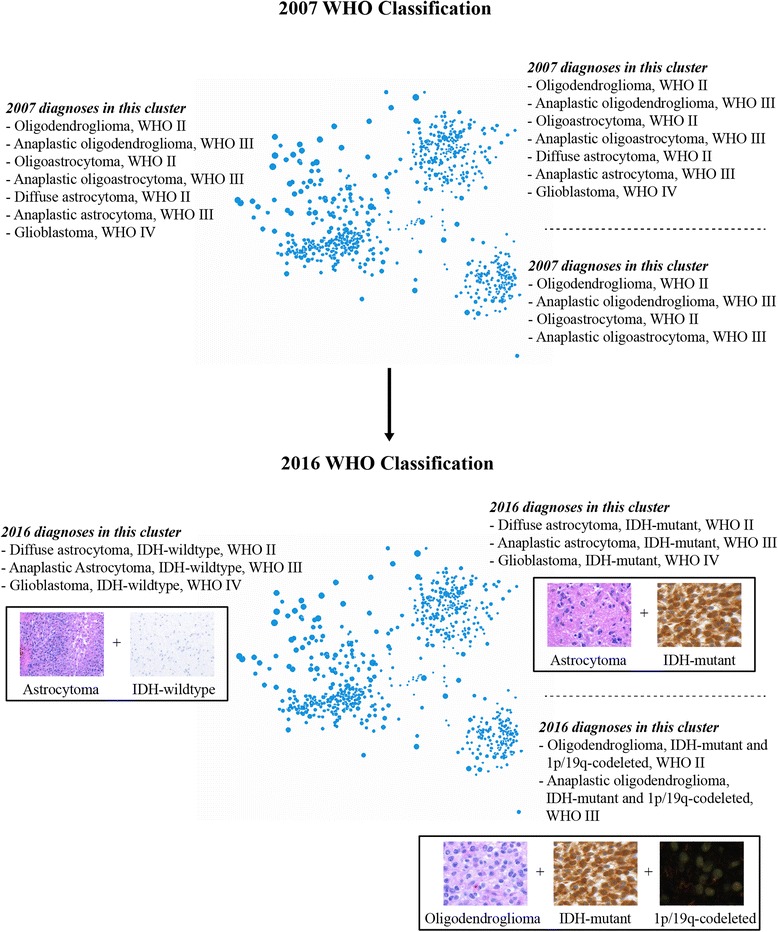
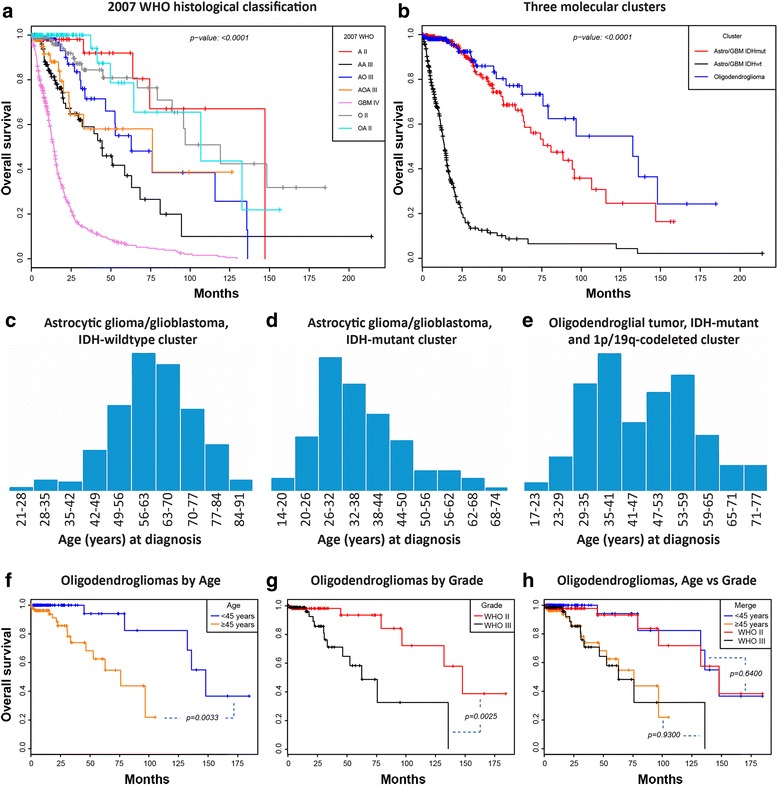
Recent updating of the World Health Organization (WHO) classification of central nervous system (CNS) tumors in 2016 demonstrates the first organized effort to restructure brain tumor classification by incorporating histomorphologic features with recurrent molecular alterations. Revised CNS tumor diagnostic criteria also attempt to reduce interobserver variability of histological interpretation and provide more accurate stratification related to clinical outcome. As an example, diffuse gliomas (WHO grades II-IV) are now molecularly stratified based upon isocitrate dehydrogenase 1 or 2 (IDH) mutational status, with gliomas of WHO grades II and III being substratified according to 1p/19q codeletion status. For now, grading of diffuse gliomas is still dependent upon histological parameters. Independent of WHO classification criteria, multidimensional scaling analysis of molecular signatures for diffuse gliomas from The Cancer Genome Atlas (TCGA) has identified distinct molecular subgroups, and allows for their visualization in 2-dimensional (2D) space. Using the web-based platform Oncoscape as a tool, we applied multidimensional scaling-derived molecular groups to the 2D visualization of the 2016 WHO classification of diffuse gliomas. Here we show that molecular multidimensional scaling of TCGA data provides 2D clustering that represents the 2016 WHO classification of diffuse gliomas. Additionally, we used this platform to successfully identify and define novel copy-number alteration-based molecular subtypes, which are independent of WHO grading, as well as predictive of clinical outcome. The prognostic utility of these molecular subtypes was further validated using an independent data set of the German Glioma Network prospective glioblastoma patient cohort.
Overview
The claims and statistics of this paper haven’t been checked yet.
Free: it reads the open-access text and checks the first 5 claims that cite a source we can check. Create a free account to check every claim.
Integrity signals
Registry
Cites
Statistics
Figures
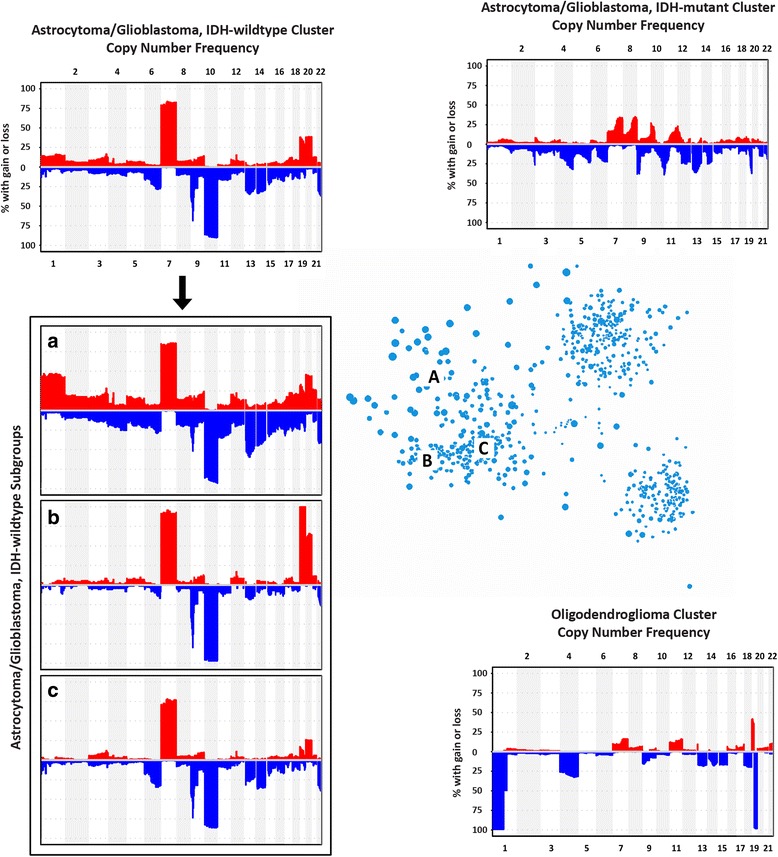
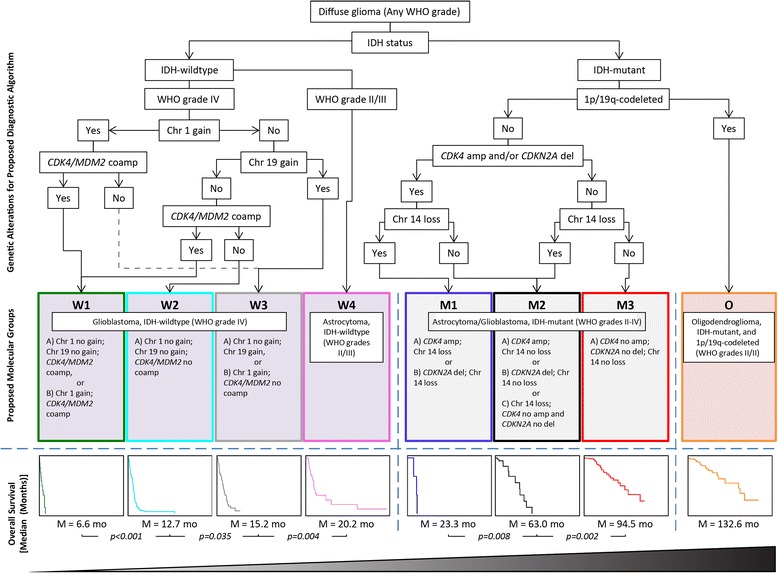
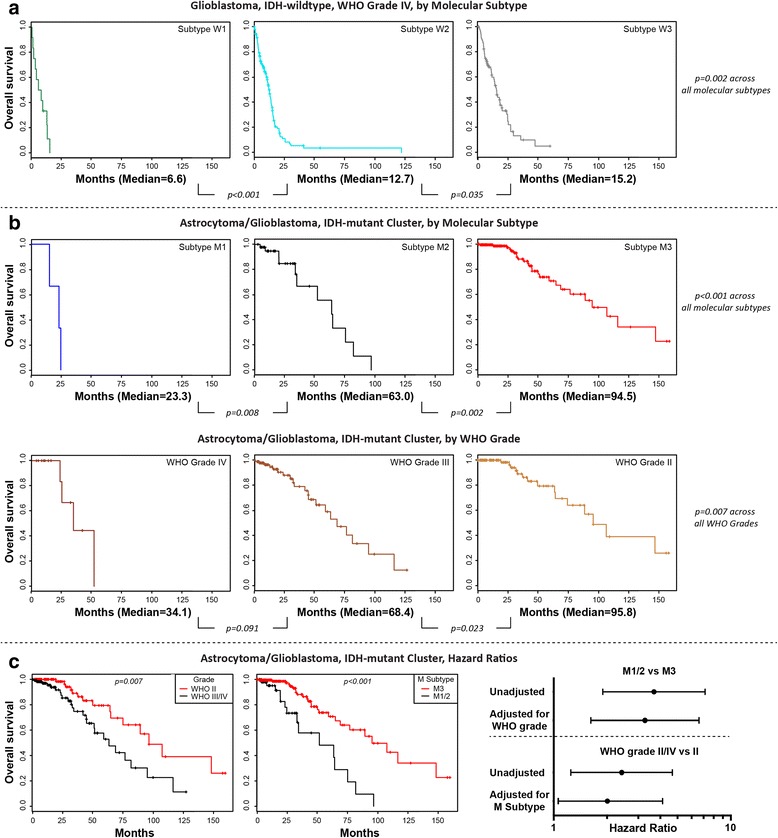
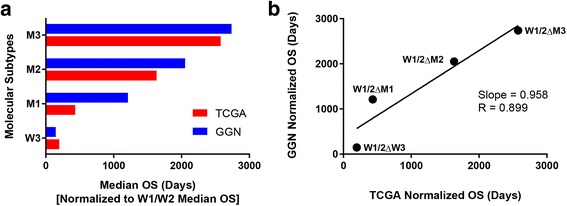
Verification
Claims the paper makes
The claims and statistics of this paper haven’t been checked yet.
Free: it reads the open-access text and checks the first 5 claims that cite a source we can check. Create a free account to check every claim.
Claims other papers make about this one
Each is checked against this paper’s own text: does it say what the citing paper says it does?
The source backs part of the claim, not all of it — or backs it for a different population, condition or comparison.
In the citing paper
“However, the grading criteria in the current classification schema for oligodendrogliomas continues to predominantly rely upon histopathologic examination; the differentiating criterion between grade 2 and grade 3 oligodendrogliomas are the presence of conspicuous microvascular proliferation and/or 6 mitoses per 10 high-power field [3,4,5,6,7,8,9,10,11].”
From BPC 157 Therapy of Myotendinous Junction Injury in Rats (2025) · cites this paper as [5]
Experimental — accuracy not yet measured
Self-check
Percentages, sums and reported differences re-computed from the paper’s own numbers.
The self-check needs the paper’s full text.
Citations
Cites
The 2016 World Health Organization Classification of Tumors of the Central Nervous System: a summary
Louis, D. N., Perry, A., Reifenberger, G., von Deimling, A., Figarella-Branger, D., Cavenee, W. K., Ohgaki, H., Wiestler, O. D., Kleihues, P., & Ellison, D. W. (2016) · Acta Neuropathologica · doi:10.1007/s00401-016-1545-1 · Cited by 15,657
Self-citationThe 2007 WHO Classification of Tumours of the Central Nervous System
Louis, D. N., Ohgaki, H., Wiestler, O. D., Cavenee, W. K., Burger, P. C., Jouvet, A., Scheithauer, B. W., & Kleihues, P. (2007) · Acta Neuropathologica · doi:10.1007/s00401-007-0243-4 · Cited by 15,397
Comprehensive genomic characterization defines human glioblastoma genes and core pathways
The Cancer Genome Atlas Research Network (2008) · Nature · doi:10.1038/nature07385 · Cited by 7,735
Verhaak, R. G. W., Hoadley, K. A., Purdom, E., Wang, V., Qi, Y., Wilkerson, M. D., Miller, C. R., Ding, L., Golub, T., Mesirov, J. P., et al. (2010) · Cancer Cell · doi:10.1016/j.ccr.2009.12.020 · Cited by 7,575
IDH1 and IDH2 Mutations in Gliomas
Yan, H., Parsons, D. W., Jin, G., McLendon, R., Rasheed, B. A., Yuan, W., Kos, I., Batinic-Haberle, I., Jones, S., Riggins, G. J., et al. (2009) · New England Journal of Medicine · doi:10.1056/nejmoa0808710 · Cited by 5,847
Comprehensive, Integrative Genomic Analysis of Diffuse Lower-Grade Gliomas
The Cancer Genome Atlas Research Network (2015) · New England Journal of Medicine · doi:10.1056/nejmoa1402121 · Cited by 3,148 · cited 3×
“Such molecular alterations include mutations in the isocitrate dehydrogenase (IDH) 1 and 2 genes, codeletion of chromosome arms 1p and 19q, or hypermethylation of the gene encoding O-6methylguanine DNA methyltransferase (MGMT) [4, 8, 9, 12, 22, 31, 32, 46].”
BackgroundIdentification of a CpG Island Methylator Phenotype that Defines a Distinct Subgroup of Glioma
Noushmehr, H., Weisenberger, D. J., Diefes, K., Phillips, H. S., Pujara, K., Berman, B. P., Pan, F., Pelloski, C. E., Sulman, E. P., Bhat, K. P., et al. (2010) · Cancer Cell · doi:10.1016/j.ccr.2010.03.017 · Cited by 2,337 · cited 1×
“longer survival than tumors within the IDH-wildtype cluster, again consistent with prior studies of glioblastoma and the new WHO classifications [4, 17, 23, 26, 30, 46].”
ResultCeccarelli, M., Barthel, F. P., Malta, T. M., Sabedot, T. S., Salama, S. R., Murray, B. A., Morozova, O., Newton, Y., Radenbaugh, A., Pagnotta, S. M., et al. (2016) · Cell · doi:10.1016/j.cell.2015.12.028 · Cited by 2,189 · cited 2×
“Such molecular alterations include mutations in the isocitrate dehydrogenase (IDH) 1 and 2 genes, codeletion of chromosome arms 1p and 19q, or hypermethylation of the gene encoding O-6methylguanine DNA methyltransferase (MGMT) [4, 8, 9, 12, 22, 31, 32, 46].”
BackgroundGlioma Groups Based on 1p/19q,IDH, and TERT Promoter Mutations in Tumors
Eckel-Passow, J. E., Lachance, D. H., Molinaro, A. M., Walsh, K. M., Decker, P. A., Sicotte, H., Pekmezci, M., Rice, T., Kosel, M. L., Smirnov, I. V., et al. (2015) · New England Journal of Medicine · doi:10.1056/nejmoa1407279 · Cited by 1,982 · cited 2×
“Such molecular alterations include mutations in the isocitrate dehydrogenase (IDH) 1 and 2 genes, codeletion of chromosome arms 1p and 19q, or hypermethylation of the gene encoding O-6methylguanine DNA methyltransferase (MGMT) [4, 8, 9, 12, 22, 31, 32, 46].”
BackgroundSturm, D., Witt, H., Hovestadt, V., Khuong-Quang, D.-A., Jones, D. T. W., Konermann, C., Pfaff, E., Tönjes, M., Sill, M., Bender, S., et al. (2012) · Cancer Cell · doi:10.1016/j.ccr.2012.08.024 · Cited by 1,828 · cited 1×
“de) were collected along with survival and gene methylation data as previously described [41].”
MethodSelf-citation
Research works printed but not linked: 1
- 10. Coons SW, Johnson PC, Scheithauer BW, Yates AJ, Pearl DK (1997) Improving diagnostic accuracy and interobserver concordance in the classification and grading of primary gliomas. Cancer 79: 1381-1393 11 · doi:10.1002/(sici)1097-0142(19970401)79:7<1381::aid-cncr16>3.0.co;2-w
Cited by
cIMPACT-NOW update 5: recommended grading criteria and terminologies for IDH-mutant astrocytomas
Brat, D. J., Aldape, K., Colman, H., Figrarella-Branger, D., Fuller, G. N., Giannini, C., Holland, E. C., Jenkins, R. B., Kleinschmidt-DeMasters, B., Komori, T., et al. (2020) · Acta Neuropathologica · doi:10.1007/s00401-020-02127-9 · Cited by 520
Self-citationGlioblastoma at the crossroads: current understanding and future therapeutic horizons
Singh, S., Dey, D., Barik, D., Mohapatra, I., Kim, S., Sharma, M., Prasad, S., Wang, P., Singh, A., & Singh, G. (2025) · Signal Transduction and Targeted Therapy · doi:10.1038/s41392-025-02299-4 · Cited by 287
“119 The incorporation of CNA pro fi ling into routine clinical practice holds promise for improving patient strati fi cation, treatment selection, and outcome prediction.”
Appay, R., Dehais, C., Maurage, C.-A., Alentorn, A., Carpentier, C., Colin, C., Ducray, F., Escande, F., Idbaih, A., Kamoun, A., et al. (2019) · Neuro-Oncology · doi:10.1093/neuonc/noz124 · Cited by 278
Komori, T. (2022) · Laboratory Investigation · doi:10.1038/s41374-021-00667-6 · Cited by 168
Classification of adult‐type diffuse gliomas: Impact of the World Health Organization 2021 update
Whitfield, B. T., & Huse, J. T. (2022) · Brain Pathology · doi:10.1111/bpa.13062 · Cited by 192
“Much like IDH- mutant astrocytomas in WHO 2021, IDH- mutant and 1p/19q- codeleted oligodendrogliomas are now associated with multiple possible CNS WHO grades, either grade 2 or grade 3, reflecting significant differences in overall survival [45].”
BackgroundMutant IDH1 Promotes Glioma Formation In Vivo
Philip, B., Yu, D. X., Silvis, M. R., Shin, C. H., Robinson, J. P., Robinson, G. L., Welker, A. E., Angel, S. N., Tripp, S. R., Sonnen, J. A., et al. (2018) · Cell Reports · doi:10.1016/j.celrep.2018.03.133 · Cited by 113
“23) and 12q (CDK4; 12q13 and MDM2; 12q15) have also been observed (Cimino et al., 2017).”
InfluentialAlghamri, M. S., McClellan, B. L., Avvari, R., Thalla, R., Carney, S. V., Hartlage, C. S., Haase, S., Ventosa, M., Taher, A. W., Kamran, N., et al. (2021) · Science Advances · doi:10.1126/sciadv.abh3243 · Cited by 98
“Several studies suggested that mIDH1 may play a critical role in shaping the immunological landscape of the tumor microenvironment (TME) ( 6 – 9 ).”
van den Bent, M. J., French, P. J., Brat, D., Tonn, J. C., Touat, M., Ellingson, B. M., Young, R. J., Pallud, J., von Deimling, A., Sahm, F., et al. (2024) · Neuro-Oncology · doi:10.1093/neuonc/noae107 · Cited by 88
“76,94 Homozygous deletion of RB1 was strongly associated with inferior overall survival among IDH-mutant astrocytomas on univariate analysis.”
BackgroundSelf-citationTotal copy number variation as a prognostic factor in adult astrocytoma subtypes
Mirchia, K., Sathe, A. A., Walker, J. M., Fudym, Y., Galbraith, K., Viapiano, M. S., Corona, R. J., Snuderl, M., Xing, C., Hatanpaa, K. J., et al. (2019) · Acta Neuropathologica Communications · doi:10.1186/s40478-019-0746-y · Cited by 90
Li, Y., Wei, D., Liu, X., Fan, X., Wang, K., Li, S., Zhang, Z., Ma, K., Qian, T., Jiang, T., et al. (2020) · European Radiology · doi:10.1007/s00330-021-08237-6 · Cited by 87
Role of myeloid cells in the immunosuppressive microenvironment in gliomas
Locarno, C. V., Simonelli, M., Carenza, C., Capucetti, A., Stanzani, E., Lorenzi, E., Persico, P., Bella, S. D., Passoni, L., Mavilio, D., et al. (2019) · Immunobiology · doi:10.1016/j.imbio.2019.10.002 · Cited by 80
Updates on the WHO diagnosis of IDH-mutant glioma
Reuß, D. (2023) · Journal of Neuro-Oncology · doi:10.1007/s11060-023-04250-5 · Cited by 70
Beyond IDH-Mutation: Emerging Molecular Diagnostic and Prognostic Features in Adult Diffuse Gliomas
Mirchia, K., & Richardson, T. E. (2020) · Cancers · doi:10.3390/cancers12071817 · Cited by 75
Umehara, T., Arita, H., Yoshioka, E., Shofuda, T., Kanematsu, D., Kinoshita, M., Kodama, Y., Mano, M., Kagawa, N., Fujimoto, Y., et al. (2019) · Acta Neuropathologica Communications · doi:10.1186/s40478-019-0749-8 · Cited by 61
Molecular Correlates of Long Survival in IDH-Wildtype Glioblastoma Cohorts
Galbraith, K., Kumar, V., Abdullah, K. G., Walker, J. M., Adams, S. H., Prior, T., Dimentberg, R., Henderson, F. C., Mirchia, K., Sathe, A. A., et al. (2020) · Journal of Neuropathology & Experimental Neurology · doi:10.1093/jnen/nlaa059 · Cited by 59
Cimino, P. J., & Holland, E. C. (2019) · Neuro-Oncology · doi:10.1093/neuonc/noz052 · Cited by 56
Self-citationMitotic Index Thresholds Do Not Predict Clinical Outcome for IDH-Mutant Astrocytoma
Yoda, R. A., Marxen, T., Longo, L., Ene, C. I., Wirsching, H., Keene, C. D., Holland, E. C., & Cimino, P. J. (2019) · Journal of Neuropathology & Experimental Neurology · doi:10.1093/jnen/nlz082 · Cited by 57
“amplification, polysomy chromosome 1, and polysomy chromosome 19, have been demonstrated as having additional prognostic value beyond glioma histological grading (6, 32).”
BackgroundSelf-citationCimino, P. J., Kim, Y., Wu, H., Alexander, J., Wirsching, H., Szulzewsky, F., Pitter, K. L., Ozawa, T., Wang, J., Vazquez, J., et al. (2018) · Genes & Development · doi:10.1101/gad.312157.118 · Cited by 55
Self-citationPattwell, S. S., Arora, S., Cimino, P. J., Ozawa, T., Szulzewsky, F., Hoellerbauer, P., Bonifert, T., Hoffstrom, B. G., Boiani, N., Bolouri, H., et al. (2020) · Nature Communications · doi:10.1038/s41467-020-16786-5 · Cited by 50
Self-citationLiu, W., Xu, Z., Zhou, J., Xing, S., Li, Z., Gao, X., Feng, S., & Xiao, Y. (2020) · Frontiers in Oncology · doi:10.3389/fonc.2020.00627 · Cited by 55
Frequency of false-positive FISH 1p/19q codeletion in adult diffuse astrocytic gliomas
Ball, M. K., Kollmeyer, T. M., Praska, C. E., Bublitz, M. L., Giannini, C., Raghunathan, A., Jentoft, M. E., Lachance, D. H., Kipp, B. R., Jenkins, R. B., et al. (2020) · Neuro-Oncology Advances · doi:10.1093/noajnl/vdaa109 · Cited by 41
“To decrease the risk of a false-positive FISH result and the need for follow-up testing to clarify discordant results in adult diffuse gliomas, we reinforce the recommendations for (1) IDH testing to generally precede 1p/19q codeletion testing and (2) 1p/19q codeletion testing be performed only after an IDH mutation h…”
MethodAdolescents and Young Adults With Cancer: CNS Tumors
Wu, J., Heidelberg, R. E., & Gajjar, A. J. (2023) · Journal of Clinical Oncology · doi:10.1200/jco.23.01747 · Cited by 42
Incorporating Advances in Molecular Pathology Into Brain Tumor Diagnostics
Vega, J. E. V., & Brat, D. J. (2018) · Advances in Anatomic Pathology · doi:10.1097/pap.0000000000000186 · Cited by 40
Copy number profiling across glioblastoma populations has implications for clinical trial design
Cimino, P. J., McFerrin, L. G., Wirsching, H., Arora, S., Bolouri, H., Rabadán, R., Weller, M., & Holland, E. C. (2018) · Neuro-Oncology · doi:10.1093/neuonc/noy108 · Cited by 40
Self-citationMultiscale, multimodal analysis of tumor heterogeneity in IDH1 mutant vs wild-type diffuse gliomas
Berens, M. E., Sood, A., Barnholtz‐Sloan, J. S., Graf, J. F., Cho, S., Kim, S., Kiefer, J., Byron, S. A., Halperin, R. F., Nasser, S., et al. (2019) · PLoS ONE · doi:10.1371/journal.pone.0219724 · Cited by 40
“In low-grade gliomas with IDH mutations, 1p/19q codeletion is further associated with oligodendrogliomas and better chemotherapeutic response [12].”
BackgroundWirsching, H., Roelcke, U., Weller, J., Hundsberger, T., Hottinger, A. F., von Moos, R., Caparrotti, F., Conen, K. L., Remonda, L., Roth, P., et al. (2021) · Clinical Cancer Research · doi:10.1158/1078-0432.ccr-20-2096 · Cited by 41
“Receptor tyrosine kinase I 11 (31) 5 (28)”
BackgroundMethodSelf-citationByeon, Y., Park, Y. W., Lee, S., Park, D., Shin, H., Han, K., Chang, J. H., Kim, S. H., Lee, S., Ahn, S. S., et al. (2025) · npj Digital Medicine · doi:10.1038/s41746-025-01530-4 · Cited by 40
Rogers, T. W., Toor, G. S., Drummond, K. J., Love, C., Field, K. M., Asher, R., Tsui, A. E., Buckland, M. E., & Gonzales, M. F. (2017) · Journal of Neuro-Oncology · doi:10.1007/s11060-017-2710-7 · Cited by 44
IDH-Mutant Low-grade Glioma: Advances in Molecular Diagnosis, Management, and Future Directions
Dono, A., Ballester, L. Y., Primdahl, D., Esquenazi, Y., & Bhatia, A. (2021) · Current Oncology Reports · doi:10.1007/s11912-020-01006-6 · Cited by 38
CDKN2A/B Homozygous Deletions in Astrocytomas: A Literature Review
Yuile, A., Satgunaseelan, L., Wei, J., Rodriguez, M., Back, M., Pavlakis, N., Hudson, A. L., Kastelan, M., Wheeler, H., & Lee, A. (2023) · Current Issues in Molecular Biology · doi:10.3390/cimb45070335 · Cited by 39
“[19] 2017 Retrospective analysis 1062 Two separate databases accessed— TCGA (NGS); and German glioma network (DNA-based methylation analysis) Post-WHO 2016 Low No Negative impact”
BackgroundInfluentialLiquid Biopsy for Glioma Using Cell-Free DNA in Cerebrospinal Fluid
Otsuji, R., Fujioka, Y., Hata, N., Kuga, D., Hatae, R., Sangatsuda, Y., Nakamizo, A., Mizoguchi, M., & Yoshimoto, K. (2024) · Cancers · doi:10.3390/cancers16051009 · Cited by 40
Immunogenetics of glioblastoma: the future of personalized patient management
Abedalthagafi, M., Barakeh, D. H., & Foshay, K. M. (2018) · npj Precision Oncology · doi:10.1038/s41698-018-0070-1 · Cited by 31
Mirchia, K., Snuderl, M., Galbraith, K., Hatanpaa, K. J., Walker, J. M., & Richardson, T. E. (2019) · Acta Neuropathologica Communications · doi:10.1186/s40478-019-0778-3 · Cited by 30
Richardson, T. E., Walker, J. M., Hambardzumyan, D., Brem, S. S., Hatanpaa, K. J., Viapiano, M. S., Pai, B., Umphlett, M., Becher, O. J., Snuderl, M., et al. (2024) · Acta Neuropathologica · doi:10.1007/s00401-024-02761-7 · Cited by 33
Phenotypic plasticity of myeloid cells in glioblastoma development, progression, and therapeutics
Ye, Z., Ai, X., Zhao, L., Fei, F., Wang, P., & Zhou, S. (2021) · Oncogene · doi:10.1038/s41388-021-02010-1 · Cited by 30
“In GBMs, the recruitment and functions of DCs are affected by factors from tumor cells or other immune cells.”
BackgroundInfluentialChromosomal instability in adult-type diffuse gliomas
Richardson, T. E., Walker, J. M., Abdullah, K. G., McBrayer, S. K., Viapiano, M. S., Mussa, Z. M., Tsankova, N. M., Snuderl, M., & Hatanpaa, K. J. (2022) · Acta Neuropathologica Communications · doi:10.1186/s40478-022-01420-w · Cited by 30
“IDH-mutant astrocytomas are WHO grade 4 in the presence of microvascular proliferation, necrosis, and/or homozygous CDKN2A deletion [15, 65, 90], although other molecular features have been suggested as well [3, 15, 29, 70, 105].”
BackgroundRoux, A., Tauziède‐Espariat, A., Zanello, M., Peeters, S., Zah‐Bi, G., Párraga, E., Edjlali, M., Lechapt, E., Shor, N., Bellu, L., et al. (2020) · Neuro-Oncology · doi:10.1093/neuonc/noaa022 · Cited by 25
Tumor mutational burden predicts survival in patients with low-grade gliomas expressing mutated IDH1
Alghamri, M. S., Thalla, R., Avvari, R., Dabaja, A. A., Taher, A. W., Zhao, L., Ulintz, P., Castro, M. G., & Lowenstein, P. R. (2020) · Neuro-Oncology Advances · doi:10.1093/noajnl/vdaa042 · Cited by 27
Richardson, T. E., Sathe, A. A., Xing, C., Mirchia, K., Viapiano, M. S., Snuderl, M., Abdullah, K. G., Hatanpaa, K. J., & Walker, J. M. (2021) · Journal of Neuropathology & Experimental Neurology · doi:10.1093/jnen/nlab008 · Cited by 31
Zhao, B., Xia, Y., Yang, F., Wang, Y., Wang, Y., Wang, Y., Dai, C., Wang, Y., & Ma, W. (2022) · Molecular Medicine · doi:10.1186/s10020-022-00454-z · Cited by 26
“The presence of CDKN2A/B homozygous deletion is associated with decreased survival in IDH-mt glioma grades 2 and 3 (Cimino and Holland 2019; Cimino et al. 2017).”
BackgroundNeill, S. G., Hauenstein, J., Li, M. M., Liu, Y. J., Luo, M., Saxe, D., & Ligon, A. H. (2020) · Cancer Genetics · doi:10.1016/j.cancergen.2020.02.004 · Cited by 29
IDH-mutant gliomas with additional class-defining molecular events
Ahrendsen, J. T., Torre, M., Meredith, D. M., Hornick, J. L., Reardon, D. A., Wen, P. Y., Yeo, K. K., Malinowski, S. W., Ligon, K. L., Ramkissoon, S. H., et al. (2021) · Modern Pathology · doi:10.1038/s41379-021-00795-w · Cited by 24
Brat, D. J., Aldape, K., French, P. J., Louis, D. N., Nasrallah, M. P., Reifenberger, G., Reuß, D., Touat, M., van den Bent, M. J., Wesseling, P., et al. (2026) · Neuro-Oncology · doi:10.1093/neuonc/noag108 · Cited by 27
Self-citationOvercoming the Odds: Toward a Molecular Profile of Long-Term Survival in Glioblastoma
Richardson, T. E., Kumar, V., Xing, C., Hatanpaa, K. J., & Walker, J. M. (2020) · Journal of Neuropathology & Experimental Neurology · doi:10.1093/jnen/nlaa102 · Cited by 20
A comparative analysis of IDH-mutant glioma in pediatric, young adult, and older adult patients
Lim-Fat, M. J., Cotter, J. A., Touat, M., Vogelzang, J. R., Sousa, C., Pisano, W., Geduldig, J. E., Bhave, V. M., Driver, J., Kao, P., et al. (2024) · Neuro-Oncology · doi:10.1093/neuonc/noae142 · Cited by 21
Genome-Wide Analysis of Glioblastoma Patients with Unexpectedly Long Survival
Richardson, T. E., Patel, S. V., Serrano, J., Sathe, A. A., Daoud, E. V., Oliver, D., Maher, E. A., Madrigales, A., Mickey, B., Taxter, T., et al. (2019) · Journal of Neuropathology & Experimental Neurology · doi:10.1093/jnen/nlz025 · Cited by 20
Diagnostic accuracy of magnetic resonance imaging in detection of intra-axial gliomas
Munir, S., Khan, S. A., Hanif, H., & Khan, M. (2020) · Pakistan Journal of Medical Sciences · doi:10.12669/pjms.37.1.2489 · Cited by 18
Petersen, J. K., Boldt, H. B., Sørensen, M. D., Blach, S., Dahlrot, R. H., Hansen, S., Burton, M., Thomassen, M., Kruse, T. A., Poulsen, F. R., et al. (2020) · Neuropathology and Applied Neurobiology · doi:10.1111/nan.12645 · Cited by 19
Self-citationNuechterlein, N., Shapiro, L. G., Holland, E. C., & Cimino, P. J. (2021) · Acta Neuropathologica Communications · doi:10.1186/s40478-021-01295-3 · Cited by 18
“We have previously observed that there is a strong association between adult diffuse glioma molecular subtype and patient somatic copy number alteration (SCNA) profiles, indicating that SCNA data alone may reflect global genomic structures that are associated with, and predictive of, IDH mutational status [7, 16, 17,…”
BackgroundSelf-citationPrognostic Impact of TERT Promoter Mutations in Adult-Type Diffuse Gliomas Based on WHO2021 Criteria
Lee, Y., Park, C.-K., & Park, S. (2024) · Cancers · doi:10.3390/cancers16112032 · Cited by 18
Expanding the molecular grading criteria in IDH-mutant astrocytoma
Virata, M., Samanamud, J. L., Slocum, C., Kandoi, S., Nguyen, P., Savani, M. R., Shi, D. D., Sharma, S., Hiya, S., Maldonado‐Díaz, C., et al. (2026) · Neuro-Oncology · doi:10.1093/neuonc/noag069 · Cited by 14
Data dimensionality reduction technique for clustering problem of metabolomics data
Rustam, R., Gunawan, A. Y., & Kresnowati, M. T. A. P. (2022) · Heliyon · doi:10.1016/j.heliyon.2022.e09715 · Cited by 18
Stochastic growth pattern of untreated human glioblastomas predicts the survival time for patients
Ma, Z., Niu, B., Phan, T. A., Stensjøen, A. L., Ene, C. I., Woodiwiss, T. R., Wang, T., Maini, P. K., Holland, E. C., & Tian, J. P. (2020) · Scientific Reports · doi:10.1038/s41598-020-63394-w · Cited by 16
“Expectation (Standard Deviation) 267(29) 264(29) 256(29) 242(29) 216(28) 190(27) 137(26)”
Self-citationVega, J. E. V., Brat, D. J., Ryken, T. C., & Olson, J. J. (2020) · Journal of Neuro-Oncology · doi:10.1007/s11060-020-03616-3 · Cited by 17
Integrated Multi-Omics Maps of Lower-Grade Gliomas
Binder, H., Schmidt, M., Hopp, L., Davitavyan, S., Arakelyan, A., & Loeffler‐Wirth, H. (2022) · Cancers · doi:10.3390/cancers14112797 · Cited by 14
“In a previous two-modality (Gex and Dme) combiSOM approach on WHO grade IV glioblastoma data, we tuned the weighting factor between dominant weighting of Gex (we = 0.99) and Dme (wm = 0.99) [34].”
BackgroundInfluentialRichardson, T. E., Yokoda, R. T., Rashidipour, O., Vij, M., Snuderl, M., Brem, S. S., Hatanpaa, K. J., McBrayer, S. K., Abdullah, K. G., Umphlett, M., et al. (2023) · Neuro-Oncology Advances · doi:10.1093/noajnl/vdad085 · Cited by 15
Chen, W., Guo, S., Wang, Y., Shi, Y., Guo, X., Liu, D., Li, Y., Wang, Y., Xing, H., Xia, Y., et al. (2023) · Cancer Medicine · doi:10.1002/cam4.6476 · Cited by 13
Yokoda, R. T., Cobb, W. S., Yong, R. L. M., Crary, J. F., Viapiano, M. S., Walker, J. M., Umphlett, M., Tsankova, N. M., & Richardson, T. E. (2023) · Journal of Neuropathology & Experimental Neurology · doi:10.1093/jnen/nlad063 · Cited by 14
Osei, E. K., Walters, P., Masella, O., Tennant, Q., Fishwick, A., Dadzie, E., Bhangu, A., & Darko, J. (2019) · Journal of Radiotherapy in Practice · doi:10.1017/s1460396919000955 · Cited by 15
Total whole-arm chromosome losses predict malignancy in human cancer
Zheng, Y., Ahmad, K., & Henikoff, S. (2025) · Proceedings of the National Academy of Sciences · doi:10.1073/pnas.2505385122 · Cited by 12
“There are five human acrocentric chromosomes (13, 14, 15, 21 and 22), which have similar kinetochore conformations as meta-centrics ( 16 ) but only a single euchromatic arm ( Fig.”
Translating Basic Science Discoveries into Improved Outcomes for Glioblastoma
Dirks, P. B., Gilbert, M. R., Holland, E. C., Maher, E. A., & Weiss, W. A. (2020) · Clinical Cancer Research · doi:10.1158/1078-0432.ccr-19-3924 · Cited by 12
Self-citationXi, S., Huang, Q., & Zeng, J. (2024) · Journal of Neuropathology & Experimental Neurology · doi:10.1093/jnen/nlad112 · Cited by 11
Sasaki, H., Kitamura, Y., Toda, M., Hirose, Y., & Yoshida, K. (2024) · Brain Tumor Pathology · doi:10.1007/s10014-024-00480-1 · Cited by 13
Analysis and visualization of linked molecular and clinical cancer data by using Oncoscape
McFerrin, L. G., Zager, M. A., Zhang, J., Krenn, G., McDermott, R., Horse-Grant, D., Silgard, E. T., Colevas, K., Shannon, P. T., Bolouri, H., et al. (2018) · Nature Genetics · doi:10.1038/s41588-018-0208-7 · Cited by 12
Self-citationThe prognostic impact of subclonal IDH1 mutation in grade 2–4 astrocytomas
Vij, M., Yokoda, R. T., Rashidipour, O., Tran, I., Vasudevaraja, V., Snuderl, M., Yong, R. L. M., Cobb, W. S., Umphlett, M., Walker, J. M., et al. (2023) · Neuro-Oncology Advances · doi:10.1093/noajnl/vdad069 · Cited by 11
Integrated diagnostics of diffuse astrocytic and oligodendroglial tumors
Malzkorn, B., & Reifenberger, G. (2019) · Der Pathologe · doi:10.1007/s00292-019-0581-8 · Cited by 11
Self-citationMolecular classification of adult gliomas: recent advances and future perspectives
Barritault, M., Meyronet, D., & Ducray, F. (2018) · Current Opinion in Oncology · doi:10.1097/cco.0000000000000482 · Cited by 10
HOXD12 defines an age-related aggressive subtype of oligodendroglioma
Nuechterlein, N., Cimino, S., Shelbourn, A., Ha, V., Arora, S., Rajan, S., Shapiro, L. G., Holland, E. C., Aldape, K., McGranahan, T. M., et al. (2024) · Acta Neuropathologica · doi:10.1007/s00401-024-02802-1 · Cited by 10
“Contrary to most cancer types, the age distribution of oligodendroglioma patients has been reported to appear bimodal, possibly indicating that certain age ranges are associated with different tumor biology [17, 64].”
BackgroundInfluentialSelf-citationHannikainen, P. A., Kosa, P. F., Barbour, C. R., & Bielekova, B. (2020) · Frontiers in Neurology · doi:10.3389/fneur.2020.565957 · Cited by 10
“441 Thus, we conclude that there is likely age-related decrease in immunosurveillance of CNS tissue, 442 which may, at least partially underlie the epidemiological observations of second peak of CNS 443 malignancies (56,57) and high morbidity of CNS infections in aged population (58,59).”
BackgroundRichardson, T. E., & Walker, J. M. (2020) · Journal of Neuropathology & Experimental Neurology · doi:10.1093/jnen/nlaa083 · Cited by 8
The Evolving Molecular Landscape of High-Grade Gliomas
Pinarbasi, E. S., & Pratt, D. W. (2021) · The Cancer Journal · doi:10.1097/ppo.0000000000000542 · Cited by 8
Radiogenomic modeling predicts survival-associated prognostic groups in glioblastoma
Nuechterlein, N., Li, B., Feroze, A. H., Holland, E. C., Shapiro, L. G., Haynor, D. R., Fink, J. R., & Cimino, P. J. (2021) · Neuro-Oncology Advances · doi:10.1093/noajnl/vdab004 · Cited by 8
Self-citationRazek, A. A. K. A., El-Serougy, L. G., Abdelsalam, M. A. M., Gaballa, G., & Talaat, M. (2020) · Polish Journal of Radiology · doi:10.5114/pjr.2020.93397 · Cited by 7
“Differentiation between World Health Organisation (WHO) grade II and III gliomas is of upmost importance for selecting and developing appropriate treatment, detecting early treatment failure, and identifying accurate and clinically relevant biological endpoints for high-risk but potentially highly rewarding tumoural s…”
BackgroundEne, C., Cimino, P. J., Fine, H. A., & Holland, E. C. (2020) · Neurosurgical FOCUS · doi:10.3171/2020.7.focus20418 · Cited by 7
Self-citationDigital PCR-Based Method for Detecting CDKN2A Loss in Brain Tumours
Tsuriel, S., Hannes, V., Hasona, A., Raz, M. A., & Hershkovitz, D. (2022) · Molecular Diagnosis & Therapy · doi:10.1007/s40291-022-00610-5 · Cited by 6
Alzoubi, H., Alsabbah, A., Caltabiano, R., & Broggi, G. (2022) · ONCOLOGIE · doi:10.32604/oncologie.2022.020890 · Cited by 7
Brendle, C., Klose, U., Hempel, J.-M., Schittenhelm, J., Skardelly, M., Tabatabai, G., Ernemann, U., & Bender, B. (2020) · Neurological Sciences · doi:10.1007/s10072-020-04474-7 · Cited by 6
Nuechterlein, N., Shelbourn, A., Szulzewsky, F., Arora, S., Casad, M., Pattwell, S. S., Merino-Galán, L., Sulman, E. P., Arowa, S., Alvinez, N., et al. (2024) · Genes & Development · doi:10.1101/gad.351350.123 · Cited by 7
“In summary, this study builds on our previous investigations of SCNAs in glioblastoma by using a systematic, unbiased, exome-wide analysis with revised WHO 2021 glioblastoma diagnostic criteria, including both histologically and molecularly defined tumors (Cimino et al. 2017; 2018a,b).”
Self-citationTateishi, K., Miyake, Y., Nakamura, T., Iwashita, H., Hayashi, T., Oshima, A., Honma, H., Hayashi, H., Sugino, K., Kato, M., et al. (2023) · Acta Neuropathologica Communications · doi:10.1186/s40478-023-01683-x · Cited by 5
“Another study demonstrated that combination of CDK4 amplification and/or CDKN2A deletion, and chromosome 14 loss conferred poor prognosis in astrocytoma, IDH-mutant [10, 11].”
BackgroundPutting Glioblastoma in Its Place: IRF3 Inhibits Invasion
Pattwell, S. S., & Holland, E. C. (2017) · Trends in Molecular Medicine · doi:10.1016/j.molmed.2017.07.008 · Cited by 5
“Within non-CIMP GBM, expression based molecular subclasses have been discovered beyond initial WHO classification criteria and highlight increasingly diverse tumor cell populations within this already heterogeneous group of tumors [3, 6].”
BackgroundSelf-citationMatek, D., Pevec, D., Boban-Blagaic, A., & Sikiric, P. (2025) · Biomedicines · doi:10.3390/biomedicines13010201 · Cited by 4
Allwohn, L., Wolfgang, J., Onken, J., Wasilewski, D., Roohani, S., Zips, D., Ehret, F., & Kaul, D. (2023) · Clinical and Translational Radiation Oncology · doi:10.1016/j.ctro.2023.100626 · Cited by 5
“4 tumors are characterized by a worse outcome [14,15].”
BackgroundAlmaraz, E. R., Guerra, G., Al-Adli, N. N., Young, J. S., Dada, A., Quintana, D. S., Taylor, J. W., Bush, N. A. O., Clarke, J. L., Butowski, N. A., et al. (2025) · Neuro-Oncology Advances · doi:10.1093/noajnl/vdaf024 · Cited by 5
“23,37,38 Lastly, recurrent IDH-mutant astrocytomas that develop”
Komori, T. (2019) · Neuro-Oncology · doi:10.1093/neuonc/noz186 · Cited by 4
Identification of Potential Biomarkers of Platelet RNA in Glioblastoma by Bioinformatics Analysis
Chen, X., Lin, Q.-X., Jiang, Y., Wang, C., Min, F., Ou, Y., Xia, Y., Yu, G., & Liu, R. (2022) · BioMed Research International · doi:10.1155/2022/2488139 · Cited by 4
“For glioma, its molecular characteristics and molecular mechanism have become one of the research hotspots in recent years: the new classification of central nervous system tumors by the World Health Organization (WHO) breaks the traditional diagnostic principle based on histological criteria and includes molecular ma…”
The molecular landscape of adult diffuse gliomas and relevance to clinical trials
Cimino, P. J., & Holland, E. C. (2019) · Oncotarget · doi:10.18632/oncotarget.26750 · Cited by 5
Self-citationAlghamri, M. S., Avvari, R., Thalla, R., Kamran, N., Zhang, L., Ventosa, M., Taher, A. W., Faisal, S. M., Núñez, F. J., Garcia-Fabiani, M. B., et al. (2020) · bioRxiv (Cold Spring Harbor Laboratory) · doi:10.1101/2020.07.22.215954 · Cited by 4
“landscape of the tumor microenvironment (31-34).”
Nuechterlein, N., Shelbourn, A., & Cimino, P. J. (2023) · Journal of Neuropathology & Experimental Neurology · doi:10.1093/jnen/nlad092 · Cited by 4
Self-citationRecent Advancements and Future Perspectives on Molecular Biomarkers in Adult Lower-Grade Gliomas
Fleming, J. L., & Chakravarti, A. (2025) · The Cancer Journal · doi:10.1097/ppo.0000000000000758 · Cited by 3
Jiang, H., Wang, X., Chen, X., Zhang, S., Ren, Q., Li, M., Li, M., Ren, X., Lin, S., & Cui, Y. (2025) · Discover Oncology · doi:10.1007/s12672-025-01811-0 · Cited by 3
“Our investigation unveiled a notably favorable prognosis for A4 compared to hGBM, marked by a median survival that remained undefined and a median follow-up duration extending to 46.9 months, surpassing previous literature findings [4–6, 14–17, 33].”
InfluentialDiffuse Astrocytoma and Oligodendroglioma: An Integrated Diagnosis and Management
Florian, I. Ş., & Șușman, S. (2019) · IntechOpen eBooks · doi:10.5772/intechopen.76205 · Cited by 4
“The inclusion in these categories on the basis of genetic determinations also has a role in prognosis [10].”
BackgroundZhang, Z., Ma, J., Xu, Y., & Zhang, H. (2021) · Annals of Translational Medicine · doi:10.21037/atm-21-1228 · Cited by 3
Tumors of the Central Nervous System
Vega, J. E. V., Ballester, L. Y., & Schniederjan, M. (2021) · Springer eBooks · doi:10.1007/978-3-030-73227-1_6 · Cited by 3
Yang, R., Wang, Z., Qi, S., Ni, B., Guo, J., Li, K., Song, H., Xie, S., Zhang, Y., Wang, X., et al. (2023) · Genes & Diseases · doi:10.1016/j.gendis.2022.12.017 · Cited by 2
“Additionally, CNVs provide more accurate stratification of clinical outcomes than does the WHO grade system.(4) Therefore, we reasoned that differentially expressed genes (DEGs) among GBM cells with different CNV statuses would be significant for the aggressiveness of GBM.”
BackgroundA contemporary molecular view of diffuse gliomas with implications for diagnosis
Yang, X., Brat, D. J., Li, J., Wang, X., & Tong, L. (2020) · Glioma · doi:10.4103/glioma.glioma_11_20 · Cited by 2
Patel, V., & Alexandrescu, S. (2021) · Seminars in Diagnostic Pathology · doi:10.1053/j.semdp.2021.11.003 · Cited by 2
Baek, I. K., Cheong, H. S., Namgoong, S., Kim, J., Kang, S., Yoon, S., Kim, S. H., Chang, J. H., Kim, L. H., & Shin, H. D. (2022) · Scientific Reports · doi:10.1038/s41598-022-23217-6 · Cited by 2
SYST-16 ANXA5 PROMOTES GLIOMA PROGRESSION THROUGH THE FAK/PI3K/AKT PATHWAY
Zhang, X., Zhou, H., Han, W., Zhang, D., Han, X., Hou, L., Li, H., Sun, G., & Xue, X. (2023) · Neuro-Oncology Advances · doi:10.1093/noajnl/vdad070.120 · Cited by 1
Ozeki, Y., Honda‐Kitahara, M., Yanagisawa, S., Takahashi, M., Ohno, M., Miyakita, Y., Kikuchi, M., Nakano, T., Hosoya, T., Sugino, H., et al. (2024) · Japanese Journal of Clinical Oncology · doi:10.1093/jjco/hyae151 · Cited by 1
Pathology and Classification of Tumors of the Central Nervous System
Reifenberger, G., Blümcke, I., Wesseling, P., Pietsch, T., & Paulus, W. (2019) · Springer eBooks · doi:10.1007/978-3-030-04152-6_1 · Cited by 1
Self-citation
Metadata
- Authors
- Cimino, P. J., Zager, M., McFerrin, L., Wirsching, H.-G., Bolouri, H., Hentschel, B., von Deimling, A., Jones, D., Reifenberger, G., Weller, M., & Holland, E. C.
- Affiliations
- University of Washington (US)
- Fred Hutch Cancer Center (US)
- Leipzig University (DE)
- University Hospital Heidelberg (DE)
- German Cancer Research Center (DE)
- University of Zurich (CH)
- Corresponding author
- Cimino, Patrick J.
- Holland, Eric C.
- ORCID
- Venue
- Acta Neuropathologica Communications
- Published
- 2017-05-22
- Volume
- 5
- Issue
- 1
- Pages
- 39-39
- ISSN
- 2051-5960 (ISSN-L)
- PMC
- PMC5439117
- OpenAlex
- W2618667624
- Cited by
- 126
- References
- 46
- Citations by year
- 2026: 6 · 2025: 11 · 2024: 13 · 2023: 14 · 2022: 13 · 2021: 17 · 2020: 24 · 2019: 17 · 2018: 9 · 2017: 2
- FWCI
- 8.17
- Type
- journal article
- Language
- en
- Open access
- gold
- doi.org
- Licence
- cc-by
- Locations
- Acta Neuropathologica Communications (publishedVersion, cc-by)
- Europe PMC (PubMed Central) (publishedVersion, cc-by)
- PubMed Central (publishedVersion, cc-by)
- PubMed (publishedVersion)
- Zurich Open Repository and Archive (University of Zurich) (acceptedVersion, cc-by)
- DOAJ (DOAJ: Directory of Open Access Journals) (submittedVersion, cc-by-sa)
- Zurich Open Repository and Archive (University of Zurich)
- Funders
- Deutsche Krebshilfe (70-3163-Wi 3)
- Topics
- Health Sciences › Medicine › Oncology › Glioma Diagnosis and Treatment
- Life Sciences › Biochemistry, Genetics and Molecular Biology › Cancer Research › Cancer Genomics and Diagnostics
- Health Sciences › Medicine › Radiology, Nuclear Medicine and Imaging › Radiomics and Machine Learning in Medical Imaging
- Keywords
- diffuse glioma, WHO 2016 classification, multidimensional scaling, molecular subtypes, copy number alterations, IDH mutation, 1p/19q codeletion, glioblastoma, prognostic factors, central nervous system tumors
- MeSH terms
- Clinical Decision-Making, Adult, Algorithms, Brain Neoplasms, Glioma, Humans, Middle Aged, Prognosis, World Health Organization, Cohort Studies, Cluster Analysis, Survival Analysis, DNA Copy Number Variations, Neoplasm Grading
About these checks
Registry, retraction, Cites and statistics results are computed, not judged, with one exception: a printed reference that no index lists is read once by a model before it counts as a citation error. Claims are extracted by a model and kept only when their quote appears verbatim in the text; each cited source is then checked, with a model’s help, for whether it says what the claim relies on. Those verdicts can be wrong — read the claim’s quote and the cited source before relying on one.
Statistics and arithmetic are recomputed, not judged.
Confidence bands are shown only for fields calibrated on our annotated test set. None is calibrated yet, so no band is shown.
What counts as a claim ›How we measure confidence ›How we check this ›
Are you an author, or do you see a problem with this page? Request a review
Data sources
Bibliographic data: Semantic Scholar, OpenAlex, Crossref.
Contains information from the Semantic Scholar Academic Graph Datasets, made available under the ODC Attribution License (ODC-BY 1.0).
Semantic Scholar’s data is described in: Kinney, R., et al. (2023). The Semantic Scholar Open Data Platform. arXiv:2301.10140.
