

The DOI matches its Crossref record.
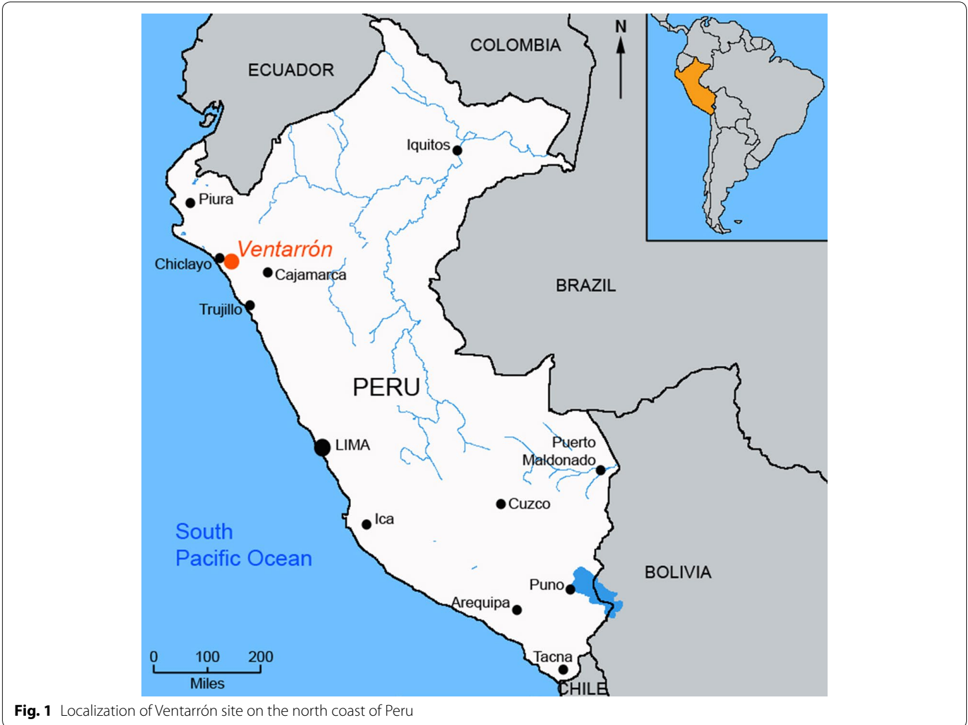
The origins of mural painting in Ancient Peru: archaeometric preliminary study of the Ventarrón mural paintings, Valle de Lambayeque
Abstract
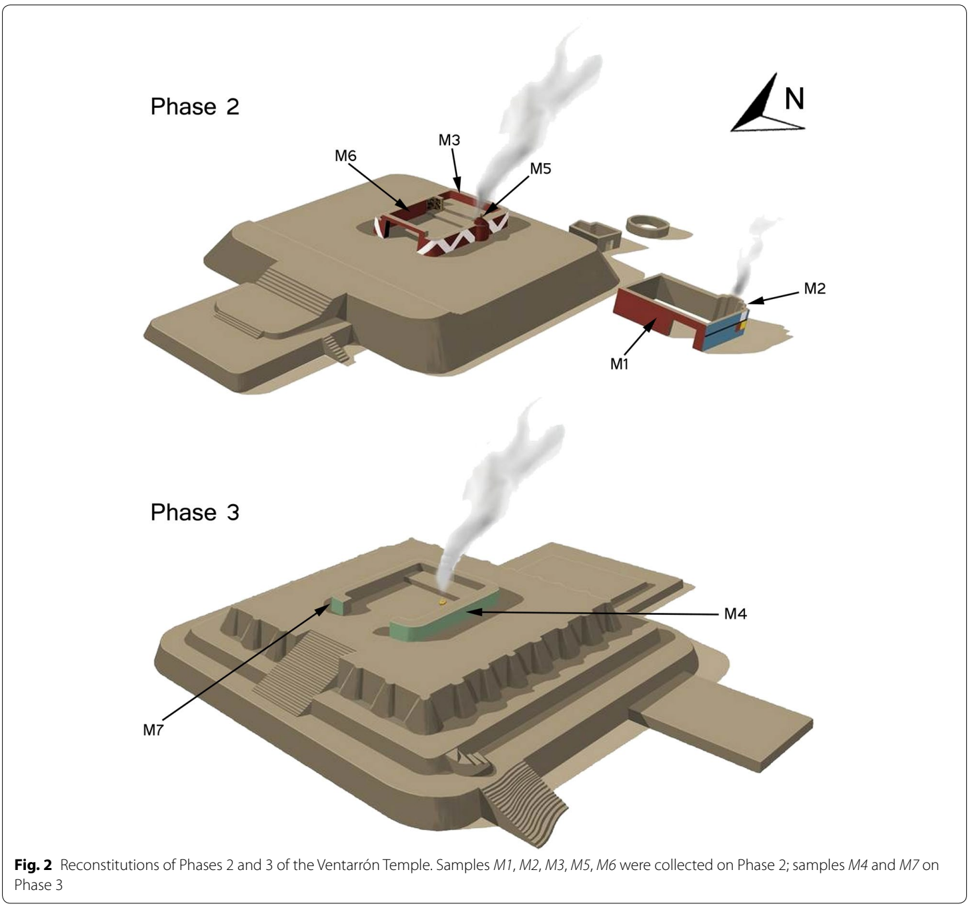
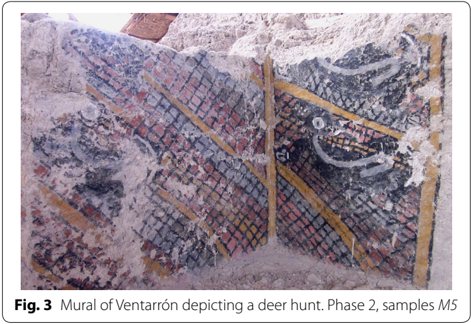
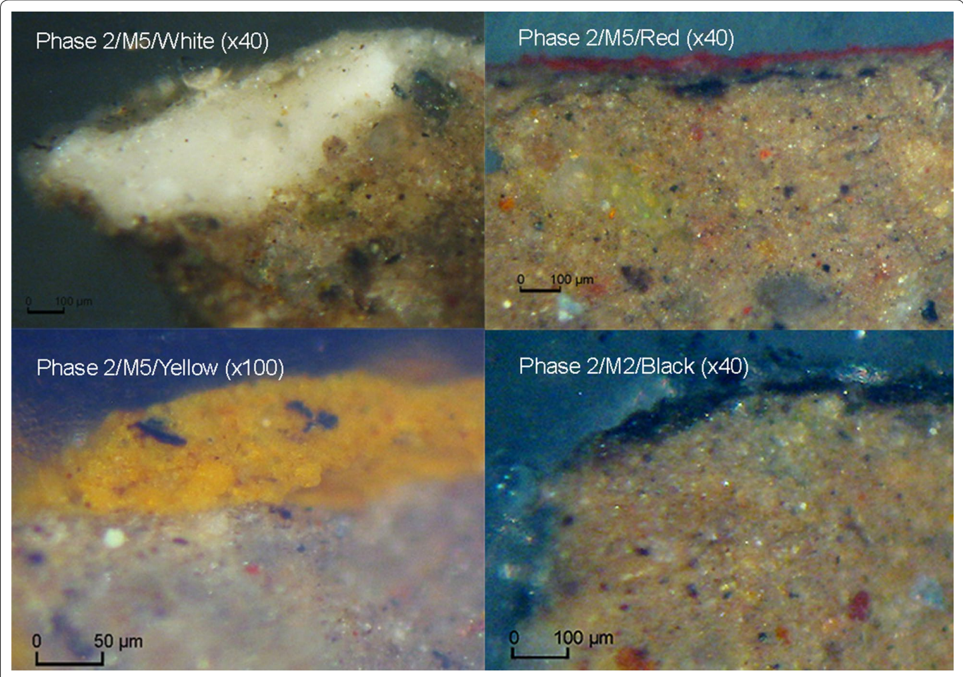
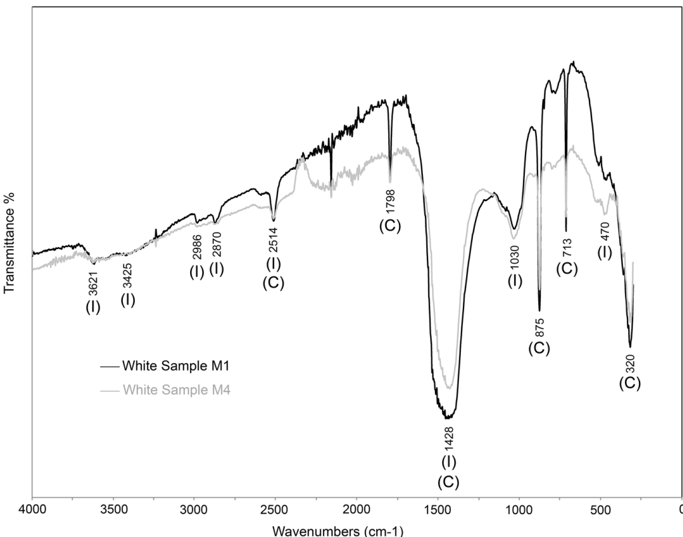
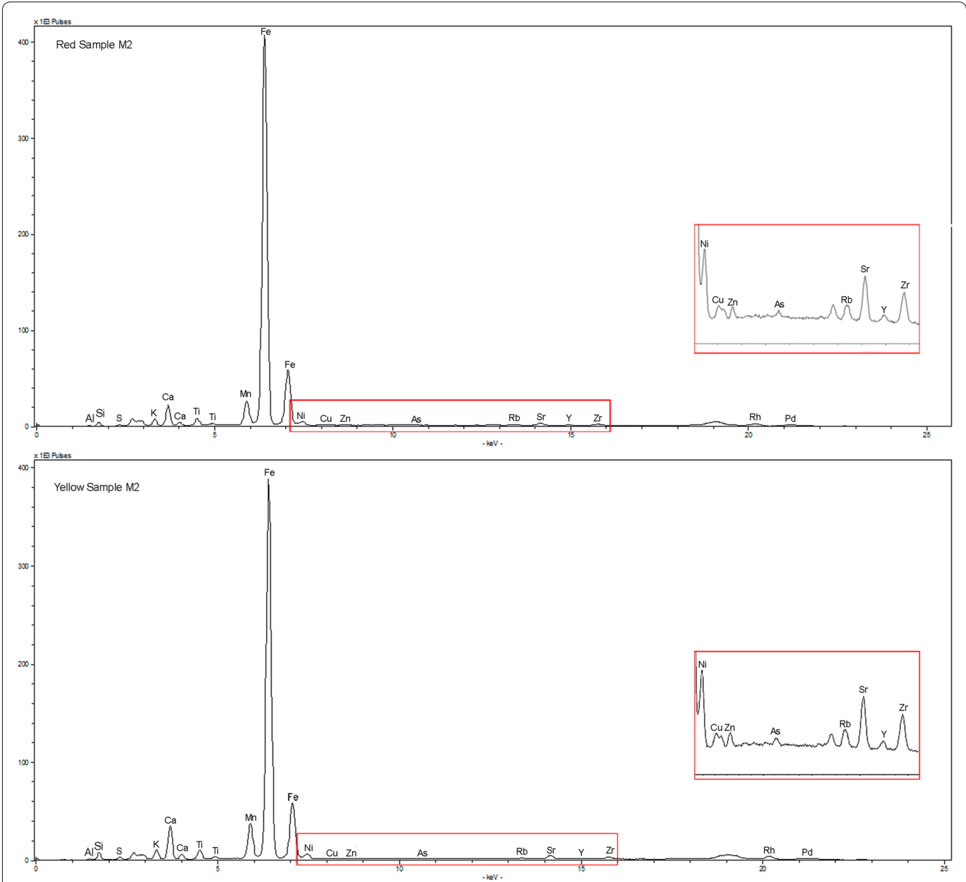
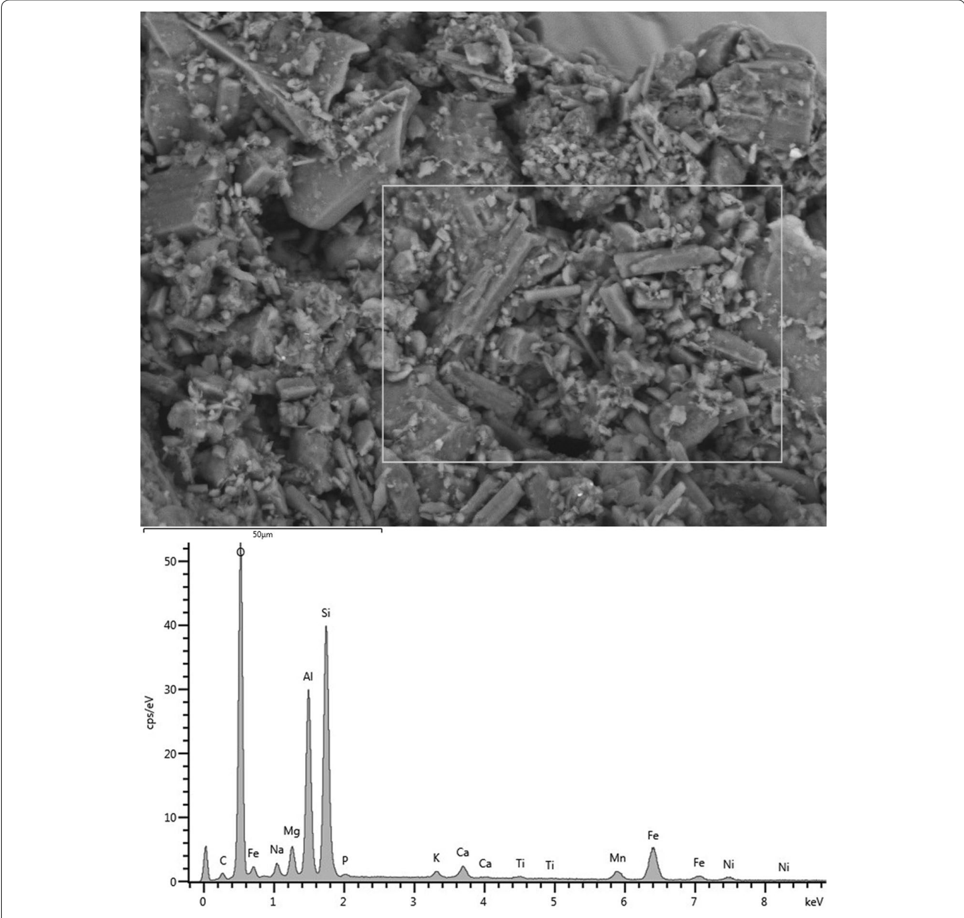
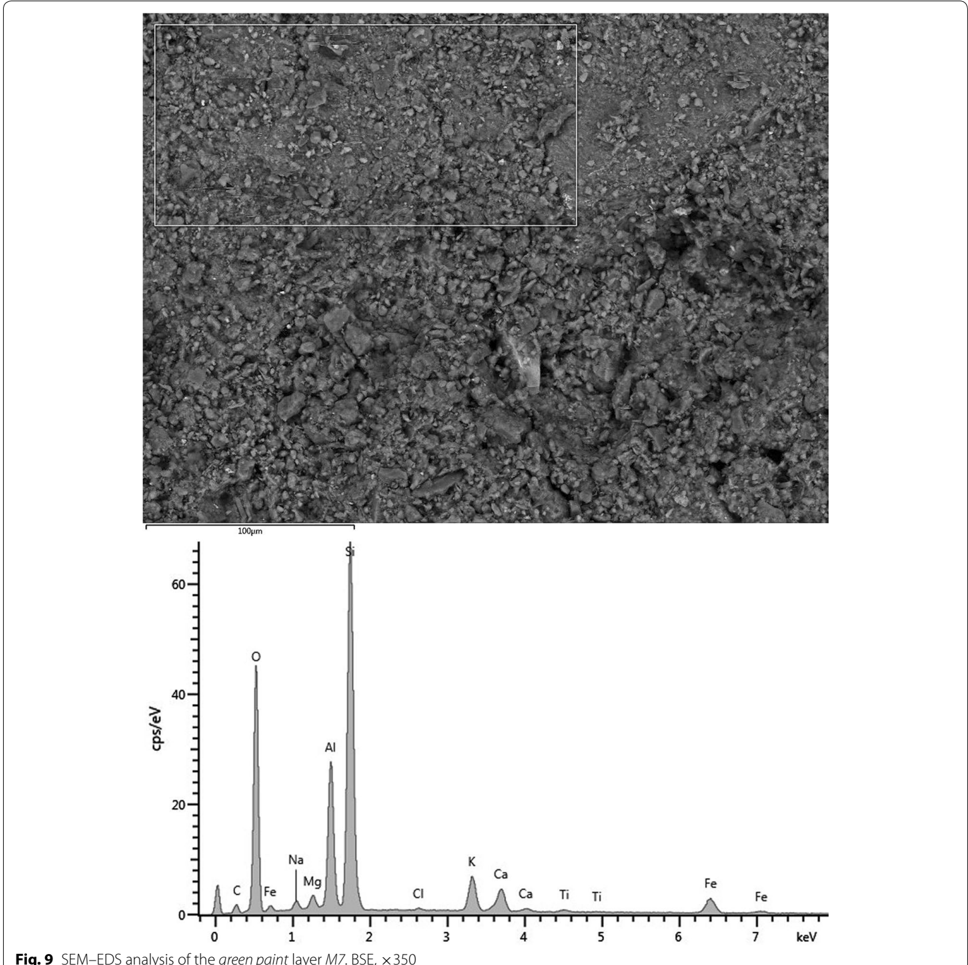
Background: Since 2007, the research led on the Huaca Ventarrón site has allowed investigators to discover outstanding wall paintings. These murals are one of the oldest examples of this artistic expression in the Andean area and American continent (4000 BP). Analyses have given indications on the materials and techniques used by the first painters, ancestors of a long pictorial tradition. Results: Thanks to an archaeometric approach, combining observations and analysis (Optical Microscopy (OM), Scanning Electron Microscopy and Energy-dispersive X-ray Spectroscopy (SEM–EDS), X-ray Fluorescence (XRF) and Fourier Transform Infrared Spectroscopy (FTIR)), it was possible to characterize the colorant materials used in the two constructive sampled phases. These materials are mineral pigments, iron oxides, clays and natural earth, mixed in order to create a wide chromatic scale. Conclusions: Through this research we were able to obtain the first analytical data concerning such ancient mural paintings. It was very useful to comprehend the emergence of this artistic expression in Peru. These results open new research perspectives as well about the origins of Prehispanic pictorial technology as about conservation of wall-paintings in earthen architecture.
Overview
The claims and statistics of this paper haven’t been checked yet.
Run the check — free, no account needed. It reads the open-access text and checks the sources it cites.
Integrity signals
Registry
Cites
Statistics
Figures
Verification
Claims the paper makes
The claims and statistics of this paper haven’t been checked yet.
Run the check — free, no account needed. It reads the open-access text and checks the sources it cites.
Claims other papers make about this one
Each is checked against this paper’s own text: does it say what the citing paper says it does?
In the citing paper
“A green clay that could also be tentatively identified as green earth through its chemical composition was used on much older murals at Huaca Ventarrón (2300-2035 BC) in the Lambayeque Valley of Northern Peru (Wright et al. 2015).”
From Compositional analysis and cross-cultural examination of blue and blue-green post-fire colorants on tolita-tumaco ceramics (2019) · cites this paper as Wright et al. 2015
Self-check
Percentages, sums and reported differences re-computed from the paper’s own numbers.
The self-check needs the paper’s full text.
Citations
Cites
No references could be resolved yet.
Research works printed but not linked: 6
- Alva Meneses I (2008) Los complejos de Cerro Ventarrón y Collud-Zarpán: del Precerámico al Formativo en el valle de Lambayeque. Boletín de Arqueología PUCP 12:97–117 · DOI
- Du C, Zhou G, Deng J, Zhou J (2010) Characterization of soil clay minerals using mid-infrared spectroscopy. In: Xu J, Huang PM (eds) Molecular environmental soil science at the interfaces in the earth’s critical zone. Springer, Heidelberg, pp 265–268 · DOI
- Aliatis I, Bersani D, Campani E, Casoli A, Paololottici P, Mantovan S, Marino I-G, Ospitali F (2009) Green pigments of the Pompeian artists’ palette. Spectrochim Acta Part A Mol Biomol Spectrosc 73:532–538 · DOI
- Vignaud C, Pomiès MP, Menu M (2000) La peinture préhistorique. Dossier pour la Science, vol 27, p 44
- Wright V (2008) Étude de la polychromie des reliefs sur terre crue de la Huaca de la Luna Trujillo, Pérou. British Archaeological Reports (BAR S1808), Paris Monographs in American Archaeology 21, Archaeopress, Oxford
- Wright V (2010) Pigmentos y tecnología artística mochica: una nueva aproximación en la comprensión de la organización social. Bulletin de l’Institut Français d’Études Andines (IFEA) 39–2:299–330 · DOI
Cited by
Sorted by citations
Reiss, B. F., Spilde, M., & Peterson, E. (2019) · Boletín De Arqueología PUCP · doi:10.18800/boletindearqueologiapucp.201902.007 · Cited by 1
Metadata
- Authors
- Wright, V., Meneses, I. A., & Laval, É.
- Venue
- Heritage Science
- Published
- 2015-10-12
- Volume
- 3
- Issue
- 1
- ISSN
- 2050-7445
- Cited by
- 10
- References
- 0
- Language
- en
About these checks
Registry, retraction, Cites and statistics results are computed, not judged, with one exception: a printed reference that no index lists is read once by a model before it counts as a citation error. Claims are extracted by a model and kept only when their quote appears verbatim in the text; each cited source is then checked, with a model’s help, for whether it says what the claim relies on. Those verdicts can be wrong — read the claim’s quote and the cited source before relying on one.
Statistics and arithmetic are recomputed, not judged.
Confidence bands are shown only for fields calibrated on our annotated test set. None is calibrated yet, so no band is shown.
What counts as a claim ›How we measure confidence ›How we check this ›
Are you an author, or do you see a problem with this page? Request a review
