

A diagnostic tool for assessing the conservation condition of cellulose nitrate and acetate in heritage collections: quantifying the degree of substitution by infrared spectroscopy
Open accessThe DOI matches its Crossref record; 31 of the 31 references it cites were found in a registry or an index.
Abstract
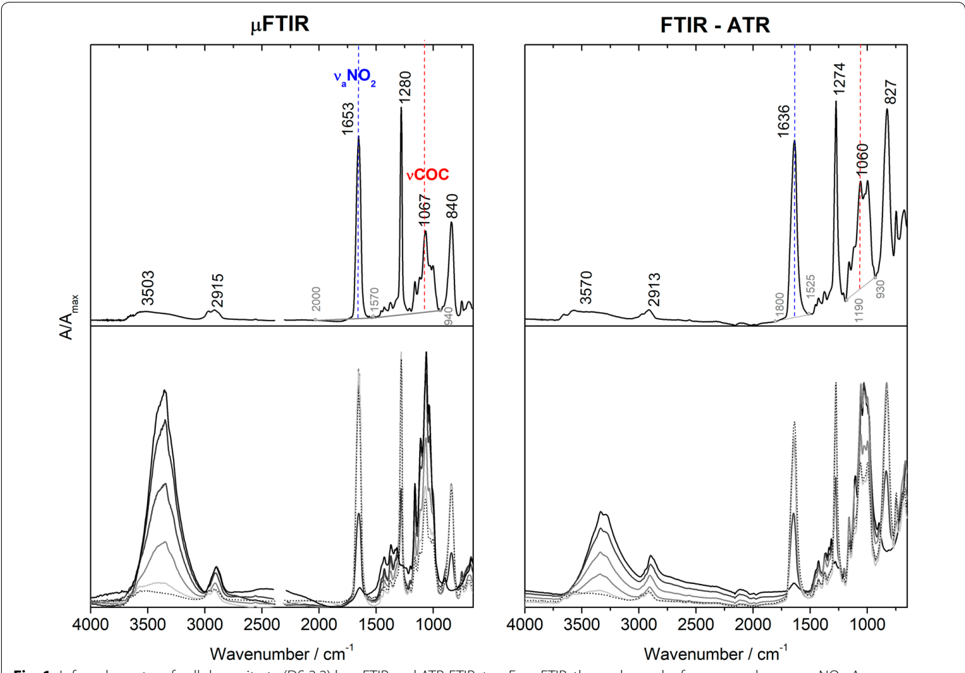
Cellulose nitrate and acetate are materials at risk in heritage collections because it is not possible to predict the evolution of their conservation state over time. Knowing that the degree of substitution (DS) of these materials correlates with their state of conservation because the fundamental degradation mechanism is hydrolysis, in this work, DS was measured in historical objects and artworks. Infrared spectra were used to develop and optimize calibration curves for cellulose nitrate and acetate references that were next applied to calculate DS values of heritage objects. The extent of hydrolysis measured, with this tool, correlated well with the physical deterioration assessed through the sample hardness (Shore A) which was measured with a Durometer. Calibration curves were optimized in reference materials by Attenuated Total Reflectance (ATR-FTIR) and Micro Fourier Transform Infrared Spectroscopy (μFTIR). The DS values of the AC reference materials was previously calculated by nuclear magnetic resonance spectroscopy. The calibration curves were obtained plotting DS as a function of the ratio between a reference peak (which does not suffer relevant changes during degradation) and selected peaks that monitor the degradation for cellulose acetate and nitrate polymers (avoiding the interference of plasticizers). The reference peak for both was the COC stretching mode (νCOC). The probe peak was, for cellulose nitrate, the NO 2 asymmetric stretching (ν a NO 2) and, for cellulose acetate, the OH stretching mode (νOH). This ratio was then applied to calculate DS values of historical materials, in good and poor conservation condition; in situ by ATR, and in micro-samples collected from artworks by μFTIR. This selection comprises cinematographic and photographic films dated from the 1890s to the 1960s, and contemporary works of art made with cellulose acetate sheets by Portuguese artist José Escada dated from the 1960s. Finally, by comparison with the original estimated DS values, we show how this tool permits to define the state of degradation of these complex polymer matrixes. Thus, establishing the quantification of the DS as a novel tool to monitor the degradation of cellulose ester plastics, contributing in this way for a sustainable preservation of an irreplaceable heritage.
Overview
The claims and statistics of this paper haven’t been checked yet.
Free: it reads the open-access text and checks the first 5 claims that cite a source we can check. Create a free account to check every claim.
Integrity signals
Registry
Cites
Statistics
Figures
Verification
Claims the paper makes
The claims and statistics of this paper haven’t been checked yet.
Free: it reads the open-access text and checks the first 5 claims that cite a source we can check. Create a free account to check every claim.
Claims other papers make about this one
Each is checked against this paper’s own text: does it say what the citing paper says it does?
The check wasn’t confident either way, so it gives no verdict — never disputed.
In the citing paper
“The peaks at 2873, 2959, 1448, 1046 and 751 correspond to previous FTIR spectral data of camphor (Nunes et al., 2020).”
From Vibrational spectroscopic methods for the identification and distinction of essential oils in genus Ocimum L.: A chemometric approach (2022) · cites this paper as Nunes et al., 2020
Experimental — accuracy not yet measured
Self-check
Percentages, sums and reported differences re-computed from the paper’s own numbers.
The self-check needs the paper’s full text.
Citations
Cites
RAHMAN, M., & BRAZEL, C. (2004) · Progress in Polymer Science · doi:10.1016/j.progpolymsci.2004.10.001 · Cited by 883
Degradation of Cellulose Acetate-Based Materials: A Review
Puls, J., Wilson, S. A., & Hölter, D. (2011) · Journal of Polymers and the Environment · doi:10.1007/s10924-010-0258-0 · Cited by 679
Fei, P., Liao, L., Cheng, B., & Song, J. (2017) · Analytical Methods · doi:10.1039/c7ay02165h · Cited by 269
Chemistry: Molecules, Matter, and Change
Jones, L. F., & Atkins, P. J. (1997) · Medical Entomology and Zoology · Cited by 236
Samios, E., Dart, R. K., & Dawkins, J. V. (1997) · Polymer · doi:10.1016/s0032-3861(96)00868-3 · Cited by 144
Kono, H., Hashimoto, H., & Shimizu, Y. (2014) · Carbohydrate Polymers · doi:10.1016/j.carbpol.2014.11.004 · Cited by 143
Ilharco, L. M., & de Barros, R. B. (2000) · Langmuir · doi:10.1021/la000579e · Cited by 118 · cited 1×
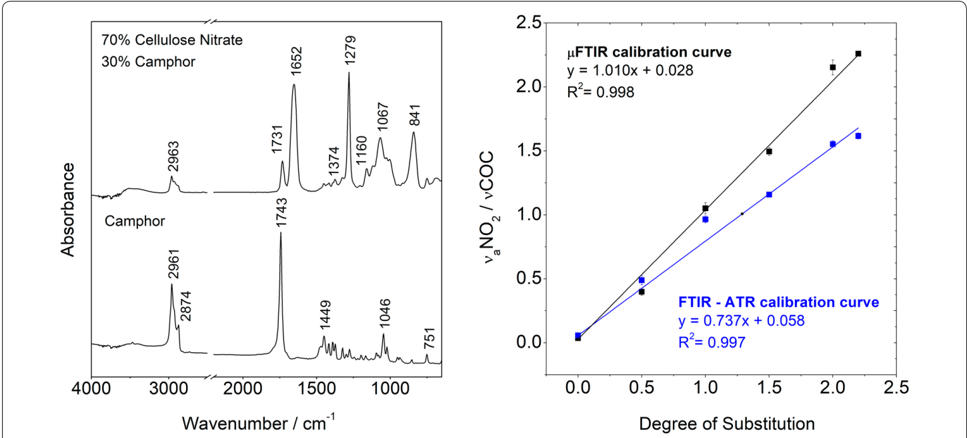
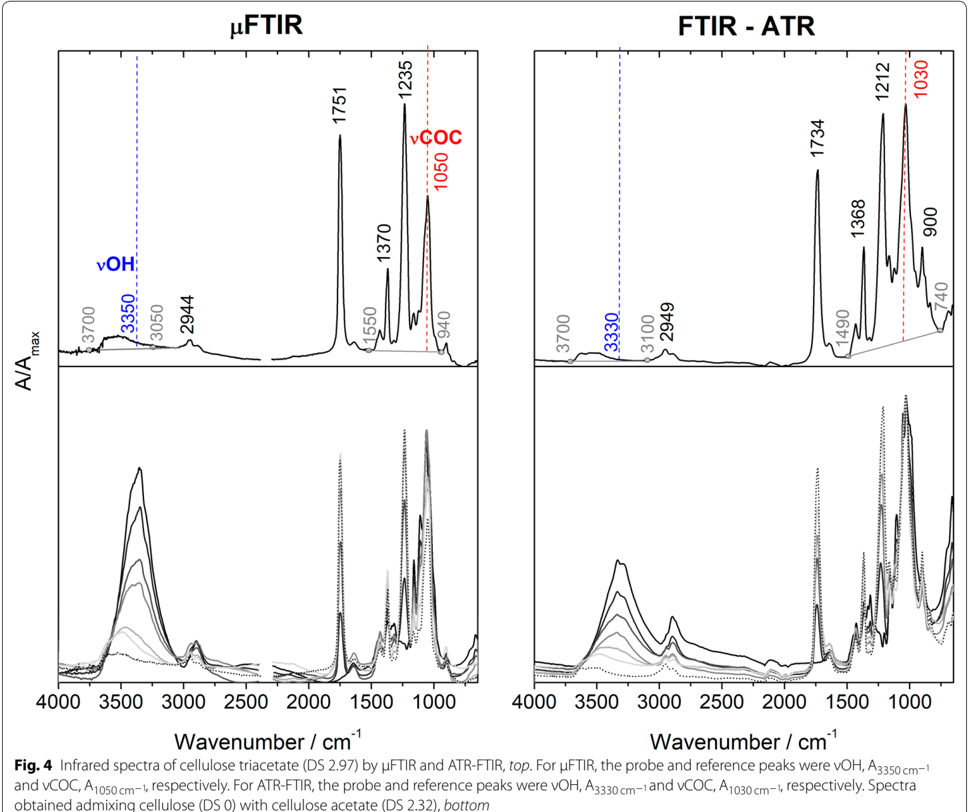
“They are characterized by the carbonyl stretching (μFTIR 1751 cm−1; ATR-FTIR 1734 cm−1), the ester stretching (μFTIR 1235 cm−1; ATR-FTIR 1212 cm−1) and the methyl bending (μFTIR 1370 cm−1; ATR-FTIR 1368 cm−1); the stretching of the ether groups (μFTIR 1050 cm−1; ATR-FTIR 1030 cm−1); and the hydroxyl stretching (with m…”
BackgroundPhotooxidation of cellulose nitrate: New insights into degradation mechanisms
Berthumeyrie, S., Collin, S., Bussière, P., & Thérias, S. (2014) · Journal of Hazardous Materials · doi:10.1016/j.jhazmat.2014.02.039 · Cited by 73
Neves, A., Angelin, E. M., Roldão, É., & Melo, M. J. (2018) · Journal of Raman Spectroscopy · doi:10.1002/jrs.5464 · Cited by 67
Self-citationInvestigation of the degradation of cellulose acetate museum artefacts
Littlejohn, D., Pethrick, R. A., Quye, A., & Ballany, J. M. (2012) · Polymer Degradation and Stability · doi:10.1016/j.polymdegradstab.2012.08.023 · Cited by 63
Research works printed but not linked: 3
- 11. Yarsley VE, Flavell W, Adamson PS, Perkins NG. Cellulosic plastics. London: The Plastics Institute; 1964.
- 13. Thérias S, Bussière P, Gardette M, Gardette J, Lattuati-derieux A, Université C, et al. Altération des objets en celluloïd dans les collections: étude des mécanismes de vieillissement Degradation of celluloid in art works: a study of the mechanisms. Actes du Colloq Sci des matériaux du Patrim Cult. 2012;2:68-73.
- 20. Hamrang A. Degradation and stabilzation of cellulose based plastics & artifacts. Ph.D. Thesis. Faculty of Science and Engineering, The Manchester Metropolitan University; 1994.
Cited by
Liu, G., & Kazarian, S. G. (2022) · The Analyst · doi:10.1039/d2an00005a · Cited by 163
Synthesis, molecular features and biological activities of modified plant polysaccharides
Mukherjee, S., Jana, S., Khawas, S., Kicuntod, J., Marschall, M., Ray, B., & Ray, S. (2022) · Carbohydrate Polymers · doi:10.1016/j.carbpol.2022.119299 · Cited by 126
Determination of the degree of substitution of cellulose esters via ATR‐FTIR spectroscopy
Wolfs, J., Scheelje, F. C. M., Matveyeva, O., & Meier, M. A. R. (2023) · Journal of Polymer Science · doi:10.1002/pol.20230220 · Cited by 41
Gao, Z., Cizdziel, J. V., & Chen, L. (2023) · Journal of environmental chemical engineering · doi:10.1016/j.jece.2023.109671 · Cited by 37
Méndez, D. E., & Allscher, T. (2022) · Polymers · doi:10.3390/polym14040808 · Cited by 34
“The ATR spectra of cellulose derivatives show characteristic signals from the cellulose backbone, as well as particular bands specific to the acetate and nitrate side groups [30].”
BackgroundCarvalho, J. P. F., Teixeira, M. C., Lameirinhas, N. S., Matos, F. S., Luís, J. L., Pires, L. S. O., Oliveira, H., Oliveira, J. M., Silvestre, A. J. D., Vilela, C., et al. (2023) · ACS Applied Materials & Interfaces · doi:10.1021/acsami.3c07077 · Cited by 33
Boukeciat, H., Tarchoun, A. F., Trache, D., Abdelaziz, A., Belmehdi, D., Meziani, R., Boumaza, L., & Klapötke, T. M. (2024) · FirePhysChem · doi:10.1016/j.fpc.2024.04.002 · Cited by 29
From waste to value: Characterization of recycled cellulose acetate for sustainable waste management
Slejko, E. A., Tuan, A., & Scuor, N. (2023) · Waste Management Bulletin · doi:10.1016/j.wmb.2023.10.001 · Cited by 28
Abd-Elmaksoud, G. A., Abusaif, M. S., Ammar, Y. A., Al-Sharbasy, S., & Migahed, M. A. (2023) · Arabian Journal for Science and Engineering · doi:10.1007/s13369-023-08073-4 · Cited by 26
“The IR spectra of the organic compound TAP-TPP exhibited sharp bands at ν 3421, 3315, 2211, 1654, 1610 cm − 1 revealed to NH 2 , CN, C=O, and new CH=N groups, respectively [43–46].”
BackgroundRos, S. D., Aliev, A. E., del Gaudio, I., King, R., Pokorska, A., Kearney, M., & Curran, K. (2020) · Polymer Degradation and Stability · doi:10.1016/j.polymdegradstab.2020.109420 · Cited by 26
“However, in studies involving historic cellulose acetate artefacts, to the best of our knowledge, high-resolution NMR spectroscopy has been employed only as a qualitative tool for the identification of additives [41], or as a quantitative method for characterising DS in unplasticised, commercial CA samples [42], by us…”
MethodNeves, A., Ramos, A. M., Callapez, M. E., Friedel, R., Réfrégiers, M., Thoury, M., & Melo, M. J. (2021) · Scientific Reports · doi:10.1038/s41598-021-99058-6 · Cited by 26
Self-citationUnsupervised hyperspectral image segmentation of films: a hierarchical clustering-based approach
Liu, L., Delnevo, G., & Mirri, S. (2023) · Journal Of Big Data · doi:10.1186/s40537-023-00713-8 · Cited by 25
“Infrared spectroscopy has been applied to quantify the degradation degree of the transparent supports (cellulose-based materials) [11, 12], but it is a single point based analysis and not includes the study on emulsion layers.”
MethodMicheluz, A., Angelin, E. M., Lopes, J. A., Melo, M. J., & Pamplona, M. (2021) · Polymers · doi:10.3390/polym13142278 · Cited by 25
Self-citationMohtar, A. A., Pinto, M. L., Neves, A., Nunes, S., Zappi, D., Varani, G., Ramos, A. M., Melo, M. J., Wallaszkovits, N., Rodrigo, J. I. L., et al. (2021) · Scientific Reports · doi:10.1038/s41598-021-95373-0 · Cited by 23
Self-citationNagai, M. L. E., Santos, P. D. S., Otubo, L., de Oliveira, M. J. A., & Vásquez, P. (2021) · Radiation Physics and Chemistry · doi:10.1016/j.radphyschem.2021.109395 · Cited by 18
Shehzad, W., & Karim, M. R. A. (2023) · Diamond and Related Materials · doi:10.1016/j.diamond.2023.110050 · Cited by 18
Mohtar, A. A., Nunes, S., Silva, J., Ramos, A. M., Lopes, J. F., & Pinto, M. L. (2021) · ACS Omega · doi:10.1021/acsomega.0c05438 · Cited by 18
Self-citationTyagi, A., Yadav, A. K., Yadav, A., Saini, L., Kumar, V., Jain, P., Mohammad, I., Ansari, M. J., El Enshasy, H. A., Abdel-Gawad, F. K., et al. (2022) · Journal of King Saud University: Science · doi:10.1016/j.jksus.2022.102355 · Cited by 17
Characterization of corn husks carboxymethyl cellulose formation using Raman spectroscopy
Panyathip, R., Witthayapak, M., Thuephloi, P., Sukunta, J., Thipchai, P., Thanakkasaranee, S., Jantanasakulwong, K., & Rachtanapun, P. (2025) · Industrial Crops and Products · doi:10.1016/j.indcrop.2025.120887 · Cited by 17
Neves, A., Friedel, R., Callapez, M. E., & Swank, S. D. (2023) · Heritage Science · doi:10.1186/s40494-023-00989-2 · Cited by 16
“assess the conservation condition by quantifying the cellulose nitrate degree of substitution (DS) using calibration curves [62].”
MethodSelf-citationLozano, M. V. C., Elsässer, C., Angelin, E. M., & Pamplona, M. (2023) · Polymers · doi:10.3390/polym15030522 · Cited by 15
“Besides the sublimation of camphor, the loss of nitro groups and the creation of carbonyl (C=O) functions can be typically linked to the two main pathways that rule the degradation of celluloid with moderate N mass percent content when the temperature remains below 100 °C and illumination is kept above 300 nm [11,12,1…”
BackgroundMethodInfluentialSelf-citationAkinterinwa, A., Akinterinwa, E. T., & Wilson, L. D. (2025) · Sustainable Chemistry One World · doi:10.1016/j.scowo.2025.100065 · Cited by 13
A quantitative study of acetic acid emissions from historical cellulose acetate at room conditions
Novak, M., Grau‐Bové, J., Rijavec, T., Kraševec, I., Kralj-Cigić, I., Stefani, C. D., Checkley‐Scott, C., & Strlič, M. (2025) · npj Heritage Science · doi:10.1038/s40494-025-01551-y · Cited by 10
“As this sample is a photographic negative, itsFTIR spectrum is dominated by the bands at 1630, 1540, and 1451 cm − 1 , which originate fromthegelatinemediapresentinphotographicmaterials 51,52 .”
Lozano, M. V. C., Sciutto, G., Prati, S., & Mazzeo, R. (2022) · Heritage Science · doi:10.1186/s40494-022-00748-9 · Cited by 10
“gluconolactones, gluconic and glucuronic acid) produced during scission of the CN chain at later degradation stages [6].”
BackgroundLozano, M. V. C., Catelli, E., Sciutto, G., Prati, S., Genorini, E., & Mazzeo, R. (2022) · Talanta · doi:10.1016/j.talanta.2022.124223 · Cited by 8
Zare, F., Gonçalves, S., Faria, M., & Gonçalves, M. C. (2023) · Membranes · doi:10.3390/membranes13030346 · Cited by 8
Nasa, J. L., Blaensdorf, C., Dolcher, E., Seppia, S. D., Micheluz, A., Modugno, F., Pamplona, M., & Bonaduce, I. (2022) · Journal of Analytical and Applied Pyrolysis · doi:10.1016/j.jaap.2022.105468 · Cited by 8
Shehzad, W., & Karim, M. R. A. (2023) · Applied Physics A · doi:10.1007/s00339-023-06732-9 · Cited by 8
Nanoprecipitation to produce hydrophobic cellulose nanospheres for water-in-oil Pickering emulsions
Anrango, B. A. T., Naiya, M. M., Dongen, J. V., Matich, O., Whitby, C. P., & Chen, J. L. ‐. (2024) · Cellulose · doi:10.1007/s10570-024-05983-w · Cited by 7
Shehzad, W., & Karim, M. R. A. (2024) · Journal of Energy Storage · doi:10.1016/j.est.2024.110435 · Cited by 7
A Closer Look at Heritage Systems from Medieval Colors to Modern and Contemporary Artworks
Melo, M. J., Vieira, M., Nabais, P., Neves, A., Pamplona, M., & Angelin, E. M. (2024) · Heritage · doi:10.3390/heritage7100259 · Cited by 6
“For example, using a portable FTIR-ATR device, Nunes et al. constructed calibration curves to quantify the decrease in the degree of substitution in cellulose nitrate and cellulose acetate [82].”
MethodSelf-citationCherif, M. C., Boughendjioua, H., Caputo, L., Camele, I., Tahraoui, T., Feo, V. D., & Elshafie, H. S. (2025) · Chemistry & Biodiversity · doi:10.1002/cbdv.202500720 · Cited by 6
“The results obtained in this study (Figure 1) are in accordance with those previously published by [32, 33], in which the peaks located at around 2956.52, 2877.68, 1741.45, 1448.70, 1376.81, and 748.41 cm − 1 are attributed to camphor.”
InfluentialWang, L., Yang, T., & Zhao, G. (2022) · Materials Research Express · doi:10.1088/2053-1591/ac565f · Cited by 6
Jastrzębiowska, N., Wawrzyk, A., & Uroda, N. (2023) · Materials · doi:10.3390/ma16217033 · Cited by 6
“The FTIR-ATR technique has been used by many researchers to understand the degradation process of cellulose nitrate in historical artifacts [13,23,27,29].”
BackgroundMethodWang, Z., Yin, Y., Shan, Z., Cui, Q., Zhang, W., Chai, B., Li, D., Yu, Z., & Su, B. (2024) · Heritage Science · doi:10.1186/s40494-024-01165-w · Cited by 6
“As far as we know, CN is rarely used in mural conservation, but it is usually used as an adhesive for pottery [40] and film base [42, 43].”
BackgroundConti, C., Catrambone, M., Colombo, C., Possenti, E., Rectenwald, K. M., Realini, M., & Strobbia, P. (2022) · Heritage Science · doi:10.1186/s40494-022-00758-7 · Cited by 6
“Sample 3 is the only one with an excess of anions; however, in this sample sulphate was almost totally neutralized by calcium (strong correlation sulphate vs calcium), and nitrate was 11% by weight; considering that nitrate cellulose (CN) was observed in almost all samples by FTIR, the hydrolysis and subsequently degr…”
BackgroundInfluentialElsässer, C., Mayr, V., Montag, P., Angelin, E. M., Hilbig, H., Große, C. U., & Pamplona, M. (2023) · Polymers · doi:10.3390/polym15040852 · Cited by 6
“The nitrate vibration probe bands for all other mock-ups showed a consistent but slight decrease along aging, which corroborates the assumption that incipient-induced degradation occurred and was likely due to the homolytic scission of the nitro groups (denitration) [12,48,49].”
BackgroundSelf-citationHajivand, P., Longo, M., Mastropietro, T. F., Godbert, N., Monteleone, M., Bezzu, C. G., Armentano, D., & Jansen, J. C. (2025) · Polymer · doi:10.1016/j.polymer.2025.128679 · Cited by 5
Morales–Cepeda, A. B., Díaz-Guerrero, A. M., Ledezma-Pérez, A. S., Alvarado‐Canché, C., & Rivera‐Armenta, J. L. (2024) · Chemical Papers · doi:10.1007/s11696-024-03366-w · Cited by 5
Indoor Air Quality in a Museum Storage Room: Conservation Issues Induced in Plastic Objects
Catrambone, M., Cappellina, M., Olivini, F., Possenti, E., Saccani, I., & Sansonetti, A. (2024) · Atmosphere · doi:10.3390/atmos15121409 · Cited by 4
Porpora, F., Dei, L., Maiano, A. M., & Carretti, E. (2024) · Journal of Cultural Heritage · doi:10.1016/j.culher.2024.11.013 · Cited by 4
Toader, G. A., Grigorean, V. T., & Ioniţă, M. (2024) · Biomolecules · doi:10.3390/biom14030366 · Cited by 4
“The FTIR spectrum of NC exhibits three main absorption peaks situated at 1648, 1279, and 839 cm − 1 , conceding to both symmetric and asymmetric stretching of the NO 2 group [42–44].”
BackgroundNasa, J. L., Carnazza, P., Francone, S., Colombini, M. P., & Modugno, F. (2022) · Journal of Analytical and Applied Pyrolysis · doi:10.1016/j.jaap.2022.105483 · Cited by 4
Porpora, F., Lisi, L., Carretti, E., D’Aleo, C., Sanctis, M. D., Baldini, S., & Dei, L. (2025) · Molecules · doi:10.3390/molecules30061348 · Cited by 3
“…FTIR-ATR spectra (Figure 11A), it is possible to obtain information about the deacetylation process in a non-invasive and non-destructive way [32–35]; for films degraded in the absence of inhibitors, after the 24th day, a decrease in the intensity of the peaks associated with the acetyl group…”
Sun, J., Li, J., Liu, J., Liu, H., & Gao, Y. (2025) · International Journal of Biological Macromolecules · doi:10.1016/j.ijbiomac.2025.145961 · Cited by 3
Highly Porous Particles of Cellulose Derivatives for Advanced Applications
Kuznetsov, N. M., Zakharevich, A. A., Vdovichenko, A. Y., Kovaleva, V. V., Zagoskin, Y. D., Bakirov, A. V., Malakhov, S. N., Grigoriev, T. Е., & Чвалун, С. Н. (2024) · ChemPlusChem · doi:10.1002/cplu.202400375 · Cited by 3
Safe Storage? An Assessment of Polyethylene for the Storage of Heritage Objects
Stuart, B. H., Wong, S., Goodall, R. A., Beale, A., Chu, C., Nel, P., Amin-Jones, H., & Thomas, P. S. (2022) · Studies in Conservation · doi:10.1080/00393630.2022.2092702 · Cited by 3
Reguieg, I., Diaf, K., & Elbahri, Z. (2022) · International Journal of Environmental Research · doi:10.1007/s41742-022-00484-9 · Cited by 3
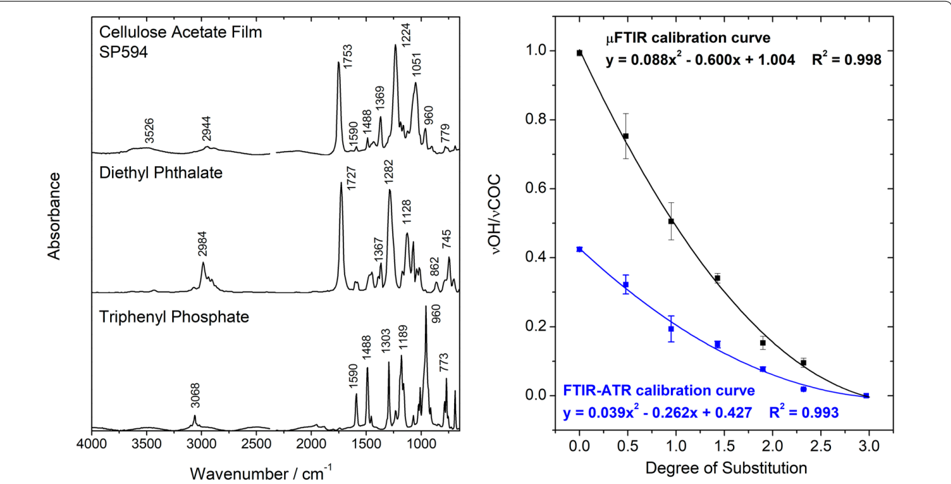
“The stretching vibration band of C–O ether groups and C–H methyl bending appeared at 1054 cm−1 and 1381 cm−1 respectively (Nunes et al. 2020).”
BackgroundEvaluation of the environmental performance of archival boxes for cellulose acetate storage
Novak, M. (2023) · UCL Discovery (University College London) · doi:10.13140/rg.2.2.10683.73765 · Cited by 3
Hasanin, M. S., El-Rashedy, A. A. E., El-Ziaty, A. K., Abbass, E. M., & Kamel, S. M. (2025) · Scientific Reports · doi:10.1038/s41598-025-14571-2 · Cited by 2
“On the other side, the concentration of ligands in the nanocomposite was measured at the same wavelength for each ligand 20,21 .”
Juwono, A. L., Krisnandi, Y. K., Abrar, G. A., Saragi, I. R., & Muiz, L. J. (2024) · Materials Research Express · doi:10.1088/2053-1591/ad425f · Cited by 2
Versatile performance of hydrophilic PVDF/CuO nanocomposite membranes for TDS removal in RO reject
Selvaraj, A., & Jeyadharmarajan, J. (2024) · Energy Sources Part A Recovery Utilization and Environmental Effects · doi:10.1080/15567036.2024.2403719 · Cited by 2
“…of these polymeric membranes are Thin-film composite (Ismail et al. 2022), polysulfone (Serbanescu, Voicu, and Thakur 2020), poly-vinylidene fluoride (Zou and Lee 2022), cellulose acetate (Vatanpour et al. 2022), and cellulose nitrate (Nunes et al. 2020; Valappil, Ghasem, and Al-Marzouqi 2021).”
Analyses and findings of unusual substitute materials in a raincoat from WWII
Lauridsen, C. B., Brock‐Nannestad, T., & Simonsen, K. P. (2021) · Heritage Science · doi:10.1186/s40494-021-00572-7 · Cited by 2
Influence of Disinfection Methods on Cinematographic Film
Knotek, V., Ďurovič, M., Dolenský, B., & Hrdlička, Z. (2023) · Materials · doi:10.3390/ma16093493 · Cited by 2
“In addition to UV radiation, water (specifically H3O) can cause heterolytic cleavage of the main cellulosic chain [2].”
BackgroundInfluentialPuente-Muñoz, S., Huidobro, J., la Fuente, I. V.-D., Etxebarria, I., Costantini, I., Veneranda, M., Prieto‐Taboada, N., Ilchenko, O. O., Girolami, G. D., Lillo, A. D., et al. (2025) · Journal of Cultural Heritage · doi:10.1016/j.culher.2025.07.028 · Cited by 2
de la Peña, A. M., Miguel, E. R. D. S., & de Gyves, J. (2023) · Membranes · doi:10.3390/membranes13080740 · Cited by 2
“The broad band in the FTIR spectra with the maximum located near 3500 cm−1 can be attributed both to hydroxyl stretching in CTA [47] and to stretching vibrations of adsorbed water in Aliquat 336 [22,28,48,49].”
BackgroundStuart, B. H., Frankham, G. J., Mangion, G., & Ueland, M. (2023) · Forensic Science International Animals and Environments · doi:10.1016/j.fsiae.2023.100079 · Cited by 2
Thompson, J. E., Mazzini, F., Yazdi, S. T., & Edgar, K. J. (2023) · Wiley eBooks · doi:10.1002/0471440264.pst045.pub2 · Cited by 2
Longoni, M., Scipioni, S., Plutino, A., Sarti, B., Rizzi, A., & Bruni, S. (2024) · Microchemical Journal · doi:10.1016/j.microc.2024.110120 · Cited by 1
Porpora, F., Dei, L., Forcellini, C., D’Aleo, C., Lisi, L., Sanctis, M. D., & Carretti, E. (2025) · Macromolecular Rapid Communications · doi:10.1002/marc.202500075 · Cited by 1
de Bruyn‐Ouboter, V. M., Kutzke, H., Sait, S. T. L., Friis, H., Krzywiecki, M., & Erbe, A. (2025) · ChemPlusChem · doi:10.1002/cplu.202500099 · Cited by 1
Buttarelli, A., Longoni, M., Rossetto, V., & Bruni, S. (2025) · Vibrational Spectroscopy · doi:10.1016/j.vibspec.2025.103818 · Cited by 1
Using nanoindentation to study the aging of cellulose acetate in cinematographic films
Cordill, M. J., Žák, S., & Wallaszkovits, N. (2025) · npj Heritage Science · doi:10.1038/s40494-025-01940-3 · Cited by 1
“Anothermethodthathasbeenusedintheheritagesciences 19 toquickly evaluate the mechanical behaviour of plastic is the Shore A hardness 20,21 .”
InfluentialSelf-citationIbrahim, F. H., Shoimah, S. M., Steven, S., Ardy, H., Santosa, S. P., & Mardiyati, Y. (2025) · Materials science forum · doi:10.4028/p-xjwm1s · Cited by 1
“…Vol. 1155 of absorption peak intensity of NO 2 vibration and COC vibration can be measured from absorption at 1631 cm -1 (measured from baseline delineated between 1472 cm -1 and 1710 cm -1 ) and 1053 cm -1 (measured from baseline delineated between 930 cm -1 and 1190 cm -1 ) respectively [20].”
Assessing the Performance and Lifetime of Cellulose Nitrate Lacquer on Silver
Thickett, D., & Harvey, C. (2025) · Materials · doi:10.3390/ma18174155 · Cited by 1
“The autocatalytic nature of cellulose nitrate deterioration has been postulated to be related to increasing nitrogen dioxide concentrations [1,20].”
Zawierucha, I., Kozłowski, C. A., Gajda, B., & Witt, K. (2026) · Membranes · doi:10.3390/membranes16030092 · Cited by 1
“The obtained data are consistent with the literature [37–39], which describes cellulose triacetate membranes with nitrophenyl plasticizers.”
Aljanaahi, A., Aljanaahi, A., Ahli, N. A., Alblooshi, R. A., Yasin, A., & Shah, I. (2026) · Frontiers in Chemistry · doi:10.3389/fchem.2026.1739998 · Cited by 1
“…and symmetric stretching vibrations of the nitro group (NO 2 ) appear at 1635 cm −1 and 1269 cm −1 , respectively, while the O-NO 2 stretching vibration is observed at 817 cm −1 ; together, these three bands form a diagnostic triplet for nitrocellulose (Larsson, 2014; Nunes et al., 2020).”
Lopez, R., Buongarzoni, A., Morales, A. M., Marte͏, F., & Tascón, M. (2026) · Journal of Cultural Heritage · doi:10.1016/j.culher.2026.08.003 · Cited by 1
Treatment Case Studies in the Consolidation and Adhesion of Cellulose Nitrate
Kim, E., Longo, C., Docking, E. C., Gallupe, C., Langmuir, R., & Magarro, C. (2024) · Studies in Conservation · doi:10.1080/00393630.2024.2345422 · Cited by 1
Alam, M. S., Albratty, M., Ahmed, H., Najmi, A., Zoghebi, K. A., Rehman, Z. U., Basode, V. K., Moni, S. S., Alam, M. F., Ahsan, W., et al. (2025) · Indian Journal of Pharmaceutical Education and Research · doi:10.5530/ijper.20250719 · Cited by 1
Zazzo, L. D., Magna, G., Capuano, R., Prati, S., Sciutto, G., Lozano, M. V. C., Mazzeo, R., Natale, C. D., & Paolesse, R. (2022) · IEEE International Symposium on Olfaction and Electronic Nose (ISOEN) · doi:10.1109/isoen54820.2022.9789638
Long-term effect of disinfection on collodion light-sensitive layer
Benetková, B., Knotek, V., & Ďurovič, M. (2022) · Koroze a ochrana materialu · doi:10.2478/kom-2022-0017
Hajivand, P., Longo, M., Mastropietro, T. F., Godbert, N., Monteleone, M., Bezzu, C. G., Armentano, D., & Jansen, J. C. (2025) · SSRN Electronic Journal · doi:10.2139/ssrn.5162835
Dong, X., Li, Y., Chao, X., & Zhou, Y. (2025) · npj Heritage Science · doi:10.1038/s40494-025-01679-x
A Call to Action Regarding Vinegar Syndrome Degradation of 1:1 Drawings in Nautical Archaeology
Dostal, C., Breyfogle, K. L., & Kennedy, C. (2025) · The International Journal of Nautical Archaeology · doi:10.1080/10572414.2025.2506182
“Initial identification was made through a qualitative search in the instrument’s library and confirmed through comparison with previously published spectra (Ilharco & Brito De Barros, 2000; Song et al., 2012; Jung et al., 2018; Nunes et al., 2020).”
The Impact of Humidity in the Thermal Ageing of Celluloid: An Inter-Scale Investigation
Piccolo, A., Tomasin, P., Zoleo, A., Miorin, E., & Nodari, L. (2025) · Polymers · doi:10.3390/polym17121648
de Sá, S. F., Babo, S., Neves, A., Garcia, A., Nunes, S., Cairoli, A., & Melo, M. J. (2025) · Gels · doi:10.3390/gels11120954
“These results are aligned with the acid hydrolysis reported in the literature [2,3,27].”
InfluentialSelf-citationAdditional file 1 of Analyses and findings of unusual substitute materials in a raincoat from WWII
Lauridsen, C. B., Brock‐Nannestad, T., & Simonsen, K. P. (2021) · Figshare · doi:10.6084/m9.figshare.16620769
Lozano, M. V. C., Sciutto, G., Prati, S., & Mazzeo, R. (2022) · Figshare · doi:10.6084/m9.figshare.20347619
Conti, C., Catrambone, M., Colombo, C., Possenti, E., Rectenwald, K. M., Realini, M., & Strobbia, P. (2022) · Figshare · doi:10.6084/m9.figshare.20452898
Neves, A., Friedel, R., Callapez, M., & Swank, S. D. (2024) · Figshare · doi:10.6084/m9.figshare.26603215
Self-citationRizzo, R. E., Porfido, C., Butler, I., Allegretta, I., Terzano, R., De Pascale, O., & Senesi, G. S. (2022) · CNR ExploRA
Levan as a biomaterial for the conservation of cultural heritage
Sağlam, R. (2022) · Dspace Repository (Marmara Üniversitesi)
Disegno e pittura infantile. L’importanza del colore negli studi di Élise Freinet
Zuccoli, F. (2024) · BOA (University of Milano-Bicocca)
Graphene-Related Materials and 2D Materials: A new strategy in contemporary muralism conservation
Guarnieri, N., Tsakonas, C., Gorgolis, G., Carbone, M. G. P., Paterakis, G., Galiotis, C., Goidanich, S., & Toniolo, L. (2025) · Virtual Community of Pathological Anatomy (University of Castilla La Mancha)
Corviseri, M. C., Polidoro, A., Poli, M. D., Stevanin, C., Pasti, L., & Franchina, F. A. (2025) · Institutional Research Information System University of Ferrara (University of Ferrara)
Biopolymer-based matrix mixed membranes for CO₂ y CH₂ separation
Moranchel-Pérez, J. (2022) · UCrea (University of Cantabria)
Metodika dezinfekce fotografických a filmových materiálů s želatinovou světlocitlivou vrstvou
Boryskova, S., Branyšová, T., Demnerová, K., Ďurovič, M., Hnulíková, B., Hricková, K., Kadavá, J., Knotek, V., Limpouch, O., Benetková, B., et al. (2022) · Digital Repository (National Repository of Grey Literature)
Metodika dezinfekce fotografických materiálů s kolódiovou světlocitlivou vrstvou
Boryskova, S., Branyšová, T., Demnerová, K., Ďurovič, M., Hnulíková, B., Kadavá, J., Knotek, V., Limpouch, O., Benetková, B., Nováková, M., et al. (2022) · Digital Repository (National Repository of Grey Literature)
Shi, Y., Ruan, Y., Luo, J., Ma, E., Dong, X., Li, Y., Zhou, Y., & Luo, Y. (2026) · npj Heritage Science · doi:10.1038/s40494-026-02466-y
Vibrational Spectroscopic Characterisation of Cellulose
Vitharanage, T. I. V. D., & Noothalapati, H. (2026) · Biological and medical physics, biomedical engineering · doi:10.1007/978-3-032-15306-7_2
da Silva, M. T., da Silva, D. P. D. S., Silva, J. G., Alves, A. G. T., da Rocha, A. C., Dias, J. V. D. C., Ribeiro, A. A. P., Magalhães, T. A., dos Santos, V. J. R., Rossi, I., et al. (2026) · Polymer Bulletin · doi:10.1007/s00289-026-06631-y
Pankin, D. V., Moskovskiy, M. N., & Povolotckaia, A. (2026) · Molecules · doi:10.3390/molecules31162890
“Studies using IR and Raman spectroscopy have identified the most prominent cellulose nitrate peaks, demonstrated spectral differences from cellulose acetate [17], and established degradation markers [15,17–19].”
InfluentialShiwani, S., Raghunathan, S., Popp, J., Schie, I. W., & Krafft, C. (2026) · Analytical and Bioanalytical Chemistry · doi:10.1007/s00216-026-06735-4
Lesmana, D., Mardiyati, Y., Ramadhan, M. H., Abdurrahman, I., Ibrahim, F. H., Steven, S., & Santosa, S. P. (2026) · Macromolecular Symposia · doi:10.1002/masy.70453
Boanca, C., Earar, K., Cocoș, D. I., Feier, R. D., Fratila, D. N., & Beuran, M. (2026) · International Journal of Conservation Science · doi:10.36868/ijcs.2026.03.31
“Infrared spectroscopy has been shown to provide useful indicators of degradation in cellulose nitrate and acetate and can help distinguish visually similar polymers with markedly different conservation requirements [43].”
Beuran, M., Cocoș, D. I., Feier, R. D., & Earar, K. (2026) · International Journal of Conservation Science · doi:10.36868/ijcs.2026.03.33
“Cellulose nitrate and cellulose acetate undergo progressive chemical degradation that can be monitored through changes in molecular composition and spectroscopic response [19], [22].”
InfluentialMulti-analytical characterization of an Ary Brizzi easel painting
Barberena, C. J. S., Guerrero, A. C. B., Monkes, P., Fazio, A. T., & Maier, M. (2026) · Radiation Physics and Chemistry · doi:10.1016/j.radphyschem.2026.114475
Multimodal analysis reveals hydrolysis as a shared mechanism in magnetic tape degradation
Harrison, J., James, J., Borca, C. N., Blatter, D., Hess, R. L., Hadzis, D., Pribble, K., Ménétrier, F., Dufaux, A., & Gliga, S. (2026) · npj Heritage Science · doi:10.1038/s40494-026-02940-7
Azolini, F., Curran, K., Ros, S. D., & Gibson, A. (2026) · ChemPlusChem · doi:10.1002/cplu.70265
Metadata
- Authors
- Nunes, S., Ramacciotti, F., Neves, A., Angelin, E. M., Ramos, A. M., Roldão, É., Wallaszkovits, N., Armijo, A. A., & Melo, M. J.
- Affiliations
- LAQV Requimte (PT)
- University of Bologna (IT)
- Austrian Academy of Sciences (AT)
- Corresponding author
- Melo, Maria João
- Venue
- Heritage Science
- Published
- 2020-04-06
- Volume
- 8
- Issue
- 1
- ISSN
- 2050-7445 (ISSN-L)
- OpenAlex
- W3030127525
- Semantic Scholar
- 6ff77a54c6fb4bd55ec94924e92cc5c0d5dd6ddb
- Cited by
- 85
- References
- 31
- Citations by year
- 2026: 7 · 2025: 21 · 2024: 16 · 2023: 16 · 2022: 16 · 2021: 8 · 2020: 1
- FWCI
- 50.32
- Type
- journal article
- Language
- en
- Open access
- gold
- doi.org
- Licence
- cc-by
- creativecommons.org/licenses/by/4.0 (tdm)
- creativecommons.org/licenses/by/4.0 (vor)
- Locations
- Heritage Science (publishedVersion, cc-by)
- Portuguese National Funding Agency for Science, Research and Technology (RCAAP Project by FCT) (submittedVersion, other-oa)
- Archivio istituzionale della ricerca (Alma Mater Studiorum Università di Bologna) (submittedVersion)
- DOAJ (DOAJ: Directory of Open Access Journals) (submittedVersion, cc-by-sa)
- Funders
- Horizon 2020 (H2020-NMBP‐35‐2017)
- Fundação para a Ciência e a Tecnologia (UID/QUI/50006/2019, PD/BD/136678/2018, PB/BD/114412/2016, CORES_PD/00253/2012)
- Topics
- Social Sciences › Arts and Humanities › Archeology (arts and humanities) › Cultural Heritage Materials Analysis
- Social Sciences › Arts and Humanities › Conservation › Conservation Techniques and Studies
- Physical Sciences › Chemistry › Analytical Chemistry › Spectroscopy and Chemometric Analyses
- Keywords
- nitrocellulose, cellulose acetate, degree of substitution, hydrolysis, polymer degradation, conservation condition assessment, heritage collections, calibration curve, infrared spectroscopy, ATR-FTIR spectroscopy, micro-FTIR, motion picture film, photographic film, plasticizers, degradation monitoring
About these checks
Registry, retraction, Cites and statistics results are computed, not judged, with one exception: a printed reference that no index lists is read once by a model before it counts as a citation error. Claims are extracted by a model and kept only when their quote appears verbatim in the text; each cited source is then checked, with a model’s help, for whether it says what the claim relies on. Those verdicts can be wrong — read the claim’s quote and the cited source before relying on one.
Statistics and arithmetic are recomputed, not judged.
Confidence bands are shown only for fields calibrated on our annotated test set. None is calibrated yet, so no band is shown.
What counts as a claim ›How we measure confidence ›How we check this ›
Are you an author, or do you see a problem with this page? Request a review
Data sources
Bibliographic data: Semantic Scholar, OpenAlex, Crossref.
Contains information from the Semantic Scholar Academic Graph Datasets, made available under the ODC Attribution License (ODC-BY 1.0).
Semantic Scholar’s data is described in: Kinney, R., et al. (2023). The Semantic Scholar Open Data Platform. arXiv:2301.10140.
