

A diagnostic tool for assessing the conservation condition of cellulose nitrate and acetate in heritage collections: quantifying the degree of substitution by infrared spectroscopy
Open accessThe DOI matches its Crossref record; 31 of the 31 references it cites were found in a registry or an index.
Abstract
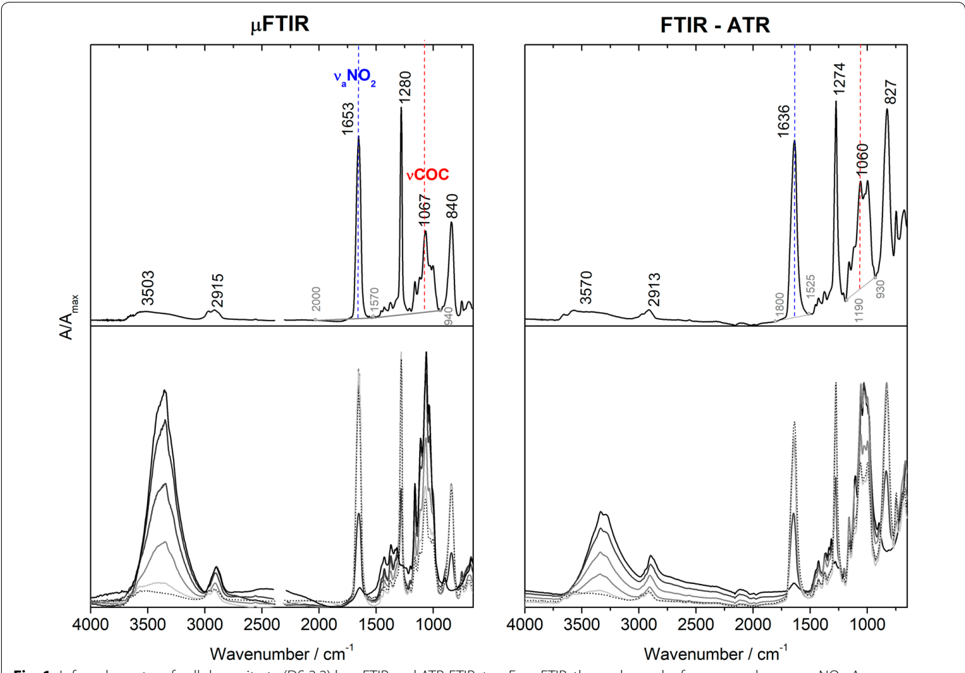
Cellulose nitrate and acetate are materials at risk in heritage collections because it is not possible to predict the evolution of their conservation state over time. Knowing that the degree of substitution (DS) of these materials correlates with their state of conservation because the fundamental degradation mechanism is hydrolysis, in this work, DS was measured in historical objects and artworks. Infrared spectra were used to develop and optimize calibration curves for cellulose nitrate and acetate references that were next applied to calculate DS values of heritage objects. The extent of hydrolysis measured, with this tool, correlated well with the physical deterioration assessed through the sample hardness (Shore A) which was measured with a Durometer. Calibration curves were optimized in reference materials by Attenuated Total Reflectance (ATR-FTIR) and Micro Fourier Transform Infrared Spectroscopy (μFTIR). The DS values of the AC reference materials was previously calculated by nuclear magnetic resonance spectroscopy. The calibration curves were obtained plotting DS as a function of the ratio between a reference peak (which does not suffer relevant changes during degradation) and selected peaks that monitor the degradation for cellulose acetate and nitrate polymers (avoiding the interference of plasticizers). The reference peak for both was the COC stretching mode (νCOC). The probe peak was, for cellulose nitrate, the NO 2 asymmetric stretching (ν a NO 2) and, for cellulose acetate, the OH stretching mode (νOH). This ratio was then applied to calculate DS values of historical materials, in good and poor conservation condition; in situ by ATR, and in micro-samples collected from artworks by μFTIR. This selection comprises cinematographic and photographic films dated from the 1890s to the 1960s, and contemporary works of art made with cellulose acetate sheets by Portuguese artist José Escada dated from the 1960s. Finally, by comparison with the original estimated DS values, we show how this tool permits to define the state of degradation of these complex polymer matrixes. Thus, establishing the quantification of the DS as a novel tool to monitor the degradation of cellulose ester plastics, contributing in this way for a sustainable preservation of an irreplaceable heritage.
Overview
The claims and statistics of this paper haven’t been checked yet.
Free: it reads the open-access text and checks the first 5 claims that cite a source we can check. Create a free account to check every claim.
Integrity signals
Registry
Cites
Statistics
Figures
Verification
Claims the paper makes
The claims and statistics of this paper haven’t been checked yet.
Free: it reads the open-access text and checks the first 5 claims that cite a source we can check. Create a free account to check every claim.
Claims other papers make about this one
Each is checked against this paper’s own text: does it say what the citing paper says it does?
The check wasn’t confident either way, so it gives no verdict — never disputed.
In the citing paper
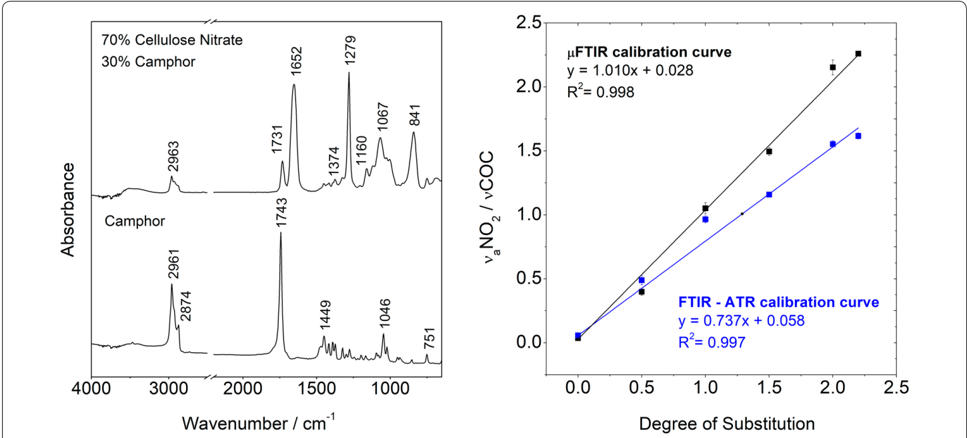
“The peaks at 2873, 2959, 1448, 1046 and 751 correspond to previous FTIR spectral data of camphor (Nunes et al., 2020).”
From Vibrational spectroscopic methods for the identification and distinction of essential oils in genus Ocimum L.: A chemometric approach (2022) · cites this paper as Nunes et al., 2020
Experimental — accuracy not yet measured
Self-check
Percentages, sums and reported differences re-computed from the paper’s own numbers.
The self-check needs the paper’s full text.
Citations
Cites
RAHMAN, M., & BRAZEL, C. (2004) · Progress in Polymer Science · doi:10.1016/j.progpolymsci.2004.10.001 · Cited by 883
Degradation of Cellulose Acetate-Based Materials: A Review
Puls, J., Wilson, S. A., & Hölter, D. (2011) · Journal of Polymers and the Environment · doi:10.1007/s10924-010-0258-0 · Cited by 679
Fei, P., Liao, L., Cheng, B., & Song, J. (2017) · Analytical Methods · doi:10.1039/c7ay02165h · Cited by 269
Chemistry: Molecules, Matter, and Change
Jones, L. F., & Atkins, P. J. (1997) · Medical Entomology and Zoology · Cited by 236
Samios, E., Dart, R. K., & Dawkins, J. V. (1997) · Polymer · doi:10.1016/s0032-3861(96)00868-3 · Cited by 144
Kono, H., Hashimoto, H., & Shimizu, Y. (2014) · Carbohydrate Polymers · doi:10.1016/j.carbpol.2014.11.004 · Cited by 143
Ilharco, L. M., & de Barros, R. B. (2000) · Langmuir · doi:10.1021/la000579e · Cited by 118 · cited 1×
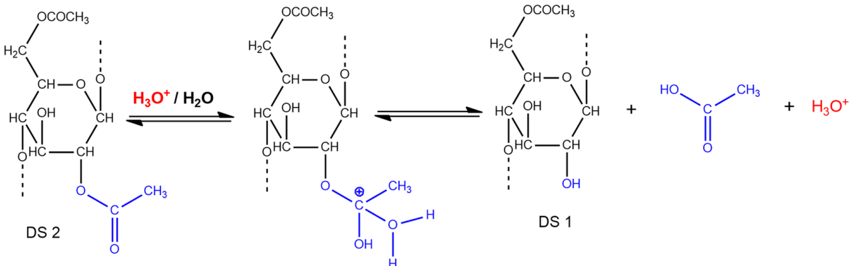
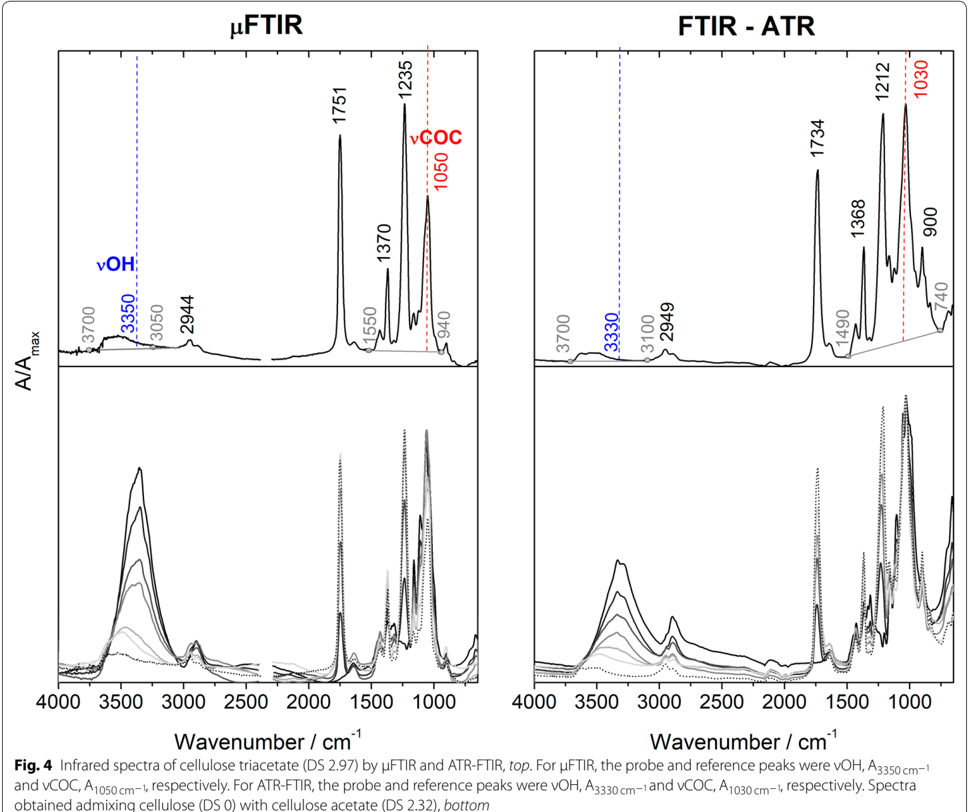
“They are characterized by the carbonyl stretching (μFTIR 1751 cm−1; ATR-FTIR 1734 cm−1), the ester stretching (μFTIR 1235 cm−1; ATR-FTIR 1212 cm−1) and the methyl bending (μFTIR 1370 cm−1; ATR-FTIR 1368 cm−1); the stretching of the ether groups (μFTIR 1050 cm−1; ATR-FTIR 1030 cm−1); and the hydroxyl stretching (with m…”
BackgroundPhotooxidation of cellulose nitrate: New insights into degradation mechanisms
Berthumeyrie, S., Collin, S., Bussière, P., & Thérias, S. (2014) · Journal of Hazardous Materials · doi:10.1016/j.jhazmat.2014.02.039 · Cited by 73
Neves, A., Angelin, E. M., Roldão, É., & Melo, M. J. (2018) · Journal of Raman Spectroscopy · doi:10.1002/jrs.5464 · Cited by 67
Self-citationInvestigation of the degradation of cellulose acetate museum artefacts
Littlejohn, D., Pethrick, R. A., Quye, A., & Ballany, J. M. (2012) · Polymer Degradation and Stability · doi:10.1016/j.polymdegradstab.2012.08.023 · Cited by 63
Photodegradation of cellulose acetate fibers
Hon, N. (1977) · Journal of Polymer Science Polymer Chemistry Edition · doi:10.1002/pol.1977.170150319 · Cited by 55
Assessing the physical stability of archival cellulose acetate films by monitoring plasticizer loss
Richardson, E. J., Giachet, M. T., Schilling, M. R., & Learner, T. (2013) · Polymer Degradation and Stability · doi:10.1016/j.polymdegradstab.2013.12.001 · Cited by 51
Mechanisms of deterioration in cellulose nitrate base archival cinematograph film
Edge, M., Allen, N. S., Hayes, M., Riley, P. N., Horie, C. V., & Gardette, J. (1990) · European Polymer Journal · doi:10.1016/0014-3057(90)90218-s · Cited by 48
Fundamental aspects of the degradation of cellulose triacetate base cinematograph film
Edge, M., Allen, N. S., Jewitt, T. S., & Horie, C. V. (1989) · Polymer Degradation and Stability · doi:10.1016/s0141-3910(89)81016-x · Cited by 47
Mazurek, J., Laganà, A., Dion, V., Etyemez, S., Carta, C., & Schilling, M. R. (2018) · Journal of Cultural Heritage · doi:10.1016/j.culher.2018.05.011 · Cited by 46
Assessment of the composition and condition of animation cels made from cellulose acetate
Giachet, M. T., Schilling, M. R., McCormick, K., Mazurek, J., Richardson, E. J., Khanjian, H. P., & Learner, T. (2014) · Polymer Degradation and Stability · doi:10.1016/j.polymdegradstab.2014.03.009 · Cited by 42
Pioneer Plastic: The Making and Selling of Celluloid
Sharlin, H. I., & Friedel, R. (1984) · The American Historical Review · doi:10.2307/1866598 · Cited by 42
Degradation of aged nitrocellulose investigated by thermal analysis and chemiluminescence
Rychlý, J., Lattuati‐Derieux, A., Matisová-Rychlá, L., Csomorová, K., Janigová, I., & Lavédrine, B. (2011) · Journal of Thermal Analysis and Calorimetry · doi:10.1007/s10973-011-1746-8 · Cited by 41
Ahmad, I. R., Cane, D., Townsend, J. H., Triana, C. F., Mazzei, L., & Curran, K. (2019) · Polymer Degradation and Stability · doi:10.1016/j.polymdegradstab.2019.109050 · Cited by 38
Photodegradation of celluloid used in museum artifacts
Bussière, P., Gardette, J., & Thérias, S. (2014) · Polymer Degradation and Stability · doi:10.1016/j.polymdegradstab.2014.02.022 · Cited by 36
Accelerated ageing to study the degradation of cellulose nitrate museum artefacts
Quye, A., Littlejohn, D., Pethrick, R. A., & Stewart, R. A. (2011) · Polymer Degradation and Stability · doi:10.1016/j.polymdegradstab.2011.06.008 · Cited by 29
Photodegradation of cellulose nitrate
Hon, D. N. ‐., & Gui, T. L. (1986) · Polymer Photochemistry · doi:10.1016/0144-2880(86)90057-6 · Cited by 27
Merlin, A., & Fouassier, J. (1982) · Die Angewandte Makromolekulare Chemie · doi:10.1002/apmc.1982.051080111 · Cited by 20 · cited 2×
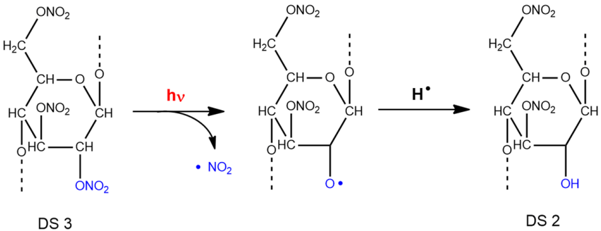
“In the absence of O2 and irradiating at λ ≥ 235, 280 and 340 nm, Hon [25], Merlin and Fouassier [26] demonstrated that the formation of CH3• and H• abstraction promotes chain scission.”
BackgroundCiliberto, E., Gemmellaro, P., Iannuso, V., Delfa, S. L., Urso, R. G., & Viscuso, E. (2013) · Procedia Chemistry · doi:10.1016/j.proche.2013.03.023 · Cited by 20 · cited 1×
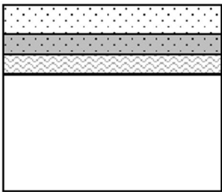
“Images are obtained through a complex stratigraphy that is depicted in Scheme 1 [6].”
BackgroundEdge, M., Allen, N. S., Williams, D. A. R., Thompson, F., & Horie, V. (1992) · Polymer Degradation and Stability · doi:10.1016/0141-3910(92)90106-f · Cited by 15
A contribution for the preservation of cellulose esters black and white negatives
Roldão, É. (2018) · Portuguese National Funding Agency for Science, Research and Technology (RCAAP Project by FCT) · Cited by 10
Self-citationAnalytical studies of the degradation of cellulose nitrate artefacts
Stewart, R. A. (1997) · OpenGrey (Institut de l'Information Scientifique et Technique) · doi:10.48730/9jms-g851 · Cited by 9
The Degradation and Stabilization of Historic Cellulose Acetate/Nitrate Base Motion-picture Film
Allen, N. S., Edge, M., Rorie, C. V., Jewitt, T. S., & Appleyard, J. H. (1988) · The Journal of Photographic Science · doi:10.1080/00223638.1988.11736978 · Cited by 9 · cited 2×
“They concluded that the effect of temperature accelerates degradation in moist or acid environments and that in dry conditions degradation occurs at a very slow rate [16].”
BackgroundEdge, M., Allen, N. S., Jewitt, T. S., & Horie, C. V. (1990) · Polymer Degradation and Stability · doi:10.1016/0141-3910(90)90020-8 · Cited by 8
Enhanced degradation of cellulose acetate film containing diphenyliodonium salt–benzophenone
Hosono, K., Kanazawa, A., Mori, H., & Endo, T. (2007) · Cellulose · doi:10.1007/s10570-007-9127-y · Cited by 8
Allen, N. S., Appleyard, T. H., Edge, M., Francis, D., Horie, C. V., & Tewitt, T. S. (1988) · The Journal of Photographic Science · doi:10.1080/00223638.1988.11736956 · Cited by 7 · cited 1×
“[4, 16, 17], on their pioneer studies with artificially aged and historical CA and CN 35 mm films from the National Film and Television Archive (United Kingdom), established that moisture absorption together with the accumulation of acid in the storage cans is the most important cause in film degradation.”
Background
Research works printed but not linked: 3
- 11. Yarsley VE, Flavell W, Adamson PS, Perkins NG. Cellulosic plastics. London: The Plastics Institute; 1964.
- 13. Thérias S, Bussière P, Gardette M, Gardette J, Lattuati-derieux A, Université C, et al. Altération des objets en celluloïd dans les collections: étude des mécanismes de vieillissement Degradation of celluloid in art works: a study of the mechanisms. Actes du Colloq Sci des matériaux du Patrim Cult. 2012;2:68-73.
- 20. Hamrang A. Degradation and stabilzation of cellulose based plastics & artifacts. Ph.D. Thesis. Faculty of Science and Engineering, The Manchester Metropolitan University; 1994.
Cited by
Liu, G., & Kazarian, S. G. (2022) · The Analyst · doi:10.1039/d2an00005a · Cited by 163
Synthesis, molecular features and biological activities of modified plant polysaccharides
Mukherjee, S., Jana, S., Khawas, S., Kicuntod, J., Marschall, M., Ray, B., & Ray, S. (2022) · Carbohydrate Polymers · doi:10.1016/j.carbpol.2022.119299 · Cited by 126
Determination of the degree of substitution of cellulose esters via ATR‐FTIR spectroscopy
Wolfs, J., Scheelje, F. C. M., Matveyeva, O., & Meier, M. A. R. (2023) · Journal of Polymer Science · doi:10.1002/pol.20230220 · Cited by 41
Gao, Z., Cizdziel, J. V., & Chen, L. (2023) · Journal of environmental chemical engineering · doi:10.1016/j.jece.2023.109671 · Cited by 37
Méndez, D. E., & Allscher, T. (2022) · Polymers · doi:10.3390/polym14040808 · Cited by 34
“The ATR spectra of cellulose derivatives show characteristic signals from the cellulose backbone, as well as particular bands specific to the acetate and nitrate side groups [30].”
Background
Metadata
- Authors
- Nunes, S., Ramacciotti, F., Neves, A., Angelin, E. M., Ramos, A. M., Roldão, É., Wallaszkovits, N., Armijo, A. A., & Melo, M. J.
- Affiliations
- LAQV Requimte (PT)
- University of Bologna (IT)
- Austrian Academy of Sciences (AT)
- Corresponding author
- Melo, Maria João
- Venue
- Heritage Science
- Published
- 2020-04-06
- Volume
- 8
- Issue
- 1
- ISSN
- 2050-7445 (ISSN-L)
- OpenAlex
- W3030127525
- Cited by
- 85
- References
- 31
- Citations by year
- 2026: 7 · 2025: 21 · 2024: 16 · 2023: 16 · 2022: 16 · 2021: 8 · 2020: 1
- FWCI
- 50.32
- Type
- journal article
- Language
- en
- Open access
- gold
- doi.org
- Licence
- cc-by
- creativecommons.org/licenses/by/4.0 (tdm)
- creativecommons.org/licenses/by/4.0 (vor)
- Locations
- Heritage Science (publishedVersion, cc-by)
- Portuguese National Funding Agency for Science, Research and Technology (RCAAP Project by FCT) (submittedVersion, other-oa)
- Archivio istituzionale della ricerca (Alma Mater Studiorum Università di Bologna) (submittedVersion)
- DOAJ (DOAJ: Directory of Open Access Journals) (submittedVersion, cc-by-sa)
- Funders
- Horizon 2020 (H2020-NMBP‐35‐2017)
- Fundação para a Ciência e a Tecnologia (UID/QUI/50006/2019, PD/BD/136678/2018, PB/BD/114412/2016, CORES_PD/00253/2012)
- Topics
- Social Sciences › Arts and Humanities › Archeology (arts and humanities) › Cultural Heritage Materials Analysis
- Social Sciences › Arts and Humanities › Conservation › Conservation Techniques and Studies
- Physical Sciences › Chemistry › Analytical Chemistry › Spectroscopy and Chemometric Analyses
- Keywords
- nitrocellulose, cellulose acetate, degree of substitution, hydrolysis, polymer degradation, conservation condition assessment, heritage collections, calibration curve, infrared spectroscopy, ATR-FTIR spectroscopy, micro-FTIR, motion picture film, photographic film, plasticizers, degradation monitoring
About these checks
Registry, retraction, Cites and statistics results are computed, not judged, with one exception: a printed reference that no index lists is read once by a model before it counts as a citation error. Claims are extracted by a model and kept only when their quote appears verbatim in the text; each cited source is then checked, with a model’s help, for whether it says what the claim relies on. Those verdicts can be wrong — read the claim’s quote and the cited source before relying on one.
Statistics and arithmetic are recomputed, not judged.
Confidence bands are shown only for fields calibrated on our annotated test set. None is calibrated yet, so no band is shown.
What counts as a claim ›How we measure confidence ›How we check this ›
Are you an author, or do you see a problem with this page? Request a review
Data sources
Bibliographic data: Semantic Scholar, OpenAlex, Crossref.
Contains information from the Semantic Scholar Academic Graph Datasets, made available under the ODC Attribution License (ODC-BY 1.0).
Semantic Scholar’s data is described in: Kinney, R., et al. (2023). The Semantic Scholar Open Data Platform. arXiv:2301.10140.
