

RecencyMiner: mining recency-based personalized behavior from contextual smartphone data
Open accessThe DOI matches its Crossref record; 41 of the 41 references it cites were found in a registry or an index.
Abstract
Due to the advanced features in recent smartphones and context-awareness in mobile technologies, users’ diverse behavioral activities with their phones and associated contexts are recorded through the device logs. Behavioral patterns of smartphone users may vary greatly between individuals in different contexts—for example, temporal, spatial, or social contexts. However, an individual’s phone usage behavior may not be static in the real-world changing over time. The volatility of usage behavior will also vary from user-to-user. Thus, an individual’s recent behavioral patterns and corresponding machine learning rules are more likely to be interesting and significant than older ones for modeling and predicting their phone usage behavior. Based on this concept of recency, in this paper, we present an approach for mining recency-based personalized behavior, and name it “RecencyMiner” for short, utilizing individual’s contextual smartphone data, in order to build a context-aware personalized behavior prediction model. The effectiveness of RecencyMiner is examined by considering individual smartphone user’s real-life contextual datasets. The experimental results show that our proposed recency-based approach better predicts individual’s phone usage behavior than existing baseline models, by minimizing the error rate in various context-aware test cases.
Overview
The claims and statistics of this paper haven’t been checked yet.
Free: it reads the open-access text and checks the first 5 claims that cite a source we can check. Create a free account to check every claim.
Integrity signals
Registry
Cites
Statistics
Figures
Verification
Claims the paper makes
The claims and statistics of this paper haven’t been checked yet.
Free: it reads the open-access text and checks the first 5 claims that cite a source we can check. Create a free account to check every claim.
Claims other papers make about this one
Each is checked against this paper’s own text: does it say what the citing paper says it does?
The cited source says what the claim attributes to it.
In the citing paper
“Besides, the concept of RecencyMiner, proposed in our earlier paper Sarker et al. [108] that takes into account recent behavioral patterns could be effective while analyzing behavioral data as it may not be static in the real-world changes over time.”
From Data Science and Analytics: An Overview from Data-Driven Smart Computing, Decision-Making and Applications Perspective (2021) · cites this paper as [108]
The cited source says what the claim attributes to it.
In the citing paper
“Thus, rather than considering the traditional data analysis, the concept of RecencyMiner, i.e., recent pattern-based extracted insight or knowledge proposed in our earlier paper Sarker et al. [108] might be effective.”
From Data Science and Analytics: An Overview from Data-Driven Smart Computing, Decision-Making and Applications Perspective (2021) · cites this paper as [108]
Self-check
Percentages, sums and reported differences re-computed from the paper’s own numbers.
The self-check needs the paper’s full text.
Citations
Cites
Data mining: concepts and techniques
(2012) · Choice Reviews Online · doi:10.5860/choice.49-3305 · Cited by 28,531
Self-citation(1992) · Cited by 23,431
Mining association rules between sets of items in large databases
Agrawal, R., Imieliński, T., & Swami, A. (1993) · Proceedings of the 1993 ACM SIGMOD international conference on Management of data · doi:10.1145/170035.170072 · Cited by 14,907 · cited 1×
“On the other hand, association rule learning [13] is the discovery of associations or relationships among a set of available items in a given dataset.”
BackgroundMining association rules between sets of items in large databases
Agrawal, R., Imieliński, T., & Swami, A. (1993) · ACM SIGMOD Record · doi:10.1145/170036.170072 · Cited by 4,551
Reality mining: sensing complex social systems
Eagle, N., & (Sandy) Pentland, A. (2006) · Personal and Ubiquitous Computing · doi:10.1007/s00779-005-0046-3 · Cited by 2,772
Witten, I. H., & Frank, E. (2005) · Cited by 815
A General Incremental Technique for Maintaining Discovered Association Rules
Cheung, D. W., Lee, S. D., & Kao, B. (1997) · Database Systems for Advanced Applications '97 · doi:10.1142/9789812819536_0020 · Cited by 371 · cited 1×
“These are pattern based [15, 16], tree based [17], three-way decision based [18, 19], probability-based [20, 21].”
MethodMining Mobile User Preferences for Personalized Context-Aware Recommendation
Zhu, H., Chen, E., Xiong, H., Yu, K., Cao, H., & Tian, J. (2015) · ACM Transactions on Intelligent Systems and Technology · doi:10.1145/2532515 · Cited by 157
MobileMiner: mining your frequent patterns on your phone
Srinivasan, V., Moghaddam, S., Mukherji, A., Rachuri, K. K., Xu, C., & Tapia, E. M. (2014) · Proceedings of the 2014 ACM International Joint Conference on Pervasive and Ubiquitous Computing · doi:10.1145/2632048.2632052 · Cited by 141
PrefMiner: mining user's preferences for intelligent mobile notification management
Mehrotra, A., Hendley, R., & Musolesi, M. (2016) · Proceedings of the 2016 ACM International Joint Conference on Pervasive and Ubiquitous Computing · doi:10.1145/2971648.2971747 · Cited by 137
UbiqLog: a generic mobile phone-based life-log framework
Rawassizadeh, R., Tomitsch, M., Wac, K., & Tjoa, A. M. (2012) · Personal and Ubiquitous Computing · doi:10.1007/s00779-012-0511-8 · Cited by 114
A machine learning based robust prediction model for real-life mobile phone data
Sarker, I. H. (2019) · Internet of Things · doi:10.1016/j.iot.2019.01.007 · Cited by 113
Self-citationFreitas, A. A. (2000) · ACM SIGKDD Explorations Newsletter · doi:10.1145/360402.360423 · Cited by 100
Individualized Time-Series Segmentation for Mining Mobile Phone User Behavior
Sarker, I. H., Colman, A., Kabir, M. A., & Han, J. (2018) · The Computer Journal · doi:10.1093/comjnl/bxx082 · Cited by 80
Self-citationOn mining mobile apps usage behavior for predicting apps usage in smartphones
Liao, Z.-X., Pan, Y.-C., Peng, W.-C., & Lei, P.-R. (2013) · Proceedings of the 22nd ACM international conference on Information & Knowledge Management · doi:10.1145/2505515.2505529 · Cited by 68 · cited 1×
“In order to mine users’ contextual mobile phone data to model their behavior, a number of authors use a static period of phone log data, such as phone call logs [22–25], SMS Log [26], mobile application (apps) usages logs [3, 27, 28], mobile phone notification logs [10], web logs [29–31], game Log [32], context logs […”
BackgroundMafrur, R., Nugraha, I. G. D., & Choi, D. (2015) · Human-centric Computing and Information Sciences · doi:10.1186/s13673-015-0049-7 · Cited by 61
Behavior-based adaptive call predictor
Phithakkitnukoon, S., Dantu, R., Claxton, R., & Eagle, N. (2011) · ACM Transactions on Autonomous and Adaptive Systems · doi:10.1145/2019583.2019588 · Cited by 54 · cited 1×
“In [22], the authors assume the latest 2 months as a recent period of time call records for predicting incoming and outgoing calls for the next 24-h based on the user’s past communication history in order to get better prediction accuracy.”
BackgroundTime based patterns in mobile-internet surfing
Halvey, M., Keane, M. T., & Smyth, B. (2006) · Proceedings of the SIGCHI Conference on Human Factors in Computing Systems · doi:10.1145/1124772.1124778 · Cited by 49 · cited 2×
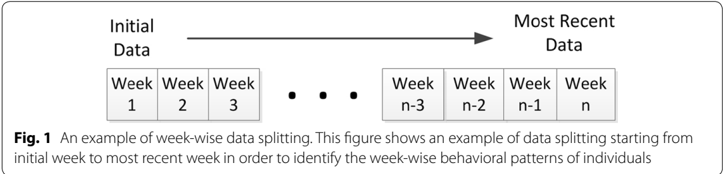
“we assume users’ behaviors follow a weekly pattern and use a weekly window in order to calculate the conflict score, as time-of-the-week is an important factor impacting on mobile user behavior and the behavior is influenced by time-of-the-week [30].”
BackgroundMethodLi, Y., Zhang, Z., Chen, W., & Min, F. (2015) · International Journal of Machine Learning and Cybernetics · doi:10.1007/s13042-015-0337-6 · Cited by 49 · cited 1×
“These are pattern based [15, 16], tree based [17], three-way decision based [18, 19], probability-based [20, 21].”
MethodNodobo: Mobile Phone as a Software Sensor for Social Network Research
Bell, S., McDiarmid, A., & Irvine, J. (2011) · 2011 IEEE 73rd Vehicular Technology Conference (VTC Spring) · doi:10.1109/vetecs.2011.5956319 · Cited by 48
Mining User Behavioral Rules from Smartphone Data Through Association Analysis
Sarker, I. H., & Salim, F. D. (2018) · Lecture notes in computer science · doi:10.1007/978-3-319-93034-3_36 · Cited by 45
Self-citationLarge-scale evaluation of call-availability prediction
Pielot, M. (2014) · Proceedings of the 2014 ACM International Joint Conference on Pervasive and Ubiquitous Computing · doi:10.1145/2632048.2632060 · Cited by 41 · cited 1×
“[25], use a static period of log data starting from 2012 to May 2014 to predict whether a user would pick up a call or not.”
MethodYou never call: Demoting unused contacts on mobile phones using DMTR
Bergman, O., Komninos, A., Liarokapis, D., & Clarke, J. (2011) · Personal and Ubiquitous Computing · doi:10.1007/s00779-011-0411-3 · Cited by 37
Phone call log as a context source to modeling individual user behavior
Sarker, I. H., Colman, A., Kabir, M. A., & Han, J. (2016) · Proceedings of the 2016 ACM International Joint Conference on Pervasive and Ubiquitous Computing: Adjunct · doi:10.1145/2968219.2971592 · Cited by 33 · cited 1×
“[23], the authors use phone call log data starting from August 2014 to September 2015 as a context source to model individual mobile phone user behavior.”
MethodSelf-citationTime Based Segmentation of Log Data for User Navigation Prediction in Personalization
Halvey, M., Keane, M. T., & Smyth, B. (2005) · The 2005 IEEE/WIC/ACM International Conference on Web Intelligence (WI'05) · doi:10.1109/wi.2005.147 · Cited by 22
Mobile Data Science: Towards Understanding Data-Driven Intelligent Mobile Applications
Sarker, I. (2018) · ICST Transactions on Scalable Information Systems · doi:10.4108/eai.13-7-2018.155866 · Cited by 21
Self-citationBehavior-Oriented Time Segmentation for Mining Individualized Rules of Mobile Phone Users
Sarker, I. H., Colman, A., Kabir, M. A., & Han, J. (2016) · 2016 IEEE International Conference on Data Science and Advanced Analytics (DSAA) · doi:10.1109/dsaa.2016.60 · Cited by 20 · cited 2×
“behavioral rules based on observations with so little “support” is unlikely to be effective [6].”
BackgroundSelf-citationAn adaptive speed-call list algorithm and its evaluation with ESM
Lee, S., Seo, J., & Lee, G. (2010) · CHI Conference on Human Factors in Computing Systems · doi:10.1145/1753326.1753632 · Cited by 19 · cited 1×
“[5] extract call logs data for previous 3 months as a recent period for designing a call recommendation algorithm for an adaptive speed-call list.”
Time-Based Personalised Mobile Game Downloading
Paireekreng, W., Rapeepisarn, K., & Wong, K. W. (2009) · Lecture notes in computer science · doi:10.1007/978-3-642-03270-7_5 · Cited by 18 · cited 2×
“In order to mine users’ contextual mobile phone data to model their behavior, a number of authors use a static period of phone log data, such as phone call logs [22–25], SMS Log [26], mobile application (apps) usages logs [3, 27, 28], mobile phone notification logs [10], web logs [29–31], game Log [32], context logs […”
BackgroundAn incremental updating algorithm for mining association rules
Xu, B., Yi, T., Wu, F., & Chen, Z. (2002) · Journal of Electronics (China) · doi:10.1007/s11767-002-0073-4 · Cited by 17 · cited 1×
“These are pattern based [15, 16], tree based [17], three-way decision based [18, 19], probability-based [20, 21].”
MethodBarzaiq, O. O., & Loke, S. W. (2011) · Personal and Ubiquitous Computing · doi:10.1007/s00779-011-0401-5 · Cited by 16
Stefanis, V., Πλέσσας, Α., Komninos, A., & Garofalakis, J. D. (2013) · Pervasive and Mobile Computing · doi:10.1016/j.pmcj.2013.08.002 · Cited by 15
Understanding the Role of Data-Centric Social Context in Personalized Mobile Applications
Sarker, I. (2018) · EAI Endorsed Transactions on Context-aware Systems and Applications · doi:10.4108/eai.18-6-2018.155671 · Cited by 15
Self-citationConditional Log-linear Models for Mobile Application Usage Prediction
Kim, J., & Mielikäinen, T. (2014) · Lecture notes in computer science · doi:10.1007/978-3-662-44848-9_43 · Cited by 14 · cited 1×
“In order to mine users’ contextual mobile phone data to model their behavior, a number of authors use a static period of phone log data, such as phone call logs [22–25], SMS Log [26], mobile application (apps) usages logs [3, 27, 28], mobile phone notification logs [10], web logs [29–31], game Log [32], context logs […”
BackgroundMining Dynamic Databases using Probability-Based Incremental Association Rule Discovery Algorithm
Amornchewin, R., & Kreesuradej, W. (2020) · Zenodo (CERN European Organization for Nuclear Research) · doi:10.3217/jucs-015-12-2409 · Cited by 13 · cited 1×
“These are pattern based [15, 16], tree based [17], three-way decision based [18, 19], probability-based [20, 21].”
MethodAdequacy of Data for Characterizing Caller Behavior
Phithakkitnukoon, S., & Dantu, R. (2008) · Cited by 13
A Three-way Decision Approach to Incremental Frequent Itemsets Mining
Zhang, Z. (2014) · Journal of Information and Computational Science · doi:10.12733/jics20104003 · Cited by 10 · cited 1×
“These are pattern based [15, 16], tree based [17], three-way decision based [18, 19], probability-based [20, 21].”
MethodThusaranon, P., & Kreesuradej, W. (2015) · Artificial Life and Robotics · doi:10.1007/s10015-015-0210-4 · Cited by 7
Extracting interesting association rules from toolbar data
Bordino, I., Donato, D., & Poblete, B. (2012) · ACM International Conference on Information and Knowledge Management (CIKM) · doi:10.1145/2396761.2398687 · Cited by 6
Understanding recency-based behavior model for individual mobile phone users
Sarker, I. H., Kabir, M. A., Colman, A., & Han, J. (2017) · ACM International Joint Conference on Pervasive and Ubiquitous Computing (UbiComp) · doi:10.1145/3123024.3124570 · Cited by 6 · cited 2×
“To address the above mentioned issues in behavior modeling, in this paper, we present RecencyMiner, a recency-based approach to model individual’s mobile usage behavior, which significantly extends our earlier work [2].”
BackgroundMethodSelf-citationIdentifying Recent Behavioral Data Length in Mobile Phone Log
Sarker, I. H., Kabir, M. A., Colman, A., & Han, J. (2017) · EAI International Conference on Mobile and Ubiquitous Systems: Computing, Networking and Services (MobiQuitous) · doi:10.1145/3144457.3144506 · Cited by 4 · cited 1×
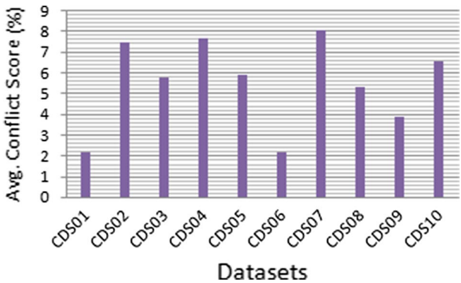
“If the conflict score of 2 adjacent weeks is 0% (no conflict), the behavioral patterns are highly similar in these 2 weeks [41].”
BackgroundSelf-citation
Research works printed but not linked: 3
- 12. Witten IH, Frank E. Data miining: practical machine learning tools and techniques. New York: Morgan Kaufmann; 2005.
- 14. Agrawal R, Srikant R. Fast algorithms for mining association rules. In: Proceedings of the international joint confer- ence on very large data bases, Santiago Chile, vol. 1215; 1994. p. 487-99.
- 15. Cheung DW, Han J, Ng VT, Wong C. Maintenance of discovered association rules in large databases: an incremental updating technique. In: On IEEE data engineering, proceedings of the twelfth international conference. 1996. p. 106-14.
Cited by
Sarker, I. H. (2021) · SN Computer Science · doi:10.1007/s42979-021-00815-1 · Cited by 2,678
“stance, in our earlier works, we have presented several machines learning rule-based techniques [100] [105] [102], where the extracted rules are humanunderstandable and easier to interpret, update or”
MethodSelf-citationSarker, I. H. (2022) · SN Computer Science · doi:10.1007/s42979-022-01043-x · Cited by 1,208
“Furthermore, rule-based models may be quickly improved according to the demands by adding, deleting, or updating rules based on domain expert information, or recency, i.e. based on recent trends [83].”
BackgroundSelf-citationCybersecurity data science: an overview from machine learning perspective
Sarker, I. H., Kayes, A. S. M., Badsha, S., Alqahtani, H., Watters, P., & Ng, A. (2020) · Journal of Big Data · doi:10.1186/s40537-020-00318-5 · Cited by 766
“Therefore, the concept of recency analysis [170] in cybersecurity solutions could be another issue in cybersecurity data science.”
BackgroundSelf-citationAI-Driven Cybersecurity: An Overview, Security Intelligence Modeling and Research Directions
Sarker, I. H., Furhad, M. H., & Nowrozy, R. (2021) · SN Computer Science · doi:10.1007/s42979-021-00557-0 · Cited by 543
Self-citationSarker, I. H. (2021) · SN Computer Science · doi:10.1007/s42979-021-00765-8 · Cited by 570
“is much more than just data, which is not static data [108].”
Self-citation
Metadata
- Authors
- Sarker, I. H., Colman, A., & Han, J.
- Affiliations
- Chittagong University of Engineering & Technology (BD)
- Swinburne University of Technology (AU)
- Corresponding author
- Sarker, Iqbal H.
- Venue
- Journal of Big Data
- Published
- 2019-06-06
- Volume
- 6
- Issue
- 1
- ISSN
- 2196-1115 (ISSN-L)
- OpenAlex
- W2948335084
- Cited by
- 65
- References
- 41
- Citations by year
- 2025: 5 · 2024: 8 · 2023: 7 · 2022: 8 · 2021: 14 · 2020: 14 · 2019: 8
- FWCI
- 4.93
- Type
- journal article
- Language
- en
- Open access
- gold
- doi.org
- Licence
- cc-by
- creativecommons.org/licenses/by/4.0 (tdm)
- creativecommons.org/licenses/by/4.0 (vor)
- Locations
- Journal Of Big Data (publishedVersion, cc-by)
- DOAJ (DOAJ: Directory of Open Access Journals) (submittedVersion, cc-by-sa)
- Swinburne figshare (Swinburne University of Technology) (submittedVersion, cc-by)
- Funders
- Charles Sturt University
- Swinburne University of Technology
- Topics
- Physical Sciences › Computer Science › Computer Vision and Pattern Recognition › Context-Aware Activity Recognition Systems
- Social Sciences › Transportation › Human Mobility and Location-Based Analysis
- Physical Sciences › Computer Science › Information Systems › Data Mining Algorithms and Applications
- Keywords
- smartphone usage behavior, contextual information, context awareness
About these checks
Registry, retraction, Cites and statistics results are computed, not judged, with one exception: a printed reference that no index lists is read once by a model before it counts as a citation error. Claims are extracted by a model and kept only when their quote appears verbatim in the text; each cited source is then checked, with a model’s help, for whether it says what the claim relies on. Those verdicts can be wrong — read the claim’s quote and the cited source before relying on one.
Statistics and arithmetic are recomputed, not judged.
Confidence bands are shown only for fields calibrated on our annotated test set. None is calibrated yet, so no band is shown.
What counts as a claim ›How we measure confidence ›How we check this ›
Are you an author, or do you see a problem with this page? Request a review
Data sources
Bibliographic data: Semantic Scholar, OpenAlex, Crossref.
Contains information from the Semantic Scholar Academic Graph Datasets, made available under the ODC Attribution License (ODC-BY 1.0).
Semantic Scholar’s data is described in: Kinney, R., et al. (2023). The Semantic Scholar Open Data Platform. arXiv:2301.10140.
