

Context-aware rule learning from smartphone data: survey, challenges and future directions
Open accessThe DOI matches its Crossref record; 134 of the 135 references it cites were found in a registry or an index.
Abstract
Smartphones are considered as one of the most essential and highly personal devices of individuals in our current world. Due to the popularity of context-aware technology and recent developments in smartphones, these devices can collect and process raw contextual data about users’ surrounding environment and their corresponding behavioral activities with their phones. Thus,smartphone data analytics and building data-driven context-aware systems have gained wide attention from both academia and industry in recent days. In order to build intelligent context-aware applications on smartphones, effectively learning a set of context-aware rules from smartphone data is the key. This requires advanced data analytical techniques with high precision and intelligent decision making strategies based on contexts. In comparison to traditional approaches,machine learning based techniques provide more effective and efficient results for smartphone data analytics and corresponding context-aware rule learning. Thus, this article first makes a survey on previous work in the area of contextual smartphone data analytics and then presents a discussion of challenges and future directions for effectively learning context-aware rules from smartphone data, in order to build rule-based automated and intelligent systems.
Overview
The claims and statistics of this paper haven’t been checked yet.
Free: it reads the open-access text and checks the first 5 claims that cite a source we can check. Create a free account to check every claim.
Integrity signals
Registry
Cites
Statistics
Figures
Verification
Claims the paper makes
The claims and statistics of this paper haven’t been checked yet.
Free: it reads the open-access text and checks the first 5 claims that cite a source we can check. Create a free account to check every claim.
Claims other papers make about this one
Each is checked against this paper’s own text: does it say what the citing paper says it does?
The cited source says what the claim attributes to it.
In the citing paper
“Besides, incorporating contextual information such as temporal context, spatial context, social context, environmental context, etc. [100] can be used for building an adaptive, context-aware, and dynamic model or framework, depending on the problem domain.”
From Data Science and Analytics: An Overview from Data-Driven Smart Computing, Decision-Making and Applications Perspective (2021) · cites this paper as [100]
Self-check
Percentages, sums and reported differences re-computed from the paper’s own numbers.
The self-check needs the paper’s full text.
Citations
Cites
Data Mining: Practical Machine Learning Tools and Techniques
(2011) · Elsevier eBooks · doi:10.1016/c2009-0-19715-5 · Cited by 25,437
(1992) · Cited by 23,431
Quinlan, J. R. (1986) · Machine Learning · doi:10.1007/bf00116251 · Cited by 21,439
Fast algorithms for mining association rules
Agrawal, R., & Srikant, R. (1998) · Cited by 11,307
Mining frequent patterns without candidate generation
Han, J., Pei, J., & Yin, Y. (2000) · ACM SIGMOD Record · doi:10.1145/335191.335372 · Cited by 6,402
Survey of Clustering Algorithms
Xu, R., & WunschII, D. (2005) · IEEE Transactions on Neural Networks · doi:10.1109/tnn.2005.845141 · Cited by 6,197
Top 10 algorithms in data mining
Wu, X., Kumar, V., Ross Quinlan, J., Ghosh, J., Yang, Q., Motoda, H., McLachlan, G. J., Ng, A., Liu, B., Yu, P. S., et al. (2008) · Knowledge and Information Systems · doi:10.1007/s10115-007-0114-2 · Cited by 5,667
Understanding and Using Context
Dey, A. K. (2001) · Personal and Ubiquitous Computing · doi:10.1007/s007790170019 · Cited by 5,012
Context-Aware Computing Applications
Schilit, B., Adams, N., & Want, R. (1994) · 1994 First Workshop on Mobile Computing Systems and Applications · doi:10.1109/wmcsa.1994.16 · Cited by 3,231 · cited 1×
“[20] the important aspects of context are: (i) where you are, (ii) whom you are with, and (iii) what resources are nearby.”
BackgroundBobadilla, J., Ortega, F., Hernando, A., & Gutiérrez, A. (2013) · Knowledge-Based Systems · doi:10.1016/j.knosys.2013.03.012 · Cited by 3,158
Research works printed but not linked: 8
- 18. Hull R, Neaves P, Bedford-Roberts J. Towards situated computing. In: Wearable computers, 1997. Digest of papers., first international symposium On, IEEE; 1997. p. 146-53.
- 62. Karatzoglou A, Baltrunas L, Church K, Böhmer M. Climbing the app wall: enabling mobile app discovery through context-aware recommendations. In: Proceedings of the international conference on information and knowledge management, Maui, Hawaii, USA, 29 October-02 November, p. 2527-30. ACM, New York, USA; 2012.
- 75. MacQueen J. Some methods for classification and analysis of multivariate observations. In: Fifth Berkeley sympo- sium on mathematical statistics and probability, vol. 1; 1967.
- 78. Sorensen T. Method of establishing groups of equal amplitude in plant sociology based on similarity of species. Biol Skr. 1948;5:1-34.
- 83. Ma BLWHY. Integrating classification and association rule mining. In: Proceedings of the fourth international conference on knowledge discovery and data mining; 1998.
- Cheung DW, Han J, Ng VT, Wong C. Maintenance of discovered association rules in large databases: an incremental updating technique. In: Data engineering, 1996. Proceedings of the twelfth international conference On, IEEE; 1996. p. 106–14.
- Abbaspour R, Samadzadegan F. Building a context-aware mobile tourist guide system base on a service oriented architecture. Int Arch Photogramm Remote Sens Spatial Inform Sci. 2008;37:871–4.
- 104. Ge Y, Liu Q. Xiong H, Tuzhilin A, Chen J. Cost-aware travel tour recommendation. In: Proceedings of the 17th ACM SIGKDD international conference on knowledge discovery and data mining, ACM; 2011. p. 983-91. 136. Park M-H, Hong J-H, Cho S-B. Location-based recommendation system using bayesian user's preference model in mobile devices. In: International conference on ubiquitous intelligence and computing, Springer; 2007. p. 1130-9. 137. Zheng VW, Cao B, Zheng Y, Xie X, Yang Q. Collaborative filtering meets mobile recommendation: a user-centered approach. In: AAAI, vol. 10, 2010. p. 236-41. 138. World tourism organization, unwto. http://www2.unwto .org/. 139. Abbaspour R, Samadzadegan F. Building a context-aware mobile tourist guide system base on a service oriented architecture. Int Arch Photogramm Remote Sens Spatial Inform Sci. 2008;37:871-4. 140. Pashtan A, Blattler R, Andi AH, Scheuermann P. Catis: a context-aware tourist information system, 2003. 141.
Cited by
Machine learning: Algorithms, real-world applications and research directions
Sarker, I. H. (2021) · SN Computer Science · doi:10.1007/s42979-021-00592-x · Cited by 5,583
“…etc. and in the distribution phase - the inventory management, consumer analysis, etc. – User Behavior Analytics and Context-Aware Smart-phone Applications: Context-awareness is a system’s ability to capture knowledge about its surroundings at any moment and modify behaviors accordingly [28] [93].”
Self-citationSarker, I. H. (2021) · SN Computer Science · doi:10.1007/s42979-021-00815-1 · Cited by 2,678
Self-citationCybersecurity data science: an overview from machine learning perspective
Sarker, I. H., Kayes, A. S. M., Badsha, S., Alqahtani, H., Watters, P., & Ng, A. (2020) · Journal of Big Data · doi:10.1186/s40537-020-00318-5 · Cited by 766
“In an expert system, the rules are usually manually defined by a knowledge engineer working in collaboration with a domain expert [37, 140, 146].”
BackgroundSelf-citationSarker, I. H. (2021) · SN Computer Science · doi:10.1007/s42979-021-00765-8 · Cited by 570
“[100] can be used for building an adaptive, context-aware, and dynamic model or framework, depending on the problem domain.”
Self-citationAI-Driven Cybersecurity: An Overview, Security Intelligence Modeling and Research Directions
Sarker, I. H., Furhad, M. H., & Nowrozy, R. (2021) · SN Computer Science · doi:10.1007/s42979-021-00557-0 · Cited by 543
Self-citationAI-Driven Cybersecurity: An Overview, Security Intelligence Modeling and Research Directions
Sarker, I. H. (2021) · doi:10.20944/preprints202101.0457.v1 · Cited by 550
Self-citationSarker, I. H., Khan, A. I., Abushark, Y. B., & Alsolami, F. (2023) · Mobile Networks and Applications · doi:10.1007/s11036-022-01937-3 · Cited by 398
Self-citationIntruDTree: A Machine Learning Based Cyber Security Intrusion Detection Model
Sarker, I. H., Abushark, Y. B., Alsolami, F., & Khan, A. I. (2020) · Symmetry · doi:10.3390/sym12050754 · Cited by 356
Self-citationDeep Cybersecurity: A Comprehensive Overview from Neural Network and Deep Learning Perspective
Sarker, I. H. (2021) · doi:10.20944/preprints202102.0340.v1 · Cited by 295
Self-citationDeep Cybersecurity: A Comprehensive Overview from Neural Network and Deep Learning Perspective
Sarker, I. H. (2021) · SN Computer Science · doi:10.1007/s42979-021-00535-6 · Cited by 289
“In addition to the security features, the broader contextual information [139] [140] [141] such as temporal context, spatial context, or the relationship or dependency among the events or network connections, users might help to build an adaptive system.”
BackgroundSelf-citationBlockchain and AI-Based Solutions to Combat Coronavirus (COVID-19)-Like Epidemics: A Survey
Nguyen, D. C., Ding, M., Pathirana, P. N., & Seneviratne, A. (2021) · IEEE Access · doi:10.1109/access.2021.3093633 · Cited by 286
“In these situations, AI can analyse such different activities which can reveal the patterns of mobile users accordingly [98].”
BackgroundMobile Data Science and Intelligent Apps: Concepts, AI-Based Modeling and Research Directions
Sarker, I. H., Hoque, M. M., Uddin, M. K., & Alsanoosy, T. (2021) · Mobile Networks and Applications · doi:10.1007/s11036-020-01650-z · Cited by 207
“Typically, by context, we refer to any information that characterizes a situation related to the interaction between humans, applications, and the surrounding environment [4, 12].”
BackgroundInfluentialSelf-citationCybersecurity Threats and Their Mitigation Approaches Using Machine Learning—A Review
Ahsan, M., Nygard, K. E., Gomes, R., Chowdhury, M. M., Rifat, N., & Connolly, J. F. (2022) · Journal of Cybersecurity and Privacy · doi:10.3390/jcp2030027 · Cited by 197
“The rules and logic of an expert system are normally manually documented and implemented by a knowledge engineer working with a domain expert [30,121,126].”
BackgroundCyber Intrusion Detection Using Machine Learning Classification Techniques
Alqahtani, H., Sarker, I. H., Kalim, A., Minhaz Hossain, S. M., Ikhlaq, S., & Hossain, S. (2020) · Communications in Computer and Information Science · doi:10.1007/978-981-15-6648-6_10 · Cited by 173
“…include Bayesian approach [17, 22], Tree-based model [14, 20, 24, 18], Artificial Neural Network based model [23] that are used frequently in predictive analytics [8, 16, 29, 30], to develop a fruitful data-driven IDS predictive model for providing intelligent services of cyber security.”
BackgroundMethodSelf-citationSmart City Data Science: Towards data-driven smart cities with open research issues
Sarker, I. H. (2022) · Internet of Things · doi:10.1016/j.iot.2022.100528 · Cited by 177
Self-citationBehavDT: A Behavioral Decision Tree Learning to Build User-Centric Context-Aware Predictive Model
Sarker, I. H., Colman, A., Han, J., Khan, A. I., Abushark, Y. B., & Salah, K. (2020) · Mobile Networks and Applications · doi:10.1007/s11036-019-01443-z · Cited by 142
“However, in many context-aware cases, decision tree causes over-fitting problem and the generated classification rules mostly have low reliability [22].”
BackgroundInfluentialSelf-citationSarker, I. H. (2021) · Internet of Things · doi:10.1016/j.iot.2021.100393 · Cited by 129
Self-citationA Review on Machine Learning Strategies for Real-World Engineering Applications
Jhaveri, R. H., Revathi, A. R., Ramana, K., Raut, R., & Dhanaraj, R. K. (2022) · Mobile Information Systems · doi:10.1155/2022/1833507 · Cited by 173
IOT and context‐aware learning‐based optimal neural network model for real‐time health monitoring
Dhanushkodi, K., & Sethuraman, R. (2020) · Transactions on Emerging Telecommunications Technologies · doi:10.1002/ett.4132 · Cited by 128
“…set Context-aware smartphone usage 42 Prediction of numerous different activities from their phone Context-aware rule learning from smartphone data 43 Provides more efficient and effective phone data analytics User-centric context-aware predictive model 44 Effectively provide context-specific…”
BackgroundCrime Prediction Using Spatio-Temporal Data
Hossain, S., Abtahee, A., Kashem, I., Hoque, M. M., & Sarker, I. H. (2020) · Communications in computer and information science · doi:10.1007/978-981-15-6648-6_22 · Cited by 123
“Classification techniques are used in many different domains such as financial market, business intelligence, healthcare, weather forecasting etc [17].”
BackgroundSelf-citationA Data-Driven Heart Disease Prediction Model Through K-Means Clustering-Based Anomaly Detection
Ripan, R. C., Sarker, I. H., Hossain, S. M. M., Anwar, M. M., Nowrozy, R., Hoque, M. M., & Furhad, M. H. (2021) · SN Computer Science · doi:10.1007/s42979-021-00518-7 · Cited by 112
“Our anomaly detection model could also play a significant role while conducting rule-based analysis based on a given dataset in a particular application domain [25, 29].”
MethodSelf-citationSarker, I. H. (2023) · Security and Privacy · doi:10.1002/spy2.295 · Cited by 146
Self-citationSemi-supervised and un-supervised clustering: A review and experimental evaluation
Taha, K. (2023) · Information Systems · doi:10.1016/j.is.2023.102178 · Cited by 106
IoT trust and reputation: a survey and taxonomy
Aaqib, M., Ali, A., Chen, L., & Nibouche, O. (2023) · Journal of Cloud Computing Advances Systems and Applications · doi:10.1186/s13677-023-00416-8 · Cited by 95
“According to [102], “Context-aware systems provide related information and services to users depending on their tasks”.”
BackgroundPersonalized and Adaptive Context-Aware Mobile Learning: Review, challenges and future directions
Gumbheer, C. P., Khedo, K. K., & Bungaleea, A. (2022) · Education and Information Technologies · doi:10.1007/s10639-022-10942-8 · Cited by 104
“Sarker (2019) use an intelligent algorithm that enables a context-aware mobile learning application to provide a comprehensive learning recommendation depending on the learner’s surroundings.”
BackgroundThe Recent Technologies to Curb the Second-Wave of COVID-19 Pandemic
Poongodi, M., Malviya, M., Hamdi, M., Rauf, H. T., Kadry, S., & Thinnukool, O. (2021) · IEEE Access · doi:10.1109/access.2021.3094400 · Cited by 83
“In this scenario, AI can analyze various functions [30].”
BackgroundBhargava, A., & Bansal, A. (2021) · Multimedia Tools and Applications · doi:10.1007/s11042-021-10714-5 · Cited by 66
“The literature presents various AI-based solutions for COVID-19 detection using temperature detection of face [82, 98] and data analysis [83, 88].”
BackgroundDetecting Suspicious Texts Using Machine Learning Techniques
Sharif, O., Hoque, M. M., Kayes, A. S. M., Nowrozy, R., & Sarker, I. H. (2020) · Applied Sciences · doi:10.3390/app10186527 · Cited by 63
Self-citationPersonalized Book Recommendation System using Machine Learning Algorithm
Sarma, D., Mittra, T., & Shahadat, M. (2021) · International Journal of Advanced Computer Science and Applications · doi:10.14569/ijacsa.2021.0120126 · Cited by 50
“Moreover, several context-aware rule-based techniques [36], and their recent pattern-based analysis [37] or classification-based techniques [38] [45] [46] or rule-based belief prediction [39] [40] [41]can be used to build the recommendation systems.”
MethodContextPCA: Predicting Context-Aware Smartphone Apps Usage Based On Machine Learning Techniques
Sarker, I. H., Abushark, Y. B., & Khan, A. I. (2020) · Symmetry · doi:10.3390/sym12040499 · Cited by 44
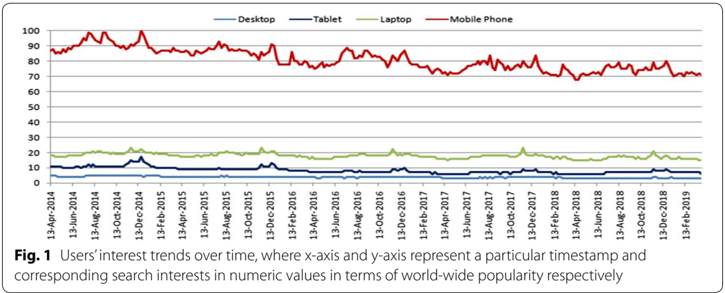
“In the real world, users’ interest on “Mobile Phones” is more and more than other platforms such as “Desktop Computer”, “Laptop Computer” or “Tablet Computer” over time [1].”
Self-citationIn consilium apparatus: Artificial intelligence, stakeholder reciprocity, and firm performance
Bosse, D. A., Thompson, S. M., & Ekman, P. (2022) · Journal of Business Research · doi:10.1016/j.jbusres.2022.113402 · Cited by 60
Context-Aware Machine Learning for Intelligent Transportation Systems: A Survey
Huang, G., Zaslavsky, A., Loke, S. W., Abken, A., Medvedev, A., & Hassani, A. (2022) · IEEE Transactions on Intelligent Transportation Systems · doi:10.1109/tits.2022.3216462 · Cited by 61
“Recently, the context has been extended to broader content covering the physical, social situations and interpersonal networks [23], [24] [75].”
BackgroundContext Aware Control Systems: An Engineering Applications Perspective
Cajo, R., Ghita, M., Copoţ, D., Birs, I., Muresan, C. I., & Ionescu, C. M. (2020) · IEEE Access · doi:10.1109/access.2020.3041357 · Cited by 58
“One of themost important IoT device is the popular smartphone, for which the techniques required in rule-based automated applications are presented in [43].”
BackgroundSarker, I. H., Alqahtani, H., Alsolami, F., Khan, A. I., Abushark, Y. B., & Siddiqui, M. K. (2020) · Journal of Big Data · doi:10.1186/s40537-020-00328-3 · Cited by 35
“…surrounding contextual information such as temporal context, spatial context, social or device-related context, etc. Typically, by context, we refer to any information that characterizes a situation related to the interaction between humans, applications, and the surrounding environment [1, 10].”
BackgroundInfluentialSelf-citationAdaptive Anomaly Detection Framework Model Objects in Cyberspace
Alkahtani, H. S., Aldhyani, T. H. H., & Al‐Yaari, M. (2020) · Applied Bionics and Biomechanics · doi:10.1155/2020/6660489 · Cited by 48
“However, in the current study, the main focus is on the learning techniques of classi-fi cation [35, 41], which leverages a given training dataset for the sake of building a predictive system.”
BackgroundRetractedTruong, M.-X., & van der Wal, R. (2024) · BioScience · doi:10.1093/biosci/biae077 · Cited by 37
“Smartphones have pro-foundly affected how people create and share content on social networks, foster social relationships, seek information, entertain themselves, and learn (Sarker 2019 ).”
K-Nearest Neighbor Learning based Diabetes Mellitus Prediction and Analysis for eHealth Services
Sarker, I. H., Faruque, M., Alqahtani, H., & Kalim, A. (2018) · ICST Transactions on Scalable Information Systems · doi:10.4108/eai.13-7-2018.162737 · Cited by 40
Self-citationChen, W., Yu, C., Wang, H., Wang, Z., Yang, L., Wang, Y., Shi, W., & Shi, Y. (2023) · ACM Symposium on User Interface Software and Technology (UIST) · doi:10.1145/3586183.3606741 · Cited by 45
“There has already been extensive research on these types of problems [9, 22, 31, 35].”
BackgroundAn Efficient K-Means Clustering Algorithm for Analysing COVID-19
Zubair, M., Iqbal, M. A., Shil, A., Haque, E., Hoque, M. M., & Sarker, I. H. (2021) · Advances in intelligent systems and computing · doi:10.1007/978-3-030-73050-5_43 · Cited by 38
Self-citationAutomatic Rule Generation for Decision-Making in Context-Aware Systems Using Machine Learning
Jabla, R., Khemaja, M., Buendía, F., & Faïz, S. (2022) · Computational Intelligence and Neuroscience · doi:10.1155/2022/5202537 · Cited by 23
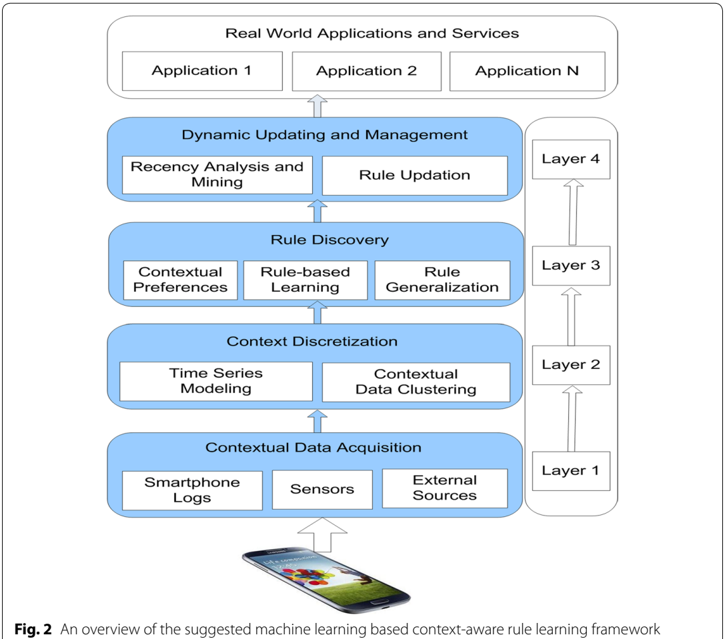
“As data mining and specifically machine learning could be more accurate for profiting better rules [5], exploring recent advances in the application of machine learning might be beneficial in offering a way to learn and generate a set of nonredundant rules that are easily comprehensible and are capable of Hindawi”
BackgroundA Rule-Based Expert System to Assess Coronary Artery Disease Under Uncertainty
Hossain, S., Sarma, D., Chakma, R. J., Alam, W., Hoque, M. M., & Sarker, I. H. (2020) · Communications in computer and information science · doi:10.1007/978-981-15-6648-6_12 · Cited by 25
Self-citationDeep Learning-Based Context-Aware Recommender System Considering Change in Preference
Jeong, S.-Y., & Kim, Y. (2023) · Electronics · doi:10.3390/electronics12102337 · Cited by 26
A new approach for optimal time-series segmentation
Carmona-Poyato, A., Fernández-García, N. L., Madrid-Cuevas, F. J., & Durán-Rosal, A. M. (2020) · Pattern Recognition Letters · doi:10.1016/j.patrec.2020.04.006 · Cited by 20
Sarker, I. H., Khan, A. I., Abushark, Y. B., & Alsolami, F. J. (2021) · Symmetry · doi:10.3390/sym13101975 · Cited by 30
“We demonstrated in an earlier paper [5], that users’ interest in “ mobile phones ” is increasing at a faster rate than that of other platforms, such as “ desktop computers ”, “ laptop computers ”, and “ tablet computers ”, according to Google Trends data [6] and that this interest is increasing on…”
BackgroundSelf-citationStudy Survey of Increasing Arabic Learning Due to Smartphones
Yakir, J., Jiao, D., & Wang, Y. (2023) · Journal International of Lingua and Technology · doi:10.55849/jiltech.v1i3.227 · Cited by 17
“Learning by using smartphones is favoured by students This is a form of a questionnaire with the question do you like learning with a smartphone (Sarker, 2019)? 44.”
BackgroundMonitoring Distracted Driving Behaviours with Smartphones: An Extended Systematic Literature Review
Papatheocharous, E., Kaiser, C., Moser, J., & Stocker, A. (2023) · Sensors · doi:10.3390/s23177505 · Cited by 21
“Both smartphone-based data analysis and data-driven context-aware systems on smartphones have gained increasing attention in recent years [56].”
BackgroundClustering Enabled Robust Intrusion Detection System for Big Data Using Hadoop–PySpark
Rahman, M. A., & Shahriar, H. (2023) · IEEE International Conference on Smart Communities: Improving Quality of Life using AI, Robotics and IoT (HONET) · doi:10.1109/honet59747.2023.10374747 · Cited by 18
Things2People Interaction toward Energy Savings in Shared Spaces Using BIM
Mataloto, B. M., Mendes, H., & Ferreira, J. C. (2020) · Applied Sciences · doi:10.3390/app10165709 · Cited by 16
“Also, Sarker in [30] shows that employees improve their ecological behaviour when they get positive criticism on their drive to reduce energy usage and know that their activities positively affect their working environment, so our approach is also aligned with this.”
BackgroundMethodClassification of m-payment users’ behavior using machine learning models
Aslam, F., Awan, T. M., & Fatima, T. (2021) · Journal of Financial Services Marketing · doi:10.1057/s41264-021-00114-z · Cited by 14
Online Troll Reviewer Detection Using Deep Learning Techniques
Al-Adhaileh, M. H., Aldhyani, T. H. H., & Alghamdi, A. D. (2022) · Applied Bionics and Biomechanics · doi:10.1155/2022/4637594 · Cited by 12
“According to the research questions asked in this paper [24], the main contributions of the developed system are as follows:”
MethodRetractedExplore the influence of contextual characteristics on the learning understanding on LMS
Benabbes, K., Housni, K., Hmedna, B., Zellou, A., & Mezouary, A. E. (2023) · Education and Information Technologies · doi:10.1007/s10639-023-11899-y · Cited by 15
“Therefore, data quality verification mechanisms are necessary to minimize data collection errors and keep the gathered information as reliable as possible (Sarker, 2019).”
BackgroundAn Effective Heart Disease Prediction Model Based on Machine Learning Techniques
Ripan, R. C., Sarker, I. H., Furhad, M. H., Anwar, M. M., & Hoque, M. M. (2021) · Advances in intelligent systems and computing · doi:10.1007/978-3-030-73050-5_28 · Cited by 14
Self-citationIntelligence and Usability Empowerment of Smartphone Adaptive Features
Alghamdi, A. M., Riasat, H., Iqbal, M. W., Ashraf, M. U., Alshahrani, A. S., & Alshamrani, A. (2022) · Applied Sciences · doi:10.3390/app122312245 · Cited by 16
Assessing the effectiveness of smartphones in education: A Meta-analysis of recent studies
Ibragimov, A. G., Gimaliev, V. G., Khrisanova, E. G., Aleksandrova, N. S., Omarova, L. B., & Гаврилович, Б. А. (2023) · Online Journal of Communication and Media Technologies · doi:10.30935/ojcmt/12877 · Cited by 11
Predicting Diabetes Mellitus and Analysing Risk-Factors Correlation
Faruque, M. F., Asaduzzaman, A., Hossain, S. M. M., Furhad, M. H., & Sarker, I. H. (2019) · EAI Endorsed Transactions on Pervasive Health and Technology · doi:10.4108/eai.13-7-2018.164173 · Cited by 12
Self-citationAttribute Driven Temporal Active Online Community Search
Das, B. C., Anwar, M. M., Bhuiyan, M. A.-A., Sarker, I. H., Alyami, S. A., & Moni, M. A. (2021) · IEEE Access · doi:10.1109/access.2021.3093368 · Cited by 11
“In the real world, time is considered as the most significant factor that impacts on user activities [12].”
BackgroundSelf-citationFairness Concerns in App Reviews: A Study on AI-Based Mobile Apps
Nasab, A. R., Dashti, M., Shahin, M., Zahedi, M., Khalajzadeh, H., Arora, C., & Liang, P. (2025) · ACM Transactions on Software Engineering and Methodology · doi:10.1145/3690633 · Cited by 29
“Section 8 outlines the threats to validity, and Section 9 concludes this work.”
BackgroundAnimated Character Style Investigation with Decision Tree Classification
Liu, K., Chang, K.-M., Liu, Y., & Chen, J. (2020) · Symmetry · doi:10.3390/sym12081261 · Cited by 12
Odera, D., & Odiaga, G. A. (2023) · World Journal of Advanced Engineering Technology and Sciences · doi:10.30574/wjaets.2023.9.1.0142 · Cited by 15
A new approach for optimal offline time-series segmentation with error bound guarantee
Carmona-Poyato, Á., García, N. L. F., Madrid-Cuevas, F., & Durán-Rosal, A. M. (2021) · Pattern Recognition · doi:10.1016/j.patcog.2021.107917 · Cited by 10
Impacts on Context Aware Systems in Evidence-Based Health Informatics: A Review
Christopoulou, S. C. (2022) · Healthcare · doi:10.3390/healthcare10040685 · Cited by 10
“The authors of the article [48] surveyed previous work and presented the challenges and future directions for effectively learning context-aware rules from smartphone data.”
BackgroundLu, L., Yuan, Y., Chen, X., & Li, Z. (2020) · Electronics · doi:10.3390/electronics9091496 · Cited by 9
“In recent years, machine learning-based and context-aware recommendation methods have been surveyed and presented in existing work to enhance the recommendation performance [16,17].”
BackgroundThe Impact of AI on Business, Economics and Innovation
Echeberría, A. L. (2022) · Springer eBooks · doi:10.1007/978-3-030-88241-9_3 · Cited by 8
Text and phone calls: user behaviour and dual-channel communication prediction
Hayat, S., Rextin, A. T., Idris, A., & Nasim, M. (2020) · Human-centric Computing and Information Sciences · doi:10.1186/s13673-020-00217-x · Cited by 7
“Furthermore, Sarker et al. [35] have suggested a context-aware rule learning framework based on machine learning techniques, for effectively learning context-aware rules from smartphone data to develop rule-based adaptive systems.”
BackgroundResolving Covid-19 with Blockchain and AI: A Systematic Review
Singh, S., & Verma, S. B. (2024) · ADCAIJ ADVANCES IN DISTRIBUTED COMPUTING AND ARTIFICIAL INTELLIGENCE JOURNAL · doi:10.14201/adcaij.31454 · Cited by 9
Cyber Intrusion Detection System based on Machine Learning Classification Approaches
Ogundokun, R. O., Misra, S., Babatunde, A. N., & Chockalingam, S. (2022) · International Conference on Applied Artificial Intelligence (ICAPAI) · doi:10.1109/icapai55158.2022.9801566 · Cited by 9
Optimal online time-series segmentation
Carmona-Poyato, A., Fernández-García, N. L., Madrid-Cuevas, F. J., Muñoz‐Salinas, R., & Romero-Ramírez, F. J. (2023) · Knowledge and Information Systems · doi:10.1007/s10115-023-02029-8 · Cited by 6
“In Sarker [21] are compared the offline and online approaches.”
Smartphone Learning Media Prototype Model Based on SAC (Smart Apps Creator) For 4.0 Learning
Puspitasari, J., Juhadi, J., Suyahmo, S., Wijayanto, P. A., & Saadah, N. (2022) · International Journal of Social Learning (IJSL) · doi:10.47134/ijsl.v3i1.75 · Cited by 15
“Strengthened by Sarker (2019) said that smartphone is a challenge and future directions for effectively learning rules from smartphone data to build rule-based automated and intelligent systems.”
BackgroundUsing alert dwell time to filter universal clinical alerts: A machine learning approach
Chien, S.-C., Yang, H., Chen, C.-Y., Chien, C., Hsu, C.-K., Chien, P.-H., & Li, Y. (2023) · Computer Methods and Programs in Biomedicine · doi:10.1016/j.cmpb.2023.107696 · Cited by 5
Mobile Deep Learning: Exploring Deep Neural Network for Predicting Context-Aware Smartphone Usage
Sarker, I. H., Abushark, Y. B., Khan, A. I., Alam, M. M., & Nowrozy, R. (2021) · SN Computer Science · doi:10.1007/s42979-021-00548-1 · Cited by 5
“In the real world, users’ interest in “Mobile Phones” is more and more than other platforms like “Tablet Computer”, “Desktop Computer”, “Laptop Computer” overtime [18].”
BackgroundSelf-citationThe design and implementation of intelligent ubiquitous learning multi-agent context-aware system
Guettala, M., Bourekkache, S., Kazar, O., Harous, S., & Zouai, M. (2023) · World Journal on Educational Technology Current Issues · doi:10.18844/wjet.v15i4.9091 · Cited by 5
Improving User Environment Detection Using Context-Aware Multi-Task Deep Learning in Mobile Networks
Morel, M.-L. A., Saffar, I., Singh, K., Hamidèche, S. A., & Viho, C. (2022) · IEEE Transactions on Cognitive Communications and Networking · doi:10.1109/tccn.2022.3205696 · Cited by 7
“A lot of research has already been done on use context detection in mobile environments, especially in the domain of context-aware rule learning which is detailed in [2].”
Context-aware next location prediction using data mining and metaheuristics
Bhadane, C., & Shah, K. (2020) · Evolutionary Intelligence · doi:10.1007/s12065-020-00469-7 · Cited by 3
“Dividing 24 hours into 3–4 time intervals [22] of equal size is proved useful statistically in studying Human Mobility Patterns.”
BackgroundMethodProgressive search personalization and privacy protection using federated learning
Sarkar, S., Agrawal, S., Chowdhuri, A., & Ramani, S. (2023) · Expert Systems · doi:10.1111/exsy.13318 · Cited by 7
“Sarker et al. (2019) provides an approach for mining recency-based personalized behaviour for predicting an individual's phone usage behaviour.”
A Survey of Data Mining and Machine Learning-Based Intrusion Detection System for Cyber Security
Ganesan, S., Shanmugaraj, G., & Indumathi, A. (2023) · Advances in information security, privacy, and ethics book series · doi:10.4018/978-1-6684-9317-5.ch004 · Cited by 4
Distracted Driver Monitoring with Smartphones: A Preliminary Literature Review
Kaiser, C., Stocker, A., & Papatheocharous, E. (2021) · Conference of Open Innovations Association (FRUCT) · doi:10.23919/fruct52173.2021.9435545 · Cited by 3
“Both smartphone-based data analytics and building data-driven context-aware systems on smartphones have gained increasing attention in recent years [29].”
BackgroundFitria, T. N., Lita, W., Limei, S., & Bevoor, B. (2023) · Journal International of Lingua and Technology · doi:10.55849/jiltech.v2i1.383 · Cited by 7
Crime Prediction Using Spatio-Temporal DataPreprint
Hossain, S., Abtahee, A., Kashem, I., Hoque, M. M., & Sarker, I. H. (2020) · arXiv (Cornell University) · doi:10.48550/arxiv.2003.09322 · Cited by 12
“Classification techniques are used in many different domains such as financial market, business intelligence, healthcare, weather forecasting etc [17].”
BackgroundSelf-citationOn the use of historical data in context-aware multimedia documents adaptation processes
Smaala, A., Laboudi, Z., Saighi, A., & Moudjari, A. (2024) · Bulletin of Electrical Engineering and Informatics · doi:10.11591/eei.v13i2.5297 · Cited by 2
“We cite as examples machine-learning approaches for: IoT cultural data [24], context-aware intrusion detection [25], smartphone data analytics [26]–[29], activity recognition [30], and healthcare support [31].”
MethodCAPP : Context‐Aware Privacy‐Preserving Continuous Authentication in Smartphones
Jacob, S., Vinod, P., & Menon, V. G. (2024) · Security and Privacy · doi:10.1002/spy2.478 · Cited by 3
“However,thesensorialinformationcollectedduringthisprocesscould potentially expose user identities [6] or lead to user profiling [7], so it becomes crucial to implement privacy protection techniques [5] when constructing an outsourced CA mechanism for smart-phones.”
The Context Awareness Challenges for PIS
Kirsch-Pinheiro, M. (2023) · Springer eBooks · doi:10.1007/978-3-031-18176-4_3 · Cited by 2
Data science leverage and big data analysis for Internet of Things energy systems
Behnam, A., Azad, S., Daneshvar, M., Anvari‐Moghaddam, A., & Marzband, M. (2023) · Elsevier eBooks · doi:10.1016/b978-0-323-95421-1.00006-9 · Cited by 3
Machine Learning Applications in Adsorption of Water Pollutants
Shikuku, V. O., & Masinde, N. W. (2023) · Advances in environmental engineering and green technologies book series · doi:10.4018/978-1-6684-6791-6.ch001 · Cited by 2
A Few-Shot Learning-Based Material Recognition Scheme Using Smartphones
Kim, Y., Yoon, J., & Kim, S. (2025) · Applied Sciences · doi:10.3390/app15010430 · Cited by 2
Machine Learning: Algorithms, Real World Applications and Research Directions
Al-Tameemi, M. N. (2025) · Academia Open · doi:10.21070/acopen.9.2024.10451 · Cited by 3
AI for Covid-19: Conduits for Public Health Surveillance
Unnithan, C. R., Hardy, J., & Lilley, N. (2020) · Lecture notes on data engineering and communications technologies · doi:10.1007/978-981-15-9682-7_2 · Cited by 2
Dhandapani, S., & Rodriguez, A. R. J. (2022) · Concurrency and Computation Practice and Experience · doi:10.1002/cpe.7456 · Cited by 1
“Assuming B rich,d = B d , then substitute Equation (18) in Equation (13),”
BackgroundInfluentialEnhancing IoT Security and Malware Detection Based on Machine Learning
Abu-Khadrah, A. I., AlMutairi, M. A., Hassan, M. R., & Ali, A. M. (2025) · Lecture notes in networks and systems · doi:10.1007/978-981-96-6435-1_44 · Cited by 4
Shilov, N. G. (2021) · Conference of Open Innovations Association (FRUCT) · doi:10.23919/fruct53335.2021.9599960 · Cited by 1
Guo, H. G. (2022) · Discrete Dynamics in Nature and Society · doi:10.1155/2022/7986472 · Cited by 1
“From the user-centered perspective, Sarker [20] divided the contextual information into computing scenarios, user contexts, physical contexts, temporal contexts, and social contexts.”
BackgroundRetractedPatients using real-time remote health monitoring applications
Butt, S. A., Ali, A., Khalid, A., Shaheen, Q., Ariza-Colpas, P., & Shiraz, M. (2023) · Elsevier eBooks · doi:10.1016/b978-0-323-99421-7.00016-7 · Cited by 1
The Role of Artificial Intelligence in Cyber Security
Arockiasamy, K. (2023) · Advances in information security, privacy, and ethics book series · doi:10.4018/978-1-6684-7110-4.ch001 · Cited by 1
A Resource Aware Memory Requirement Calculation Model for Memory Constrained Context-Aware Systems
Ali, M., Muhammad, A., Uddin, I., Ali, G., Asim, M., & ELAffendi, M. A. (2024) · IEEE Access · doi:10.1109/access.2024.3361317 · Cited by 1
“In recent years, the context has been extended to other factors, such as the social and physical aspects of an entity and the activities of the user [8], [12], [13].”
BackgroundFramework for Cyber Threats in Social Networks
Sheba Pari, N., & Senthil Kumar, K. (2022) · International Journal of Engineering and Advanced Technology · doi:10.35940/ijeat.f3762.0811622
Liu, C., Jin, H., & Wang, J. (2023) · SSRN Electronic Journal · doi:10.2139/ssrn.4498434
Survey Study on the Increase of Arabic Learning Due to Smartphones
Salam, M. Y., Xavier, M., & Elliot, M. (2023) · International Journal of Educational Narratives · doi:10.55849/ijen.v1i4.385
“This is a questionnaire form with the question do you like learning with smartphones (Sarker, 2019)? 44.”
BackgroundAngel Latha Mary, S., Poonguzhali, A., Sivasubramanian, S., Ramasamy, V., Dhivya, P., & Alagumalai, S. (2026) · Journal of Computer Virology and Hacking Techniques · doi:10.2139/ssrn.4742732
Deep Learning Approach to Real-World Application: An Empirical Analysis
Kiranmayee, B. V., Sukheja, D., Gurujala, C. D., Kilaru, A., Rohith, D., Pallavulu, S., & More, R. (2024) · Data-intensive research · doi:10.1007/978-981-99-9179-2_45
Machine learning techniques in additive manufacturing of functional polymers and nanocomposites
Vitore, J. G., Gholap, A. D., Nunse, D., Pawar, R., Deshkar, S. S., & Giram, P. S. (2025) · Elsevier eBooks · doi:10.1016/b978-0-443-26516-7.00021-3
Goyal, P., Chadwick, C., Jing, M., Williams, S., & Bryce, R. C. (2025) · Advances in intelligent systems and computing · doi:10.1007/978-3-031-89063-5_51 · Cited by 1
Metadata
- Authors
- Sarker, I. H.
- Affiliations
- Chittagong University of Engineering & Technology (BD)
- Corresponding author
- Sarker, Iqbal H.
- ORCID
- Sarker, Iqbal H.
- Venue
- Journal of Big Data
- Published
- 2019-10-31
- Volume
- 6
- Issue
- 1
- ISSN
- 2196-1115 (ISSN-L)
- OpenAlex
- W2982291760
- Cited by
- 105
- References
- 135
- Citations by year
- 2026: 3 · 2025: 9 · 2024: 8 · 2023: 24 · 2022: 18 · 2021: 20 · 2020: 20 · 2019: 2
- FWCI
- 6.72
- Type
- journal article
- Language
- en
- Open access
- gold
- doi.org
- Licence
- cc-by
- creativecommons.org/licenses/by/4.0 (tdm)
- creativecommons.org/licenses/by/4.0 (vor)
- Locations
- Journal Of Big Data (publishedVersion, cc-by)
- DOAJ (DOAJ: Directory of Open Access Journals) (submittedVersion, cc-by-sa)
- Swinburne figshare (Swinburne University of Technology) (submittedVersion, cc-by)
- Funders
- Swinburne University of Technology
- Topics
- Physical Sciences › Computer Science › Computer Vision and Pattern Recognition › Context-Aware Activity Recognition Systems
- Social Sciences › Transportation › Human Mobility and Location-Based Analysis
- Physical Sciences › Computer Science › Information Systems › Data Mining Algorithms and Applications
- Keywords
- context-aware systems, contextual information, user behavior modeling, rule-based systems, decision strategies
About these checks
Registry, retraction, Cites and statistics results are computed, not judged, with one exception: a printed reference that no index lists is read once by a model before it counts as a citation error. Claims are extracted by a model and kept only when their quote appears verbatim in the text; each cited source is then checked, with a model’s help, for whether it says what the claim relies on. Those verdicts can be wrong — read the claim’s quote and the cited source before relying on one.
Statistics and arithmetic are recomputed, not judged.
Confidence bands are shown only for fields calibrated on our annotated test set. None is calibrated yet, so no band is shown.
What counts as a claim ›How we measure confidence ›How we check this ›
Are you an author, or do you see a problem with this page? Request a review
Data sources
Bibliographic data: Semantic Scholar, OpenAlex, Crossref.
Contains information from the Semantic Scholar Academic Graph Datasets, made available under the ODC Attribution License (ODC-BY 1.0).
Semantic Scholar’s data is described in: Kinney, R., et al. (2023). The Semantic Scholar Open Data Platform. arXiv:2301.10140.
