

A survey on missing data in machine learning
Open accessThe DOI matches its Crossref record; 184 of the 184 references it cites were found in a registry or an index.
Abstract
Machine learning has been the corner stone in analysing and extracting information from data and often a problem of missing values is encountered. Missing values occur because of various factors like missing completely at random, missing at random or missing not at random. All these may result from system malfunction during data collection or human error during data pre-processing. Nevertheless, it is important to deal with missing values before analysing data since ignoring or omitting missing values may result in biased or misinformed analysis. In literature there have been several proposals for handling missing values. In this paper, we aggregate some of the literature on missing data particularly focusing on machine learning techniques. We also give insight on how the machine learning approaches work by highlighting the key features of missing values imputation techniques, how they perform, their limitations and the kind of data they are most suitable for. We propose and evaluate two methods, the k nearest neighbor and an iterative imputation method (missForest) based on the random forest algorithm. Evaluation is performed on the Iris and novel power plant fan data with induced missing values at missingness rate of 5% to 20%. We show that both missForest and the k nearest neighbor can successfully handle missing values and offer some possible future research direction.
Overview
The claims and statistics of this paper haven’t been checked yet.
Free: it reads the open-access text and checks the first 5 claims that cite a source we can check. Create a free account to check every claim.
Integrity signals
Registry
Cites
Statistics
Figures
Verification
Claims the paper makes
The claims and statistics of this paper haven’t been checked yet.
Free: it reads the open-access text and checks the first 5 claims that cite a source we can check. Create a free account to check every claim.
Claims other papers make about this one
Each is checked against this paper’s own text: does it say what the citing paper says it does?
The check wasn’t confident either way, so it gives no verdict — never disputed.
In the citing paper
“Earlier methods described in22–25 disrupt the temporal dependencies, making them unsuitable for predicting events based on sequential data.”
From Comparative analysis of machine learning approaches for heatwave event prediction in India (2025) · cites this paper as [25]
Experimental — accuracy not yet measured
Self-check
Percentages, sums and reported differences re-computed from the paper’s own numbers.
The self-check needs the paper’s full text.
Citations
Cites
Breiman, L. (2001) · Machine Learning · doi:10.1023/a:1010933404324 · Cited by 133,538 · cited 1×
“Also, the use of KNN in the big data setting is still an under-explored area.”
An introduction to ROC analysis
Fawcett, T. (2006) · Pattern Recognition Letters · doi:10.1016/j.patrec.2005.10.010 · Cited by 21,879 · cited 1×
“Where the TPR is the proportion of correctly imputed positives of all positives and the TPR is the proportion of all negatives that are wrongly imputed as positives [144].”
BackgroundClassification and Regression Trees.
Ryzin, J. V., Breiman, L., Friedman, J. H., Olshen, R. A., & Stone, C. J. (1986) · Journal of the American Statistical Association · doi:10.2307/2288003 · Cited by 20,825
Statistical Analysis With Missing Data
Lahiff, M., Little, R. J. A., & Rubin, D. B. (1989) · Journal of the American Statistical Association · doi:10.2307/2289883 · Cited by 17,265
THE USE OF MULTIPLE MEASUREMENTS IN TAXONOMIC PROBLEMS
FISHER, R. A. (1936) · Annals of Eugenics · doi:10.1111/j.1469-1809.1936.tb02137.x · Cited by 15,227 · cited 1×
“While MSE is equal to the sum of variance and squared predicted missing value as in the following equation:”
MethodClassification And Regression Trees
Breiman, L., Friedman, J. H., Olshen, R. A., & Stone, C. J. (2017) · doi:10.1201/9781315139470 · Cited by 11,417
Classification and regression trees
Praagman, J. (1985) · European Journal of Operational Research · doi:10.1016/0377-2217(85)90321-2 · Cited by 10,053
RUBIN, D. B. (1976) · Biometrika · doi:10.1093/biomet/63.3.581 · Cited by 9,925
Chai, T., & Draxler, R. R. (2014) · Geoscientific Model Development · doi:10.5194/gmd-7-1247-2014 · Cited by 8,761 · cited 2×
“However, [144] partially disputed the conclusions and introduced arguments against avoiding RMSE.”
BackgroundText categorization with Support Vector Machines: Learning with many relevant features
Joachims, T. (1998) · Lecture Notes in Computer Science · doi:10.1007/bfb0026683 · Cited by 7,999
Research works printed but not linked: 8
- Suthar B, Patel H, Goswami A. A survey: classification of imputation methods in data mining. Int J Emerg Technol Adv Eng. 2012;2(1):309–12.
- Chen Y-C. Pattern graphs: a graphical approach to nonmonotone missing data. arXiv preprint arXiv:2004.00744. 2020. · arXiv
- Williams R. Missing data Part 1: overview, traditional methods. Notre Dame: University of Notre Dame; 2015.
- Allison PD. Missing data, vol. 136. Thousand Oaks: Sage Publications; 2001.
- Gimpy M. Missing value imputation in multi attribute data set. Int J Comput Sci Inf Technol. 2014;5(4):1–7.
- He Y, Pi D-C. Improving KNN method based on reduced relational grade for microarray missing values imputation. IAENG Int J Comput Sci. 2016;43(3):1–7.
- Gimpy D, Rajan Vohra M. Estimation of missing values using decision tree approach. Int J Comput Sci Inf Technol. 2014;5(4):5216–20.
- Phyu TN. Survey of classification techniques in data mining. In: Proceedings of the international multiconference of engineers and computer scientists, vol. 1. 2009.
Cited by
Validation of biomarkers of aging
Moqri, M., Herzog, C., Poganik, J. R., Ying, K., Justice, J. N., Belsky, D. W., Higgins-Chen, A. T., Chen, B. H., Cohen, A. A., Fuellen, G., et al. (2024) · Nature Medicine · doi:10.1038/s41591-023-02784-9 · Cited by 361
“For example, the treatment of missing or repeated measurements (for example, using imputation or machine learning methods 56,57 ), data normalization and quality control influence predictive performance results; therefore, it is important to establish and follow standards and best practices for…”
Liu, M., Li, S., Yuan, H., Ong, M. E. H., Ning, Y., Xie, F., Saffari, S. E., Shang, Y., Volovici, V., Chakraborty, B., et al. (2023) · Artificial Intelligence in Medicine · doi:10.1016/j.artmed.2023.102587 · Cited by 219
Prediction of diabetes disease using an ensemble of machine learning multi-classifier models
Abnoosian, K., Farnoosh, R., & Behzadi, M. H. (2023) · BMC Bioinformatics · doi:10.1186/s12859-023-05465-z · Cited by 215
Li, J., Guo, S., Ma, R., He, J., Zhang, X., Rui, D., Ding, Y., Li, Y., Jian, L.-Y., Cheng, J., et al. (2024) · BMC Medical Research Methodology · doi:10.1186/s12874-024-02173-x · Cited by 212
“To compare the performance of the different missing value imputation methods, three widely used metrics were chosen for this study: mean absolute error (MAE), root mean square error (RMSE) and area under the curve (AUC) [5].”
BackgroundMethodThe impact of imputation quality on machine learning classifiers for datasets with missing values
Shadbahr, T., Roberts, M., Stanczuk, J., Gilbey, J., Teare, P., Dittmer, S., Thorpe, M., Viñas, R., Sala, E., Lió, P., et al. (2023) · Communications Medicine · doi:10.1038/s43856-023-00356-z · Cited by 198
“Classifier (K) Tuned Hyperparameters Random Forest (144) Number of trees (8), maximum depth of trees (2), minimum samples needed for splits in each individual leaf (3), minimum number of samples in each leaf (3).”
MethodAir Quality Index prediction using machine learning for Ahmedabad city
Maltare, N. N., & Vahora, S. (2023) · Digital Chemical Engineering · doi:10.1016/j.dche.2023.100093 · Cited by 182
Avoiding common machine learning pitfalls
Lones, M. A. (2024) · Patterns · doi:10.1016/j.patter.2024.101046 · Cited by 170
“There are various forms of imputation that can be used to achieve this; see Emmanuel et al. 13 for a review.”
Ebiaredoh-Mienye, S. A., Swart, T. G., Esenogho, E., & Mienye, I. D. (2022) · Bioengineering · doi:10.3390/bioengineering9080350 · Cited by 151
“It is vital to appropriately deal with missing values before building ML models because ignoring or deleting the missing data could degrade or bias the performance of the models [39,40].”
BackgroundOverview of leakage scenarios in supervised machine learning
Sasse, L., Nicolaisen‐Sobesky, E., Dukart, J., Eickhoff, S. B., GOETZ, M. A., Hamdan, S., Komeyer, V., Kulkarni, A. J., Lahnakoski, J. M., Love, B. C., et al. (2025) · Journal Of Big Data · doi:10.1186/s40537-025-01193-8 · Cited by 146
“For instance, data imputation can be performed in a within-sample fashion such that missing values are estimated using other features of that sample (see, e.g., [18]). to fit parameters but also to data that researchers use to make data-driven decisions.”
BackgroundLearning from data with structured missingness
Mitra, R., McGough, S. F., Chakraborti, T., Holmes, C. C., Copping, R., Hagenbuch, N., Biedermann, S., Noonan, J., Lehmann, B., Shenvi, A., et al. (2023) · Nature Machine Intelligence · doi:10.1038/s42256-022-00596-z · Cited by 139
“However, in many ML problems data may not be missing at random, but rather may exhibit some multivariate structure or pattern (7).”
Understanding and Mitigating Bias in Imaging Artificial Intelligence
Tejani, A. S., Ng, Y. S., Xi, Y., & Rayan, J. C. (2024) · RadioGraphics · doi:10.1148/rg.230067 · Cited by 138
Alam, S., Ayub, M. S., Arora, S., & Khan, M. A. (2023) · Decision Analytics Journal · doi:10.1016/j.dajour.2023.100341 · Cited by 131
Afkanpour, M., Hosseinzadeh, E., & Tabesh, H. (2024) · BMC Medical Research Methodology · doi:10.1186/s12874-024-02310-6 · Cited by 131
Missing Data Imputation: A Comprehensive Review
Alwateer, M. M., Atlam, E., El-Raouf, M. M. A., Ghoneim, O. A., & Gad, I. (2024) · Journal of Computer and Communications · doi:10.4236/jcc.2024.1211004 · Cited by 131
Ortiz, B. L., Gupta, V., Kumar, R., Jalin, A. F., Cao, X., Ziegenbein, C., Singhal, A., Tewari, M., & Choi, S. W. (2024) · JMIR mhealth and uhealth · doi:10.2196/59587 · Cited by 125
“The preprocessing steps help transform raw sensor data, which can be noisy and inconsistent, into a clean, structured format suitable for AI/ML models to process [10-12].”
A review on missing values for main challenges and methods
Ren, L., Wang, T., Sekhari, A., Zhang, H., & Bouras, A. (2023) · Information Systems · doi:10.1016/j.is.2023.102268 · Cited by 118
Applications of artificial intelligence and machine learning in heart failure
Averbuch, T., Sullivan, K., Sauer, A. J., Mamas, M. A., Voors, A. A., Gale, C. P., Metra, M., Ravindra, N. G., & Spall, H. G. C. V. (2022) · European Heart Journal - Digital Health · doi:10.1093/ehjdh/ztac025 · Cited by 111
“58 Clinical AI applications must adequately address dataset shift, a phenomenon of degrading performance when the training data for a model differs from the data used to provide clinical advice.”
Bryzgalova, S., Lerner, S., Lettau, M., & Pelger, M. (2024) · Review of Financial Studies · doi:10.1093/rfs/hhae036 · Cited by 106
Machine learning: its challenges and opportunities in plant system biology
Hesami, M., Alizadeh, M., Jones, A. M. P., & Torkamaneh, D. (2022) · Applied Microbiology and Biotechnology · doi:10.1007/s00253-022-11963-6 · Cited by 102
“Accurate predictive analytics of big data such as replacing incorrect readings can be employed to estimate missing data (Emmanuel et al. 2021).”
Rao, K. M., Ghanta, S., & Supriya, K. (2023) · Multimedia Tools and Applications · doi:10.1007/s11042-023-15087-5 · Cited by 100
“[8] compared two data imputation methods, the k-nearest neighbor technique and an iterative imputation method based on a random forest algorithm.”
MethodWieser, P., Kent, A. J. R., Till, C. B., Donovan, J. J., Neave, D. A., Blatter, D. L., & Krawczynski, M. J. (2022) · Journal of Petrology · doi:10.1093/petrology/egac126 · Cited by 98
Zhang, Y., Feng, Y., Ren, Z., Zuo, R., Zhang, T., Li, Y., Wang, Y., Liu, Z., Sun, Z., Han, Y. M., et al. (2023) · Bioresource Technology · doi:10.1016/j.biortech.2023.128746 · Cited by 94
A review on machine learning approaches for microalgae cultivation systems
Syed, T., Krujatz, F., Ihadjadene, Y., Mühlstädt, G., Hamedi, H., Mädler, J., & Urbas, L. (2024) · Computers in Biology and Medicine · doi:10.1016/j.compbiomed.2024.108248 · Cited by 92
Chesterman, X., Verstraeten, T., Daems, P.-J., Nowé, A., & Helsen, J. (2023) · Wind energy science · doi:10.5194/wes-8-893-2023 · Cited by 89
An Intelligent Missing Data Imputation Techniques: A Review
Seu, K., Kang, M.-S., & Lee�, H. (2022) · JOIV International Journal on Informatics Visualization · doi:10.30630/joiv.6.1-2.935 · Cited by 84
“The missing values are only computed from the instance subset that is a high correlation with the sample that contains the missing values [15].”
BackgroundMethodEdge Computing Data Optimization for Smart Quality Management: Industry 5.0 Perspective
Bajić, B., Suzić, N., Morača, S., Stefanovic, M. Z., Jovičić, M., & Rikalović, A. (2023) · Sustainability · doi:10.3390/su15076032 · Cited by 84
Recent advances in wind turbine condition monitoring using SCADA data: A state-of-the-art review
Wang, S., Vidal, Y., & Pozo, F. (2025) · Reliability Engineering & System Safety · doi:10.1016/j.ress.2025.111838 · Cited by 74
Machine Learning-Based Computational Design Methods for High-Entropy Alloys
Zhao, Y. M., Zhang, J. Y., Liaw, P. K., & Yang, T. (2025) · High Entropy Alloys & Materials · doi:10.1007/s44210-025-00055-5 · Cited by 74
Review for Handling Missing Data with special missing mechanism
Zhou, Y., Aryal, S., & Bouadjenek, M. R. (2024) · arXiv (Cornell University) · doi:10.48550/arxiv.2404.04905 · Cited by 73
Application and Potential of Artificial Intelligence in Heart Failure: Past, Present, and Future
Yoon, M., Park, J. J., Hur, T., Hua, C.-H., Hussain, M., Lee, S., & Choi, D. (2023) · International Journal of Heart Failure · doi:10.36628/ijhf.2023.0050 · Cited by 72
“66) In addition, an obvious situation in visual-based diagnosis and predictive tasks (e.g., segmentation of the left ventricle endocardium, epicardium, and left atrium regions in echocardiography for providing fine-grained cardiac information) is the limited availability of well-annotated imaging…”
BackgroundExplainable Machine Learning Model for Chronic Kidney Disease Prediction
Arif, M. S., Rehman, A. U., & Asif, D. (2024) · Algorithms · doi:10.3390/a17100443 · Cited by 71
A machine learning model to predict the pyrolytic kinetics of different types of feedstocks
Wang, S., Shi, Z., Jin, Y., Zaini, I. N., Li, Y., Tang, C., Mu, W., Wen, Y., Jiang, J., Jönsson, P. G., et al. (2022) · Energy Conversion and Management · doi:10.1016/j.enconman.2022.115613 · Cited by 70
Predicting lung cancer survival based on clinical data using machine learning: A review
Altuhaifa, F. A., Win, K. T., & Su, G. (2023) · Computers in Biology and Medicine · doi:10.1016/j.compbiomed.2023.107338 · Cited by 69
Better, Not Just More: Data-centric machine learning for Earth observation
Roscher, R., Rußwurm, M., Gevaert, C. M., Kampffmeyer, M., dos Santos, J. A., Vakalopoulou, M., Hänsch, R., Hansen, S., Nogueira, K., Prexl, J., et al. (2024) · IEEE Geoscience and Remote Sensing Magazine · doi:10.1109/mgrs.2024.3470986 · Cited by 66
“A commonly used set of techniques is the filling of gaps in spatial and temporal coverage, as missing data is a common problem and causes different issues such as performance degradation, problems in data analysis, and biased outcomes [109].”
Aderemi, I. A., Kehinde, T. O., Okwor, U. D., Hussain, A. K., Adjei, K. Y., & Ekechi, C. C. (2025) · IEEE Sensors Reviews · doi:10.1109/sr.2025.3595500 · Cited by 65
“The authors in [114] and [115] showed that XAI’s reliability is inherently sensitive to data noise and bias, leading to interpretability degradation in low-quality input environments [9], [10].”
Forecasting sustainable development goals scores by 2030 using machine learning models
Chenary, K., Kalat, O. P., & Sharifi, A. (2024) · Sustainable Development · doi:10.1002/sd.3037 · Cited by 63
Missing Data Imputation in the Internet of Things Sensor Networks
Agbo, B., Al-Aqrabi, H., Hill, R. C., & Alsboui, T. (2022) · Future Internet · doi:10.3390/fi14050143 · Cited by 61
Murray, J. D., Lange, J. J., Bennett-Lenane, H., Holm, R., Kuentz, M., O’Dwyer, P. J., & Griffin, B. T. (2023) · European Journal of Pharmaceutical Sciences · doi:10.1016/j.ejps.2023.106562 · Cited by 61
“Often with this approach, the available data differs between studies, requiring fields with missing values to be either dropped or have these numbers imputed (Emmanuel et al., 2021).”
Regional Heatwave Prediction Using Graph Neural Network and Weather Station Data
Li, P., Yu, Y., Huang, D., Wang, Z., & Sharma, A. (2023) · Geophysical Research Letters · doi:10.1029/2023gl103405 · Cited by 57
“Missing data can introduce large uncertainties to data-driven algorithms (Emmanuel et al., 2021; Hariri et al., 2019).”
BackgroundAhmed, A., Uddin, M. N., Akbar, M., Salih, R., Khan, M. A., Bisheh, H., & Rabczuk, T. (2023) · International Journal of Mechanics and Materials in Design · doi:10.1007/s10999-023-09675-4 · Cited by 57
“Some other imputation approaches, such as K.N.N. and decision trees, are also employed to deal with missing data (Emmanuel et al. 2021), but XGBoost is more accurate when handling missing data (Aydin and Ozturk 2021).”
Prediction of corn variety yield with attribute-missing data via graph neural network
Yang, F., Zhang, D., Zhang, Y., Zhang, Y., Han, Y., Zhang, Q., Zhang, Q., Zhang, C., Liu, Z., & Wang, K. (2023) · Computers and Electronics in Agriculture · doi:10.1016/j.compag.2023.108046 · Cited by 56
Industrial Foundation Models (IFMs) for intelligent manufacturing: A systematic review
Zhao, S., Liu, S., Jiang, Y., Zhao, B. M., Lv, Y., Zhang, J., Wang, L., & Zhong, R. Y. (2025) · Journal of Manufacturing Systems · doi:10.1016/j.jmsy.2025.06.011 · Cited by 55
Pneuma : Leveraging LLMs for Tabular Data Representation and Retrieval in an End-to-End System
Balaka, M. I. L., Alexander, D., Wang, Q., Gong, Y., Krisnadhi, A. A., & Fernandez, R. C. (2025) · Proceedings of the ACM on Management of Data · doi:10.1145/3725337 · Cited by 54
Toha, A., Purwono, P., & Gata, W. (2022) · Buletin Ilmiah Sarjana Teknik Elektro · doi:10.12928/biste.v4i1.6079 · Cited by 53
“Missing data menggambarkan nilai mana yang hilang dan dapat diamati dalam kumpulan data tersebut [22].”
BackgroundMartín, L., Sánchez, L., Lanza, J., & Sotres, P. (2023) · Internet of Things · doi:10.1016/j.iot.2023.100779 · Cited by 53
“Following this approach to absent value imputation, the k nearest neighbors of the missing value are used to estimate its value based on an inter-instance distance metric [37].”
Hao, Z.-H., Feng, P., Zhang, S., & Zhai, Y. (2025) · Composites Part B Engineering · doi:10.1016/j.compositesb.2025.112587 · Cited by 54
Karthick, K., Krishnan, S., & Manikandan, R. (2023) · Journal of Water and Climate Change · doi:10.2166/wcc.2023.403 · Cited by 51
The challenges of using machine learning models in psychiatric research and clinical practice
Ostojic, D., Lalousis, P. A., Donohoe, G. J., & Morris, D. W. (2024) · European Neuropsychopharmacology · doi:10.1016/j.euroneuro.2024.08.005 · Cited by 51
“As illustrated in the Table 2, values can be missing due to a variety of factors including “ missing completely at random ” (MCAR), “ missing at random ” (MAR), or “ missing not at random ” (MNAR) (Emmanuel et al., 2021).”
BackgroundMethodInfluentialDo We Really Need to Drop Items with Missing Modalities in Multimodal Recommendation?
Malitesta, D., Rossi, E., Pomo, C., Noia, T. D., & Malliaros, F. D. (2024) · ACM International Conference on Information and Knowledge Management (CIKM) · doi:10.1145/3627673.3679898 · Cited by 51
Wu, J., & Huang, C. (2025) · Journal of Hazardous Materials · doi:10.1016/j.jhazmat.2025.137276 · Cited by 51
Pranolo, A., Setyaputri, F. U., Paramarta, A. K. I., Triono, A. P. P., Fadhilla, A. F., Akbari, A. K. G., Utama, A. B. P., Wibawa, A. P., & Uriu, W. (2024) · ILKOM Jurnal Ilmiah · doi:10.33096/ilkom.v16i2.2333.210-220 · Cited by 49
“One of the initial tasks in data preparation involves addressing missing values, which are frequently encountered in extensive datasets and can substantially impact the performance of models [27].”
Liu, D., Wang, Y., Liu, C., Wang, K., Yuan, X., & Yang, C. (2023) · IEEE Transactions on Automation Science and Engineering · doi:10.1109/tase.2023.3287895 · Cited by 49
“There are many researches for MVI under MCAR assumption, which can be classified into two categories: statistical analysis methods and machine learning methods [11], [12].”
MethodChandra, W., Suprihatin, B., & Resti, Y. (2023) · Symmetry · doi:10.3390/sym15040887 · Cited by 48
“However, using the median imputation on large amounts of data can produce biased or unrealistic results, thus providing misleading information [11].”
BackgroundMethodInfluentialIslam, M. M., Kibria, N. M. S. J., Kumar, S., Roy, D. C., & Karim, M. R. (2024) · PLoS ONE · doi:10.1371/journal.pone.0315393 · Cited by 48
Mnyawami, Y. N., Maziku, H. H., & Mushi, J. C. (2022) · Applied Artificial Intelligence · doi:10.1080/08839514.2022.2071406 · Cited by 48
“The remained dataset was 206885 samples and 15 features after removing inconsistent rows and features using univariate feature processing method imputed values in the i -th feature dimension using only non-missing values in that feature dimen-sion (Emmanuel et al. 2021).”
MethodFei, Z., Liang, S., Cai, Y., & Shen, Y. (2023) · Materials · doi:10.3390/ma16020583 · Cited by 46
Bikše, J., Retiķe, I., Haaf, E., & Kalvāns, A. (2023) · Journal of Hydrology · doi:10.1016/j.jhydrol.2023.129424 · Cited by 46
“, to fulfil the requirement of statistical software packages that do not support missing values (Dax and Zilberbrand, 2017; Emmanuel et al., 2021).”
Railway accident causation analysis: Current approaches, challenges and potential solutions
Hong, W.-T., Clifton, G., & Nelson, J. D. (2023) · Accident Analysis & Prevention · doi:10.1016/j.aap.2023.107049 · Cited by 46
Khan, U. A., Khan, N. M., & Zafar, M. H. (2023) · Energy Conversion and Management X · doi:10.1016/j.ecmx.2023.100486 · Cited by 46
Marycz, M., Turowska, I., Glazik, S., & Jasiński, P. (2025) · Sensors · doi:10.3390/s25226961 · Cited by 46
“Their treatment depends on the mechanism of missingness: missing completely at random (MCAR), missing at random (MAR), or NMAR [130,131].”
Barua, M. K. (2024) · doi:10.63125/3mjcah04 · Cited by 46
A proposed hybrid framework to improve the accuracy of customer churn prediction in telecom industry
Ouf, S. M., Mahmoud, K. T., & Abdel-Fattah, M. A. (2024) · Journal Of Big Data · doi:10.1186/s40537-024-00922-9 · Cited by 44
Nguyen, D. Q., Tran, K. Q., Le, T. D., Wahab, M. M. A., & Nguyen‐Xuan, H. (2024) · Computer Methods in Applied Mechanics and Engineering · doi:10.1016/j.cma.2024.117603 · Cited by 43
Xu, Z., Tang, J., Qi, C., Yao, D., Liu, C., Zhan, Y., & Lukasiewicz, T. (2023) · Computers in Biology and Medicine · doi:10.1016/j.compbiomed.2023.107744 · Cited by 42
Missing values imputation using Fuzzy K-Top Matching Value
Ali, A., Abu-Elkheir, M., Atwan, A., & Elmogy, M. M. (2022) · Journal of King Saud University - Computer and Information Sciences · doi:10.1016/j.jksuci.2022.12.011 · Cited by 41
“An imputation with high prediction accuracy may be maintained if the provided data offers significant information for resolving missing values (Emmanuel et al., 2021).”
Doolub, G., Mamalakis, M., Alabed, S., van der Geest, R. J., Swift, A. J., Rodrigues, J. C. L., Garg, P., Joshi, N. V., & Dastidar, A. G. (2023) · Medical Sciences · doi:10.3390/medsci11010020 · Cited by 41
Analysis of the Effectiveness of Pop-Up Book Media on Science Learning in Elementary Schools
Zaniyati, M., & Rohmani, R. (2024) · IJORER International Journal of Recent Educational Research · doi:10.46245/ijorer.v5i4.641 · Cited by 40
“Extracted data includes information on the research design, sample, data collection methods, and results of the study (Emmanuel et al., 2021; Lobe et al., 2020; Munim et al., 2020; Popenoe et al., 2021; Santoso, 2021).”
MethodGenomics‐based plant disease resistance prediction using machine learning
Upadhyaya, S. R., Danilevicz, M. F., Dolatabadian, A., Neik, T. X., Zhang, F., Al-Mamun, H. A., Bennamoun, M., Batley, J., & Edwards, D. (2024) · Plant Pathology · doi:10.1111/ppa.13988 · Cited by 40
Detection of Kidney Diseases: Importance of Feature Selection and Classifiers
Almayyan, W. I., & AlGhannam, B. A. (2024) · International Journal of E-Health and Medical Communications · doi:10.4018/ijehmc.354587 · Cited by 40
“The best approach depends on the specific characteristics of the dataset and the research objectives (Emmanuel et al., 2021).”
Assessment of Different Methods for Estimation of Missing Rainfall Data
Hırca, T., & Türkkan, G. E. (2024) · Water Resources Management · doi:10.1007/s11269-024-03936-3 · Cited by 39
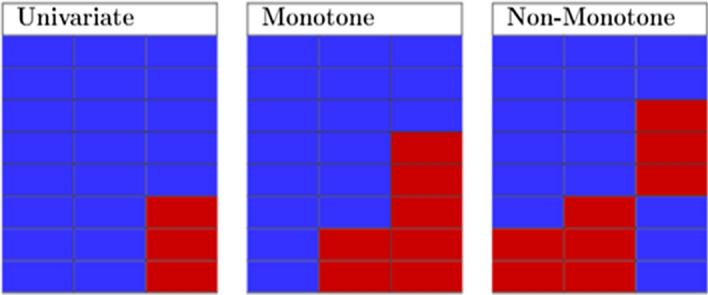
“• Univariate: There is a univariate missing data pattern when only one variable has missing data (Demirtas 2018; Emmanuel et al. 2021).”
Prediction of hydrogel swelling states using machine learning methods
Wang, Y., Wallmersperger, T., & Ehrenhofer, A. (2024) · Engineering Reports · doi:10.1002/eng2.12893 · Cited by 38
“49 In the following, we list some of the most utilized imputation methods in literature: (i) mean value imputation 50 ; (ii) median value imputation; (iii) iterative imputation 48,51 ; (iv) k-NN imputation 52 ; (v) regression imputation 53 ; (vi) multiple imputation.”
Vaziri, P., Ahmadi, S., Daneshfar, F., Sedaee, B., Alimohammadi, H., & Rasaei, M. R. (2024) · SPE Journal · doi:10.2118/221475-pa · Cited by 38
Jiménez, I. A. C., Olivetti, E. C., Vezzetti, E., Moos, S., Celeghin, A., & Marcolin, F. (2024) · Neural Computing and Applications · doi:10.1007/s00521-024-10240-z · Cited by 38
“…[98] is one among the implementations of ensemble learning, where the prediction of more than one model is involved [99]; it is a widespread supervised approach in multiclass classification tasks, and it is suitable for missing data [100] as some EEG data were lost after the removal of artifacts.”
Kasaraneni, P. P., Kumar, Y. V. P., Moganti, G. L. K., & Kannan, R. (2022) · Sensors · doi:10.3390/s22239323 · Cited by 38
MultiMoDN—Multimodal, Multi-Task, Interpretable Modular Networks
Swamy, V., Satayeva, M., Frej, J., Bossy, T., Vogels, T., Jaggi, M., Käser, T., & Hartley, M. (2023) · neural information processing systems · doi:10.52202/075280-1221 · Cited by 38
Hu, Y., Wu, R.-Y., Lin, Y.-C., & Lin, T.-Y. (2024) · BMC Medical Research Methodology · doi:10.1186/s12874-024-02392-2 · Cited by 37
“Con-figuring kNN typically requires selecting an appropriate distance metric—such as Hamming, Euclidean, or Man-hattan distance—and determining the optimal number of neighbors, k , to predict each missing value [9].”
BackgroundMethodInfluentialMahdian, M., Noori, R., Saravani, M. J., Shahvaran, A. R., Shahmohammad, M., Gaffney, P. P. J., Salamattalab, M. M., Anboohi, M. S., Hosseinzadeh, M., Xia, F., et al. (2026) · Water Research · doi:10.1016/j.watres.2026.125367 · Cited by 37
“The KNN algorithm estimates missing entries based on the most similar observations in the feature space, using Euclidean distance as the similarity metric, within the multidimensional feature space (Emmanuel et al. , 2021).”
Santos, M. S., Abreu, P. H., Fernández, A., Luengo, J., & Santos, J. A. M. (2022) · Engineering Applications of Artificial Intelligence · doi:10.1016/j.engappai.2022.104791 · Cited by 37
An adaptive Laplacian weight random forest imputation for imbalance and mixed-type data
Ren, L., Sekhari, A., Zhang, H., Wang, T., & Bouras, A. (2022) · Information Systems · doi:10.1016/j.is.2022.102122 · Cited by 37
Spence, C., Shah, O. A., Cebula, A., Tucker, K., Sochart, D. H., Kader, D. F., & Asopa, V. (2023) · BJS Open · doi:10.1093/bjsopen/zrad113 · Cited by 36
“Three of 14 studies 22,25,39 did not clearly state how missing data were managed; mismanagement of missing data can lead to reduced statistical power and create bias within the results following ML analysis 53–55 .”
BackgroundTutsoy, Ö., & Sümbül, H. E. (2024) · Briefings in Bioinformatics · doi:10.1093/bib/bbae344 · Cited by 36
“[7] examined the k -nearest neighbours ( k-NN) and search-based random forest unsupervised learning algorithms with 5% to 20% missingness rates.”
Khalil, A. A., Liu, Z., Fathalla, A., Ali, A., & Salah, A. (2024) · IEEE Access · doi:10.1109/access.2024.3468993 · Cited by 36
“Furthermore, insurers may be exposed to higher levels of risk if critical data points are missing from fraud detection systems, which could make it harder to identify suspicious patterns and behaviors [49].”
BackgroundMethodChung, H., Ko, Y., Lee, I., Hur, H., Huh, J., Han, S., Kim, K. W., & Lee, J. (2023) · Journal of Cachexia Sarcopenia and Muscle · doi:10.1002/jcsm.13176 · Cited by 36
“36 In the future, it is important to collect more data with as much information as possible.”
BackgroundEriksson, M. H., Ripart, M., Piper, R. J., Moeller, F., Das, K. B., Eltze, C. M., Cooray, G., Booth, J., Whitaker, K. J., Chari, A., et al. (2023) · Epilepsia · doi:10.1111/epi.17637 · Cited by 36
Study on Data Preprocessing for Machine Learning Based on Semiconductor Manufacturing Processes
Park, H.-J., Koo, Y.-S., Yang, H.-Y., Han, Y., & Nam, C. (2024) · Sensors · doi:10.3390/s24175461 · Cited by 35
“Moreover, manual data entry can result in input errors [7].”
BackgroundKhan, M. Z. I., Ren, J.-N., Cao, C., Ye, H.-Y.-X., Wang, H., Guo, Y.-M., Yang, J., & Chen, J. (2024) · Frontiers in Pharmacology · doi:10.3389/fphar.2024.1441587 · Cited by 34
An examination of machine learning-based credit card fraud detection systems
Sinha, H. (2024) · International Journal of Science and Research Archive · doi:10.30574/ijsra.2024.12.2.1456 · Cited by 33
Review of machine learning methods for sea level change modeling and prediction
Ayinde, A. S., Huaming, Y. U., & Kejian, W. (2024) · The Science of The Total Environment · doi:10.1016/j.scitotenv.2024.176410 · Cited by 33
Petrosillo, I., Lovello, E. M., Drago, C., Magazzino, C., & Valente, D. (2024) · Environmental and Sustainability Indicators · doi:10.1016/j.indic.2024.100482 · Cited by 33
Meola, A., Winkler, M., & Weinrich, S. (2023) · Bioresource Technology · doi:10.1016/j.biortech.2023.128604 · Cited by 32
Applying the Huntington’s Disease Integrated Staging System (HD-ISS) to Observational Studies
Long, J. D., Gantman, E. C., Mills, J. A., Vaidya, J. G., Mansbach, A., Tabrizi, S. J., & Sampaio, C. (2023) · Journal of Huntington s Disease · doi:10.3233/jhd-220555 · Cited by 32
“The ggplot2 [22] package was used for graphing, missRanger [23] for MissForest data imputation, MatchIt [24] for propensity score matching, cutpointr [19] for cut-point estimation, and graph smoothers were generalized additive (mixed) models (GAMs or GAMMs) estimated with mgcv [25].”
Semantic decision Trees: A new learning system for the ID3-Based algorithm using a knowledge base
Chanmee, S., & Kesorn, K. (2023) · Advanced Engineering Informatics · doi:10.1016/j.aei.2023.102156 · Cited by 32
1D Convolutional LSTM-based wind power prediction integrated with PkNN data imputation technique
Shahid, F., Mehmood, A., Khan, R., Smadi, A. A., Yaqub, M., Alsmadi, M. K., & Zheng, Z. (2023) · Journal of King Saud University - Computer and Information Sciences · doi:10.1016/j.jksuci.2023.101816 · Cited by 32
“These models may be used for various purposes, such as developing a plan for a future energy system, discovering strategies to cut CO2 emissions, or calculating investment costs (Emmanuel et al., 2021).”
Tamanna, T., Mahmud, S., Salma, N., Hossain, M. M., & Karim, M. R. (2025) · Scientific Reports · doi:10.1038/s41598-025-99288-y · Cited by 31
“Among all the methods, random forest considered superior to impute missing values, so this research deployed random forest for imputing missing values 81–83 .”
Multimodal Learning for Multi-omics: A Survey
Tabakhi, S., Suvon, M. N. I., Ahadian, P., & Lu, H. (2023) · World Scientific Annual Review of Artificial Intelligence · doi:10.1142/s2811032322500047 · Cited by 31
DEGAIN: Generative-Adversarial-Network-Based Missing Data Imputation
Shahbazian, R., & Trubitsyna, I. (2022) · Information · doi:10.3390/info13120575 · Cited by 31
“KNN-based algorithms require heavy calculations to find the nearest neighbors [29].”
Machine learning determination of applied behavioral analysis treatment plan type
Maharjan, J., Garikipati, A., Dinenno, F. A., Ciobanu, M., Barnes, G., Browning, E., Decurzio, J., Mao, Q., & Das, R. (2023) · Brain Informatics · doi:10.1186/s40708-023-00186-8 · Cited by 31
“While the chosen ML model (XGBoost) is able to handle missing data, a high rate of missingness in the data can lead the model to draw wrong conclusions [35], and thus, input features were checked for a high missing rate (> 50%).”
BackgroundMethodShang, M., Liang, C., Luo, J., & Zhang, H. (2023) · Information Sciences · doi:10.1016/j.ins.2023.119038 · Cited by 31
Ferri, P., Romero-García, N., Badenes, R., Lora, D., Morales, T. G., de la Cámara, A. G., Garcia-Gomez, J. M., & Sáez, C. (2023) · Computer Methods and Programs in Biomedicine · doi:10.1016/j.cmpb.2023.107803 · Cited by 31
Karthick, K., K, A. S., Shanmugasundaram, R., Safran, M., Alfarhood, S., & Al-Rajhi, W. (2023) · Sustainability · doi:10.3390/su151813424 · Cited by 31
Metadata
- Authors
- Emmanuel, T., Maupong, T., Mpoeleng, D., Semong, T., Mphago, B., & Tabona, O.
- Affiliations
- Botswana International University of Science and Technology (BW)
- Corresponding author
- Emmanuel, Tlamelo
- Venue
- Journal of Big Data
- Published
- 2021-10-27
- Volume
- 8
- Issue
- 1
- Pages
- 140-140
- ISSN
- 2196-1115 (ISSN-L)
- PMC
- PMC8549433
- OpenAlex
- W3170657538
- Semantic Scholar
- e2e8ea9bcdb83deb2787ce89db1b51f7ccb1bd1e
- Cited by
- 1,067
- References
- 183
- Citations by year
- 2026: 203 · 2025: 345 · 2024: 284 · 2023: 164 · 2022: 69 · 2021: 2
- FWCI
- 96.80
- Type
- journal article
- Language
- en
- Open access
- gold
- doi.org
- Licence
- cc-by
- creativecommons.org/licenses/by/4.0 (tdm)
- creativecommons.org/licenses/by/4.0 (vor)
- Locations
- Journal Of Big Data (publishedVersion, cc-by)
- Europe PMC (PubMed Central) (publishedVersion, other-oa)
- PubMed Central (publishedVersion, cc-by)
- PubMed (publishedVersion)
- DOAJ (DOAJ: Directory of Open Access Journals) (submittedVersion, cc-by-sa)
- Funders
- Botswana International University of Science and Technology
- Topics
- Physical Sciences › Mathematics › Statistics and Probability › Statistical Methods and Bayesian Inference
- Physical Sciences › Computer Science › Artificial Intelligence › Machine Learning and Data Classification
- Physical Sciences › Computer Science › Information Systems › Data Mining and Machine Learning Applications
- Keywords
- missing data, missing completely at random, missing at random, missing not at random, k-nearest neighbors imputation, missForest, random forest, Iris dataset
About these checks
Registry, retraction, Cites and statistics results are computed, not judged, with one exception: a printed reference that no index lists is read once by a model before it counts as a citation error. Claims are extracted by a model and kept only when their quote appears verbatim in the text; each cited source is then checked, with a model’s help, for whether it says what the claim relies on. Those verdicts can be wrong — read the claim’s quote and the cited source before relying on one.
Statistics and arithmetic are recomputed, not judged.
Confidence bands are shown only for fields calibrated on our annotated test set. None is calibrated yet, so no band is shown.
What counts as a claim ›How we measure confidence ›How we check this ›
Are you an author, or do you see a problem with this page? Request a review
Data sources
Bibliographic data: Semantic Scholar, OpenAlex, Crossref.
Contains information from the Semantic Scholar Academic Graph Datasets, made available under the ODC Attribution License (ODC-BY 1.0).
Semantic Scholar’s data is described in: Kinney, R., et al. (2023). The Semantic Scholar Open Data Platform. arXiv:2301.10140.
