

In vitro assessment of a computer-designed potential anticancer agent in cervical cancer cells
Open accessThe DOI matches its Crossref record; 44 of the 44 references it cites were found in a registry or an index.
Abstract
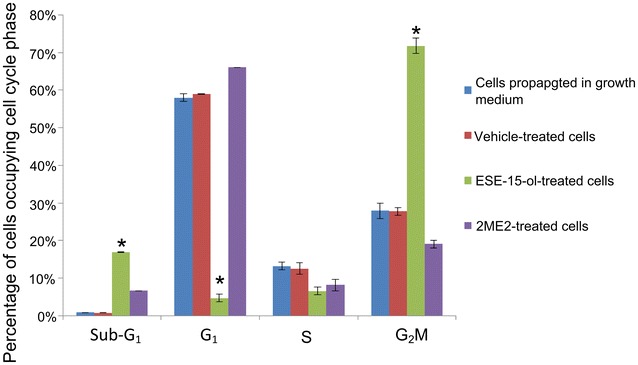
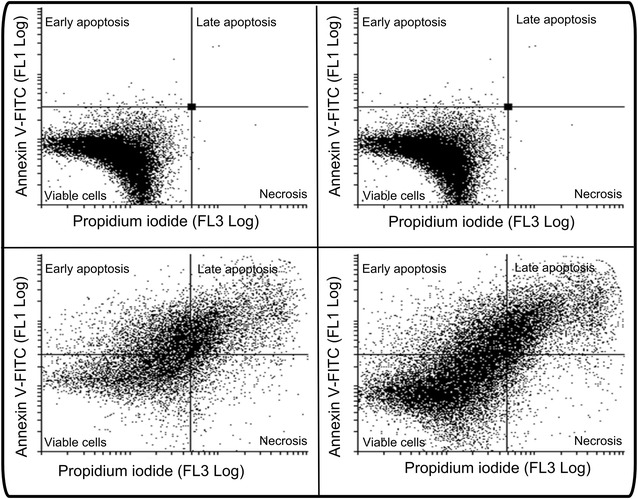
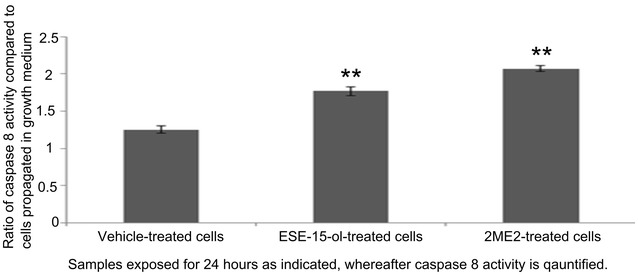
Computer-based technology is becoming increasingly essential in biological research where drug discovery programs start with the identification of suitable drug targets. 2-Methoxyestradiol (2ME2) is a 17β-estradiol metabolite that induces apoptosis in various cancer cell lines including cervical cancer, breast cancer and multiple myeloma. Owing to 2ME2’s poor in vivo bioavailability, our laboratory in silico-designed and subsequently synthesized a novel 2ME2 analogue, 2-ethyl-3- O -sulphamoyl-estra-1,3,5(10),15-tetraen-17-ol (ESE-15-ol), using receptor- and ligand molecular modeling. In this study, the biological effects of ESE-15-ol (180 nM) and its parent molecule, 2ME2 (1 µM), were assessed on morphology and apoptosis induction in cervical cancer cells. Transmission electron microscopy, scanning electron microscopy and polarization-optical transmitted light differential interference contrast (PlasDIC) images demonstrated morphological hallmarks of apoptosis including apoptotic bodies, shrunken cells, vacuoles, reduced cell density and cell debris. Flow cytometry analysis showed apoptosis induction by means of annexin V-FITC staining. Cell cycle analysis showed that ESE-15-ol exposure resulted in a statistically significant increase in the G 2 M phase (72%) compared to 2ME2 (19%). Apoptosis induction was more pronounced when cells were exposed to ESE-15-ol compared to 2ME2. Spectrophotometric analysis of caspase 8 activity demonstrated that 2ME2 and ESE-15-ol both induced caspase 8 activation by 2- and 1.7-fold respectively indicating the induction of the apoptosis. However, ESE-15-ol exerted all of the above-mentioned effects at a much lower pharmacological concentration (180 nM) compared to 2ME2 (1 µM physiological concentration). Computer-based technology is essential in drug discovery and together with in vitro studies for the evaluation of these in silico-designed compounds, drug development can be improved to be cost effective and time consuming. This study evaluated the anticancer potential of ESE-15-ol, an in silico-designed compound in vitro. Research demonstrated that ESE-15-ol exerts antiproliferative activity accompanied with apoptosis induction at a nanomolar concentration compared to the micromolar range required by 2ME2. This study is the first study to demonstrate the influence of ESE-15-ol on morphology, cell cycle progression and apoptosis induction in HeLa cells. In silico-design by means of receptor- and ligand molecular modeling is thus effective in improving compound bioavailability while preserving apoptotic activity in vitro.
Overview
The claims and statistics of this paper haven’t been checked yet.
Free: it reads the open-access text and checks the first 5 claims that cite a source we can check. Create a free account to check every claim.
Integrity signals
Registry
Cites
Statistics
Figures
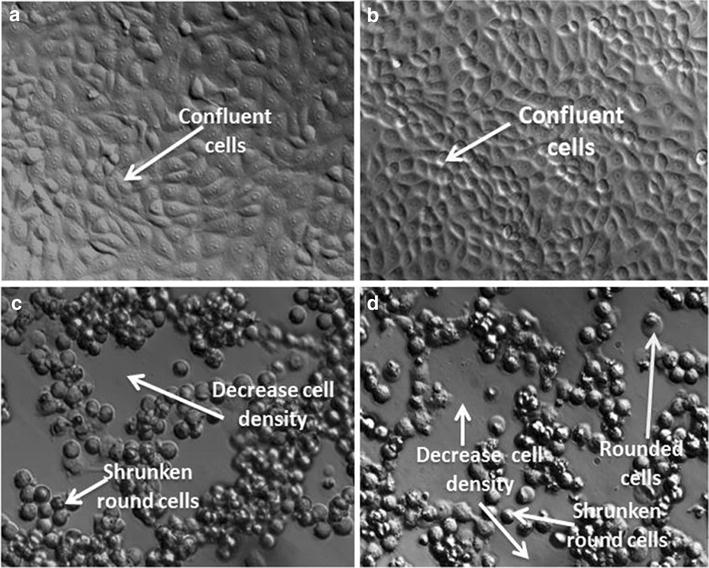
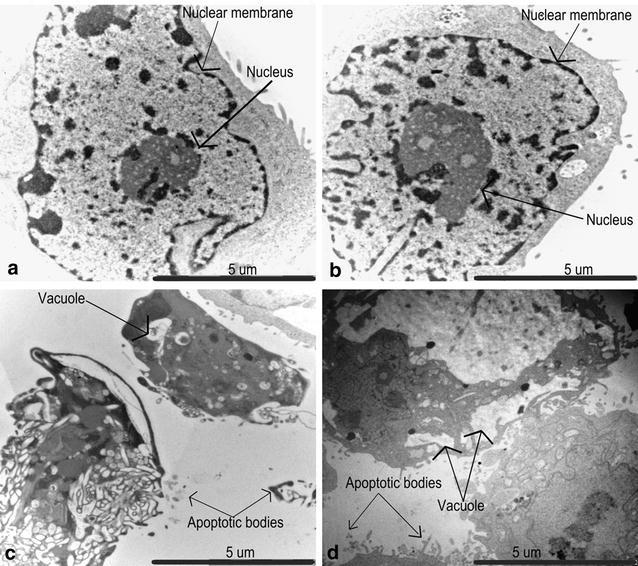
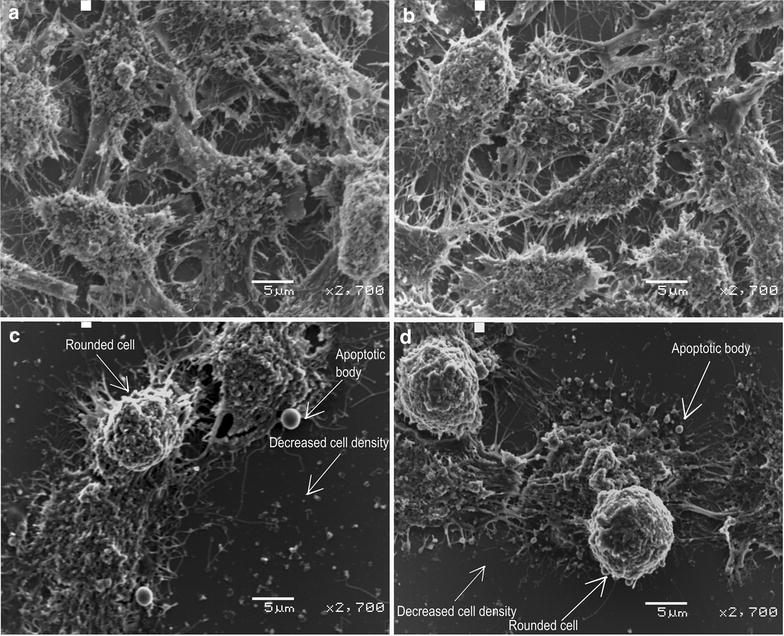
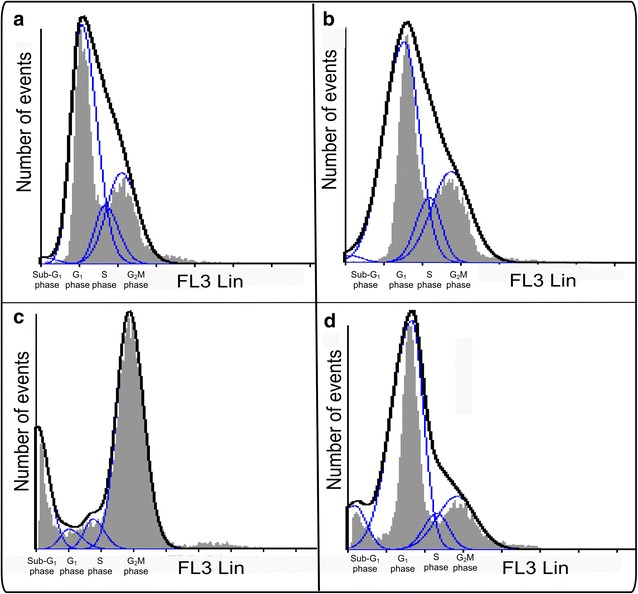
Verification
Claims the paper makes
The claims and statistics of this paper haven’t been checked yet.
Free: it reads the open-access text and checks the first 5 claims that cite a source we can check. Create a free account to check every claim.
Claims other papers make about this one
Each is checked against this paper’s own text: does it say what the citing paper says it does?
The source backs part of the claim, not all of it — or backs it for a different population, condition or comparison.
In the citing paper
“Widely used models such as HeLa, HepG2, SH-SY5Y, and 3T3 exemplify this paradox: despite their convenience and historical utility, their biological behavior increasingly reflects adaptation to artificial culture conditions rather than native physiology”
From Primary cell cultures versus immortalized cell lines: critical comparative insights into biological fidelity and translational applications (2026) · cites this paper as Visagie et al. 2016
Experimental — accuracy not yet measured
Self-check
Percentages, sums and reported differences re-computed from the paper’s own numbers.
The self-check needs the paper’s full text.
Citations
Cites
Vermes, I., Haanen, C., Steffens-Nakken, H., & Reutellingsperger, C. (1995) · Journal of Immunological Methods · doi:10.1016/0022-1759(95)00072-i · Cited by 5,410 · cited 1×
“…populations of cells were distinguished: those that were unlabelled (viable cells), those that have bound annexin V-FITC only (early apoptotic), those that have been stained with PI (necrotic) and those that have both bound annexin V and been labelled with PI (late apoptotic/necrotic cells) [24].”
BackgroundApoptosis in cancer: from pathogenesis to treatment
Wong, R. S. (2011) · Journal of Experimental & Clinical Cancer Research · doi:10.1186/1756-9966-30-87 · Cited by 2,836 · cited 2×
“Apoptosis is generally categorized as one of three modes namely, intrinsic (also known as the mitochondrial pathway), extrinsic (also known as death receptor pathway) and the endoplasmic pathway [25, 26].”
BackgroundCoupling endoplasmic reticulum stress to the cell death program
Rao, R. V., Ellerby, H. M., & Bredesen, D. E. (2004) · Cell Death & Differentiation · doi:10.1038/sj.cdd.4401378 · Cited by 1,209
Computer-aided drug discovery and development (CADDD): in silico-chemico-biological approach
Kapetanovic, I. M. (2008) · Chemico-Biological Interactions · doi:10.1016/j.cbi.2006.12.006 · Cited by 662 · cited 1×
“Commonly used computational approaches include ligand-binding drug design, structure-based drug design (docking studies) and structure-activity relationships [12].”
MethodMitochondrial outer membrane permeabilization during apoptosis: the innocent bystander scenario
Chipuk, J. E., Bouchier-Hayes, L., & Green, D. R. (2006) · Cell Death & Differentiation · doi:10.1038/sj.cdd.4401963 · Cited by 631 · cited 1×
“It is characterised by mitochondrial outer membrane permeabilization and activation of initiator caspase 9 [26, 27].”
BackgroundAdvantages and limitations of current network inference methods
De Smet, R., & Marchal, K. (2010) · Nature Reviews Microbiology · doi:10.1038/nrmicro2419 · Cited by 515
The application of in silico drug-likeness predictions in pharmaceutical research
Tian, S., Wang, J., Li, Y., Li, D., Xu, L., & Hou, T. (2015) · Advanced Drug Delivery Reviews · doi:10.1016/j.addr.2015.01.009 · Cited by 498 · cited 1×
“In silico-design process takes into account parameters such as activity, absorption, distribution, metabolism and excretion and has resulted in a rational drug identification tool [33].”
Targeting Microtubules for Cancer Chemotherapy
Zhou, J., & Giannakakou, P. (2005) · Current Medicinal Chemistry-Anti-Cancer Agents · doi:10.2174/1568011053352569 · Cited by 468 · cited 2×
“2ME2 induces apoptosis by activating the intrinsic-and extrinsic cascade by both caspase depend- ent-and independent pathways [4].”
BackgroundThe genomic and transcriptomic landscape of a HeLa cell line
Landry, J. J. M., Pyl, P. T., Rausch, T., Zichner, T., Tekkedil, M. M., Stütz, A. M., Jauch, A., Aiyar, R. S., Pau, G., Delhomme, N., et al. (2013) · G3 Genes|Genomes|Genetics · doi:10.1534/g3.113.005777 · Cited by 416 · cited 2×
“Plas-DIC provides reproducibly high-quality imaging of individual cells, cell clusters creating a relief-type impression regardless of the of the plastic cell culture vessels thickness compared to the glass-bottom vessels required for differential interference contrast techniques [17, 18].”
BackgroundIn silico ADME/T modelling for rational drug design
Wang, Y., Xing, J., Xu, Y., Zhou, N., Peng, J., Xiong, Z., Liu, X., Luo, X., Luo, C., Chen, K., et al. (2015) · Quarterly Reviews of Biophysics · doi:10.1017/s0033583515000190 · Cited by 367 · cited 1×
“Computer modelling techniques benefit the drug development industry since this approach reduces the cost of drug development by 50% [32].”
Background
Cited by
Brzeziński, M., Socka, M., Makowski, T., Kost, B., Cieślak, M., & Królewska‐Golińska, K. (2021) · Colloids and Surfaces B Biointerfaces · doi:10.1016/j.colsurfb.2021.111598 · Cited by 51
Enhanced phytoremediation of TNT and cobalt co-contaminated soil by AfSSB transformed plant
Gao, J., Peng, R., Zhu, B., Tian, Y., Xu, J., Wang, B., Fu, X., Han, H.-J., Wang, L., Zhang, F., et al. (2021) · Ecotoxicology and Environmental Safety · doi:10.1016/j.ecoenv.2021.112407 · Cited by 23
Visagie, M. H., van den Bout, I., & Joubert, A. M. (2017) · PLoS ONE · doi:10.1371/journal.pone.0176006 · Cited by 14
Self-citationEl‐Sherbiny, M. M., El‐Hefnawy, M. E., & Tayel, A. A. (2024) · International Journal of Biological Macromolecules · doi:10.1016/j.ijbiomac.2024.137320 · Cited by 13
Ozfiliz-Kilbas, P., Sarikaya, B., Yerlikaya, P. O., Gürkan, A. Ç., Arısan, E. D., Temizci, B., & Palavan-Unsal, N. (2018) · Molecular Biology Reports · doi:10.1007/s11033-018-4222-8 · Cited by 14
Metadata
- Authors
- Visagie, M. H., Jaiswal, S. R., & Joubert, A. M.
- Affiliations
- University of Pretoria (ZA)
- Corresponding author
- Visagie, Michelle Helen
- Venue
- Biological Research
- Published
- 2016-11-02
- Volume
- 49
- Issue
- 1
- Pages
- 43-43
- ISSN
- 0716-9760 (ISSN-L)
- 0717-6287
- PMC
- PMC5093968
- OpenAlex
- W2548500814
- Cited by
- 11
- References
- 44
- Citations by year
- 2026: 1 · 2025: 1 · 2024: 2 · 2021: 3 · 2019: 1 · 2018: 2 · 2017: 1
- FWCI
- 1.08
- Type
- journal article
- Language
- en
- Open access
- gold
- doi.org
- Licence
- cc-by
- Locations
- Biological Research (publishedVersion, cc-by)
- PubMed Central (publishedVersion, cc-by)
- PubMed (publishedVersion)
- LA Referencia (Red Federada de Repositorios Institucionales de Publicaciones Científicas) (publishedVersion, other-oa)
- Americanae (AECID Library) (submittedVersion, cc-by)
- DOAJ (DOAJ: Directory of Open Access Journals) (submittedVersion)
- UpSpace Institutional Repository (University of Pretoria) (submittedVersion, cc-by)
- Funders
- National Research Foundation
- Cancer Association of South Africa
- University of Pretoria
- Topics
- Life Sciences › Biochemistry, Genetics and Molecular Biology › Endocrinology › Estrogen and related hormone effects
- Physical Sciences › Chemistry › Organic Chemistry › Heterocyclic Compound Synthesis and Bioactivity
- Life Sciences › Pharmacology, Toxicology and Pharmaceutics › Drug Discovery › Computational Drug Discovery Methods
- Keywords
- 2-methoxyestradiol, cervical cancer cells, apoptosis induction, G2/M cell cycle arrest, caspase-8 activation, anticancer agents, computer-aided drug design, estradiol metabolites, antiproliferative activity, drug bioavailability
- MeSH terms
- 2-Methoxyestradiol, Antineoplastic Agents, Carbonic Anhydrase Inhibitors, Cell Cycle, Cells, Cultured, Uterine Cervical Neoplasms, Culture Media, Estradiol, Female, Flow Cytometry, HeLa Cells, Humans, Microscopy, Electron, Scanning, Microscopy, Polarization, Sulfonamides, Time Factors, Reproducibility of Results, Computer-Aided Design, Apoptosis, Microscopy, Electron, Transmission, Caspase 8
About these checks
Registry, retraction, Cites and statistics results are computed, not judged, with one exception: a printed reference that no index lists is read once by a model before it counts as a citation error. Claims are extracted by a model and kept only when their quote appears verbatim in the text; each cited source is then checked, with a model’s help, for whether it says what the claim relies on. Those verdicts can be wrong — read the claim’s quote and the cited source before relying on one.
Statistics and arithmetic are recomputed, not judged.
Confidence bands are shown only for fields calibrated on our annotated test set. None is calibrated yet, so no band is shown.
What counts as a claim ›How we measure confidence ›How we check this ›
Are you an author, or do you see a problem with this page? Request a review
Data sources
Bibliographic data: Semantic Scholar, OpenAlex, Crossref.
Contains information from the Semantic Scholar Academic Graph Datasets, made available under the ODC Attribution License (ODC-BY 1.0).
Semantic Scholar’s data is described in: Kinney, R., et al. (2023). The Semantic Scholar Open Data Platform. arXiv:2301.10140.
