

Annotation inconsistencies beyond sequence similarity-based function prediction – phylogeny and genome structure
Open accessThe DOI matches its Crossref record; 24 of the 24 references it cites were found in a registry or an index.
Abstract
The function annotation process in computational biology has increasingly shifted from the traditional characterization of individual biochemical roles of protein molecules to the system-wide detection of entire metabolic pathways and genomic structures. The so-called genome-aware methods broaden misannotation inconsistencies in genome sequences beyond protein function assignments, encompassing phylogenetic anomalies and artifactual genomic regions. We outline three categories of error propagation in databases by providing striking examples – at various levels of appreciation by the community from traditional to emerging, thus raising awareness for future solutions.
Overview
The claims and statistics of this paper haven’t been checked yet.
Free: it reads the open-access text and checks the first 5 claims that cite a source we can check. Create a free account to check every claim.
Integrity signals
Registry
Cites
Statistics
Figures

Verification
Claims the paper makes
The claims and statistics of this paper haven’t been checked yet.
Free: it reads the open-access text and checks the first 5 claims that cite a source we can check. Create a free account to check every claim.
Claims other papers make about this one
Each is checked against this paper’s own text: does it say what the citing paper says it does?
The source backs part of the claim, not all of it — or backs it for a different population, condition or comparison.
In the citing paper
“Articles with wrongly annotated nucleotide sequence reagents could contribute to the spread of misinformation with the gene research literature, as described for incorrectly annotated genes (61, 62).”
From Identification of human gene research articles with wrongly identified nucleotide sequences (2022) · cites this paper as [61]
Experimental — accuracy not yet measuredThe cited source says what the claim attributes to it.
In the citing paper
“Such erroneous gene calls may (i) become the cause of downstream gene-prediction or annotation errors, (ii) generate false positive predictions for gene/protein associations and (iii) hinder large-scale genome evolution studies (115,116).”
From Tandem repeats lead to sequence assembly errors and impose multi-level challenges for genome and protein databases (2019) · cites this paper as [116]
Self-check
Percentages, sums and reported differences re-computed from the paper’s own numbers.
The self-check needs the paper’s full text.
Citations
Cites
Pfam: the protein families database
Finn, R. D., Bateman, A., Clements, J., Coggill, P., Eberhardt, R. Y., Eddy, S. R., Heger, A., Hetherington, K., Holm, L., Mistry, J., et al. (2014) · Nucleic Acids Research · doi:10.1093/nar/gkt1223 · Cited by 6,148
Genomic sequence of the pathogenic and allergenic filamentous fungus Aspergillus fumigatus
Nierman, W. C., Pain, A., Anderson, M. J., Wortman, J. R., Kim, H. S., Arroyo, J., Berriman, M., Abe, K., Archer, D. B., Bermejo, C., et al. (2005) · Nature · doi:10.1038/nature04332 · Cited by 1,391 · cited 1×
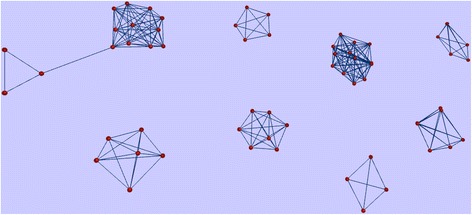
“Six of the eight displayed families originate from a single genome project [23] particular NGS short reads and their assemblies – which follows, as the main focus of this commentary.”
BackgroundSchaffer, A. A. (2001) · Nucleic Acids Research · doi:10.1093/nar/29.14.2994 · Cited by 1,386 · cited 1×
“Network view of sequence similarities detected by BlastP [21], generated with BioLayout [22].”
MethodThe Universal Protein Resource (UniProt): an expanding universe of protein information
Wu, C. H. (2006) · Nucleic Acids Research · doi:10.1093/nar/gkj161 · Cited by 1,110 · cited 2×
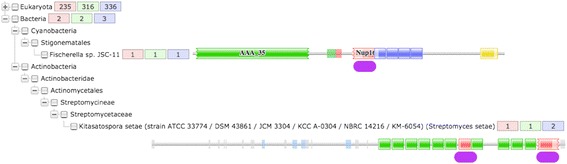
“These phylogenetic anomalies are present both in Pfam (PF11715) [24], as well as the corresponding UniProt entries [14].”
BackgroundAnnotation Error in Public Databases: Misannotation of Molecular Function in Enzyme Superfamilies
Schnoes, A. M., Brown, S. D., Dodevski, I., & Babbitt, P. C. (2009) · PLoS Computational Biology · doi:10.1371/journal.pcbi.1000605 · Cited by 698 · cited 1×
“Ways to address this general issue are community-based initiatives for model organisms, from which most other annotations are drawn using various computational methods [3], as well as manual curation of individual families within superfamilies [12].”
BackgroundAutomated protein function prediction--the genomic challenge
Friedberg, I. (2006) · Briefings in Bioinformatics · doi:10.1093/bib/bbl004 · Cited by 366
Intrinsic errors in genome annotation
DEVOS, D., & VALENCIA, A. (2001) · Trends in Genetics · doi:10.1016/s0168-9525(01)02348-4 · Cited by 294 · cited 1×
“The strategy of sequence similarity-based function prediction is well-understood, as the general categories of intrinsic errors for genome-wide annotation have been identified [7].”
BackgroundA survey of error-correction methods for next-generation sequencing
Yang, X., Chockalingam, S. P., & Aluru, S. (2013) · Briefings in Bioinformatics · doi:10.1093/bib/bbs015 · Cited by 249 · cited 1×
“In this new era of shotgun sequencing and assembly, short-sequence read collections and incomplete genome surveys, additional checks are absolutely inevit-able [17], to ensure that those – once considered groundbreaking – genome-aware methods achieve their full potential [9].”
BackgroundNeumann, N., Lundin, D., & Poole, A. M. (2010) · PLoS ONE · doi:10.1371/journal.pone.0013241 · Cited by 167 · cited 1×
“Case in point are the Y-Nups, previously verified to be phylogenetically restricted to eukaryotic genomes: in fact, extensive searches across Bacteria and Archaea have never revealed any single instance of a detectable sequence similarity beyond Eukaryotes [15].”
BackgroundModeling the percolation of annotation errors in a database of protein sequences
Gilks, W. R., Audit, B., De Angelis, D., Tsoka, S., & Ouzounis, C. A. (2002) · Bioinformatics · doi:10.1093/bioinformatics/18.12.1641 · Cited by 164 · cited 1×
“The properties of error propagation across databases have been studied with a number of approaches and statistical models [5].”
BackgroundSelf-citation
Cited by
Guidelines for the use and interpretation of assays for monitoring autophagy (4th edition) 1
Klionsky, D. J., Abdel-Aziz, A. K., Abdelfatah, S., Abdellatif, M., Abdoli, A., Abel, S., Abeliovich, H., Abildgaard, M. H., Abudu, Y. P., Acevedo-Arozena, A., et al. (2021) · Autophagy · doi:10.1080/15548627.2020.1797280 · Cited by 2,897
Tørresen, O. K., Star, B., Mier, P., Andrade-Navarro, M. A., Bateman, A., Jarnot, P., Gruca, A., Grynberg, M., Kajava, A. V., Promponas, V. J., et al. (2019) · Nucleic Acids Research · doi:10.1093/nar/gkz841 · Cited by 347
“Such erroneous gene calls may (i) become the cause of downstream gene-prediction or annotation errors, (ii) generate false positive predictions for gene/protein associations and (iii) hinder large-scale genome evolution studies (115,116).”
BackgroundSelf-citationRavcheev, D. A., & Thiele, I. (2017) · Frontiers in Genetics · doi:10.3389/fgene.2017.00111 · Cited by 146
“Thus, a search of orthologs as described in Approach, Tools, and Databases is often incorrectly applied to large protein families containing proteins with different functions (Rodionov, 2007; Promponas et al., 2015).”
BackgroundDanchin, A., Ouzounis, C., Tokuyasu, T., & Zucker, J. (2018) · Microbial Biotechnology · doi:10.1111/1751-7915.13284 · Cited by 56
“In parallel, many experiments revealed that annotation by similarity kept producing errors that percolated throughout databases (Promponas et al. , 2015).”
BackgroundSelf-citationFunctional Annotations of Paralogs: A Blessing and a Curse
Zallot, R., Harrison, K., Kolaczkowski, B., & de Crécy‐Lagard, V. (2016) · Life · doi:10.3390/life6030039 · Cited by 56
“Once made, functional annotation errors can be difficult to correct in large sequence databases and can often “propagate” themselves to newly sequenced genomes through “(mis)annotation transfer” [36–39].”
Background
Metadata
- Authors
- Promponas, V. J., Iliopoulos, I., & Ouzounis, C. A.
- Affiliations
- University of Cyprus (CY)
- University of Crete (GR)
- Centre for Research and Technology Hellas (GR)
- Corresponding author
- Ouzounis, Christos A.
- Venue
- Standards in Genomic Sciences
- Published
- 2015-11-19
- Volume
- 10
- Issue
- 1
- Pages
- 108-108
- ISSN
- 1944-3277 (ISSN-L)
- PMC
- PMC4653902
- OpenAlex
- W2184129002
- Cited by
- 43
- References
- 24
- Citations by year
- 2026: 2 · 2025: 4 · 2024: 3 · 2023: 2 · 2022: 6 · 2021: 8 · 2020: 2 · 2019: 5 · 2018: 3 · 2017: 4 · 2016: 3
- FWCI
- 1.45
- Type
- journal article
- Language
- en
- Open access
- gold
- doi.org
- Licence
- cc-by
- creativecommons.org/licenses/by/4.0 (tdm)
- creativecommons.org/licenses/by/4.0 (vor)
- Locations
- Standards in Genomic Sciences (publishedVersion, cc-by)
- PubMed Central (publishedVersion, cc-by)
- PubMed (publishedVersion)
- Funders
- University of Miami
- University of Toronto
- University of California, San Francisco
- Topics
- Life Sciences › Biochemistry, Genetics and Molecular Biology › Molecular Biology › Genomics and Phylogenetic Studies
- Life Sciences › Biochemistry, Genetics and Molecular Biology › Molecular Biology › Bioinformatics and Genomic Networks
- Life Sciences › Biochemistry, Genetics and Molecular Biology › Molecular Biology › Machine Learning in Bioinformatics
- Keywords
- functional annotation, annotation inconsistency, protein function prediction, sequence similarity, genome structure, metabolic pathway prediction, error propagation, genomic databases
About these checks
Registry, retraction, Cites and statistics results are computed, not judged, with one exception: a printed reference that no index lists is read once by a model before it counts as a citation error. Claims are extracted by a model and kept only when their quote appears verbatim in the text; each cited source is then checked, with a model’s help, for whether it says what the claim relies on. Those verdicts can be wrong — read the claim’s quote and the cited source before relying on one.
Statistics and arithmetic are recomputed, not judged.
Confidence bands are shown only for fields calibrated on our annotated test set. None is calibrated yet, so no band is shown.
What counts as a claim ›How we measure confidence ›How we check this ›
Are you an author, or do you see a problem with this page? Request a review
How to cite
Cite CoChat for the checks on this page, and the paper for its own findings.
- This page
- CoChat. (2026). Citation check: Annotation inconsistencies beyond sequence similarity-based function prediction – phylogeny and genome structure. https://app.cochat.ai/papers/10.1186/s40793-015-0101-2
- The paper
- Promponas, V. J., Iliopoulos, I., & Ouzounis, C. A. (2015). Annotation inconsistencies beyond sequence similarity-based function prediction – phylogeny and genome structure. Standards in Genomic Sciences. https://doi.org/10.1186/s40793-015-0101-2
Data sources
Bibliographic data: Semantic Scholar, OpenAlex, Crossref.
Contains information from the Semantic Scholar Academic Graph Datasets, made available under the ODC Attribution License (ODC-BY 1.0).
Semantic Scholar’s data is described in: Kinney, R., et al. (2023). The Semantic Scholar Open Data Platform. arXiv:2301.10140.
