

The effects of Mediterranean diet on cardiovascular risk factors, glycemic control and weight loss in patients with type 2 diabetes: a meta-analysis
Open accessPublished version of a preprint
The DOI matches its Crossref record; 47 of the 47 references it cites were found in a registry or an index.
Abstract
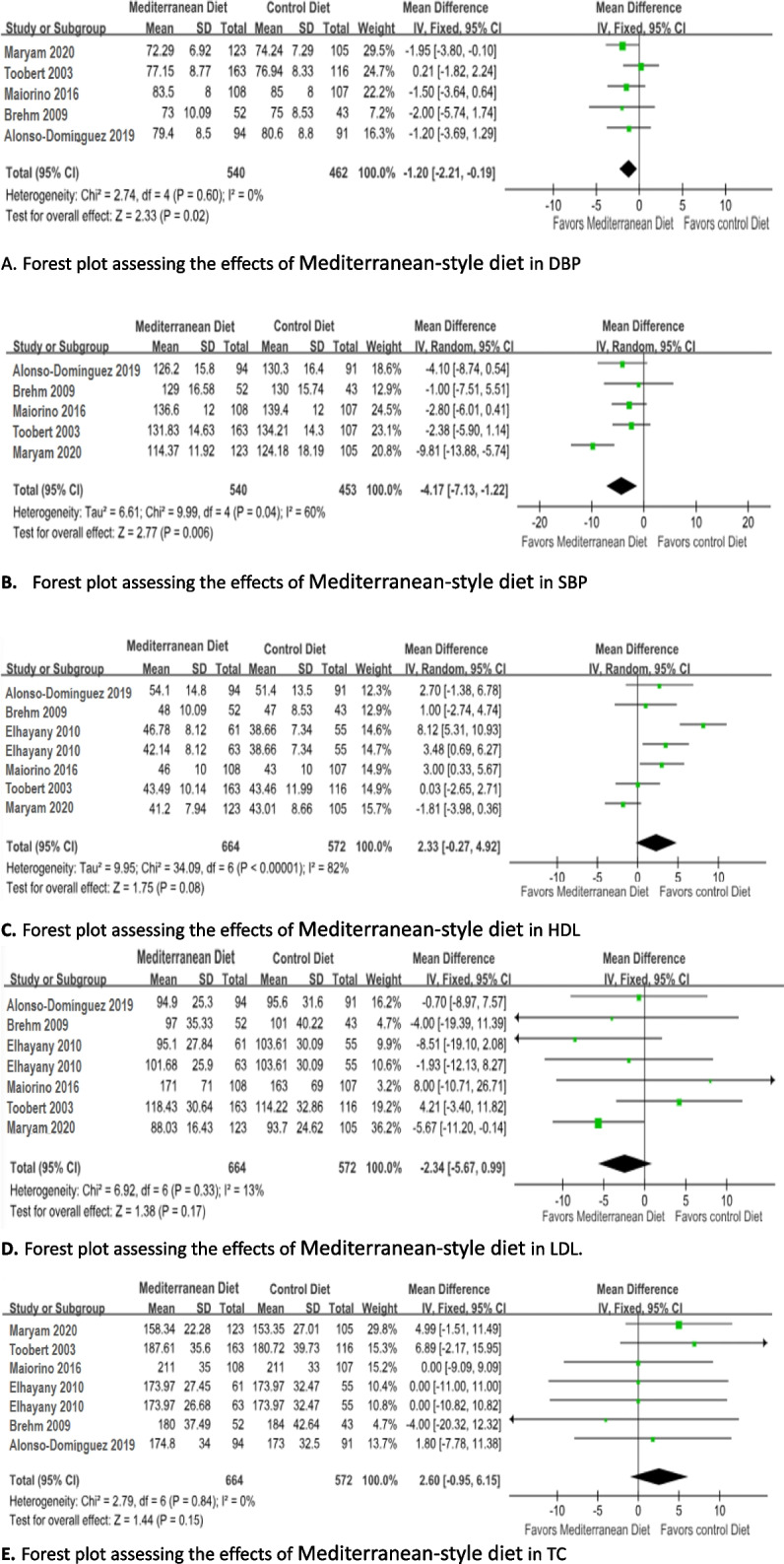
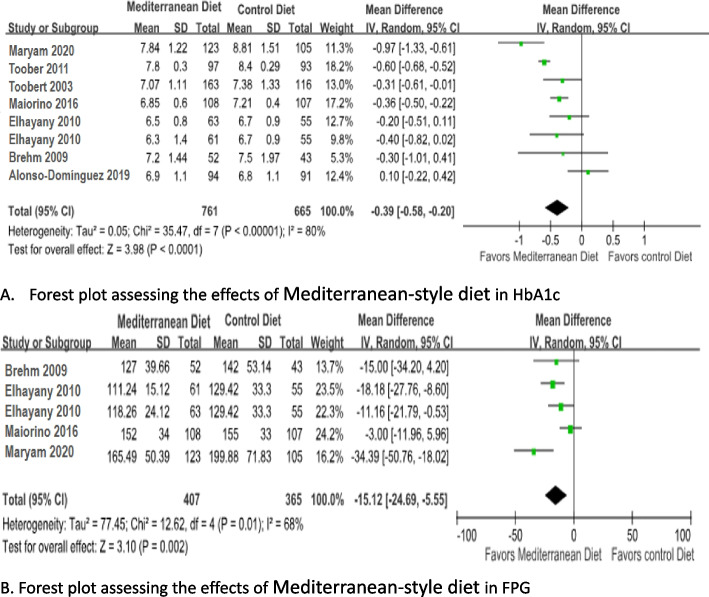
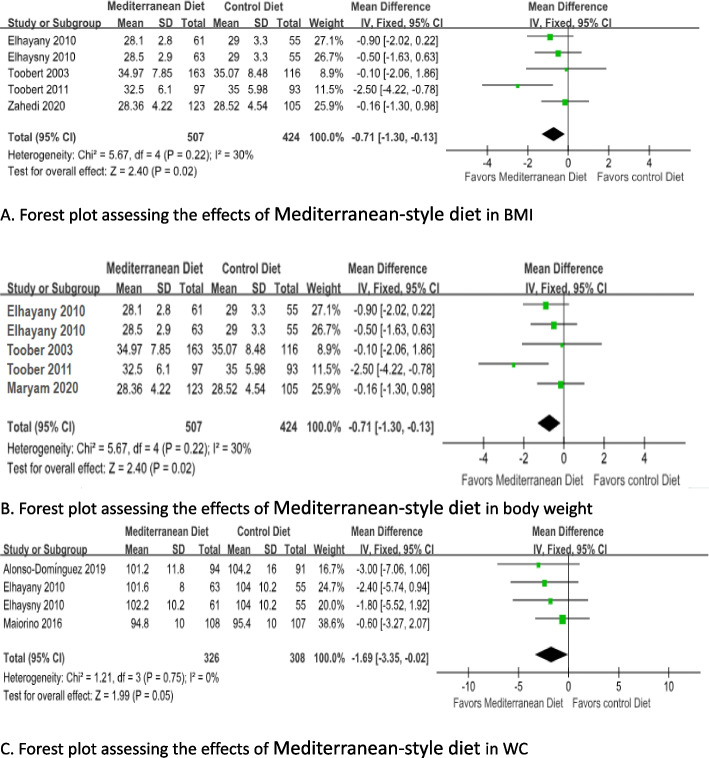
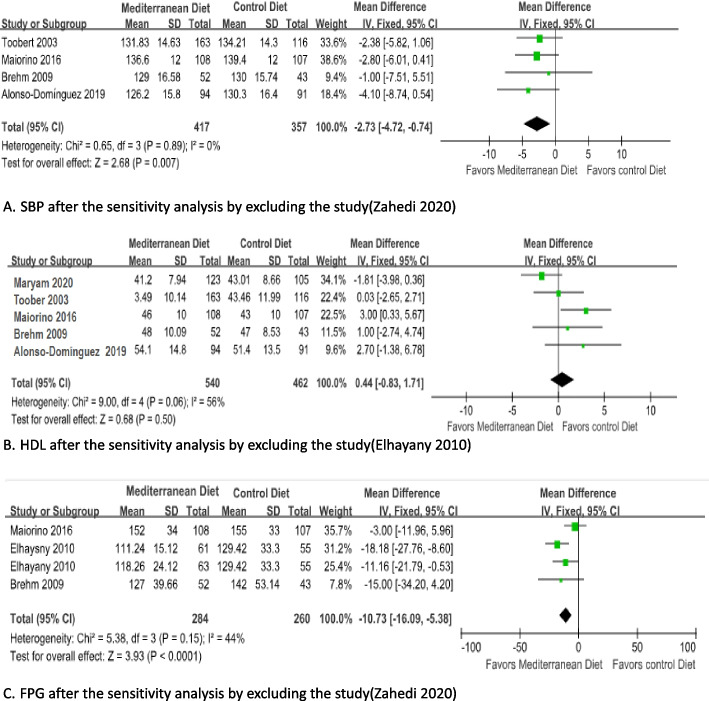
To explore the impact of the Mediterranean diet on cardiovascular risk factors, glycemic control and weight loss in patients with type 2 diabetes(T2D) by a meta-analysis of randomized controlled trials (RCTs). We systematically searched PubMed, Cochrance Library, EMBASE and four Chinese databases to identify RCTs that compared the Mediterranean diet with control diets in patients with T2D up to December 2021. The Risk of Bias of the included studies was assessed using the version 2 of the Cochrane risk-of-bias tools for randomized trials (ROB 2). Seven RCTs with 1371 patients met the eligibility criteria and entered into the meta-analysis. Compared to control diets, the beneficial effects of Mediterranean diet were not statistically significant in high-density lipoprotein (MD = 2.33; 95% CI : -0.27 to 4.92), low-density lipoprotein (MD = -2.34; 95% CI -5.67 to 0.99) and total cholesterol (MD = 2.60; 95% CI: -0.95 to 6.15). But Mediterranean diet led to reduce the level of diastolic blood pressure (MD = -1.20; 95% CI: -2.21 to -0.19) and systolic blood pressure (MD = -4.17; 95% CI: -7.12 to -1.22). Meanwhile, Mediterranean diet showed beneficial effects in glycemic control (HbA1[%]: MD = -0.39, 95% CI: -0.58 to -0.20; fasting plasma glucose: MD = -15.12, 95% CI: -24.69 to -5.55) and weight loss (BMI: MD = -0.71, 95% CI: -1.30 to -0.78; WC: MD = -1.69; 95% CI: -3.35 to -0.02) compared to the control diets. The meta-analysis presented evidence supporting the beneficial effects of the Mediterranean diet on blood pressure, glycemic control, and weight loss. However, the impact of the Mediterranean diet on the lipid profile was not found to be significant, warranting further verification. This Meta-analysis was registered on the INPLASY website (Registration number: INPLASY 202160096).
Overview
The claims and statistics of this paper haven’t been checked yet.
Free: it reads the open-access text and checks the first 5 claims that cite a source we can check. Create a free account to check every claim.
Integrity signals
Registry
Cites
Statistics
Figures
Verification
Claims the paper makes
The claims and statistics of this paper haven’t been checked yet.
Free: it reads the open-access text and checks the first 5 claims that cite a source we can check. Create a free account to check every claim.
Claims other papers make about this one
Each is checked against this paper’s own text: does it say what the citing paper says it does?
The source backs part of the claim, not all of it — or backs it for a different population, condition or comparison.
In the citing paper
“MedDiet, characterized by a high intake of monounsaturated fatty acids, fiber, and antioxidant compounds, is one of the most studied dietary models in the context of cardiovascular disease and type 2 diabetes prevention [52].”
From Dietary and Behavioral Strategies for Weight Loss and Weight Loss Maintenance: A Narrative Review (2025) · cites this paper as [52]
Experimental — accuracy not yet measuredThe source backs part of the claim, not all of it — or backs it for a different population, condition or comparison.
In the citing paper
“In participants with type 2 diabetes, greater decreases in blood pressure were observed compared with LF [52]”
From Dietary and Behavioral Strategies for Weight Loss and Weight Loss Maintenance: A Narrative Review (2025) · cites this paper as [52]
Experimental — accuracy not yet measuredThe check wasn’t confident either way, so it gives no verdict — never disputed.
In the citing paper
“Diabetes-related comorbidities also include metabolic dysfunction–associated steatotic liver disease,19 cancers such as colorectal and breast,20 and dementia.21”
From Diagnosis and Treatment of Type 2 Diabetes in Adults: A Review (2025) · cites this paper as [20]
Experimental — accuracy not yet measuredIn the citing paper
“In individuals with excess body weight and comorbid type 2 diabetes, MedDiet was associated with reductions in HbA1c and fasting glucose [52].”
From Dietary and Behavioral Strategies for Weight Loss and Weight Loss Maintenance: A Narrative Review (2025) · cites this paper as [52]
In the citing paper
“At the other extreme, the MedDiet has consistently demonstrated beneficial effects on glycemic control, insulin sensitivity, blood pressure, and lipid profile, particularly in individuals with type 2 diabetes and high cardiovascular risk [52,54].”
From Dietary and Behavioral Strategies for Weight Loss and Weight Loss Maintenance: A Narrative Review (2025) · cites this paper as [52]
1 more claim about this paper
Create a free account to see every claim other papers make about this one.
Self-check
Percentages, sums and reported differences re-computed from the paper’s own numbers.
The self-check needs the paper’s full text.
Citations
Cites
International Diabetes Federation 2017
Carracher, A. M., Marathe, P. H., & Close, K. L. (2018) · Journal of Diabetes · doi:10.1111/1753-0407.12644 · Cited by 13,418
You are what you eat: Diet, health and the gut microbiota
Zmora, N., Suez, J., & Elinav, E. (2019) · Nature Reviews Gastroenterology & Hepatology · doi:10.1038/s41575-018-0061-2 · Cited by 1,792 · cited 1×
“…Mediterranean diet affects glucagon ‐ like peptide 1 [42], oxyntomodulin [43], postprandial lipemia [44], and antioxidant/ antioxidant enzymes compounds [45], gut microbiota composition and function [46, 47], branched chain aminoacid management [48] and many other aspects have certain significance.”
BackgroundTHE DIET AND 15-YEAR DEATH RATE IN THE SEVEN COUNTRIES STUDY
KEYS, A., MIENOTTI, A., KARVONEN, M. J., ARAVANIS, C., BLACKBURN, H., BUZINA, R., DJORDJEVIC, B. S., DONTAS, A. S., FIDANZA, F., KEYS, M. H., et al. (1986) · American Journal of Epidemiology · doi:10.1093/oxfordjournals.aje.a114480 · Cited by 1,790 · cited 1×
“Mediterranean diet, first proposed by Ancel Key in 1960 [12], is a unique diet of people living in the Mediterranean region.”
BackgroundExcess Mortality among Persons with Type 2 Diabetes
Tancredi, M., Rosengren, A., Svensson, A.-M., Kosiborod, M., Pivodic, A., Gudbjörnsdottir, S., Wedel, H., Clements, M., Dahlqvist, S., & Lind, M. (2015) · New England Journal of Medicine · doi:10.1056/nejmoa1504347 · Cited by 996
Ajala, O., English, P., & Pinkney, J. (2013) · The American Journal of Clinical Nutrition · doi:10.3945/ajcn.112.042457 · Cited by 821 · cited 1×
“Mediterranean diet can reduce the levels of HbA1c and FPG in patients with T2D, which is consistent with the results of two meta-analyses in 2013 and 2015 [16, 38].”
ResultHealth Benefits of the Mediterranean Diet: Metabolic and Molecular Mechanisms
Tosti, V., Bertozzi, B., & Fontana, L. (2018) · The Journals of Gerontology: Series A · doi:10.1093/gerona/glx227 · Cited by 762
Jannasch, F., Kröger, J., & Schulze, M. B. (2017) · The Journal of Nutrition · doi:10.3945/jn.116.242552 · Cited by 498 · cited 1×
“Lifestyle interventions have been recognized by experts and scholars as an effective means for the treatment of T2D and dietary changes can effectively improve insulin sensitivity, prevent the progression of the disease and delay the occurrence of complications [6, 7].”
BackgroundEsposito, K., Ida Maiorino, M., Ciotola, M., Di Palo, C., Scognamiglio, P., Gicchino, M., Petrizzo, M., Saccomanno, F., Beneduce, F., Ceriello, A., et al. (2010) · Obstetrical & Gynecological Survey · doi:10.1097/ogx.0b013e3181e5a159 · Cited by 460 · cited 1×
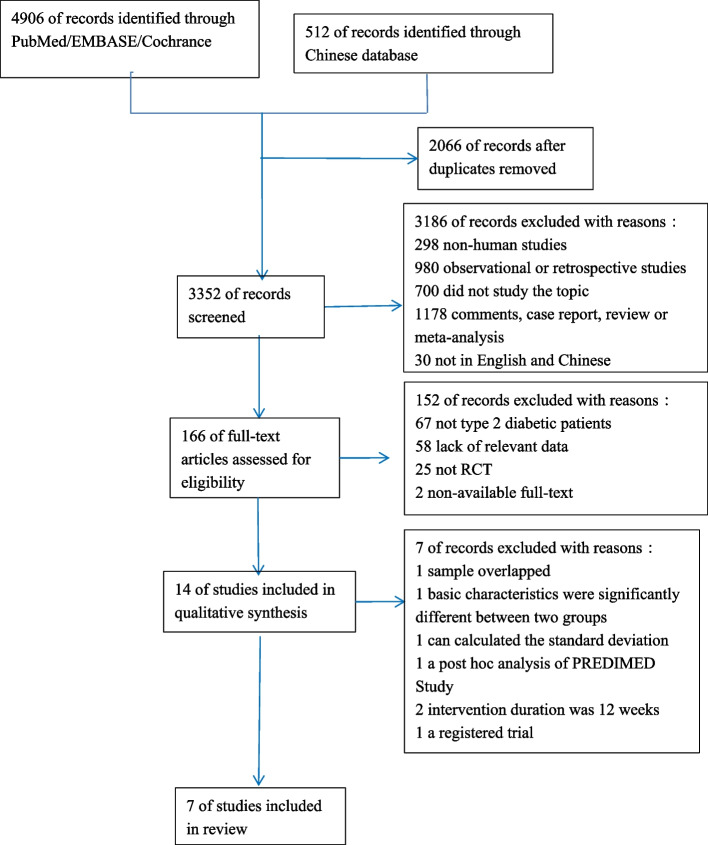
“A total 14 studies included in qualitative synthesis, of these, 4 studies were excluded for the following reasons: One study sample overlapped [23], One study the basic characteristics were significantly different between two groups [24].”
BackgroundZhenyukh, O., Civantos, E., Ruiz-Ortega, M., Sánchez, M. S., Vázquez, C., Peiró, C., Egido, J., & Mas, S. (2017) · Free Radical Biology and Medicine · doi:10.1016/j.freeradbiomed.2017.01.009 · Cited by 402 · cited 1×
“…Mediterranean diet affects glucagon ‐ like peptide 1 [42], oxyntomodulin [43], postprandial lipemia [44], and antioxidant/ antioxidant enzymes compounds [45], gut microbiota composition and function [46, 47], branched chain aminoacid management [48] and many other aspects have certain significance.”
BackgroundOlive oil intake and risk of cardiovascular disease and mortality in the PREDIMED Study
Guasch-Ferré, M., Hu, F. B., Martínez-González, M. A., Fitó, M., Bulló, M., Estruch, R., Ros, E., Corella, D., Recondo, J., Gómez-Gracia, E., et al. (2014) · BMC Medicine · doi:10.1186/1741-7015-12-78 · Cited by 374 · cited 1×
“Intake of 10g of olive oil per day can reduce the risk of heart disease by 16% [36, 37].”
Background
Research works printed but not linked: 1
- WHO Fact Sheet No. 312: Diabetes 2013 Geneva WHO
Cited by
Diagnosis and Treatment of Type 2 Diabetes in Adults: A Review
Kalyani, R. R., Neumiller, J. J., Maruthur, N. M., & Wexler, D. J. (2025) · JAMA · doi:10.1001/jama.2025.5956 · Cited by 204
Ruiz‐Pozo, V. A., Guevara‐Ramírez, P., Paz‐Cruz, E., Tamayo‐Trujillo, R., Cadena-Ullauri, S., Frías-Toral, E., Simancas‐Racines, D., Roshkova, Y. V. A., Reytor-González, C., & Zambrano, A. K. (2024) · Food and Agricultural Immunology · doi:10.1080/09540105.2024.2398042 · Cited by 30
“It has been associated with a significant reduction of HbA 1C and fasting glucose, as well as improvements in blood pressure and body weight (Barrea et al., 2020; Zheng et al., 2024).”
Dietary and Behavioral Strategies for Weight Loss and Weight Loss Maintenance: A Narrative Review
Żurawski, T., & Bartosiewicz, A. (2025) · Nutrients · doi:10.3390/nu18010012 · Cited by 18
“MedDiet, characterized by a high intake of monounsaturated fatty acids, fiber, and antioxidant compounds, is one of the most studied dietary models in the context of cardio-vascular disease and type 2 diabetes prevention [52].”
InfluentialThe Role of Obesity as a Cardiac Disease Risk Factor in Patients with Type 2 Diabetes
Koirala, S., Sunnaa, M., Bernier, T. D., & Oktay, A. A. (2024) · Current Cardiology Reports · doi:10.1007/s11886-024-02129-z · Cited by 17
“However, the impact of the Mediterranean diet on the lipid profile was not found to be significant [51].”
The Cardioprotective Effects of Nutritional Ketosis: Mechanisms and Clinical Implications
Venturini, C., Mancinelli, L., Matacchione, G., Olivieri, F., & Antonicelli, R. (2024) · Nutrients · doi:10.3390/nu16234204 · Cited by 16
“A meta-analysis emphasized the impact of the Mediterranean diet on cardiovascular risk factors such as cholesterol levels, blood pressure, and glycemic control, showing risk reduction particularly for patients with type 2 diabetes [25].”
Kavanagh, M. E., Back, S., Chen, V., Glenn, A. J., Viscardi, G., Houshialsadat, Z., Sievenpiper, J. L., Kendall, C. W. C., Jenkins, D. J. A., & Chiavaroli, L. (2024) · Nutrients · doi:10.3390/nu16172817 · Cited by 16
“Furthermore, given the 0.23% lower HbA1c associated per 1-cup increase in dietary pulses per day, chickpeas, beans, and lentils may be particular foods to encourage to support glycemic control as part of the plant protein pillar of the Portfolio Diet.”
BackgroundInfluentialAstbury, N. M. (2024) · Diabetes Obesity and Metabolism · doi:10.1111/dom.15855 · Cited by 12
“56 Therefore, there is evidence to suggest following the Mediterranean diet can be beneficial for both glycaemic control and cardiovascular health.”
Zúnica‐García, S., Blanquer‐Gregori, J. F. J., Sánchez-Ortiga, R., Chicharro‐Luna, E., & Jiménez‐Trujillo, I. (2024) · Journal of Diabetes and its Complications · doi:10.1016/j.jdiacomp.2024.108871 · Cited by 10
Bersch-Ferreira, Â. C., Machado, R. H. V., de Oliveira, J. S., Santos, R. H. N., da Silva, L. R., Mota, L. G. S., Pagano, R., Sady, É. R. R., Miyada, D. H. K., Miranda, T. A., et al. (2024) · Nutrients · doi:10.3390/nu16223849 · Cited by 11
Forcina, G., Filippo, P. D., Biasio, D. D., Cesaro, F. G., Frattolillo, V., Massa, A., Cesare, M. D., Marzuillo, P., del Giudice, E. M., & Sessa, A. D. (2025) · Nutrients · doi:10.3390/nu17182942 · Cited by 14
“Overall, these findings underscore the potential of MD-driven, microbiota-targeted dietary strategies in pediatric populations to reduce systemic inflammation and lower long-term cardiometabolic risk [95–97].”
Hemmat, A., Ghaebi, N. K., Nematy, M., Mashhadi, F., Emadzadeh, M., Moghadam, M. R. S. F., & Roudi, F. (2025) · The Journal of Obstetrics and Gynecology of India · doi:10.1007/s13224-025-02111-x · Cited by 7
“On the other hand, the Mediterranean diet with a high amount of seeds, vegetables, fish, fruits, moderate consumption of alcohol and olive oil and low consumption of red meat and butter is associated with lower levels of inflammation [27].”
Lama, K., Bhutia, G. T., Deka, R., Beeraka, N. M., & Gupta, S. K. (2025) · International Immunopharmacology · doi:10.1016/j.intimp.2025.115467 · Cited by 6
Buscemi, C., Randazzo, C., Barile, A. M., Caldarella, R., Murro, I., Caruso, R., Colombrita, P., Lombardo, M., Pergola, G. D., & Buscemi, S. (2025) · International Journal of Food Sciences and Nutrition · doi:10.1080/09637486.2024.2446886 · Cited by 4
“…Mediterranean diet, is characteristic of the populations living in the Mediterranean region (Tolomeo et al. 2023; Godos et al. 2024) and it is typically associated with improvement in metabolic parameters (Zheng et al. 2024) and lower risk of T2D (Dinu et al. 2018; Zeraattalab-Motlagh et al. 2022).”
Impact of baseline dietary quality on the efficacy of a dietitian-guided weight reduction program
Lin, Y., Chen, Y.-C., Chen, Y., Hsieh, H., Chen, Y., Wang, W.-H., Lang, H.-F., Liao, Y.-J., Peng, Y., Lee, T., et al. (2024) · BMC Nutrition · doi:10.1186/s40795-024-00956-5 · Cited by 4
Disoteo, O., Russo, F. D. G., Renzullo, L., Negri, G., Piazzolla, G., Pergola, G. D., Triggiani, V., & Lisco, G. (2025) · Nutrients · doi:10.3390/nu17071139 · Cited by 3
Managing Constipation and Its Risks in Parkinson’s Disease: Is There a Role for Dietary Fiber?
Beke, M., & Dahl, W. J. (2025) · Canadian Journal of Dietetic Practice and Research · doi:10.3148/cjdpr-2025-015 · Cited by 3
Irgat, S. İ., Bakırhan, H., & Bakırhan, Y. E. (2025) · Frontiers in Medicine · doi:10.3389/fmed.2025.1693180 · Cited by 4
Wiśniewska, K., Okręglicka, K., Paskudzka, M., Jagielska, A. M., Bober, J., Oczkowski, M., Ciepiela, O., & Nitsch-Osuch, A. S. (2025) · Frontiers in Nutrition · doi:10.3389/fnut.2025.1677496 · Cited by 5
Viganò, P., Abodi, M., Benaglia, L., Bolis, I., Casalechi, M., Ferraro, C., Piani, L. L., Reschini, M., Ruggiero, F., Salmeri, N., et al. (2025) · BMJ Open · doi:10.1136/bmjopen-2025-108596 · Cited by 3
Pescari, D., Mihuta, S., Bena, A., Pui, R., Paul, C., & Stoian, D. L. (2026) · Frontiers in Clinical Diabetes and Healthcare · doi:10.3389/fcdhc.2026.1792614 · Cited by 3
“Compared with other categories of diet therapy (standard diabetes diets, calorie-restricted diets, or low-fat diets), superior adherence to the Mediterranean pattern has been shown to lead to signi fi cant improvements in glycemic control in individuals with T2DM (79, 80).”
Zhou, L., Liu, H., & Ma, Y. (2026) · Frontiers in Nutrition · doi:10.3389/fnut.2026.1795035 · Cited by 2
Maćków, M., Sek, G., Godyla-Jabłoński, M., Raczkowska, E., Zawadzki, M., & Neubauer, K. (2026) · Journal of Clinical Medicine · doi:10.3390/jcm15082942 · Cited by 2
Maida, C. D., Scaglione, S., Norrito, R. L., Daidone, M., Pacinella, G., Marchese, A., Vutano, F., Cassataro, G., Dell’Ajra, L., Ferrantelli, S., et al. (2026) · Nutrients · doi:10.3390/nu18101592 · Cited by 2
“Clinical evidence from human studies further suggests that the Mediterranean diet improves glycaemic control, reduces cardiovascular risk factors, and promotes weight loss in patients with type 2 diabetes mellitus (T2DM), thereby reinforcing its relevance as a therapeutic dietary strategy [41].”
Erbakan, M., & Torun, C. (2025) · Mediterranean Journal of Nutrition and Metabolism · doi:10.1177/1973798x251349603 · Cited by 1
“7 However, studies speci fi cally investigating Mediterranean diet adherence and its impact on metabolic outcomes in patients with poorly controlled diabetes remain limited.”
Palmeira, J. S., & Malinovski, J. (2025) · RCMOS - Revista Científica Multidisciplinar O Saber · doi:10.51473/rcmos.v1i2.2025.1253 · Cited by 1
Alptekin, İ. M., Gezmiş, T. E., ÖZGERİŞ, F. B., Şahin, Z., Öztürk, N., & Orbak, Z. (2026) · Pediatric Research · doi:10.1038/s41390-026-05069-2 · Cited by 1
“Any bene fi ts require con fi rmation in prospective/interventional studies.”
Mediterranean Dietary Pattern in Type 2 Diabetes Management: Pathways and Clinical Evidence
Milotić, D. M., Bulum, T., & Peroš, K. (2026) · Biomedicines · doi:10.3390/biomedicines14061350 · Cited by 2
“A meta-analysis conducted by Zheng et al., encompassing seven RCTs with a total of 1371 participants, demonstrated that adherence to the MedDiet significantly enhanced glycemic control in individuals with T2DM [64].”
Bai, X., Zhang, L., Ji, X., Chen, K., Di, X., Zheng, F., Bai, P., & Niu, W. (2024) · Diabetes Research and Clinical Practice · doi:10.1016/j.diabres.2024.111946 · Cited by 2
Li, P., & Zhang, H.-P. (2025) · World Journal of Cardiology · doi:10.4330/wjc.v17.i2.100213 · Cited by 2
Dietary Strategies to Reduce Atherosclerosis and Heart Attack Risk
Bilgin, M., Soydan, E., & Dokuyucu, R. (2024) · Ege Tıp Dergisi · doi:10.19161/etd.1457485
Lin, Y., Wang, L., Gao, R., Deng, Y., Xu, Y., Zheng, X. M., Zhang, J., Yao, Z., & Liu, L. (2025) · Research Square · doi:10.21203/rs.3.rs-6334182/v1
Self-citationБородина, И. Э., Aa, P., & Федотова, Л. В. (2025) · Medicina · doi:10.29234/2308-9113-2025-13-3-31-48
Mammen, M. V., Anand, A., Kumar, A., kumar, M., & Siwach, D. (2025) · Journal of Carcinogenesis · doi:10.64149/j.carcinog.24.3.334-340
Ouatu, A., & Buliga-Finiș, O. N. (2025) · Springer eBooks · doi:10.1007/978-3-032-11445-7_19
Assessment Of Adherence To The Mediterranean Diet In Adults With Metabolic Syndrome
Erdekli, H. A., & Köse, S. (2026) · Journal of Advanced Studies in Health Science and Obesity · doi:10.51271/jashso.55
“Improvements were also observed in HbA1c and fasting glucose levels, as well as a decrease in body weight (23).”
Hanbazaza, M. A., & Bajunayd, M. (2026) · Foods · doi:10.3390/foods15101777 · Cited by 1
“Evidence from observational studies and systematic reviews indicates an association between greater adherence to the MedDiet and a lower risk of cardiovascular disease, type 2 diabetes, mental health conditions, and all-cause mortality, as well as better health-related quality of life [2–4].”
Ernährungsempfehlungen für Menschen mit Diabetes (Update 2026)
Klammer, C., Schindler, K., Bugl, R., Plazek, D., Vötter, M., Kirchner, T., Martino, C., Klammer-Martin, J., Huber, J., Krzizek, E.-C., et al. (2026) · Wiener klinische Wochenschrift · doi:10.1007/s00508-025-02676-7
Mantoo, M. R., Chauhan, S., Shekar, R., Anudeep, P. P., Suresh, M., Khan, S., Aseem Basha, M., Yadav, S., Agstam, S., Kumar, S., et al. (2026) · BMC Cardiovascular Disorders · doi:10.1186/s12872-026-05974-8
“Meta-analyses further confirm its beneficial effects on cardiovascular risk factors, metabolic syndrome and CAD [13, 14].”
Recent Insights in Vegetarian Nutrition
(2026) · Frontiers research topics · doi:10.3389/978-2-8325-8068-4
The Mediterranean diet: nutritional insights and sustainability
Chira, A., & Saleem, F. (2026) · Elsevier eBooks · doi:10.1016/b978-0-443-45513-1.00033-4
Augimeri, G., Mazza, D., Gelsomino, L., Barone, I., Giordano, C., Catalano, S., Adornetto, C., Sinicropi, M. S., & Bonofiglio, D. (2026) · Nutrients · doi:10.3390/nu18132183
Delarue, J., Dernini, S., Berry, E., Burlingame, B., González-Gross, M. M., Capone, R., Vecchio, Y., Brighenti, F., Trichopoulou, A. D., Federation of European Nutrition Societies (FENS), et al. (2026) · Journal of Nutritional Science · doi:10.1017/jns.2026.10079
“The Mediterranean diet is a widely accepted healthy diet supported by scientific evidence from epidemiology and clinical trials, including randomized control trials, and systematic reviews and meta-analyses (1 – 4) .”
Bensimhon, M., Lichtenstein, A. H., & Birk, R. Z. (2026) · Nutrients · doi:10.3390/nu18162618
“This finding aligns with systematic evidence; a recent meta-analysis of 7 RCTs involving 1371 patients with type 2 diabetes, which assessed Mediterranean-style interventions over at least 6 months, demonstrated a pooled fasting glucose reduction of 15.12 mg/dL and HbA1c reduction of 0.39% [61].”
InfluentialBeyond glycemia: clinical nutrition in type 2 diabetes and cardiometabolic risk
Labate, A. M., & Villari, P. (2026) · Academia Nutrition and Dietetics · doi:10.20935/acadnutr8484
Li, Q., Chen, Y., Ye, W., Chen, L., Wu, K., Pan, D., Xia, H., Yang, L., Wang, S., Sun, G., et al. (2026) · International Journal for Vitamin and Nutrition Research · doi:10.31083/ijvnr50268
Aguilar, P., & Abudoj, L. G. (2026) · Ciencia Latina Revista Científica Multidisciplinar · doi:10.37811/cl_rcm.v10i4.25461
Ren, H., Peng, Z., Liu, D., Ma, H., Zhao, D., Zhang, P., Dong, J., Li, C., Zhang, H., Liu, J., et al. (2026) · Sport Sciences for Health · doi:10.1007/s11332-026-01945-w
“The quality of included experimental research was evaluated using version 2 of the Cochrane risk-of-bias tools for randomized trials (ROB 2) [20].”
Rojas, J. P. S., Abellán-Alemán, J. A., Salinas, G. L. A., Rabanal, M. D. S. G., Marco-Detchart, C., Irigoyen, I. A., Sánchez, M. G., Feíto, D. P., García, V. Í., de la Rosa, R. D. G., et al. (2026) · Nutrients · doi:10.3390/nu18193156
“Similarly, a meta-analysis of randomised controlled trials among adults with type 2 diabetes found improvements in blood pressure and glycaemic control but no statistically significant reduction in total cholesterol [21].”
AĞIRLIK YÖNETİMİNDE BESLENME ALIŞKANLIKLARININ ROLÜ
Çetinöz, N. B., Özler, E., & Şanlıer, N. (2026) · Journal of Advanced Studies in Health Science and Obesity · doi:10.51271/jashso.91
Heart and Brain: Linking Obesity-Related Inflammation, Cardiovascular Disease and Cognitive Function
Reiss, A. B., Gulkarov, S., Syed, U., Ben-Dor, G. A., Srivastava, A., Singh, M., & Leon, J. D. (2026) · Journal of Cardiovascular Development and Disease · doi:10.3390/jcdd13100477
“There is strong evidence that the Mediterranean diet lowers rates of diabetes, improves glycemic control, and reduces incidence of cardiovascular outcomes [355,356].”
Hipertensi di Indonesia: Pendekatan Klinis, Preventif, dan Terapi Tradisional Berbasis Bukti
Rahmianti, N. D., & Ardiana, M. (2026) · Airlangga University Press eBooks · doi:10.20473/aup.1766
Huang, H.-C. (2026) · Theoretical and Natural Science · doi:10.54254/2753-8818/2026.38129
Metadata
- Authors
- Zheng, X., Zhang, W., Wan, X., Lv, X., Lin, P., Si, S., Xue, F., Wang, A., & Cao, Y.
- Affiliations
- Shandong University (CN)
- Yangzhou University (CN)
- Corresponding author
- Cao, Yingjuan
- ORCID
- Venue
- BMC Nutrition
- Published
- 2024-04-19
- Volume
- 10
- Issue
- 1
- Pages
- 59-59
- ISSN
- 2055-0928 (ISSN-L)
- PMC
- PMC11027355
- OpenAlex
- W4394959678
- Cited by
- 44
- References
- 46
- Citations by year
- 2026: 18 · 2025: 16 · 2024: 10
- FWCI
- 3.87
- Type
- journal article
- Language
- en
- Open access
- gold
- doi.org
- Licence
- cc-by
- creativecommons.org/licenses/by/4.0 (tdm)
- creativecommons.org/licenses/by/4.0 (vor)
- Locations
- BMC Nutrition (publishedVersion, cc-by)
- Research Square (acceptedVersion, cc-by)
- PubMed Central (publishedVersion, cc-by)
- PubMed (publishedVersion)
- DOAJ (DOAJ: Directory of Open Access Journals) (submittedVersion, cc-by-sa)
- Funders
- China Natural Science Foundation (72274110)
- Topics
- Health Sciences › Medicine › Public Health, Environmental and Occupational Health › Nutritional Studies and Diet
- Health Sciences › Medicine › Endocrinology, Diabetes and Metabolism › Diabetes, Cardiovascular Risks, and Lipoproteins
- Health Sciences › Medicine › Endocrinology, Diabetes and Metabolism › Diabetes Treatment and Management
- Keywords
- Mediterranean diet, type 2 diabetes, cardiovascular risk factors, glycemic control, weight loss, blood pressure, lipid profile, HbA1c, fasting blood glucose, body mass index, waist circumference, dietary intervention, LDL cholesterol, HDL cholesterol, total cholesterol, systolic blood pressure, diastolic blood pressure, waist-to-hip ratio, waist-to-height ratio
About these checks
Registry, retraction, Cites and statistics results are computed, not judged, with one exception: a printed reference that no index lists is read once by a model before it counts as a citation error. Claims are extracted by a model and kept only when their quote appears verbatim in the text; each cited source is then checked, with a model’s help, for whether it says what the claim relies on. Those verdicts can be wrong — read the claim’s quote and the cited source before relying on one.
Statistics and arithmetic are recomputed, not judged.
Confidence bands are shown only for fields calibrated on our annotated test set. None is calibrated yet, so no band is shown.
What counts as a claim ›How we measure confidence ›How we check this ›
Are you an author, or do you see a problem with this page? Request a review
Data sources
Bibliographic data: Semantic Scholar, OpenAlex, Crossref.
Contains information from the Semantic Scholar Academic Graph Datasets, made available under the ODC Attribution License (ODC-BY 1.0).
Semantic Scholar’s data is described in: Kinney, R., et al. (2023). The Semantic Scholar Open Data Platform. arXiv:2301.10140.
