

The effects of Mediterranean diet on cardiovascular risk factors, glycemic control and weight loss in patients with type 2 diabetes: a meta-analysis
Open accessPublished version of a preprint
The DOI matches its Crossref record; 47 of the 47 references it cites were found in a registry or an index.
Abstract
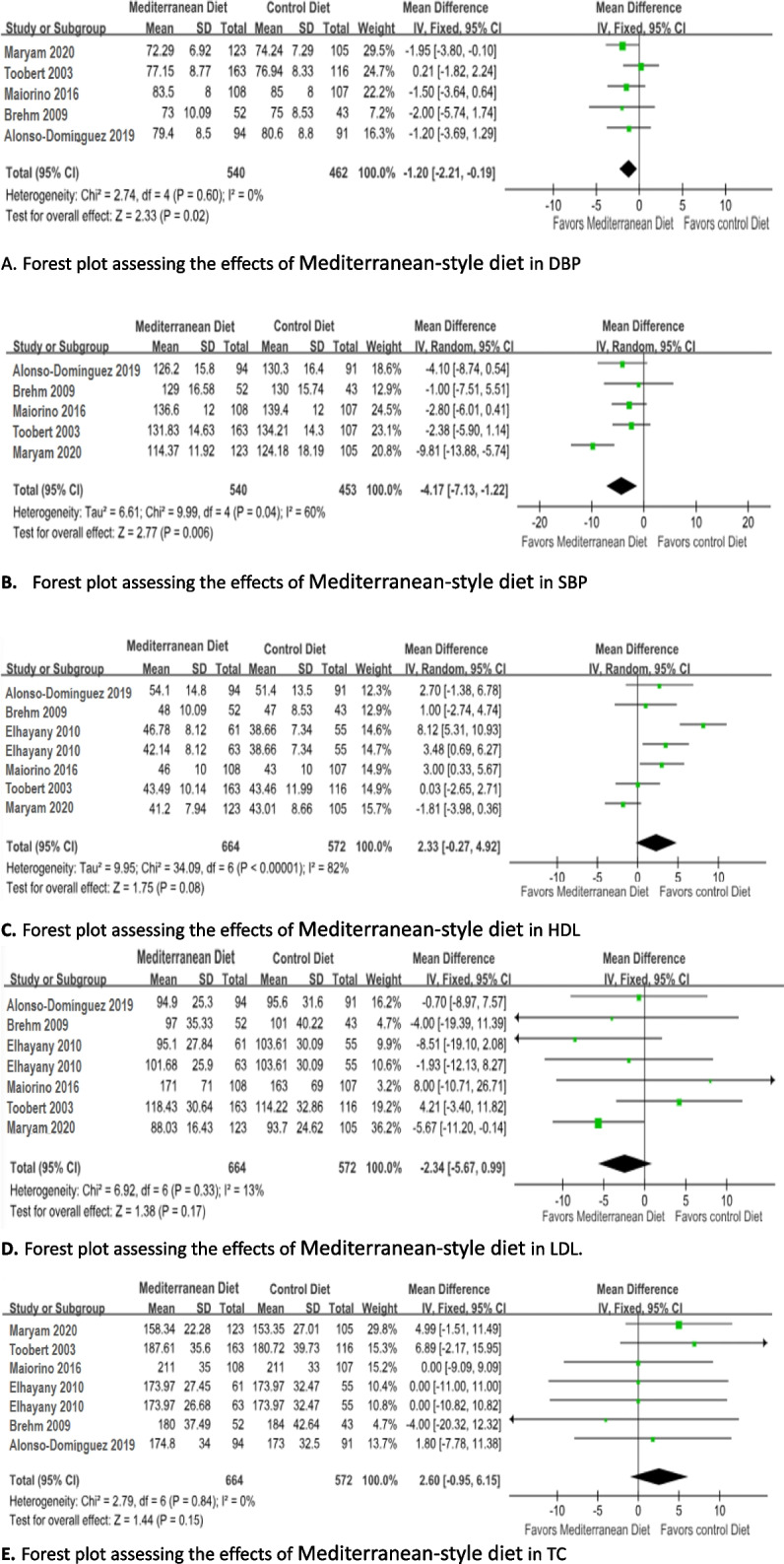
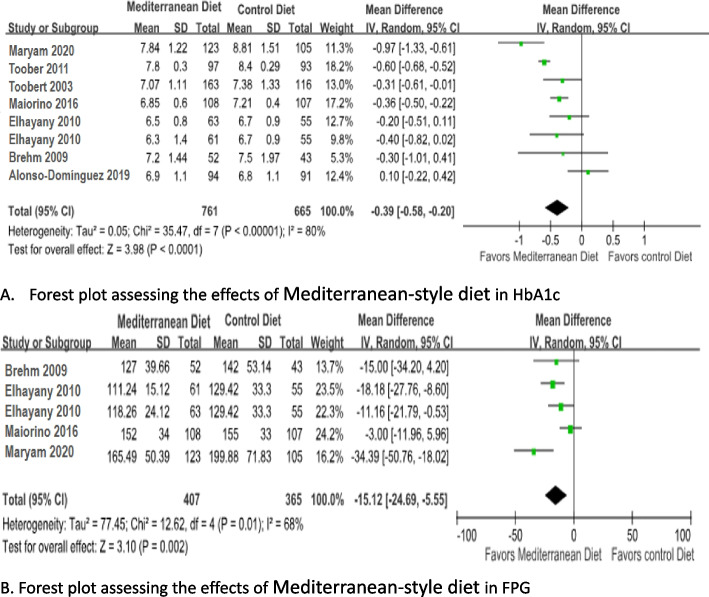
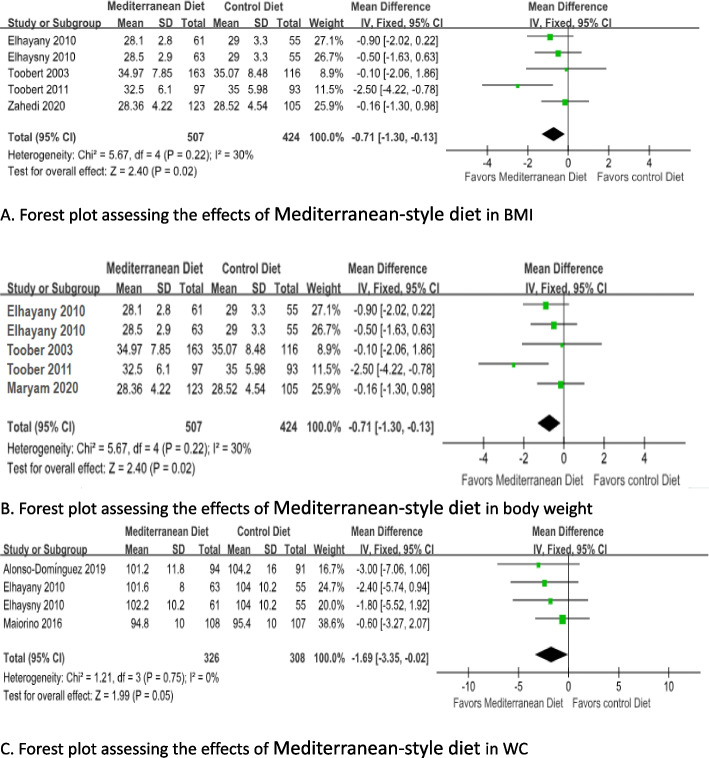
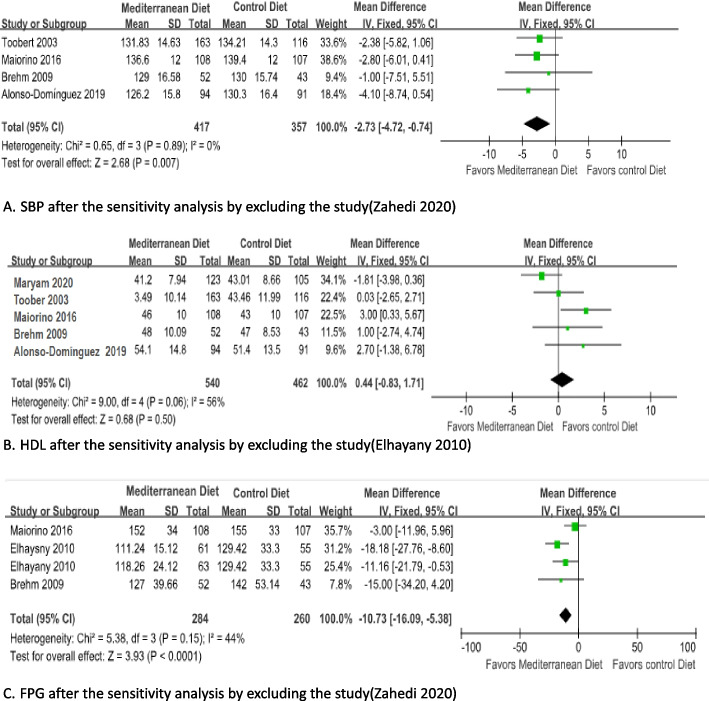
To explore the impact of the Mediterranean diet on cardiovascular risk factors, glycemic control and weight loss in patients with type 2 diabetes(T2D) by a meta-analysis of randomized controlled trials (RCTs). We systematically searched PubMed, Cochrance Library, EMBASE and four Chinese databases to identify RCTs that compared the Mediterranean diet with control diets in patients with T2D up to December 2021. The Risk of Bias of the included studies was assessed using the version 2 of the Cochrane risk-of-bias tools for randomized trials (ROB 2). Seven RCTs with 1371 patients met the eligibility criteria and entered into the meta-analysis. Compared to control diets, the beneficial effects of Mediterranean diet were not statistically significant in high-density lipoprotein (MD = 2.33; 95% CI : -0.27 to 4.92), low-density lipoprotein (MD = -2.34; 95% CI -5.67 to 0.99) and total cholesterol (MD = 2.60; 95% CI: -0.95 to 6.15). But Mediterranean diet led to reduce the level of diastolic blood pressure (MD = -1.20; 95% CI: -2.21 to -0.19) and systolic blood pressure (MD = -4.17; 95% CI: -7.12 to -1.22). Meanwhile, Mediterranean diet showed beneficial effects in glycemic control (HbA1[%]: MD = -0.39, 95% CI: -0.58 to -0.20; fasting plasma glucose: MD = -15.12, 95% CI: -24.69 to -5.55) and weight loss (BMI: MD = -0.71, 95% CI: -1.30 to -0.78; WC: MD = -1.69; 95% CI: -3.35 to -0.02) compared to the control diets. The meta-analysis presented evidence supporting the beneficial effects of the Mediterranean diet on blood pressure, glycemic control, and weight loss. However, the impact of the Mediterranean diet on the lipid profile was not found to be significant, warranting further verification. This Meta-analysis was registered on the INPLASY website (Registration number: INPLASY 202160096).
Overview
The claims and statistics of this paper haven’t been checked yet.
Free: it reads the open-access text and checks the first 5 claims that cite a source we can check. Create a free account to check every claim.
Integrity signals
Registry
Cites
Statistics
Figures
Verification
Claims the paper makes
The claims and statistics of this paper haven’t been checked yet.
Free: it reads the open-access text and checks the first 5 claims that cite a source we can check. Create a free account to check every claim.
Claims other papers make about this one
Each is checked against this paper’s own text: does it say what the citing paper says it does?
The source backs part of the claim, not all of it — or backs it for a different population, condition or comparison.
In the citing paper
“MedDiet, characterized by a high intake of monounsaturated fatty acids, fiber, and antioxidant compounds, is one of the most studied dietary models in the context of cardiovascular disease and type 2 diabetes prevention [52].”
From Dietary and Behavioral Strategies for Weight Loss and Weight Loss Maintenance: A Narrative Review (2025) · cites this paper as [52]
Experimental — accuracy not yet measuredThe source backs part of the claim, not all of it — or backs it for a different population, condition or comparison.
In the citing paper
“In participants with type 2 diabetes, greater decreases in blood pressure were observed compared with LF [52]”
From Dietary and Behavioral Strategies for Weight Loss and Weight Loss Maintenance: A Narrative Review (2025) · cites this paper as [52]
Experimental — accuracy not yet measuredThe check wasn’t confident either way, so it gives no verdict — never disputed.
In the citing paper
“Diabetes-related comorbidities also include metabolic dysfunction–associated steatotic liver disease,19 cancers such as colorectal and breast,20 and dementia.21”
From Diagnosis and Treatment of Type 2 Diabetes in Adults: A Review (2025) · cites this paper as [20]
Experimental — accuracy not yet measuredIn the citing paper
“In individuals with excess body weight and comorbid type 2 diabetes, MedDiet was associated with reductions in HbA1c and fasting glucose [52].”
From Dietary and Behavioral Strategies for Weight Loss and Weight Loss Maintenance: A Narrative Review (2025) · cites this paper as [52]
In the citing paper
“At the other extreme, the MedDiet has consistently demonstrated beneficial effects on glycemic control, insulin sensitivity, blood pressure, and lipid profile, particularly in individuals with type 2 diabetes and high cardiovascular risk [52,54].”
From Dietary and Behavioral Strategies for Weight Loss and Weight Loss Maintenance: A Narrative Review (2025) · cites this paper as [52]
1 more claim about this paper
Create a free account to see every claim other papers make about this one.
Self-check
Percentages, sums and reported differences re-computed from the paper’s own numbers.
The self-check needs the paper’s full text.
Citations
Cites
International Diabetes Federation 2017
Carracher, A. M., Marathe, P. H., & Close, K. L. (2018) · Journal of Diabetes · doi:10.1111/1753-0407.12644 · Cited by 13,418
You are what you eat: Diet, health and the gut microbiota
Zmora, N., Suez, J., & Elinav, E. (2019) · Nature Reviews Gastroenterology & Hepatology · doi:10.1038/s41575-018-0061-2 · Cited by 1,792 · cited 1×
“…Mediterranean diet affects glucagon ‐ like peptide 1 [42], oxyntomodulin [43], postprandial lipemia [44], and antioxidant/ antioxidant enzymes compounds [45], gut microbiota composition and function [46, 47], branched chain aminoacid management [48] and many other aspects have certain significance.”
BackgroundTHE DIET AND 15-YEAR DEATH RATE IN THE SEVEN COUNTRIES STUDY
KEYS, A., MIENOTTI, A., KARVONEN, M. J., ARAVANIS, C., BLACKBURN, H., BUZINA, R., DJORDJEVIC, B. S., DONTAS, A. S., FIDANZA, F., KEYS, M. H., et al. (1986) · American Journal of Epidemiology · doi:10.1093/oxfordjournals.aje.a114480 · Cited by 1,790 · cited 1×
“Mediterranean diet, first proposed by Ancel Key in 1960 [12], is a unique diet of people living in the Mediterranean region.”
BackgroundExcess Mortality among Persons with Type 2 Diabetes
Tancredi, M., Rosengren, A., Svensson, A.-M., Kosiborod, M., Pivodic, A., Gudbjörnsdottir, S., Wedel, H., Clements, M., Dahlqvist, S., & Lind, M. (2015) · New England Journal of Medicine · doi:10.1056/nejmoa1504347 · Cited by 996
Ajala, O., English, P., & Pinkney, J. (2013) · The American Journal of Clinical Nutrition · doi:10.3945/ajcn.112.042457 · Cited by 821 · cited 1×
“Mediterranean diet can reduce the levels of HbA1c and FPG in patients with T2D, which is consistent with the results of two meta-analyses in 2013 and 2015 [16, 38].”
ResultHealth Benefits of the Mediterranean Diet: Metabolic and Molecular Mechanisms
Tosti, V., Bertozzi, B., & Fontana, L. (2018) · The Journals of Gerontology: Series A · doi:10.1093/gerona/glx227 · Cited by 762
Jannasch, F., Kröger, J., & Schulze, M. B. (2017) · The Journal of Nutrition · doi:10.3945/jn.116.242552 · Cited by 498 · cited 1×
“Lifestyle interventions have been recognized by experts and scholars as an effective means for the treatment of T2D and dietary changes can effectively improve insulin sensitivity, prevent the progression of the disease and delay the occurrence of complications [6, 7].”
BackgroundEsposito, K., Ida Maiorino, M., Ciotola, M., Di Palo, C., Scognamiglio, P., Gicchino, M., Petrizzo, M., Saccomanno, F., Beneduce, F., Ceriello, A., et al. (2010) · Obstetrical & Gynecological Survey · doi:10.1097/ogx.0b013e3181e5a159 · Cited by 460 · cited 1×
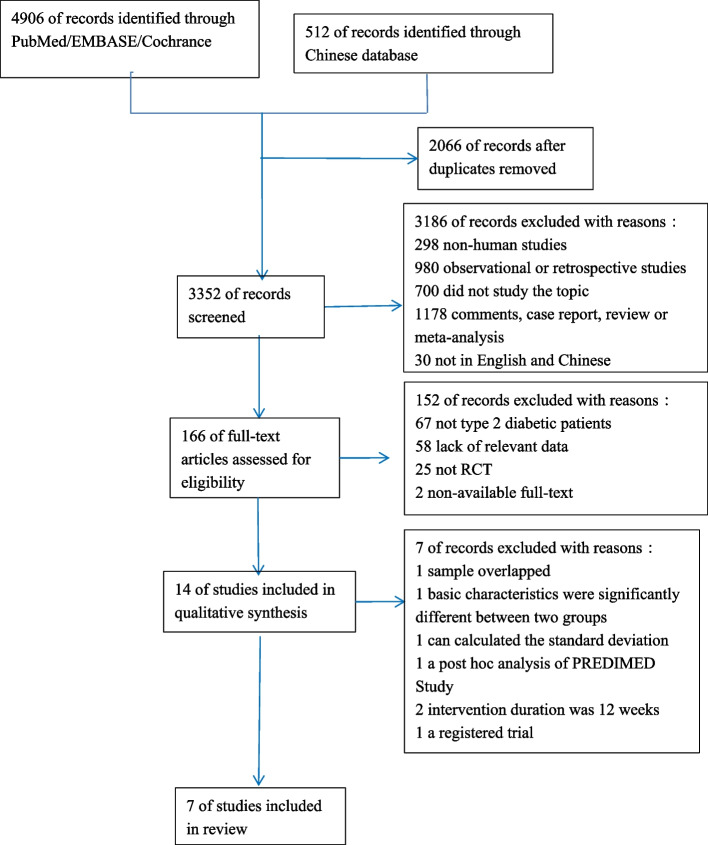
“A total 14 studies included in qualitative synthesis, of these, 4 studies were excluded for the following reasons: One study sample overlapped [23], One study the basic characteristics were significantly different between two groups [24].”
BackgroundZhenyukh, O., Civantos, E., Ruiz-Ortega, M., Sánchez, M. S., Vázquez, C., Peiró, C., Egido, J., & Mas, S. (2017) · Free Radical Biology and Medicine · doi:10.1016/j.freeradbiomed.2017.01.009 · Cited by 402 · cited 1×
“…Mediterranean diet affects glucagon ‐ like peptide 1 [42], oxyntomodulin [43], postprandial lipemia [44], and antioxidant/ antioxidant enzymes compounds [45], gut microbiota composition and function [46, 47], branched chain aminoacid management [48] and many other aspects have certain significance.”
BackgroundOlive oil intake and risk of cardiovascular disease and mortality in the PREDIMED Study
Guasch-Ferré, M., Hu, F. B., Martínez-González, M. A., Fitó, M., Bulló, M., Estruch, R., Ros, E., Corella, D., Recondo, J., Gómez-Gracia, E., et al. (2014) · BMC Medicine · doi:10.1186/1741-7015-12-78 · Cited by 374 · cited 1×
“Intake of 10g of olive oil per day can reduce the risk of heart disease by 16% [36, 37].”
BackgroundDietary Polyphenols and Type 2 Diabetes: Current Insights and Future Perspectives
Xiao, J. B., & Hogger, P. (2014) · Current Medicinal Chemistry · doi:10.2174/0929867321666140706130807 · Cited by 361 · cited 1×
“This kind of food can effectively improve insulin sensitivity and prevent production of advanced glycosylated end products and other factors [39].”
BackgroundSnorgaard, O., Poulsen, G. M., Andersen, H. K., & Astrup, A. (2017) · BMJ Open Diabetes Research & Care · doi:10.1136/bmjdrc-2016-000354 · Cited by 351 · cited 2×
“Moreover, the research results of Snorgaard et al [41] showed that low-fed diets achieved higher rates of diabetes remission (defined as HbA1c 6.5”
ResultInfluentialAdherence to a Mediterranean diet and risk of diabetes: a systematic review and meta-analysis
Schwingshackl, L., Missbach, B., König, J., & Hoffmann, G. (2015) · Public Health Nutrition · doi:10.1017/s1368980014001542 · Cited by 340 · cited 1×
“Compared with conventional diet, Mediterranean diet can reduce HbA1c level by 0.53 [16], but compared with low-fat diet, Mediterranean diet can only reduce HbA1c by 0.32 [40].”
BackgroundInfluentialElhayany, A., Lustman, A., Abel, R., Attal‐Singer, J., & Vinker, S. (2010) · Diabetes, Obesity and Metabolism · doi:10.1111/j.1463-1326.2009.01151.x · Cited by 298 · cited 5×
“Of the seven RCTs, two studies were identifified as having high risk of bias [17, 34], and five as having some concerns (Brehm et al. [30], Toobert et al. [31], Maiorino .”
BackgroundResultInfluentialHuo, R., Du, T., Xu, Y., Xu, W., Chen, X., Sun, K., & Yu, X. (2015) · European Journal of Clinical Nutrition · doi:10.1038/ejcn.2014.243 · Cited by 296 · cited 6×
“It’s worth noting that, despite the 2015meta-analysis on the effects of the Mediterranean diet on blood glucose in diabetic patients [16], this information is now eight years old, and further research may be warranted to provide updated insights.”
BackgroundResultInfluentialSchwingshackl, L., & Hoffmann, G. (2012) · Nutrients · doi:10.3390/nu4121989 · Cited by 294 · cited 1×
“Current studies have shown that dietary patterns such as low fat [8], low carbohydrate [9], and high mono-unsaturated fatty acids [10] have certain effects on blood glucose control and weight of diabetic patients, but the results are not consistent.”
ResultBiologic and Quality-of-Life Outcomes From the Mediterranean Lifestyle Program
Toobert, D. J., Glasgow, R. E., Strycker, L. A., Barrera, M., Radcliffe, J. L., Wander, R. C., & Bagdade, J. D. (2003) · Diabetes Care · doi:10.2337/diacare.26.8.2288 · Cited by 238
Glycated hemoglobin measurement and prediction of cardiovascular disease
Di Angelantonio, E., Gao, P., Khan, H., Butterworth, A. S., Wormser, D., Kaptoge, S., Kondapally Seshasai, S. R., Thompson, A., Sarwar, N., Willeit, P., et al. (2014) · JAMA · doi:10.1001/jama.2014.1873 · Cited by 231
Esposito, K., Maiorino, M. I., Petrizzo, M., Bellastella, G., & Giugliano, D. (2014) · Diabetes Care · doi:10.2337/dc13-2899 · Cited by 205 · cited 1×
“Vegetable oil (mainly olive oil, rich in unsaturated fatty acids) should be used for cooking, and a low proportion of red meat and processed foods should be used, as well as red wine with each meal [13–15].”
BackgroundBrehm, B. J., Lattin, B. L., Summer, S. S., Boback, J. A., Gilchrist, G. M., Jandacek, R. J., & D’Alessio, D. A. (2009) · Diabetes Care · doi:10.2337/dc08-0687 · Cited by 196 · cited 2×
“In terms of the randomization process, four studies presented some concerns due to insufficient information on allocation concealment (Brehm et al. [30], Toobert et al. [31], Elhayany et al. [17], Maryam et al. [19].”
BackgroundHuntriss, R., Campbell, M., & Bedwell, C. (2018) · European Journal of Clinical Nutrition · doi:10.1038/s41430-017-0019-4 · Cited by 170 · cited 1×
“Huntriss’ meta-analysis showed that reducing the proportion of carbohydrate diet can better manage T2D [18].”
BackgroundBloomfield, H. E., Koeller, E., Greer, N., MacDonald, R., Kane, R., & Wilt, T. J. (2016) · Annals of Internal Medicine · doi:10.7326/m16-0361 · Cited by 159 · cited 1×
“Lifestyle interventions have been recognized by experts and scholars as an effective means for the treatment of T2D and dietary changes can effectively improve insulin sensitivity, prevent the progression of the disease and delay the occurrence of complications [6, 7].”
BackgroundVitale, M., Masulli, M., Calabrese, I., Rivellese, A., Bonora, E., Signorini, S., Perriello, G., Squatrito, S., Buzzetti, R., Sartore, G., et al. (2018) · Nutrients · doi:10.3390/nu10081067 · Cited by 152 · cited 1×
“Intake of 10g of olive oil per day can reduce the risk of heart disease by 16% [36, 37].”
BackgroundGardner, C. D., Landry, M. J., Perelman, D., Petlura, C., Durand, L. R., Aronica, L., Crimarco, A., Cunanan, K. M., Chang, A., Dant, C. C., et al. (2022) · The American Journal of Clinical Nutrition · doi:10.1093/ajcn/nqac154 · Cited by 151 · cited 1×
“Two studies the intervention duration was 12 weeks and two weeks, which did not meet the requirement of >6 months of intervention for this study [27, 28].”
BackgroundRein, M., Ben-Yacov, O., Godneva, A., Shilo, S., Zmora, N., Kolobkov, D., Cohen-Dolev, N., Wolf, B.-C., Kosower, N., Lotan-Pompan, M., et al. (2022) · BMC Medicine · doi:10.1186/s12916-022-02254-y · Cited by 149
Lotfi, K., Saneei, P., Hajhashemy, Z., & Esmaillzadeh, A. (2022) · Advances in Nutrition · doi:10.1093/advances/nmab092 · Cited by 101
Pan, B., Wu, Y., Yang, Q., Ge, L., Gao, C., Xun, Y., Tian, J., & Ding, G. (2019) · Journal of Evidence-Based Medicine · doi:10.1111/jebm.12312 · Cited by 99 · cited 3×
“Mediterranean diet can reduce the BMI and WC of patients with T2D, which is consistent with the results of many previous studies [11, 16, 41], and may be related to the fact that Mediterranean diet is rich in a large number of vegetable, grain and other plant foods, which provide more dietary fiber…”
BackgroundMethodResultImpact of low-carbohydrate diet on body composition: meta-analysis of randomized controlled studies
Hashimoto, Y., Fukuda, T., Oyabu, C., Tanaka, M., Asano, M., Yamazaki, M., & Fukui, M. (2016) · Obesity Reviews · doi:10.1111/obr.12405 · Cited by 96 · cited 2×
“Moreover, the research results of Hashimoto et al. [42] showed that low-fed diets can better manage body weight and fat mass compared with Mediterranean diet which may be related to the age of the research object in the included literature to some extent.”
BackgroundResultTang, C., Wang, X., Qin, L., & Dong, J.-Y. (2021) · Nutrients · doi:10.3390/nu13082623 · Cited by 92 · cited 1×
“In 2021 tang et al. meta-analyzed a cohort study correlating the Mediterranean diet with mortality in patients with cardiovascular disease and showed that Mediterranean diet improved survival in people with a history of CVD, But there is no validation of specific serum indicators [20].”
MethodAlonso-Domínguez, R., García-Ortiz, L., Patino-Alonso, M. C., Sánchez-Aguadero, N., Gómez-Marcos, M. A., & Recio-Rodríguez, J. I. (2019) · Nutrients · doi:10.3390/nu11010162 · Cited by 90 · cited 1×
“[19], Alonso-Dominguez et al. [33].”
Sarsangi, P., Salehi‐Abargouei, A., Ebrahimpour‐Koujan, S., & Esmaillzadeh, A. (2022) · Advances in Nutrition · doi:10.1093/advances/nmac046 · Cited by 88 · cited 1×
“Sarsangi et al. [22] meta-analysis of a prospective cohort study of the Mediterranean diet and risk of T2D showed that the Mediterranean diet reduces the risk of T2D, but specific indicators of the Mediterranean diet in patients with T2D have not yet been analyzed [22].”
BackgroundPérez-Ferre, N., Del Valle, L., Torrejón, M. J., Barca, I., Calvo, M. I., Matía, P., Rubio, M. A., & Calle-Pascual, A. L. (2015) · Clinical Nutrition · doi:10.1016/j.clnu.2014.09.005 · Cited by 87 · cited 1×
“One study cannot calculated the standard deviation from the data in the original study [25], 1 study was a post hoc analysis of PREDIMED study [26].”
Urpi-Sarda, M., Almanza-Aguilera, E., Llorach, R., Vázquez-Fresno, R., Estruch, R., Corella, D., Sorli, J. V., Carmona, F., Sanchez-Pla, A., Salas-Salvadó, J., et al. (2019) · Diabetes & Metabolism · doi:10.1016/j.diabet.2018.02.006 · Cited by 84 · cited 1×
“…Mediterranean diet affects glucagon ‐ like peptide 1 [42], oxyntomodulin [43], postprandial lipemia [44], and antioxidant/ antioxidant enzymes compounds [45], gut microbiota composition and function [46, 47], branched chain aminoacid management [48] and many other aspects have certain significance.”
BackgroundLong-term outcomes from a multiple-risk-factor diabetes trial for Latinas: ¡Viva Bien!
Toobert, D. J., Strycker, L. A., King, D. K., Barrera, M., Osuna, D., & Glasgow, R. E. (2011) · Translational Behavioral Medicine · doi:10.1007/s13142-010-0011-1 · Cited by 83
Maiorino, M. I., Bellastella, G., Petrizzo, M., Gicchino, M., Caputo, M., Giugliano, D., & Esposito, K. (2017) · European Journal of Preventive Cardiology · doi:10.1177/2047487316676133 · Cited by 77
Monlezun, D. J., Kasprowicz, E., Tosh, K. W., Nix, J., Urday, P., Tice, D., Sarris, L., & Harlan, T. S. (2015) · Diabetes Research and Clinical Practice · doi:10.1016/j.diabres.2015.05.007 · Cited by 76 · cited 1×
“A total 14 studies included in qualitative synthesis, of these, 4 studies were excluded for the following reasons: One study sample overlapped [23], One study the basic characteristics were significantly different between two groups [24].”
BackgroundMaiorino, M. I., Bellastella, G., Petrizzo, M., Scappaticcio, L., Giugliano, D., & Esposito, K. (2016) · Endocrine · doi:10.1007/s12020-016-0881-1 · Cited by 68 · cited 1×
“…Mediterranean diet affects glucagon ‐ like peptide 1 [42], oxyntomodulin [43], postprandial lipemia [44], and antioxidant/ antioxidant enzymes compounds [45], gut microbiota composition and function [46, 47], branched chain aminoacid management [48] and many other aspects have certain significance.”
BackgroundCarter, P., Achana, F., Troughton, J., Gray, L. J., Khunti, K., & Davies, M. J. (2014) · Journal of Human Nutrition and Dietetics · doi:10.1111/jhn.12138 · Cited by 62 · cited 1×
“According to the survey by Carter et al. on all populations with or without diabetes, Mediterranean diet can only reduce the level of HbA1c, but its effect on FPG is not obvious [49].”
MethodBasterra-Gortari, F. J., Ruiz-Canela, M., Martínez-González, M. A., Babio, N., Sorlí, J. V., Fito, M., Ros, E., Gómez-Gracia, E., Fiol, M., Lapetra, J., et al. (2019) · Diabetes Care · doi:10.2337/dc18-2475 · Cited by 59 · cited 1×
“One study cannot calculated the standard deviation from the data in the original study [25], 1 study was a post hoc analysis of PREDIMED study [26].”
Gomez-Marin, B., Gomez-Delgado, F., Lopez-Moreno, J., Alcala-Diaz, J. F., Jimenez-Lucena, R., Torres-Peña, J. D., Garcia-Rios, A., Ortiz-Morales, A. M., Yubero-Serrano, E. M., del Mar Malagon, M., et al. (2018) · The American Journal of Clinical Nutrition · doi:10.1093/ajcn/nqy144 · Cited by 45 · cited 1×
“Furthermore, studies have shown that Mediterranean diet affects glucagon ‐ like peptide 1 [42], oxyntomodulin [43], postprandial lipemia [44], and antioxidant/ antioxidant enzymes compounds [45], gut microbiota composition and function [46, 47], branched chain aminoacid management [48] and many…”
BackgroundDi Mauro, A., Tuccinardi, D., Watanabe, M., Del Toro, R., Monte, L., Giorgino, R., Rampa, L., Rossini, G., Kyanvash, S., Soare, A., et al. (2021) · Diabetes/Metabolism Research and Reviews · doi:10.1002/dmrr.3406 · Cited by 39
Zahedi, M., Akhlagh, S. A., Aboomardani, M., Alipoor, R., Hosseini, S. A., & Shahmirzadi, A. R. (2020) · Gazi Medical Journal · doi:10.12996/gmj.2020.166 · Cited by 19 · cited 4×
“In addition, Mohammad’s survey in 2020 showed that compared with conventional diet, Mediterranean diet could not effectively reduce body mass index (BMI) and multiple risk indicators of heart disease in patients with T2D [19].”
BackgroundInfluentialDietary Recommendations for the Prevention of Type 2 diabetes: What Are They Based on?
Carter, P., Khunti, K., & Davies, M. J. (2012) · Journal of Nutrition and Metabolism · doi:10.1155/2012/847202 · Cited by 18 · cited 1×
“Investigation shows that the proportion of overweight or obese people in type 2 diabetic population is as high as 90% [4].”
BackgroundPapamichou, D., Panagiotakos, D. B., Holmes, E. C., Koutsakis, P., Katsoulotos, H., Loo, R. L., & Itsiopoulos, C. (2021) · Nutrition Metabolism and Cardiovascular Diseases · doi:10.1016/j.numecd.2021.09.031 · Cited by 14 · cited 1×
“One study is a registered trial with no clinical data yet available [29].”
BackgroundEsposito, K., Maiorino, M. I., Ciotola, M., Di Palo, C., Scognamiglio, P., Gicchino, M., Petrizzo, M., Saccomanno, F., Beneduce, F., Ceriello, A., et al. (2009) · Annals of Internal Medicine · doi:10.7326/0003-4819-151-5-200909010-00004 · Cited by 13
Breukelman, G. J., Basson, A. K., Djarova, T. G., Shaw, B. S., Preez, C. J. D., & Shaw, I. (2021) · Heliyon · doi:10.1016/j.heliyon.2021.e06266 · Cited by 6 · cited 1×
“Current studies have shown that dietary patterns such as low fat [8], low carbohydrate [9], and high mono-unsaturated fatty acids [10] have certain effects on blood glucose control and weight of diabetic patients, but the results are not consistent.”
ResultAthinarayanan, S. J., Hallberg, S. J., McKenzie, A. L., Lechner, K., King, S., McCarter, J. P., Volek, J. S., Phinney, S. D., & Krauss, R. M. (2021) · Cardiovascular Diabetology · doi:10.1186/s12933-021-01214-9 · Cited by 3 · cited 1×
“Current studies have shown that dietary patterns such as low fat [8], low carbohydrate [9], and high mono-unsaturated fatty acids [10] have certain effects on blood glucose control and weight of diabetic patients, but the results are not consistent.”
Result
Research works printed but not linked: 1
- WHO Fact Sheet No. 312: Diabetes 2013 Geneva WHO
Cited by
Diagnosis and Treatment of Type 2 Diabetes in Adults: A Review
Kalyani, R. R., Neumiller, J. J., Maruthur, N. M., & Wexler, D. J. (2025) · JAMA · doi:10.1001/jama.2025.5956 · Cited by 204
Ruiz‐Pozo, V. A., Guevara‐Ramírez, P., Paz‐Cruz, E., Tamayo‐Trujillo, R., Cadena-Ullauri, S., Frías-Toral, E., Simancas‐Racines, D., Roshkova, Y. V. A., Reytor-González, C., & Zambrano, A. K. (2024) · Food and Agricultural Immunology · doi:10.1080/09540105.2024.2398042 · Cited by 30
“It has been associated with a significant reduction of HbA 1C and fasting glucose, as well as improvements in blood pressure and body weight (Barrea et al., 2020; Zheng et al., 2024).”
Dietary and Behavioral Strategies for Weight Loss and Weight Loss Maintenance: A Narrative Review
Żurawski, T., & Bartosiewicz, A. (2025) · Nutrients · doi:10.3390/nu18010012 · Cited by 18
“MedDiet, characterized by a high intake of monounsaturated fatty acids, fiber, and antioxidant compounds, is one of the most studied dietary models in the context of cardio-vascular disease and type 2 diabetes prevention [52].”
InfluentialThe Role of Obesity as a Cardiac Disease Risk Factor in Patients with Type 2 Diabetes
Koirala, S., Sunnaa, M., Bernier, T. D., & Oktay, A. A. (2024) · Current Cardiology Reports · doi:10.1007/s11886-024-02129-z · Cited by 17
“However, the impact of the Mediterranean diet on the lipid profile was not found to be significant [51].”
The Cardioprotective Effects of Nutritional Ketosis: Mechanisms and Clinical Implications
Venturini, C., Mancinelli, L., Matacchione, G., Olivieri, F., & Antonicelli, R. (2024) · Nutrients · doi:10.3390/nu16234204 · Cited by 16
“A meta-analysis emphasized the impact of the Mediterranean diet on cardiovascular risk factors such as cholesterol levels, blood pressure, and glycemic control, showing risk reduction particularly for patients with type 2 diabetes [25].”
Metadata
- Authors
- Zheng, X., Zhang, W., Wan, X., Lv, X., Lin, P., Si, S., Xue, F., Wang, A., & Cao, Y.
- Affiliations
- Shandong University (CN)
- Yangzhou University (CN)
- Corresponding author
- Cao, Yingjuan
- ORCID
- Venue
- BMC Nutrition
- Published
- 2024-04-19
- Volume
- 10
- Issue
- 1
- Pages
- 59-59
- ISSN
- 2055-0928 (ISSN-L)
- PMC
- PMC11027355
- OpenAlex
- W4394959678
- Cited by
- 44
- References
- 46
- Citations by year
- 2026: 18 · 2025: 16 · 2024: 10
- FWCI
- 3.87
- Type
- journal article
- Language
- en
- Open access
- gold
- doi.org
- Licence
- cc-by
- creativecommons.org/licenses/by/4.0 (tdm)
- creativecommons.org/licenses/by/4.0 (vor)
- Locations
- BMC Nutrition (publishedVersion, cc-by)
- Research Square (acceptedVersion, cc-by)
- PubMed Central (publishedVersion, cc-by)
- PubMed (publishedVersion)
- DOAJ (DOAJ: Directory of Open Access Journals) (submittedVersion, cc-by-sa)
- Funders
- China Natural Science Foundation (72274110)
- Topics
- Health Sciences › Medicine › Public Health, Environmental and Occupational Health › Nutritional Studies and Diet
- Health Sciences › Medicine › Endocrinology, Diabetes and Metabolism › Diabetes, Cardiovascular Risks, and Lipoproteins
- Health Sciences › Medicine › Endocrinology, Diabetes and Metabolism › Diabetes Treatment and Management
- Keywords
- Mediterranean diet, type 2 diabetes, cardiovascular risk factors, glycemic control, weight loss, blood pressure, lipid profile, HbA1c, fasting blood glucose, body mass index, waist circumference, dietary intervention, LDL cholesterol, HDL cholesterol, total cholesterol, systolic blood pressure, diastolic blood pressure, waist-to-hip ratio, waist-to-height ratio
About these checks
Registry, retraction, Cites and statistics results are computed, not judged, with one exception: a printed reference that no index lists is read once by a model before it counts as a citation error. Claims are extracted by a model and kept only when their quote appears verbatim in the text; each cited source is then checked, with a model’s help, for whether it says what the claim relies on. Those verdicts can be wrong — read the claim’s quote and the cited source before relying on one.
Statistics and arithmetic are recomputed, not judged.
Confidence bands are shown only for fields calibrated on our annotated test set. None is calibrated yet, so no band is shown.
What counts as a claim ›How we measure confidence ›How we check this ›
Are you an author, or do you see a problem with this page? Request a review
Data sources
Bibliographic data: Semantic Scholar, OpenAlex, Crossref.
Contains information from the Semantic Scholar Academic Graph Datasets, made available under the ODC Attribution License (ODC-BY 1.0).
Semantic Scholar’s data is described in: Kinney, R., et al. (2023). The Semantic Scholar Open Data Platform. arXiv:2301.10140.
