

Heavy Resistance Training Versus Plyometric Training for Improving Running Economy and Running Time Trial Performance: A Systematic Review and Meta-analysis
Open accessThe DOI matches its Crossref record; 101 of the 101 references it cites were found in a registry or an index; 1 of the 77 sources its claims cite were checked for support.
Abstract
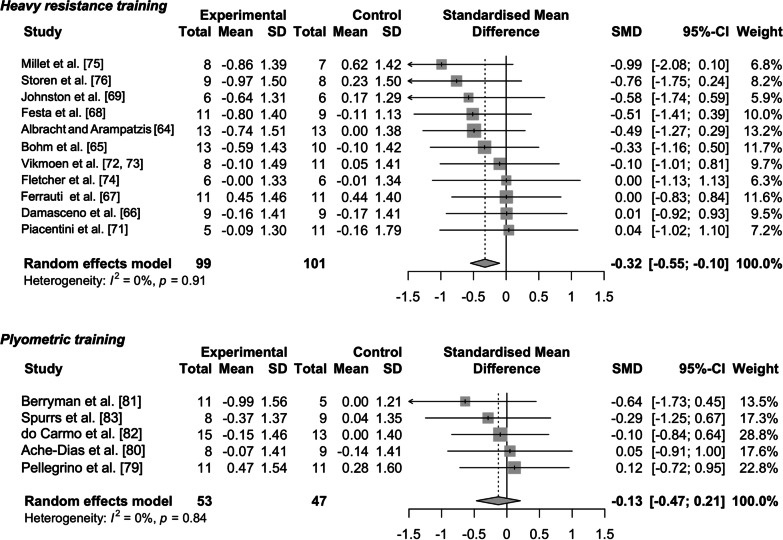
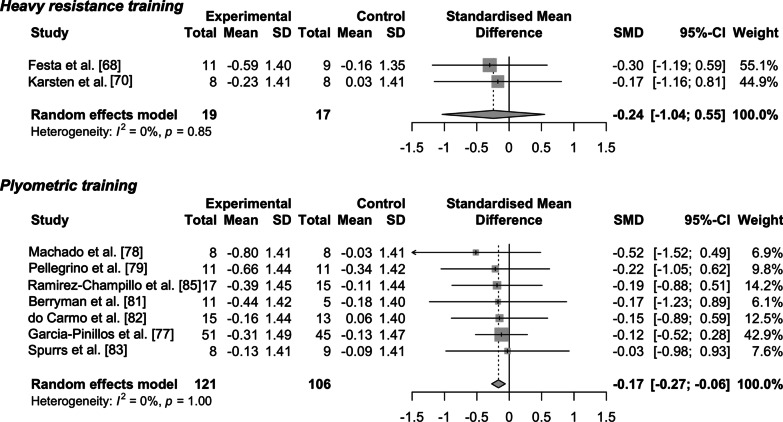
Background: As an adjunct to running training, heavy resistance and plyometric training have recently drawn attention as potential training modalities that improve running economy and running time trial performance. However, the comparative effectiveness is unknown. The present systematic review and meta-analysis aimed to determine if there are different effects of heavy resistance training versus plyometric training as an adjunct to running training on running economy and running time trial performance in long-distance runners. Methods: Electronic databases of PubMed, Web of Science, and SPORTDiscus were searched. Twenty-two studies completely satisfied the selection criteria. Data on running economy and running time trial performance were extracted for the meta-analysis. Subgroup analyses were performed with selected potential moderators. Results: The pooled effect size for running economy in heavy resistance training was greater ( g = − 0.32 [95% confidence intervals [CIs] − 0.55 to − 0.10]: effect size = small) than that in plyometric training ( g = -0.13 [95% CIs − 0.47 to 0.21]: trivial). The effect on running time trial performance was also larger in heavy resistance training ( g = − 0.24 [95% CIs − 1.04 to − 0.55]: small) than that in plyometric training ( g = − 0.17 [95% CIs − 0.27 to − 0.06]: trivial). Heavy resistance training with nearly maximal loads (≥ 90% of 1 repetition maximum [1RM], g = − 0.31 [95% CIs − 0.61 to − 0.02]: small) provided greater effects than those with lower loads (< 90% 1RM, g = − 0.17 [95% CIs − 1.05 to 0.70]: trivial). Greater effects were evident when training was performed for a longer period in both heavy resistance (10–14 weeks, g = − 0.45 [95% CIs − 0.83 to − 0.08]: small vs. 6–8 weeks, g = − 0.21 [95% CIs − 0.56 to 0.15]: small) and plyometric training (8–10 weeks, g = 0.26 [95% CIs − 0.67 to 0.15]: small vs. 4–6 weeks, g = − 0.06 [95% CIs 0.67 to 0.55]: trivial). Conclusions: Heavy resistance training, especially with nearly maximal loads, may be superior to plyometric training in improving running economy and running time trial performance. In addition, running economy appears to be improved better when training is performed for a longer period in both heavy resistance and plyometric training.
Overview
CoChat Summary
TL;DR
In long-distance runners, heavy resistance training added to running training produced larger pooled improvements in running economy and running time trial performance than plyometric training, though the effects were small. Nearly maximal loads and longer intervention periods (≥10 weeks) were associated with larger running-economy benefits.
Key findings
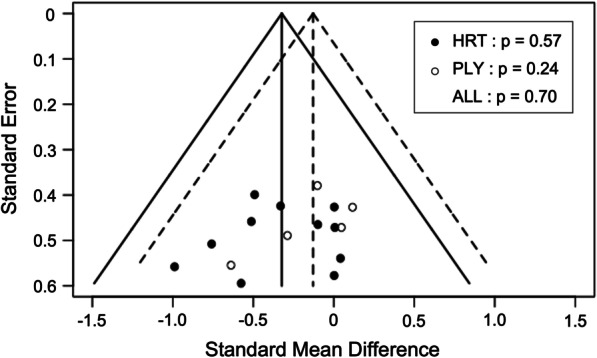
- Running economy improved more with heavy resistance training (g = −0.32 [95% CI −0.55 to −0.10], small) than with plyometric training (g = −0.13 [95% CI −0.47 to 0.21], trivial).
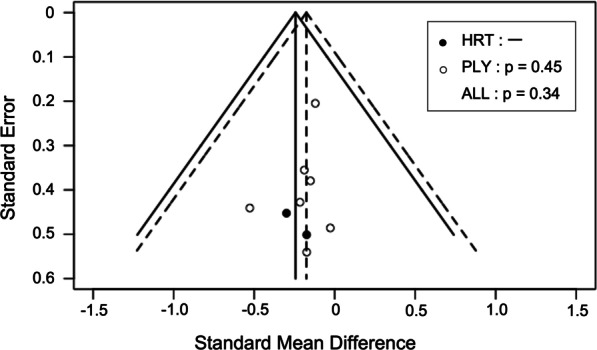
- Running time trial performance also favored heavy resistance training (g = −0.24 [95% CI −1.04 to −0.55], small) over plyometric training (g = −0.17 [95% CI −0.27 to −0.06], trivial), although the results narrative notes that the heavy-resistance 95% CI crossed zero.
- Heavy resistance training with nearly maximal loads (≥90% 1RM or ≤4RM) produced a larger running-economy effect (g = −0.31 [95% CI −0.61 to −0.02], small) than lower loads (<90% 1RM or >4RM; g = −0.17 [95% CI −1.05 to 0.70], trivial).
- Longer intervention periods produced larger running-economy effects in both modalities: heavy resistance 10–14 weeks (g = −0.45 [95% CI −0.83 to −0.08], small) vs 6–8 weeks (g = −0.21 [95% CI −0.56 to 0.15], small); plyometric 8–10 weeks (g = −0.26 [95% CI −0.67 to 0.15], small) vs 4–6 weeks (g = −0.06 [95% CI −0.67 to 0.55], trivial).
Methods
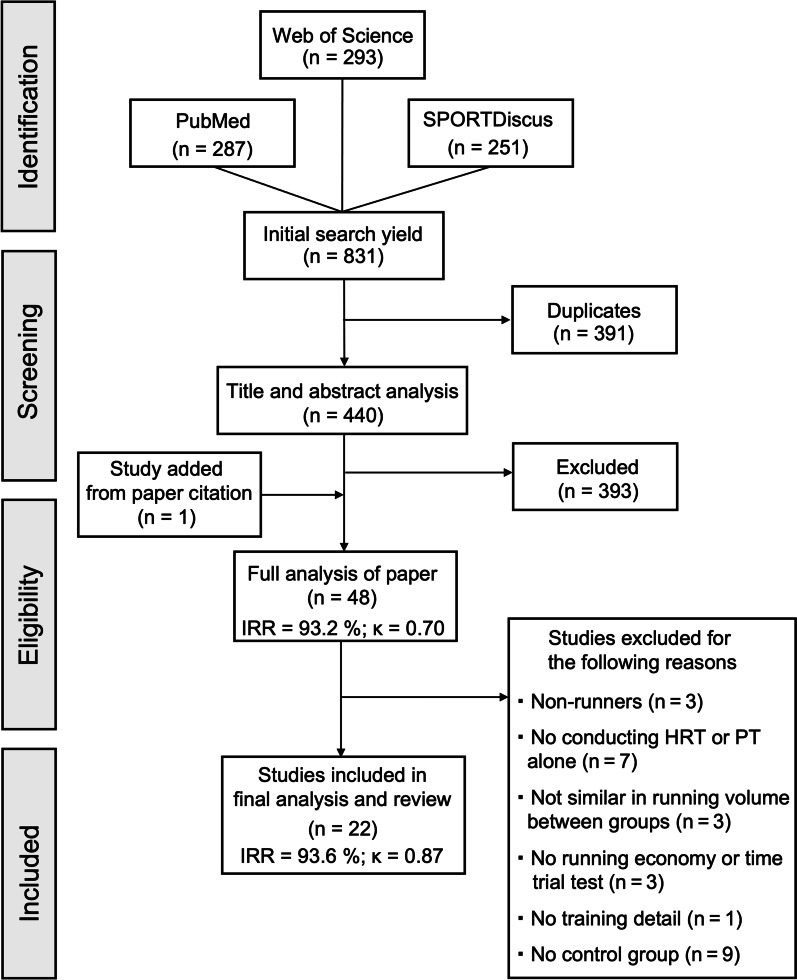
- Systematic review and meta-analysis conducted according to PRISMA; PubMed, Web of Science, and SPORTDiscus were searched up to May 7, 2022. Twenty-two articles satisfied selection criteria; after combining two reports from one research group, 21 studies were finally adopted. Running economy was assessed in 18 studies and running time trial performance in 10 studies; 13 articles examined heavy resistance training and 9 examined plyometric training.
- Participants were middle- or long-distance runners, cross-country runners, triathletes, or duathletes; non-runners were excluded. Interventions lasted ≥4 weeks. Heavy resistance training was defined as ≥70% 1RM or equivalent (≤12RM), or isometric training ≥70% maximum voluntary contraction; plyometric training was defined as body-weight and/or ≤20% 1RM exercise using the stretch–shortening cycle.
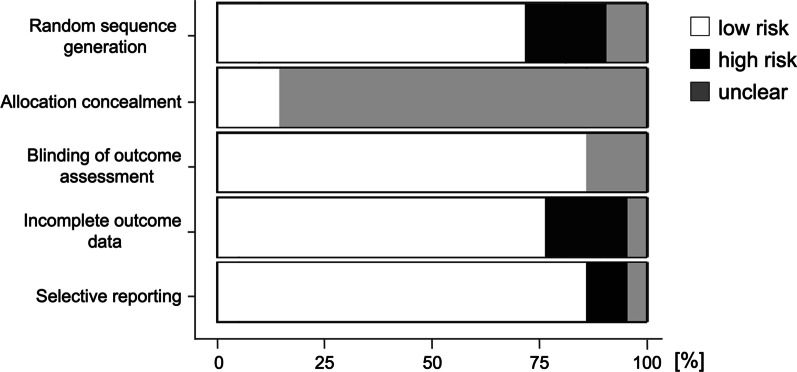
- Hedges’ g with 95% CIs was calculated and synthesized with a random-effects model. Subgroup analyses examined performance level, age, intervention period, training modality, and training intensity. Heterogeneity was assessed with I² and Cochran’s Q; risk of bias and quality were assessed with Cochrane tools, PEDro, CONSORT, Oxford levels, and SORT.
Limitations
- Stated in the paper: the review did not consider the effects of running training because running volume was reported inconsistently across studies; the authors did not directly compare effect sizes between heavy resistance and plyometric training because of differences in training period and number of studies; and lack of information on time-trial effect sizes prevented subgroup analyses for running time trial performance.
- Evident from the text: the number of studies examining heavy resistance training effects on running time trial performance was limited, and the associated 95% CI crossed zero; effect sizes were small even for heavy resistance training.
- Evident from the methods: all quality, risk-of-bias, and strength-of-recommendation assessments were performed by a single author (YE).
Model-written summary. Check it against the paper before relying on it.
Integrity signals
Registry
Cites
Statistics
Figures
Verification
Claims the paper makes
0 Valid · 1 Not valid · 50 Not checked · 55 Own results and interpretations
None of the sources cited for this claim have been checked yet.
In the paper
“The reason behind this interest is that the energy cost of skeletal muscle represents majority of the total energy cost of running [9, 10].”
§ Heavy Resistance Training Versus Plyometric Training for Improving Running Economy and Running Time Trial Performance: A Systematic Review and Meta-analysis > Background
What the sources say
- Not checked yetcites [9] Fletcher JR MacIntosh BR Running economy from a muscle energetics perspective Front Physiol 2017 10.3389/fphys.2017.00433 28690549 PMC5479897 source
Checked before — its earlier verdict is held back until a new check runs.
- Could not verifycites [10] Kipp S Kram R Hoogkamer W Extrapolating metabolic savings in running: implications for performance predictions Front Physiol 2019 10.3389/fphys.2019.00079 30804807 PMC6378703 sourceExperimental — accuracy not yet measured
Our copy of Kipp, Shalaya, Kram and Hoogkamer (2019) is a modeling/review piece on how metabolic savings translate into faster running: the Introduction, 'Running Velocity and V̇O2' and 'Possible Confounding Factors' sections discuss the gross O2–velocity relation, net vs. gross cost of transport and Pugh's cubic air-resistance term, but no passage apportions the total energy cost of running to skeletal muscle. Searched: 'energy cost of skeletal muscle represents the majority of the total energy cost of running', 'active muscles account for the largest proportion of oxygen consumption during running', 'skeletal muscle metabolic power accounts for most of the energy expended during locomotion', 'muscle ... fraction of total metabolic cost' — only reference-list entries (e.g., di Prampero et al., 1986; Margaria et al., 1963; Kipp, Grabowski & Kram, 2018) and the air-resistance passages came back, none stating the claim. Nothing in our copy contradicts the claim either, so it is not addressed rather than disputed. (LLM, conf=0.68)
plain- Asserted: passes — The authors put it forward as true.
- Checkable: passes — It can be checked against evidence.
- Load-bearing: passes — The paper’s conclusions depend on it.
- Based: passes — The paper gives a reason why it holds.
- Not checked yet
A result the paper reports from its own data — it cites no other source for it, so there is none to check. The quote shows it is in the paper.
In the paper
“The pooled effect size for running economy in heavy resistance training was greater (g = − 0.32 [95% confidence intervals [CIs] − 0.55 to − 0.10]: effect size = small)”
§ Heavy Resistance Training Versus Plyometric Training for Improving Running Economy and Running Time Trial Performance: A Systematic Review and Meta-analysis > Abstract > Results
plain- Asserted: passes — The authors put it forward as true.
- Checkable: passes — It can be checked against evidence.
- Load-bearing: passes — The paper’s conclusions depend on it.
- Based: passes — The paper gives a reason why it holds.
In the paper
“The effect size of plyometric training in Lv. 2 runners on running economy was greater than that of Lv. 1 runners (Lv. 2 vs. Lv. 1, g = − 0.20 [small] vs. 0.12 [trivial]).”
§ Heavy Resistance Training Versus Plyometric Training for Improving Running Economy and Running Time Trial Performance: A Systematic Review and Meta-analysis > Results > Subgroup Analysis on the Effects of Plyometric Training on Running Economy and Running Time Trial Performance
What the sources say
- Not matchedcites Table 5
This doesn’t read as a citation we can look up.
plainstates an association- Asserted: passes — The authors put it forward as true.
- Checkable: passes — It can be checked against evidence.
- Load-bearing: unclear — It is unclear whether the paper’s conclusions depend on it.
- Based: passes — The paper gives a reason why it holds.
- Not matched
A result the paper reports from its own data — it cites no other source for it, so there is none to check. The quote shows it is in the paper.
In the paper
“than that in plyometric training (g = -0.13 [95% CIs − 0.47 to 0.21]: trivial)”
§ Heavy Resistance Training Versus Plyometric Training for Improving Running Economy and Running Time Trial Performance: A Systematic Review and Meta-analysis > Abstract > Results
plain- Asserted: passes — The authors put it forward as true.
- Checkable: passes — It can be checked against evidence.
- Load-bearing: passes — The paper’s conclusions depend on it.
- Based: passes — The paper gives a reason why it holds.
In the paper
“The subgroup difference was also seen in age (young vs. old, g = − 0.51 [moderate] vs. − 0.12 [trivial]), training load (≥ 90% of 1RM or ≤ 4RM vs. < 90% of 1RM or > 4RM, g = − 0.31 [small] vs. − 0.17 [trivial]), and intervention period (10–14 vs. 6–8 weeks, g = -0.45 [small] vs. − 0.21 [small]) (Table 4).”
§ Heavy Resistance Training Versus Plyometric Training for Improving Running Economy and Running Time Trial Performance: A Systematic Review and Meta-analysis > Results > Subgroup Analysis on the Effects of Heavy Resistance Training on Running Economy and Running Time Trial Performance
What the sources say
- Not matchedcites Table 4
This doesn’t read as a citation we can look up.
plainstates an association- Asserted: passes — The authors put it forward as true.
- Checkable: passes — It can be checked against evidence.
- Load-bearing: unclear — It is unclear whether the paper’s conclusions depend on it.
- Based: passes — The paper gives a reason why it holds.
- Not matched
66 more claims
Create a free account to see all 106 claims and to verify the 67 references still open.
- It may state two separate claims as one. 20
- Probably not a substantial claim. 21
Claims other papers make about this one
Each is checked against this paper’s own text: does it say what the citing paper says it does?
In the citing paper
“it has been suggested that PL may have a greater effect in athletes with higher performance levels [43, 120] or in training programmes of longer duration in endurance athletes [120] and healthy adults (i.e., longer than 7 weeks) [131].”
From Effect of Strength Training Programs in Middle- and Long-Distance Runners’ Economy at Different Running Speeds: A Systematic Review with Meta-analysis (2024) · cites this paper as [120]
Self-check
Percentages, sums and reported differences re-computed from the paper’s own numbers.
Each contradiction between two passages listed here was confirmed by an independent check.
Rated major: it would touch a result — a value a result rests on, reported and recomputed p-values on opposite sides of the significance level, two passages that conflict with no sign which is right, or a cited work retracted before this paper was published.
In the paper
§ Heavy Resistance Training Versus Plyometric Training for Improving Running Economy and Running Time Trial Performance: A Systematic Review and Meta-analysis > Abstract > Results
“g = − 0.24 [95% CIs − 1.04 to − 0.55]: small”
§ Heavy Resistance Training Versus Plyometric Training for Improving Running Economy and Running Time Trial Performance: A Systematic Review and Meta-analysis > Results > Effects of Heavy Resistance versus Plyometric Training on Running Economy and Running Time Trial Performance
“although the associated 95% CIs of heavy resistance training crossed zero (Fig. 6).”
Rated major: it would touch a result — a value a result rests on, reported and recomputed p-values on opposite sides of the significance level, two passages that conflict with no sign which is right, or a cited work retracted before this paper was published.
In the paper
§ Heavy Resistance Training Versus Plyometric Training for Improving Running Economy and Running Time Trial Performance: A Systematic Review and Meta-analysis > Abstract > Results
“that in plyometric training (g = -0.13 [95% CIs − 0.47 to 0.21]: trivial)”
§ Heavy Resistance Training Versus Plyometric Training for Improving Running Economy and Running Time Trial Performance: A Systematic Review and Meta-analysis > Results > Effects of Heavy Resistance versus Plyometric Training on Running Economy and Running Time Trial Performance
“The pooled effect size for heavy resistance training was greater than that for plyometric training (g = − 0.32 [small] vs. − 0.17 [trivial])”
Rated major: it would touch a result — a value a result rests on, reported and recomputed p-values on opposite sides of the significance level, two passages that conflict with no sign which is right, or a cited work retracted before this paper was published.
In the paper
§ Heavy Resistance Training Versus Plyometric Training for Improving Running Economy and Running Time Trial Performance: A Systematic Review and Meta-analysis > Results > Subgroup Analysis on the Effects of Heavy Resistance Training on Running Economy and Running Time Trial Performance
“| Young (21.0–31.5 years) | − 0.51 [ − 0.83, 0.19] | Moderate |”
§ Heavy Resistance Training Versus Plyometric Training for Improving Running Economy and Running Time Trial Performance: A Systematic Review and Meta-analysis > Discussion > Subgroup Analysis on the Effects of Heavy Resistance Training on Running Economy
“heavy resistance training in young runners (21.0–31.5 years) produced moderate improvements in running economy (g = − 0.51 [95% CIs − 0.83 to − 0.19])”
Rated minor: it would not touch a result — a value no result rests on, a p-value that stays on the same side of the significance level, or a conflict that is clerical, resolved elsewhere in the paper, or outside its own findings.
In the paper
§ Heavy Resistance Training Versus Plyometric Training for Improving Running Economy and Running Time Trial Performance: A Systematic Review and Meta-analysis > Results > Study Selection
“running economy [63–68, 70–75, 78–83]”
§ Heavy Resistance Training Versus Plyometric Training for Improving Running Economy and Running Time Trial Performance: A Systematic Review and Meta-analysis > Results > Effects of Heavy Resistance versus Plyometric Training on Running Economy and Running Time Trial Performance
“| 1 | Karsten et al. [68] | HRT | 8: M = 5, F = 3, 39 ± 5.1 | 6 | DRT | 80% 1RM | – | 5 km: − 3.5%, g = − 0.23 [ − 1.21, 0.75] |”
Rated minor: it would not touch a result — a value no result rests on, a p-value that stays on the same side of the significance level, or a conflict that is clerical, resolved elsewhere in the paper, or outside its own findings.
In the paper
§ Heavy Resistance Training Versus Plyometric Training for Improving Running Economy and Running Time Trial Performance: A Systematic Review and Meta-analysis > Results > Study Selection
“running time trial performance [65, 67, 69, 76–78, 80–82, 84]”
§ Heavy Resistance Training Versus Plyometric Training for Improving Running Economy and Running Time Trial Performance: A Systematic Review and Meta-analysis > Results > Effects of Heavy Resistance versus Plyometric Training on Running Economy and Running Time Trial Performance
“| 2 | Johnston et al. [69] | HRT | 6: F, 30.3 ± 1.4 | 10 | DRT | 6RM | 12.8 km/h: V˙ O2; − 4.1%, g = − 0.66 [ − 1.82, 0.50]13.8 km/h: V˙ O2; − 3.8%, g = − 0.61 [ − 1.77, 0.55] | – |”
3 more findings
Create a free account to see every finding of this check.
Citations
Cites
Statistical Power Analysis for the Behavioral Sciences
Muller, K. (1989) · Technometrics · doi:10.1080/00401706.1989.10488618 · Cited by 99,167
The Measurement of Observer Agreement for Categorical Data
Landis, J. R., & Koch, G. G. (1977) · Biometrics · doi:10.2307/2529310 · Cited by 81,148
Preferred Reporting Items for Systematic Reviews and Meta-Analyses: The PRISMA Statement
Moher, D., Liberati, A., Tetzlaff, J., Altman, D. G., & The PRISMA Group (2009) · PLoS Medicine · doi:10.1371/journal.pmed.1000097 · Cited by 64,042
Measuring inconsistency in meta-analyses
Higgins, J. P. T., Thompson, S. G., Deeks, J. J., & Altman, D. G. (2003) · BMJ · doi:10.1136/bmj.327.7414.557 · Cited by 63,139
Preferred reporting items for systematic reviews and meta-analyses: the PRISMA Statement.
(2009) · PubMed Central · Cited by 44,859
Reliability of the PEDro Scale for Rating Quality of Randomized Controlled Trials
Maher, C. G., Sherrington, C., Herbert, R. D., Moseley, A. M., & Elkins, M. (2003) · Physical Therapy · doi:10.1093/ptj/83.8.713 · Cited by 4,808
Effect size, confidence interval and statistical significance: a practical guide for biologists
Nakagawa, S., & Cuthill, I. C. (2007) · Biological Reviews · doi:10.1111/j.1469-185x.2007.00027.x · Cited by 3,835 · cited 1×
“Hedges’ g and 95% confidence intervals (CIs) were calculated from the sample size, mean, and SD values in each of the experimental and control groups to estimate the magnitude of changes in outcomes between pre- and post-training [34].”
MethodLimiting factors for maximum oxygen uptake and determinants of endurance performance
BASSETT, D. R. (2000) · Medicine & Science in Sports & Exercise · doi:10.1097/00005768-200001000-00012 · Cited by 2,410 · cited 1×
“The training levels for long-distance runners are indirectly represented as the performance values [19, 20].”
BackgroundAagaard, P., Simonsen, E. B., Andersen, J. L., Magnusson, P., & Dyhre-Poulsen, P. (2002) · Journal of Applied Physiology · doi:10.1152/japplphysiol.00283.2002 · Cited by 1,844
Factors affecting running economy in trained distance runners
Saunders, P. U., Pyne, D. B., Telford, R. D., & Hawley, J. A. (2004) · Sports Medicine · doi:10.2165/00007256-200434070-00005 · Cited by 975 · cited 1×
“Performance Level of the Runners Examined In highly trained runners, where running economy has already been highly developed through years of endurance training, it may be difficult to produce further improvements in running economy and/or running time trial performance [18].”
Background
Research works printed but not linked: 2
- Higgins JPT, Green S. Cochrane handbook for systematic reviews of interventions. In: Deeks JJ, Higgins JPT, Altman DG, eds. Chapter 9: Analysing data and undertakeing meta-analyses. The Cochrane Collaboration: 2011, https://handbook-5-1.cochrane.org/front_page.htm. Accessed 9 June 2022.
- Machado AF Castro JBP Bocalini DS Figueira Junior A Nunes RA Vale R Effects of plyometric training on the performance of 5-km road runners J Phys Educ Sport 2019 10.7752/jpes.2019.01099 · doi:10.7752/jpes.2019.01099
Cited by
Exercise Metabolism and Adaptation in Skeletal Muscle
Smith, J. A. B., Murach, K. A., Dyar, K. A., & Zierath, J. R. (2023) · Nature Reviews Molecular Cell Biology · doi:10.1038/s41580-023-00606-x · Cited by 342
Llanos-Lagos, C., Ramirez-Campillo, R., Moran, J., & Sáez de Villarreal, E. (2024) · Sports Medicine · doi:10.1007/s40279-023-01978-y · Cited by 68
Hooren, B. V., Aagaard, P., & Blazevich, A. J. (2024) · Sports Medicine · doi:10.1007/s40279-024-02110-4 · Cited by 58
Llanos-Lagos, C., Ramírez‐Campillo, R., Moran, J., & de Villarreal, E. S. (2024) · Sports Medicine · doi:10.1007/s40279-024-02018-z · Cited by 52
Li, Z., Qi, Y., Chen, X., Li, J., Zhang, J., Li, P., & Zhou, Z. (2024) · Scandinavian Journal of Medicine and Science in Sports · doi:10.1111/sms.14764 · Cited by 14
The effects of strength training on distance running performance and running injury prevention
Karp, J. R., & Mba (2024) · Journal of Physical Education and Sport · doi:10.7752/jpes.2024.10259 · Cited by 11
Ramos‐Campo, D. J., Andreu‐Caravaca, L., Clemente‐Suárez, V. J., & Rubio‐Arias, J. Á. (2025) · The Journal of Strength and Conditioning Research · doi:10.1519/jsc.0000000000005056 · Cited by 11
Grivas, G. V. (2025) · European Journal of Applied Physiology · doi:10.1007/s00421-025-06085-6 · Cited by 9
Mesfen, A., & Melkamu, Z. (2024) · Asian Journal of Sports Medicine · doi:10.5812/asjsm-149375 · Cited by 7
Iatropoulos, S., Dandrieux, P., Navarro, L., Blanco, D., & Édouard, P. (2024) · Scandinavian Journal of Medicine and Science in Sports · doi:10.1111/sms.14720 · Cited by 6
Impact of Achilles Tendon and Ankle Plantar Flexor Stiffness on the Net Metabolic Cost of Running
Nguyen, A. P., Bosquet, L., Belaoued, R., Detrembleur, C., & Mahaudens, P. (2025) · International Journal of Sports Physiology and Performance · doi:10.1123/ijspp.2024-0375 · Cited by 6
Sharma, R., Singh, G., Kothiyal, S., & Verma, S. (2025) · Journal of Bodywork and Movement Therapies · doi:10.1016/j.jbmt.2025.04.035 · Cited by 5
Riebe, D. A., Magal, M., Kaminsky, L. A., Ross, R. R., Phillips, S. M., Alhassan, S., Arena, R. A., Behm, D. G., Camhi, S. M., Church, T. S., et al. (2026) · Medicine & Science in Sports & Exercise · doi:10.1249/mss.0000000000003997 · Cited by 5
Prieto-González, P., Yağın, F. H., Sánchez-Infante, J., & Ardigò, L. P. (2024) · Retos · doi:10.47197/retos.v58.106992 · Cited by 4
Eihara, Y., Takao, K., Sugiyama, T., Maeo, S., Kanehisa, H., & Isaka, T. (2024) · European Journal of Sport Science · doi:10.1002/ejsc.12197 · Cited by 4
Self-citationComment on: “Effects of Plyometric Training on Physical Performance: An Umbrella Review”
Ramírez‐Campillo, R., Afonso, J. R., Moran, J., Behm, D. G., & Granacher, U. (2023) · Sports Medicine - Open · doi:10.1186/s40798-023-00595-3 · Cited by 5
Enhancing clarity and methodological rigor in umbrella reviews
Abdullah, A., Saeed, H., & Ahmad, M. H. (2024) · Annals of Medicine and Surgery · doi:10.1097/ms9.0000000000002536 · Cited by 4
Acute and Chronic Effects of Stretching on Running Economy: A Systematic Review with Meta-Analysis
Warneke, K., Zechner, M., Siegel, S. D., Jochum, D., Brunssen, L., & Konrad, A. (2025) · Sports Medicine - Open · doi:10.1186/s40798-025-00859-0 · Cited by 2
Nixon, K. L., Franz, C. J., Birchmeier, C. J., Knous, J. L., Berry, D. C., Osterhoff, K. M., & Lincoln, M. A. (2023) · Internet Journal of Allied Health Sciences and Practice · doi:10.46743/1540-580x/2023.2476 · Cited by 1
Associations Between Isokinetic Torque and External Load Metrics During Youth Soccer Matches
Michailidis, Y. (2025) · Sports · doi:10.3390/sports13090311 · Cited by 1
Analisis Korelasi Kekuatan Maksimal Dengan Performa Sprint Pada Atlet Rugby 7s
Cahyo, D. D., Fajri, I. T., Nauroh, Q., & Hutauruk, D. D. M. (2025) · Jurnal Kepelatihan Olahraga · doi:10.17509/jko-upi.v17i2.85740 · Cited by 1
Martins, J. C. D. C., Fernandes, M. S. D. S., Aidar, F. J., Silva, G. I. D. C. E., Filho, E. M. A. A., Yağın, F. H., Bădicu, G., Prieto-González, P., Al-Mhanna, S. B., Goni, M. D., et al. (2026) · PLoS ONE · doi:10.1371/journal.pone.0342428 · Cited by 1
Eihara, Y., Kinoshita, M., Jotoku, K., Maeo, S., Kanehisa, H., & Isaka, T. (2026) · Medicine & Science in Sports & Exercise · doi:10.1249/mss.0000000000004008 · Cited by 1
Self-citationThe Influence of Somatic Maturation on Stretch-Shortening Cycle Function in Youth Athletes
Keleher, K., Samways, B., & Kite, R. J. (2026) · The Journal of Strength and Conditioning Research · doi:10.1519/jsc.0000000000005445 · Cited by 1
Effects of resistance training on running economy: a systematic review and meta-analysis
Zecchin, A., de Lima, L. C. R., Puggina, E. F., & Júnior, M. F. T. (2025) · Retos · doi:10.47197/retos.v71.113574 · Cited by 1
Case Report: Rehabilitation and Return to Running Program for Shin Splints Runners.
Wirananta, D. H., & Rahman, F. (2024) · JURNAL PENDIDIKAN JASMANI DAN OLAHRAGA · doi:10.17509/jpjo.v9i1.67153
Filho, A. S. S., Inácio, P. A., Aprigliano, V., Leonardo, P. S., Silva, I. O., Cunha, R. M., Chiappa, G. R., Fajemiroye, J. O., Vieira, R. P., Lopes‐Martins, R. Á. B., et al. (2025) · Applied Sciences · doi:10.3390/app15020693
Neuromuscular recruitment runs
Sorensen, T. (2025) · Scientific Journal of Sport and Performance · doi:10.55860/rcpk9702
Kestovoimaharjoittelu kestävyysjuoksijoiden alaraajavaivojen hoidossa
Kuokkanen, A., Nenonen, H., & Väkevä, V. (2024) · Theseus (Ammattikorkeakoulujen)
Behardien, M. (2025) · Open University of Cape Town (University of Cape Town)
Correlation of Strength Characteristics with Running Economy in Well-Trained Male Distance Runners
Thaiyanont, T., Sairaya, T., Tanapin, P., Haowhan, P., Meepol, N., Surasartpisal, B., Patarachao, P., Konthasing, P., Keerasomboon, T., & Jamkrajang, P. (2026) · Lecture notes in bioengineering · doi:10.1007/978-981-95-0804-4_7
dos Santos, K. L., da Silva, J., Brasil, C., & de Lima, A. P. (2026) · Revista Brasileira de Ciências do Esporte · doi:10.1590/rbce.48.e20250031
Lanzarini, L. D. V., Schmitt, P. J., Goulart, V. B., Oliveira, G. M., Huff, T., Ventura, T. P., & Turnes, T. (2026) · Sport Sciences for Health · doi:10.1007/s11332-026-01927-y
Dredge, K., Ingram, L. A., Gleadhill, S., Stanley, J., & Bennett, H. (2026) · International Journal of Sports Science & Coaching · doi:10.1177/17479541261488006
Vinu, W., Josyula, T., Kabeer, D. A., Karmakar, D., Valappil, I. N. K., Parpa, K., Katanic, B., Geantă, V. A., Vveinhardt, J., & Govindasamy, K. (2026) · Frontiers in Physiology · doi:10.3389/fphys.2026.1781766
Avaliação fisioterapêutica do corredor clínica e biomecânica do corredor
Pereira, J. M., Santos, M. E., & Openheimer, D. G. (2026) · doi:10.54665/9786585924528
โพธิ์ปิติกุล, ฉ. (2026) · Thai Journal of Leisure and Recreation · doi:10.67909/tjlr.e262002
Metadata
- Authors
- Eihara, Y., Takao, K., Sugiyama, T., Maeo, S., Terada, M., Kanehisa, H., & Isaka, T.
- Affiliations
- Ritsumeikan University (JP)
- Corresponding author
- Eihara, Yuuri
- ORCID
- Venue
- Sports Medicine - Open
- Published
- 2022-11-12
- Volume
- 8
- Issue
- 1
- Pages
- 138-138
- ISSN
- 2198-9761 (ISSN-L)
- 2199-1170
- PMC
- PMC9653533
- OpenAlex
- W4309072816
- Cited by
- 38
- References
- 101
- Citations by year
- 2026: 11 · 2025: 11 · 2024: 12 · 2023: 4
- FWCI
- 1.18
- Type
- journal article
- Language
- en
- Open access
- gold
- doi.org
- Licence
- cc-by
- creativecommons.org/licenses/by/4.0 (tdm)
- creativecommons.org/licenses/by/4.0 (vor)
- Locations
- Sports Medicine - Open (publishedVersion, cc-by)
- PubMed (publishedVersion)
- PubMed Central (publishedVersion, cc-by)
- Topics
- Health Sciences › Medicine › Orthopedics and Sports Medicine › Sports Performance and Training
- Health Sciences › Medicine › Physiology (medical) › Cardiovascular and exercise physiology
- Physical Sciences › Engineering › Biomedical Engineering › Lower Extremity Biomechanics and Pathologies
- Keywords
- high-load resistance training, plyometric training, running economy, long-distance runners, training duration, endurance running, resistance training, training periodization, exercise frequency, training volume, exercise intensity
About these checks
Registry, retraction, Cites and statistics results are computed, not judged, with one exception: a printed reference that no index lists is read once by a model before it counts as a citation error. Claims are extracted by a model and kept only when their quote appears verbatim in the text; each cited source is then checked, with a model’s help, for whether it says what the claim relies on. Those verdicts can be wrong — read the claim’s quote and the cited source before relying on one.
The claim verdicts this report counts are experimental: their accuracy is not yet measured.
A language model drew the claims from the paper on 2026-11-19, under version 3 of the claim definition (model deepseek-v4.1-flash, prompt extract-v3).
A second model labelled each claim on 2026-11-19 (model jev-1.13-20260917, definition revision gold-guideline-v0.2).
Cited sources are checked with a language model’s help (qwen3.8-omni-flash).
Statistics and arithmetic are recomputed, not judged.
Confidence bands are shown only for fields calibrated on our annotated test set. None is calibrated yet, so no band is shown.
What counts as a claim ›How we measure confidence ›How we check this ›
Are you an author, or do you see a problem with this page? Request a review
Data sources
Bibliographic data: Semantic Scholar, OpenAlex, Crossref.
Contains information from the Semantic Scholar Academic Graph Datasets, made available under the ODC Attribution License (ODC-BY 1.0).
Semantic Scholar’s data is described in: Kinney, R., et al. (2023). The Semantic Scholar Open Data Platform. arXiv:2301.10140.
