

Using mobile health technology to improve behavioral skill implementation through homework in evidence-based parenting intervention for disruptive behavior disorders in youth: study protocol for intervention development and evaluation
Open accessThe DOI matches its Crossref record; 40 of the 40 references it cites were found in a registry or an index.
Abstract
BACKGROUND: Disruptive behavior disorders (DBDs) (oppositional defiant disorder (ODD) and conduct disorder (CD)) are prevalent, costly, and oftentimes chronic psychiatric disorders of childhood. Evidence-based interventions that focus on assisting parents to utilize effective skills to modify children's problematic behaviors are first-line interventions for the treatment of DBDs. Although efficacious, the effects of these interventions are often attenuated by poor implementation of the skills learned during treatment by parents, often referred to as between-session homework. The multiple family group (MFG) model is an evidence-based, skills-based intervention model for the treatment of DBDs in school-age youth residing in urban, socio-economically disadvantaged communities. While data suggest benefits of MFG on DBD behaviors, similar to other skill-based interventions, the effects of MFG are mitigated by the poor homework implementation, despite considerable efforts to support parents in homework implementation. This paper focuses on the study protocol for the development and preliminary evaluation of a theory-based, smartphone mobile health (mHealth) application (My MFG) to support homework implementation by parents participating in MFG. METHODS/DESIGN: This paper describes a study design proposal that begins with a theoretical model, uses iterative design processes to develop My MFG to support homework implementation in MFG through a series of pilot studies, and a small-scale pilot randomised controlled trial to determine if the intervention can demonstrate change (preliminary efficacy) of My MFG in outpatient mental health settings in socioeconomically disadvantaged communities. DISCUSSION: This preliminary study aims to understand the implementation of mHealth methods to improve the effectiveness of evidence-based interventions in routine outpatient mental health care settings for youth with disruptive behavior and their families. Developing methods to augment the benefits of evidence-based interventions, such as MFG, where homework implementation is an essential mediator of treatment benefits is critical to full adoption/implementation of these intervention in routine practice settings and maximizing benefits for youth with DBDs and their families. TRIAL REGISTRATION: ClinicalTrials.gov NCT01917838.
Overview
The claims and statistics of this paper haven’t been checked yet.
Free: it reads the open-access text and checks the first 5 claims that cite a source we can check. Create a free account to check every claim.
Integrity signals
Registry
Cites
Statistics
Figures
Verification
Claims the paper makes
The claims and statistics of this paper haven’t been checked yet.
Free: it reads the open-access text and checks the first 5 claims that cite a source we can check. Create a free account to check every claim.
Claims other papers make about this one
Each is checked against this paper’s own text: does it say what the citing paper says it does?
The source backs part of the claim, not all of it — or backs it for a different population, condition or comparison.
In the citing paper
“Indeed, many previous studies that leveraged (nonsmartphone) mobile phones supported learning by displaying psychoeducational content [56,58,140], receiving tips/reminders via SMS [47,149], using (bidirectional) SMS communication to perform (in situ) assessment [149], or telephone calls to health care providers [75,81,145].”
From Smartphone Apps for the Treatment of Mental Disorders: Systematic Review (2020) · cites this paper as [47]
Experimental — accuracy not yet measured
Self-check
Percentages, sums and reported differences re-computed from the paper’s own numbers.
The self-check needs the paper’s full text.
Citations
Cites
Intrinsic Motivation and Self-Determination in Human Behavior
Deci, E. L., & Ryan, R. M. (1985) · doi:10.1007/978-1-4899-2271-7 · Cited by 26,772 · cited 1×
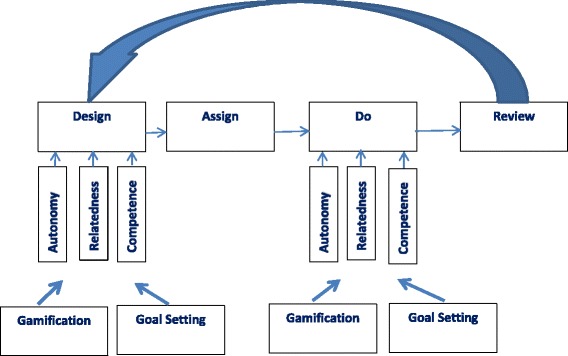
“The second is selfdetermination theory [31] which posits that behavior change and learning are determined by three factors:”
BackgroundIntrinsic Motivation and Self-Determination in Human Behavior
Miller, K. A., Deci, E. L., & Ryan, R. M. (1988) · Contemporary Sociology · doi:10.2307/2070638 · Cited by 15,312
Building a practically useful theory of goal setting and task motivation: A 35-year odyssey.
Locke, E. A., & Latham, G. P. (2002) · American Psychologist · doi:10.1037/0003-066x.57.9.705 · Cited by 7,766 · cited 1×
“The fourth is goal setting [33], which assists individuals in directing attention,”
BackgroundEvidence-Based Psychosocial Treatments for Children and Adolescents With Disruptive Behavior
Eyberg, S. M., Nelson, M. M., & Boggs, S. R. (2008) · Journal of Clinical Child & Adolescent Psychology · doi:10.1080/15374410701820117 · Cited by 1,335
Brestan, E. V., & Eyberg, S. M. (1998) · Journal of Clinical Child Psychology · doi:10.1207/s15374424jccp2702_5 · Cited by 1,025 · cited 13×
“This paper discusses the rationale behind the development of My MFG, the conceptual models that form the foundation of My MFG, and a proposal for a series of iterative studies to develop and preliminarily evaluate My MFG. Evidence-based treatment for DBDs in socioeconomically disadvantaged settings Publicly funded out…”
BackgroundInfluentialHealth behavior models in the age of mobile interventions: are our theories up to the task?
Riley, W. T., Rivera, D. E., Atienza, A. A., Nilsen, W., Allison, S. M., & Mermelstein, R. (2011) · Translational Behavioral Medicine · doi:10.1007/s13142-011-0021-7 · Cited by 978 · cited 1×
“There is a lack of research that addresses the use of mobile technology to improve homework completion and quality and often a lack of theoretical foundation supporting mobile technologies in behavioral interventions [29, 30].”
BackgroundFamily experience of barriers to treatment and premature termination from child therapy.
Kazdin, A. E., Holland, L., & Crowley, M. (1997) · Journal of Consulting and Clinical Psychology · doi:10.1037//0022-006x.65.3.453 · Cited by 720
Mohr, D. C., Burns, M. N., Schueller, S. M., Clarke, G., & Klinkman, M. (2013) · General Hospital Psychiatry · doi:10.1016/j.genhosppsych.2013.03.008 · Cited by 693 · cited 1×
“There is a lack of research that addresses the use of mobile technology to improve homework completion and quality and often a lack of theoretical foundation supporting mobile technologies in behavioral interventions [29, 30].”
BackgroundChorpita, B. F., & Daleiden, E. L. (2009) · Journal of Consulting and Clinical Psychology · doi:10.1037/a0014565 · Cited by 687 · cited 14×
“This paper discusses the rationale behind the development of My MFG, the conceptual models that form the foundation of My MFG, and a proposal for a series of iterative studies to develop and preliminarily evaluate My MFG. Evidence-based treatment for DBDs in socioeconomically disadvantaged settings Publicly funded out…”
BackgroundInfluentialNock, M. K., & Ferriter, C. (2005) · Clinical Child and Family Psychology Review · doi:10.1007/s10567-005-4753-0 · Cited by 453
Cited by
Smartphone Apps for the Treatment of Mental Disorders: Systematic Review
Miralles, I., Granell, C., Díaz-Sanahuja, L., Van Woensel, W., Bretón-López, J., Mira, A., Castilla, D., & Casteleyn, S. (2020) · JMIR mHealth and uHealth · doi:10.2196/14897 · Cited by 188
“Articles fulfilling all the following IC were included in our systematic review: (IC1) Full research articles published in an international journal or conference proceedings between January 1, 2013, and December 31, 2018, written in English, and where a full text was available; (IC2) Primary research articles, that is…”
BackgroundInfluentialDahl, V. A., Ramakrishnan, A., Spears, A. P., Jorge, A., Lu, J. M., Bigio, N. A., & Chacko, A. (2019) · Journal of Developmental and Physical Disabilities · doi:10.1007/s10882-019-09691-3 · Cited by 117
“Adherence attenuates the potential impact of pharmacological and psychosocial interventions (Adler and Nierenberg 2010; Bai et al. 2015; Chacko et al. 2015, 2018b), suggesting that efforts to enhance treatment adherence are critical (Acri et al. 2017; Chacko et al. 2016a, b, 2017, 2018a, 2014).”
BackgroundSelf-citationChacko, A., Merrill, B. M., Kofler, M. J., & Fabiano, G. A. (2024) · Translational Psychiatry · doi:10.1038/s41398-024-02890-3 · Cited by 72
Self-citationJones, D. J., Loiselle, R., Zachary, C., Georgeson, A. R., Highlander, A., Turner, P., Youngstrom, J. K., Khavjou, O., Anton, M. T., Gonzalez, M., et al. (2020) · Behavior Therapy · doi:10.1016/j.beth.2020.07.001 · Cited by 47
Georgeson, A. R., Highlander, A., Loiselle, R., Zachary, C., & Jones, D. J. (2020) · Clinical Psychology Review · doi:10.1016/j.cpr.2020.101858 · Cited by 35
Berkel, C., Gallo, C. G., Sandler, I. N., Mauricio, A. M., Smith, J. D., & Brown, C. H. (2019) · The Journal of Primary Prevention · doi:10.1007/s10935-018-00534-z · Cited by 27
Halperin, J. M., Marks, D. J., Chacko, A., Bedard, A., O’Neill, S. C., Curchack, J. T., Bourchtein, E., & Berwid, O. G. (2019) · Research on Child and Adolescent Psychopathology · doi:10.1007/s10802-019-00610-w · Cited by 33
Self-citationParent, J. M., Anton, M. T., Loiselle, R., Highlander, A., Breslend, N. L., Forehand, R., Hare, M. M., Youngstrom, J. K., & Jones, D. J. (2021) · Journal of Child Psychology and Psychiatry · doi:10.1111/jcpp.13554 · Cited by 38
“…and basic (e.g. videotape modeling) to those more recent and sophisticated (e.g. remote coaching, internet-delivered sessions) has long been rooted in the literature on BPT (e.g. Chacko, Isham, Cleek, & McKay, 2016; Jones et al., 2013; Ortiz, Vidair, Acri, Chacko, & Kobak, 2020, for a review).”
BackgroundEngaging Families in Treatment for Child Behavior Disorders
Acri, M. C., Chacko, A., Gopalan, G., & McKay, M. M. (2017) · Wiley eBooks · doi:10.1002/9781119092254.ch24 · Cited by 24
Self-citationAdverse Events in Behavioral Parent Training for Children with ADHD: An Under-Appreciated Phenomenon
Allan, C. C., & Chacko, A. (2018) · The ADHD Report · doi:10.1521/adhd.2018.26.1.4 · Cited by 20
Self-citationClinically Significant and Reliable Change: Comparing an Evidence-based Intervention to Usual Care
Vardanian, M. M., Ramakrishnan, A., Peralta, S., Siddiqui, Y., Shah, S. P., Clark-Whitney, E., & Chacko, A. (2019) · Journal of Child and Family Studies · doi:10.1007/s10826-019-01621-3 · Cited by 12
Self-citationJansen, R., & Reid, M. (2020) · JMIR mhealth and uhealth · doi:10.2196/13179 · Cited by 12
McCall, M. P., Anton, M. T., Highlander, A., Loiselle, R., Forehand, R., Khavjou, O., & Jones, D. J. (2023) · Behavior Modification · doi:10.1177/01454455231165937 · Cited by 5
“…in BPT (e.g., video modeling) to include those targeting clinicians (e.g., online therapist training) and families (e.g., telehealth and other behavioral intervention technologies; Bausback & Bunge, 2021; Chacko, Isham, et al., 2016; Comer et al., 2015; Ortiz et al., 2020; Sullivan et al., 2021).”
BackgroundOruche, U. M., Robb, S. L., Draucker, C. B., Aalsma, M. C., Pescosolido, B. A., Chacko, A., Ofner, S., Bakoyannis, G., & Brown-Podgorski, B. L. (2018) · Child & Youth Care Forum · doi:10.1007/s10566-018-9462-1 · Cited by 8
Self-citationTrask, E. V., Barounis, K., Carlisle, B. L., Garland, A. F., & Aarons, G. A. (2018) · Administration and Policy in Mental Health and Mental Health Services Research · doi:10.1007/s10488-018-0867-9 · Cited by 5
“A randomized controlled trial of My MFG is currently underway to determine if it is effective in improving the quality and quality of therapeutic homework (Chacko et al. 2016).”
BackgroundTreatment Barriers in Mental Health: Perspectives of Using Mobile Technology
Goman, R. (2018) · UST Research Online (University of St. Thomas - Minnesota) · Cited by 1
Adolescent Social Skills Intervention: Theory, Design, and Implementation
Spaans, R. E. (2021) · ERA: Education and Research Archive (University of Alberta) · doi:10.7939/r3-1yt1-yx70 · Cited by 1
Analysis and Development of a Platform for Generating Context-Aware Apps for Mental Health
Miralles, I. (2019) · Tesis Doctorals en Xarxa (Consorci de Serveis Universitaris de Catalunya) · doi:10.6035/14101.2019.142529
Barriers to and Facilitators of Engagement in Behavioral Parent Training Interventions
Forde, M., Krishnamurthy, S., Yang, E., Muscente, K. K., & Chacko, A. (2026) · Elsevier eBooks · doi:10.1016/b978-0-443-29009-1.00047-0
Self-citation
Metadata
- Authors
- Chacko, A., Isham, A., Cleek, A. F., & McKay, M. M.
- Affiliations
- New York University (US)
- University of Wisconsin–Madison (US)
- Corresponding author
- Chacko, Anil
- Venue
- Pilot and Feasibility Studies
- Published
- 2016-09-20
- Volume
- 2
- Issue
- 1
- Pages
- 57-57
- ISSN
- 2055-5784 (ISSN-L)
- PMC
- PMC5153755
- OpenAlex
- W2518967962
- Cited by
- 19
- References
- 40
- Citations by year
- 2026: 1 · 2024: 1 · 2023: 1 · 2021: 2 · 2020: 4 · 2019: 5 · 2018: 4 · 2017: 1
- FWCI
- 5.12
- Type
- journal article
- Language
- en
- Open access
- gold
- doi.org
- Licence
- cc-by
- creativecommons.org/licenses/by/4.0/ (tdm)
- creativecommons.org/licenses/by/4.0/ (vor)
- Locations
- Pilot and Feasibility Studies (publishedVersion, cc-by)
- PubMed Central (publishedVersion, cc-by)
- PubMed (publishedVersion)
- Funders
- National Institute of Mental Health (R34MH100407)
- Topics
- Social Sciences › Psychology › Applied Psychology › Digital Mental Health Interventions
- Health Sciences › Health Professions › General Health Professions › Mobile Health and mHealth Applications
- Social Sciences › Psychology › Clinical Psychology › Child and Adolescent Psychosocial and Emotional Development
- Keywords
- mobile health, parenting support, disruptive behavior disorders, conduct disorder, oppositional defiant disorder, mobile application, intervention development, outpatient psychiatric care, school-age youth
About these checks
Registry, retraction, Cites and statistics results are computed, not judged, with one exception: a printed reference that no index lists is read once by a model before it counts as a citation error. Claims are extracted by a model and kept only when their quote appears verbatim in the text; each cited source is then checked, with a model’s help, for whether it says what the claim relies on. Those verdicts can be wrong — read the claim’s quote and the cited source before relying on one.
Statistics and arithmetic are recomputed, not judged.
Confidence bands are shown only for fields calibrated on our annotated test set. None is calibrated yet, so no band is shown.
What counts as a claim ›How we measure confidence ›How we check this ›
Are you an author, or do you see a problem with this page? Request a review
Data sources
Bibliographic data: Semantic Scholar, OpenAlex, Crossref.
Contains information from the Semantic Scholar Academic Graph Datasets, made available under the ODC Attribution License (ODC-BY 1.0).
Semantic Scholar’s data is described in: Kinney, R., et al. (2023). The Semantic Scholar Open Data Platform. arXiv:2301.10140.
