

Using mobile health technology to improve behavioral skill implementation through homework in evidence-based parenting intervention for disruptive behavior disorders in youth: study protocol for intervention development and evaluation
Open accessThe DOI matches its Crossref record; 40 of the 40 references it cites were found in a registry or an index.
Abstract
BACKGROUND: Disruptive behavior disorders (DBDs) (oppositional defiant disorder (ODD) and conduct disorder (CD)) are prevalent, costly, and oftentimes chronic psychiatric disorders of childhood. Evidence-based interventions that focus on assisting parents to utilize effective skills to modify children's problematic behaviors are first-line interventions for the treatment of DBDs. Although efficacious, the effects of these interventions are often attenuated by poor implementation of the skills learned during treatment by parents, often referred to as between-session homework. The multiple family group (MFG) model is an evidence-based, skills-based intervention model for the treatment of DBDs in school-age youth residing in urban, socio-economically disadvantaged communities. While data suggest benefits of MFG on DBD behaviors, similar to other skill-based interventions, the effects of MFG are mitigated by the poor homework implementation, despite considerable efforts to support parents in homework implementation. This paper focuses on the study protocol for the development and preliminary evaluation of a theory-based, smartphone mobile health (mHealth) application (My MFG) to support homework implementation by parents participating in MFG. METHODS/DESIGN: This paper describes a study design proposal that begins with a theoretical model, uses iterative design processes to develop My MFG to support homework implementation in MFG through a series of pilot studies, and a small-scale pilot randomised controlled trial to determine if the intervention can demonstrate change (preliminary efficacy) of My MFG in outpatient mental health settings in socioeconomically disadvantaged communities. DISCUSSION: This preliminary study aims to understand the implementation of mHealth methods to improve the effectiveness of evidence-based interventions in routine outpatient mental health care settings for youth with disruptive behavior and their families. Developing methods to augment the benefits of evidence-based interventions, such as MFG, where homework implementation is an essential mediator of treatment benefits is critical to full adoption/implementation of these intervention in routine practice settings and maximizing benefits for youth with DBDs and their families. TRIAL REGISTRATION: ClinicalTrials.gov NCT01917838.
Overview
The claims and statistics of this paper haven’t been checked yet.
Free: it reads the open-access text and checks the first 5 claims that cite a source we can check. Create a free account to check every claim.
Integrity signals
Registry
Cites
Statistics
Figures
Verification
Claims the paper makes
The claims and statistics of this paper haven’t been checked yet.
Free: it reads the open-access text and checks the first 5 claims that cite a source we can check. Create a free account to check every claim.
Claims other papers make about this one
Each is checked against this paper’s own text: does it say what the citing paper says it does?
The source backs part of the claim, not all of it — or backs it for a different population, condition or comparison.
In the citing paper
“Indeed, many previous studies that leveraged (nonsmartphone) mobile phones supported learning by displaying psychoeducational content [56,58,140], receiving tips/reminders via SMS [47,149], using (bidirectional) SMS communication to perform (in situ) assessment [149], or telephone calls to health care providers [75,81,145].”
From Smartphone Apps for the Treatment of Mental Disorders: Systematic Review (2020) · cites this paper as [47]
Experimental — accuracy not yet measured
Self-check
Percentages, sums and reported differences re-computed from the paper’s own numbers.
The self-check needs the paper’s full text.
Citations
Cites
Intrinsic Motivation and Self-Determination in Human Behavior
Deci, E. L., & Ryan, R. M. (1985) · doi:10.1007/978-1-4899-2271-7 · Cited by 26,772 · cited 1×
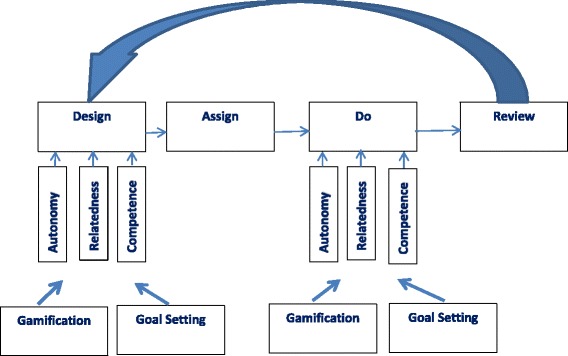
“The second is selfdetermination theory [31] which posits that behavior change and learning are determined by three factors:”
BackgroundIntrinsic Motivation and Self-Determination in Human Behavior
Miller, K. A., Deci, E. L., & Ryan, R. M. (1988) · Contemporary Sociology · doi:10.2307/2070638 · Cited by 15,312
Building a practically useful theory of goal setting and task motivation: A 35-year odyssey.
Locke, E. A., & Latham, G. P. (2002) · American Psychologist · doi:10.1037/0003-066x.57.9.705 · Cited by 7,766 · cited 1×
“The fourth is goal setting [33], which assists individuals in directing attention,”
BackgroundEvidence-Based Psychosocial Treatments for Children and Adolescents With Disruptive Behavior
Eyberg, S. M., Nelson, M. M., & Boggs, S. R. (2008) · Journal of Clinical Child & Adolescent Psychology · doi:10.1080/15374410701820117 · Cited by 1,335
Brestan, E. V., & Eyberg, S. M. (1998) · Journal of Clinical Child Psychology · doi:10.1207/s15374424jccp2702_5 · Cited by 1,025 · cited 13×
“This paper discusses the rationale behind the development of My MFG, the conceptual models that form the foundation of My MFG, and a proposal for a series of iterative studies to develop and preliminarily evaluate My MFG. Evidence-based treatment for DBDs in socioeconomically disadvantaged settings Publicly funded out…”
BackgroundInfluentialHealth behavior models in the age of mobile interventions: are our theories up to the task?
Riley, W. T., Rivera, D. E., Atienza, A. A., Nilsen, W., Allison, S. M., & Mermelstein, R. (2011) · Translational Behavioral Medicine · doi:10.1007/s13142-011-0021-7 · Cited by 978 · cited 1×
“There is a lack of research that addresses the use of mobile technology to improve homework completion and quality and often a lack of theoretical foundation supporting mobile technologies in behavioral interventions [29, 30].”
BackgroundFamily experience of barriers to treatment and premature termination from child therapy.
Kazdin, A. E., Holland, L., & Crowley, M. (1997) · Journal of Consulting and Clinical Psychology · doi:10.1037//0022-006x.65.3.453 · Cited by 720
Mohr, D. C., Burns, M. N., Schueller, S. M., Clarke, G., & Klinkman, M. (2013) · General Hospital Psychiatry · doi:10.1016/j.genhosppsych.2013.03.008 · Cited by 693 · cited 1×
“There is a lack of research that addresses the use of mobile technology to improve homework completion and quality and often a lack of theoretical foundation supporting mobile technologies in behavioral interventions [29, 30].”
BackgroundChorpita, B. F., & Daleiden, E. L. (2009) · Journal of Consulting and Clinical Psychology · doi:10.1037/a0014565 · Cited by 687 · cited 14×
“This paper discusses the rationale behind the development of My MFG, the conceptual models that form the foundation of My MFG, and a proposal for a series of iterative studies to develop and preliminarily evaluate My MFG. Evidence-based treatment for DBDs in socioeconomically disadvantaged settings Publicly funded out…”
BackgroundInfluentialNock, M. K., & Ferriter, C. (2005) · Clinical Child and Family Psychology Review · doi:10.1007/s10567-005-4753-0 · Cited by 453
Nock, M. K., & Kazdin, A. E. (2005) · Journal of Consulting and Clinical Psychology · doi:10.1037/0022-006x.73.5.872 · Cited by 403 · cited 1×
“Unfortunately, the limited data available suggest that homework is not often completed in parenting interventions [2, 18].”
BackgroundGARLAND, A. F., HAWLEY, K. M., BROOKMAN-FRAZEE, L., & HURLBURT, M. S. (2008) · Journal of the American Academy of Child & Adolescent Psychiatry · doi:10.1097/chi.0b013e31816765c2 · Cited by 389 · cited 14×
“This paper discusses the rationale behind the development of My MFG, the conceptual models that form the foundation of My MFG, and a proposal for a series of iterative studies to develop and preliminarily evaluate My MFG. Evidence-based treatment for DBDs in socioeconomically disadvantaged settings Publicly funded out…”
BackgroundInfluentialDretzke, J., Davenport, C., Frew, E., Barlow, J., Stewart-Brown, S., Bayliss, S., Taylor, R. S., Sandercock, J., & Hyde, C. (2009) · Child and Adolescent Psychiatry and Mental Health · doi:10.1186/1753-2000-3-7 · Cited by 347
Baydar, N., Reid, M. J., & Webster-Stratton, C. (2003) · Child Development · doi:10.1111/1467-8624.00616 · Cited by 343 · cited 1×
“Collectively, data suggests that attending treatment and being actively involved when in a treatment session is necessary, but insufficient in producing desired outcomes following treatment—homework completion is necessary to maximize benefits of evidencebased parenting interventions [8, 11, 13, 15].”
BackgroundMichelson, D., Davenport, C., Dretzke, J., Barlow, J., & Day, C. (2013) · Clinical Child and Family Psychology Review · doi:10.1007/s10567-013-0128-0 · Cited by 292
Brestan, E. V., Jacobs, J. R., Rayfield, A. D., & Eyberg, S. M. (1999) · Behavior Therapy · doi:10.1016/s0005-7894(99)80043-4 · Cited by 219 · cited 1×
“Consumer satisfaction and feedback Treatment attitude inventory [40] Feedback questionnaire Group and individual consultancy meeting Parent; target child; therapist Postreatment Fig.”
BackgroundUse and Impact of eHealth System by Low-income Women With Breast Cancer
Gustafson, D. H., McTavish, F. M., Stengle, W., Ballard, D., Hawkins, R., Shaw, B. R., Jones, E., Julèsberg, K., McDowell, H., Chen, W. C., et al. (2005) · Journal of Health Communication · doi:10.1080/10810730500263257 · Cited by 202 · cited 2×
“We hypothesize that My MFG, which is based on a strong theoretical foundations [9, 31–33], employed through mHealth features via smartphones we have successfully utilized in previous work [34, 35] offers an opportunity to significantly improve the effectiveness of MFG.”
BackgroundMethodPsychological Theory and the Gamification of Learning
Landers, R. N., Bauer, K. N., Callan, R. C., & Armstrong, M. B. (2015) · Gamification in Education and Business · doi:10.1007/978-3-319-10208-5_9 · Cited by 198
Using Homework Assignments in Cognitive Behavior Therapy
(2005) · doi:10.4324/9780203499825 · Cited by 195 · cited 5×
“Summary statistics of quantity of homework completed will be directly compared to our previous studies of MFG [9].”
BackgroundMethodResultInfluentialEnhancing Traditional Behavioral Parent Training for Single Mothers of Children with ADHD
Chacko, A., Wymbs, B. T., Wymbs, F. A., Pelham, W. E., Swanger-Gagne, M. S., Girio, E., Pirvics, L., Herbst, L., Guzzo, J., Phillips, C., et al. (2009) · Journal of Clinical Child & Adolescent Psychology · doi:10.1080/15374410802698388 · Cited by 184
Self-citationHow attendance and quality of participation affect treatment response to parent management training.
Nix, R. L., The Conduct Problems Prevention Research Group, Bierman, K. L., & McMahon, R. J. (2009) · Journal of Consulting and Clinical Psychology · doi:10.1037/a0015028 · Cited by 182 · cited 1×
“Collectively, data suggests that attending treatment and being actively involved when in a treatment session is necessary, but insufficient in producing desired outcomes following treatment—homework completion is necessary to maximize benefits of evidencebased parenting interventions [8, 11, 13, 15].”
BackgroundKling, Å., Forster, M. O., Sundell, K., & Melin, L. (2010) · Behavior Therapy · doi:10.1016/j.beth.2010.02.004 · Cited by 149
Hanson, G. (1998) · Psychiatric Services · doi:10.1176/ps.49.2.255 · Cited by 115
Weisz, J. R., Jensen, A. L., & McLeod, B. D. (2005) · Cited by 108
Clarke, A. T., Marshall, S. A., Mautone, J. A., Soffer, S. L., Jones, H. A., Costigan, T. E., Patterson, A., Jawad, A. F., & Power, T. J. (2015) · Journal of Clinical Child & Adolescent Psychology · doi:10.1080/15374416.2013.794697 · Cited by 101 · cited 1×
“, motivational techniques, problem solving barriers to skill implementation, and phone calls between session, as well as home visits [10, 19]).”
BackgroundPsychosocial Interventions for Child Disruptive Behaviors: A Meta-analysis
EPSTEIN, R. A., Fonnesbeck, C., Potter, S., Rizzone, K. H., & McPheeters, M. L. (2015) · PEDIATRICS · doi:10.1542/peds.2015-2577 · Cited by 92
Chacko, A., Gopalan, G., Franco, L. M., Dean-Assael, K., Jackson, J. M., Marcus, S. M., Hoagwood, K., & McKay, M. M. (2014) · Journal of Emotional and Behavioral Disorders · doi:10.1177/1063426614532690 · Cited by 73 · cited 5×
“However, despite these significant efforts, rates of homework completion were often poor [19, 20].”
BackgroundSelf-citationRos, R., Hernandez, J., Graziano, P. A., & Bagner, D. M. (2015) · Behavior Therapy · doi:10.1016/j.beth.2015.08.004 · Cited by 73 · cited 1×
“Collectively, data suggests that attending treatment and being actively involved when in a treatment session is necessary, but insufficient in producing desired outcomes following treatment—homework completion is necessary to maximize benefits of evidencebased parenting interventions [8, 11, 13, 15].”
BackgroundAn e-health solution for people with alcohol problems.
Gustafson, D. H., Boyle, M. G., Shaw, B. R., Isham, A., Mctavish, F. M., Richards, S., Schubert, C. J., Levy, M., & Johnson, K. (2011) · PubMed Central · Cited by 70
Self-citationLee, C. M., Horvath, C. A., & Hunsley, J. D. (2013) · Professional Psychology Research and Practice · doi:10.1037/a0031133 · Cited by 66
Conceptualizing Patient Barriers to Nonadherence with Homework Assignments
Kazantzis, N., & Shinkfield, G. (2007) · Cognitive and Behavioral Practice · doi:10.1016/j.cbpra.2006.08.003 · Cited by 53 · cited 1×
“, social support to implement homework; environmental barriers and facilitators to homework completion) affect the quality of each of the four processes, ultimately impacting the quantity and quality of homework implementation [23, 24].”
BackgroundCan between-session (homework) activities be considered a common factor in psychotherapy?
Kazantzis, N., & Ronan, K. R. (2006) · Journal of Psychotherapy Integration · doi:10.1037/1053-0479.16.2.115 · Cited by 48
Detweiler-Bedell, J. B., & Whisman, M. A. (2005) · Professional Psychology: Research and Practice · doi:10.1037/0735-7028.36.2.219 · Cited by 46 · cited 1×
“, social support to implement homework; environmental barriers and facilitators to homework completion) affect the quality of each of the four processes, ultimately impacting the quantity and quality of homework implementation [23, 24].”
BackgroundGopalan, G., Chacko, A., Franco, L. M., Dean-Assael, K., Rotko, L., Marcus, S. M., Hoagwood, K., & McKay, M. M. (2014) · Journal of Child and Family Studies · doi:10.1007/s10826-014-0074-6 · Cited by 44 · cited 3×
“However, despite these significant efforts, rates of homework completion were often poor [19, 20].”
BackgroundSelf-citationVillodas, M. T., McBurnett, K., Kaiser, N. M., Rooney, M. E., & Pfiffner, L. J. (2013) · Child Psychiatry & Human Development · doi:10.1007/s10578-013-0405-7 · Cited by 44
Chacko, A., Anderson, L., Wymbs, B. T., & Wymbs, F. A. (2013) · Behaviour Change · doi:10.1017/bec.2013.25 · Cited by 29 · cited 3×
“Use of reminders as cues to perform the homework task in context has been routinely used but is often limited in improving completion [8].”
BackgroundSelf-citationGearing, R. E., Schwalbe, C. S., Dweck, P., & Berkowitz, J. (2012) · Community Mental Health Journal · doi:10.1007/s10597-011-9394-9 · Cited by 23
Schwalbe, C. S. J., & Gearing, R. E. (2012) · American Journal of Orthopsychiatry · doi:10.1111/j.1939-0025.2011.01133.x · Cited by 15
Concurrent parent and child therapy groups for externalizing disorders: The rural replication
Tynan, W. D., Chew, C., & Algermissen, M. (2004) · Cognitive and Behavioral Practice · doi:10.1016/s1077-7229(04)80012-9 · Cited by 14
Youth Therapist Strategies to Enhance Client Homework Completion
Houlding, C., SCHMIDT, F. H., & Walker, D. L. (2009) · Child and Adolescent Mental Health · doi:10.1111/j.1475-3588.2009.00533.x · Cited by 11
Cited by
Smartphone Apps for the Treatment of Mental Disorders: Systematic Review
Miralles, I., Granell, C., Díaz-Sanahuja, L., Van Woensel, W., Bretón-López, J., Mira, A., Castilla, D., & Casteleyn, S. (2020) · JMIR mHealth and uHealth · doi:10.2196/14897 · Cited by 188
“Articles fulfilling all the following IC were included in our systematic review: (IC1) Full research articles published in an international journal or conference proceedings between January 1, 2013, and December 31, 2018, written in English, and where a full text was available; (IC2) Primary research articles, that is…”
BackgroundInfluentialDahl, V. A., Ramakrishnan, A., Spears, A. P., Jorge, A., Lu, J. M., Bigio, N. A., & Chacko, A. (2019) · Journal of Developmental and Physical Disabilities · doi:10.1007/s10882-019-09691-3 · Cited by 117
“Adherence attenuates the potential impact of pharmacological and psychosocial interventions (Adler and Nierenberg 2010; Bai et al. 2015; Chacko et al. 2015, 2018b), suggesting that efforts to enhance treatment adherence are critical (Acri et al. 2017; Chacko et al. 2016a, b, 2017, 2018a, 2014).”
BackgroundSelf-citationChacko, A., Merrill, B. M., Kofler, M. J., & Fabiano, G. A. (2024) · Translational Psychiatry · doi:10.1038/s41398-024-02890-3 · Cited by 72
Self-citationJones, D. J., Loiselle, R., Zachary, C., Georgeson, A. R., Highlander, A., Turner, P., Youngstrom, J. K., Khavjou, O., Anton, M. T., Gonzalez, M., et al. (2020) · Behavior Therapy · doi:10.1016/j.beth.2020.07.001 · Cited by 47
Georgeson, A. R., Highlander, A., Loiselle, R., Zachary, C., & Jones, D. J. (2020) · Clinical Psychology Review · doi:10.1016/j.cpr.2020.101858 · Cited by 35
Metadata
- Authors
- Chacko, A., Isham, A., Cleek, A. F., & McKay, M. M.
- Affiliations
- New York University (US)
- University of Wisconsin–Madison (US)
- Corresponding author
- Chacko, Anil
- Venue
- Pilot and Feasibility Studies
- Published
- 2016-09-20
- Volume
- 2
- Issue
- 1
- Pages
- 57-57
- ISSN
- 2055-5784 (ISSN-L)
- PMC
- PMC5153755
- OpenAlex
- W2518967962
- Cited by
- 19
- References
- 40
- Citations by year
- 2026: 1 · 2024: 1 · 2023: 1 · 2021: 2 · 2020: 4 · 2019: 5 · 2018: 4 · 2017: 1
- FWCI
- 5.12
- Type
- journal article
- Language
- en
- Open access
- gold
- doi.org
- Licence
- cc-by
- creativecommons.org/licenses/by/4.0/ (tdm)
- creativecommons.org/licenses/by/4.0/ (vor)
- Locations
- Pilot and Feasibility Studies (publishedVersion, cc-by)
- PubMed Central (publishedVersion, cc-by)
- PubMed (publishedVersion)
- Funders
- National Institute of Mental Health (R34MH100407)
- Topics
- Social Sciences › Psychology › Applied Psychology › Digital Mental Health Interventions
- Health Sciences › Health Professions › General Health Professions › Mobile Health and mHealth Applications
- Social Sciences › Psychology › Clinical Psychology › Child and Adolescent Psychosocial and Emotional Development
- Keywords
- mobile health, parenting support, disruptive behavior disorders, conduct disorder, oppositional defiant disorder, mobile application, intervention development, outpatient psychiatric care, school-age youth
About these checks
Registry, retraction, Cites and statistics results are computed, not judged, with one exception: a printed reference that no index lists is read once by a model before it counts as a citation error. Claims are extracted by a model and kept only when their quote appears verbatim in the text; each cited source is then checked, with a model’s help, for whether it says what the claim relies on. Those verdicts can be wrong — read the claim’s quote and the cited source before relying on one.
Statistics and arithmetic are recomputed, not judged.
Confidence bands are shown only for fields calibrated on our annotated test set. None is calibrated yet, so no band is shown.
What counts as a claim ›How we measure confidence ›How we check this ›
Are you an author, or do you see a problem with this page? Request a review
Data sources
Bibliographic data: Semantic Scholar, OpenAlex, Crossref.
Contains information from the Semantic Scholar Academic Graph Datasets, made available under the ODC Attribution License (ODC-BY 1.0).
Semantic Scholar’s data is described in: Kinney, R., et al. (2023). The Semantic Scholar Open Data Platform. arXiv:2301.10140.
