

Recommendations for progression criteria during external randomised pilot trial design, conduct, analysis and reporting
Open accessThe DOI matches its Crossref record; 37 of the 37 references it cites were found in a registry or an index; 10 of the 14 sources its claims cite were checked for support.
Abstract
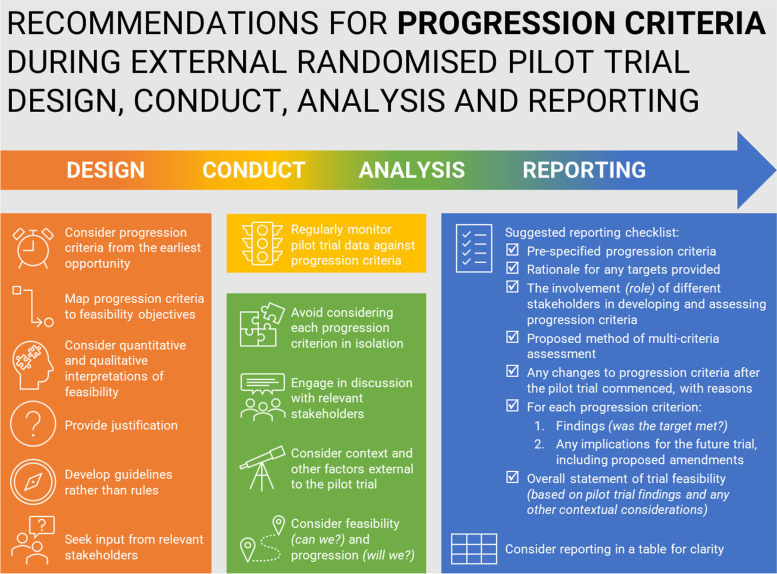
Background: External randomised pilot trials aim to assess whether a future definitive Randomised Controlled Trial (RCT) is feasible. Prespecified progression criteria help guide the interpretation of pilot trial findings to decide whether, and how, a definitive RCT should be conducted. This commentary presents a set of proposed recommendations for progression criteria to guide researchers when (i) designing, (ii) conducting, (iii) analysing and (iv) reporting external randomised pilot trials. Methods: Recommendations were developed following a mixed methods approach. This involved (i) a methodological review of pilot trial publications, (ii) a cross-sectional study of pilot trial research funding applications, (iii) qualitative interviews with pilot trial researchers and (iv) a survey of corresponding authors of identified pilot trial publications. Initial recommendations were refined following two consultation stakeholder workshops held in July 2022. Recommendations for progression criteria for external randomised pilot trials: i. Design : consider progression criteria from the earliest opportunity; map progression criteria to feasibility objectives; consider quantitative and qualitative interpretations of feasibility; provide justification; develop guidelines rather than rules; seek input from relevant stakeholders. ii. Conduct : regularly monitor pilot trial data against progression criteria. iii. Analysis : avoid considering each progression criterion in isolation; engage in discussion with relevant stakeholders; consider context and other factors external to the pilot trial; consider feasibility (can we?) and progression (will we?). iv. Reporting : we propose a reporting checklist in relation to progression criteria and recommend reporting in a table format for clarity. Conclusion: These recommendations provide a helpful resource for researchers to consider progression criteria at different stages of external randomised pilot trials. We have produced a simple infographic tool to summarise these recommendations for researchers to refer to. Further research is needed to evaluate whether these proposed recommendations should inform future development, or update, of established guidelines for the design, conduct, analysis and reporting of external randomised pilot trials.
Overview
CoChat Summary
TL;DR
This commentary proposes recommendations for progression criteria across the design, conduct, analysis, and reporting of external randomised pilot trials, developed from four mixed-methods studies and stakeholder consultation. It offers practical guidance and a reporting checklist/table format, while calling for further evaluation before updating established guidelines.
Key findings
- Recommendations span four stages: design (consider early, map to feasibility objectives, use quantitative and qualitative interpretations, justify criteria, treat as guidelines rather than rules, seek stakeholder input); conduct (regularly monitor data against criteria); analysis (avoid considering criteria in isolation, engage stakeholders, consider context, distinguish feasibility from progression); and reporting (use a proposed checklist and table format).
- Development drew on four studies over three years (2019–2022): a methodological review of pilot trial publications, a cross-sectional study of NIHR Research for Patient Benefit funding applications, qualitative interviews, and a survey of corresponding authors.
- Initial recommendations were refined after two external stakeholder workshops in July 2022; stakeholders included three trial investigators, four trial statisticians, six trial methodologists/health services researchers, one research funder manager, and one professor of primary care pharmacy.
- The paper proposes a reporting checklist (Table 1) and recommends reporting progression criteria in a table format for clarity; an infographic tool was also produced.
Methods
- Mixed methods approach with four distinct studies: (i) methodological review of external randomised pilot trial protocol and result publications (January 2018–December 2019); (ii) cross-sectional study of progression criteria in NIHR RfPB funding applications (funding decision July 2017–July 2019); (iii) qualitative interviews with pilot trial researchers/stakeholders (December 2020–July 2021); and (iv) survey of corresponding authors from study one (January–February 2022).
- Findings were iteratively triangulated; the lead author drafted initial recommendations, which were refined by the wider study team and following feedback from two external stakeholder workshops in July 2022.
- Stakeholder consultation included three trial investigators, four trial statisticians, six trial methodologists/health services researchers, one research funder manager, and one professor of primary care pharmacy.
Limitations
- Stated: Further research is needed to evaluate whether the proposed recommendations should inform future development or update of established guidelines for the design, conduct, analysis, and reporting of external randomised pilot trials.
- Stated: The recommendations were developed with external randomised pilot trials in mind, though they might also apply to non-randomised or single-arm pilot or feasibility studies.
- Evident: The recommendations are proposed from triangulation of four studies and stakeholder workshops rather than a formal consensus or empirical evaluation of their implementation; no data are reported on whether adopting them improves feasibility assessment or reduces research waste.
Model-written summary. Check it against the paper before relying on it.
Integrity signals
Registry
Cites
Statistics
Figures
Verification
Claims the paper makes
7 Valid · 0 Not valid · 3 Not checked · 5 Own results and interpretations
Every source the paper cites for this claim was checked and supports it.
In the paper
“If progression criteria are not set a priori, there is a risk that pilot trials may be optimistic in reporting that a future RCT is feasible [11] and progress to a definitive RCT without modification or acknowledgement of potential limitations [12].”
§ Recommendations for progression criteria during external randomised pilot trial design, conduct, analysis and reporting > Background
What the sources say
- Supportedcites [12] Mbuagbaw L Kosa SD Lawson DO The reporting of progression criteria in protocols of pilot trials designed to assess the feasibility of main trials is insufficient: a meta-epidemiological study Pilot feasibility Stud 2019 5 120 10.1186/s40814-019-0500-z 31700654 PMC6827233 source
The Discussion explicitly warns that, without a priori progression criteria, studies that did not do well in the pilot stage may move to a larger trial without modification or due acknowledgement of potential limitations. This supports the portion of the citing sentence attributed to this source [12]. (LLM, conf=0.95)
hedgedstates a possible cause- Asserted: passes — The authors put it forward as true.
- Checkable: passes — It can be checked against evidence.
- Load-bearing: passes — The paper’s conclusions depend on it.
- Based: passes — The paper gives a reason why it holds.
- Supported
Every source the paper cites for this claim was checked and supports it.
In the paper
“If progression criteria are not set a priori, there is a risk that pilot trials may be optimistic in reporting that a future RCT is feasible [11] and progress to a definitive RCT without modification or acknowledgement of potential limitations [12].”
§ Recommendations for progression criteria during external randomised pilot trial design, conduct, analysis and reporting > Background
What the sources say
- Supportedcites [11] Morgan B Hejdenberg J Kuleszewicz K Are some feasibility studies more feasible than others? A review of the outcomes of feasibility studies on the ISRCTN registry. Pilot Feasibility Stud 2021 71 1 8 10.1186/S40814-021-00931-Y PMC8573999 34749831 source
The Discussion (page not provided) says many reviewed studies lacked progression criteria or used unclear criteria and that some may therefore have been optimistic in reporting a future RCT feasible. This supports the claim’s qualified description of a risk, rather than asserting that optimism occurred in every such trial. (LLM, conf=0.94)
hedgedstates a possible cause- Asserted: passes — The authors put it forward as true.
- Checkable: passes — It can be checked against evidence.
- Load-bearing: passes — The paper’s conclusions depend on it.
- Based: passes — The paper gives a reason why it holds.
- Supported
The cited sources support only part of this claim — read each source’s verdict below.
In the paper
“Note that unlike an internal pilot trial, any outcome data collected during an external pilot trial does not contribute to the definitive trial analysis [8].”
§ Recommendations for progression criteria during external randomised pilot trial design, conduct, analysis and reporting > Recommendations for progression criteria > Recommendations for progression criteria during pilot trial conduct
What the sources say
- Partly supportedcites [8] Eldridge SM Lancaster GA Campbell MJ Defining Feasibility and Pilot Studies in Preparation for Randomised Controlled Trials: Development of a Conceptual Framework PLoS One. 2016 11 e0150205. 10.1371/journal.pone.0150205 26978655 PMC4792418 sourceExperimental — accuracy not yet measured
The Introduction distinguishes stand-alone pilot studies completed before a definitive RCT from internal pilots designed as its early stage. It does not state whether outcome data from either type contribute to the definitive trial analysis, so the claim about data inclusion is not established by this paper. (LLM, conf=0.82)
plain- Asserted: passes — The authors put it forward as true.
- Checkable: passes — It can be checked against evidence.
- Load-bearing: unclear — It is unclear whether the paper’s conclusions depend on it.
- Based: passes — The paper gives a reason why it holds.
- Partly supported
In the paper
“Investigators should be aware that small pilot trial sample sizes might mean that any estimates of rates are subject to considerable uncertainty [25].”
§ Recommendations for progression criteria during external randomised pilot trial design, conduct, analysis and reporting > Recommendations for progression criteria > Recommendations for progression criteria during pilot trial design
What the sources say
- Not checked yetcites [25] Netz Y Lidor R Ziv G Small samples and increased variability-discussing the need for restricted types of randomization in exercise interventions in old age Eur Rev Aging Phys Act 2019 16 1 8 10.1186/S11556-019-0224-3/TABLES/4 31673298 PMC6815362 doi:10.1186/s11556-019-0224-3/tables/4
hedgedstates a possible cause- Asserted: passes — The authors put it forward as true.
- Checkable: passes — It can be checked against evidence.
- Load-bearing: passes — The paper’s conclusions depend on it.
- Based: passes — The paper gives a reason why it holds.
1 reference still to check
A free account verifies the references that are still open.
- Probably not a substantial claim. 11
- The quote only partly states this claim. 2
- It may state two separate claims as one. 1
Citations
Cites
Dermyshi, E., Wang, Y., Yan, C., Hong, W., Qiu, G., Gong, X., & Zhang, T. (2017) · Neonatology · doi:10.1159/000454668 · Cited by 24,451
GRADE guidelines: 1. Introduction—GRADE evidence profiles and summary of findings tables
Guyatt, G., Oxman, A. D., Akl, E. A., Kunz, R., Vist, G., Brozek, J., Norris, S., Falck-Ytter, Y., Glasziou, P., & deBeer, H. (2011) · Journal of Clinical Epidemiology · doi:10.1016/j.jclinepi.2010.04.026 · Cited by 10,681 · cited 1×
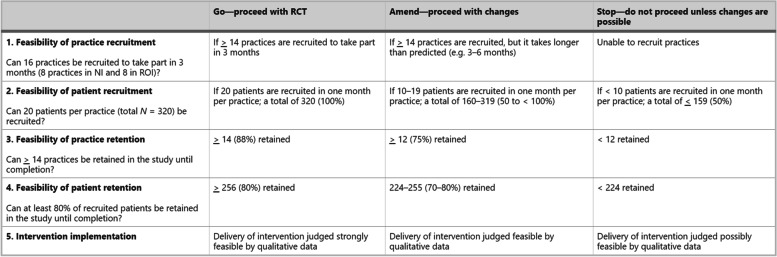
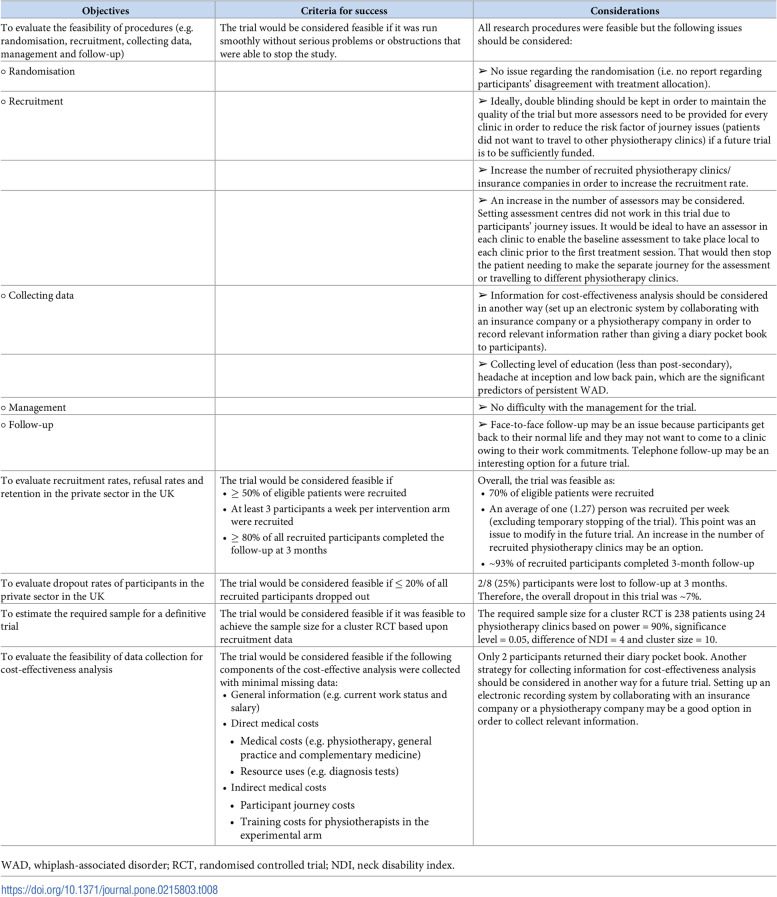
“This format of evidence synthesis and reporting strikes a balance between simplicity of information presentation and completeness (or transparency) [31], and some pilot trial publications have effectively reported pilot trial findings in a similar format [32–35].”
ResultNorderyd, O. M., Koch, G., Papias, A., Köhler, A. A., Helkimo, A. N., Brahm, C., Lindmark, U., Lindfors, N., Mattsson, A., Rolander, B., et al. (2015) · PubMed · Cited by 3,584
CONSORT 2010 statement: extension to randomised pilot and feasibility trials.
Eldridge, S. M., Chan, C. L., Campbell, M. J., Bond, C. M., Hopewell, S., Thabane, L., & Lancaster, G. A. (2016) · BMJ · doi:10.1136/bmj.i5239 · Cited by 3,404
Self-citationCONSORT 2010 statement: extension to randomised pilot and feasibility trials
on behalf of the PAFS consensus group, Eldridge, S. M., Chan, C. L., Campbell, M. J., Bond, C. M., Hopewell, S., Thabane, L., & Lancaster, G. A. (2016) · Pilot and Feasibility Studies · doi:10.1186/s40814-016-0105-8 · Cited by 2,843 · cited 5×
“ADePT A process for Decision-making after Pilot and feasibility Trials CI Chief Investigator CONSORT Consolidated Standards of Reporting Trials CReDECI Criteria for Reporting the Development and Evaluation of Complex Interventions in healthcare CTU Clinical Trials Unit PAFS Pilot and Feasibility Studies PPI Patient an…”
BackgroundInfluentialSelf-citationEldridge, S. M., Lancaster, G. A., Campbell, M. J., Thabane, L., Hopewell, S., Coleman, C. L., & Bond, C. M. (2016) · PLOS ONE · doi:10.1371/journal.pone.0150205 · Cited by 1,581 · cited 4×
“Note that unlike an internal pilot trial, any outcome data collected during an external pilot trial does not contribute to the definitive trial analysis [8].”
BackgroundResultInfluentialSelf-citationPublication bias: evidence of delayed publication in a cohort study of clinical research projects
Stern, J. M., & Simes, R. J. (1997) · BMJ · doi:10.1136/bmj.315.7109.640 · Cited by 818
Avery, K. N. L., Williamson, P. R., Gamble, C., O'Connell Francischetto, E., Metcalfe, C., Davidson, P., Williams, H., & Blazeby, J. M. (2017) · BMJ Open · doi:10.1136/bmjopen-2016-013537 · Cited by 575 · cited 3×
“a ‘rescue plan’ that outlines any problems encountered and how they were addressed [26].”
BackgroundMethodInfluentialO’Cathain, A., Hoddinott, P., Lewin, S., Thomas, K. J., Young, B., Adamson, J., Jansen, Y. J., Mills, N., Moore, G., & Donovan, J. L. (2015) · Pilot and Feasibility Studies · doi:10.1186/s40814-015-0026-y · Cited by 458
Understanding randomised controlled trials
Akobeng, A. K. (2005) · Archives of Disease in Childhood · doi:10.1136/adc.2004.058222 · Cited by 458 · cited 1×
“Background RCTs are integral to the practice of evidence-based medicine [1], however they are often expensive, complicated, and take a long time to set up, conduct, analyse and disseminate findings [2–5].”
Background
Research works printed but not linked: 1
- NIHR Guidance on applying for feasibility studies. v1.0 2017
Cited by
Consolidated guidance for behavioral intervention pilot and feasibility studies
Pfledderer, C. D., von Klinggraeff, L., Burkart, S. A., Bandeira, A. D. S., Lubans, D. R., Jago, R., Okely, A. D., van Sluijs, E. M. F., Ioannidis, J. P. A., Thrasher, J. F., et al. (2024) · Pilot and Feasibility Studies · doi:10.1186/s40814-024-01485-5 · Cited by 74
“We also provide a crosswalk of 161 guidelines, checklists, frameworks, and recommendations, mapped on to the subthemes identified and an additional publication that was published after the Delphi process, but was relevant to include in the list [15].”
BackgroundMethodDetermining sample size for pilot trials: a tutorial
Ying, X., Freedland, K. E., Powell, L. H., Stuart, E. A., Ehrhardt, S., & Mayo‐Wilson, E. (2025) · BMJ · doi:10.1136/bmj-2024-083405 · Cited by 77
Thurston, C., Humphries, S., Bezuidenhout, L., Johansson, S., Holmlund, L., von Koch, L., English, C., & Conradsson, D. M. (2025) · International Journal of Stroke · doi:10.1177/17474930251315628 · Cited by 16
“These were developed based on recommendations and similar studies 16–18 and modified following feedback from the wider research group.”
Suglo, J. N., Winkley, K., & Sturt, J. A. (2024) · PLoS ONE · doi:10.1371/journal.pone.0302385 · Cited by 22
Schootemeijer, S., de Vries, N. M., Darweesh, S. K. L., Ascherio, A., Schwarzschild, M. A., Macklin, E. A., & Bloem, B. R. (2025) · Neurology Report · doi:10.1097/npt.0000000000000507 · Cited by 15
Khalid, T., Ben‐Shlomo, Y., Bertram, W., Culliford, L. A., Henderson, E. J., Jepson, M., Johnson, E., Mitchell, A. S., Palmer, S., Evans, J. T., et al. (2024) · BMJ Open · doi:10.1136/bmjopen-2024-084678 · Cited by 17
“17-Apr-2024”
Methodological progress note: Pilot randomized controlled trials
Corley, A., Marsh, N. M., & Keogh, S. J. (2024) · Journal of Hospital Medicine · doi:10.1002/jhm.13376 · Cited by 13
Nys, L. D., Oyebola, E., Connelly, J., Ryde, G. C., & Phillips, A. C. (2024) · BMC Geriatrics · doi:10.1186/s12877-024-05324-3 · Cited by 36
“Further, the use of progression criteria as guidelines helped identify potential challenges and develop solutions to improve the quality and feasibility of the intervention [127].”
BackgroundBillany, R. E., Macdonald, J. H., Burns, S., Chowdhury, R., Ford, E. C., Mubaarak, Z., Sohansoha, G. K., Vadaszy, N., Young, H. M. L., BISHOP, N. C., et al. (2025) · PLoS ONE · doi:10.1371/journal.pone.0316031 · Cited by 13
“…of other secondary feasibility outcomes would indicate that the trial could progress to a fully powered randomised controlled trial (RCT) and identify areas of trial design or conduct that would require adjustment, or particular adaptations that would be needed to the intervention [44].”
Sansalone, E., Zucca, A. C., Duncan, M. J., Morris, O. J., Smith, S. R., Robinson, S., Chenery, R., Moore, H. J., da Silva, P. V., Riley, L., et al. (2025) · BMJ Open · doi:10.1136/bmjopen-2024-093869 · Cited by 7
“The criteria has been established based on recommendations for progression criteria for pilot trials and feasibility studies 32 33 and will be used by the study team to evaluate whether a larger trial is warranted and to inform any required changes to the protocol.”
Sveinall, H., Brox, J. I., Engebretsen, K. B., Hoksrud, A. F., Røe, C., & Johnsen, M. B. (2024) · BMJ Open · doi:10.1136/bmjopen-2024-085916 · Cited by 6
“21 Thus, values below the cut-off were assessed based on empirical data.”
Smith, S. G., Green, S. M. C., McNaught, E., Graham, C. D., Foy, R., Ow, P. L., French, D., Hall, L., Wilkes, H., Ba, C. T., et al. (2025) · Annals of Behavioral Medicine · doi:10.1093/abm/kaaf003 · Cited by 6
“64 They were approved by the independent trial steering committee, who had oversight of the trial delivery.”
Fogarty, S., Heazell, A. E. P., Munk, N., & Hay, P. (2024) · Pilot and Feasibility Studies · doi:10.1186/s40814-024-01499-z · Cited by 6
“Progression criteria are listed below and use a Red-Amber-Green system based on previous feasibility work (14, 68) covering both qualitative and quantitative criteria (69).”
MethodRhodes, S., McDougal, E., Efthymiou, C., Stewart, T. M., & Booth, J. N. (2024) · Pilot and Feasibility Studies · doi:10.1186/s40814-024-01530-3 · Cited by 5
“Over 50% of participants initially recruited completed baseline testing and 100% of participants who completed baseline testing completed follow-up testing which is in line with criteria for progression reported in other studies [91].”
ResultTake charge after long COVID: a mixed methods randomised controlled pilot study protocol
Luker, S., Doveton, A., Manuel, K., Adey‐Wakeling, Z., Jaggard, D., Crotty, M., Cameron, I. D., Karnon, J. D., McNaughton, H., Ullah, S., et al. (2025) · Annals of Medicine · doi:10.1080/07853890.2025.2516694 · Cited by 3
“This approach has been adapted from a previous study [45] and cut offs listed are in line with previous expert panel recommendations [46].”
Santos, G. C., Liljeroos, M., Tschann, K., Denhaerynck, K., Wicht, J., Jurgens, C. Y., Hullin, R., & Schäfer‐Keller, P. (2023) · Pilot and Feasibility Studies · doi:10.1186/s40814-023-01390-3 · Cited by 5
“Indeed, recent recommendations on progression criteria should be considered [74].”
BackgroundWade-Mcbane, K., King, A., Urch, C., Johansson, L., & Wells, M. (2023) · BMJ Open · doi:10.1136/bmjopen-2023-072367 · Cited by 5
Webb, M. A., & van Gelder, J. (2025) · Pilot and Feasibility Studies · doi:10.1186/s40814-025-01709-2 · Cited by 4
Genna, C., Thekkan, K. R., Cancani, F., Nardo, M. D., Rossi, A., Franci, M., Satta, T., Chiusolo, F., Ranieri, C. D., Piga, S., et al. (2025) · Intensive and Critical Care Nursing · doi:10.1016/j.iccn.2025.104190 · Cited by 4
Evans, R. A., Simpson, S. A., Manifield, J., Ahmed, Z., Barber, S. R., Barwell, G., Brown, S., Daw, P., Dean, S. G., Doherty, P., et al. (2025) · BMJ Open · doi:10.1136/bmjopen-2025-100195 · Cited by 7
“Secondary outcome data were collected at baseline (pre-randomisation) and 3 months post-randomisation by a blinded assessor at each study site.”
Larsson-Lund, M., Barchéus, I.-M., Ranner, M., Vikman, I., Jacobsson, L., & Lexell, E. M. (2025) · BMC Health Services Research · doi:10.1186/s12913-025-12456-8 · Cited by 5
“SEE deserves further feasibility research with a pilot-RCT design, allowing for the development of progression criteria for a potential future evaluation study, in accordance with recommendations for pilot-RCTs [59].”
Prott, L. S., Spitznagel, F. A., Hugger, A., Langner, R., Gierthmuehlen, P. C., & Gierthmuehlen, M. (2024) · Pilot and Feasibility Studies · doi:10.1186/s40814-024-01447-x · Cited by 7
Evrard, P., Chevallereau, T., Aikpitanyi, J., Pétein, C., Tubeuf, S., Henrard, S., & Spinewine, A. (2024) · BMJ Open · doi:10.1136/bmjopen-2024-085435 · Cited by 2
Valand, I. U., Bjørkkjær, T., Kiland, C., Hillesund, E. R., Vik, F. N., & Øverby, N. C. (2025) · Pilot and Feasibility Studies · doi:10.1186/s40814-025-01680-y · Cited by 5
“It should be noted that the progression criteria were set in conjunction with the reporting of data, and not a priori as recommended [45, 50].”
Ashworth, J., Cornwall, N., Harrisson, S. A., Woodcock, C., Nicholls, E. E., Lancaster, G., Wathall, S., Laing, L., Helliwell, T., Jowett, S. M., et al. (2025) · Pilot and Feasibility Studies · doi:10.1186/s40814-025-01636-2 · Cited by 4
“First, we included qualitative assessment of acceptability in our study progression criteria as proposed in new recommendations for progression criteria [54].”
Veldheer, S., Rutt, K., Schaefer, E. W., Kim, I., Hrabovsky, S., Smith, B., Thomas, O. W., Moore, A. M., Pagoto, S., Conroy, D. E., et al. (2026) · Pilot and Feasibility Studies · doi:10.1186/s40814-026-01766-1 · Cited by 2
“The decision to progress to a fully powered phase III trial was established based on meeting the following a priori feasibility criteria [45].”
Ahern, L., Timmons, S., Lamb, S. E., & McCullagh, R. (2024) · HRB Open Research · doi:10.12688/hrbopenres.13843.1 · Cited by 2
Thiblin, E., Lundgren, J., Bergqvist, M., Huynh, T. N. T., Reuther, C., Rösler, S., Woodford, J., & von Essén, L. (2025) · BMC Psychiatry · doi:10.1186/s12888-025-06897-y · Cited by 4
“However, not all progression criteria [30] were met, suggesting a need for some modifications and refinements to EJDeR and refinements to study procedures prior to progressing to the CHANGE-pilot trial.”
Taylor, R. S., Chaudhry, I. B., Faruque, M., Jeemon, P., Blakemore, A., Lovell, K., Husain, N., Saghir, T., Mashreky, S. R., Harikrishnan, S., et al. (2025) · NIHR Open Research · doi:10.3310/nihropenres.13957.1 · Cited by 3
“Data will include fidelity checks of intervention delivery, interviews with patients and staff, and analysis of barriers to engagement 36 .”
Fogarty, S., Heazell, A. E. P., Munk, N., & Hay, P. (2026) · BMC Complementary Medicine and Therapies · doi:10.1186/s12906-026-05244-2 · Cited by 2
“The feasibility success criteria for progression to a larger study were defined by a Red-Amber-Green sys-tem [35] informed by previous feasibility research [14, 48] which encompasses both qualitative and quantitative domains [49] (Table 2) [35].”
Price, J., Rushton, A., Ives, N. J., Jolly, K. B., Parmar, P., & Greaves, C. J. (2025) · Pilot and Feasibility Studies · doi:10.1186/s40814-025-01608-6 · Cited by 5
“Based on recommendations for progression criteria in feasibility studies [40], five key areas of uncertainty will be evaluated against a traffic light system (Table 2).”
Laing, E. M., de Arriba, R. A., Schramm, E., Schäffeler, N., Zipfel, S., Stengel, A., & Graf, J. (2025) · Frontiers in Psychiatry · doi:10.3389/fpsyt.2025.1531756 · Cited by 2
Salisbury, T. T., Maguele, M. S. B., Chissale, F., de Melo, M. S. I., Hanselmann, M., Lamahewa, K., Langat, E. C., Mandlate, F., Nyaga, L., Seward, N., et al. (2025) · Pilot and Feasibility Studies · doi:10.1186/s40814-025-01617-5 · Cited by 1
“Overall feasibility and acceptability criteria for progression to a full trial have been informed by Mel-lor et al.’s [44] trial progression recommendations and retention criteria used in previous mental health research conducted in LMICs [45].”
Charlesworth, K., Torgerson, D. J., & Watson, J. M. (2025) · Pilot and Feasibility Studies · doi:10.1186/s40814-025-01604-w · Cited by 1
“Criteria followed recent guidance in being considered guidelines rather than absolute rules and being co-informed by qualitative analysis [15, 16].”
Adey‐Wakeling, Z., Block, H., Hutchins, S., Greene, L., van den Berg, M., Stewart, G., Liu, E., Shulver, W., Crotty, M., & Hillier, S. (2026) · Archives of Rehabilitation Research and Clinical Translation · doi:10.1016/j.arrct.2026.100587 · Cited by 1
“23,24 For each criterion, green indicates that the approach is feasible, amber indicates that minor modi fi cations are needed to improve feasibility, and red indicates that the approach is not feasible for progression or requires major modi fi cations.”
O’Grady, M., Connolly, D., & Barrett, E. (2024) · Contemporary Clinical Trials Communications · doi:10.1016/j.conctc.2024.101332 · Cited by 1
“Progression criteria were not developed for this proposed study, as guidance regarding the application and development of progression criteria for non-randomised feasibility trials is limited [58,59].”
BackgroundSENSE-Cog Residential Care: piloting hearing and vision support for dementia in long-term care
Leroi, I., Äijälä, M., Boland, E., Buckey, B., Connelly, J. P., Conlon, J., Curley, N., Refaie, A. E., Galvin, M., Gibb, M., et al. (2026) · npj Dementia · doi:10.1038/s44400-025-00046-8 · Cited by 1
Fadlilah, S., Murdhiono, W. R., Nugroho, A., Rias, Y. A., Hsiao, S., Lee, K.-L., Feng, P., & Tsai, H. (2026) · Research in Nursing & Health · doi:10.1002/nur.70116 · Cited by 2
Lui, F., Gany, F. M., Espinosa, A., Riobo, C., Chang, F., Narang, B., Rodriguez, A., González, J., Niu, Y., Chen, R., et al. (2026) · Pilot and Feasibility Studies · doi:10.1186/s40814-026-01770-5 · Cited by 2
“…from our pilot trial to a future definitive trial is warranted, we will follow Mellor et al.’s “traffic light” set of progression criteria [62]: we will proceed/go (green) to the definitive trial if we observe ≥ 11 out of 15 successes per arm, amend (yellow) our design to improve…”
Chiwanga, F. S., Woodford, J., Masika, G. M., Richards, D. A., Savi, V., & von Essén, L. (2023) · JMIR Research Protocols · doi:10.2196/48799 · Cited by 3
“…stopping rules will be developed in accordance with our feasibility objectives, existing relevant literature, and input from a broad range of relevant stakeholders, including GAB members and researchers external to the research team who have relevant expertise in conducting similar research [64].”
Sansalone, E., Forbes, E., Palazzi-Parsons, A., et al. (2025) · doi:10.2196/preprints.90063 · Cited by 1
Steinberg, R. J., Robinson, L. R., Kachmarchuk, O., Jankey, S., Posa, S., Mayo, A. L., Simon, M., Kiss, A., MacKay, C., Simpson, R., et al. (2025) · Canadian Prosthetics & Orthotics Journal · doi:10.33137/cpoj.v8i1.45122 · Cited by 1
Hansen, T. S., Jensen, P. S., Nørholm, V., Loft, M. I., & Poulsen, I. (2025) · COPD Journal of Chronic Obstructive Pulmonary Disease · doi:10.1080/15412555.2025.2531017 · Cited by 1
“Progression criteria were set by the research team for the quantitative data, in accordance with recommendations from Mellor et al. [17].”
An App-Based WHO Mental Health Guide for Depression Detection: A Cluster Randomized Clinical Trial
Kohrt, B. A., Ojagbemi, A., Luitel, N. P., Bakolis, I., Bello, T., McCrone, P., Salisbury, T. T., Jordans, M. J. D., Votruba, N., Carswell, K., et al. (2025) · JAMA Network Open · doi:10.1001/jamanetworkopen.2025.12064 · Cited by 8
Wray, F., Cruice, M. N., Kellar, I., & Förster, A. (2025) · Pilot and Feasibility Studies · doi:10.1186/s40814-024-01589-y · Cited by 1
Williams, C., Pease, A. S., Goodenough, T., Breheny, K., Shirkey, B. A., Watanabe, R., Sinai, P., Rai, M., Cuthill, I. C., Mummé, M., et al. (2025) · Pilot and Feasibility Studies · doi:10.1186/s40814-025-01603-x · Cited by 3
“This was because we wanted to consider any proposed design changes and the qualitative data on acceptability and implantation when making this decision, and quantitative progression criteria would not help us address these [46].”
Cooper, D. K., Lupini, F., Alonzo, J. K., Beets, M. W., Guastaferro, K., McLain, A. C., Saini, S., & Prinz, R. J. (2025) · Journal of Marital and Family Therapy · doi:10.1111/jmft.70052 · Cited by 1
“Decisions will be made based on the overall weight of evidence rather than any single metric (Mellor et al. 2023).”
Forde, C. P., Tutton, E., Costa, M. L., Cook, J. A., Franssen, M., Appelbe, D., Barker, R., Keene, D. J., Taylor, G., Deakin, M., et al. (2026) · The Bone & Joint Journal · doi:10.1302/0301-620x.108b3.bjj-2025-0403.r1 · Cited by 4
Milliron, B., Mountain, P., Salman, K., Longo, G., Schlechter, H., Deutsch, J. M., & Jubelirer, T. F. (2025) · Pilot and Feasibility Studies · doi:10.1186/s40814-025-01703-8 · Cited by 3
“Con - sistent with Mellor et al.’s [31] recommendations for feasibility trials, we have defined specific progression criteria to determine whether the study procedures are practicable and whether to proceed to a larger trial.”
InfluentialVlachodimitropoulou, E., Malinowski, A. K., Kaplovitch, E., Carrier, M., & Shehata, N. (2025) · Blood Vessels Thrombosis & Hemostasis · doi:10.1016/j.bvth.2025.100106 · Cited by 1
“21,22 Adherence to study medication was assessed via participant self-reporting during scheduled follow-up telephone sessions at 3 and 6 weeks postpartum.”
InfluentialAmorim, A. B., Rebbeck, T. J., Dam, N. T. V., Johnstone, C. S. H., Ashton-James, C. E., Costa, N., Barnet-Hepples, T., Jennings, M., Refshauge, K. M., & Pappas, E. (2025) · Pilot and Feasibility Studies · doi:10.1186/s40814-025-01612-w · Cited by 1
“To keep a record of the issues faced during the pilot trial, we will maintain a document called ‘lessons learned’ that details the problems encountered, the attempts made to resolve them, and whether they worked or not [40].”
Maciel, L., Pires, A. R., Basto-Pereira, M., & Day, C. (2025) · Healthcare · doi:10.3390/healthcare13020176 · Cited by 1
“The parameters to determine feasibility success were based on the Mellor et al. [47] recommendations.”
Fairman, C. M., Brooks, A. M., Candow, D. G., Jackson, K. E., Bottone, G., Scott, B., Anderson, K. S., Hirsch, K. R., Cardaci, T. D., VanderVeen, B. N., et al. (2026) · PLoS ONE · doi:10.1371/journal.pone.0353630 · Cited by 1
von Bülow, C., Bojesen, S. B., Hagelskjær, V., Nielsen, K. T., & Wæhrens, E. E. (2026) · Pilot and Feasibility Studies · doi:10.1186/s40814-026-01855-1
Aldana-López, J. A., (11622220), R. S.-A., Durand-Arias, S., Carmona-Huerta, J., Cárdenas-García, E., Arámbula-Román, J. C., Metcalfe, J. D., Swanson, S., Keleher, J., Villafuerte-Jacob, E., et al. (2026) · Pilot and Feasibility Studies · doi:10.1186/s40814-026-01809-7
“Therefore, the thresholds proposed in this study will be interpreted alongside qualitative findings, implementation context, and fidelity assessments when determining readiness for a future definitive trial [35].”
Johnson, A. M., Bocarro, J. N., Kroshus-Havril, E., & Arredondo, E. M. (2026) · Pilot and Feasibility Studies · doi:10.1186/s40814-026-01765-2
Gameiro, S., Leone, D., D’Angelo, A., Veleva, Z., Morey, R. D., & Boivin, J. (2025) · BMJ Open · doi:10.1136/bmjopen-2025-101269
“24 Traffic-light progression criteria mapped to feasibility objectives 25 are defined and presented in online supplemental Table 1.”
Meidinger, P., Hong, Q. N., Tittley, J., Campeau‐Lecours, A., & Roy, J. (2025) · Pilot and Feasibility Studies · doi:10.1186/s40814-025-01646-0 · Cited by 1
“Progression criteria were established based on a combination of numerical (quantitative) and textual (qualitative) indicators (see Table 2) [66].”
Smith, L. L., Olson, L., & Gearing, R. E. (2026) · Research on Social Work Practice · doi:10.1177/10497315261441539
Carpenter, J. G., Douglas, N., & Chisholm, L. (2026) · Journal of the American Medical Directors Association · doi:10.1016/j.jamda.2026.106424
Andrade, B. F., Brodkin, S., Israel, A., da Conceicao, T. V., Aitken, M., Djurovic, T., Battaglia, M., Bedard, A., Suri, A., Courtney, D., et al. (2026) · PLoS ONE · doi:10.1371/journal.pone.0351733
Wissing, M., Skovlund, P. C., Drysdale, S., Amidi, A., Zachariae, R. H., Laurberg, T., & Borgquist, S. (2025) · Pilot and Feasibility Studies · doi:10.1186/s40814-025-01621-9
“To ensure that the feasibility objectives in this study are met, progression criteria for each objective are developed [74].”
Yang, Y., Green, K. L., Zhang, N., McGarrigle, L., & Todd, C. J. (2025) · Pilot and Feasibility Studies · doi:10.1186/s40814-025-01693-7 · Cited by 1
“It is therefore important to consider the specific context of each trial [48].”
Milliron, B., Salman, K., Schlechter, H., Mountain, P., Longo, G., Deutsch, J. M., & Jubelirer, T. F. (2026) · Integrative Cancer Therapies · doi:10.1177/15347354261476641
Björklund, M., Cornwall, N., Holden, M. A., & Jinks, C. (2026) · Qualitative Health Research · doi:10.1177/10497323261431142 · Cited by 1
Stephens, G., Liloglou, T., Moffatt, M., & Littlewood, C. (2025) · PLoS ONE · doi:10.1371/journal.pone.0332953 · Cited by 1
“Feasibility of the study to progress to a substantive cohort study was assessed against pre-determined success criteria with red, amber, green thresholds (Table 3) developed using published guidelines [33].”
Meidinger, P., Hong, Q. N., Tittley, J., et al. (2024) · Research Square · doi:10.21203/rs.3.rs-5183538/v1
McLeod, C. J., Maidment, D. W., & Rees, C. (2024) · Appetite · doi:10.1016/j.appet.2024.107776 · Cited by 1
“In alignment with recommendations (Mellor et al., 2023), pre-specified progression criteria were pragmatically derived amongst the research team based on the following feasibility objectives: (1) completion of data collection sheets, and (2) residents ’ enjoyment of the CURTAIN performance.”
Salgado, N. S., Barroso, T. M. M. D. D. A., Marques, M. I., & Peres, M. A. D. A. (2026) · Journal of Holistic Nursing · doi:10.1177/08980101261488093
Atkin-Jones, T., Ali, M., Eze-Onuorah, A. C. J., Ifeanacho, E., Khosravirad, A., Madden, K., Sadeghirad, B., & Mbuagbaw, L. C. E. (2025) · Pilot and Feasibility Studies · doi:10.1186/s40814-025-01655-z
“Another limitation is that the implementation of progression criteria is a relatively recent development, meaning that guidelines on their recommended usage have not yet been well established [19].”
Marino, G., Giglio, E., Giuseffi, M., Pace, G., Calabrese, C., Sichetti, M., & Mecca, M. (2026) · Cancers · doi:10.3390/cancers18172758
Rubagumya, F., Kwizera, V., Mutetiwabo, I., Habimana, S., Sebashi, F., Muhorakeye, F., Ngowi, N. S. N., Hoxha, I. S., Nyirazinyoye, L., & Mutesa, L. (2026) · The Oncologist · doi:10.1093/oncolo/oyag275
Ikoona, E. N., Namulemo, L., Kayita, G. L., Sakwa, R., Vandi, M. A., & Sahr, F. (2026) · Journal of Interventional Epidemiology and Public Health · doi:10.37432/jieph-d-26-00266
MacKay, C., Zidarov, D., Chan, B., Dilkas, S., Hitzig, S. L., Marinho-Buzelli, A. R., Mayo, A. L., Payne, M. W. C., Schneeberg, A., de Zepetnek, J. O. T., et al. (2025) · PLoS ONE · doi:10.1371/journal.pone.0326761
“Progression criteria to a definitive trial Mellor et al. (2023) [92] recommend using guidelines rather than rules when using progression criteria in a feasibility study, avoiding consideration of one indicator in isolation, and involvement of partners in the decision making.”
Souza‐Talarico, J. N., Hansen, M., Ashida, S., Newman, L., Harb, A., Saleem, A., Cortés, Y. I., Embree, J., Doyle, C., Halverson, K., et al. (2026) · Research Square · doi:10.21203/rs.3.rs-11168039/v1
Neziraj, M., Kumlien, C., & Axelsson, M. (2026) · BMJ Open · doi:10.1136/bmjopen-2026-118018
Suglo, J. N., Winkley, K., & Sturt, J. A. (2023) · SSRN Electronic Journal · doi:10.2139/ssrn.4535486
Dahl, M., Eiberg, J., Borregaard, B., Petersen, C., Budtz-Lilly, J. W., Shahidi, S., Jørgensen, T. M., Christensen, C. S., Lindholt, H., Damsgaard, B., et al. (2026) · Pilot and Feasibility Studies · doi:10.1186/s40814-026-01907-6
Kumar, S., Negi, S., Tripathy, S., Beurs, D. P. D., Pandit, D., Wijnen, B. F. M., Vijayakumar, L., Shields‐Zeeman, L., & Pathare, S. (2025) · F1000Research · doi:10.12688/f1000research.159494.1
“37 The progression criteria is focused on assessing the feasibility of the study design and the feasibility and appropriateness of the intervention, indicated in Table 2 below.”
InfluentialBennion, J., Hudson, M., Hickson, M., Allgar, V. L., Kent, B., McWilliams, D. J., & Martín, D. (2025) · Journal of the Intensive Care Society · doi:10.1177/17511437251400612 · Cited by 1
Janbakhsh, M., Turnbull, E., Baker, J., Bacon, A., & Farrand, P. A. (2026) · BMJ Open · doi:10.1136/bmjopen-2025-112494
“Feasibility outcomes are presented alongside respective progression criteria to inform decision making 38 regarding progression to an MRC Phase II feasibility randomised controlled.”
Panganiban, H. P., Ricciardone, S. G., Evans, T., Ankravs, M. J., Fazio, T. N., Clark, N., Avasthi, A., MacIsaac, C., Presneill, J., See, E. J., et al. (2026) · Pilot and Feasibility Studies · doi:10.1186/s40814-026-01867-x · Cited by 1
Schønheyder, M., Kongsted, A., Larsen, R. S., et al. (2026) · Research Square · doi:10.21203/rs.3.rs-10315281/v1
Joseph, R. P., Pituch, K. A., Yu, F., Salisbury, D. L., & Maxfield, M. (2026) · JMIR Formative Research · doi:10.2196/82494
“Given the early stage of the research and following the recommendations of others [51], we did not set specific criteria or strict thresholds for establishing feasibility based on the individual metrics assessed.”
Ogbonnaya, I. N., Nakigudde, J., Naigino, R., Stockman, J. K., Chung, Y., Nantongo, M., Marsiglia, F. F., Hahn, J. A., Wechsberg, W. M., Mwebembezi, A., et al. (2025) · Contemporary Clinical Trials · doi:10.1016/j.cct.2025.108136
Noguchi, K. S., Sakakibara, B. M., Phillips, S. M., Ginis, K. A. M., Beauchamp, M., Thabane, L., McBurney, P., McQuarrie, A. M., Elliott, B., Pinili, K., et al. (2026) · BMJ Open · doi:10.1136/bmjopen-2026-126255
Mazza, C., Favieri, F., Lombardi, L., Trumello, C., Fiorenza, E., Stella, M. L., Vedova, A. M. D., Babore, A., & Tambelli, R. (2026) · Journal of Clinical Medicine · doi:10.3390/jcm15135271
Users’ Guide to the Surgical Literature: How to Assess a Pilot Trial in Surgery
Li, G., Bai, X., Lancaster, G., & Thabane, L. (2025) · Springer eBooks · doi:10.1007/978-3-031-87083-5_12
Woodfield, M. J., Fortune, S. A., Cargo, T., Merry, S., & Hetrick, S. E. (2025) · Implementation Research and Practice · doi:10.1177/26334895251363418
“Adopting a wider lens may also be important, for example, considering progression criteria in harmony with each other, rather than in isolation, and incorporating consideration of other contextual factors external to the trial (Mellor et al., 2023).”
Romero, R. H., van der Meulen, K., Granizo, L., del Barrio, C., Puyol, P., Lara, L., Olmos, R., Bivol, M., Grealy, K., Jiménez, M. G., et al. (2026) · Pilot and Feasibility Studies · doi:10.1186/s40814-026-01853-3
Dias, F. M. V., Vescovi, R. G. L., Anhoque, C. F., dos Santos, M. E. P., de Barros, C. N., de Souza, I. I., Filho, W. G. D. S., Ilha, J., & Arêas, F. Z. D. S. (2025) · MethodsX · doi:10.1016/j.mex.2025.103681
“…compliance ( % of participants who completed the intervention), recruitment ( % of participants recruited in time) and retention rates ( % of participants who completed the evaluations), randomization success, blind-success, acceptability and the occurrence of any adverse events [35,36] (Table 3).”
Milliron, B., Schlechter, H., Muir, C., Moss, C., Henstenburg, J. A., Rappaport, K., Boakye, F., Deutsch, J. M., & Jubelirer, T. F. (2026) · Contemporary Clinical Trials Communications · doi:10.1016/j.conctc.2026.101681
Smyth, A. P. J., Hughes, S., Thapar, S., & Knaüper, B. (2026) · Journal of Contextual Behavioral Science · doi:10.1016/j.jcbs.2026.100992
Duong, V. N., Thompson, C., McVeigh, J. A., & Quested, E. (2026) · Research Quarterly for Exercise and Sport · doi:10.1080/02701367.2026.2733279
Piloto de ensaios clínicos randômicos: o que precisamos saber?
dos Santos, L. M., Silva, B. S. M., de Souza, E. R., Bittencourt, I. S., Rocha, P. K., & Kusahara, D. M. (2024) · Revista Enfermagem Contemporânea · doi:10.17267/2317-3378rec.2024.e5654 · Cited by 1
Willingham, T. B., Stowell, J. F., Moldavskiy, M., & Backus, D. A. (2025) · Archives of Rehabilitation Research and Clinical Translation · doi:10.1016/j.arrct.2025.100579
“Fea-sibility was determined using an approach informed by methodological guidance for pilot and feasibility trials 39,40 that recommend de fi ning thresholds speci fi c to the study context.”
Metadata
- Authors
- Mellor, K., Albury, C., Dutton, S. J., Eldridge, S., & Hopewell, S.
- Affiliations
- University of Oxford (GB)
- University of London (GB)
- Corresponding author
- Mellor, Katie
- Venue
- Pilot and Feasibility Studies
- Published
- 2023-04-15
- Volume
- 9
- Issue
- 1
- Pages
- 59-59
- ISSN
- 2055-5784 (ISSN-L)
- PMC
- PMC10105402
- OpenAlex
- W4365814045
- Cited by
- 145
- References
- 37
- Citations by year
- 2026: 70 · 2025: 54 · 2024: 16 · 2023: 5
- FWCI
- 29.42
- Type
- journal article
- Language
- en
- Open access
- gold
- doi.org
- Licence
- cc-by
- creativecommons.org/licenses/by/4.0 (tdm)
- creativecommons.org/licenses/by/4.0 (vor)
- Locations
- Pilot and Feasibility Studies (publishedVersion, cc-by)
- PubMed Central (publishedVersion, cc-by)
- PubMed (publishedVersion)
- DOAJ (DOAJ: Directory of Open Access Journals) (submittedVersion, cc-by-sa)
- Funders
- Medical Research Foundation (MR/N013468/1)
- Topics
- Physical Sciences › Mathematics › Statistics and Probability › Statistical Methods in Clinical Trials
- Social Sciences › Decision Sciences › Statistics, Probability and Uncertainty › Meta-analysis and systematic reviews
- Health Sciences › Health Professions › General Health Professions › Health Policy Implementation Science
- Keywords
- progression criteria, feasibility assessment, trial design, trial conduct, trial analysis, trial reporting, reporting checklist, stakeholder engagement, grant applications
About these checks
Registry, retraction, Cites and statistics results are computed, not judged, with one exception: a printed reference that no index lists is read once by a model before it counts as a citation error. Claims are extracted by a model and kept only when their quote appears verbatim in the text; each cited source is then checked, with a model’s help, for whether it says what the claim relies on. Those verdicts can be wrong — read the claim’s quote and the cited source before relying on one.
The claim verdicts this report counts are experimental: their accuracy is not yet measured.
A language model drew the claims from the paper on 2026-10-10, under version 3 of the claim definition (model deepseek-v4.1-flash, prompt extract-v3).
A second model labelled each claim on 2026-10-10 (model jev-1.13-20260917, definition revision gold-guideline-v0.2).
Cited sources are checked with a language model’s help (gpt-6-sol).
Statistics and arithmetic are recomputed, not judged.
Confidence bands are shown only for fields calibrated on our annotated test set. None is calibrated yet, so no band is shown.
What counts as a claim ›How we measure confidence ›How we check this ›
Are you an author, or do you see a problem with this page? Request a review
Data sources
Bibliographic data: Semantic Scholar, OpenAlex, Crossref.
Contains information from the Semantic Scholar Academic Graph Datasets, made available under the ODC Attribution License (ODC-BY 1.0).
Semantic Scholar’s data is described in: Kinney, R., et al. (2023). The Semantic Scholar Open Data Platform. arXiv:2301.10140.
