

Systematic review and meta-analysis of quotation inaccuracy in medicine
Open accessThe DOI matches its Crossref record; 63 of the 63 references it cites were found in a registry or an index; 14 of the 32 sources its claims cite were checked for support.
Abstract
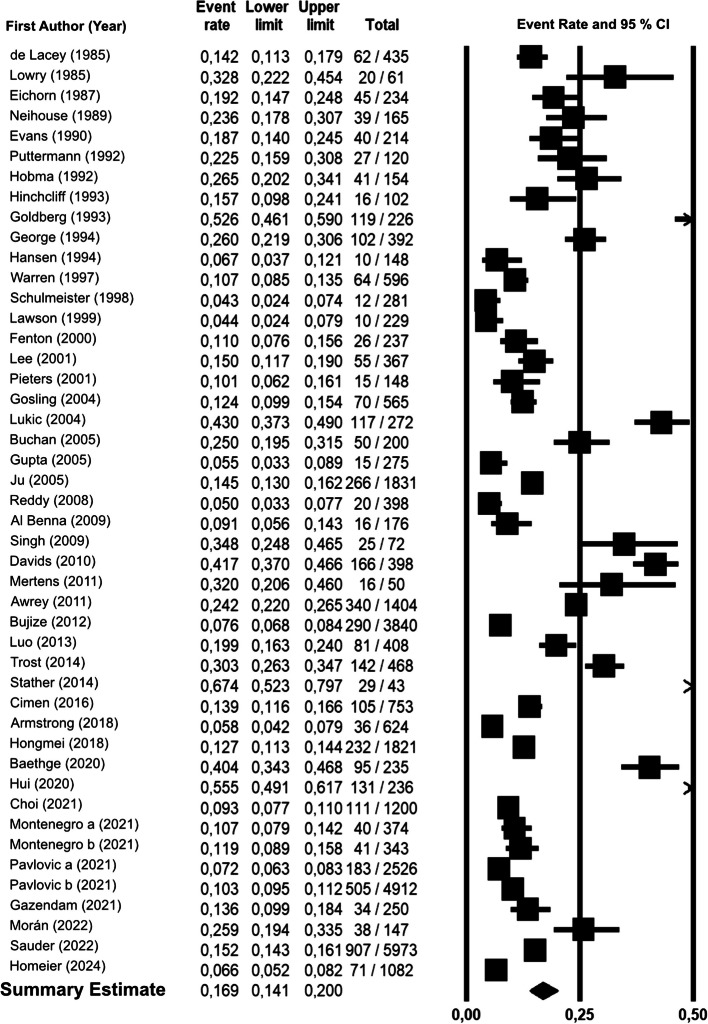
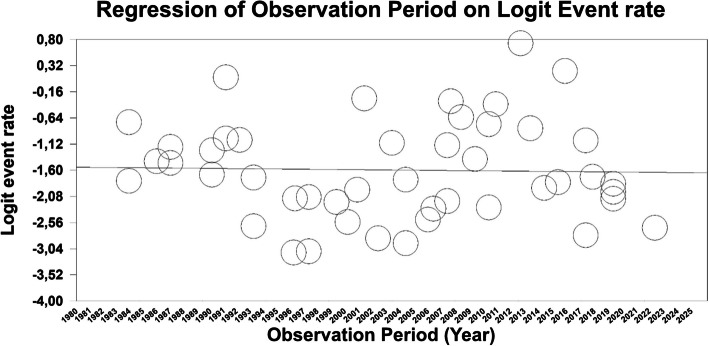
BACKGROUND: Quotations are crucial to science but have been shown to be often inaccurate. Quotation errors, that is, a reference not supporting the authors' claim, may still be a significant issue in scientific medical writing. This study aimed to examine the quotation error rate and trends over time in the medical literature. METHODS: A systematic search of PubMed, Web of Science, and reference lists for quotation error studies in medicine and without date or language restrictions identified 46 studies analyzing 32,000 quotations/references. Literature search, data extraction, and risk of bias assessments were performed independently by two raters. Random-effects meta-analyses and meta-regression were used to analyze error rates and trends (protocol pre-registered on OSF). RESULTS: 16.9% (95% CI: 14.1%-20.0%) of quotations were incorrect, with approximately half classified as major errors (8.0% [95% CI: 6.4%-10.0%]). Heterogeneity was high, and Egger's test for small study effects remained negative throughout. Meta-regression showed no significant improvement in quotation accuracy over recent years (slope: -0.002 [95% CI: -0.03 to 0.02], p = 0.85). Neither risk of bias, nor the number of references were statistically significantly associated with total error rate, but journal impact factor was: Spearman's ρ = -0.253 (p = 0.043, binomial test, N = 25). CONCLUSIONS: Quotation errors remain a problem in the medical literature, with no improvement over time. Addressing this issue requires concerted efforts to improve scholarly practices and editorial processes.
Overview
CoChat Summary
## TL;DR
This systematic review and meta-analysis found that quotation errors remain common in medicine: 16.9% of quotations were incorrect, and about half of these were major errors. The error rate showed no significant improvement over time.
## Key findings
- Across 46 studies and 32,074 quotations, the summary estimate of total quotation error rate was 16.9% (95% CI 14.1%–20.0%).
- Of the quotation errors, 8.0% (95% CI 6.4%–10.0%) were major errors and 7.8% (95% CI 5.7%–10.5%) were minor errors; secondary quotations were 5.3% (95% CI 3.3%–8.5%) across 18 studies.
- Meta-regression found no significant improvement over time for total errors (slope −0.002, 95% CI −0.03 to 0.02, p = 0.85), and similarly none for major, minor, or secondary errors.
- Journal impact factor was the only reported predictor associated with total error rate: Spearman’s ρ = −0.253 (p = 0.043, binomial test, N = 25); risk of bias and number of references were not statistically significant.
## Methods
- Systematic review and meta-analysis of studies on quotation error rates in medicine, with no date or language restrictions; searches were run in PubMed, Web of Science, and reference lists, and the protocol was pre-registered on OSF.
- Included 46 studies; the paper reports 32,074 quotations/references analyzed. Two reviewers independently performed screening, data extraction, and risk-of-bias assessment.
- Pooled estimates were calculated using random-effects meta-analysis; meta-regression assessed time trends, and subgroup analyses examined risk of bias, medical specialty, and journal impact factor.
## Limitations
- The paper states there is no gold standard for assessing quotation errors, so some judgment is involved in classifying errors.
- The authors note they may have missed studies (for example, some Chinese papers were not retrievable), though they also say there were no language restrictions and the base of 46 studies was solid.
- Most included studies focused on quotations within original peer-reviewed research articles; reviews, editorials, grey literature, and quotation errors from single-source papers or non-medicine fields were not systematically analyzed, limiting generalizability.
- The text makes evident that high heterogeneity was present throughout the meta-analyses, so the exact pooled point estimates should be interpreted cautiously.
Model-written summary. Check it against the paper before relying on it.
Integrity signals
Registry
Cites
Statistics
Figures
Verification
Claims the paper makes
11 Valid · 0 Not valid · 4 Not checked · 49 Own results and interpretations
Every source the paper cites for this claim was checked and supports it.
In the paper
“When we re-calculated a summary estimate restricted to the 28 studies used in our earlier meta-analysis [8] but with all imputations employed in the current analysis we arrived at a total error rate of 17.0% [13.0–21.9].”
§ Systematic review and meta-analysis of quotation inaccuracy in medicine > Results > Subgroup analyses
What the sources say
- Supportedcites [8] Jergas H, Baethge C. Quotation accuracy in medical journal articles-a systematic review and meta-analysis. PeerJ. 2015;3: e1364. 26528420 PMC4627914 source
The citation identifies the earlier meta-analysis and its set of 28 studies; the citing authors describe the 17.0% estimate as their own recalculation, not a result reported by this source. The source’s Results (Main analysis; page unavailable) confirm that its main analysis included 28 studies and report its original total-error estimate as 25.4%. (LLM, conf=0.93)
plain- Asserted: passes — The authors put it forward as true.
- Checkable: passes — It can be checked against evidence.
- Load-bearing: unclear — It is unclear whether the paper’s conclusions depend on it.
- Based: passes — The paper gives a reason why it holds.
- Rests on an assumption not shown here.
- Supported
Every source the paper cites for this claim was checked and supports it.
In the paper
“De Lacey et al. reported substantial error rates in major medical journals [2].”
§ Systematic review and meta-analysis of quotation inaccuracy in medicine > Introduction
What the sources say
- Supportedcites [2] de Lacey G, Record C, Wade J. How accurate are quotations and references in medical journals? Br Med J (Clin Res Ed). 1985;291:884–6. PMC1416756 3931753 source
The Results report misquotation rates of 10%–20% across the six medical journals studied. The Discussion gives an overall rate of 15% of references, including 12% with misleading errors, supporting the cited statement about substantial quotation error rates. (LLM, conf=0.94)
plain- Asserted: passes — The authors put it forward as true.
- Checkable: passes — It can be checked against evidence.
- Load-bearing: passes — The paper’s conclusions depend on it.
- Based: passes — The paper gives a reason why it holds.
- Supported
The cited sources support only part of this claim — read each source’s verdict below.
In the paper
“the most comprehensive systematic review and meta-analysis [8] included studies published until 2014.”
§ Systematic review and meta-analysis of quotation inaccuracy in medicine > Introduction
What the sources say
- Partly supportedcites [8] Jergas H, Baethge C. Quotation accuracy in medical journal articles-a systematic review and meta-analysis. PeerJ. 2015;3: e1364. 26528420 PMC4627914 sourceExperimental — accuracy not yet measured
The Methods (Literature search) say the review searched through December 26, 2014. But the Results say the included studies appeared between 1985 and 2013, not that studies published in 2014 were included. The copy also does not establish that this was the most comprehensive review. (LLM, conf=0.88)
plain- Asserted: passes — The authors put it forward as true.
- Checkable: passes — It can be checked against evidence.
- Load-bearing: passes — The paper’s conclusions depend on it.
- Based: passes — The paper gives a reason why it holds.
- Partly supported
The sources with a verdict support this claim; the rest weren’t checked yet, have no full text we could read, or their verdicts aren’t rated yet.
In the paper
“In the meantime, new studies have been published e.g., [3, 4, 10].”
§ Systematic review and meta-analysis of quotation inaccuracy in medicine > Introduction
What the sources say
- Not checked — no full text of the sourcecites [3] Choi J, Gupta A, Kaghazchi A, Htwe TS, Baiocchi M, Spain DA. Citation Inaccuracies in Influential Surgical Journals. JAMA Surg. 2021;156:791–2. 34037684 PMC8156172 source
- Supportedcites [4] Hui A, Rains LS, Todd A, Boaz A, Johnson S. The accuracy and accessibility of cited evidence: a study examining mental health policy documents. Soc Psychiatry Psychiatr Epidemiol. 2020;55:111–21. 31641826 source
The Discussion reports the present study’s 40.3% accuracy error rate, and the Conclusion describes its investigation of referencing accuracy in mental health policy documents. This paper is therefore an example of a study published since 2014 on quotation or citation errors. (LLM, conf=0.93)
- Not checked — no full text of the sourcecites [10] Baethge C. Importance, Errors, and Patterns of Quotations to Psychiatric Original Articles. Pharmacopsychiatry. 2020;53:247–55. 32485760 source
plain- Asserted: passes — The authors put it forward as true.
- Checkable: passes — It can be checked against evidence.
- Load-bearing: passes — The paper’s conclusions depend on it.
- Based: passes — The paper gives a reason why it holds.
Every source the paper cites for this claim was checked and supports it.
In the paper
“we included 18 reports on 18 new studies [3, 4, 10, 23–38], for a total of 46 studies – together with 28 studies [2, 3, 5, 6, 16, 17, 17, 39–45, 45–60] from our systematic review published in 2015 [8] – that form the basis of this meta-analysis”
§ Systematic review and meta-analysis of quotation inaccuracy in medicine > Results
What the sources say
- Supportedcites [8] Jergas H, Baethge C. Quotation accuracy in medical journal articles-a systematic review and meta-analysis. PeerJ. 2015;3: e1364. 26528420 PMC4627914 source
The Results section states that the 2015 review included 28 studies in its main analysis. The citing sentence attributes those 28 studies to this source; its total of 46 also includes 18 new studies in the citing authors’ meta-analysis. (LLM, conf=0.94)
plain- Asserted: passes — The authors put it forward as true.
- Checkable: passes — It can be checked against evidence.
- Load-bearing: passes — The paper’s conclusions depend on it.
- Based: passes — The paper gives a reason why it holds.
- Supported
31 more claims · 3 with their cited sources checked
Create a free account to see all 64 claims and every source verdict.
- Probably not a substantial claim. 16
- It may state two separate claims as one. 16
Citations
Cites
The PRISMA 2020 statement: An updated guideline for reporting systematic reviews
Page, M. J., McKenzie, J. E., Bossuyt, P. M., Boutron, I., Hoffmann, T. C., Mulrow, C. D., Shamseer, L., Tetzlaff, J. M., Akl, E. A., Brennan, S. E., et al. (2021) · BMJ · doi:10.1136/bmj.n71 · Cited by 108,283
The Measurement of Observer Agreement for Categorical Data
Landis, J. R., & Koch, G. G. (1977) · Biometrics · doi:10.2307/2529310 · Cited by 81,148
Meta-analysis in clinical trials
DerSimonian, R., & Laird, N. (1986) · Controlled Clinical Trials · doi:10.1016/0197-2456(86)90046-2 · Cited by 39,552
Shea, B. J., Reeves, B. C., Wells, G., Thuku, M., Hamel, C., Moran, J., Moher, D., Tugwell, P., Welch, V., Kristjansson, E., et al. (2017) · BMJ · doi:10.1136/bmj.j4008 · Cited by 10,636 · cited 1×
“As recommended by PRISMA 2020 [15], the PRISMA-S extension [18], and the AMSTAR-2 [19] tool for systematic reviews and meta-analyses, we included grey literature (e.g., dissertations, conference abstracts) to minimize publication bias and enhance transparency.”
Rethlefsen, M. L., Kirtley, S., Waffenschmidt, S., Ayala, A. P., Moher, D., Page, M. J., Koffel, J. B., PRISMA-S Group, Blunt, H., Brigham, T., et al. (2021) · Systematic Reviews · doi:10.1186/s13643-020-01542-z · Cited by 3,714 · cited 1×
“As recommended by PRISMA 2020 [15], the PRISMA-S extension [18], and the AMSTAR-2 [19] tool for systematic reviews and meta-analyses, we included grey literature (e.g., dissertations, conference abstracts) to minimize publication bias and enhance transparency.”
Rethlefsen, M. L., Kirtley, S., Waffenschmidt, S., Ayala, A. P., Moher, D., Page, M. J., & Koffel, J. (2019) · doi:10.31219/osf.io/sfc38 · Cited by 3,696
Munn, Z., Moola, S., Lisy, K., Riitano, D., & Tufanaru, C. (2015) · International Journal of Evidence-Based Healthcare · doi:10.1097/xeb.0000000000000054 · Cited by 3,131 · cited 1×
“Absent a risk of bias tool specifically designed for original research on quotation inaccuracy, we revised the Joanna Briggs Institute (JBI) Critical Appraisal Checklist for Studies Reporting Prevalence Data [20] for the purposes of this study (eTable 3).”
A comparison of heterogeneity variance estimators in combining results of studies
Sidik, K., & Jonkman, J. N. (2007) · Statistics in Medicine · doi:10.1002/sim.2688 · Cited by 380
How accurate are quotations and references in medical journals?
de Lacey, G., Record, C., & Wade, J. (1985) · BMJ · doi:10.1136/bmj.291.6499.884 · Cited by 160 · cited 3×
“And yet, in an early investigation into their accuracy, De Lacey et al. reported substantial error rates in major medical journals [2].”
When Is There a Group that Knows?
Bird, A. (2014) · Oxford University Press eBooks · doi:10.1093/acprof:oso/9780199665792.003.0003 · Cited by 145
Quotational and Reference Accuracy in Surgical Journals: A Continuing Peer Review Problem
Evans, J. T. (1990) · JAMA · doi:10.1001/jama.1990.03440100059009 · Cited by 129
Eichorn, P., & Yankauer, A. (1987) · American Journal of Public Health · doi:10.2105/ajph.77.8.1011 · Cited by 114
Stather, P., Sidloff, D. A., Rhema, I. A., et al. (2013) · European Journal of Vascular and Endovascular Surgery · doi:10.1016/j.ejvs.2013.11.007 · Cited by 113
The accuracy of citation and quotation in otolaryngology/head and neck surgery journals
Fenton, J. E., Brazier, H., Souza, A., Hughes, J. P., & McShane, D. P. (2000) · Clinical Otolaryngology · doi:10.1046/j.1365-2273.2000.00322.x · Cited by 94
Schwarzer, G., & Rücker, G. (2022) · Methods in Molecular Biology · doi:10.1007/978-1-0716-1566-9_10 · Cited by 90 · cited 1×
“For statistical reasons, high heterogeneity is more likely to appear in single group meta-analyses than in meta-analyses of group comparisons [65] and thus our finding is not surprising nor in contrast to our first meta-analysis [8].”
Quotation accuracy in medical journal articles—a systematic review and meta-analysis
Jergas, H., & Baethge, C. (2015) · PeerJ · doi:10.7717/peerj.1364 · Cited by 88 · cited 9×
“We preferred results on all quotations in the texts in the primary studies because, often, authors quote a reference more than once [8]: In many studies, the number of quotations analyzed exceeds the number of references under scrutiny.”
InfluentialSelf-citationMogull, S. A. (2017) · PLoS ONE · doi:10.1371/journal.pone.0184727 · Cited by 75 · cited 3×
“The most recent review [9], however, is based on only fifteen studies, and the most comprehensive systematic review and meta-analysis [8] included studies published until 2014.”
Referencing and quotation accuracy in four manual therapy journals
Gosling, C. M., Cameron, M., & Gibbons, P. F. (2004) · Manual Therapy · doi:10.1016/s1356-689x(03)00056-0 · Cited by 58 · cited 1×
“The average number of quotations per reference was 1.56 (standard deviation [SD] 0.25), calculated from 14 studies in 13 papers providing numbers [5, 6, 10, 17, 29–31, 36, 42, 43, 47, 52, 63].”
InfluentialCitation and quotation accuracy in three anatomy journals
Lukić, I. K., Lukić, A., Glunc̆ić, V., Katavić, V., Vuc̆enik, V., & Marus̆ić, A. (2004) · Clinical Anatomy · doi:10.1002/ca.10255 · Cited by 56
Reference accuracy in peer-reviewed pediatric orthopaedic literature
Davids, J. R., Weigl, D. M., Edmonds, J. P., & Blackhurst, D. W. (2010) · The Journal of Bone and Joint Surgery-American Volume · doi:10.2106/jbjs.i.00063 · Cited by 55 · cited 2×
“Seven studies presented agreement figures of error assessment by raters for an average kappa of 0.73 (range: 0.61–0.96) [33, 42, 43, 46, 52, 56, 63], indicating good interrater-agreement.”
InfluentialQuotation and Reference Accuracy of Three Nursing Journals
Schulmeister, L. (1998) · Image: the Journal of Nursing Scholarship · doi:10.1111/j.1547-5069.1998.tb01269.x · Cited by 53
Reference accuracy in the emergency medicine literature
Goldberg, R., Newton, E., Cameron, J., Jacobson, R., Chan, L., Bukata, W. R., & Rakab, A. (1993) · Annals of Emergency Medicine · doi:10.1016/s0196-0644(05)81995-x · Cited by 49 · cited 1×
“Seven studies presented agreement figures of error assessment by raters for an average kappa of 0.73 (range: 0.61–0.96) [33, 42, 43, 46, 52, 56, 63], indicating good interrater-agreement.”
InfluentialReference citations in radiology: accuracy and appropriateness of use in two major journals.
Hansen, M. E., & McIntire, D. D. (1994) · American Journal of Roentgenology · doi:10.2214/ajr.163.3.8079876 · Cited by 46
How accurate are citations of frequently cited papers in biomedical literature?
Pavlovic, V., Weissgerber, T., Stanisavljevic, D., Pekmezovic, T., Milicevic, O., Lazovic, J. M., Cirkovic, A., Savic, M., Rajovic, N., Piperac, P., et al. (2021) · Clinical Science · doi:10.1042/cs20201573 · Cited by 46
Reference accuracy in the dermatologic literature
George, P. M., & Robbins, K. (1994) · Journal of the American Academy of Dermatology · doi:10.1016/s0190-9622(94)70136-9 · Cited by 45 · cited 5×
“The average number of quotations per reference was 1.56 (standard deviation [SD] 0.25), calculated from 14 studies in 13 papers providing numbers [5, 6, 10, 17, 29–31, 36, 42, 43, 47, 52, 63].”
InfluentialAccuracy of references in burns journals
Al-Benna, S., Rajgarhia, P., Ahmed, S., & Sheikh, Z. (2009) · Burns · doi:10.1016/j.burns.2008.11.014 · Cited by 41 · cited 1×
“…full texts we included 18 reports on 18 new studies [3, 4, 10, 23–38], for a total of 46 studies – together with 28 studies [2, 3, 5, 6, 16, 17, 17, 39–45 , Studies were published between 1985 and 2024, covered quotations published 1984-2022, and came from 14 countries, predominantly from the US…”
Accuracy of references in general surgical journals — An old problem revisited
Reddy, M. S., Srinivas, S., Sabanayagam, N., & Balasubramanian, S. P. (2008) · The Surgeon · doi:10.1016/s1479-666x(08)80067-4 · Cited by 41 · cited 2×
“Seven studies presented agreement figures of error assessment by raters for an average kappa of 0.73 (range: 0.61–0.96) [33, 42, 43, 46, 52, 56, 63], indicating good interrater-agreement.”
InfluentialAccuracy of citation and quotation in foot and ankle surgery journals
Luo, M., Li, C. C., Molina, D., Andersen, C. R., & Panchbhavi, V. K. (2013) · Foot & Ankle International · doi:10.1177/1071100713475354 · Cited by 41 · cited 2×
“Seven studies presented agreement figures of error assessment by raters for an average kappa of 0.73 (range: 0.61–0.96) [33, 42, 43, 46, 52, 56, 63], indicating good interrater-agreement.”
InfluentialLee, S. Y., & Lee, J. S. (1999) · International Journal of Dermatology · doi:10.1046/j.1365-4362.1999.00706.x · Cited by 34
Reference accuracy in the general surgery literature
Awrey, J., Inaba, K., Barmparas, G., Recinos, G., Teixeira, P. G. R., Chan, L. S., Talving, P., & Demetriades, D. (2011) · World Journal of Surgery · doi:10.1007/s00268-010-0912-7 · Cited by 33
Accuracy of references and quotations in veterinary journals
Hinchcliff, K. W., Bruce, N. J., Powers, J. D., & Kipp, M. L. (1993) · Journal of the American Veterinary Medical Association · doi:10.2460/javma.1993.202.03.397 · Cited by 32
Accuracy of Referencing in the Ophthalmic Literature
Buchan, J. C., Norris, J. L., & Kuper, H. (2005) · American Journal of Ophthalmology · doi:10.1016/j.ajo.2005.07.018 · Cited by 30
Quotation Accuracy in Review Articles
Neihouse, P. F., & Priske, S. C. (1989) · DICP · doi:10.1177/1060028089023007-813 · Cited by 29 · cited 2×
“…assessed as full texts we included 18 reports on 18 new studies [3, 4, 10, 23–38], for a total of 46 studies – together with 28 studies [2, 3, 5, 6, 16, 17, 17, 39–45 , Studies were published between 1985 and 2024, covered quotations published 1984-2022, and came from 14 countries,…”
InfluentialBuijze, G. A., Weening, A. A., Poolman, R. W., Bhandari, M., & Ring, D. (2012) · The Journal of Bone and Joint Surgery. British volume · doi:10.1302/0301-620x.94b2.27618 · Cited by 27 · cited 2×
“Seven studies presented agreement figures of error assessment by raters for an average kappa of 0.73 (range: 0.61–0.96) [33, 42, 43, 46, 52, 56, 63], indicating good interrater-agreement.”
InfluentialBurden of proof: combating inaccurate citation in biomedical literature
Peoples, N., Østbye, T., & Yan, L. L. (2023) · BMJ · doi:10.1136/bmj-2023-076441 · Cited by 25
Misquotation of a Commonly Referenced Hand Surgery Study
Porrino, J. A., Tan, V., & Daluiski, A. (2008) · The Journal Of Hand Surgery · doi:10.1016/j.jhsa.2007.10.007 · Cited by 24
Reference Errors in Otolaryngology–Head and Neck Surgery Literature
Armstrong, M. F., Conduff, J. H., Fenton, J. E., & Coelho, D. H. (2018) · Otolaryngology–Head and Neck Surgery · doi:10.1177/0194599818772521 · Cited by 24 · cited 1×
“Out of 5094 database records screened and 52 study reports assessed as full texts we included 18 reports on 18 new studies [3, 4, 10, 23–38], for a total of 46 studies – together with 28 studies [2, 3, 5, 6, 16, 17, 17, 39–45 , Studies were published between 1985 and 2024, covered quotations…”
Quotation accuracy in educational research articles
Lazonder, A. W., & Janssen, N. (2021) · Educational Research Review · doi:10.1016/j.edurev.2021.100430 · Cited by 24
Technical editing of research reports in biomedical journals
Wager, E., & Middleton, P. (2007) · Cochrane Database of Systematic Reviews · doi:10.1002/14651858.mr000002.pub2 · Cited by 20 · cited 1×
“Summarizing research [7–9] arrived at quotation error rates of one in four to seven, with half of all misquotations considered major, that is, the claim is not at all supported by the source.”
How accurate are quotations and references in medical journals?
Lowry, S. R. (1985) · BMJ · doi:10.1136/bmj.291.6506.1421 · Cited by 19
The Virtues of Correct Citation
Mertens, S., & Baethge, C. (2011) · Deutsches Ärzteblatt international · doi:10.3238/arztebl.2011.0550 · Cited by 19
Self-citationHow accurate is the neurosurgery literature? A review of references
Montenegro, T. S., Hines, K., Gonzalez, G. A., Fatema, U., Partyka, P. P., Thalheimer, S., & Harrop, J. (2021) · Acta Neurochirurgica · doi:10.1007/s00701-020-04576-3 · Cited by 16
The accuracy and accessibility of cited evidence: a study examining mental health policy documents
Hui, A., Rains, L. S., Todd, A., Boaz, A., & Johnson, S. (2020) · Social Psychiatry and Psychiatric Epidemiology · doi:10.1007/s00127-019-01786-8 · Cited by 15 · cited 2×
“Out of 5094 database records screened and 52 study reports assessed as full texts we included 18 reports on 18 new studies [3, 4, 10, 23–38], for a total of 46 studies – together with 28 studies [2, 3, 5, 6, 16, 17, 17, 39–45 , Studies were published between 1985 and 2024, covered quotations…”
Singh, S., & Chaudhary, R. (2009) · Indian Journal of Dermatology, Venereology and Leprology · doi:10.4103/0378-6323.55392 · Cited by 14 · cited 1×
“Five studies provided numbers, for a mean factor of 1.15 errors per index quotation error [17, 30, 58, 60], but many reported merely the first error of a quotation.”
InfluentialQuotation Errors in High-Impact-Factor Orthopaedic and Sports Medicine Journals
Gazendam, A., Cohen, D., Morgan, S., Ekhtiari, S., & Ghert, M. (2021) · JBJS Open Access · doi:10.2106/jbjs.oa.21.00019 · Cited by 13 · cited 1×
“Seven studies presented agreement figures of error assessment by raters for an average kappa of 0.73 (range: 0.61–0.96) [33, 42, 43, 46, 52, 56, 63], indicating good interrater-agreement.”
InfluentialCitation Inaccuracies in Influential Surgical Journals
Choi, J., Gupta, A., Kaghazchi, A., Htwe, T. S., Baiocchi, M., & Spain, D. A. (2021) · JAMA Surgery · doi:10.1001/jamasurg.2021.1445 · Cited by 13 · cited 4×
“Out of 5094 database records screened and 52 study reports assessed as full texts we included 18 reports on 18 new studies [3, 4, 10, 23–38], for a total of 46 studies – together with 28 studies [2, 3, 5, 6, 16, 17, 17, 39–45 , Studies were published between 1985 and 2024, covered quotations…”
InfluentialAccuracy of references in psychiatric literature: a survey of three journals
Lawson, L. A., & Fosker, R. (1999) · Psychiatric Bulletin · doi:10.1192/pb.23.4.221 · Cited by 12
Reference accuracy in spine surgery
Montenegro, T. S., Hines, K., Partyka, P. P., & Harrop, J. (2021) · Journal of Neurosurgery: Spine · doi:10.3171/2020.6.spine20640 · Cited by 12
[Errors in literature references in the Nederlands Tijdschrift voor Geneeskunde].
Hobma, S., & Overbeke, A. J. P. M. (1992) · PubMed · Cited by 11
Quotation errors related to the Distal Radius Acute Fracture Fixation Trial paper
Cay, P., Leung, B., Curlewis, K., Stone, A., Roper, T., & Ricketts, D. (2021) · Journal of Hand Surgery (European Volume) · doi:10.1177/17531934211002985 · Cited by 9
Inaccurate Citations Are Prevalent Within Orthopaedic Sports Medicine Literature
Homeier, D., Adams, M., Lynch, T., & Cognetti, D. (2024) · Arthroscopy, Sports Medicine, and Rehabilitation · doi:10.1016/j.asmr.2023.100873 · Cited by 9
Quotation accuracy: fact or fiction?
Putterman, C. (1992) · PubMed · Cited by 8
Make quotations great again: a proposal to reduce false-knowledge
Bareket, R., Schonberg, M. A., & Schonmann, Y. (2019) · BMJ Evidence-Based Medicine · doi:10.1136/bmjebm-2018-111109 · Cited by 8
Importance, Errors, and Patterns of Quotations to Psychiatric Original Articles
Baethge, C. (2020) · Pharmacopsychiatry · doi:10.1055/a-1167-3567 · Cited by 7 · cited 4×
“Out of 5094 database records screened and 52 study reports assessed as full texts we included 18 reports on 18 new studies [3, 4, 10, 23–38], for a total of 46 studies – together with 28 studies [2, 3, 5, 6, 16, 17, 17, 39–45 , Studies were published between 1985 and 2024, covered quotations…”
InfluentialSelf-citationHow accurate are quotations and references in medical journals?
Haworth, J. (1985) · BMJ · doi:10.1136/bmj.291.6504.1282 · Cited by 7
Quotation Accuracy of Systematic Review and Meta-Analysis Protocols on Acupuncture
Morán, J. M., Romero-Moreno, M., García, A. S., & Herrera‐Peco, I. (2021) · Healthcare · doi:10.3390/healthcare10010055 · Cited by 6
Curlewis, K., Leung, B., Sinclair, L., Ricketts, D., & Rogers, B. A. (2022) · European Journal of Orthopaedic Surgery & Traumatology · doi:10.1007/s00590-022-03243-w · Cited by 6
Sauder, M., Newsome, K., Zagales, I., Autrey, C., Das, S., Ang, D. N., & Elkbuli, A. (2022) · The American Surgeon · doi:10.1177/00031348211067993 · Cited by 5
Walker, R. C. S. (2017) · doi:10.1002/9781118972090.ch21 · Cited by 4
The Accuracy of References in The Journal of Urology ®
Çimen, H. İ., Atik, Y. T., Saitz, T. R., & Şerefoğlu, E. C. (2016) · The Journal of Urology · doi:10.1016/j.juro.2015.12.104 · Cited by 3
Tfelt‐Hansen, P. (2015) · Headache: The Journal of Head and Face Pain · doi:10.1111/head.12529 · Cited by 3
A Survey of Quotation Accuracy in Two Korean Dermatologyical Journals
Lee, S. Y., & Lee, J. S. (1995) · Annals of Dermatology · doi:10.5021/ad.1995.7.3.236 · Cited by 2
Practical Advice for Preventing Problems When Referencing the Literature
Coverdale, J., Aggarwal, R., Balon, R., Beresin, E. V., Guerrero, A. P. S., Louie, A. K., Morreale, M. K., & Brenner, A. M. (2023) · Academic Psychiatry · doi:10.1007/s40596-023-01920-4 · Cited by 2
Research works printed but not linked: 4
- Zhang, Ju (张菊), Zhong, Junxing (钟均行). Analysis of Reference Citation Errors in Medical Journals [医学期刊中参考文献引用错误分析 ]. 2005. Chinese Journal of Scientific and Technical Periodicals;16:845–7.
- Zhu, Hongmei, Wang, Jie, Zhong, Yingru, Sun, Yuhang, Hu, Yongguo, Zhang, Dazhi, et al. Quotation accuracy and inappropriate quotation of the references in articles published in medical journals with high impact factors. Chinese Journal of Scientific and Technical Periodicals. 2018;Issue 10:1029–35.
- Trost L., Mulhall J.P. Frequency of citation errors among male sexual medicine publications in high-impact urology journals. The Journal of Urology. 4S:e330–1.
- Warren KJ, Bhatia N, Teh W, Fleming M, Lange M. Reference and quotation accuracy in the major and minor infectious diseases journals. Third international congress on biomedical peer review and global communications: Prague, Czech Republic; 1997.
Cited by
Hallucinated citations are polluting the scientific literature. What can be done?
Naddaf, M., & Quill, E. (2026) · Nature · doi:10.1038/d41586-026-00969-z · Cited by 36
Resnik, D. B., & Hosseini, M. (2026) · Accountability in Research · doi:10.1080/08989621.2026.2645390 · Cited by 26
“According to a recent meta-analysis (Baethge and Jergas 2025), almost 17% of all quotations in medical publications have inaccuracies, and roughly half of those inaccuracies involve major errors (i.e., “the claim is not at all supported by the source”).”
de Waal, A. A. (2026) · Journal of Engineering Management and Competitiveness · doi:10.5937/jemc2600001w · Cited by 3
Тихонова, Е. В. (2026) · Хранение и переработка сельхозсырья · doi:10.36107/spfp.2025.4.699
A scoping review of guides and advice for scholarly citing in health research
Østengaard, L., Tjørnhøj‐Thomsen, T., Paludan‐Müller, A. S., Elkjær, M., Frandsen, T. F., & Hróbjartsson, A. (2026) · Research Integrity and Peer Review · doi:10.1186/s41073-026-00195-1
“However, citations are not always carefully selected, and sometimes, it can be questioned whether the cited papers were adequately read due to the inaccurate representation of information [1, 2].”
Metadata
- Authors
- Baethge, C., & Jergas, H.
- Affiliations
- University of Cologne (DE)
- Corresponding author
- Baethge, Christopher
- Venue
- Research Integrity and Peer Review
- Published
- 2025-07-23
- Volume
- 10
- Issue
- 1
- Pages
- 13-13
- ISSN
- 2058-8615 (ISSN-L)
- PMC
- PMC12285159
- OpenAlex
- W4412565252
- Cited by
- 11
- References
- 60
- Citations by year
- 2026: 11
- FWCI
- 1.70
- Type
- journal article
- Language
- en
- Open access
- gold
- doi.org
- Licence
- cc-by
- creativecommons.org/licenses/by/4.0 (tdm)
- creativecommons.org/licenses/by/4.0 (vor)
- Locations
- Research Integrity and Peer Review (publishedVersion, cc-by)
- PubMed Central (publishedVersion, cc-by)
- PubMed (publishedVersion)
- Kölner Universitäts PublikationsServer (Universität zu Köln) (submittedVersion, other-oa)
- DOAJ (DOAJ: Directory of Open Access Journals) (submittedVersion, cc-by-sa)
- Funders
- Chancen ergreifen, Forschung und Familie fördern – Programm für chancengerechte Hochschulmedizin in Nordrhein-Westfalen
- Universitätsklinikum Köln
- Topics
- Social Sciences › Education › Academic integrity and plagiarism
- Social Sciences › Library and Information Sciences › Academic Writing and Publishing
- Social Sciences › Library and Information Sciences › scientometrics and bibliometrics research
- Keywords
- quotation errors, citation accuracy, medical literature, scientific writing, error rate, journal impact factor, editorial practice, research integrity, bibliographic references
About these checks
Registry, retraction, Cites and statistics results are computed, not judged, with one exception: a printed reference that no index lists is read once by a model before it counts as a citation error. Claims are extracted by a model and kept only when their quote appears verbatim in the text; each cited source is then checked, with a model’s help, for whether it says what the claim relies on. Those verdicts can be wrong — read the claim’s quote and the cited source before relying on one.
The claim verdicts this report counts are experimental: their accuracy is not yet measured.
A language model drew the claims from the paper on 2026-09-28, under version 3 of the claim definition (model deepseek-v4.1-flash, prompt extract-v3).
A second model labelled each claim on 2026-09-28 (model jev-1.13-20260917, definition revision gold-guideline-v0.2).
Cited sources are checked with a language model’s help (gpt-6-sol).
Statistics and arithmetic are recomputed, not judged.
Confidence bands are shown only for fields calibrated on our annotated test set. None is calibrated yet, so no band is shown.
What counts as a claim ›How we measure confidence ›How we check this ›
Are you an author, or do you see a problem with this page? Request a review
Data sources
Bibliographic data: Semantic Scholar, OpenAlex, Crossref.
Contains information from the Semantic Scholar Academic Graph Datasets, made available under the ODC Attribution License (ODC-BY 1.0).
Semantic Scholar’s data is described in: Kinney, R., et al. (2023). The Semantic Scholar Open Data Platform. arXiv:2301.10140.
