

Depression and anxiety among patients with Parkinson’s disease: frequency, risk factors, and impact on quality of life
Open accessThe DOI matches its Crossref record; 71 of the 71 references it cites were found in a registry or an index.
Abstract
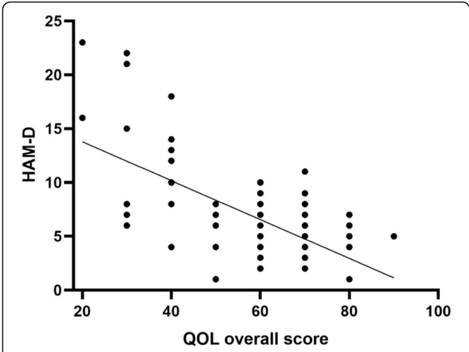
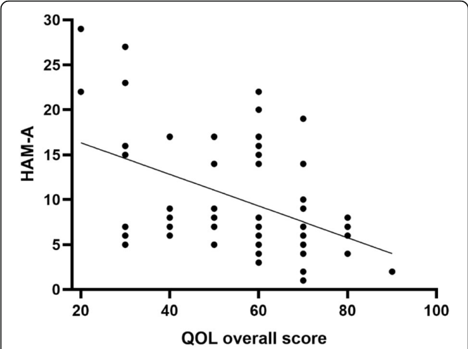
Abstract Background Depression and anxiety are non-motor symptoms of Parkinson’s disease (PD) that are often overlooked and underrated. This study aimed to highlight the frequency and risk factors of depression and anxiety among subjects with PD. Methods Sixty-four patients with PD who were diagnosed according to United Kingdom Parkinson’s Disease Society (UKPDS) Brain Bank Criteria and 50 sex- and age-matched healthy control subjects are evaluated for depression and anxiety. PD severity and staging were assessed using Unified Parkinson’s Disease Rating Scale (UPDRS) and Hoehn and Yahr scale. Depression and anxiety were diagnosed using DSM-IV TR criteria and scored using Hamilton Depression and Hamilton Anxiety Rating Scales (HAM-D and HAM-A). The World Health Organization Quality of Life (WHOQOL)-BREF was used to assess impact of depression and anxiety on quality of life. Results 31.25% of patients with PD had depression while 40.6% of patients had anxiety disorder. Depression was higher in females and patients with history of depression and low socioeconomic status (SES). Anxiety was common in young patients and those who had history of anxiety. Overlap between depression and anxiety was recorded in 23.4%. Total UPDRS and Hoehn and Yahr scale accounted for 33.4% of variance for depression. Total UPDRS and earlier age of onset accounted for 39% of variance for anxiety. Advanced disease stage and severity were independent predictors for depression while disease severity and younger age of onset were the main predictors for anxiety. Depression and anxiety have a negative impact on the overall quality of life of PD patients especially on physical and psychosocial domains. Conclusion Depression and anxiety are relatively common in PD. Female gender, low SES, and history of depression were the main risk factors for developing depression. Young age and history of anxiety were risk factors for anxiety. Both had negative impact on quality of life.
Overview
The claims and statistics of this paper haven’t been checked yet.
Free: it reads the open-access text and checks the first 5 claims that cite a source we can check. Create a free account to check every claim.
Integrity signals
Registry
Cites
Statistics
Figures
Verification
Claims the paper makes
The claims and statistics of this paper haven’t been checked yet.
Free: it reads the open-access text and checks the first 5 claims that cite a source we can check. Create a free account to check every claim.
Self-check
Percentages, sums and reported differences re-computed from the paper’s own numbers.
The self-check needs the paper’s full text.
Citations
Cites
1 retracted
Hallit, S. R., Haddad, C., Hallit, R. R., Akel, M., Obeïd, S., Haddad, G., Soufia, M., Khansa, W., Khoury, R., Kheir, N., et al. (2019) · Clinical Epidemiology and Global Health · doi:10.1016/j.cegh.2019.02.002 · Cited by 33
RetractedFolstein, M. F., Folstein, S. E., & McHugh, P. R. (1975) · Journal of Psychiatric Research · doi:10.1016/0022-3956(75)90026-6 · Cited by 88,282
Parkinsonism: onset, progression, and mortality
Hoehn, M. M., & Yahr, M. D. (1967) · Neurology · doi:10.1212/wnl.17.5.427 · Cited by 12,107
Hughes, A. J., Daniel, S. E., Kilford, L., & Lees, A. J. (1992) · Journal of Neurology, Neurosurgery & Psychiatry · doi:10.1136/jnnp.55.3.181 · Cited by 10,378 · cited 2×
“Inclusion criteria included patients diagnosed with PD according to the United Kingdom Parkinson’s Disease Society (UKPDS) Brain Bank Criteria [11, 12], non-demented, willing to participate in the study, and able to give informed consent.”
MethodMDS clinical diagnostic criteria for Parkinson’s disease
Postuma, R. B., Berg, D., Stern, M., Poewe, W., Olanow, C. W., Oertel, W., Obeso, J., Marek, K., Litvan, I., Lang, A. E., et al. (2015) · Movement Disorders · doi:10.1002/mds.26424 · Cited by 7,653
Recent Developments in Parkinson's Disease
Hurtig, H. I. (1987) · Neurology · doi:10.1212/wnl.37.5.893 · Cited by 1,920
A systematic review of prevalence studies of dementia in Parkinson's disease
Aarsland, D., Zaccai, J., & Brayne, C. (2005) · Movement Disorders · doi:10.1002/mds.20527 · Cited by 1,689
A systematic review of prevalence studies of depression in Parkinson's disease
Reijnders, J. S. A. M., Ehrt, U., Weber, W. E. J., Aarsland, D., & Leentjens, A. F. G. (2008) · Movement Disorders · doi:10.1002/mds.21803 · Cited by 1,239
Sydney multicenter study of Parkinson's disease: Non‐L‐dopa–responsive problems dominate at 15 years
Hely, M. A., Morris, J. G. L., Reid, W. G. J., & Trafficante, R. (2005) · Movement Disorders · doi:10.1002/mds.20324 · Cited by 1,050
Depression in Parkinson disease—epidemiology, mechanisms and management
Aarsland, D., Påhlhagen, S., Ballard, C. G., Ehrt, U., & Svenningsson, P. (2012) · Nature Reviews Neurology · doi:10.1038/nrneurol.2011.189 · Cited by 593
Research works printed but not linked: 4
- El-Tawab A. Socioeconomic status scale, faculty of education, department of psychology. Assiut University; 2004.
- First MB, Spitzer RL, Gibbon M, Williams JBW, Benjamin LS. Structured clinical interview for DSM-IV-clinician version (SCID-CV) (user's guide interview). Washington, DC: American Psychiatric Press; 1997.
- El Missiry A, Sorour A, Sadek A, Fahy T, Abdel Mawgoud M, Asaad T. Homicide and psychiatric illness: an Egyptian study [MD thesis]. Cairo: Faculty of Medicine, Ain Shams University; 2004.
- Jeffrey S. Psychiatric symptoms have greater impact in early vs late PD. Medscape medical news; 2007.
Cited by
Zhou, L., Xiong, J., Chai, Y.-Q., Huang, L., Tang, Z.-Y., Zhang, X., Liu, B., & Zhang, J.-T. (2022) · Frontiers in Psychiatry · doi:10.3389/fpsyt.2022.933704 · Cited by 133
Exploring public perceptions and awareness of Parkinson’s disease: A scoping review
Crooks, S., Carter, G., Wilson, C. B., Wynne, L., Stark, P., Doumas, M., Rodger, M. W. M., O’Shea, E., & Mitchell, G. (2023) · PLoS ONE · doi:10.1371/journal.pone.0291357 · Cited by 37
Lai, T. T., Gericke, B., Feja, M., Conoscenti, M. A., Zelikowsky, M., & Richter, F. (2023) · npj Parkinson's Disease · doi:10.1038/s41531-023-00547-4 · Cited by 36
Bareeqa, S. B., Samar, S. S., Kamal, S., Masood, Y., Allahyar, Ahmed, S. I., & Hayat, G. R. (2022) · Neurodegenerative Disease Management · doi:10.2217/nmt-2022-0001 · Cited by 29
Alpha Synuclein Toxicity and Non-Motor Parkinson’s
Mazzotta, G. M., & Conte, C. (2024) · Cells · doi:10.3390/cells13151265 · Cited by 22
Lian, T., Zhang, W., Li, D., Guo, P. F., He, M., Zhang, Y., Li, J., Guan, H., Zhang, W., Luo, D., et al. (2024) · BMC Geriatrics · doi:10.1186/s12877-024-04854-0 · Cited by 19
“Thus, the results were adjusted for the above factors in order to reduce their influences [17].”
BackgroundRatan, Y., Rajput, A., Pareek, A., Pareek, A., Jain, V. K., Sonia, S., Farooqui, Z., Kaur, R., & Singh, G. (2024) · Biomolecules · doi:10.3390/biom14010073 · Cited by 21
“Anxiety and depression frequently coexist, and understanding the anxious depressive phenotype is crucial for efficient treatment [392,393].”
BackgroundDepression in Patients With Parkinson’s Disease: A Hospital-Based Cross-Sectional Study
Sujith, P., Arjunan, P., Iype, T., & Natarajan, V. (2023) · Cureus · doi:10.7759/cureus.47214 · Cited by 16
Miner, K. M., Jamenis, A. S., Bhatia, T. N., Clark, R. N., Rajasundaram, D., Sauvaigo, S., Mason, D. M., Posimo, J. M., Abraham, N., DeMarco, B. A., et al. (2022) · Progress in Neurobiology · doi:10.1016/j.pneurobio.2022.102307 · Cited by 14
Investigating the Shared Genetic Etiology Between Parkinson’s Disease and Depression
Reyes‐Pérez, P., García‐Marín, L. M., Aman, A. M., Antar, T., Flores‐Ocampo, V., Mitchell, B. L., Medina-Rivera, A., & Rentería, M. E. (2024) · Journal of Parkinson s Disease · doi:10.3233/jpd-230176 · Cited by 13
Neuropsychiatric symptoms in Parkinson’s disease: review of data from the Arab world
Chabbouh, A., Khalil, H., Abboud, C., Sader, A., & Khoury, R. (2024) · Journal of International Medical Research · doi:10.1177/03000605241304646 · Cited by 13
“%) compared with the Western literature, 18 which highlights a possible higher prevalence of anxiety disorders in Arab-speaking populations.”
Hassan, M. S., Mohamed, N. A., Yavuz, Y., Mohamed, Y. A., & Gökgül, A. (2024) · International Journal of General Medicine · doi:10.2147/ijgm.s493161 · Cited by 12
“48 Despite the high prevalence of depressive symptoms among PD patients, when managing the primary neurological disorder vigorously, it is common for the patient’s psychological health to be overlooked, unrecognized and untreated.”
BackgroundChuquilín-Arista, F., Álvarez-Avellón, T., & Menéndez‐González, M. (2021) · Brain Sciences · doi:10.3390/brainsci11060771 · Cited by 12
“Both depression and anxiety cause impairment of QoL in a similar manner [16].”
ResultRinaldi, C., Landre, C. B., VOLPE, M. I. T. C., Gonçalves, R. G., Nunes, L. D. S., Darienso, D., Cruz, A. V., de Oliveira, J. D. Q., Rinaldi, S., Fontani, V., et al. (2023) · Journal of Personalized Medicine · doi:10.3390/jpm13060937 · Cited by 9
“Depression is the most frequently observed psychiatric disorder in PD [10,11] and is associated with worsening of motor function [12] and a more severe clinical picture of PD.”
BackgroundThunga, A. V., Karthikbabu, S., & Venkatesan, P. (2022) · Annals of Movement Disorders · doi:10.4103/aomd.aomd_49_21 · Cited by 10
Lin, H., Lin, Y.-T., Chiou, C., & Pan, H.-H. (2024) · Frontiers in Psychiatry · doi:10.3389/fpsyt.2024.1309989 · Cited by 7
Cassidy, I., Doody, O., & Meskell, P. (2022) · BMC Geriatrics · doi:10.1186/s12877-022-03612-4 · Cited by 7
“This is particularly important given the negative impact of depression and anxiety on the lives of PwP [58].”
BackgroundHero, M., Rožmarić, G., Šukunda, E., Papić, E., Rački, V., & Vuletić, V. (2022) · Croatian Medical Journal · doi:10.3325/cmj.2022.63.62 · Cited by 7
Sławek, J. W., & Radziwon, J. (2026) · Neurologia i Neurochirurgia Polska · doi:10.5603/pjnns.110793 · Cited by 10
Samanta, S., Bisht, M., Kanimozhi, M., Kumar, N., & Handu, S. S. (2023) · Journal of Family Medicine and Primary Care · doi:10.4103/jfmpc.jfmpc_2288_22 · Cited by 6
“[23] Similarly, other studies have reported that depression decreases the QOL in Parkinson’s patients.[24,25]”
ResultExperiences of Living With the Nonmotor Symptoms of Parkinson's Disease: A Photovoice Study
Smith, L., Callis, J., Bridger‐Smart, S., & Guilfoyle, O. (2024) · Health Expectations · doi:10.1111/hex.14124 · Cited by 6
“Accordingly, quantitative studies have shown anxiety and depression are associated with lower QoL [36] and cognitive [37] and motor decline in PD [38].”
BackgroundSang, S., Ba, Y., & Yang, N. (2024) · Frontiers in Neuroscience · doi:10.3389/fnins.2024.1353759 · Cited by 6
CBT for Generalized Anxiety Disorder in Parkinson’s Disease: A Case Study
Apostol, A. E., Mohamed, B., Thomas, C., Williams, T., Mahon, S., Fisher, M., & Lewis-Morton, R. (2023) · Clinical Gerontologist · doi:10.1080/07317115.2023.2254311 · Cited by 7
“Prevalence rates of mental health difficulties in PD are high, with 6% to 55% of pwP experiencing anxiety disorders (Broen et al., 2016), 3% to 90% experiencing depression (Reijnders et al., 2008), and 23% meeting criteria for both conditions (Khedr et al., 2020).”
BackgroundStorey, A., Nash, E., Dempsey, H., McIvor, K., & Zarotti, N. (2025) · Neuropsychological Rehabilitation · doi:10.1080/09602011.2025.2457666 · Cited by 4
“Psychological distress is also prevalent, with evidence suggesting higher rates of anxiety and depression (Chan et al., 2021; Khedr et al., 2020; Lima et al., 2021), post-traumatic stress (Hütter & Kreitschmann-Andermahr, 2014), panic disorders (Sharma et al., 2022), and suicidal risk (Erlangsen et…”
Pallidal beta power is associated with depression in Parkinson’s disease
Johnson, K. A., Coutinho, P. B., Kenney, L. E., Wong, J. K., Hilliard, J. D., Foote, K. D., Bowers, D., Pontone, G. M., & de Hemptinne, C. (2026) · npj Parkinson s Disease · doi:10.1038/s41531-026-01264-4 · Cited by 4
Glycated Alpha-Synuclein Assemblies Cause Distinct Parkinson’s Disease Pathogenesis in Mice
Rajan, A., Varghese, A., Hashardeen, S. P., Babu, A. T., Vijayan, V., & Thakur, P. S. (2025) · ACS Chemical Neuroscience · doi:10.1021/acschemneuro.5c00428 · Cited by 5
Sujith, P., Arjunan, P., Iype, T., & Natarajan, V. (2024) · Cureus · doi:10.7759/cureus.54736 · Cited by 4
“There is a negative effect of depression on the QOL of patients with PD and depression is the most important determinant of QOL [5-11].”
BackgroundMethodInfluentialScreening for non-motor symptoms in Egyptian patients with Parkinson’s disease
Mohammed, S. S., Ali, R. M., Farghaly, M., El-Serafy, O. A., & Hegazy, M. I. (2022) · The Egyptian Journal of Neurology Psychiatry and Neurosurgery · doi:10.1186/s41983-022-00541-2 · Cited by 5
“Further research needs to be conducted with larger sample size covering different geographical areas in different centers across Egypt.”
BackgroundInfluentialAlikhani, A., Salari, M., & Etemadifar, M. (2025) · Applied Neuropsychology Adult · doi:10.1080/23279095.2025.2458701 · Cited by 3
Anxiety Symptoms and Disease Severity in Parkinson Disease
Whitmarsh, A., Protea, S., & Gibson, J. S. (2024) · Journal of Neuroscience Nursing · doi:10.1097/jnn.0000000000000770 · Cited by 3
Kyprakis, I., Skaramagkas, V., Boura, I., Karamanis, G., Fotiadis, D. I., Kefalopoulou, Z. M., Spanaki, C., & Tsiknakis, M. (2025) · Annual International Conference of the IEEE Engineering in Medicine and Biology Society (EMBC) · doi:10.1109/embc58623.2025.11253137 · Cited by 2
“Depressive symptoms, affecting about 40-45% of PD patients [11], [12], are closely related to diminished QoL, increased disability, and faster progression of motor symptoms [13].”
Frequency of Depression among Patients with Parkinson Disease
Lateef, M., Alvi, W. I., Malik, A., Jamal, N., Umair, M., & Khan, M. A. (2023) · Pakistan Journal of Neurological Sciences · doi:10.56310/pjns.v18i02.237 · Cited by 2
Azaiez, C., Chalghaf, N., Tannoubi, A., Guelmami, N., Srem‐Sai, M., Quansah, F., Hagan, J. E., Sneni, H., Boussayala, G., Ghalmi, I., et al. (2024) · BMC Public Health · doi:10.1186/s12889-024-20002-0 · Cited by 3
“However, the SF-36, EQ-5D and WHOQOL-Bref scales have been used in Arabic-speaking people with PD [57–60].”
MethodHamieh, N. M., Ansart, M., Guinebretiere, O., Lekens, B., Gantzer, L., Durrleman, S., & Nédelec, T. (2025) · Journal of Affective Disorders · doi:10.1016/j.jad.2025.04.094 · Cited by 2
Relationship of Vitamin D Deficiency with Non-Motor Functions of Parkinson’s disease
Khan, M. S. H., Mouri, U. K., Islam, M. R., Rahman, T., Rahman, A., & Ahmed, J. U. (2024) · Bangladesh Journal of Medicine · doi:10.3329/bjm.v35i2.72400 · Cited by 2
Exploring pain phenomena and associations in Parkinson’s disease: A Turkish perspective
Baran, G., & Öner, Ö. (2025) · Ideggyógyászati Szemle · doi:10.18071/isz.78.0056 · Cited by 1
Uribe-Kirby, R., Pawlak, A., Pitman, L., Zuniga, G., & Jones, J. D. (2025) · Parkinsonism & Related Disorders · doi:10.1016/j.parkreldis.2025.107345 · Cited by 1
Mitsushi, S., Ryuta, T., KADOTA, A., Takahiro, T., Yuri, Y., Takabatake, S., Yumi, S., Sotokawa, T., & Fujii, H. (2025) · Asian Journal of Human Services · doi:10.14391/ajhs.28.195 · Cited by 1
Alenko, A., Morankar, S., Chelkeba, L., Seyoum, S. A., Uka, Y. Y., & Keygnaert, I. (2025) · Journal of Geriatric Psychiatry and Neurology · doi:10.1177/08919887251339836 · Cited by 1
“2 A cross-sectional study conducted in different African countries reported different psychiatric symptoms and disorders in people living with PD. 14-17 However, there is limited evidence of the qualitative differences in how these psychiatric manifestations are experienced by people with PD…”
Stewart, C. B., Sathyanarayana, S., Foster, V. K., Iredale, R., Galley, D., Pasquini, J., Anderson, K. N., Pavese, N., & Ledingham, D. (2025) · Movement Disorders Clinical Practice · doi:10.1002/mdc3.70291 · Cited by 2
“23,24 This mental health component may create a negative feedback loop in which reduced activity and social isolation can reinforce depressive symptoms, further impairing daily functioning.”
Depression in patients with Parkinson’s disease. Preliminary results of the cohort study
Rotaru, L., Gavriliuc, O., & Grosu, O. (2023) · Bulletin of the Academy of Sciences of Moldova Medical Sciences · doi:10.52692/1857-0011.2022.3-74.16 · Cited by 1
Gambaran Gejala Depresi pada Penderita Parkinson Disease di RSI Ibnu Sina Padang
Mubarak, M. D., Syafrita, Y., Nurhayati, N., Liza, R. G., & Syahrul, M. Z. (2024) · Jurnal Ilmu Kesehatan Indonesia · doi:10.25077/jikesi.v5i2.1153 · Cited by 1
Depression and Quality of Life in Parkinson’s Disease Patients: A Cross-Sectional Study
Nagarajan, R., Chinnaiyan, S., & Palanisamy, B. (2024) · Journal of Psychosocial Rehabilitation and Mental Health · doi:10.1007/s40737-024-00441-z · Cited by 1
Doctoral Capstone Experience with a Neurological Population
Groce, C. E. (2021) · NSUWorks (Nova Southeastern University)
Bhoopatiraju, S., & Grossberg, G. T. (2021) · touchREVIEWS in Neurology · doi:10.17925/usn.2021.17.2.97
Hubungan Ansietas dengan Penyakit Parkinson pada Pasien Rawat Jalan
Kurniawan, Y. S., Syafrita, Y., & Susanti, R. (2022) · Window of Health Jurnal Kesehatan · doi:10.33096/woh.vi.252 · Cited by 2
Morton, R. L., Tong, M., Montgomery, S., & Fflur, S. (2022) · FPOP Bulletin Psychology of Older People · doi:10.53841/bpsfpop.2022.1.160.47
Parkinson’s Detection: Emotional Intelligence Perspective
-, A. B., Mir, K. H., & Singh, Y. P. (2023) · International Journal For Multidisciplinary Research · doi:10.36948/ijfmr.2023.v05i03.4090
Lin, H., Lin, Y.-T., Chiou, C., & Pan, H.-H. (2023) · doi:10.2196/preprints.52433
Genomic profile of Parkinson's disease in Asians
Besin, V., Humardani, F. M., Yulianti, T., & Justyn, M. (2023) · Clinica Chimica Acta · doi:10.1016/j.cca.2023.117682
Korelasi antara Kecemasan dan Depresi dengan Kualitas Hidup pada Pasien dengan Penyakit Parkinson
Sugiarto, N. E., Pertiwi, J. M., & Warouw, F. (2024) · e-CliniC · doi:10.35790/ecl.v12i3.59448
Nonverbal Expression in the Voice: Impact of Select Trait, Neurologic, and Psychiatric Conditions
Horgan, T. G., Hall, J. A., & Miller, N. S. (2024) · Springer eBooks · doi:10.1007/978-3-031-70064-4_5
Harnessing Herbal Bioactives for Anxiety Management: A Natural Remedy Perspective
Mahima, M., Mazumder, A., & Pentela, B. (2025) · Journal of Natural Remedies · doi:10.18311/jnr/2025/49580
Oxidative stress and depression in Parkinson’s disease
Trofimova, S. A., Lukina, L. V., Михайлов, В. А., & Дубинина, Е. Е. (2025) · S S Korsakov Journal of Neurology and Psychiatry · doi:10.17116/jnevro2025125091131
Papagiannopoulos, O. D., Georga, E. I., Arana‐Arri, E., Uribarrena, J. E. I., Lopez-Perez, L., Rujas, M., Temporale, C., Cea, G., de Battle, J., Pecchia, L., et al. (2025) · Annual International Conference of the IEEE Engineering in Medicine and Biology Society (EMBC) · doi:10.1109/embc58623.2025.11254769
“These may be cognitive impairment, mood disturbances, sleep disturbances, autonomic dysfunction, and abnormalities of sensation and significantly impact overall quality of life in PD patients [4].”
Brooks, K. (2024) · Lancaster EPrints (Lancaster University) · doi:10.17635/lancaster/thesis/2465
Azaiez, C., Chalghaf, N., Tannoubi, A., Guelmami, N., Srem‐Sai, M., Quansah, F., Hagan, J. E., Sneni, H., Boussayala, G., Ghalmi, I., et al. (2024) · Figshare · doi:10.6084/m9.figshare.27020786
Cassidy, I., Doody, O., & Meskell, P. (2024) · Figshare · doi:10.6084/m9.figshare.26556938
Cassidy, I., Doody, O., & Meskell, P. (2024) · Figshare · doi:10.6084/m9.figshare.26556944
Cassidy, I., Doody, O., & Meskell, P. (2024) · Figshare · doi:10.6084/m9.figshare.26556941
Diab, S. (2023) · Archipel (Université du Québec à Montréal)
Depression, type 2 diabetes mellitus, and omega-3 polyunsaturated fatty acids
Serhiyenko, V. A., Chemerys, O. M., Markevych, M.-Y. Y., & Serhiyenko, A. A. (2026) · INTERNATIONAL JOURNAL OF ENDOCRINOLOGY (Ukraine) · doi:10.22141/2224-0721.22.1.2026.1680
Oxidative Stress and Depression in Parkinson’s Disease
Sa, T., Lukina, L. V., Mikhailov, V. A., & Дубинина, Е. Е. (2026) · Neuroscience and Behavioral Physiology · doi:10.1007/s11055-026-01984-3
Associations Between Cognitive, Emotional Difficulties and miRNA in Parkinson‘s Disease Patients
Kaminskas, B. (2022) · Lithuanian University of Health Sciences
Azaiez, C. (2024) · theses.fr (ABES) · doi:10.70675/e0ab1fa3z017dz4597za978z75d25c7a2417
Alshimemeri, S. A., Aljaffer, M. A., Alghamdi, A. H., Alshammari, N. F., Alsaber, N. S., Alromayan, R. S., & Almadani, A. H. (2026) · Medicine · doi:10.1097/md.0000000000048538
The Microbiome and Neurotransmitter Regulation: A Double-Edged Sword
Paul, D., & Agrawal, R. (2026) · Springer eBooks · doi:10.1007/978-981-95-7494-0_7
Noor, U., Khan, I., Zheng, W.-F., Khan, I., & Li, S. (2026) · Ageing and Neurodegenerative Diseases · doi:10.20517/and.2026.06
Araújo, B., Caridade-Silva, R., Vilaça-Ferreira, A. C., Martins‐Macedo, J., Teixeira, C., Soares-Guedes, C., Summavielle, T., Svenningsson, P., Pinto, L., & Teixeira, F. G. (2026) · Research Square · doi:10.21203/rs.3.rs-10814574/v1
Metadata
- Authors
- Khedr, E. M., Abdelrahman, A. A., Elserogy, Y., Zaki, A. F., & Gamea, A.
- Affiliations
- Assiut University Hospitals (EG)
- South Valley University (EG)
- Corresponding author
- Khedr, Eman M.
- Venue
- The Egyptian Journal of Neurology, Psychiatry and Neurosurgery
- Published
- 2020-12
- Volume
- 56
- Issue
- 1
- ISSN
- 1110-1083 (ISSN-L)
- 1687-8329
- OpenAlex
- W3113290029
- Cited by
- 61
- References
- 71
- Citations by year
- 2026: 5 · 2025: 12 · 2024: 21 · 2023: 11 · 2022: 10 · 2021: 2
- FWCI
- 2.49
- Type
- journal article
- Language
- en
- Open access
- diamond
- doi.org
- Licence
- cc-by
- creativecommons.org/licenses/by/4.0 (tdm)
- creativecommons.org/licenses/by/4.0 (vor, 8 d)
- Locations
- The Egyptian Journal of Neurology Psychiatry and Neurosurgery (publishedVersion, cc-by)
- DOAJ (DOAJ: Directory of Open Access Journals) (submittedVersion, cc-by-sa)
- Greater South Information System
- Topics
- Health Sciences › Medicine › Clinical Neurology › Parkinson's Disease Mechanisms and Treatments
- Health Sciences › Medicine › Clinical Neurology › Deep Brain Stimulation and Movement Disorders
- Health Sciences › Medicine › Psychiatry and Mental health › Dementia and Cognitive Impairment Research
- Keywords
- Parkinson's disease, depression, anxiety, non-motor symptoms, quality of life, risk factors, disease severity, age of onset, socioeconomic status, sex differences, comorbidities
About these checks
Registry, retraction, Cites and statistics results are computed, not judged, with one exception: a printed reference that no index lists is read once by a model before it counts as a citation error. Claims are extracted by a model and kept only when their quote appears verbatim in the text; each cited source is then checked, with a model’s help, for whether it says what the claim relies on. Those verdicts can be wrong — read the claim’s quote and the cited source before relying on one.
Statistics and arithmetic are recomputed, not judged.
Confidence bands are shown only for fields calibrated on our annotated test set. None is calibrated yet, so no band is shown.
What counts as a claim ›How we measure confidence ›How we check this ›
Are you an author, or do you see a problem with this page? Request a review
Data sources
Bibliographic data: Semantic Scholar, OpenAlex, Crossref.
Contains information from the Semantic Scholar Academic Graph Datasets, made available under the ODC Attribution License (ODC-BY 1.0).
Semantic Scholar’s data is described in: Kinney, R., et al. (2023). The Semantic Scholar Open Data Platform. arXiv:2301.10140.
