

Preparation of nano-fertilizer blend from banana peels
Open accessThe DOI matches its Crossref record; 20 of the 20 references it cites were found in a registry or an index.
Abstract
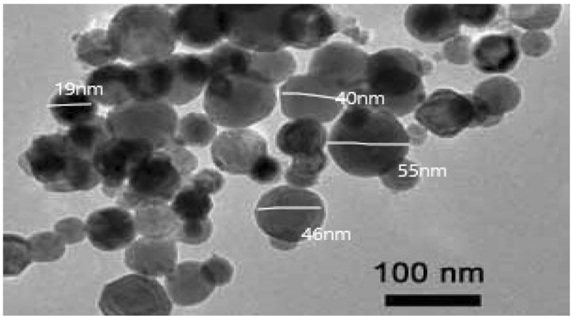
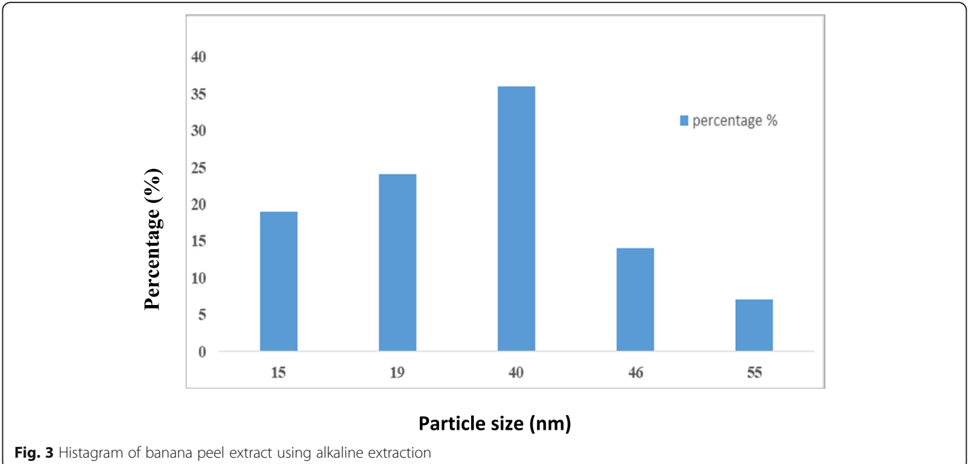
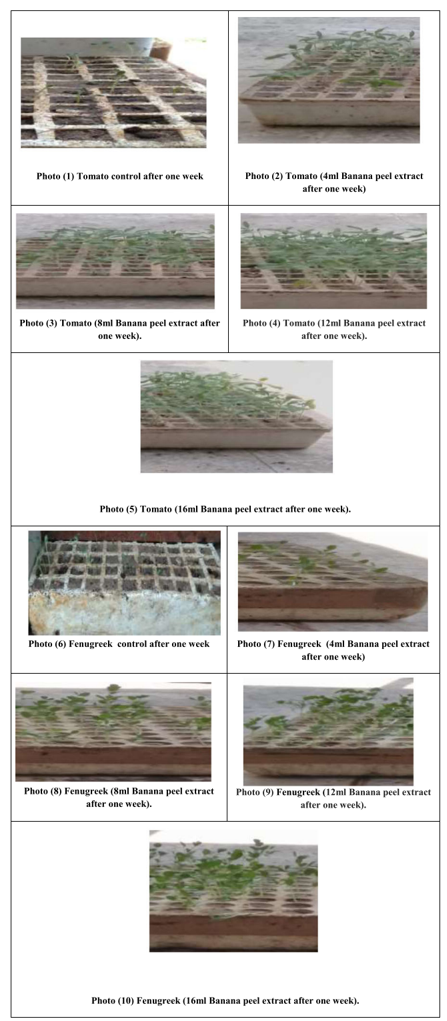
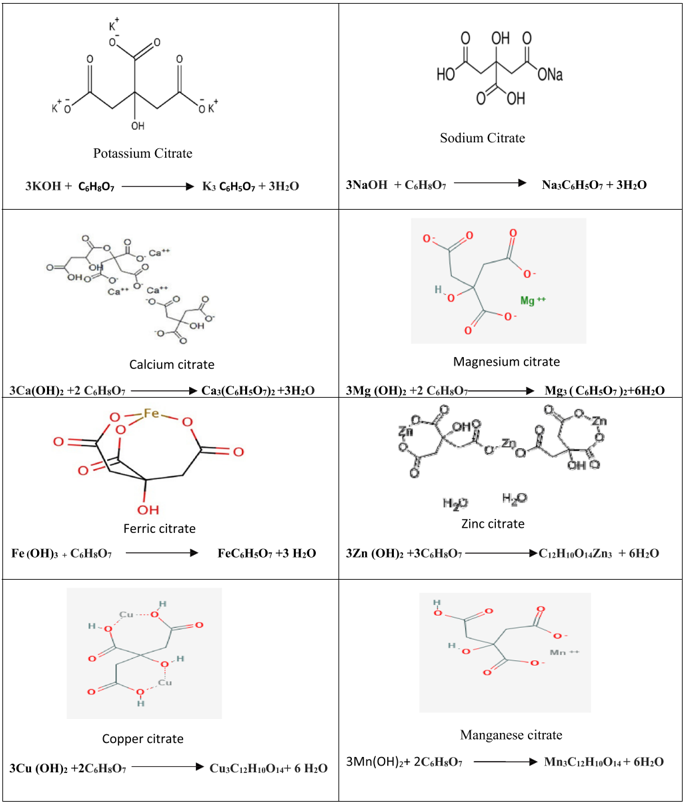
Banana contains important nutrients, which could be recycled into useful materials to be reused in different purposes. Extraction of mixed nano bio stimulant fertilizer from banana peels is the main purpose of this investigation. Nano-fertilizer extract was subjected to physical and chemical analyses for characterization. The fertilizer constituent size ranged from 19 to 55 nm, and the histogram illustrates that the major nanoparticles were 40 nm with an average percentage of 36% while 55-nm particles were the minor size with an average percentage of 6%. The synthesized nanofertilizers contained chelated potassium, chelated iron, tryptophan, urea, amino acids, protein, and citric acid. Nano-fertilizer extracted from banana peels was applied in agriculture of two crops, tomato and fenugreek. The data revealed that germination percentage increased with increasing dose of banana peel extract for both crops. For tomato crop, the germination percentage was increased from 14% (control without nano) to 97% after 7 days of plantation. Also, the same trend was noticed for fenugreek crop, the germination percentage was enhanced from 25% (control without nano) to 93.14%.
Overview
The claims and statistics of this paper haven’t been checked yet.
Free: it reads the open-access text and checks the first 5 claims that cite a source we can check. Create a free account to check every claim.
Integrity signals
Registry
Cites
Statistics
Figures
Verification
Claims the paper makes
The claims and statistics of this paper haven’t been checked yet.
Free: it reads the open-access text and checks the first 5 claims that cite a source we can check. Create a free account to check every claim.
Claims other papers make about this one
Each is checked against this paper’s own text: does it say what the citing paper says it does?
The check wasn’t confident either way, so it gives no verdict — never disputed.
In the citing paper
“It is used as a stabilizing agent for zinc oxide nanoparticles synthesis.[61]”
From Bioactive, antioxidant, industrial, and nutraceutical applications of banana peel (2023) · cites this paper as [61]
Experimental — accuracy not yet measuredThe check wasn’t confident either way, so it gives no verdict — never disputed.
In the citing paper
“Had a promising antimicrobial activity against Gram-positive, Gram-negative bacteria and fungi Dmochowska et al. [61]”
From Bioactive, antioxidant, industrial, and nutraceutical applications of banana peel (2023) · cites this paper as [61]
Experimental — accuracy not yet measured
Self-check
Percentages, sums and reported differences re-computed from the paper’s own numbers.
The self-check needs the paper’s full text.
Citations
Cites
Multiple Range and Multiple F Tests
Duncan, D. B. (1955) · Biometrics · doi:10.2307/3001478 · Cited by 23,217
Antioxidant activity of apple peels
Wolfe, K., Wu, X., & Liu, R. H. (2003) · Journal of Agricultural and Food Chemistry · doi:10.1021/jf020782a · Cited by 1,873 · cited 1×
“Banana peels form about 18–33% of the whole fruit mass and are considered as a waste product (Wolfe et al. 2003).”
BackgroundHappi Emaga, T., Andrianaivo, R. H., Wathelet, B., Tchango, J. T., & Paquot, M. (2007) · Food Chemistry · doi:10.1016/j.foodchem.2006.09.006 · Cited by 502 · cited 4×
“Banana peels as organic waste drew a great attention due to its extract rich in natural phenolic compound antioxidants such as vitamins, flavonoids, essential amino acids, growth promoters, and potassium element which are necessary for plant growth (Lee et al. 2010; Emaga et al. 2007).”
BackgroundInfluentialBanana by-products: An under-utilized renewable food biomass with great potential
Padam, B. S., Tin, H. S., Chye, F. Y., & Abdullah, M. I. (2014) · Journal of Food Science and Technology · doi:10.1007/s13197-012-0861-2 · Cited by 426 · cited 2×
“…and inflorescence into various food and non-food applications, serving as thickening agent, coloring and flavor, alternative source for macro- and micronutrients, natural cuticles, livestock feed, natural fibers, and sources of natural bioactive compounds and bio-fertilizers (Padam et al. 2014).”
BackgroundNardi, S., Pizzeghello, D., Schiavon, M., & Ertani, A. (2016) · Scientia Agricola · doi:10.1590/0103-9016-2015-0006 · Cited by 393
Development of banana peel jelly and its antioxidant and textural properties
Lee, E.-H., Yeom, H.-J., Ha, M.-S., & Bae, D.-H. (2010) · Food Science and Biotechnology · doi:10.1007/s10068-010-0063-5 · Cited by 124 · cited 4×
“Banana peels as organic waste drew a great attention due to its extract rich in natural phenolic compound antioxidants such as vitamins, flavonoids, essential amino acids, growth promoters, and potassium element which are necessary for plant growth (Lee et al. 2010; Emaga et al. 2007).”
BackgroundInfluential(2016) · Journal of chemical and pharmaceutical research · Cited by 106
Improving thermo tolerance of wheat plant by foliar application of citric acid or oxalic acid
Sadak, M. S., & Orabi, S. (2015) · Cited by 85
PHYSIOLOGICAL RESPONSE OF PERIWINKLE PLANTS (CATHARANTHUS ROSEUS L.) TO TRYPTOPHAN AND PUTRESCINE
Talaat, I. M., Bekheta, & Mahgoub, M. H. (2005) · Cited by 75
Industrial ethanol from banana peels for developing countries: Response surface methodology
Gebregergs, A., Gebresemati, M., & Sahu, O. (2016) · Pacific Science Review A: Natural Science and Engineering · doi:10.1016/j.psra.2016.06.002 · Cited by 42 · cited 1×
“Also, banana peels were utilized for the production of bioethanol by using the yeast Saccharomyces cerevisiae (Gebregergs et al. 2016).”
MethodNitrogen Management in Furrow Irrigated, Ridge‐Tilled Corn
Gordon, W. B., Whitney, D. A., & Raney, R. J. (1993) · jpa · doi:10.2134/jpa1993.0213 · Cited by 39 · cited 1×
“Also, it does not improve soil structure (Gordon et al. 1993); then, decrease in organic matter content leads to nutrient imbalance and soil acidification (Ojeniyi 2000).”
BackgroundTaha, R. A. (2014) · Cited by 38
Abou Dahab, T. A. M., & Nahed, G. A. A. (2006) · World Journal of Agriculture and Soil Science · Cited by 35
Ogbomo, K. E. L. (2011) · International Research Journal of Agriculture and Soil Science · Cited by 22
Arabloo, M., Taheri, M., Yazdani, H., & Shahmoradi, M. (2017) · Trakia Journal of Sciences · doi:10.15547/tjs.2017.01.003 · Cited by 20 · cited 1×
“The efficiency of organic synthesized fertilizers was improved when they are applied in combination with 1/2 unit or one unit of NPK recommended rates (Arabloo et al. 2017).”
BackgroundUsing Soluble Calcium to Stimulate Plant Growth
Feagley, S. E., & Fenn, L. B. (1998) · OakTrust (Texas A&M University Libraries) · Cited by 12
Joñca, Z., & Lewandowski, W. (2004) · Polish Journal of Environmental Studies · Cited by 10
Mostafa, M., Mubarak, M., Khalil, N., & Mohamad, G. H. (2014) · Journal of Soil Sciences and Agricultural Engineering /Journal of Soil Sciences and Agricultural Engineering · doi:10.21608/jssae.2014.49111 · Cited by 6 · cited 2×
“The effect of both diphenylamin and tryptophan significantly increased plant growth (in terms of plant height, number of leaves/plant, stem diameter, root length, and leaf area, as well as fresh and dry weights of the different plant parts) and the contents of carotenoids, total soluble sugars, and total free amino ac…”
BackgroundExtraction of antioxidant activity, phenolic content and minerals in banana peel
Atiah, A. N. (2010) · Cited by 4
n, M. N., seyin, H. H., Tuba, B., & Bihter, C. O. E. (2013) · African Journal of Agricultural Research · doi:10.5897/ajar11.1219 · Cited by 2 · cited 2×
“nutrition for plants and iron deficiency causes severe problem for the soil (Mordoğan et al. 2013).”
Background
Research works printed but not linked: 11
- Bakry BA, Ibrahim FM, Abdallah MMS and El-Bassiouny HMS ( 2016) Effect of banana peel extract or tryptophan on growth, yield and some biochemical aspects of quinoa plants under water deficit International J Pharm Tech Res 9;8:276-287
- Brad berry C (2017) Unconventional uses for banana peels
- Brad berry C (2017) Unconventional uses for banana peels DIY Fertilizers (2012) How to use banana peels, the micro gardener.
- El-Bassiouny HMS (2005) Physiological responses of wheat to salinity alleviation by nicotinamide and tryptophan. Int J Agric Biol 7(4):653-659
- Haider P (2013) Eating banana peels will make you extremely OM time Hulbert R (2014) Banana peels to potassium metal. Periodic experiment Ibrahim MFM, Abd El-Gawad HG, Bondok AM (2015) Physiological impacts of potassium citrate and folic acid on growth, yield and some viral diseases of plants. Middle East J Agric Res 04:577-589
- Hulbert R (2014) Banana peels to potassium metal. Periodic experiment
- Ibrahim MFM, Abd El-Gawad HG, Bondok AM (2015) Physiological impacts of potassium citrate and folic acid on growth, yield and some viral diseases of plants. Middle East J Agric Res 04:577–589
- Ojeniyi SO (2000) Effect of goat manure on soil nutrients and okra yield in a rain forest area of Nigeria. Appl Trop Agric 5:20-23
- Patel H, Patel A, Surati T, Shah G (2012) Potential use of banana peels for the production of fermented products. IJED 9(1):1-7
- Sharif Hossain ABM (2015) Nano-particle preparation from lingo-cellulose based banana peel biomass as a tool of nano-biotechnology. Glob J Biol Agric Health Sci 4(3):19-21
- Sudha K, Anitta S, Mythili Devi P, Thejomayah G (2015) Biosynthesis of iron nano- particle from green banana peel extract. Int J Soc Sci Interdiscip Res 4(6): 165-176
Cited by
Natural and Synthetic Polymers for Biomedical and Environmental Applications
Satchanska, G., Davidova, S., & Petrov, P. D. (2024) · Polymers · doi:10.3390/polym16081159 · Cited by 585
“The time and dose of nutrient release will depend on the plant’s requirement [29,69].”
BackgroundRecovery of Banana Waste-Loss from Production and Processing: A Contribution to a Circular Economy
Alzate Acevedo, S., Díaz Carrillo, Á. J., Flórez-López, E., & Grande-Tovar, C. D. (2021) · Molecules · doi:10.3390/molecules26175282 · Cited by 277
Wypij, M., Trzcińska-Wencel, J., Golińska, P., Ávila-Quezada, G. D., Ingle, A. P., & Rai, M. K. (2023) · Frontiers in Chemistry · doi:10.3389/fchem.2022.1106230 · Cited by 143
“(2019) contained chelated potassium, chelated iron, tryptophan, urea, amino acids, proteins and citric acid, and showed significant effects when tested for tomato and fenugreek seed germination (Hussein et al., 2019).”
BackgroundEnhancing sustainability in agriculture with nanofertilizers
Saurabh, K., Prakash, V., Dubey, A. K., Ghosh, S., Kumari, A., Sundaram, P. K., Jeet, P., Sarkar, B., Upadhyaya, A., Das, A., et al. (2024) · Discover Applied Sciences · doi:10.1007/s42452-024-06267-5 · Cited by 136
Nano-based slow releasing fertilizers for enhanced agricultural productivity
Madzokere, T. C., Murombo, L. T., & Chiririwa, H. (2021) · Materials Today Proceedings · doi:10.1016/j.matpr.2020.12.674 · Cited by 112
Metadata
- Authors
- Hussein, H. S., Shaarawy, H. H., Hussien, N. H., & Hawash, S. I.
- Affiliations
- National Research Centre (EG)
- Corresponding author
- Hussein, H S
- Venue
- Bulletin of the National Research Centre
- Published
- 2019-02-12
- Volume
- 43
- Issue
- 1
- ISSN
- 1110-0591 (ISSN-L)
- 2522-8307
- OpenAlex
- W2942481957
- Cited by
- 101
- References
- 20
- Citations by year
- 2026: 10 · 2025: 15 · 2024: 29 · 2023: 16 · 2022: 12 · 2021: 10 · 2020: 7 · 2019: 2
- FWCI
- 5.71
- Type
- journal article
- Language
- en
- Open access
- diamond
- doi.org
- Licence
- cc-by
- creativecommons.org/licenses/by/4.0 (tdm)
- Locations
- Bulletin of the National Research Centre/Bulletin of the National Research Center (publishedVersion, cc-by)
- DOAJ (DOAJ: Directory of Open Access Journals) (submittedVersion, cc-by-sa)
- Funders
- National Research Centre
- Topics
- Life Sciences › Agricultural and Biological Sciences › Plant Science › Plant Growth Enhancement Techniques
- Life Sciences › Agricultural and Biological Sciences › Agronomy and Crop Science › Polymer-Based Agricultural Enhancements
- Life Sciences › Agricultural and Biological Sciences › Plant Science › Agriculture, Plant Science, Crop Management
- Keywords
- banana peel, nanofertilizers, agricultural waste valorization, seed germination, tomato, fenugreek, iron chelates, tryptophan, amino acids, citric acid, urea, nanoparticle size distribution
About these checks
Registry, retraction, Cites and statistics results are computed, not judged, with one exception: a printed reference that no index lists is read once by a model before it counts as a citation error. Claims are extracted by a model and kept only when their quote appears verbatim in the text; each cited source is then checked, with a model’s help, for whether it says what the claim relies on. Those verdicts can be wrong — read the claim’s quote and the cited source before relying on one.
Statistics and arithmetic are recomputed, not judged.
Confidence bands are shown only for fields calibrated on our annotated test set. None is calibrated yet, so no band is shown.
What counts as a claim ›How we measure confidence ›How we check this ›
Are you an author, or do you see a problem with this page? Request a review
Data sources
Bibliographic data: Semantic Scholar, OpenAlex, Crossref.
Contains information from the Semantic Scholar Academic Graph Datasets, made available under the ODC Attribution License (ODC-BY 1.0).
Semantic Scholar’s data is described in: Kinney, R., et al. (2023). The Semantic Scholar Open Data Platform. arXiv:2301.10140.
