

Scientific knowledge and wisdom of kimchi: a blessing Korean
Open accessThe DOI matches its Crossref record; 47 of the 48 references it cites were found in a registry or an index; none of the 60 sources its claims cite is checked for support yet.
Abstract
Kimchi, a unique traditional fermented food of Korea, is a product of agricultural necessity and scientific serendipity. This blessed food, born from the efforts of Korean women striving to create delicious and lasting sustenance, has become an integral part of Korean cuisine. Always present in the traditional Korean bapsang, which means meal table setting alongside bap (rice), kuk (soup), and banchan (side dishes), kimchi's appeal remains constant despite frequent consumption. The origin and evolution of kimchi are intrinsically linked to Korea's history, with fermentation techniques and ingredients adapting to diverse regional and social environments over time. While contemporary research often focuses on kimchi processing and its health benefits, fewer studies explore the fermentation mechanisms, historical background, safety aspects, and preservation techniques of kimchi. Understanding the nature of kimchi requires a comprehensive examination of its biological role and historical context. This manuscript reviews kimchi fermentation from scientific and cultural perspectives, covering ingredients, microorganisms, fermentation mechanisms, and preservation history. We also discuss the safety, palatability, and health benefits of kimchi. The development of kimchi reflects centuries of culinary innovation by Korean women, who created yangnyom (seasonings) and fermented foods to enhance the nutritional value and flavor of bap, ultimately shaping the unique and delightful Korean cuisine we know today.
Overview
CoChat Summary
TL;DR
This narrative review synthesizes scientific and cultural perspectives on kimchi, covering its ingredients, fermentation microorganisms, preservation history, safety, palatability, and health benefits. It argues that kimchi reflects Korean yangnyom and kimjang wisdom, with lactic acid fermentation, capsaicin, salt, and traditional/modern storage shaping its distinctive safety, taste, and probiotic properties.
Key findings
- Kimchi fermentation is driven mainly by lactic acid bacteria from *Lactobacillus*, *Leuconostoc*, and *Weissella*; capsaicin in chili inhibits unwanted microorganisms and promotes lactic acid bacteria, garlic is a source of *Leuconostoc* and *Weissella*, and ginger helps *Leuconostoc mesenteroides*. Acidity stages are described as initial <0.2%, immature 0.2–0.4%, optimum 0.4–0.9%, and over-ripening >0.9%; another classification gives immature <0.3%, ripe 0.3–0.8%, and over-ripe >1.0%. Lactic acid bacteria can proliferate to over one billion per gram of kimchi.
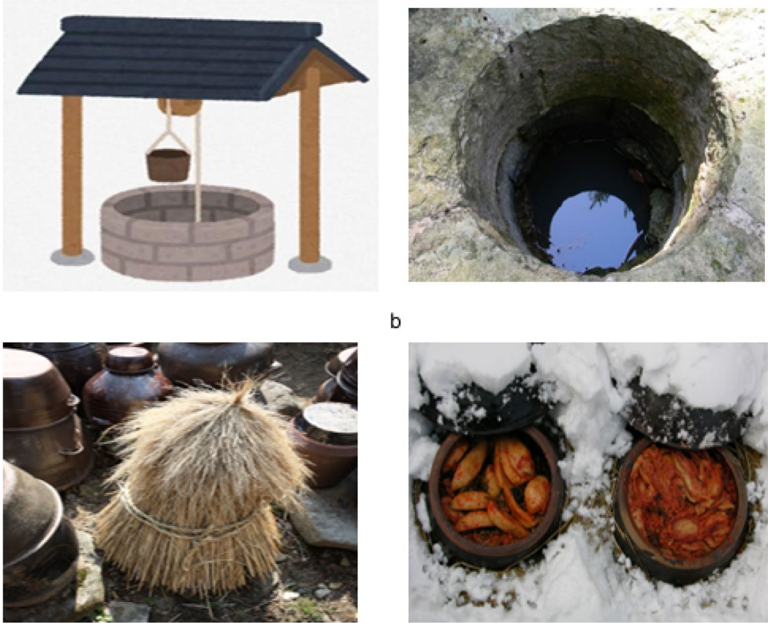
- Traditional preservation relied on cool storage: underground tunnels at 5–10 °C, earthenware jars hung 3–5 m deep in wells or springs to keep kimchi tasty for 5–6 days in summer, and buried kimchi jars at −2 to 5 °C through winter. The modern kimchi refrigerator maintains −1 to 0 °C, controls fermentation, and prevents golmaji.
- Safety is attributed to brining-induced hypertonic conditions that deactivate spoilage bacteria, capsaicin controlling harmful bacteria, and lactic acid lowering pH. The World Kimchi Research Institute reported that golmaji-causing yeast showed no specific toxicity reactions or toxicity-related genes in cell, animal, and genetic analyses.
- Kimchi is described as a unique Korean lactic acid-fermented vegetable dish, with almost two hundred reported kinds; kimjang culture was recognized by UNESCO in 2013. Radish is noted as rich in digestive enzymes and providing several times more vitamin C than apples.
Methods
- Design: narrative review combining scientific and cultural perspectives on kimchi fermentation, ingredients, microorganisms, preservation history, safety, palatability, and health benefits.
- Data/sample: no primary experimental sample; the paper draws on historical documents such as *Tomudaejak* (1611), *Sallimkyongje*, *Jeungbo-sallimkyongje* (1766), and *Eumsikdimibang* (17th century), along with prior scientific literature and World Kimchi Research Institute findings.
- Main analysis: descriptive synthesis rather than systematic review, meta-analysis, or primary data analysis; no search strategy, inclusion criteria, or quantitative pooling are reported.
Limitations
- The paper does not state limitations.
- Evident from the text: it is a narrative review without a reported systematic search strategy, inclusion/exclusion criteria, or quality appraisal, so conclusions rely on selected literature and cultural/historical interpretation.
- Evident from the text: some health and epigenetic claims are framed as future research possibilities rather than tested findings, such as the suggestion that Koreans may have an epigenetic imprint affecting kimchi consumption.
Model-written summary. Check it against the paper before relying on it.
Integrity signals
Registry
Cites
Statistics
Figures
Verification
Claims the paper makes
0 Valid · 10 Not valid · 43 Not checked · 30 Own results and interpretations
A statement the paper makes itself — it cites no source for it, so there is none to check. The quote shows it is in the paper.
In the paper
“The dominating lactic acid bacteria are responsible for the production of acidity, through the fermentation of the available carbohydrates.”
§ Scientific knowledge and wisdom of kimchi: a blessing Korean > Making kimchi, kimjang and kimchi fermentation
plainstates a cause- Asserted: passes — The authors put it forward as true.
- Checkable: passes — It can be checked against evidence.
- Load-bearing: unclear — It is unclear whether the paper’s conclusions depend on it.
- Based: passes — The paper gives a reason why it holds.
A statement the paper makes itself — it cites no source for it, so there is none to check. The quote shows it is in the paper.
In the paper
“With the modern development of refrigerators, especially kimchi refrigerators, fermentation can be controlled, allowing kimchi to be safely consumed for over a year.”
§ Scientific knowledge and wisdom of kimchi: a blessing Korean > Why is kimchi safe?
plainstates a cause- Asserted: passes — The authors put it forward as true.
- Checkable: passes — It can be checked against evidence.
- Load-bearing: passes — The paper’s conclusions depend on it.
- Based: passes — The paper gives a reason why it holds.
A conclusion the paper draws from its own results — it cites no other source for it, so there is none to check. The quote shows it is in the paper.
In the paper
“from the perspective of culinary development, kimchi is a healthy food because it allows bap to be eaten without using sugar and oil to enhance flavor.”
§ Scientific knowledge and wisdom of kimchi: a blessing Korean > Why is kimchi healthy?
plainstates a cause- Asserted: passes — The authors put it forward as true.
- Checkable: passes — It can be checked against evidence.
- Load-bearing: passes — The paper’s conclusions depend on it.
- Based: passes — The paper gives a reason why it holds.
- Rests on 2 assumptions not shown here.
None of the sources cited for this claim have been checked yet.
In the paper
“However, lactic acid bacteria belonging to genera such as Lactobacillus, Leuconostoc, and Weissella are the main fermenting microorganisms [14,23].”
§ Scientific knowledge and wisdom of kimchi: a blessing Korean > Fermentation microorganisms
What the sources say
- Not checked yetcites [14] Codex Alimentarius Commission (Codex), Codex Standard for Kimchi. Codex Standard 223. Food and Agriculture Organization of the United Nations, 2001, Rome, Italy
- Not checked yetcites [23] Moon SH, Chang M, Kim HY, Chang HC. Pichia kudriavzevii is the major yeast involved in film-formation, off-odor production, and texture-soften- ing in over-ripened Kimchi. Food Sci Biotechnol. 2014;23:489-97. https:// doi. org/ 10. 1007/ s10068-014-0067-7. source
plain- Asserted: passes — The authors put it forward as true.
- Checkable: passes — It can be checked against evidence.
- Load-bearing: unclear — It is unclear whether the paper’s conclusions depend on it.
- Based: passes — The paper gives a reason why it holds.
In the paper
“When kimchi becomes sour, yeast species (Candida, Pediococcus, Saccharomyces spp., etc.) that can grow in acid begins to grow on the surface of kimchi to form a film.In this way, the white colony-forming yeast or white acid membranes on the surface of kimchi are called 'golmaji' [19].”
§ Scientific knowledge and wisdom of kimchi: a blessing Korean > Kimchi fermentation stage and changes in lactic acid bacteria
What the sources say
- Not checked yetcites [19] Park B, Yang JS, Moon EW, Seo HY, Ha JH. Influence of capsaicinoids con- tent on the microbial community during kimchi fermentation. J Microbiol Biotechnol. 2019;29:1580-90. https:// doi. org/ 10. 4014/ jmb. 1907. 07023. source
plainstates a cause- Asserted: passes — The authors put it forward as true.
- Checkable: passes — It can be checked against evidence.
- Load-bearing: unclear — It is unclear whether the paper’s conclusions depend on it.
- Based: passes — The paper gives a reason why it holds.
32 more claims
Create a free account to see all 83 claims and to verify the 60 references still open.
- It may state two separate claims as one. 28
- Probably not a substantial claim. 28
Self-check
Percentages, sums and reported differences re-computed from the paper’s own numbers.
Each contradiction between two passages listed here was confirmed by an independent check.
Rated minor: it would not touch a result — a value no result rests on, a p-value that stays on the same side of the significance level, or a conflict that is clerical, resolved elsewhere in the paper, or outside its own findings.
In the paper
§ Scientific knowledge and wisdom of kimchi: a blessing Korean > Making kimchi, kimjang and kimchi fermentation
“in late Autumn large quantities of kimchi are prepared as an annual event, for eating during the winter when the fresh vegetable supply is limited.We called this 'kimjang culture' [9].”
§ Scientific knowledge and wisdom of kimchi: a blessing Korean > Kimchi preservation
“What used to require kimjang preparation every one or two weeks during Spring and Autumn can now be done once a month.”
Citations
Cites
Gut-microbiota-targeted diets modulate human immune status
Wastyk, H. C., Fragiadakis, G. K., Perelman, D., Dahan, D., Merrill, B. D., Yu, F. B., Topf, M., Gonzalez, C. G., Van Treuren, W., Han, S., et al. (2021) · Cell · doi:10.1016/j.cell.2021.06.019 · Cited by 1,385
Cheigh, H., Park, K., & Lee, C. Y. (1994) · Critical Reviews in Food Science and Nutrition · doi:10.1080/10408399409527656 · Cited by 413
Self-citationEarly Neolithic wine of Georgia in the South Caucasus
McGovern, P., Jalabadze, M., Batiuk, S., Callahan, M. P., Smith, K. E., Hall, G. R., Kvavadze, E., Maghradze, D., Rusishvili, N., Bouby, L., et al. (2017) · Proceedings of the National Academy of Sciences · doi:10.1073/pnas.1714728114 · Cited by 354
Kimchi microflora: history, current status, and perspectives for industrial kimchi production
Jung, J. Y., Lee, S. H., & Jeon, C. O. (2014) · Applied Microbiology and Biotechnology · doi:10.1007/s00253-014-5513-1 · Cited by 330
Kimchi and Other Widely Consumed Traditional Fermented Foods of Korea: A Review
Patra, J. K., Das, G., Paramithiotis, S., & Shin, H.-S. (2016) · Frontiers in Microbiology · doi:10.3389/fmicb.2016.01493 · Cited by 318
Directed deterrence by capsaicin in chillies
Tewksbury, J. J., & Nabhan, G. P. (2001) · Nature · doi:10.1038/35086653 · Cited by 302
Lyall, V., Heck, G. L., Vinnikova, A. K., Ghosh, S., Phan, T. T., Alam, R. I., Russell, O. F., Malik, S. A., Bigbee, J. W., & DeSimone, J. A. (2004) · The Journal of Physiology · doi:10.1113/jphysiol.2004.065656 · Cited by 262
Vera-Santander, V. E., Hernández-Figueroa, R. H., Jiménez-Munguía, M. T., Mani-López, E., & López-Malo, A. (2023) · Molecules · doi:10.3390/molecules28031230 · Cited by 147
Choi, Y.-J., Yong, S., Lee, M. J., Park, S. J., Yun, Y.-R., Park, S.-H., & Lee, M.-A. (2019) · LWT · doi:10.1016/j.lwt.2019.02.001 · Cited by 143
Self-citationMicrobial Succession and Metabolite Changes during Long‐Term Storage of Kimchi
Jeong, S. H., Lee, S. H., Jung, J. Y., Choi, E. J., & Jeon, C. O. (2013) · Journal of Food Science · doi:10.1111/1750-3841.12095 · Cited by 138
Jung, M. Y., Kim, T.-W., Lee, C.-S., Kim, J. Y., Song, H. S., Kim, Y. B., Ahn, S. W., Kim, J. S., Roh, S. W., & Lee, S. H. (2018) · Food Chemistry · doi:10.1016/j.foodchem.2018.05.093 · Cited by 119
Self-citationSource Tracking and Succession of Kimchi Lactic Acid Bacteria during Fermentation
Lee, S. H., Jung, J. Y., & Jeon, C. O. (2015) · Journal of Food Science · doi:10.1111/1750-3841.12948 · Cited by 117
Effects of combining two lactic acid bacteria as a starter culture on model kimchi fermentation
Lee, J.-J., Choi, Y.-J., Lee, M. J., Park, S. J., Oh, S. J., Yun, Y.-R., Min, S. G., Seo, H.-Y., Park, S.-H., & Lee, M.-A. (2020) · Food Research International · doi:10.1016/j.foodres.2020.109591 · Cited by 114
Self-citationSome Important Metabolites Produced by Lactic Acid Bacteria Originated from Kimchi
Lee, S.-J., Jeon, H.-S., Yoo, J.-Y., & Kim, J.-H. (2021) · Foods · doi:10.3390/foods10092148 · Cited by 112
Capsaicin and Gut Microbiota in Health and Disease
Rosca, A. E., Iesanu, M. I., Zahiu, C. D. M., Voiculescu, S. E., Paslaru, A. C., & Zagrean, A.-M. (2020) · Molecules · doi:10.3390/molecules25235681 · Cited by 92
Yang, F., Xiao, X., Lee, B. H., Vu, S., Yang, W., Yarov-Yarovoy, V., & Zheng, J. (2018) · Nature Communications · doi:10.1038/s41467-018-05339-6 · Cited by 91
Controlled fermentation of kimchi using naturally occurring antimicrobial agents
Kim, J., Bang, J., Beuchat, L. R., Kim, H., & Ryu, J.-H. (2012) · Food Microbiology · doi:10.1016/j.fm.2012.05.007 · Cited by 86 · cited 1×
“The product can be called kimchi only after the completion of the fermentation process [12, 13].”
Park, J.-M., Shin, J.-H., Lee, D.-W., Song, J.-C., Suh, H.-J., Chang, U.-J., & Kim, J.-M. (2010) · Food Science and Biotechnology · doi:10.1007/s10068-010-0075-1 · Cited by 76
Moon, S. H., Chang, M., Kim, H. Y., & Chang, H. C. (2014) · Food Science and Biotechnology · doi:10.1007/s10068-014-0067-7 · Cited by 74
Does kimchi deserve the status of a probiotic food?
Cha, J., Kim, Y. B., Park, S.-E., Lee, S. H., Roh, S. W., Son, H.-S., & Whon, T. W. (2024) · Critical Reviews in Food Science and Nutrition · doi:10.1080/10408398.2023.2170319 · Cited by 72
Self-citationXiang, Q., Tang, X., Cui, S., Zhang, Q., Liu, X., Zhao, J., Zhang, H., Mao, B., & Chen, W. (2022) · Foods · doi:10.3390/foods11050686 · Cited by 69
Fermented Foods of Korea and Their Functionalities
Jung, S., Chae, S., & Shin, D.-H. (2022) · Fermentation · doi:10.3390/fermentation8110645 · Cited by 59
Kim, M.-J., Lee, H.-W., Kim, J. Y., Kang, S. E., Roh, S. W., Hong, S. W., Yoo, S. R., & Kim, T.-W. (2020) · Food Research International · doi:10.1016/j.foodres.2020.109315 · Cited by 44
Exploring the philosophical values of kimchi and kimjang culture
Surya, R., & Lee, A. G.-Y. (2022) · Journal of Ethnic Foods · doi:10.1186/s42779-022-00136-5 · Cited by 40
Heterofermentative lactic acid bacteria dominate in Korean commercial kimchi
Kim, H.-Y., Bong, Y.-J., Jeong, J.-K., Lee, S., Kim, B.-Y., & Park, K.-Y. (2016) · Food Science and Biotechnology · doi:10.1007/s10068-016-0075-x · Cited by 34
Garlic is a source of major lactic acid bacteria for early-stage fermentation of cabbage-kimchi
Lim, S. B., Shin, S.-Y., Moon, J. S., Otgonbayar, G.-E., Joo, W., Lee, S. J., Jeon, C. O., & Han, N. S. (2015) · Food Science and Biotechnology · doi:10.1007/s10068-015-0184-y · Cited by 31
Dietary cellulose nanofiber modulates obesity and gut microbiota in high-fat-fed mice
Nagano, T., & Yano, H. (2020) · Bioactive Carbohydrates and Dietary Fibre · doi:10.1016/j.bcdf.2020.100214 · Cited by 30
A survey of research papers on the health benefits of kimchi and kimchi lactic acid bacteria
Kim, B., Mun, E.-G., Kim, D., Kim, Y., Park, Y., Lee, H.-J., & Cha, Y.-S. (2018) · Journal of Nutrition and Health · doi:10.4163/jnh.2018.51.1.1 · Cited by 29
Aboyeji, C. M., Adekiya, A. O., Dunsin, O., Agbaje, G. O., Olugbemi, O., Okoh, H. O., & Olofintoye, T. A. J. (2017) · Agroforestry Systems · doi:10.1007/s10457-017-0174-6 · Cited by 28
Gabbianelli, R., Bordoni, L., Morano, S., Calleja-Agius, J., & Lalor, J. G. (2020) · International Journal of Molecular Sciences · doi:10.3390/ijms21145032 · Cited by 27
Kim, S.-H., Ko, J., & Kwon, D. Y. (2023) · Journal of Ethnic Foods · doi:10.1186/s42779-023-00183-6 · Cited by 27
Self-citationScience and philosophy of Korea traditional foods (K-food)
Kwon, D. Y., Soon-Hee, K., Chung, K. R., Daily, J. W., & Park, S. (2023) · Journal of Ethnic Foods · doi:10.1186/s42779-023-00194-3 · Cited by 24
Self-citationInfluence of Capsaicinoids Content on the Microbial Community during Kimchi Fermentation
Park, B., Yang, J.-S., Moon, E. W., Seo, H.-Y., & Ha, J.-H. (2019) · Journal of Microbiology and Biotechnology · doi:10.4014/jmb.1907.07023 · Cited by 23
Metagenomic lactic acid bacterial diversity during Mulkimchi fermentation based on 16S rRNA sequence
Kim, B., Seo, W. T., Kim, M. G., Yun, H. D., & Cho, K. M. (2012) · Journal of the Korean Society for Applied Biological Chemistry · doi:10.1007/s13765-012-2185-3 · Cited by 21
Lee, W., Kwon, M.-S., Yun, Y.-R., Choi, H., Jung, M.-J., Hwang, H., Shin, M.-J., Park, J.-H., Kim, D.-R., Yoon Chang, J., et al. (2024) · Journal of Functional Foods · doi:10.1016/j.jff.2024.106401 · Cited by 21
Safety Assessment of White Colony-Forming Yeasts in Kimchi
Jeong, C. H., Kim, J. Y., Oh, Y. J., Ko, H. I., Roh, S. W., Hong, S. W., Kwon, H. C., Han, S. G., & Kim, T. W. (2022) · Food Microbiology · doi:10.1016/j.fm.2022.104057 · Cited by 20
Kimchi and its antiobesity and anticancer functions
Park, K.-Y., Hong, G.-H., Lee, S.-Y., & Lee, Y.-J. (2024) · Journal of Ethnic Foods · doi:10.1186/s42779-024-00250-6 · Cited by 14
Kimchi and Its Health Benefits
Park, K.-Y., & Ju, J. (2018) · Korean Functional Foods · doi:10.1201/9781315156453-3 · Cited by 14
Preserving the Legacy of Healthy Korean Food
Oh, S.-H., Park, K. W., Daily, J. W., & Lee, Y.-E. (2014) · Journal of Medicinal Food · doi:10.1089/jmf.2014.1701.ed · Cited by 14
Self-citationLa vitamina C y algo más: Un premio Nobel poco conocido en Chile
Berger, Z., Salinas, A. B., & Gyorgy Szanthó, P. (2015) · Revista médica de Chile · doi:10.4067/s0034-98872015000800015 · Cited by 9
Onggi’s permeability to carbon dioxide accelerates kimchi fermentation
Kim, S., & Hu, D. L. (2023) · Journal of The Royal Society Interface · doi:10.1098/rsif.2023.0034 · Cited by 8
Self-citationKwon, D. Y. (2020) · Handbook of Eating and Drinking · doi:10.1007/978-3-030-14504-0_150 · Cited by 6
Self-citationGeohistorical Evolution of Kimchi as an Ethnic Food
Kwon, D. Y., Chung, K. R., Daily, J. W., & Park, S. (2025) · Journal of Ethnic Foods · doi:10.1186/s42779-025-00271-9 · Cited by 6
Self-citationYangnyeom (Spices) and Health Benefits
Na, H.-K., & Surh, Y.-J. (2018) · Korean Functional Foods · doi:10.1201/9781315156453-11 · Cited by 5
The Answer for a Healthy Life Is a Korean Traditional Diet
Kwon, D. Y. (2022) · Korean Food Systems · doi:10.1201/9781003275732-5 · Cited by 3
Self-citationLactic Acid Bacteria in Kimchi
Choi, H.-J., Lee, J., & Jang, J.-Y. (2018) · Korean Functional Foods · doi:10.1201/9781315156453-4 · Cited by 2
(1989) · Korean Journal of Food Science and Technology
(1997) · KRIBB Repository
Self-citation
Research works printed but not linked: 6
- Park KY, Cheigh HS. Kimchi. In: Hui YH, Meunier-Goddik L, Josephsen J, Nip WI, Stanfield PS, editors. Handbook food and beverage fermentaion technology. Chapter 35, 41. Cambridge: CRC Press; 2004.
- Kwon DY. Humanities of Korean foods (in Korean). Seoul: Health Letter; 2019.
- Ku YJ, Choi SY. Science and technology of kimchi. Seoul: Korea Food Research Institute; 1990. p. 125-34.
- Swamy KRM. Origin, distribution, taxonomy, botanical description, genetic diversity, and breeding of Capsicum (Capsicum annuum L.). Int J Dev Res. 2023;13:61956-77.
- Han ES. History of kimchi and industrial development. In: Shin DH, editor. Korean fermentation foods. Seoul: Sikanyon; 2021. p. 193-267.
- Agarwal P, Das C, Dias O, Shanbhag T. Antimicrobial property of capsaicin. Int Res J Biol Sci. 2017;6:7-11.
Cited by
The Adoption of Agriculture Technology in Small-Scale Farming in The Adumasa Community in Ghana
Antwi, D. K., Gyamera, E., & Abdulshakur, M. M. (2025) · Journal of Educational Technology and Learning Creativity · doi:10.37251/jetlc.v3i1.1618 · Cited by 8
Herlina, H., Amiruddin, A. C., Firmansyah, A., Surahman, S., Vivekanantharasa, R., & Rasli, A. B. M. (2025) · Tekno - Pedagogi Jurnal Teknologi Pendidikan · doi:10.22437/teknopedagogi.v15i1.42217 · Cited by 4
Indhra, F. M., Anshori, M., Mananghaya, M. E., & Chaw, E. P. (2025) · Tekno - Pedagogi Jurnal Teknologi Pendidikan · doi:10.22437/teknopedagogi.v15i1.42212 · Cited by 2
Flavor Lexicon and Testing for Kimchi Available in the United States
Lee, J.-H., Chambers, E., Chambers, D. H., & Miller, A. E. (2025) · Journal of Sensory Studies · doi:10.1111/joss.70048 · Cited by 2
Nurulanningsih, N., Wahyuni, S. S., Sayc, S. C. C., & Barrios, R. G. (2025) · Tekno - Pedagogi Jurnal Teknologi Pendidikan · doi:10.22437/teknopedagogi.v15i1.42206 · Cited by 2
Metadata
- Authors
- Kwon, D. Y., Chung, K. R., Lee, C. H., Kim, S.-H., Daily, J. W., & Park, S.
- Affiliations
- Hoseo University (KR)
- World Institute of Kimchi (KR)
- Corresponding author
- Kwon, Dae Young
- Venue
- Journal of Ethnic Foods
- Published
- 2025-02-26
- Volume
- 12
- Issue
- 1
- Pages
- 8
- ISSN
- 2352-6181 (ISSN-L)
- 2352-619X
- OpenAlex
- W4407931478
- Cited by
- 17
- References
- 47
- Citations by year
- 2026: 9 · 2025: 8
- FWCI
- 4.98
- Type
- journal article
- Language
- en
- Open access
- diamond
- doi.org
- Licence
- cc-by
- creativecommons.org/licenses/by/4.0 (tdm)
- creativecommons.org/licenses/by/4.0 (vor)
- Locations
- Journal of Ethnic Foods (publishedVersion, cc-by)
- DOAJ (DOAJ: Directory of Open Access Journals) (submittedVersion)
- Funders
- Korea Food Research Institute
- Topics
- Life Sciences › Agricultural and Biological Sciences › Food Science › Food Quality and Safety Studies
- Life Sciences › Agricultural and Biological Sciences › Food Science › Probiotics and Fermented Foods
- Life Sciences › Agricultural and Biological Sciences › Food Science › Food Nutrient Composition and Product Development
- Keywords
- kimchi, fermented foods, kimchi fermentation, fermentation mechanism, kimchi ingredients, traditional Korean food, Korean women
About these checks
Registry, retraction, Cites and statistics results are computed, not judged, with one exception: a printed reference that no index lists is read once by a model before it counts as a citation error. Claims are extracted by a model and kept only when their quote appears verbatim in the text; each cited source is then checked, with a model’s help, for whether it says what the claim relies on. Those verdicts can be wrong — read the claim’s quote and the cited source before relying on one.
A language model drew the claims from the paper on 2026-11-24, under version 3 of the claim definition (model deepseek-v4.1-flash, prompt extract-v3).
A second model labelled each claim on 2026-11-24 (model jev-1.13-20260917, definition revision gold-guideline-v0.2).
Statistics and arithmetic are recomputed, not judged.
Confidence bands are shown only for fields calibrated on our annotated test set. None is calibrated yet, so no band is shown.
What counts as a claim ›How we measure confidence ›How we check this ›
Are you an author, or do you see a problem with this page? Request a review
Data sources
Bibliographic data: Semantic Scholar, OpenAlex, Crossref.
Contains information from the Semantic Scholar Academic Graph Datasets, made available under the ODC Attribution License (ODC-BY 1.0).
Semantic Scholar’s data is described in: Kinney, R., et al. (2023). The Semantic Scholar Open Data Platform. arXiv:2301.10140.
