

Relationship between work–family conflict, sleep quality, and depressive symptoms among mental health nurses
Open accessThe DOI matches its Crossref record; 47 of the 47 references it cites were found in a registry or an index.
Abstract
Background: Nursing has a reputation for being one of the most stressful occupations. As a result of their work, many nurses suffer from anxiety and depression. Nurses are also at risk of poor sleep owing to their work nature. This study aimed to examine the relationship between work–family conflict, sleep quality, and depressive symptoms among mental health nurses. A descriptive cross-sectional study design was utilized in this study. Setting/sample: This study was conducted at El Azazi Hospital for Mental Health, Al-Sharkia Governorate on 139 mental health nurses. Four tools were used in this study: Socio-demographic data sheet, Work–Family Conflict Scale, Arabic Pittsburgh Sleep Quality Index, and Arabic Center for Epidemiologic Studies Depression Scale. Results: Results revealed that, a significant percentage of mental health nurses suffered from poor sleep quality and depressive symptoms, there were highly statistically significantly positive correlations between work–family conflict (WFC) and both of Pittsburgh Sleep Quality Index (PSQI) and depressive symptoms among nurses. Conclusions: Working with psychiatric patients affected their nurses, which disturbed their sleep quality and led to depressive symptoms. As well, increasing work–family conflict in mental health nurses leads to poor sleep quality and depressive symptoms. Family interference with work, sleep quality, and work interference with family were statistically significant predictors of depressive symptoms.
Overview
The claims and statistics of this paper haven’t been checked yet.
Free: it reads the open-access text and checks the first 5 claims that cite a source we can check. Create a free account to check every claim.
Integrity signals
Registry
Cites
Statistics
Figures
Verification
Claims the paper makes
The claims and statistics of this paper haven’t been checked yet.
Free: it reads the open-access text and checks the first 5 claims that cite a source we can check. Create a free account to check every claim.
Claims other papers make about this one
Each is checked against this paper’s own text: does it say what the citing paper says it does?
The source backs part of the claim, not all of it — or backs it for a different population, condition or comparison.
In the citing paper
“Consistent with the findings of previous research [31–35], our study found that nurses experience more work-to-family conflict than family-to-work conflict, leading to a feeling of stress and guilt.”
From Factors associated with clinical nurse’s mental health: a qualitative study applying the social ecological model (2024) · cites this paper as [35]
Experimental — accuracy not yet measured
Self-check
Percentages, sums and reported differences re-computed from the paper’s own numbers.
The self-check needs the paper’s full text.
Citations
Cites
The CES-D Scale: A Self-Report Depression Scale for Research in the General Population
Radloff, L. S. (1977) · Applied Psychological Measurement · doi:10.1177/014662167700100306 · Cited by 53,267
The Pittsburgh Sleep Quality Index: a new instrument for psychiatric practice and research
Buysse, D. J., Reynolds, C. F., Monk, T. H., Berman, S. R., & Kupfer, D. J. (1989) · Psychiatry Research · doi:10.1016/0165-1781(89)90047-4 · Cited by 35,234
Sources of Conflict Between Work and Family Roles
Greenhaus, J. H., & Beutell, N. J. (1985) · Academy of Management Review · doi:10.5465/amr.1985.4277352 · Cited by 4,788 · cited 1×
“Behavior patterns in one role may be incompatible with behavior expectations in another, resulting in behavior-based conflict [6].”
BackgroundConstruction and Initial Validation of a Multidimensional Measure of Work–Family Conflict
Carlson, D. S., Kacmar, K. M., & Williams, L. J. (2000) · Journal of Vocational Behavior · doi:10.1006/jvbe.1999.1713 · Cited by 2,437 · cited 2×
“Tool II: Work–Family Conflict Scale The WFC Scale was developed by Carlson, Kacmar, and Williams [22].”
MethodAmstad, F. T., Meier, L. L., Fasel, U., Elfering, A., & Semmer, N. K. (2011) · Journal of Occupational Health Psychology · doi:10.1037/a0022170 · Cited by 1,654
Translating the Pittsburgh Sleep Quality Index Into Arabic
Suleiman, K. H., Yates, B. C., Berger, A. M., Pozehl, B., & Meza, J. (2010) · Western Journal of Nursing Research · doi:10.1177/0193945909348230 · Cited by 394 · cited 5×
“The cut-off level of A-PSQI: good sleep quality (0–5) and poor sleep quality (6–21).”
MethodInfluentialSleep, sleepiness, fatigue, and performance of 12-hour-shift nurses
Geiger-Brown, J., Rogers, V. E., Trinkoff, A. M., Kane, R. L., Bausell, R. B., & Scharf, S. M. (2012) · Chronobiology International · doi:10.3109/07420528.2011.645752 · Cited by 382 · cited 1×
“” [11] As a result of their heavy workload, nurses suffer from a variety of sleep disorders, including poor sleep quantity and quality, acute and chronic sleep loss, and sleep interruptions [12].”
BackgroundThe impact of shift work on nurses' job stress, sleep quality and self-perceived health status
Lin, S.-H., Liao, W.-C., Chen, M.-Y., & Fan, J.-Y. (2014) · Journal of Nursing Management · doi:10.1111/jonm.12020 · Cited by 206 · cited 1×
“As expected, working more night shifts a month is connected with an increase in sleep disturbances, as shown by several large studies on clinical nurses in general hospitals [43, 46, 47], while the current study result showed that, nurses’ sleep quality had no statistically significant relation with shift manner.”
ResultZhou, S., Da, S., Guo, H., & Zhang, X. (2018) · Frontiers in Psychology · doi:10.3389/fpsyg.2018.00544 · Cited by 192 · cited 2×
“People who have a lot of work–family conflict have more depressive symptoms, marital issues, poor health, and lower life satisfaction, well-being, and family life quality [15].”
BackgroundPalhares, V. D. C., Corrente, J. E., & Matsubara, B. B. (2014) · Revista de Saúde Pública · doi:10.1590/s0034-8910.2014048004939 · Cited by 152
Is Chronic Insomnia a Precursor to Major Depression? Epidemiological and Biological Findings
Baglioni, C., & Riemann, D. W. (2012) · Current Psychiatry Reports · doi:10.1007/s11920-012-0308-5 · Cited by 145 · cited 1×
“According to a meta-analysis based on 21 studies, people with insomnia are twice as likely to develop depression as people who do not have sleep problems [17].”
MethodSleep disturbances among Chinese clinical nurses in general hospitals and its influencing factors
Dong, H., Zhang, Q., Sun, Z., Sang, F., & Xu, Y. (2017) · BMC Psychiatry · doi:10.1186/s12888-017-1402-3 · Cited by 140 · cited 2×
“[46] detected that the average PSQI score among clinical nurses in general hospitals was 7.”
BackgroundResultAssociation between sleep quality and nurse productivity among Korean clinical nurses
Park, E., Lee, H. Y., & Park, C. S.-Y. (2018) · Journal of Nursing Management · doi:10.1111/jonm.12634 · Cited by 131 · cited 1×
“8% of clinical nurses reported having poor sleep quality [36] which is greater than the prevalence of 69.”
BackgroundWork–family conflict, cardiometabolic risk, and sleep duration in nursing employees.
Berkman, L. F., Liu, S. Y., Hammer, L., Moen, P., Klein, L. C., Kelly, E., Fay, M., Davis, K., Durham, M., Karuntzos, G., et al. (2015) · Journal of Occupational Health Psychology · doi:10.1037/a0039143 · Cited by 130
The Impact of Perceived Stress and Coping Adequacy on the Health of Nurses: A Pilot Investigation
Jordan, T. R., Khubchandani, J., & Wiblishauser, M. (2016) · Nursing Research and Practice · doi:10.1155/2016/5843256 · Cited by 128 · cited 1×
“The stress levels of 92% of hospital nurses ranged from moderate to extremely high [1].”
BackgroundTsaras, K., Papathanasiou, I. V., Вус, В., Panagiotopoulou, A., Katsou, M., Kelesi, Μ., & Fradelos, Ε. C. (2018) · Medical Archives · doi:10.5455/medarh.2017.72.62-67 · Cited by 124 · cited 1×
“, who investigated “Predicting Factors of Depression and Anxiety in Mental Health Nurses,” in Greece, and found that age, marital status, educational level, and nursing experience were all associated with elevated depressive symptoms in mental health nurses [28].”
BackgroundGhislieri, C., Gatti, P., Molino, M., & Cortese, C. G. (2017) · Journal of Nursing Management · doi:10.1111/jonm.12442 · Cited by 122 · cited 1×
“According to recent studies, high-stress situations can cause physical and psychological difficulties in nurses, such as work– family conflicts (WFCs), poor sleep, and poor health [2].”
BackgroundPredictors and outcomes of nurse professional autonomy: A cross‐sectional study
Labrague, L., Mcenroe-Petitte, D. M., & Tsaras, K. (2018) · International Journal of Nursing Practice · doi:10.1111/ijn.12711 · Cited by 122
Depression and Work Family Conflict Among Corrections Officers
Obidoa, C., Reeves, D., Warren, N., Reisine, S., & Cherniack, M. (2011) · Journal of Occupational & Environmental Medicine · doi:10.1097/jom.0b013e3182307888 · Cited by 117 · cited 1×
“Furthermore, WFC have been found to be positively connected to depressive symptoms in previous studies [3, 10].”
ResultÅkerstedt, T., Garefelt, J., Richter, A., Westerlund, H., Magnusson Hanson, L. L., Sverke, M., & Kecklund, G. (2015) · Sleep · doi:10.5665/sleep.4828 · Cited by 110
Sleep Quality among Female Hospital Staff Nurses
Chien, P. L., Su, H.-F., Hsieh, P., Siao, R.-Y., Ling, P., & Jou, H. (2013) · Sleep Disorders · doi:10.1155/2013/283490 · Cited by 109
Hao, J., Wu, D., Liu, L., Li, X., & Wu, H. (2015) · International Journal of Environmental Research and Public Health · doi:10.3390/ijerph120606682 · Cited by 102 · cited 5×
“In the same line, work–family conflict was positively associated with depressive symptoms among nurses in a previous study conducted in the northeastern United States [3], which is also consistent with other previous studies’ results in nursing populations [14, 49].”
BackgroundResultInfluentialLeineweber, C., Westerlund, H., Chungkham, H. S., Lindqvist, R., Runesdotter, S., & Tishelman, C. (2014) · PLoS ONE · doi:10.1371/journal.pone.0096991 · Cited by 95 · cited 1×
“In the same line, work–family conflict was positively associated with depressive symptoms among nurses in a previous study conducted in the northeastern United States [3], which is also consistent with other previous studies’ results in nursing populations [14, 49].”
ResultPredictors and outcomes of work–family conflict among nurses
Labrague, L. J., Ballad, C. A. C., & Fronda, D. C. (2020) · International Nursing Review · doi:10.1111/inr.12642 · Cited by 87 · cited 2×
“N degree who reported a higher level of WFC when compared to nurses with higher education [32].”
BackgroundResultBarriers to intensive care unit nurses' autonomy in Iran: A qualitative study
Allahbakhshian, M., Alimohammadi, N., Taleghani, F., Nik, A. Y., Abbasi, S., & Gholizadeh, L. (2016) · Nursing Outlook · doi:10.1016/j.outlook.2016.12.004 · Cited by 80 · cited 1×
“As previously clarified, higher education is required for the development of improved cognitive capacities, strong clinical judgment, and problem-solving ability, all of which are crucial when dealing with work– family conflict [33].”
BackgroundLee, C.-Y., Chen, H., Tseng, M. M., Lee, H., & Huang, L. (2015) · Journal of Nursing Research · doi:10.1097/jnr.0000000000000095 · Cited by 72
Sugawara, N., Danjo, K., Furukori, H., Sato, Y., Tomita, T., Fujii, A., Nakagami, T., Kitaoka, K., & Yasui‐Furukori, N. (2017) · Neuropsychiatric Disease and Treatment · doi:10.2147/ndt.s127053 · Cited by 72 · cited 2×
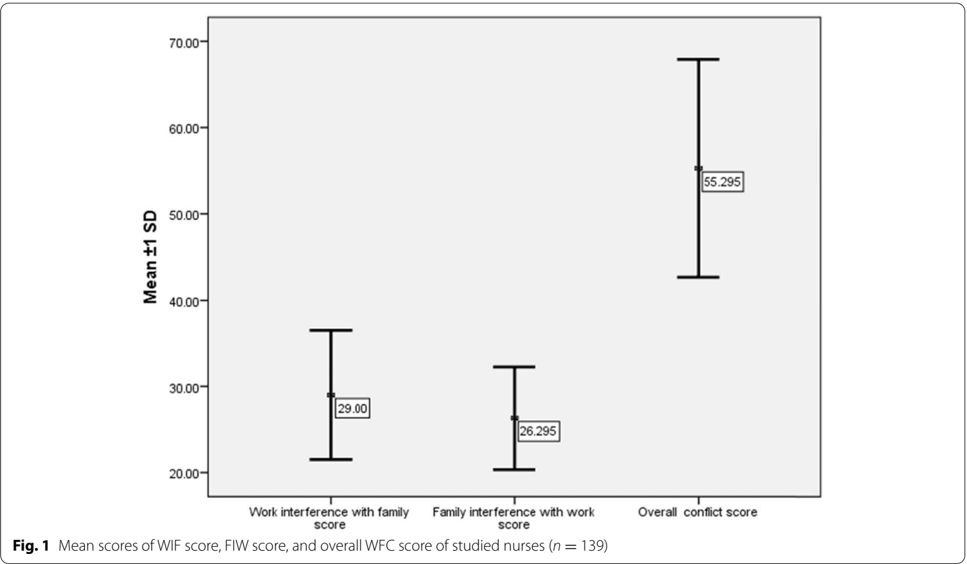
“[4] found that, the WIF mean score was 23.”
BackgroundTang, K. (2014) · Scandinavian Journal of Work, Environment & Health · doi:10.5271/sjweh.3431 · Cited by 70
Work-Family Conflict, Sleep, and Mental Health of Nursing Assistants Working in Nursing Homes
Zhang, Y., Punnett, L., & Nannini, A. (2016) · Workplace Health & Safety · doi:10.1177/2165079916665397 · Cited by 70
Zhang, Y., Duffy, J. F., & De Castillero, E. R. (2017) · Journal of Psychiatric and Mental Health Nursing · doi:10.1111/jpm.12409 · Cited by 66 · cited 5×
“001) [3], as well as between sleep disturbances and depressed symptoms (model 3, R2 = .”
BackgroundResultInfluentialWeaver, A. L., Stutzman, S. E., Supnet, C. B., & Olson, D. M. (2015) · International Emergency Nursing · doi:10.1016/j.ienj.2015.08.003 · Cited by 64
Work-Family Conflict, Psychological Distress, and Sleep Deficiency among Patient Care Workers
Jacobsen, H. B., Rème, S. E., Sembajwe, G. N., Hopcia, K. L., Stoddard, A. M., Kenwood, C. T., Stiles, T. C., Sorensen, G., & Buxton, O. M. (2014) · Workplace Health & Safety · doi:10.1177/216507991406200703 · Cited by 60
Cheng, S.-Y., Lin, P., Chang, Y., Lin, Y., Lee, P., & Chen, S. (2018) · Journal of Nursing Management · doi:10.1111/jonm.12694 · Cited by 58 · cited 2×
“3% of nurses working in teaching medical centers in Taiwan reported poor sleep quality [30].”
BackgroundPsychological Distress and Sleep Disturbance Among Female Nurses: Anxiety or Depression?
Chueh, K., Chen, K., & Lin, Y. T. (2019) · Journal of Transcultural Nursing · doi:10.1177/1043659619881491 · Cited by 55 · cited 13×
“Chueh KH, Chen KR, Lin YH (2021) Psychological distress and sleep disturbance among female nurses: anxiety or depression?”
BackgroundResultInfluentialLiu, K., Yin, T., & Shen, Q. (2020) · Applied Nursing Research · doi:10.1016/j.apnr.2020.151250 · Cited by 48 · cited 4×
“As well, previous and recent researches conducted in China indicated that work–family conflict was more significant than family–work conflict [18, 31].”
BackgroundResultInfluentialDepression among Iranian nurses: A systematic review and meta-analysis
Shahri, S. S. S., Ghashghaee, A., Behzadifar, M., Bragazzi, N. L., Behzadifar, M., Mousavinejad, N., Ghaemmohamadi, M. S., Ebadi, F., & Seyedin, H. (2017) · Medical Journal of the Islamic Republic of Iran · doi:10.14196/mjiri.31.130 · Cited by 46
Sleep problems and depression in Iranian nurses: The predictive role of workaholism
Ariapooran, S. (2018) · Iranian Journal of Nursing and Midwifery Research · doi:10.4103/ijnmr.ijnmr_188_17 · Cited by 43 · cited 3×
“This result is consistent with that of a research about sleep disturbance and depression in Iranian nurses, which revealed that age was positively associated with depression [27].”
BackgroundResultInfluentialWork-family conflict and sleep disturbance: the Malaysian working women study
AAZAMI, S., MOZAFARI, M., SHAMSUDDIN, K., & AKMAL, S. (2016) · INDUSTRIAL HEALTH · doi:10.2486/indhealth.2015-0086 · Cited by 36 · cited 2×
“Working women’s sleep disturbance is greatly increased when their WFCs have a high level of different dimensions [13].”
BackgroundComorbidity of poor sleep and primary headaches among nursing staff in north China
Wang, Y., Xie, J., Yang, F., Wu, S., Wang, H., Zhang, X., Liu, H., Deng, X., Xie, W., & Yu, S. (2015) · The Journal of Headache and Pain · doi:10.1186/s10194-015-0571-z · Cited by 33 · cited 1×
“7% [38], an even higher prevalence of 65% among nursing professionals in Southeastern Brazil [39], and the prevalence of 46% among South Indian nurses [40].”
BackgroundSleep disturbance and its association with quality of life among psychiatric nurses in China
Lu, L., Lok, K.-I., Zhang, Q., Zhang, L., Xiang, Y., Ungvari, G. S., Hall, B. J., An, F., & Xiang, Y. (2021) · PeerJ · doi:10.7717/peerj.10659 · Cited by 26 · cited 1×
“Nurses who do not get enough sleep have a higher risk of depression, poor interpersonal relationships, burnout, and even medical errors [16].”
BackgroundThe sleep quality of nurses and its influencing factors
Tarhan, M., Aydın, A., Ersoy, E., & Dalar, L. (2018) · Eurasian Journal of Pulmonology · doi:10.4103/ejop.ejop_35_18 · Cited by 23 · cited 2×
“9% of the nurses reported poor sleep quality [45].”
BackgroundWork–family conflict as a stressor in the lifestyle of nurses: A content analysis
Mahmoodi‐Shan, G. R., & Alhani, F. (2018) · Journal of Nursing and Midwifery Sciences · doi:10.4103/jnms.jnms_26_18 · Cited by 17 · cited 2×
“This finding is consistent with that of a study conducted in Iran, which showed that family influences include family members’ expectations of the nurse, as well as conflicts between family and professional roles [21].”
BackgroundResultAlAmer, M., Shdaifat, E. A., Alshowkan, A. A., Gamal-Eldeen, A. M. M., & Jamama, A. (2020) · The Open Nursing Journal · doi:10.2174/1874434602014010029 · Cited by 16
Beshai, S., Dobson, K. S., & Adel, A. (2013) · Middle East Current Psychiatry · doi:10.1097/01.xme.0000433324.92161.6d · Cited by 13
Study of Insomnia, Day Time Sleepiness and Sleep Quality among South Indian Nurses
Khade, Y., Behera, S., Parvathi, R., & Korradi, S. (2018) · JOURNAL OF CLINICAL AND DIAGNOSTIC RESEARCH · doi:10.7860/jcdr/2018/32602.11392 · Cited by 12 · cited 1×
“7% [38], an even higher prevalence of 65% among nursing professionals in Southeastern Brazil [39], and the prevalence of 46% among South Indian nurses [40].”
BackgroundSleep quality among nurses in a tertiary hospital in Manipur
Konjengbam, S., & Christina, S. (2019) · Journal of Medical Society · doi:10.4103/jms.jms_80_20 · Cited by 10 · cited 6×
“Similarly, another research conducted in a tertiary hospital located in Imphal, Manipur, India, found no difference between nurses who performed only day shifts and those whose shifts included night, with regard to sleep quality [11].”
BackgroundResultInfluentialRahmatika, D. F., & Parahyanti, E. (2018) · Universitas Indonesia International Psychology Symposium for Undergraduate Research (UIPSUR) · doi:10.2991/uipsur-17.2018.15 · Cited by 6 · cited 2×
“The WIF occurs when a person’s job role has a negative impact on his/her home/family role, while FIW occurs when problems and troubles from home/family follow them to work and obstruct their work role [5].”
BackgroundResult
Research works printed but not linked: 5
- Chen SS, Zheng DY, Chen QY (2017) Study on the relationship between work-family conflict and sleep quality for operating room nurses. Hospital Manag Forum 34(6):44-47 http:// www. oaj. pku. edu. cn/ wk3/ yygllt/ EN/ Y2017/ V34/ I6/ 44
- Guo YA, Xu L, Wang PL, Zou LL, Bao SS (2018) Work-family conflict and associated factors among nurses at different reproductive states. J Nurs Sci 33(19):58-60
- Li Y, Li XF, Xie L, Shao L, Dong Y (2018) Analytical survey to assess factors associated with sleep quality in registered medical nurses in tertiary first- class hospitals in Shenyang. J China Med Univ 47(7):666-669. https:// doi. org/ 10. 12007/j. issn. 0258-464 · doi:10.12007/j.issn.0258-464
- Han Y, Yuan Y, Zhang L, Fu Y (2016) Sleep disorder status of nurses in general hospitals and its influencing factors. Psychiatr Danub 28:176-183 https:// hrcak. srce. hr/ file/ 258835
- Lallukka T, Rahkonen O, Lahelma E, Arber S (2010) Sleep complaints in middle-aged women and men: the contribution of working conditions and work-family conflicts. J Sleep Res 19:466-477. https:// doi. org/ 10. 1111/j. 1365-2869. 2010. 00821 · doi:10.1111/j.1365-2869.2010.00821
Cited by
Morales-García, W. C., Vallejos, M. A., Sairitupa-Sanchez, L. Z., Morales-García, S. B., Rivera‐Lozada, O., & Morales-García, M. (2024) · Frontiers in Public Health · doi:10.3389/fpubh.2024.1268336 · Cited by 85
Safe limits on work hours for the nursing profession: a rapid evidence review
Scott-Marshall, H. K. (2024) · Frontiers in Global Women s Health · doi:10.3389/fgwh.2024.1455422 · Cited by 53
Yu, Q., Huang, C., Tian, Y., Yang, J., Li, X., Ning, M., Chen, Z., Du, J., He, J., & Li, Y. (2024) · BMC Nursing · doi:10.1186/s12912-024-02005-9 · Cited by 32
Zhang, Y., Dugan, A. G., Ghaziri, M. E., Siddique, S., & Punnett, L. (2023) · Workplace Health & Safety · doi:10.1177/21650799221139998 · Cited by 33
“Work–family conflict was positively associated with depression, as previously reported in studies of hospital nurses (Mohamed et al., 2022; Zhang, Duffy, & De Castillero, 2017) and in other occupational groups within the healthcare sector (Guille et al.”
ResultAhmadzadeh-Zeidi, M. J., Rooddehghan, Z., & Haghani, S. (2024) · BMC Nursing · doi:10.1186/s12912-024-02556-x · Cited by 14
Metadata
- Authors
- Mohamed, B. E. S., Ghaith, R. F. A. H., & Ahmed, H. A. A.
- Affiliations
- Zagazig University (EG)
- Corresponding author
- Ahmed, Hanem Ahmed AbdElkhalek
- Venue
- Middle East Current Psychiatry
- Published
- 2022-03-02
- Volume
- 29
- Issue
- 1
- ISSN
- 2090-5408 (ISSN-L)
- 2090-5416
- OpenAlex
- W4214857237
- Cited by
- 22
- References
- 47
- Citations by year
- 2026: 2 · 2025: 6 · 2024: 9 · 2023: 5
- FWCI
- 7.20
- Type
- journal article
- Language
- en
- Open access
- diamond
- doi.org
- Licence
- cc-by
- creativecommons.org/licenses/by/4.0 (tdm)
- creativecommons.org/licenses/by/4.0 (vor)
- Locations
- Middle East Current Psychiatry (publishedVersion, cc-by)
- DOAJ (DOAJ: Directory of Open Access Journals) (submittedVersion, cc-by-sa)
- Funders
- no funder
- Topics
- Social Sciences › Sociology and Political Science › Work-Family Balance Challenges
- Health Sciences › Medicine › Public Health, Environmental and Occupational Health › Occupational Health and Burnout
- Social Sciences › Psychology › Experimental and Cognitive Psychology › Sleep and Work-Related Fatigue
- Keywords
- work-family conflict, sleep quality, depressive symptoms, psychiatric nurses, psychiatric nursing, occupational stress, family interference with work, work interference with family, nurse mental health
About these checks
Registry, retraction, Cites and statistics results are computed, not judged, with one exception: a printed reference that no index lists is read once by a model before it counts as a citation error. Claims are extracted by a model and kept only when their quote appears verbatim in the text; each cited source is then checked, with a model’s help, for whether it says what the claim relies on. Those verdicts can be wrong — read the claim’s quote and the cited source before relying on one.
Statistics and arithmetic are recomputed, not judged.
Confidence bands are shown only for fields calibrated on our annotated test set. None is calibrated yet, so no band is shown.
What counts as a claim ›How we measure confidence ›How we check this ›
Are you an author, or do you see a problem with this page? Request a review
Data sources
Bibliographic data: Semantic Scholar, OpenAlex, Crossref.
Contains information from the Semantic Scholar Academic Graph Datasets, made available under the ODC Attribution License (ODC-BY 1.0).
Semantic Scholar’s data is described in: Kinney, R., et al. (2023). The Semantic Scholar Open Data Platform. arXiv:2301.10140.
