

The EZH2 selective inhibitor ZLD1039 attenuates UUO-induced renal fibrosis by suppressing YAP activation
Open accessThe DOI matches its Crossref record; 40 of the 40 references it cites were found in a registry or an index.
Abstract
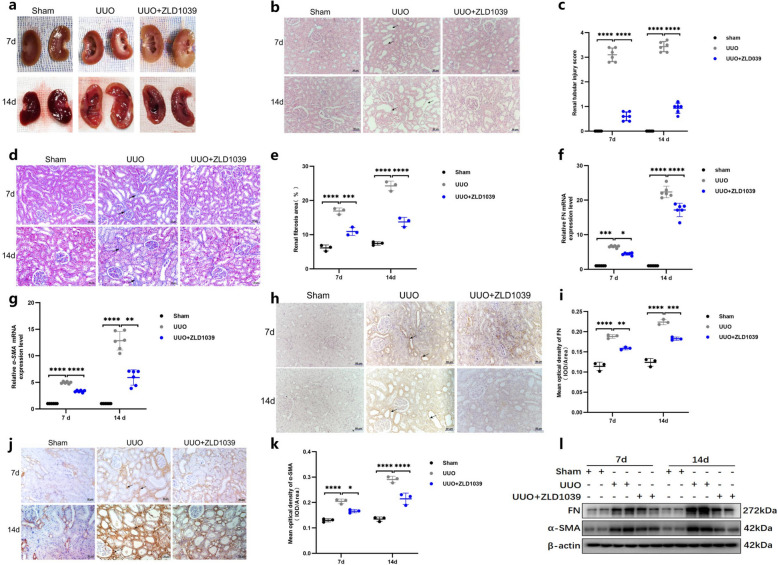
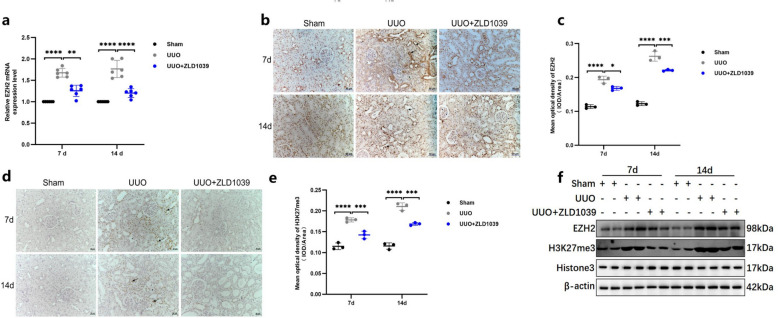
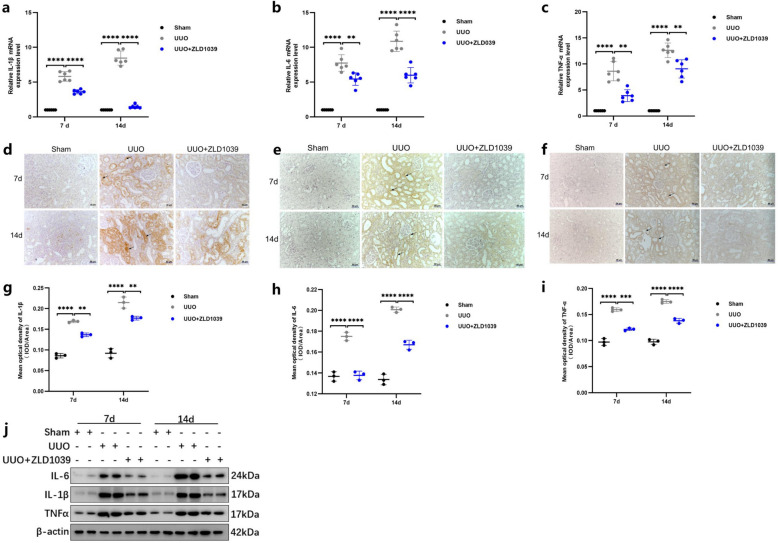
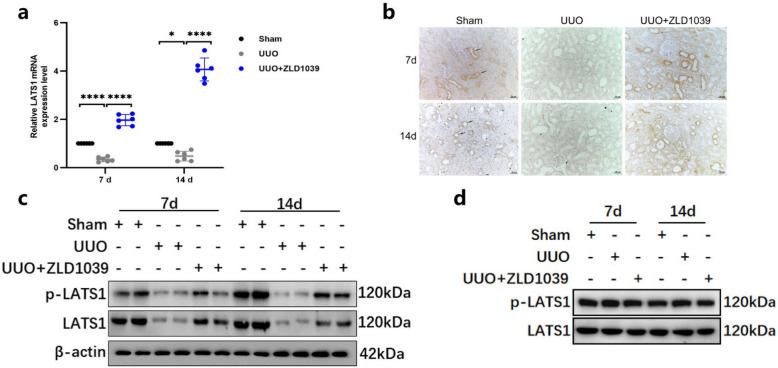
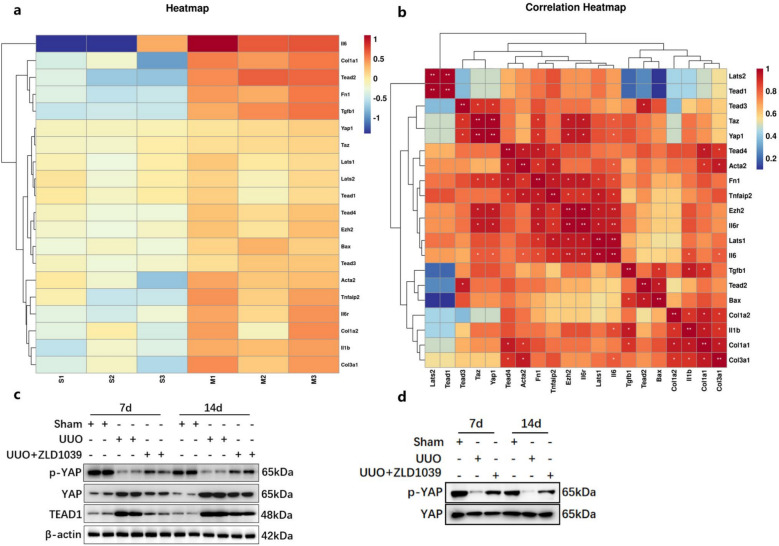
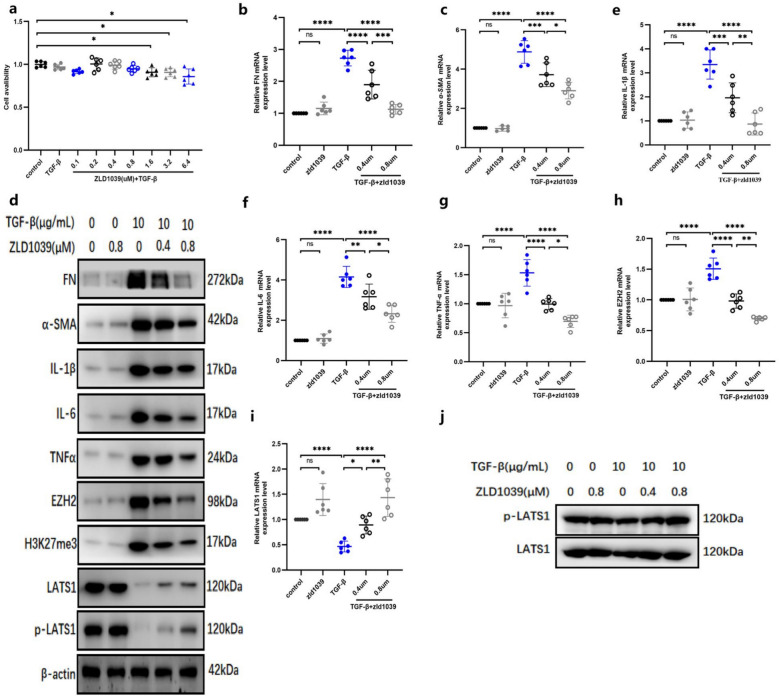
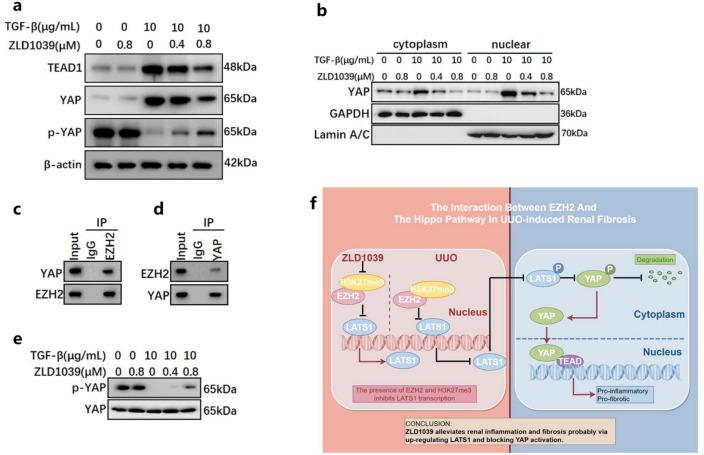
Renal fibrosis is a manifestation of the progression of chronic kidney disease (CKD) and chronic inflammation is a main driver in the development of renal fibrosis. Yes-associated protein (YAP), acting as a transcriptional co-activator within the Hippo signaling pathway, has been implicated in renal fibrosis. Enhancer of zeste homolog 2 (EZH2) exhibits high expression level in renal fibrosis induced by unilateral ureteral obstruction (UUO), yet the interplay between YAP and EZH2 in renal fibrosis remains to be elucidated. ZLD1039, a selective inhibitor of EZH2, has demonstrated protective effects against cancer and acute kidney injury (AKI). In this study, we conducted a systemic pharmacological investigation to determine if ZLD1039 treatment mitigates UUO-induced renal inflammation and fibrosis through modulation of the Hippo-YAP pathway. Our results revealed that UUO triggered renal inflammation and collagen deposition, with significant activation of YAP. Notably, ZLD1039 treatment effectively alleviated renal inflammation and fibrosis, while inhibiting the expression and nuclear translocation of YAP. Mechanically, we observed a notable down-regulation of large tumor suppressor homolog 1 (LATS1) in parallel with the up-regulation of EZH2. Furthermore, inhibition of EZH2 by ZLD1039 was linked to the up-regulation of LATS1 expression and YAP inactivation. Similarly, in vitro pharmacological inhibition of EZH2 by ZLD1039 resulted in elevated LATS1 expression and diminished YAP activation. Collectively, our findings suggest that ZLD1039, a selective inhibitor of EZH2, likely attenuates renal inflammation and fibrosis probably by up-regulating LATS1 and inhibiting YAP activation. This mechanistic link between EZH2 and YAP provides a fresh perspective on treating renal fibrosis.
Overview
The claims and statistics of this paper haven’t been checked yet.
Free: it reads the open-access text and checks the first 5 claims that cite a source we can check. Create a free account to check every claim.
Integrity signals
Registry
Cites
Statistics
Figures
Verification
Claims the paper makes
The claims and statistics of this paper haven’t been checked yet.
Free: it reads the open-access text and checks the first 5 claims that cite a source we can check. Create a free account to check every claim.
Claims other papers make about this one
Each is checked against this paper’s own text: does it say what the citing paper says it does?
The source backs part of the claim, not all of it — or backs it for a different population, condition or comparison.
In the citing paper
“These transcriptional co-activators recruit chromatin-modifying complexes to profibrotic gene loci (122).”
From The mechanotransduction-immune axis in organ fibrosis: dual regulatory mechanisms and translational therapeutic perspectives (2025) · doi:10.3389/fimmu.2025.1670213 · cites this paper as [122]
Experimental — accuracy not yet measuredIn the citing paper
“In fibrotic kidneys, upregulated EZH2-a histone methyltransferase-deposits the repressive mark H3K27me3 at the promoter of LATS1, a core inhibitor of the Hippo pathway.This epigenetic silencing promotes YAP nuclear translocation, which in turn reinforces EZH2 expression, forming a vicious cycle that amplifies fibrotic signaling (122).”
From The mechanotransduction-immune axis in organ fibrosis: dual regulatory mechanisms and translational therapeutic perspectives (2025) · doi:10.3389/fimmu.2025.1670213 · cites this paper as [122]
Self-check
Percentages, sums and reported differences re-computed from the paper’s own numbers.
The self-check needs the paper’s full text.
Citations
Cites
Hippo pathway in organ size control, tissue homeostasis, and cancer
Yu, F.-X., Zhao, B., & Guan, K.-L. (2015) · Cell · doi:10.1016/j.cell.2015.10.044 · Cited by 2,206
Renal tubule injury: a driving force toward chronic kidney disease
Liu, B.-C., Tang, T.-T., Lv, L.-L., & Lan, H.-Y. (2018) · Kidney International · doi:10.1016/j.kint.2017.09.033 · Cited by 913
Targeting the Hippo pathway in cancer, fibrosis, wound healing and regenerative medicine
Dey, A., Varelas, X., & Guan, K.-L. (2020) · Nature Reviews Drug Discovery · doi:10.1038/s41573-020-0070-z · Cited by 860 · cited 1×
“The transcriptional effectors YAP and TAZ are crucial members of the Hippo signaling pathway, and plays a crucial role in regulating cell proliferation, tissue regeneration, epithelial homeostasis, cell survival, and immune modulation [9, 10].”
Song, X., Gao, T., Wang, N., Feng, Q., You, X., Ye, T., Lei, Q., Zhu, Y., Xiong, M., Xia, Y., et al. (2016) · Scientific Reports · doi:10.1038/srep24893 · Cited by 714
Self-citationEditing the epigenome: technologies for programmable transcription and epigenetic modulation
Thakore, P. I., Black, J. B., Hilton, I. B., & Gersbach, C. A. (2016) · Nature Methods · doi:10.1038/nmeth.3733 · Cited by 451 · cited 1×
“Epigenetics, defined by heritable changes in gene expression or cell phenotype without altering the DNA sequence, encompasses DNA methylation, RNA interference and histone modification [13].”
The Role of Inflammation in CKD
Kadatane, S. P., Satariano, M., Massey, M., Mongan, K., & Raina, R. (2023) · Cells · doi:10.3390/cells12121581 · Cited by 322
Targeting renal fibrosis: Mechanisms and drug delivery systems
Nastase, M. V., Zeng-Brouwers, J., Wygrecka, M., & Schaefer, L. (2018) · Advanced Drug Delivery Reviews · doi:10.1016/j.addr.2017.12.019 · Cited by 302
Glomerulocystic kidney disease in mice with a targeted inactivation of Wwtr1
Hossain, Z., Ali, S. M., Ko, H. L., Xu, J., Ng, C. P., Guo, K., Qi, Z., Ponniah, S., Hong, W., & Hunziker, W. (2007) · Proceedings of the National Academy of Sciences · doi:10.1073/pnas.0605266104 · Cited by 297
Targeting innate immunity-driven inflammation in CKD and cardiovascular disease
Speer, T., Dimmeler, S., Schunk, S. J., Fliser, D., & Ridker, P. M. (2022) · Nature Reviews Nephrology · doi:10.1038/s41581-022-00621-9 · Cited by 232
Wang, Y., Li, H., Jiang, S., Fu, D., Lu, X., Lu, M., Li, Y., Luo, D., Wu, K., Xu, Y., et al. (2024) · Kidney International · doi:10.1016/j.kint.2024.04.016 · Cited by 203
Self-citationObstructive nephropathy and molecular pathophysiology of renal interstitial fibrosis
Nørregaard, R., Mutsaers, H. A. M., Frøkiær, J., & Kwon, T. (2023) · Physiological Reviews · doi:10.1152/physrev.00027.2022 · Cited by 181
Epigenetics in the pathogenesis of diabetic nephropathy
Li, X., Lu, L., Hou, W., Huang, T., Chen, X., Qi, J., Zhao, Y., & Zhu, M. (2021) · Acta Biochimica et Biophysica Sinica · doi:10.3724/abbs.2021016 · Cited by 156
Wang, Y., Li, Y., Chen, Z., Yuan, Y., Su, Q., Ye, K., Chen, C., Li, G., Song, Y., Chen, H., et al. (2022) · Cell Death & Disease · doi:10.1038/s41419-022-05138-4 · Cited by 127
Self-citationEGF Receptor–Dependent YAP Activation Is Important for Renal Recovery from AKI
Chen, J., You, H., Li, Y., Xu, Y., He, Q., & Harris, R. C. (2018) · Journal of the American Society of Nephrology · doi:10.1681/asn.2017121272 · Cited by 120
Li, B., Xia, Y., Mei, S., Ye, Z., Song, B., Yan, X., Lin, F., Rao, T., Yu, W., Mei, C., et al. (2023) · Theranostics · doi:10.7150/thno.83353 · Cited by 117
Chien, Y., Liu, L., Ye, H.-Y., Wu, J., & Yu, Y. (2018) · PubMed Central · Cited by 116
Li, L., Xiang, T., Guo, J., Guo, F., Wu, Y., Feng, H., Liu, J., Tao, S., Fu, P., & Ma, L. (2024) · Nature Communications · doi:10.1038/s41467-024-47315-3 · Cited by 111
Self-citationMicrobiome in Chronic Kidney Disease (CKD): An Omics Perspective
Lohia, S., Vlahou, A., & Zoidakis, J. (2022) · Toxins · doi:10.3390/toxins14030176 · Cited by 106
Zheng, Z., Li, C., Shao, G., Li, J., Xu, K., Zhao, Z., Zhang, Z., Liu, J., & Wu, H. (2021) · Cell Death and Disease · doi:10.1038/s41419-021-04041-8 · Cited by 103
Self-citationMechanistic insights into CKD-MBD-related vascular calcification and its clinical implications
Kaur, R., & Singh, R. (2022) · Life Sciences · doi:10.1016/j.lfs.2022.121148 · Cited by 92
Zhou, X., Chen, H., Hu, Y., Ma, X., Li, J., Shi, Y., Tao, M., Wang, Y., Zhong, Q., Yan, D., et al. (2023) · Cell Death and Disease · doi:10.1038/s41419-023-05782-4 · Cited by 92
McNeill, H., & Reginensi, A. (2017) · Journal of the American Society of Nephrology · doi:10.1681/asn.2016060611 · Cited by 76
Song, X., Gao, T., Wang, N., Feng, Q., You, X., Ye, T., Lei, Q., Zhu, Y., Xiong, M., Xia, Y., et al. (2016) · Scientific Reports · doi:10.1038/srep20864 · Cited by 69
Self-citationZhou, X., Xiong, C., Tolbert, E. M., Zhao, T. C., Bayliss, G. P., & Zhuang, S. (2018) · The FASEB Journal · doi:10.1096/fj.201800237r · Cited by 66
Liu, X., Li, C. X., Zhang, R., Xiao, W., Niu, X., Ye, X., Li, Z., Guo, Y., Tan, J., & Li, Y. (2018) · Cellular Signalling · doi:10.1016/j.cellsig.2018.08.011 · Cited by 65
Tubule-Specific Mst1/2 Deficiency Induces CKD via YAP and Non-YAP Mechanisms
Xu, C., Wang, L., Zhang, Y., Li, W., Li, J., Wang, Y., Meng, C., Qin, J., Zheng, Z., Lan, H. Y., et al. (2020) · Journal of the American Society of Nephrology · doi:10.1681/asn.2019101052 · Cited by 59
Epigenetics and Inflammation in Diabetic Nephropathy
Shao, B., Zhang, S., Li, H.-D., Meng, X., & Chen, H. (2021) · Frontiers in Physiology · doi:10.3389/fphys.2021.649587 · Cited by 59
Tsai, Y.-C., Hsieh, T., Liao, Y., Tsai, M., Lin, T., Lee, D., Park, J., Kim, D., Suszták, K., Yang, S., et al. (2024) · Journal of the American Society of Nephrology · doi:10.1681/asn.0000000000000428 · Cited by 55
Lou, X., Zhu, H.-T., Ning, L., Li, C., Li, S., Du, H., Zhou, X., & Xu, G. (2019) · Digestive Diseases and Sciences · doi:10.1007/s10620-019-05705-4 · Cited by 49
Dapagliflozin delays renal fibrosis in diabetic kidney disease by inhibiting YAP/TAZ activation
Feng, L., Chen, Y., Li, N., Yang, X., Zhou, L., Li, H., Wang, T., Xie, M., & Liu, H. (2023) · Life Sciences · doi:10.1016/j.lfs.2023.121671 · Cited by 46
Wen, L., Tao, S., Guo, F., Li, L.-Z., Yang, H., Liang, Y., Zhang, L., Ma, L., & Fu, P. (2021) · Acta Pharmacologica Sinica · doi:10.1038/s41401-021-00837-8 · Cited by 42
Self-citationWang, Q., Xu, L., Zhang, X., Liu, D., & Wang, R. (2020) · European Journal of Pharmacology · doi:10.1016/j.ejphar.2020.173076 · Cited by 35
Du, Z., Shi, X., & Guan, A. (2021) · Molecular Therapy — Nucleic Acids · doi:10.1016/j.omtn.2021.04.017 · Cited by 34
Zhang, J., Xu, Q., Ren, F., Liu, Y., Cai, R., Yao, Y., & Zhou, M.-S. (2021) · Canadian Journal of Physiology and Pharmacology · doi:10.1139/cjpp-2021-0033 · Cited by 22
Longitudinal kidney injury biomarker trajectories in children with obstructive uropathy
McLeod, D. J., Sebastião, Y. V., Ching, C. B., Greenberg, J. H., Furth, S. L., & Becknell, B. (2020) · Pediatric Nephrology · doi:10.1007/s00467-020-04602-7 · Cited by 20
Inhibition of EZH2 exerts antitumorigenic effects in renal cell carcinoma via LATS1
Hong, S. H., Hwang, H. J., Son, D. H., Kim, E. S., Park, S. Y., & Yoon, Y. E. (2023) · FEBS Open Bio · doi:10.1002/2211-5463.13579 · Cited by 15
Zhu, Y., Zhang, L., Song, X., Zhang, Q., Wang, T., Xiao, H., & Yu, L. (2023) · Biochemical Pharmacology · doi:10.1016/j.bcp.2023.115493 · Cited by 10
Self-citationThe Emerging Role of Epigenetic Methylation in Kidney Disease
Wen, L., Yang, H., Lin, L., Ma, L., & Fu, P. (2021) · Current Medicinal Chemistry · doi:10.2174/1573405617666211213110222 · Cited by 8
Self-citationKhales, S. A., Forghanifard, M. M., Abbaszadegan, M. R., & Hosseini, S. E. (2022) · Advances in Medical Sciences · doi:10.1016/j.advms.2022.11.002 · Cited by 6
Tubular MST1/2 Deletion and Renal Fibrosis
Chang-Panesso, M. (2020) · Journal of the American Society of Nephrology · doi:10.1681/asn.2020030305 · Cited by 4
Cited by
(2025) · doi:10.3389/fimmu.2025.1670213 · Cited by 29
He, M., Liang, L., Zhou, P., Lv, L., Hu, M., Pan, S., Zhang, M., Liu, Y., Liu, D., & Zhou, S. (2026) · Cellular and Molecular Life Sciences · doi:10.1007/s00018-026-06136-x · Cited by 3
FGFR1/YAP1 signaling in endothelial cells drives renal fibrosis and offers a therapeutic target
Jiang, X. M., Ren, Y., Yan, M., Li, M., Cao, H., & Shao, F. (2026) · Frontiers in Pharmacology · doi:10.3389/fphar.2026.1766265 · Cited by 2
Wu, M., Lin, P., Yan, Z., Wang, Y., Rinaldi, A., Cippà, P. E., Huang, D., Qiao, J., 杨爱东, Tan, B., et al. (2026) · Molecular Biomedicine · doi:10.1186/s43556-026-00617-y · Cited by 2
Wang, Q., Quan, L., Tang, J., Zeng, J., Wang, M., Huang, K., Chen, X., & Gan, F. (2026) · Ecotoxicology and Environmental Safety · doi:10.1016/j.ecoenv.2026.120294 · Cited by 2
Metadata
- Authors
- Xia, Q., Xu, F., Zhang, L., Ding, W., Liu, J., Liu, J., Chen, M., Ou, S., Xu, Y., & Wen, L.
- Affiliations
- Southwest Medical University (CN)
- West China Hospital of Sichuan University (CN)
- Corresponding author
- Ou, Santao
- Xu, Yong
- Wen, Li
- Venue
- Molecular Biomedicine
- Published
- 2025-06-06
- Volume
- 6
- Issue
- 1
- Pages
- 36-36
- ISSN
- 2662-8651 (ISSN-L)
- PMC
- PMC12144025
- OpenAlex
- W4411109894
- Cited by
- 7
- References
- 40
- Citations by year
- 2026: 6 · 2025: 1
- FWCI
- 3.47
- Type
- journal article
- Language
- en
- Open access
- gold
- doi.org
- Licence
- cc-by
- creativecommons.org/licenses/by/4.0 (tdm)
- creativecommons.org/licenses/by/4.0 (vor)
- Locations
- Molecular Biomedicine (publishedVersion, cc-by)
- PubMed Central (publishedVersion, cc-by)
- PubMed (publishedVersion)
- DOAJ (DOAJ: Directory of Open Access Journals) (submittedVersion, cc-by-sa)
- Funders
- Natural Science Foundation of Sichuan Province (2023NSFSC1530)
- Luzhou Science and Technology Bureau (2023JYJ018)
- School-Level Scientific Research Project of the Southwest Medical University (2022ZD005)
- Luzhou Science and Technology Program (2023JYJ008)
- China Postdoctoral Science Foundation (2023M742905)
- Topics
- Life Sciences › Biochemistry, Genetics and Molecular Biology › Cell Biology › Hippo pathway signaling and YAP/TAZ
- Health Sciences › Medicine › Nephrology › Chronic Kidney Disease and Diabetes
- Health Sciences › Medicine › Nephrology › Acute Kidney Injury Research
- Keywords
- EZH2 inhibitors, renal fibrosis, YAP activation, Hippo signaling pathway, LATS1, unilateral ureteral obstruction, renal inflammation, collagen deposition, chronic kidney disease, acute kidney injury
- MeSH terms
- Enhancer of Zeste Homolog 2 Protein, YAP-Signaling Proteins, Animals, Fibrosis, Kidney, Kidney Diseases, Male, Mice, Inbred C57BL, Transcription Factors, Ureteral Obstruction, Signal Transduction, Protein Serine-Threonine Kinases, Cell Cycle Proteins, Adaptor Proteins, Signal Transducing, Mice
About these checks
Registry, retraction, Cites and statistics results are computed, not judged, with one exception: a printed reference that no index lists is read once by a model before it counts as a citation error. Claims are extracted by a model and kept only when their quote appears verbatim in the text; each cited source is then checked, with a model’s help, for whether it says what the claim relies on. Those verdicts can be wrong — read the claim’s quote and the cited source before relying on one.
Statistics and arithmetic are recomputed, not judged.
Confidence bands are shown only for fields calibrated on our annotated test set. None is calibrated yet, so no band is shown.
What counts as a claim ›How we measure confidence ›How we check this ›
Are you an author, or do you see a problem with this page? Request a review
Data sources
Bibliographic data: Semantic Scholar, OpenAlex, Crossref.
Contains information from the Semantic Scholar Academic Graph Datasets, made available under the ODC Attribution License (ODC-BY 1.0).
Semantic Scholar’s data is described in: Kinney, R., et al. (2023). The Semantic Scholar Open Data Platform. arXiv:2301.10140.
