

Differential downstream signaling in microglia lacking Alzheimer’s-related TREM2 or its adaptor TYROBP/DAP12
Open accessThe DOI matches its Crossref record; 104 of the 105 references it cites were found in a registry or an index, and 1 are not checked yet; none of the 97 sources its claims cite is checked for support yet.
Abstract
Microglia, the primary immune cell in the brain, have multiple activation phenotypes involved in broad functions within the brain, playing roles in neurotoxicity/neuroprotection, release of inflammatory and anti-inflammatory cytokines, and in cell survival, proliferation, and phagocytosis. TREM2 and TYROBP form a transmembrane complex in microglia that modulates intracellular signaling networks, and these proteins are essential regulators of the transition from homeostatic to activated microglia. Recent findings support a TREM2-independent molecular signature that is involved in the early transition of homeostatic to disease-associated microglia (DAM), with the next sequential step of DAM activation from stage 1 to stage 2 being TREM2-dependent. However, the underlying mechanisms determining how TREM2 or TYROBP regulate these downstream phenotypes are largely unknown. We isolated primary microglia from C57BL/6 wild-type (WT) controls, Trem2 knock-out (KO), and Tyrobp KO mice at post-natal day 0–3. Cells were treated with Alzheimer’s disease (AD)-relevant stimuli, such as amyloid beta (Aβ) oligomers or fibrils, or ‘neuroinflammatory-like’ stimuli, such as lipopolysaccharide (LPS). We explored protein and gene expression in the presence or absence of inhibitors of the TREM2/TYROBP downstream signaling pathway. We also performed a high-throughput Olink proteomic analysis of conditioned media from WT, Trem2 KO, and Tyrobp KO stimulated with either LPS or Aβ oligomers or fibrils. Our results show that the absence of either TREM2 or TYROBP is associated with increased basal levels of phosphorylated ERK in primary microglia compared to WT controls. In addition, Trem2 KO and Tyrobp KO cells show a less ramified cell morphology at baseline, as compared to WT microglia. Moreover, stimulating primary microglia with either Aβ oligomers or LPS leads to differential protein and gene expression in cells lacking TREM2 or TYROBP. The dysregulated downstream signal transduction and morphology in the absence of TREM2 or TYROBP suggest their essential roles not only in microglial homeostasis but also in their activation in response to different stimuli. Graphical abstract
Checked 2026-11-27 · 1 reference not checked yet
Overview
CoChat Summary
TL;DR
In primary mouse microglia, loss of TREM2 or TYROBP produces overlapping baseline activation but distinct downstream signaling, transcriptomic, and secreted-protein responses to LPS and Aβ. The findings indicate TREM2 and TYROBP are not redundant in regulating microglial homeostasis and activation.
Key findings
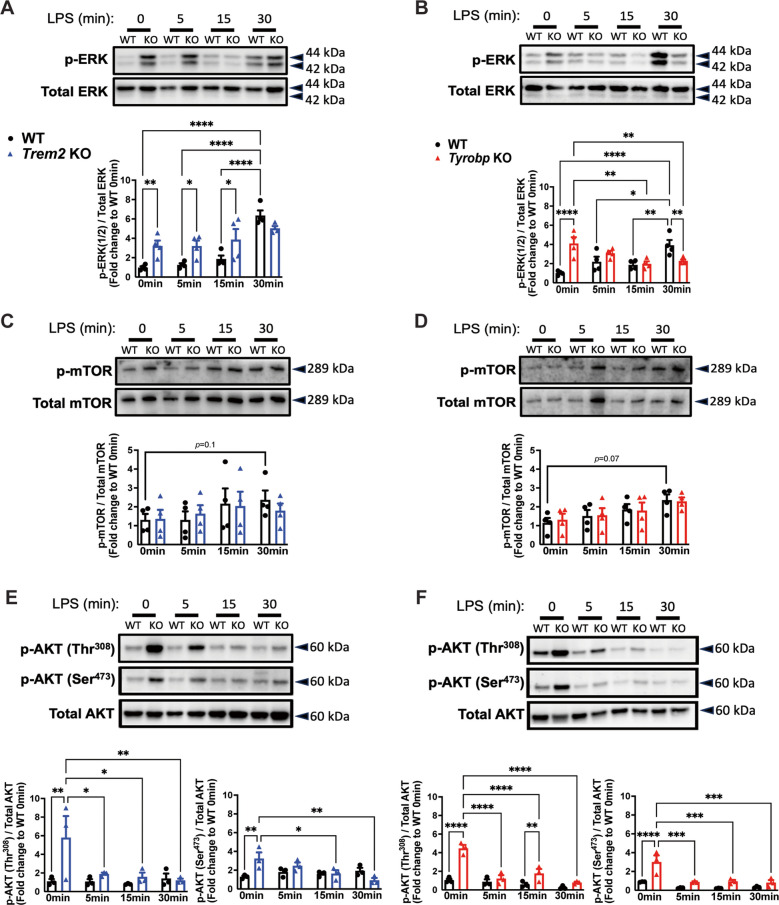
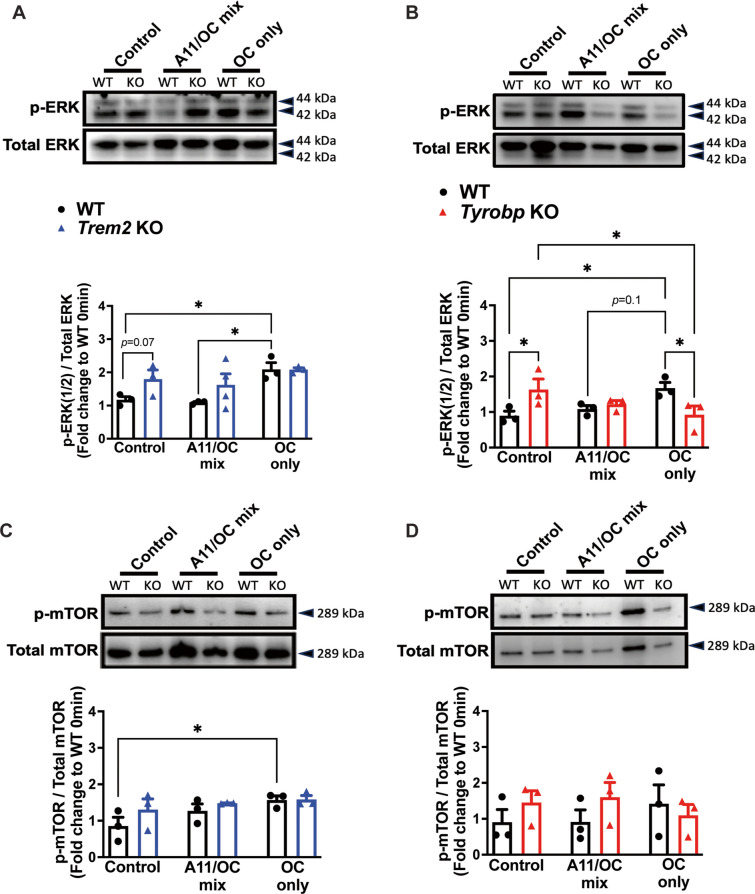
- At baseline, both Trem2 KO and Tyrobp KO microglia had increased p-ERK and p-AKT (Thr308 and Ser473) versus WT; p-Syk did not differ. After LPS, WT p-ERK increased, Trem2 KO p-ERK remained elevated with no change from baseline, and Tyrobp KO p-ERK decreased; after OC-only Aβ fibrils, WT p-ERK and p-mTOR increased, Trem2 KO showed no change, and Tyrobp KO p-ERK decreased.
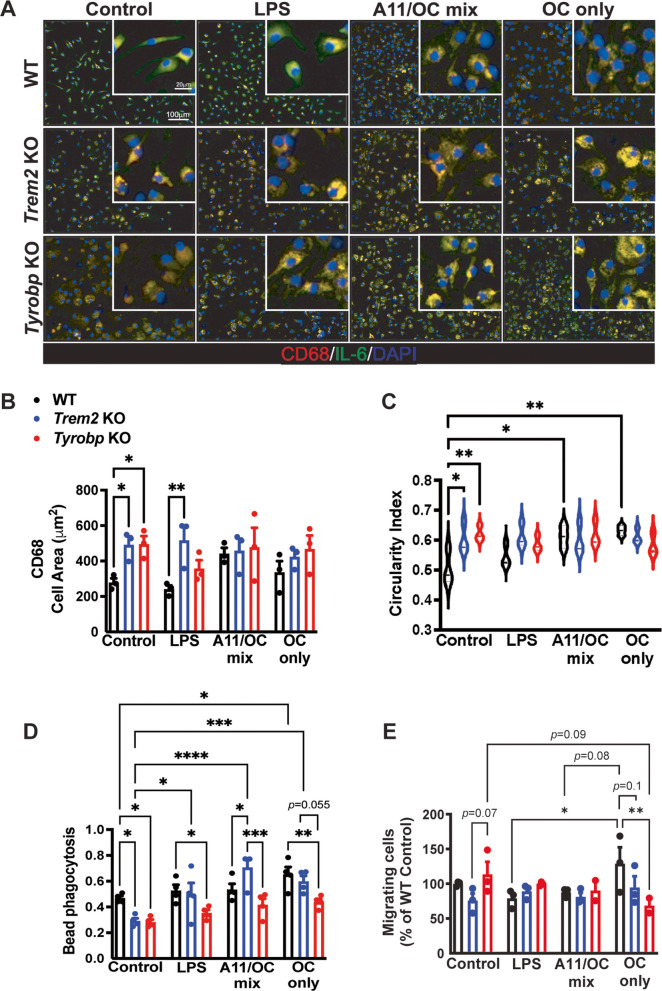
- Functionally, both KOs showed less ramified/amoeboid morphology and decreased bead phagocytosis at baseline versus WT. Upon LPS or Aβ stimulation, Trem2 KO microglia increased phagocytosis, while Tyrobp KO microglia did not; Tyrobp KO migration decreased after isolated Aβ fibrils, whereas WT and Trem2 KO motility did not significantly change.
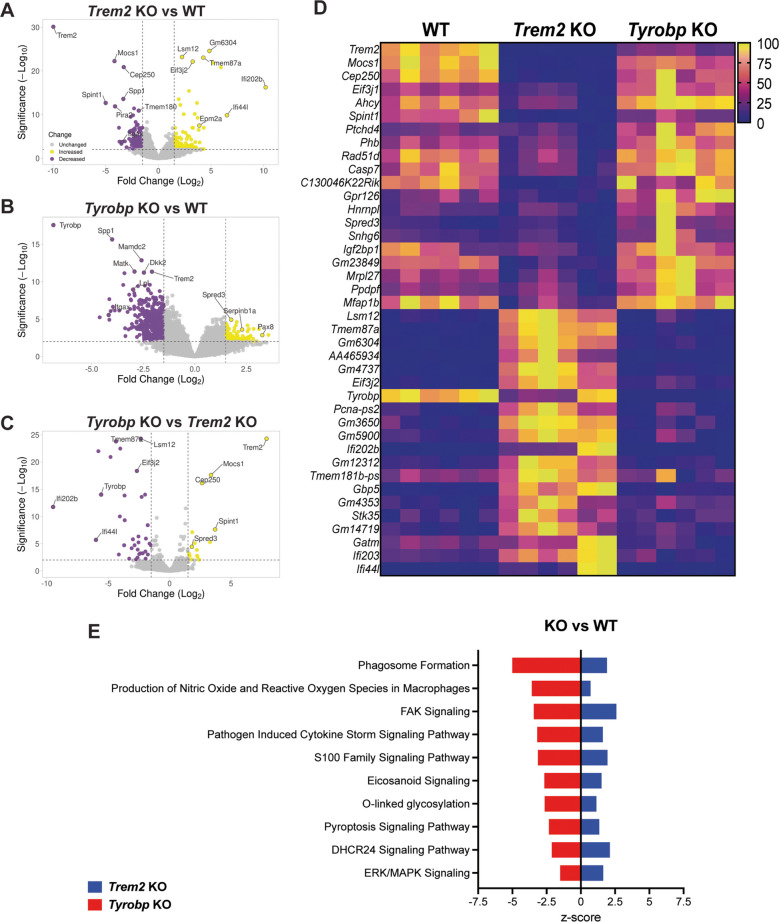
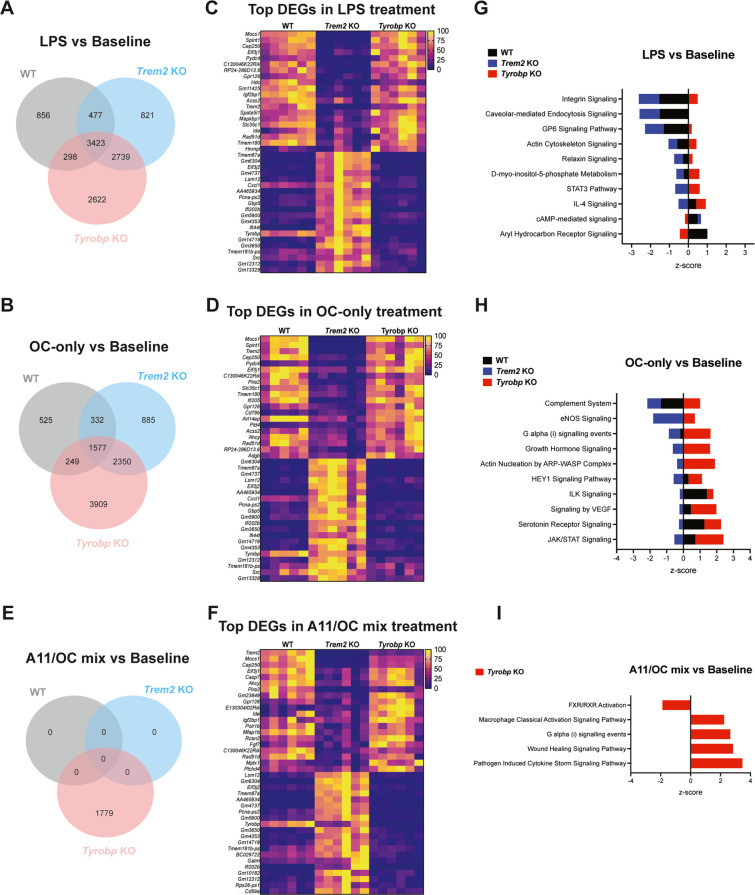
- RNA-seq at baseline identified 1190 downregulated and 1253 upregulated DEGs in Trem2 KO vs WT, 2676 downregulated and 2288 upregulated DEGs in Tyrobp KO vs WT, and 99 downregulated and 77 upregulated DEGs in Tyrobp KO vs Trem2 KO. After A11/OC mix, WT and Trem2 KO had no significant DEGs, while Tyrobp KO had 1779 DEGs.
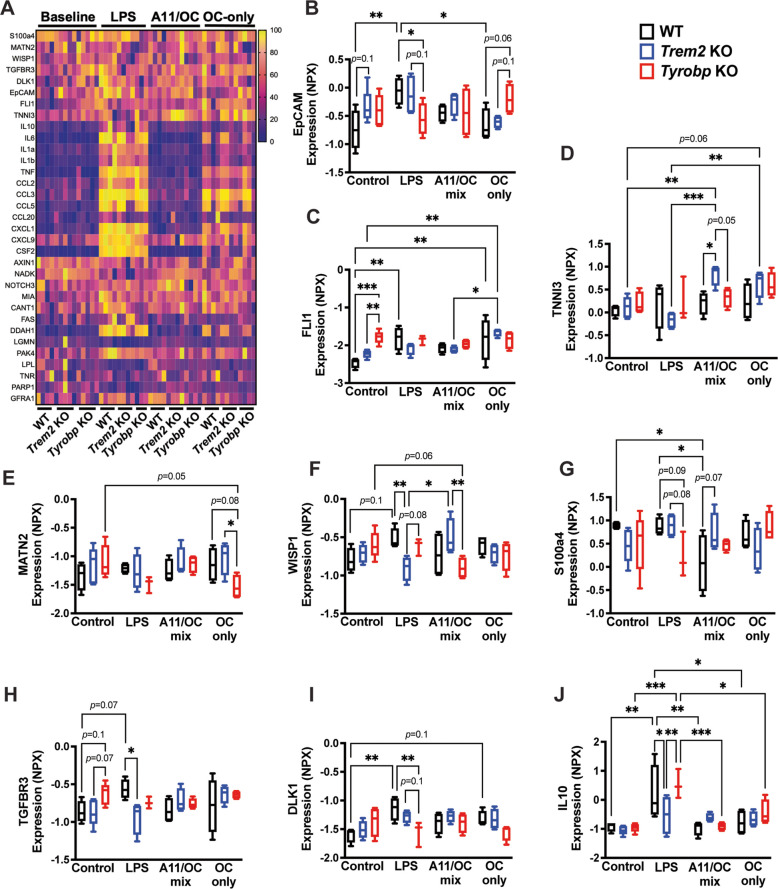
- Olink proteomics measured 92 proteins; 9 showed a significant genotype × treatment interaction, 5 a genotype main effect, and 20 a treatment main effect. IL-10 was lower in Trem2 KO conditioned media after LPS versus WT and Tyrobp KO; EpCAM was increased in Trem2 KO at baseline; Fli1 was increased in Tyrobp KO at baseline; WISP1 and MATN2 decreased in Tyrobp KO after Aβ oligomer/fibril mix versus Trem2 KO.
Methods
- Primary microglia were isolated from postnatal day 0–3 C57BL/6 WT, Trem2 KO, and Tyrobp KO mice using CD11b+ magnetic beads and seeded at 100,000 cells per well.
- Cells were treated with LPS, OC-type Aβ fibrils, or an A11/OC Aβ oligomer/fibril mixture, with or without inhibitors of Syk (BAY61-3606), TLR4 (TAK-242), or PP1/PP2A (okadaic acid); assays included morphology, phagocytosis, migration, Western blotting, RNA sequencing, and Olink proteomics.
- Statistical analysis used two-way ANOVA with Tukey’s multiple comparisons tests; RNA-seq DEGs were defined as log2 fold change > 1.5 and FDR < 0.05, with Ingenuity Pathway Analysis for canonical pathways.
Limitations
- The paper states that it used ex vivo microglia and in vitro treatments mimicking “neuroinflammation-like” and “AD-like” contexts, and notes that cultured postnatal microglia differ from acutely isolated adult microglia.
- The study isolated microglia without other cell types, which the authors state isolates microglia-intrinsic effects but lacks a physiologically relevant context; they call for future acutely isolated adult microglia or in situ models.
- The paper states it focused primarily on the canonical TREM2/TYROBP axis, although TYROBP can associate with other receptors and TREM2 can signal through other adaptors; evident from the text, there was no in vivo validation, and RNA-seq used two replicates from three independent experiments per group while Olink used n = 3–5 per genotype per condition.
Model-written summary. Check it against the paper before relying on it.
Integrity signals
Registry
Cites
Statistics
Figures
Verification
Claims the paper makes
0 Valid · 0 Not valid · 60 Not checked · 157 Own results and interpretations
A result the paper reports from its own data — it cites no other source for it, so there is none to check. The quote shows it is in the paper.
In the paper
“Like ERK, mTOR phosphorylation increased in response to OC-only treatment in WT microglia compared to controls (Fig. 3C).”
§ Differential downstream signaling in microglia lacking Alzheimer’s-related TREM2 or its adaptor TYROBP/DAP12 > Results > Aβ fibril stimulation increases ERK and mTOR phosphorylation in WT primary microglia, but not in Trem2 KO or Tyrobp KO microglia
plainstates a causen = 3- Asserted: passes — The authors put it forward as true.
- Checkable: passes — It can be checked against evidence.
- Load-bearing: passes — The paper’s conclusions depend on it.
- Based: passes — The paper gives a reason why it holds.
A result the paper reports from its own data — it cites no other source for it, so there is none to check. The quote shows it is in the paper.
In the paper
“Moreover, stimulating primary microglia with either Aβ oligomers or LPS leads to differential protein and gene expression in cells lacking TREM2 or TYROBP.”
§ Differential downstream signaling in microglia lacking Alzheimer’s-related TREM2 or its adaptor TYROBP/DAP12 > Abstract
plainstates a cause- Asserted: passes — The authors put it forward as true.
- Checkable: passes — It can be checked against evidence.
- Load-bearing: passes — The paper’s conclusions depend on it.
- Based: passes — The paper gives a reason why it holds.
None of the sources cited for this claim have been checked yet.
In the paper
“WT primary microglia, as reported [39, 40], showed an elongated uniformly ramified morphology with short processes and a small cell body at baseline (Fig. 1A).”
§ Differential downstream signaling in microglia lacking Alzheimer’s-related TREM2 or its adaptor TYROBP/DAP12 > Results > Trem2 KO and Tyrobp KO microglia show similar disruptions in cell morphology, phagocytosis, and migration at baseline, but present functional differences upon LPS or Aβ stimulation
What the sources say
- Not checked yetcites [39] Ngwa C, Qi S, Mamun AA, et al. Age and sex differences in primary microglia culture: a comparative study. J Neurosci Methods. 2021;364:109359. 34537225 PMC8551060 source
- Not checked yetcites [40] Meng J, Han L, Xu H, et al. TREM2 regulates microglial phagocytosis of synapses in innate immune tolerance. Int Immunopharmacol. 2024;127:111445. 38147777 source
plain- Asserted: passes — The authors put it forward as true.
- Checkable: passes — It can be checked against evidence.
- Load-bearing: passes — The paper’s conclusions depend on it.
- Based: passes — The paper gives a reason why it holds.
A result the paper reports from its own data — it cites no other source for it, so there is none to check. The quote shows it is in the paper.
In the paper
“Like LPS stimulation, ERK phosphorylation increased in WT primary microglia in response to a 24-h OC-only treatment (Fig. 3A, B).”
§ Differential downstream signaling in microglia lacking Alzheimer’s-related TREM2 or its adaptor TYROBP/DAP12 > Results > Aβ fibril stimulation increases ERK and mTOR phosphorylation in WT primary microglia, but not in Trem2 KO or Tyrobp KO microglia
plainstates a cause- Asserted: passes — The authors put it forward as true.
- Checkable: passes — It can be checked against evidence.
- Load-bearing: passes — The paper’s conclusions depend on it.
- Based: passes — The paper gives a reason why it holds.
A result the paper reports from its own data — it cites no other source for it, so there is none to check. The quote shows it is in the paper.
In the paper
“At the single-gene level, there were only 14 DEGs across both studies (Supplementary Fig. 8B).”
§ Differential downstream signaling in microglia lacking Alzheimer’s-related TREM2 or its adaptor TYROBP/DAP12 > Results > Lack of TREM2 or TYROBP showed large-scale changes in microglial gene expression at baseline
plain- Asserted: passes — The authors put it forward as true.
- Checkable: passes — It can be checked against evidence.
- Load-bearing: passes — The paper’s conclusions depend on it.
- Based: passes — The paper gives a reason why it holds.
93 more claims
Create a free account to see all 217 claims and to verify the 97 references still open.
- It may state two separate claims as one. 86
- Probably not a substantial claim. 54
Self-check
Percentages, sums and reported differences re-computed from the paper’s own numbers.
Each contradiction between two passages listed here was confirmed by an independent check.
Rated major: it would touch a result — a value a result rests on, reported and recomputed p-values on opposite sides of the significance level, two passages that conflict with no sign which is right, or a cited work retracted before this paper was published.
In the paper
§ Differential downstream signaling in microglia lacking Alzheimer’s-related TREM2 or its adaptor TYROBP/DAP12 > Results > Trem2 KO and Tyrobp KO microglia show similar disruptions in cell morphology, phagocytosis, and migration at baseline, but present functional differences upon LPS or Aβ stimulation
“upon different stimulations, WT and Trem2 KO microglial motility did not significantly change”
§ Differential downstream signaling in microglia lacking Alzheimer’s-related TREM2 or its adaptor TYROBP/DAP12 > Results > Trem2 KO and Tyrobp KO microglia show similar disruptions in cell morphology, phagocytosis, and migration at baseline, but present functional differences upon LPS or Aβ stimulation
“| Migration after stimulation | No change in LPS↑ in Aβ | No change from baseline | ↓ in Aβ |”
Rated major: it would touch a result — a value a result rests on, reported and recomputed p-values on opposite sides of the significance level, two passages that conflict with no sign which is right, or a cited work retracted before this paper was published.
In the paper
§ Differential downstream signaling in microglia lacking Alzheimer’s-related TREM2 or its adaptor TYROBP/DAP12 > Methods > Study design
“Toll-like receptor 4 (TLR4) inhibitor (5 µMTAK-242)”
§ Differential downstream signaling in microglia lacking Alzheimer’s-related TREM2 or its adaptor TYROBP/DAP12 > Results > Rapid TLR4 inhibition decreases ERK activation in LPS-stimulated Trem2 KO and Tyrobp KO primary microglia, while TLR4 inhibition increases ERK activation in WT microglia after 24 h
“pre-incubated for 4 h with a small molecule inhibitor of TLR4, TAK-242 (1μγ/mL)”
Rated minor: it would not touch a result — a value no result rests on, a p-value that stays on the same side of the significance level, or a conflict that is clerical, resolved elsewhere in the paper, or outside its own findings.
In the paper
§ Differential downstream signaling in microglia lacking Alzheimer’s-related TREM2 or its adaptor TYROBP/DAP12 > Results > Trem2 KO and Tyrobp KO microglia show similar disruptions in cell morphology, phagocytosis, and migration at baseline, but present functional differences upon LPS or Aβ stimulation
“After LPS stimulation, Tyrobp KO microglia showed a decrease in cell area quantified by CD68 staining”
§ Differential downstream signaling in microglia lacking Alzheimer’s-related TREM2 or its adaptor TYROBP/DAP12 > Results > Trem2 KO and Tyrobp KO microglia show similar disruptions in cell morphology, phagocytosis, and migration at baseline, but present functional differences upon LPS or Aβ stimulation
“| Morphology after stimulation | Amoeboid | No change from baseline | No change from baseline |”
Rated minor: it would not touch a result — a value no result rests on, a p-value that stays on the same side of the significance level, or a conflict that is clerical, resolved elsewhere in the paper, or outside its own findings.
In the paper
§ Differential downstream signaling in microglia lacking Alzheimer’s-related TREM2 or its adaptor TYROBP/DAP12 > Results > Trem2 KO and Tyrobp KO microglia show similar disruptions in cell morphology, phagocytosis, and migration at baseline, but present functional differences upon LPS or Aβ stimulation
“There were no differences in cell migration between Trem2 KO and Tyrobp KO compared to WT control microglia”
§ Differential downstream signaling in microglia lacking Alzheimer’s-related TREM2 or its adaptor TYROBP/DAP12 > Results > Trem2 KO and Tyrobp KO microglia show similar disruptions in cell morphology, phagocytosis, and migration at baseline, but present functional differences upon LPS or Aβ stimulation
“| Migration at baseline | ⎯ | ↓ | ↑ |”
Rated minor: it would not touch a result — a value no result rests on, a p-value that stays on the same side of the significance level, or a conflict that is clerical, resolved elsewhere in the paper, or outside its own findings.
In the paper
§ Differential downstream signaling in microglia lacking Alzheimer’s-related TREM2 or its adaptor TYROBP/DAP12 > Results > Rapid TLR4 inhibition decreases ERK activation in LPS-stimulated Trem2 KO and Tyrobp KO primary microglia, while TLR4 inhibition increases ERK activation in WT microglia after 24 h
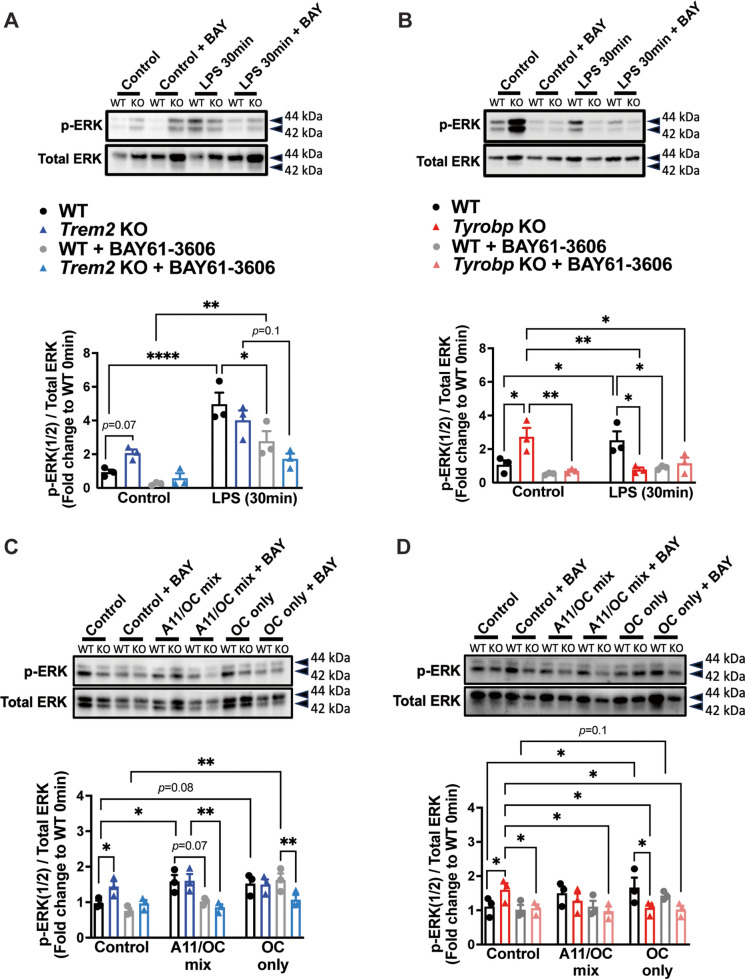
“After LPS stimulation, TLR4 inhibition decreased ERK phosphorylation in all of the groups”
§ Differential downstream signaling in microglia lacking Alzheimer’s-related TREM2 or its adaptor TYROBP/DAP12 > Results > PP1/PP2A inhibitor increases ERK activation in LPS-stimulated WT cells with no differences in Trem2 KO or Tyrobp KO microglia
“| LPS + TAK-242 | ↓ from LPS stimulation | ↓ from LPS stimulation | No change fromLPS stimulation |”
Citations
Cites
STAR: ultrafast universal RNA-seq aligner
Dobin, A., Davis, C. A., Schlesinger, F., Drenkow, J., Zaleski, C., Jha, S., Batut, P., Chaisson, M., & Gingeras, T. R. (2013) · Bioinformatics · doi:10.1093/bioinformatics/bts635 · Cited by 51,709
limma powers differential expression analyses for RNA-sequencing and microarray studies
Ritchie, M. E., Phipson, B., Wu, D., Hu, Y., Law, C. W., Shi, W., & Smyth, G. K. (2015) · Nucleic Acids Research · doi:10.1093/nar/gkv007 · Cited by 40,458
voom: precision weights unlock linear model analysis tools for RNA-seq read counts
Law, C. W., Chen, Y., Shi, W., & Smyth, G. K. (2014) · Genome Biology · doi:10.1186/gb-2014-15-2-r29 · Cited by 6,155
Causal analysis approaches in Ingenuity Pathway Analysis
Krämer, A., Green, J., Pollard, J., & Tugendreich, S. (2014) · Bioinformatics · doi:10.1093/bioinformatics/btt703 · Cited by 5,724
A Unique Microglia Type Associated with Restricting Development of Alzheimer’s Disease
Keren-Shaul, H., Spinrad, A., Weiner, A., Matcovitch-Natan, O., Dvir-Szternfeld, R., Ulland, T. K., David, E., Baruch, K., Lara-Astaiso, D., Toth, B., et al. (2017) · Cell · doi:10.1016/j.cell.2017.05.018 · Cited by 5,493
Cellpose: a generalist algorithm for cellular segmentation
Stringer, C., Wang, T., Michaelos, M., & Pachitariu, M. (2021) · Nature Methods · doi:10.1038/s41592-020-01018-x · Cited by 4,369
Alzheimer Disease: An Update on Pathobiology and Treatment Strategies
Long, J. M., & Holtzman, D. M. (2019) · Cell · doi:10.1016/j.cell.2019.09.001 · Cited by 3,204
Krasemann, S., Madore, C., Cialic, R., Baufeld, C., Calcagno, N., El Fatimy, R., Beckers, L., O’Loughlin, E., Xu, Y., Fanek, Z., et al. (2017) · Immunity · doi:10.1016/j.immuni.2017.08.008 · Cited by 2,979
Identification of a unique TGF-β–dependent molecular and functional signature in microglia
Butovsky, O., Jedrychowski, M. P., Moore, C. S., Cialic, R., Lanser, A. J., Gabriely, G., Koeglsperger, T., Dake, B., Wu, P. M., Doykan, C. E., et al. (2014) · Nature Neuroscience · doi:10.1038/nn.3599 · Cited by 2,543
Decreased Clearance of CNS β-Amyloid in Alzheimer’s Disease
Mawuenyega, K. G., Sigurdson, W., Ovod, V., Munsell, L., Kasten, T., Morris, J. C., Yarasheski, K. E., & Bateman, R. J. (2010) · Science · doi:10.1126/science.1197623 · Cited by 2,078
Cited by
The role of DAP12 in immune-related inflammatory diseases
Lu, J., Shi, L., Jin, G., Yang, Y., Zhu, F., & Zhou, G. (2026) · Inflammation Research · doi:10.1007/s00011-026-02256-z · Cited by 3
de Souza, M. R. M., Lindner, M. R., Mladinich, M. C., Gorbunova, E. E., Kirillov, V., Byrne, A. G., Laird, A. Y., Finnerty, C. E., Ikeda, P., Vorkas, C. K., et al. (2026) · mBio · doi:10.1128/mbio.01294-26 · Cited by 2
Microglial CD31 suppresses Aβ clearance and promotes Alzheimer pathology in 5×FAD mice
Zhou, Q., Sun, F., Zhang, Y., Cao, X., Li, M., Yu, H., Jiang, T., Li, S., Wang, W., Xie, J., et al. (2026) · Nature Communications · doi:10.1038/s41467-026-74037-5 · Cited by 2
Assessing microglial phagocytosis of apoptotic neurons in vitro: a multimodal approach
Mukwaya, A., Yin, Z., Yarcusko, R., Baldwin, G., Uddin, M. N., Venkat, H., Xue, Y., Arnam, N. S. V., Kam, H., Chen, D. F., et al. (2026) · Frontiers in Neuroscience · doi:10.3389/fnins.2026.1813556
Pal, A., Arif, S., Karthikeyan, I., Waisberg, E., & Guarnieri, J. W. (2026) · bioRxiv (Cold Spring Harbor Laboratory) · doi:10.64898/2026.06.03.729900
Veenstra, B. J., Nelson, K., Elder, T. R., Turner, J. R., & McLaurin, K. A. (2026) · bioRxiv (Cold Spring Harbor Laboratory) · doi:10.64898/2026.10.25.761659
Dey, S., Rachamala, H. K., Angom, R. S., & Marepally, S. K. (2026) · Frontiers in Immunology · doi:10.3389/fimmu.2026.1975066
Metadata
- Authors
- Farias Quipildor, G. E., Belfiore, R., Althobaiti, K., Najarzadeh, Z., Glabe, C., Readhead, B. P., Gandy, S., Salton, S. R. J., & Ehrlich, M. E.
- Affiliations
- Critical Path Institute (US)
- Icahn School of Medicine at Mount Sinai (US)
- University of California, Irvine (US)
- Arizona State University (US)
- Corresponding author
- Salton, Stephen R. J.
- Ehrlich, Michelle E.
- Venue
- Molecular Neurodegeneration Advances
- Published
- 2026-01-19
- Volume
- 2
- Issue
- 1
- Pages
- 8-8
- ISSN
- 3059-4944 (ISSN-L)
- PMC
- PMC12872638
- OpenAlex
- W7124759465
- Cited by
- 7
- References
- 103
- Citations by year
- 2026: 7
- FWCI
- 11.15
- Type
- journal article
- Language
- en
- Open access
- hybrid
- doi.org
- Licence
- cc-by
- creativecommons.org/licenses/by/4.0 (tdm)
- creativecommons.org/licenses/by/4.0 (vor, 16 d)
- Locations
- Molecular Neurodegeneration Advances (publishedVersion, cc-by)
- PubMed Central (publishedVersion, cc-by)
- Europe PMC (PubMed Central) (publishedVersion, cc-by)
- PubMed (publishedVersion)
- Funders
- National Institute on Aging (F32AG077881, U24AG079683, U01AG046170, RF1AG062661)
- BrightFocus Foundation (A2022007F)
- Cure Alzheimer's Fund
- Topics
- Life Sciences › Neuroscience › Neurology › Neuroinflammation and Neurodegeneration Mechanisms
- Life Sciences › Neuroscience › Cellular and Molecular Neuroscience › Alzheimer's disease research and treatments
- Life Sciences › Biochemistry, Genetics and Molecular Biology › Molecular Biology › Inflammasome and immune disorders
- Keywords
- TREM2, TYROBP, DAP12, microglia, Alzheimer's disease, disease-associated microglia, microglial activation, downstream signaling, ERK1/2 phosphorylation, amyloid-beta oligomers, amyloid-beta fibrils, lipopolysaccharide, microglial morphology, TREM2 knockout mice
About these checks
Registry, retraction, Cites and statistics results are computed, not judged, with one exception: a printed reference that no index lists is read once by a model before it counts as a citation error. Claims are extracted by a model and kept only when their quote appears verbatim in the text; each cited source is then checked, with a model’s help, for whether it says what the claim relies on. Those verdicts can be wrong — read the claim’s quote and the cited source before relying on one.
A language model drew the claims from the paper on 2026-11-27, under version 3 of the claim definition (model deepseek-v4.1-flash, prompt extract-v3).
A second model labelled each claim on 2026-11-27 (model jev-1.13-20260917, definition revision gold-guideline-v0.2).
Statistics and arithmetic are recomputed, not judged.
Confidence bands are shown only for fields calibrated on our annotated test set. None is calibrated yet, so no band is shown.
What counts as a claim ›How we measure confidence ›How we check this ›
Are you an author, or do you see a problem with this page? Request a review
Data sources
Bibliographic data: Semantic Scholar, OpenAlex, Crossref.
Contains information from the Semantic Scholar Academic Graph Datasets, made available under the ODC Attribution License (ODC-BY 1.0).
Semantic Scholar’s data is described in: Kinney, R., et al. (2023). The Semantic Scholar Open Data Platform. arXiv:2301.10140.
