

The DOI matches its Crossref record; the references it cites are not checked yet.
Lighten the Load: Scaffolding Visual Literacy in Biochemistry and Molecular Biology
Open accessAbstract
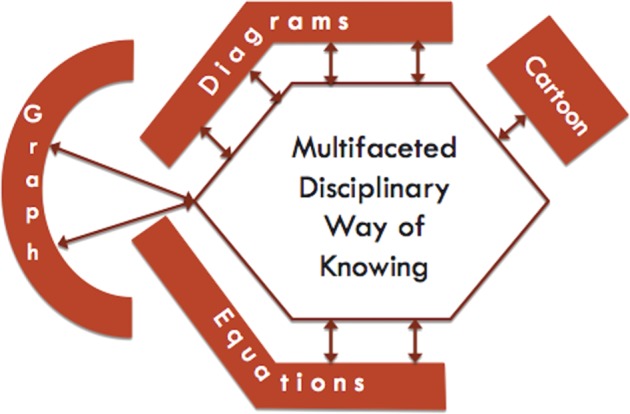
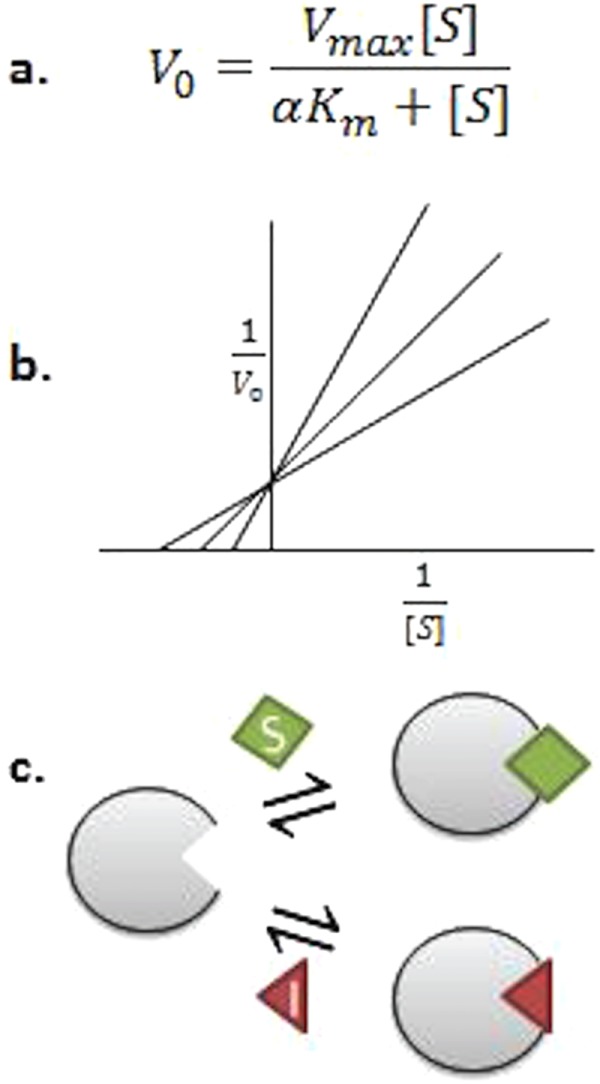
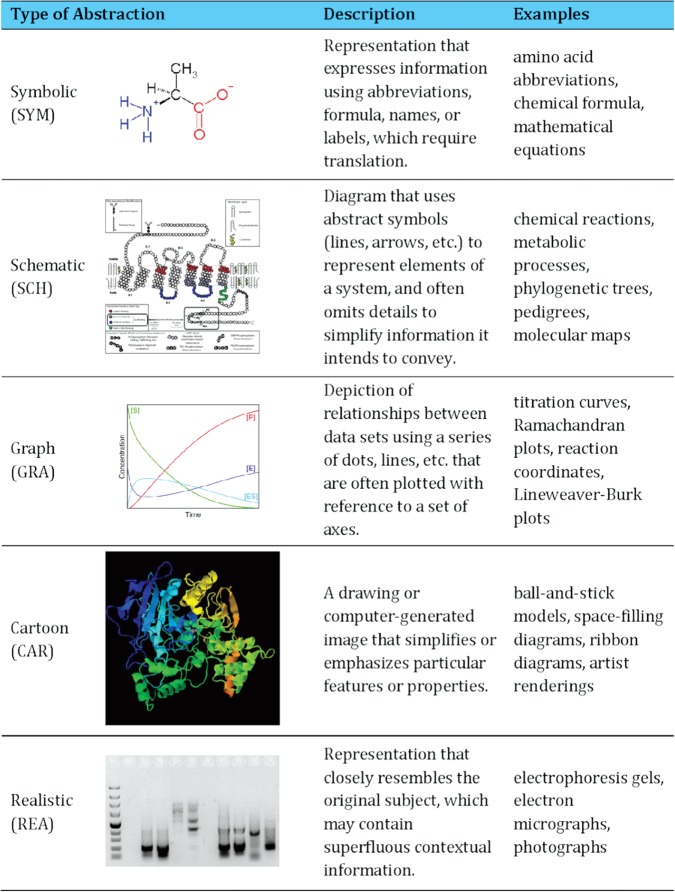
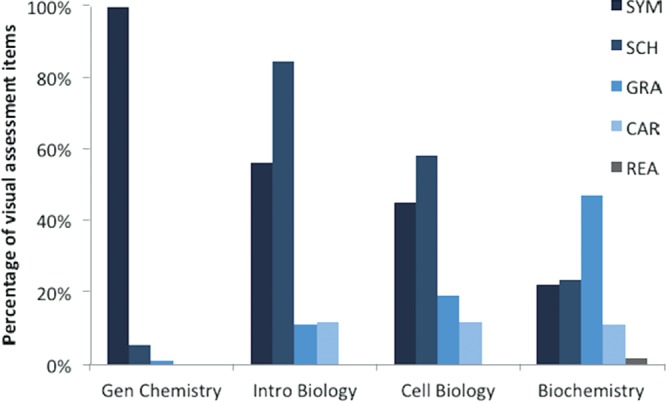
The development of scientific visual literacy has been identified as critical to the training of tomorrow’s scientists and citizens alike. Within the context of the molecular life sciences in particular, visual representations frequently incorporate various components, such as discipline-specific graphical and diagrammatic features, varied levels of abstraction, and spatial arrangements of visual elements to convey information. Visual literacy is achieved when an individual understands the various ways in which a discipline uses these components to represent a particular way of knowing. Owing to the complex nature of visual representations, the activities through which visual literacy is developed have high cognitive load. Cognitive load can be reduced by first helping students to become fluent with the discrete components of visual representations before asking them to simultaneously integrate these components to extract the intended meaning of a representation. We present a taxonomy for characterizing one component of visual representations—the level of abstraction—as a first step in understanding the opportunities afforded students to develop fluency. Further, we demonstrate how our taxonomy can be used to analyze course assessments and spur discussions regarding the extent to which the development of visual literacy skills is supported by instruction within an undergraduate biochemistry curriculum.
Overview
The claims and statistics of this paper haven’t been checked yet.
Run the check — free, no account needed. It reads the open-access text and checks the sources it cites.
Integrity signals
Registry
Cites
Statistics
Figures
Verification
Claims the paper makes
The claims and statistics of this paper haven’t been checked yet.
Run the check — free, no account needed. It reads the open-access text and checks the sources it cites.
Claims other papers make about this one
Each is checked against this paper’s own text: does it say what the citing paper says it does?
The source backs part of the claim, not all of it — or backs it for a different population, condition or comparison.
In the citing paper
“Scaffolding—the breaking down of a complex concept or task into smaller parts that can be structured with guidance for students—is a common instructional strategy that can improve students’ self-regulation of learning and student learning outcomes in STEM (Belland, 2016; Offerdahl et al., 2017; Sabel et al., 2017; Ewell et al., 2022).”
From Reading Primary Scientific Literature: Approaches for Teaching Students in the Undergraduate STEM Classroom (2023) · cites this paper as Offerdahl et al., 2017
Experimental — accuracy not yet measured
Self-check
Percentages, sums and reported differences re-computed from the paper’s own numbers.
The self-check needs the paper’s full text.
Citations
The citation lists haven’t been fetched yet
References 44 · Cited by 81
Research works printed but not linked: 60
- Ainsworth S, 2006, Learn Instr, 16, 183, 10.1016/j.learninstruc.2006.03.001 · DOI · Paper page
- Airey J, 2009, J Res Sci Teach, 46, 27, 10.1002/tea.20265 · DOI
- American Association for the Advancement of Science, 2011, Vision and Change in Undergraduate Biology Education: A Call to Action
- Avgerinou M, 1997, Br J Educ Technol, 28, 280, 10.1111/1467-8535.00035 · DOI
- Bamford A, 2003, The Visual Literacy White Paper
- Brooker RJ, 2008, Biology
- Campbell NA, 2008, Biology
- Duncan DB, 2011, J Microbiol Biol Educ, 12, 143, 10.1128/jmbe.v12i2.307 · DOI · Paper page
- Duncan RG, 2007, J Res Sci Teach, 44, 938, 10.1002/tea.20186 · DOI
- Freeman S, 2008, Biological Science, 3rd ed.
- Gabel D, 1998, International Handbook of Science Education, vol. 1, 223
- Gee JP, 2005, An Introduction to Discourse Analysis: Theory and Method, 2nd ed.
- Glaser BG, 1967, The Discovery of Grounded Theory: Strategies for Qualitative Research
- Grayson DJ, 2001, Int J Sci Educ, 23, 611, 10.1080/09500690119103 · DOI
- Halford GS, 2005, Psychol Sci, 16, 70, 10.1111/j.0956-7976.2005.00782.x · DOI
- Handelsman J, 2007, Scientific Teaching
- Henderson C, 2006, J Coll Sci Teach, 35, 46
- Kozma R, 2003, Learn Instr, 13, 205, 10.1016/S0959-4752(02)00021-X · DOI
- Kozma RB, 1997, J Res Sci Teach, 34, 949, 10.1002/(SICI)1098-2736(199711)34:9<949::AID-TEA7>3.0.CO;2-U · DOI
- Kress G, 2001, Multimodal Discourse: The Modes and Media of Modern Communication
- Marbach-Ad G, 2000, J Biol Educ, 34, 200, 10.1080/00219266.2000.9655718 · DOI
- Maykut PS, 1994, Beginning Qualitative Research: A Philosophic and Practical Guide
- Miller GA, 1956, Psych Rev, 63, 81, 10.1037/h0043158 · DOI · Paper page
- 10.1187/cbe.10-01-0001 · DOI
- Momsen JL, 2013, CBE Life Sci Educ, 9, 239, 10.1187/cbe.12-08-0130 · DOI
- National Academy of Sciences, National Academy of Engineering, and Institute of Medicine, 2009, On Being a Scientist: A Guide to Responsible Conduct in Research
- Nelson DL, 2008, Lehninger’s Principles of Biochemistry
- Offerdahl EG, 2014, Biochem Mol Biol Educ, 42, 29, 10.1002/bmb.20757 · DOI
- Postman N, 1971, Teaching as a Subversive Activity
- Raven PH, 2008, Biology
- Repapetilto, 2010, Wikimedia
- Retama, 2008, Wikimedia
- Roth WM, 2002, J Curric Stud, 34, 1, 10.1080/00220270110068885 · DOI
- Roth WM, 2013, Multiple Representations in Biological Education, 39, 10.1007/978-94-007-4192-8_3 · DOI
- Rybarczyk B, 2011, J Coll Sci Teach, 41, 106
- Sadava D, 2008, Life, the Science of Biology
- Schönborn KJ, 2006, Biochem Mol Biol Educ, 34, 94, 10.1002/bmb.2006.49403402094 · DOI
- Schönborn KJ, 2009, Int J Sci Educ, 31, 193, 10.1080/09500690701670535 · DOI
- Schönborn KJ, 2010, Biochem Mol Biol Educ, 38, 347, 10.1002/bmb.20436 · DOI
- Schönborn KJ, 2002, Biochem Mol Biol Educ, 30, 93, 10.1002/bmb.2002.494030020036 · DOI
- Shafee T, 2015, Wikimedia
- Starr C, 2008, Biology: The Unity and Diversity of Life
- Sussman JL, 2012, Wikimedia
- Taber KS, 2002, Chemical Misconceptions—Prevention, Diagnosis, and Cure
- Taber KS, 2013, Chem Educ Res Pract, 14, 156, 10.1039/C3RP00012E · DOI
- Talanquer V, 2011, Int J Sci Educ, 33, 179, 10.1080/09500690903386435 · DOI
- Tansey JT, 2013, Biochem Mol Biol Educ, 41, 289, 10.1002/bmb.20727 · DOI
- 10.1187/cbe.08-09-0055 · DOI
- Timmerman BC, 2013, Stud High Educ, 38, 693, 10.1080/03075079.2011.590971 · DOI
- Towns MH, 2012, Chem Educ Res Pract, 13, 296, 10.1039/C2RP00014H · DOI
- Trumbo J, 1999, Sci Commun, 20, 409, 10.1177/1075547099020004004 · DOI
- Tsui ABM, 2004, Classroom Discourse and the Space of Learning, 165
- Tymoczko JL, 2010, Biochemistry: A Short Course
- U+003F, 2011, Wikimedia
- V8rik, 2007, Wikimedia
- Voet D, 2011, Biochemistry
- Voet D, 2013, Fundamentals of Biochemistry: Life at the Molecular Level
- White HB, 2013, Biochem Mol Biol Educ, 41, 297, 10.1002/bmb.20729 · DOI
- Wiggins GP, 2005, Understanding by Design
- Winn W, 1993, Contemp Educ Psychol, 18, 162, 10.1006/ceps.1993.1016 · DOI
Metadata
- Authors
- Offerdahl, E. G., Arneson, J. B., & Byrne, N.
- Affiliations
- North Dakota State University (US)
- Tufts University (US)
- Corresponding author
- Offerdahl, Erika G.
- Venue
- CBE—Life Sciences Education
- Published
- 2017-03
- Volume
- 16
- Issue
- 1
- Pages
- es1
- ISSN
- 1931-7913 (ISSN-L)
- PMC
- PMC5332056
- OpenAlex
- W2581920511
- Cited by
- 81
- References
- 44
- Citations by year
- 2026: 3 · 2025: 11 · 2024: 10 · 2023: 7 · 2022: 8 · 2021: 8 · 2020: 5 · 2019: 21 · 2018: 8
- FWCI
- 33.11
- Type
- journal article
- Language
- en
- Open access
- hybrid
- doi.org
- Licence
- cc-by-nc-sa
- Locations
- CBE—Life Sciences Education (publishedVersion, cc-by-nc-sa)
- PubMed Central (publishedVersion, cc-by-nc-sa)
- PubMed (publishedVersion)
- Funders
- National Science Foundation (1010619, 1062701)
- Division of Chemistry
- Topics
- Social Sciences › Education › Science Education and Pedagogy
- Social Sciences › Psychology › Experimental and Cognitive Psychology › Visual and Cognitive Learning Processes
- Life Sciences › Biochemistry, Genetics and Molecular Biology › Molecular Biology › Genetics, Bioinformatics, and Biomedical Research
- Keywords
- visual literacy, scientific visualization, cognitive load, levels of abstraction, visual representation, biochemistry education, molecular biology education, undergraduate science curriculum, scaffolding
- MeSH terms
- Literacy, Biochemistry, Curriculum, Educational Measurement, Humans, Learning, Molecular Biology, Students, Molecular Imaging
About these checks
Registry, retraction, Cites and statistics results are computed, not judged, with one exception: a printed reference that no index lists is read once by a model before it counts as a citation error. Claims are extracted by a model and kept only when their quote appears verbatim in the text; each cited source is then checked, with a model’s help, for whether it says what the claim relies on. Those verdicts can be wrong — read the claim’s quote and the cited source before relying on one.
Statistics and arithmetic are recomputed, not judged.
Confidence bands are shown only for fields calibrated on our annotated test set. None is calibrated yet, so no band is shown.
What counts as a claim ›How we measure confidence ›How we check this ›
Are you an author, or do you see a problem with this page? Request a review
How to cite
Cite CoChat for the checks on this page, and the paper for its own findings.
- This page
- CoChat. (2026). Citation check: Lighten the Load: Scaffolding Visual Literacy in Biochemistry and Molecular Biology. https://app.cochat.ai/papers/10.1187/cbe.16-06-0193
- The paper
- Offerdahl, E. G., Arneson, J. B., & Byrne, N. (2017). Lighten the Load: Scaffolding Visual Literacy in Biochemistry and Molecular Biology. CBE—Life Sciences Education. https://doi.org/10.1187/cbe.16-06-0193
