

The DOI matches its Crossref record; 40 of the 40 references it cites were found in a registry or an index.
Axitinib in Combination With Toripalimab, a Humanized Immunoglobulin G4 Monoclonal Antibody Against Programmed Cell Death-1, in Patients With Metastatic Mucosal Melanoma: An Open-Label Phase IB Trial
Open accessAbstract
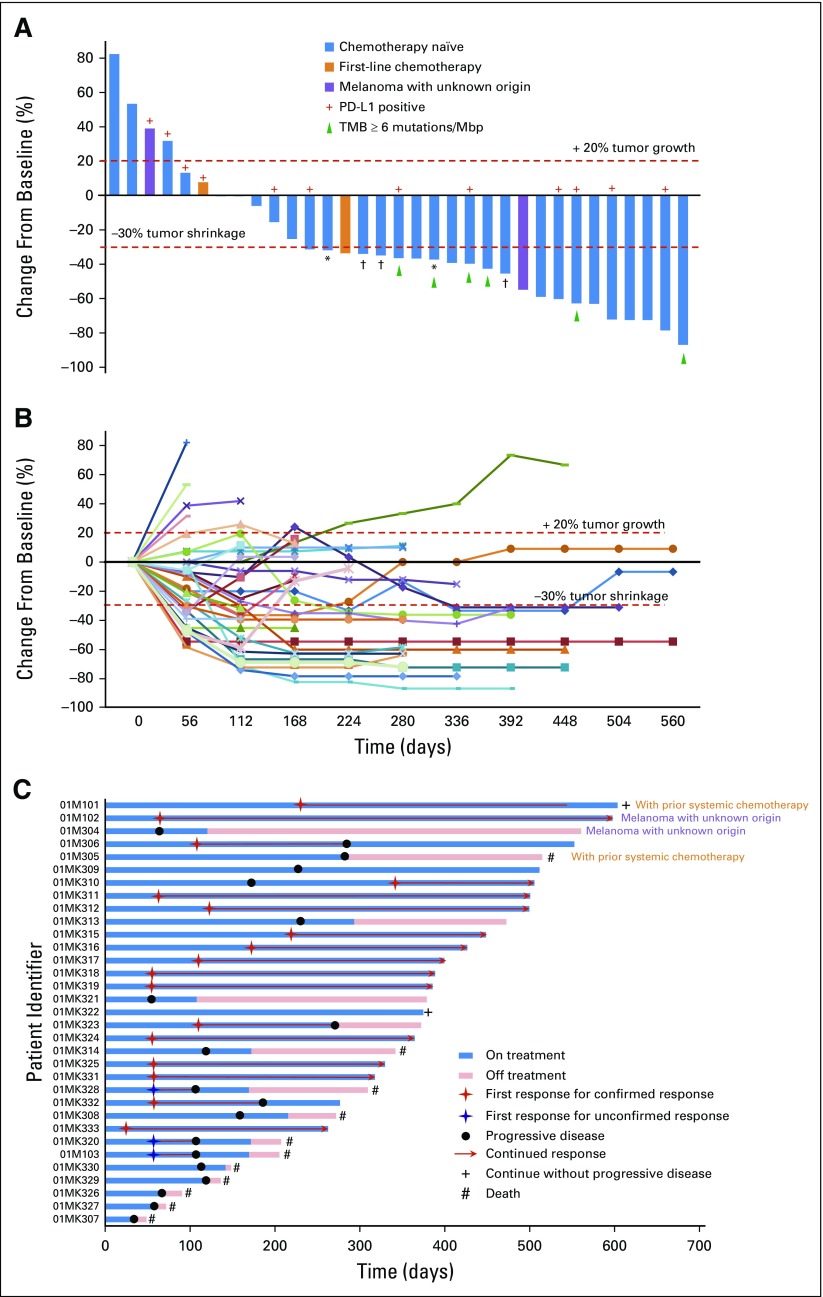
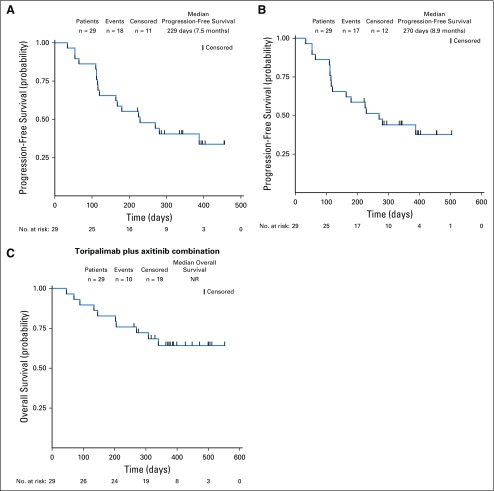
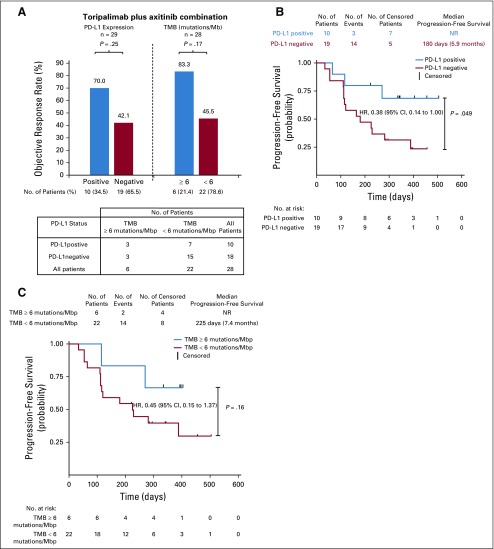
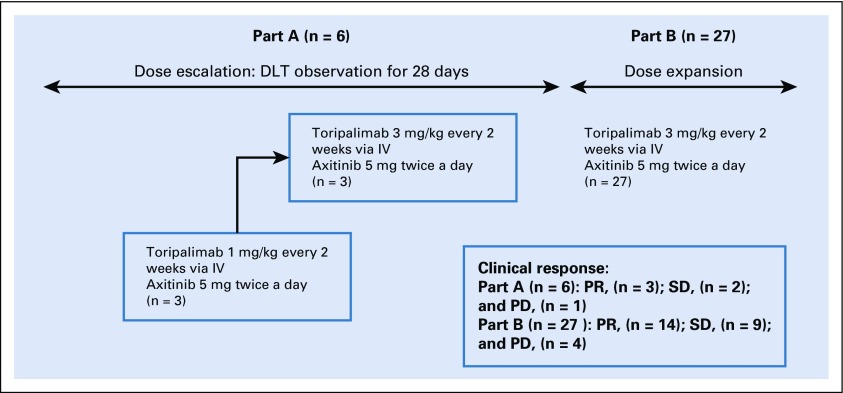
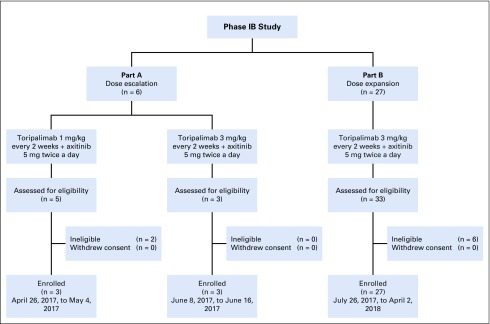
PURPOSE: Metastatic mucosal melanoma responds poorly to anti–programmed cell death-1 (PD-1) monotherapy. Vascular endothelial growth factor (VEGF) has been shown to play an important immunosuppressive role in the tumor microenvironment. The combination of VEGF inhibition and PD-1 blockade provides therapeutic opportunities for patients refractory to either therapy alone. PATIENTS AND METHODS: We conducted a single-center, phase IB trial evaluating the safety and preliminary efficacy of toripalimab, a humanized immunoglobulin G 4 monoclonal antibody against PD-1 in combination with the VEGF receptor inhibitor axitinib in patients with advanced melanoma, including patients with chemotherapy-naïve mucosal melanomas (88%). Patients received toripalimab at 1 or 3 mg/kg via intravenous infusion every 2 weeks, in combination with axitinib 5 mg orally twice a day, in a dose-escalation and cohort-expansion study until confirmed disease progression, unacceptable toxicity, or voluntary withdrawal. The primary objective was safety. Secondary objectives included efficacy, pharmacokinetics, pharmacodynamics, immunogenicity, and tumor tissue biomarkers. RESULTS: Thirty-three patients were enrolled. No dose-limiting toxicities were observed. Ninety-seven percent of patients experienced treatment-related adverse events (TRAEs). The most common TRAEs were mild (grade 1 or 2) and included diarrhea, proteinuria, hand and foot syndrome, fatigue, AST or ALT elevation, hypertension, hypo- or hyperthyroidism, and rash. Grade 3 or greater TRAEs occurred in 39.4% of patients. By the cutoff date, among 29 patients with chemotherapy-naïve mucosal melanoma, 14 patients (48.3%; 95% CI, 29.4% to 67.5%) achieved objective response, and the median progression-free survival time was 7.5 months (95% CI, 3.7 months to not reached) per Response Evaluation Criteria in Solid Tumors (RECIST) version 1.1. CONCLUSION: The combination of toripalimab plus axitinib was tolerable and showed promising antitumor activity in patients with treatment-naïve metastatic mucosal melanoma. Patients enrolled in this study were all Asian, and this combination therapy must be validated in a randomized phase III trial that includes a non-Asian population before it can become a standard of care.
Overview
The claims and statistics of this paper haven’t been checked yet.
Run the check — free, no account needed. It reads the open-access text and checks the sources it cites.
Integrity signals
Registry
Cites
Statistics
Figures
Verification
Claims the paper makes
The claims and statistics of this paper haven’t been checked yet.
Run the check — free, no account needed. It reads the open-access text and checks the sources it cites.
Claims other papers make about this one
Each is checked against this paper’s own text: does it say what the citing paper says it does?
In the citing paper
“Combination therapies such as sintilimab plus anlotinib, sintilimab plus IBI305 (bevacizumab biosimilar), camrelizumab plus apatinib, and toripalimab plus axitinib demonstrated potent antitumor effects in multiple types of cancers [22, 114–120].”
From Combination strategies with PD-1/PD-L1 blockade: current advances and future directions (2022) · cites this paper as [120]
Self-check
Percentages, sums and reported differences re-computed from the paper’s own numbers.
The self-check needs the paper’s full text.
Citations
Cites
Tumor mutational load predicts survival after immunotherapy across multiple cancer types
Samstein, R. M., Lee, C.-H., Shoushtari, A. N., Hellmann, M. D., Shen, R., Janjigian, Y. Y., Barron, D. A., Zehir, A., Jordan, E. J., Omuro, A., et al. (2019) · Nature Genetics · doi:10.1038/s41588-018-0312-8 · Cited by 4,071
IFN-γ–related mRNA profile predicts clinical response to PD-1 blockade
Ayers, M., Lunceford, J., Nebozhyn, M., Murphy, E., Loboda, A., Kaufman, D. R., Albright, A., Cheng, J. D., Kang, S. P., Shankaran, V., et al. (2017) · Journal of Clinical Investigation · doi:10.1172/jci91190 · Cited by 3,788
Distinct Sets of Genetic Alterations in Melanoma
Curtin, J. A., Fridlyand, J., Kageshita, T., Patel, H. N., Busam, K. J., Kutzner, H., Cho, K.-H., Aiba, S., Bröcker, E.-B., LeBoit, P. E., et al. (2005) · New England Journal of Medicine · doi:10.1056/nejmoa050092 · Cited by 2,747
Pan-tumor genomic biomarkers for PD-1 checkpoint blockade–based immunotherapy
Cristescu, R., Mogg, R., Ayers, M., Albright, A., Murphy, E., Yearley, J., Sher, X., Liu, X. Q., Lu, H., Nebozhyn, M., et al. (2018) · Science · doi:10.1126/science.aar3593 · Cited by 2,301
Somatic Activation of KIT in Distinct Subtypes of Melanoma
Curtin, J. A., BUSAM, K. J., Pinkel, D., & Bastian, B. C. (2006) · Journal of Clinical Oncology · doi:10.1200/jco.2006.06.2984 · Cited by 1,612
Whole-genome landscapes of major melanoma subtypes
Hayward, N. K., Wilmott, J. S., Waddell, N., Johansson, P. A., Field, M. A., Nones, K., Patch, A., Kakavand, H., Alexandrov, L. B., Burke, H., et al. (2017) · Nature · doi:10.1038/nature22071 · Cited by 1,495
McDermott, D. F., Huseni, M. A., Atkins, M. B., Motzer, R. J., Rini, B. I., Escudier, B., Fong, L., Joseph, R. W., Pal, S. K., Reeves, J. A., et al. (2018) · Nature Medicine · doi:10.1038/s41591-018-0053-3 · Cited by 1,260
VEGF-A modulates expression of inhibitory checkpoints on CD8+ T cells in tumors
Voron, T., Colussi, O., Marcheteau, E., Pernot, S., Nizard, M., Pointet, A.-L., Latreche, S., Bergaya, S., Benhamouda, N., Tanchot, C., et al. (2015) · Journal of Experimental Medicine · doi:10.1084/jem.20140559 · Cited by 1,179
Safety Profile of Nivolumab Monotherapy: A Pooled Analysis of Patients With Advanced Melanoma
Weber, J. S., Hodi, F. S., Wolchok, J. D., Topalian, S. L., Schadendorf, D., Larkin, J., Sznol, M., Long, G. V., Li, H., Waxman, I. M., et al. (2017) · Journal of Clinical Oncology · doi:10.1200/jco.2015.66.1389 · Cited by 1,158
Hellmann, M. D., Callahan, M. K., Awad, M. M., Calvo, E., Ascierto, P. A., Atmaca, A., Rizvi, N. A., Hirsch, F. R., Selvaggi, G., Szustakowski, J. D., et al. (2018) · Cancer Cell · doi:10.1016/j.ccell.2018.04.001 · Cited by 900
Research works printed but not linked: 5
- Wang X, 2014, Linchuang Zhongliuxue Zazhi, 3, 38
- Simonetti O, 2015, Anticancer Res, 35, 2113
- Cui C, 2014, Linchuang Zhongliuxue Zazhi, 3, 36
- Kim KB, 2014, Chin Clin Oncol, 3, 35
- Lee C-H, 2018, J Clin Oncol, 36
Cited by
Sorted by citations
Small molecules in targeted cancer therapy: advances, challenges, and future perspectives
Zhong, L., Li, Y., Xiong, L., Wang, W., Wu, M., Yuan, T., Yang, W. M., Tian, C., Miao, Z., Wang, T., et al. (2021) · Signal Transduction and Targeted Therapy · doi:10.1038/s41392-021-00572-w · Cited by 1,813
Combination strategies with PD-1/PD-L1 blockade: current advances and future directions
Yi, M., Zheng, X., Niu, M., Zhu, S., Ge, H., & Wu, K. (2022) · Molecular Cancer · doi:10.1186/s12943-021-01489-2 · Cited by 1,445
Tang, T., Huang, X., Zhang, G., Hong, Z., Bai, X., & Liang, T. (2021) · Signal Transduction and Targeted Therapy · doi:10.1038/s41392-020-00449-4 · Cited by 618
Self-citationSignal pathways of melanoma and targeted therapy
Guo, W., Wang, H., & Li, C. (2021) · Signal Transduction and Targeted Therapy · doi:10.1038/s41392-021-00827-6 · Cited by 419
Immunotherapy combination approaches: mechanisms, biomarkers and clinical observations
Butterfield, L. H., & Najjar, Y. G. (2023) · Nature reviews. Immunology · doi:10.1038/s41577-023-00973-8 · Cited by 372
Song, Y., Fu, Y., Xie, Q., Zhu, B., Wang, J., & Zhang, B. (2020) · Frontiers in Immunology · doi:10.3389/fimmu.2020.01956 · Cited by 273
Next-generation immuno-oncology agents: current momentum shifts in cancer immunotherapy
Pan, C.-X., Liu, H., Robins, E., Song, W., Liu, D., Li, Z., & Zheng, L. (2020) · Journal of Hematology & Oncology · doi:10.1186/s13045-020-00862-w · Cited by 251
Molecular Markers and Targets in Melanoma
Teixidó, C., Castillo, P., Martínez-Vila, C., Arance, A. M., & Alós, L. (2021) · Cells · doi:10.3390/cells10092320 · Cited by 262
Lactate dehydrogenase: a marker of diminished antitumor immunity
Wilpe, S. V., Koornstra, R. H. T., den Brok, M. H., de Groot, J. W., Blank, C. U., de Vries, I. J. M., Gerritsen, W. R., & Mehra, N. (2020) · OncoImmunology · doi:10.1080/2162402x.2020.1731942 · Cited by 218
Immunotherapy in Acral and Mucosal Melanoma: Current Status and Future Directions
Mao, L., Qi, Z., Zhang, L., Guo, J., & Si, L. (2021) · Frontiers in Immunology · doi:10.3389/fimmu.2021.680407 · Cited by 181
Self-citationWang, F., He, M.-M., Yao, Y.-C., Zhao, X., Wang, Z., Jin, Y., Luo, H., Li, J., Wang, F., Qiu, M., et al. (2021) · Cell Reports Medicine · doi:10.1016/j.xcrm.2021.100383 · Cited by 169
Tang, B., Chi, Z., Chen, Y., Liu, X., Wu, D., Chen, J., Song, X., Wang, W., Dong, L., Song, H., et al. (2020) · Clinical Cancer Research · doi:10.1158/1078-0432.ccr-19-3922 · Cited by 168
Self-citationToripalimab: First Global Approval
Keam, S. J. (2019) · Drugs · doi:10.1007/s40265-019-01076-2 · Cited by 159
Li, J., Chen, Y., Li, Y., Liu, N., & Ma, J. (2021) · Molecular Cancer · doi:10.1186/s12943-021-01317-7 · Cited by 149
Zhou, C., Wang, Y., Zhao, J., Chen, G., Liu, Z., Gu, K., Huang, M., He, J., Chen, J., Ma, Z., et al. (2021) · Clinical Cancer Research · doi:10.1158/1078-0432.ccr-20-3136 · Cited by 130
The Research Progress of Antiangiogenic Therapy, Immune Therapy and Tumor Microenvironment
Hu, H., Chen, Y., Tan, S., Wu, S., Huang, Y., Fu, S., Luo, F., & He, J. (2022) · Frontiers in Immunology · doi:10.3389/fimmu.2022.802846 · Cited by 117
Lu, M. S., Zhang, P., Zhang, Y., Li, Z., Gong, J., Li, J., Li, J., Li, Y., Zhang, X., Lü, Z., et al. (2020) · Clinical Cancer Research · doi:10.1158/1078-0432.ccr-19-4000 · Cited by 115
Self-citationKong, Y., Xu, C., Cui, C., Yang, W., Yang, S., Chi, Z., Sheng, X., Si, L., Xie, Y., Yu, R., et al. (2021) · npj Genomic Medicine · doi:10.1038/s41525-021-00169-w · Cited by 119
Self-citationToripalimab: the First Domestic Anti-Tumor PD-1 Antibody in China
Zhang, L., Hao, B., Geng, Z., & Geng, Q. (2022) · Frontiers in Immunology · doi:10.3389/fimmu.2021.730666 · Cited by 106
Resistance to Molecularly Targeted Therapies in Melanoma
Patel, M., Eckburg, A., Gantiwala, S., Hart, Z., Dein, J., Lam, K., & Puri, N. (2021) · Cancers · doi:10.3390/cancers13051115 · Cited by 104
Tang, B., Chi, Z., Chen, Y., Liu, X., Wu, D., Chen, J., Song, X., Wang, W., Dong, L., Song, H., et al. (2020) · Clinical Cancer Research · doi:10.1158/1078-0432.ccr-20-3168 · Cited by 99
Self-citationWang, J., Chang, Y., Luo, H., Jiang, W., Xu, L., Chen, T., & Zhu, X. (2020) · Biomaterials · doi:10.1016/j.biomaterials.2020.120153 · Cited by 95
PD-1/PD-L1 Based Combinational Cancer Therapy: Icing on the Cake
Zhang, J., Yan, Y., Li, J., Adhikari, R., & Fu, L. (2020) · Frontiers in Pharmacology · doi:10.3389/fphar.2020.00722 · Cited by 94
Yan, X. Q., Ye, M., Zou, Q., Chen, P., He, Z. S., Wu, B., He, D., He, C. H., Xue, X., Ji, Z., et al. (2023) · Annals of Oncology · doi:10.1016/j.annonc.2023.09.3108 · Cited by 91
Self-citationZhang, Q., Liu, X., Wei, S., Zhang, L., Tian, Y., Gao, Z., Jin, M., & Yan, S. (2021) · Frontiers in Oncology · doi:10.3389/fonc.2021.751391 · Cited by 77
Dimitriou, F., Namikawa, K., Reijers, I. L. M., Buchbinder, E. I., Soon, J. A., Zaremba, A., Teterycz, P., Mooradian, M. J., Armstrong, E., Nakamura, Y., et al. (2022) · Annals of Oncology · doi:10.1016/j.annonc.2022.06.004 · Cited by 71
Self-citationHead and neck mucosal melanoma: The United Kingdom national guidelines
Nenclares, P., Dafydd, D. A., Bagwan, I., Begg, D., Kerawala, C. J., King, E. V., Lingley, K., Paleri, V., Paterson, G., Payne, M., et al. (2020) · European Journal of Cancer · doi:10.1016/j.ejca.2020.07.017 · Cited by 68
Yan, X., Sheng, X., Chi, Z., Si, L., Cui, C., Kong, Y., Tang, B., Mao, L., Wang, X., Lian, B., et al. (2021) · Journal of Clinical Oncology · doi:10.1200/jco.20.00902 · Cited by 61
Self-citationNakamura, Y., Namikawa, K., Yoshikawa, S., Kiniwa, Y., Maekawa, T., Yamasaki, O., Isei, T., Matsushita, S., Nomura, M., Nakai, Y., et al. (2021) · ESMO Open · doi:10.1016/j.esmoop.2021.100325 · Cited by 61
Mucosal Melanoma: Epidemiology, Clinical Features, and Treatment
Sergi, M. C., Filoni, E., Triggiano, G., Cazzato, G., Internò, V., Porta, C., & Tucci, M. (2023) · Current Oncology Reports · doi:10.1007/s11912-023-01453-x · Cited by 61
Steeb, T., Wessely, A., Petzold, A., Kohl, C., Erdmann, M., Berking, C., & Heppt, M. V. (2021) · European Journal of Cancer · doi:10.1016/j.ejca.2021.08.015 · Cited by 59
Sun, L., Kang, X., Ju, H., Wang, C., Yang, G., Wang, R., & Sun, S. (2023) · Science Advances · doi:10.1126/sciadv.adg6686 · Cited by 59
Immune checkpoint inhibitors in advanced or metastatic mucosal melanoma: a systematic review
Li, J., Kan, H., Zhao, L., Sun, Z., & Bai, C. (2020) · Therapeutic Advances in Medical Oncology · doi:10.1177/1758835920922028 · Cited by 58
Li, S., Wu, X., Yan, X., Zhou, L., Chi, Z., Si, L., Cui, C., Tang, B., Mao, L., Lian, B., et al. (2022) · Journal for ImmunoTherapy of Cancer · doi:10.1136/jitc-2021-004036 · Cited by 56
Self-citationMalekan, M., Haass, N. K., Rokni, G. R., Gholizadeh, N., Ebrahimzadeh, M. A., & Kazeminejad, A. (2024) · Life Sciences · doi:10.1016/j.lfs.2024.122563 · Cited by 53
Rager, T., Eckburg, A., Patel, M., Qiu, R., Gantiwala, S., Dovalovsky, K., Fan, K. D., Lam, K., Roesler, C., Rastogi, A., et al. (2022) · Cancers · doi:10.3390/cancers14153779 · Cited by 55
Lian, B., Li, Z., Wu, N., Li, M., Chen, X., Zheng, H. Y., Gao, M., Wang, D., Sheng, X., Tian, H., et al. (2023) · Annals of Oncology · doi:10.1016/j.annonc.2023.10.793 · Cited by 54
Self-citationCurrent Trends in Mucosal Melanomas: An Overview
Santeufemia, D. A., Palmieri, G., Miolo, G., Colombino, M., Doro, M. G., Frogheri, L., Paliogiannis, P., Capobianco, G., Madonia, M., Cossu, A., et al. (2023) · Cancers · doi:10.3390/cancers15051356 · Cited by 50
Zhang, B., Wang, C., Wu, H., Wang, F., Chai, Y., Hu, Y., Wang, B., Zhou, Y. L., Xia, R., Xu, R., et al. (2023) · 癌症:英文版 · doi:10.1002/cac2.12476 · Cited by 47
Self-citationLandscape of immune checkpoint inhibitor-related adverse events in Chinese population
Li, L., Li, G., Rao, B., Dong, A.-H., Liang, W., Zhu, J., Qin, M.-P., Huang, W., Lu, J., Li, Z.-F., et al. (2020) · Scientific Reports · doi:10.1038/s41598-020-72649-5 · Cited by 46
Li, P., Qin, P., Fu, X., Zhang, G., Yan, X., Zhang, M., Zhang, X., Yang, J., Wang, H., & Ma, Z. (2021) · Annals of Palliative Medicine · doi:10.21037/apm-21-163 · Cited by 44
Self-citationAnti-angiogenesis Revisited: Combination with Immunotherapy in Solid Tumors
Chambers, A., Kundranda, M. N., Rao, S. K., Mahmoud, F. A., & Niu, J. (2021) · Current Oncology Reports · doi:10.1007/s11912-021-01099-7 · Cited by 43
Lian, B., Si, L., H., Z., Sheng, X., Kong, Y., Wang, X., Tian, H., Li, K., Mao, L., Bai, X. L., et al. (2022) · Annals of Oncology · doi:10.1016/j.annonc.2022.07.002 · Cited by 43
Self-citationManagement of Acral and Mucosal Melanoma: Medical Oncology Perspective
Jung, S., & Johnson, D. B. (2022) · The Oncologist · doi:10.1093/oncolo/oyac091 · Cited by 42
The Tumor Vessel Targeting Strategy: A Double-Edged Sword in Tumor Metastasis
Li, X., Li, Y., Lu, W., Chen, M., Ye, W., & Zhang, D. (2019) · Cells · doi:10.3390/cells8121602 · Cited by 39
Mao, L., Fang, M., Chen, Y., Wei, X., Cao, J., Lin, J., Zhang, P., Chen, L., Cao, X., Chen, Y., et al. (2022) · Clinical Cancer Research · doi:10.1158/1078-0432.ccr-22-1528 · Cited by 38
Self-citationEmerging strategies to treat rare and intractable subtypes of melanoma
Alicea, G. M., & Rebecca, V. W. (2020) · Pigment Cell & Melanoma Research · doi:10.1111/pcmr.12880 · Cited by 37
Mao, L., Lian, B., Li, C., Bai, X. L., Zhou, L., Cui, C., Chi, Z., Sheng, X., Wang, X., Tang, B., et al. (2023) · JAMA Oncology · doi:10.1001/jamaoncol.2023.1363 · Cited by 37
Self-citationResistance Mechanisms of Anti-angiogenic Therapy and Exosomes-Mediated Revascularization in Cancer
Zeng, Y., & Fu, B. M. (2020) · Frontiers in Cell and Developmental Biology · doi:10.3389/fcell.2020.610661 · Cited by 35
Evaluation of 124I-JS001 for hPD1 immuno-PET imaging using sarcoma cell homografts in humanized mice
Huang, H., Zhu, H., Xie, Q., Tian, X., Yang, X., Feng, F., Jiang, Q., Sheng, X., & Yang, Z. (2020) · Acta Pharmaceutica Sinica B · doi:10.1016/j.apsb.2020.02.004 · Cited by 33
Self-citationEvolving Treatment Approaches to Mucosal Melanoma
Zhang, S., Zhang, J., Guo, J., Si, L., & Bai, X. L. (2022) · Current Oncology Reports · doi:10.1007/s11912-022-01225-z · Cited by 34
Self-citationThe role of angiogenesis in melanoma: Clinical treatments and future expectations
Wu, Z., Bian, Y., Chu, T., Wang, Y., Man, S., Song, Y., & Wang, Z. (2022) · Frontiers in Pharmacology · doi:10.3389/fphar.2022.1028647 · Cited by 32
Yu, P., Wang, Y., Yuan, D., Sun, Y., Qin, S., & Li, T. (2023) · Frontiers in Immunology · doi:10.3389/fimmu.2023.1276694 · Cited by 36
Cao, Y., Lu, M. S., Sun, Y. L., Gong, J., Li, J., Lü, Z., Li, J., Zhang, X., Li, Y., Peng, Z., et al. (2022) · Journal of Cancer Research and Clinical Oncology · doi:10.1007/s00432-021-03898-8 · Cited by 35
Self-citationToripalimab for the treatment of melanoma
Tang, B., Chi, Z., & Guo, J. (2020) · Expert Opinion on Biological Therapy · doi:10.1080/14712598.2020.1762561 · Cited by 30
Self-citationSiraj, A. K., Parvathareddy, S. K., Pratheeshkumar, P., Divya, S. P., Al-Sobhi, S. S., Al‐Dayel, F., & Al-Kuraya, K. S. (2021) · Cancers · doi:10.3390/cancers13030555 · Cited by 34
Emerging Novel Therapeutic Approaches for Treatment of Advanced Cutaneous Melanoma
Comito, F., Pagani, R., Grilli, G., Sperandi, F., Ardizzoni, A., & Melotti, B. (2022) · Cancers · doi:10.3390/cancers14020271 · Cited by 32
Wang, X., Wu, X., Yang, Y., Xu, W., Tian, H., Lian, B., Chi, Z., Si, L., Sheng, X., Kong, Y., et al. (2023) · European Journal of Cancer · doi:10.1016/j.ejca.2022.12.027 · Cited by 30
Self-citationMa, S., Chen, R., Duan, L., Li, C., Yang, T., Wang, J., & Da, Z. (2023) · Journal of Gastrointestinal Oncology · doi:10.21037/jgo-23-108 · Cited by 28
Vos, J. L., Traets, J. J. H., Qiao, X., Seignette, I. M., Peters, D. D. G. C., Wouters, M. W. J. M., Hooijberg, E., Broeks, A., van der Wal, J. E., Karakullukçu, B., et al. (2024) · JCI Insight · doi:10.1172/jci.insight.179982 · Cited by 28
Wang, D., Xu, T., Zhu, H., Dong, J., & Fu, L. (2020) · PubMed Central · Cited by 27
Zeng, Y., Qiu, Y., Jiang, W., & Fu, B. M. (2022) · Cancers · doi:10.3390/cancers14215415 · Cited by 27
Angiogenesis and Microvascular PermeabilityPreprint
Zeng, Y., & Fu, B. M. (2024) · Cold Spring Harbor Perspectives in Medicine · doi:10.1101/cshperspect.a041163 · Cited by 28
Molecular Profiling and Novel Therapeutic Strategies for Mucosal Melanoma: A Comprehensive Review
Indini, A., Roila, F., Grossi, F., Massi, D., & Mandalà, M. (2021) · International Journal of Molecular Sciences · doi:10.3390/ijms23010147 · Cited by 25
Tang, W., Li, C., Huang, D., Zhou, S., Zheng, H., Wang, Q., Zhang, X., & Fu, J. (2024) · Cancer Biology & Therapy · doi:10.1080/15384047.2024.2358551 · Cited by 24
Wang, X., Montoyo-Pujol, Y. G., Sanchez, S. B., Corpas, G., Castro, A. M., Almazán-Fernández, F. M., Cabrera, T., & López‐Nevot, M. Á. (2021) · Journal of Oncology · doi:10.1155/2021/6610769 · Cited by 24
Self-citationLu, J., Ding, J., Liu, Z., & Chen, T. (2022) · International Journal of Oncology · doi:10.3892/ijo.2022.5302 · Cited by 24
UV-Induced Somatic Mutations Driving Clonal Evolution in Healthy Skin, Nevus, and Cutaneous Melanoma
Loras, A., Gil‐Barrachina, M., Marqués‐Torrejón, M. Á., Pérez-Pastor, G. M., & Martínez‐Cadenas, C. (2022) · Life · doi:10.3390/life12091339 · Cited by 28
Zhao, Y., Liu, L., & Weng, L. (2021) · Frontiers in Pharmacology · doi:10.3389/fphar.2021.714483 · Cited by 24
Tang, B., Mo, J., Yan, X., Duan, R., Chi, Z., Cui, C., Si, L., Kong, Y., Mao, L., Li, S., et al. (2021) · European Journal of Cancer · doi:10.1016/j.ejca.2021.07.018 · Cited by 22
Self-citationZhou, C., Li, Y., Li, J., Song, B., Li, H., Liang, B., Gu, S., Li, H., Chen, C., Li, S., et al. (2023) · Clinical Cancer Research · doi:10.1158/1078-0432.ccr-23-0410 · Cited by 22
Self-citationMultidisciplinary approach and treatment of acral and mucosal melanoma
Fortuna, A., & Amaral, T. M. S. (2024) · Frontiers in Oncology · doi:10.3389/fonc.2024.1340408 · Cited by 25
Shan, Z., & Liu, F. (2024) · Frontiers in Immunology · doi:10.3389/fimmu.2024.1441410 · Cited by 22
Immunotherapy for gastric cancer: Advances and challenges
Zhang, P., Zhang, C., Li, X., Chang, C., Gan, C., Ye, T., & Cao, D. (2024) · MedComm – Oncology · doi:10.1002/mog2.92 · Cited by 21
Jiang, J., Li, D., Liu, T., Xia, L., Guo, X., Meng, X., Liu, F., Wang, F., Yang, Z., & Zhu, H. (2021) · Bioorganic & Medicinal Chemistry Letters · doi:10.1016/j.bmcl.2021.127901 · Cited by 20
Single-arm study of camrelizumab plus apatinib for patients with advanced mucosal melanoma
Zhao, L., Ren, Y., Zhang, G., Zheng, K., Wang, J., Sha, H., Zhao, M., Huang, R., Kang, D., Su, X., et al. (2024) · Journal for ImmunoTherapy of Cancer · doi:10.1136/jitc-2023-008611 · Cited by 21
Wang, S., Zhu, H., Ding, J., Wang, F., Meng, X., Ding, L., Zhang, Y., Li, N., Yao, S., Sheng, X., et al. (2021) · Clinical Nuclear Medicine · doi:10.1097/rlu.0000000000003520 · Cited by 20
Self-citationMelanoma Tumour Vascularization and Tissue-Resident Endothelial Progenitor Cells
Hashemi, G., Dight, J., Khosrotehrani, K., & Sormani, L. (2022) · Cancers · doi:10.3390/cancers14174216 · Cited by 20
Shi, H., Tian, H., Zhu, T., Liao, Q., Liu, C. X., Yuan, P., Li, Y., Yang, J., Zong, C., Jia, S., et al. (2024) · Cell Discovery · doi:10.1038/s41421-024-00683-y · Cited by 22
Spiliopoulou, P., Vornicova, O., Genta, S., & Spreafico, A. (2023) · International Journal of Molecular Sciences · doi:10.3390/ijms24021294 · Cited by 19
Shi, J., Jiao, T., Guo, Q., Weng, W., Ma, L., Zhang, Q., Wang, L., Zhang, J., Chen, C., Huang, Y., et al. (2023) · Cancer Research · doi:10.1158/0008-5472.can-23-1356 · Cited by 18
Self-citationTeo, A. Y. T., Yau, C. E., Low, C. E., Pereira, J. V., Ng, J. Y. X., Soong, T. K., Lo, Y. T., & Yang, V. S. (2024) · EClinicalMedicine · doi:10.1016/j.eclinm.2024.102870 · Cited by 17
Huang, F., Li, J., Wen, X., Zhu, B., Liu, W., Wang, J., Jiang, H., Ding, Y., Li, D., & Zhang, X. (2022) · Scientific Reports · doi:10.1038/s41598-022-13391-y · Cited by 17
Jaeger, Z. J., Raval, N. S., Maverakis, N., Chen, D. Y., Ansstas, G., Hardi, A., & Cornelius, L. A. (2023) · Frontiers in Medicine · doi:10.3389/fmed.2023.1090737 · Cited by 16
Epidemiology, staging and management of mucosal melanoma of the head and neck: a narrative review
Jeong, Y. J., Thompson, J. F., & Ch’ng, S. (2023) · Chinese Clinical Oncology · doi:10.21037/cco-23-16 · Cited by 16
Therapeutic Approaches to Mucosal Melanoma
Lian, B., & Guo, J. (2025) · American Society of Clinical Oncology Educational Book · doi:10.1200/edbk-25-473858 · Cited by 15
Self-citationMelanoma-derived extracellular vesicles transfer proangiogenic factors
Surman, M., Przybyło, M., & Wilczak, M. (2024) · Oncology Research Featuring Preclinical and Clinical Cancer Therapeutics · doi:10.32604/or.2024.055449 · Cited by 15
Shen, K., Song, W., Wang, H., Wang, L., Yang, Y., Hu, Q., Ren, M., Gao, Z., Wang, Q., Zheng, S., et al. (2023) · Cell Death Discovery · doi:10.1038/s41420-023-01678-6 · Cited by 14
Shui, L., Cheng, K., Li, X., Shui, P., Li, S., Peng, Y., Li, J., Guo, F., Cheng, Y., & Cao, D. (2020) · Frontiers in Immunology · doi:10.3389/fimmu.2020.01127 · Cited by 14
Self-citationPrimary Malignant Melanoma of the Genitourinary System: A Systemic Review and Report of Eight Cases
Khayyat, A., Pour, M. A. E., Mousavi, S., Khalili-Toosi, A.-R., & Amin, A. (2022) · Cureus · doi:10.7759/cureus.30444 · Cited by 13
Cost-effectiveness of toripalimab plus chemotherapy for advanced esophageal squamous cell carcinoma
Xu, K., Wu, H., Zhou, C., Bao, Y., Yu, M., Zhang, L., & Li, X. (2023) · International Journal of Clinical Pharmacy · doi:10.1007/s11096-023-01540-w · Cited by 13
Self-citationSafety and feasibility of toripalimab plus lenvatinib with or without radiotherapy in advanced BTC
Wang, Y., Zhang, N., Xue, J., Zhu, C., Wang, Y., Zhang, L., Yang, X., Wang, H., Wang, S., Chao, J., et al. (2023) · Frontiers in Immunology · doi:10.3389/fimmu.2023.1084843 · Cited by 12
Du, Y., Dai, J., Mao, L., Wei, X., Bai, X. L., Chen, L., Lin, J., Chi, Z., Cui, C., Sheng, X., et al. (2023) · Journal of the European Academy of Dermatology and Venereology · doi:10.1111/jdv.19467 · Cited by 12
Self-citationChacon, A. C., Melucci, A. D., Qin, S. S., & Prieto, P. A. (2021) · International Journal of Molecular Sciences · doi:10.3390/ijms22063228 · Cited by 12
Immune checkpoint inhibitor‐based therapy for advanced acral and mucosal melanoma
Mori, T., Izumi, T., Doi, R., Kamimura, A., Takai, S., Teramoto, Y., & Nakamura, Y. (2022) · Experimental Dermatology · doi:10.1111/exd.14725 · Cited by 12
Parvathareddy, S. K., Siraj, A. K., Ahmed, S. O., Ghazwani, L. O., Aldughaither, S. M., Al‐Dayel, F., Tulbah, A. M., Ajarim, D. S., & Al-Kuraya, K. S. (2021) · Cells · doi:10.3390/cells10020229 · Cited by 14
Wu, Y., Wei, D., Ren, G., & Guo, W. (2022) · Journal of Cancer Research and Clinical Oncology · doi:10.1007/s00432-022-04090-2 · Cited by 11
Management of Noncutaneous Melanomas
Lee, A. Y., & Berman, R. S. (2020) · Surgical Oncology Clinics of North America · doi:10.1016/j.soc.2020.02.004 · Cited by 11
Zhang, X., Jin, F., Jiang, S., Cao, J., Meng, Y., Xu, Y., ChunmengWang, Chen, Y., Yang, H., Kong, Y., et al. (2021) · Investigational New Drugs · doi:10.1007/s10637-021-01172-9 · Cited by 11
Self-citationCurrent Status and Prospects of Immunotherapy for Gynecologic Melanoma
Anko, M., Kobayashi, Y., Banno, K., & Aoki, D. (2021) · Journal of Personalized Medicine · doi:10.3390/jpm11050403 · Cited by 10
Metadata
- Authors
- Sheng, X., Yan, X., Chi, Z., Si, L., Cui, C., Tang, B., Li, S., Mao, L., Lian, B., Wang, X., Bai, X., Zhou, L., Kong, Y., Dai, J., Wang, K., Tang, X., Zhou, H., Wu, H., Feng, H., Yao, S., Flaherty, K. T., & Guo, J.
- Affiliations
- Peking University Cancer Hospital (CN)
- OrigiMed, Shanghai, People’s Republic of China
- Junshi Biosciences (China) (CN)
- Shanghai Junshi Biosciences, Shanghai, People’s Republic of China
- Massachusetts General Hospital (US)
- Corresponding author
- Guo, Jun
- ORCID
- Venue
- Journal of Clinical Oncology
- Published
- 2019-11-10
- Volume
- 37
- Issue
- 32
- Pages
- 2987-2999
- ISSN
- 0732-183X (ISSN-L)
- 1527-7755
- PMC
- PMC6839911
- OpenAlex
- W2967113395
- Cited by
- 175
- References
- 40
- Citations by year
- 2026: 13 · 2025: 10 · 2024: 22 · 2023: 30 · 2022: 36 · 2021: 41 · 2020: 21 · 2019: 2
- FWCI
- 10.45
- Type
- journal article
- Language
- en
- Open access
- hybrid
- doi.org
- Licence
- cc-by
- Locations
- Journal of Clinical Oncology (publishedVersion, cc-by)
- PubMed Central (publishedVersion, cc-by)
- PubMed (publishedVersion)
- Greater South Information System
- Topics
- Health Sciences › Medicine › Oncology › Cancer Immunotherapy and Biomarkers
- Health Sciences › Medicine › Oncology › Cutaneous Melanoma Detection and Management
- Life Sciences › Biochemistry, Genetics and Molecular Biology › Molecular Biology › Melanoma and MAPK Pathways
- Keywords
- axitinib, toripalimab, mucosal melanoma, metastatic melanoma, anti-PD-1 therapy, VEGF inhibition, combination immunotherapy, immune checkpoint inhibitors, treatment-related adverse events, objective response rate, progression-free survival, tumor microenvironment, immunogenicity, pharmacokinetics, pharmacodynamics, Asian patients, dose escalation, hand-foot syndrome, proteinuria
- MeSH terms
- Exome Sequencing, Axitinib, Adult, Aged, Antineoplastic Combined Chemotherapy Protocols, Female, Humans, Male, Melanoma, Middle Aged, Mucous Membrane, Vascular Endothelial Growth Factor A, Programmed Cell Death 1 Receptor, Antibodies, Monoclonal, Humanized
About these checks
Registry, retraction, Cites and statistics results are computed, not judged, with one exception: a printed reference that no index lists is read once by a model before it counts as a citation error. Claims are extracted by a model and kept only when their quote appears verbatim in the text; each cited source is then checked, with a model’s help, for whether it says what the claim relies on. Those verdicts can be wrong — read the claim’s quote and the cited source before relying on one.
Statistics and arithmetic are recomputed, not judged.
Confidence bands are shown only for fields calibrated on our annotated test set. None is calibrated yet, so no band is shown.
What counts as a claim ›How we measure confidence ›How we check this ›
Are you an author, or do you see a problem with this page? Request a review
