

The Monocarboxylate Transporter 8 Linked to Human Psychomotor Retardation Is Highly Expressed in Thyroid Hormone-Sensitive Neuron Populations
The DOI matches its Crossref record; 61 of the 61 references it cites were found in a registry or an index.
Abstract
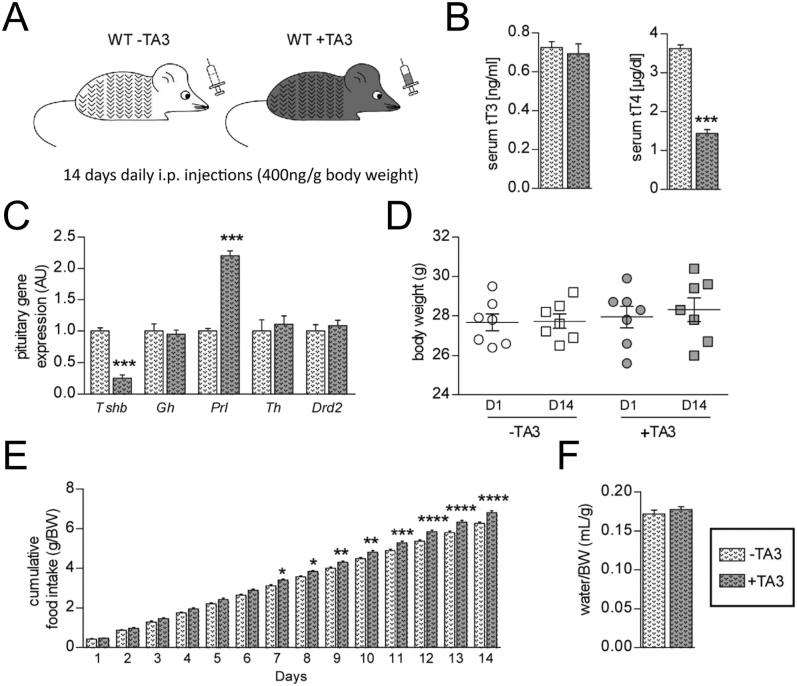
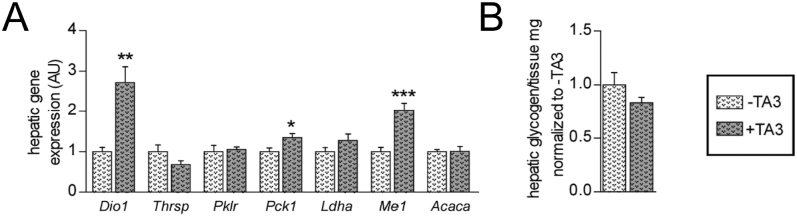
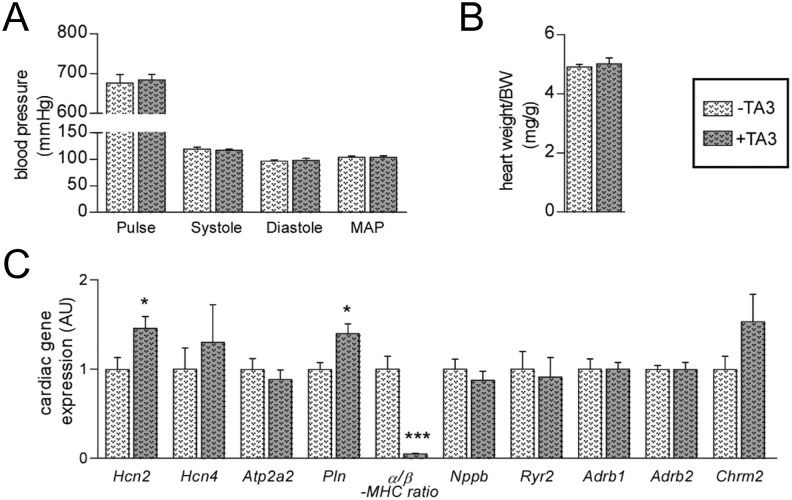
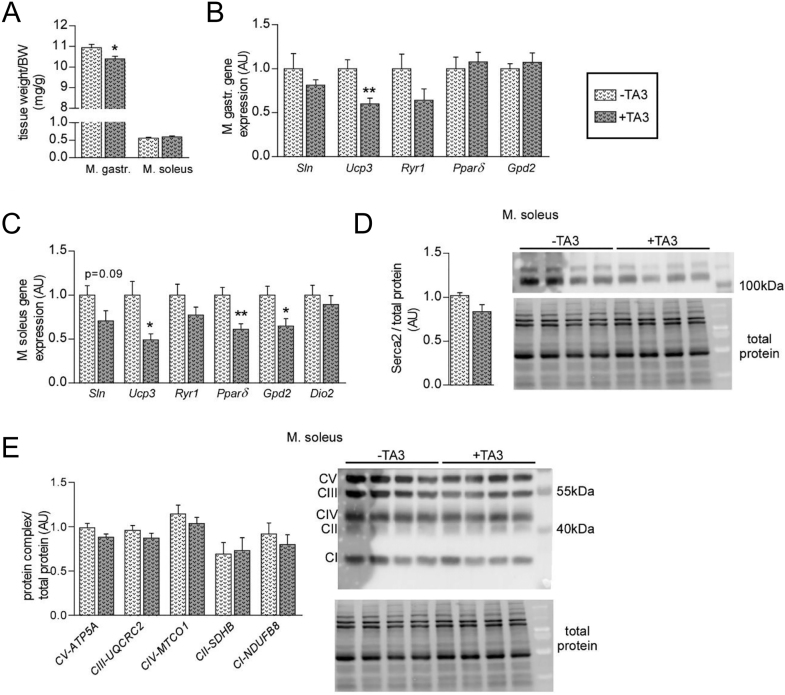
OBJECTIVE: Thyroid hormones regulate cardiovascular functions and energy homeostasis, including thermogenesis, through binding to nuclear thyroid hormone receptors. The thyroid hormone analog 3,3',5-triiodothyroacetic acid (TRIAC) has recently emerged as a therapeutic candidate for thyroid hormone transporter deficiencies (Allan-Herndon-Dudley syndrome) or thyroid hormone resistance β. Although TRIAC shows promise for these conditions, a comprehensive characterization focusing on heart and body temperature regulation has not been systematically performed in mice. METHODS: As this knowledge is critical for determining its safety profile and therapeutic advantages over conventional thyroid hormone therapy, we administered TRIAC to wild-type mice for 14 days and assessed molecular (real-time PCR, western blot, and immunoassays) and physiological (infrared thermography and blood pressure) responses. RESULTS: TRIAC treatment reduced circulating thyroxine levels and induced robust upregulation of hepatic thyroid hormone-responsive genes, including Dio1 and Me1, demonstrating classical thyromimetic activity. However, cardiovascular analysis revealed normal blood pressure and heart rate, and there were no signs of cardiac hypertrophy despite specific molecular changes in cardiac gene expression. At the metabolic level, we surprisingly did not observe any effect on brown fat thermogenesis or body temperature, while in muscle, Ucp3 and Gpd2 were reduced. CONCLUSION: Taken together, our comparative in vivo analysis demonstrates variable TRIAC responsiveness across tissues. Under defined conditions, the drug produces defined metabolic responses while avoiding classical hyperthyroid manifestations, such as tachycardia or hyperthermia, thus supporting its potential therapeutic use in thyroid hormone resistance conditions.
Overview
The claims and statistics of this paper haven’t been checked yet.
Free: it reads the open-access text and checks the first 5 claims that cite a source we can check. Create a free account to check every claim.
Integrity signals
Registry
Cites
Statistics
Figures
Verification
Claims the paper makes
The claims and statistics of this paper haven’t been checked yet.
Free: it reads the open-access text and checks the first 5 claims that cite a source we can check. Create a free account to check every claim.
Claims other papers make about this one
Each is checked against this paper’s own text: does it say what the citing paper says it does?
In the citing paper
“the MCT8 transporter, which is preferentially expressed in neurons including hypophysiotropic TRH neurons (51, 139), and tanycytes (139), has preferential affinity for T 3 (139)”
From Central regulation of hypothalamic-pituitary-thyroid axis under physiological and pathophysiological conditions (2014) · cites this paper as [139]
Self-check
Percentages, sums and reported differences re-computed from the paper’s own numbers.
The self-check needs the paper’s full text.
Citations
Cites
Physiological and Molecular Basis of Thyroid Hormone Action
Yen, P. M. (2001) · Physiological Reviews · doi:10.1152/physrev.2001.81.3.1097 · Cited by 2,011
Bianco, A. C., Salvatore, D., Gereben, B., Berry, M. J., & Larsen, P. R. (2002) · Endocrine Reviews · doi:10.1210/edrv.23.1.0455 · Cited by 1,853
The Syndromes of Resistance to Thyroid Hormone*
REFETOFF, S., WEISS, R. E., & USALA, S. J. (1993) · Endocrine Reviews · doi:10.1210/edrv-14-3-348 · Cited by 873 · cited 1×
“Finally, like patients with the syndrome of resistance to TH, who suffer from learning disorders and mental retardation (23), genetically engineered mice in which a T3 binding mutation was introduced into the TH receptor locus displayed learning deficits together with reduced BDNF (brain-derived neurotrophic factor) i…”
BackgroundIdentification of monocarboxylate transporter 8 as a specific thyroid hormone transporter
Friesema, E. C. H., Ganguly, S., Abdalla, A., Fox, J. E. M., Halestrap, A. P., & Visser, T. J. (2003) · Journal of Biological Chemistry · doi:10.1074/jbc.m300909200 · Cited by 725 · cited 1×
“expressed in brain and other TH-responsive tissues (11).”
BackgroundSelf-citationFriesema, E. C., Grueters, A., Biebermann, H., Krude, H., von Moers, A., Reeser, M., Barrett, T. G., Mancilla, E. E., Svensson, J., Kester, M. H., et al. (2004) · The Lancet · doi:10.1016/s0140-6736(04)17226-7 · Cited by 709 · cited 4×
“tional MCT8 transporter exhibit markedly elevated T3 levels (12, 13).”
BackgroundSelf-citationDumitrescu, A. M., Liao, X.-H., Best, T. B., Brockmann, K., & Refetoff, S. (2004) · The American Journal of Human Genetics · doi:10.1086/380999 · Cited by 706
The role of thyroid hormones in prenatal and neonatal neurological development--current perspectives
Porterfield, S. P. (1993) · Endocrine Reviews · doi:10.1210/er.14.1.94 · Cited by 672
Follicular cells of the thyroid gland require Pax8 gene function
Mansouri, A., Chowdhury, K., & Gruss, P. (1998) · Nature Genetics · doi:10.1038/ng0598-87 · Cited by 622
Maternal thyroid hormones early in pregnancy and fetal brain development
Escobar, G. M. D., Obregón, M. J., & Rey, F. E. D. (2004) · Best Practice & Research Clinical Endocrinology & Metabolism · doi:10.1016/j.beem.2004.03.012 · Cited by 585 · cited 1×
“Consequently, brain development is more severely affected than under conditions of congenital hypothyroidism (3).”
BackgroundMolecular Basis of Thyroid Hormone-Dependent Brain Development*
Oppenheimer, J. H., & Schwartz, H. L. (1997) · Endocrine Reviews · doi:10.1210/edrv.18.4.0309 · Cited by 517
Hennemann, G., Docter, R., Friesema, E. C. H., de Jong, M., Krenning, E. P., & Visser, T. J. (2001) · Endocrine Reviews · doi:10.1210/edrv.22.4.0435 · Cited by 394 · cited 1×
“identified recently (8, 9), questioning the hypothesis of pas-”
BackgroundSelf-citationThe type 2 iodothyronine deiodinase is expressed primarily in glial cells in the neonatal rat brain
Guadaño-Ferraz, A., Obregón, M. J., Germain, D. L. S., & Bernal, J. (1997) · Proceedings of the National Academy of Sciences · doi:10.1073/pnas.94.19.10391 · Cited by 372 · cited 1×
“After release from endothelial cells, probably also mediated by Oatp14 (10), T4 has to be translocated (presumably mediated by another transporter, not yet identified) into astrocytes and subsequently converted to the biologically active T3 by the enzyme D2, which is known to be localized intracellularly in these cell…”
BackgroundAction of thyroid hormone in brain
Bernal, J. (2002) · Journal of Endocrinological Investigation · doi:10.1007/bf03344003 · Cited by 358
Abnormal thyroid hormone metabolism in mice lacking the monocarboxylate transporter 8
Trajkovic, M., Visser, T. J., Mittag, J., Horn, S., Lukas, J., Darras, V. M., Raivich, G., Bauer, K., & Heuer, H. (2007) · Journal of Clinical Investigation · doi:10.1172/jci28253 · Cited by 353
Self-citationCalvo, R., Obregón, M. J., Ruiz de Oña, C., Escobar del Rey, F., & Morreale de Escobar, G. (1990) · Journal of Clinical Investigation · doi:10.1172/jci114790 · Cited by 322 · cited 1×
“This increase in D2 expression has been discussed as a compensatory mechanism for preserving T3 concentrations in brain (31, 32).”
BackgroundSugiyama, D., Kusuhara, H., Taniguchi, H., Ishikawa, S., Nozaki, Y., Aburatani, H., & Sugiyama, Y. (2003) · Journal of Biological Chemistry · doi:10.1074/jbc.m306933200 · Cited by 283
Transporters MCT8 and OATP1C1 maintain murine brain thyroid hormone homeostasis
Mayerl, S., Müller, J., Bauer, R., Richert, S., Kassmann, C. M., Darras, V. M., Buder, K., Boelen, A., Visser, T. J., & Heuer, H. (2014) · Journal of Clinical Investigation · doi:10.1172/jci70324 · Cited by 281
Self-citationThe syndromes of resistance to thyroid hormone
Refetoff, S. (1993) · Endocrine Reviews · doi:10.1210/er.14.3.348 · Cited by 266
An unliganded thyroid hormone receptor causes severe neurological dysfunction
Hashimoto, K., Curty, F. H., Borges, P. P., Lee, C. E., Abel, E. D., Elmquist, J. K., Cohen, R. N., & Wondisford, F. E. (2001) · Proceedings of the National Academy of Sciences · doi:10.1073/pnas.051454698 · Cited by 238 · cited 1×
“Finally, like patients with the syndrome of resistance to TH, who suffer from learning disorders and mental retardation (23), genetically engineered mice in which a T3 binding mutation was introduced into the TH receptor locus displayed learning deficits together with reduced BDNF (brain-derived neurotrophic factor) i…”
BackgroundHeuer, H., Sch�fer, M. K.-H., O'Donnell, D., Walker, P., & Bauer, K. (2000) · The Journal of Comparative Neurology · doi:10.1002/1096-9861(20001211)428:2<319::aid-cne10>3.0.co;2-9 · Cited by 199 · cited 2×
“(35)SLabeled riboprobes were produced by in vitro transcription as described previously (15).”
MethodSelf-citationTu, H. M., Légrádi, G., Bartha, T., Salvatore, D., Lechan, R. M., & Larsen, P. R. (1999) · Endocrinology · doi:10.1210/en.140.2.784 · Cited by 198 · cited 1×
“enzyme D3 that catalyzes the inactivation of T3 (27).”
BackgroundGuadaño-Ferraz, A., Escámez, M. J., Rausell, E., & Bernal, J. (1999) · The Journal of Neuroscience · doi:10.1523/jneurosci.19-09-03430.1999 · Cited by 183 · cited 1×
“This increase in D2 expression has been discussed as a compensatory mechanism for preserving T3 concentrations in brain (31, 32).”
BackgroundRami, A., Patel, A. J., & Rabié, A. (1986) · Neuroscience · doi:10.1016/0306-4522(86)90135-1 · Cited by 165 · cited 1×
“This developmental expression pattern fits well with the finding that TH deficiency during the first postnatal weeks affects pyramidal and granule cell dendritogenesis as well as granule cell migration (22, 28, 29).”
ResultThyroid Hormones and the Brain
Anderson, G. W. (2001) · Frontiers in Neuroendocrinology · doi:10.1006/frne.2000.0208 · Cited by 162
NEUROLOGICAL SIGNS IN CONGENITAL IODINE‐DEFICIENCY DISORDER (ENDEMIC CRETINISM)
DeLong, G. R., Stanbury, J. B., & Fierro‐Benitez, R. (1985) · Developmental Medicine & Child Neurology · doi:10.1111/j.1469-8749.1985.tb04542.x · Cited by 155 · cited 1×
“It is therefore not surprising that neurological or endemic cretinism not only results in mental retardation, as observed in congenital hypothyroidism, but also leads to a striatopallidal syndrome with poor motor coordination and spastic diplegia (25), exactly the symptoms found in MCT8-affected patients (12, 13).”
BackgroundDratman, M. B., Crutchfield, F. L., & Schoenhoff, M. B. (1991) · Brain Research · doi:10.1016/0006-8993(91)90194-z · Cited by 127 · cited 1×
“The functional relevance of MCT8 expression in these structures remains elusive as yet, because previous studies in rats have strongly indicated that only a fraction of T4 in the brain passes through the choroid plexus-cerebrospinal fluid barrier (17).”
BackgroundThyroid hormone transporters: recent advances
Abe, T., Suzuki, T., Unno, M., Tokui, T., & Ito, S. (2002) · Trends in Endocrinology and Metabolism · doi:10.1016/s1043-2760(02)00599-4 · Cited by 126 · cited 1×
“identified recently (8, 9), questioning the hypothesis of pas-”
BackgroundGroeneweg, S., van Geest, F. S., Abacı, A., Alcantud, A., Ambegaonkar, G., Armour, C. M., Bakhtiani, P., Bârcă, D., Bertini, E., van Beynum, I. M., et al. (2020) · The Lancet Diabetes & Endocrinology · doi:10.1016/s2213-8587(20)30153-4 · Cited by 122
Johann, K., Cremer, A. L., Fischer, A. W., Heine, M., Pensado, E. R., Resch, J., Nock, S., Virtue, S., Harder, L., Oelkrug, R., et al. (2019) · Cell Reports · doi:10.1016/j.celrep.2019.05.054 · Cited by 117
Self-citationRegulation of Iodothyronine Deiodinases in the Pax8−/− Mouse Model of Congenital Hypothyroidism
Friedrichsen, S., Christ, S., Heuer, H., Schäfer, M. K. H., Mansouri, A., Bauer, K., & Visser, T. J. (2003) · Endocrinology · doi:10.1210/en.2002-220715 · Cited by 111 · cited 1×
“Pax8 / male and female mice were used for mating, and the offspring were genotyped by Southern blot analysis as described recently (14).”
MethodSelf-citationDendritic spine density of adult hippocampal pyramidal cells is sensitive to thyroid hormone
Gould, E., Allan, M. D., & McEwen, B. S. (1990) · Brain Research · doi:10.1016/0006-8993(90)90884-e · Cited by 109 · cited 1×
“well as abnormal spine disposition (18, 19).”
Thyroid hormone and development of the rat hippocampus: Cell acquisition in the dentate gyrus
Rami, A., Rabié, A., & Patel, A. J. (1986) · Neuroscience · doi:10.1016/0306-4522(86)90134-x · Cited by 98 · cited 2×
“This developmental expression pattern fits well with the finding that TH deficiency during the first postnatal weeks affects pyramidal and granule cell dendritogenesis as well as granule cell migration (22, 28, 29).”
BackgroundResultKersseboom, S., Horn, S., Visser, W. E., Chen, J., Friesema, E. C. H., Vaurs-Barrière, C., Peeters, R. P., Heuer, H., & Visser, T. J. (2014) · Molecular Endocrinology · doi:10.1210/me.2014-1135 · Cited by 95
Self-citationOrganization of Auditory Callosal Connections in Hypothyroid Adult Rats
Berbel, P., Guadaño‐Ferraz, A., Martínez, M., Quiles, J. A., Balboa, R., & Innocenti, G. M. (1993) · European Journal of Neuroscience · doi:10.1111/j.1460-9568.1993.tb00214.x · Cited by 89 · cited 1×
“scribed in rats made hypothyroid during embryonic stages (20, 21).”
BackgroundTriiodothyroacetic acid in health and disease
Groeneweg, S., Peeters, R. P., Visser, T. J., & Visser, W. E. (2017) · Journal of Endocrinology · doi:10.1530/joe-17-0113 · Cited by 74
Self-citationGOSLINGS, B., SCHWARTZ, H. L., DILLMANN, W., SURKS, M. I., & OPPENHEIMER, J. H. (1976) · Endocrinology · doi:10.1210/endo-98-3-666 · Cited by 73
Thyroid hormones in the regulation of brown adipose tissue thermogenesis
Sentis, S. C., Oelkrug, R., & Mittag, J. (2021) · Endocrine Connections · doi:10.1530/ec-20-0562 · Cited by 72
Self-citationGravel, C., & Hawkes, R. (1990) · Journal of Comparative Neurology · doi:10.1002/cne.902910109 · Cited by 69 · cited 1×
“scribed in rats made hypothyroid during embryonic stages (20, 21).”
BackgroundEffect of Thyroid Deficiency on the Growth of the Hippocampus in the Rat
Rabié, A., Patel, A. J., Clavel, M. C., & Legrand, J. (2007) · Developmental Neuroscience · doi:10.1159/000112453 · Cited by 59
Escobar-Morreale, H. F., Obregón, M.-J., del Rey, F. E., & de Escobar, G. M. (1999) · Biochimie · doi:10.1016/s0300-9084(99)80095-9 · Cited by 48
[2] In situ hybridization techniques to map processing enzymes
Schäfer, M. K.-H., & Day, R. W. (1995) · Methods in neurosciences · doi:10.1016/s1043-9471(06)80113-8 · Cited by 44
Interference of a Mutant Thyroid Hormone Receptor α1 with Hepatic Glucose Metabolism
Vujovic, M., Nordström, K., Gauthier, K., Flamant, F., Visser, T. J., Vennström, B., & Mittag, J. (2009) · Endocrinology · doi:10.1210/en.2008-1085 · Cited by 44
Self-citationEffect of Triiodothyroacetic Acid Treatment in Mct8 Deficiency: A Word of Caution
Bárez-López, S., Obregon, M. J., Martínez-de-Mena, R., Bernal, J., Guadaño-Ferraz, A., & Morte, B. (2016) · Thyroid · doi:10.1089/thy.2015.0388 · Cited by 38
Thyroid wars: the rise of central actions
Capelli, V., Diéguez, C., Mittag, J., & López, M. (2021) · Trends in Endocrinology and Metabolism · doi:10.1016/j.tem.2021.05.006 · Cited by 30
Self-citationResistance to thyroid hormone induced tachycardia in RTHα syndrome
Dore, R., Watson, L. P. E., Hollidge, S. E., Krause, C., Sentis, S. C., Oelkrug, R., Geißler, C., Johann, K., Pedaran, M., Lyons, G., et al. (2023) · Nature Communications · doi:10.1038/s41467-023-38960-1 · Cited by 30
Self-citationHoefig, C. S., Harder, L., Oelkrug, R., Meusel, M., Vennström, B., Brabant, G. E., & Mittag, J. (2016) · Endocrinology · doi:10.1210/en.2016-1095 · Cited by 30
Self-citationHerrmann, B., Harder, L., Oelkrug, R., Chen, J., Gachkar, S., Nock, S., Resch, J., Korkowski, M., Heuer, H., & Mittag, J. (2020) · Thyroid · doi:10.1089/thy.2019.0705 · Cited by 26
Self-citationAn improved method for the precise unravelment of non-shivering brown fat thermokinetics
Oelkrug, R., & Mittag, J. (2021) · Scientific Reports · doi:10.1038/s41598-021-84200-1 · Cited by 23
Self-citationIpiña, S. L., Ruiz‐Marcos, A., del Rey, F. E., & de Escobar, G. M. (1987) · Developmental Brain Research · doi:10.1016/0165-3806(87)90243-4 · Cited by 19
Chen, J., Salveridou, E., Liebmann, L., Sundaram, S. M., Doycheva, D., Markova, B., Hübner, C. A., Boelen, A., Visser, W. E., Heuer, H., et al. (2023) · International Journal of Molecular Sciences · doi:10.3390/ijms24043452 · Cited by 19
Self-citationLópez‐Alcántara, N., Oelkrug, R., Sentis, S. C., Kirchner, H., & Mittag, J. (2023) · iScience · doi:10.1016/j.isci.2023.108064 · Cited by 16
Self-citationBárez‐López, S., Grijota-Martínez, C., Liao, X.-H., Refetoff, S., & Guadaño‐Ferraz, A. (2019) · PLoS ONE · doi:10.1371/journal.pone.0226017 · Cited by 16
Hypothalamic Thyroid Hormone Receptor α1 Signaling Controls Body Temperature
Sentis, S. C., Dore, R., Oelkrug, R., et al. (2023) · Thyroid · doi:10.1089/thy.2023.0513 · Cited by 15
Oelkrug, R., Harder, L., Pedaran, M., Hoffmann, A., Kolms, B., Inderhees, J., Gachkar, S., Resch, J., Johann, K., Jöhren, O., et al. (2023) · Nature Communications · doi:10.1038/s41467-023-42425-w · Cited by 15
Self-citation3,3′,5-Triiodothyroacetic Acid Transporters
Chen, Z., Yildiz, S., Markova, B., de Rooij, L. J., Leeuwenburgh, S., Hamers, T., Peeters, R. P., Heuer, H., Meima, M. E., & Visser, W. E. (2024) · Thyroid · doi:10.1089/thy.2023.0467 · Cited by 13
Self-citationThyroid Hormone Receptors in Control of Heart Rate
Dore, R., & Mittag, J. (2024) · Endocrinology · doi:10.1210/endocr/bqae093 · Cited by 13
Self-citationToward a treatment for thyroid hormone transporter MCT8 deficiency – achievements and challenges
Markova, B., Mayerl, S. E., & Heuer, H. (2024) · European Thyroid Journal · doi:10.1530/etj-24-0286 · Cited by 10
Self-citationThyroid Hormone Analogs: Recent Developments
Freund, M., van Geest, F. S., Groeneweg, S., van Geest, F. S., & Visser, W. E. (2025) · Thyroid · doi:10.1089/thy.2025.0245 · Cited by 8
Hypothalamic control of heart rate and body temperature by thyroid hormones
Mittag, J., & Kolms, B. (2025) · Reviews in Endocrine and Metabolic Disorders · doi:10.1007/s11154-025-09966-5 · Cited by 7
Self-citationGrijota-Martínez, C., Montero‐Pedrazuela, A., Hidalgo-Álvarez, J., Bárez‐López, S., & Guadaño‐Ferraz, A. (2022) · Thyroid · doi:10.1089/thy.2022.0562 · Cited by 5
Moran, C., Martin-Grace, J., Lyons, G., Watson, L., Taylor, K., Oddy, S., Halsall, D., & Chatterjee, K. (2025) · Journal of Clinical Endocrinology and Metabolism · doi:10.1210/clinem/dgaf583 · Cited by 4
Cited by
Neurodevelopmental and Neurophysiological Actions of Thyroid Hormone
Williams, G. R. (2008) · Journal of Neuroendocrinology · doi:10.1111/j.1365-2826.2008.01733.x · Cited by 559
Thyroid Function Is Associated with Components of the Metabolic Syndrome in Euthyroid Subjects
Roos, A., Bakker, S. J. L., Links, T. P., Gans, R. O. B., & Wolffenbuttel, B. H. R. (2007) · The Journal of Clinical Endocrinology & Metabolism · doi:10.1210/jc.2006-1718 · Cited by 542
“Of particular interest for a potential discrepancy is that expression of the thyroid hormone transporter monocarboxylate transporter 8 is thought to be of great importance for the uptake of thyroid hormone by thyroid hormone-sensitive neuronal cells (32, 34), whereas there is no evidence for a hypothyroid state in the…”
BackgroundConsensus Paper: Cerebellar Development
Leto, K., Arancillo, M., Becker, E. B. E., Buffo, A., Chiang, C., Ding, B., Dobyns, W. B., Dusart, I., Haldipur, P., Hatten, M. E., et al. (2016) · The Cerebellum · doi:10.1007/s12311-015-0724-2 · Cited by 484
“T3 is then transferred to neurons or oligodendrocytes, possibly via monocarboxylate transporter 8 [407].”
Thyroid Hormones and Brain Development
Bernal, J. (2005) · Vitamins & Hormones · doi:10.1016/s0083-6729(05)71004-9 · Cited by 471
Influence of maternal thyroid hormones during gestation on fetal brain development
Moog, N. K., Entringer, S., Heim, C., Wadhwa, P. D., Kathmann, N., & Buss, C. (2017) · Neuroscience · doi:10.1016/j.neuroscience.2015.09.070 · Cited by 474
“MCT8 is expressed in neurons, which suggests that neuronal uptake of T3 produced in astrocytes is facilitated by this transporter (Heuer et al., 2005).”
Background
Metadata
- Authors
- Heuer, H., Maier, M. K., Iden, S., Mittag, J., Friesema, E. C. H., Visser, T. J., & Bauer, K.
- Affiliations
- Max Planck Society (DE)
- Erasmus MC (NL)
- Corresponding author
- Heuer, Heike
- Venue
- Endocrinology
- Publisher
- The Endocrine Society
- Published
- 2005-04-01
- Volume
- 146
- Issue
- 4
- Pages
- 1701-1706
- ISSN
- 0013-7227 (ISSN-L)
- 1945-7170
- PMC
- PMC13386237
- OpenAlex
- W2062347722
- Cited by
- 269
- References
- 31
- Citations by year
- 2026: 3 · 2025: 7 · 2024: 10 · 2023: 9 · 2022: 8 · 2021: 5 · 2020: 4 · 2019: 13 · 2018: 5 · 2017: 12 · 2016: 13 · 2015: 20 · 2014: 15 · 2013: 9 · 2012: 14
- FWCI
- 11.65
- Type
- journal article
- Language
- en
- Open access
- closed
- Locations
- Endocrinology (publishedVersion)
- PubMed (publishedVersion)
- EUR Research Repository (Erasmus University Rotterdam) (publishedVersion)
- EUR Research Repository (Erasmus University Rotterdam) (submittedVersion)
- Max Planck Institute for Plasma Physics (submittedVersion)
- MPG.PuRe (Max Planck Society) (submittedVersion)
- Funders
- Deutsche Forschungsgemeinschaft (424957847, SPP1629, TRR296)
- Topics
- Health Sciences › Medicine › Endocrinology, Diabetes and Metabolism › Thyroid Disorders and Treatments
- Health Sciences › Medicine › Oncology › Drug Transport and Resistance Mechanisms
- Physical Sciences › Environmental Science › Health, Toxicology and Mutagenesis › Chemical Analysis and Environmental Impact
- Keywords
- triac, Allan-Herndon-Dudley syndrome, MCT8, thyroid hormone receptor, DIO1, ME1, brown fat thermogenesis, thermoregulation, blood pressure, cardiac hypertrophy, muscle thermogenesis, UCP3, GPD2
- MeSH terms
- Iodothyronine Deiodinase Type II, Animals, Brain, Carrier Proteins, Female, Humans, Iodide Peroxidase, Male, Neurons, Psychomotor Disorders, RNA, Messenger, Thyroid Hormones, Monocarboxylic Acid Transporters, Organic Cation Transport Proteins, Symporters, Mice
About these checks
Registry, retraction, Cites and statistics results are computed, not judged, with one exception: a printed reference that no index lists is read once by a model before it counts as a citation error. Claims are extracted by a model and kept only when their quote appears verbatim in the text; each cited source is then checked, with a model’s help, for whether it says what the claim relies on. Those verdicts can be wrong — read the claim’s quote and the cited source before relying on one.
Statistics and arithmetic are recomputed, not judged.
Confidence bands are shown only for fields calibrated on our annotated test set. None is calibrated yet, so no band is shown.
What counts as a claim ›How we measure confidence ›How we check this ›
Are you an author, or do you see a problem with this page? Request a review
Data sources
Bibliographic data: Semantic Scholar, OpenAlex, Crossref.
Contains information from the Semantic Scholar Academic Graph Datasets, made available under the ODC Attribution License (ODC-BY 1.0).
Semantic Scholar’s data is described in: Kinney, R., et al. (2023). The Semantic Scholar Open Data Platform. arXiv:2301.10140.
