

Human Herpesvirus 6 Encephalitis in Immunocompetent and Immunocompromised Hosts
Open accessThe DOI matches its Crossref record; 21 of the 21 references it cites were found in a registry or an index.
Abstract
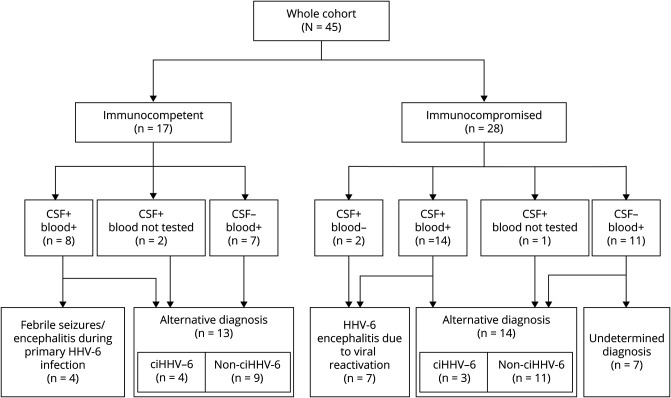
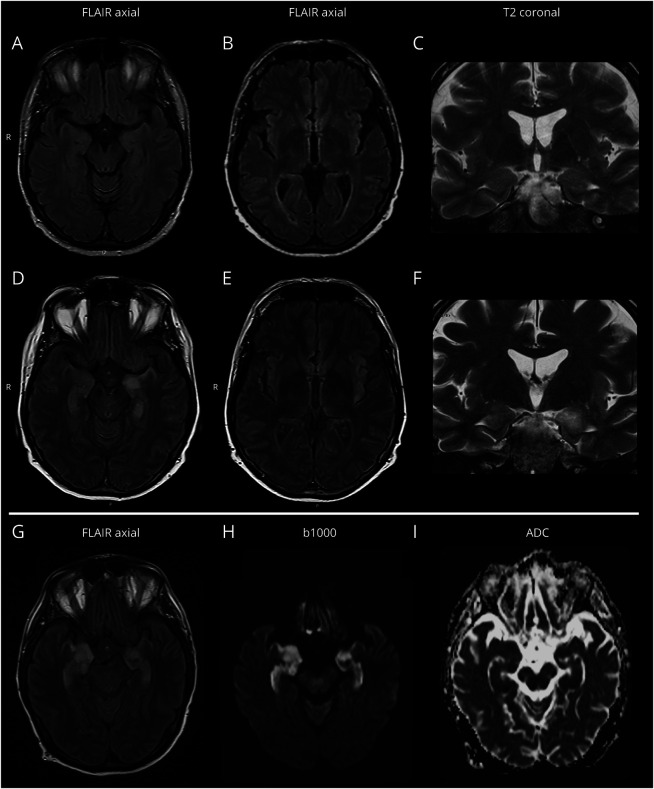
OBJECTIVE: The aim of this study was to analyze the clinical, radiologic, and biological features associated with human herpesvirus 6 (HHV-6) encephalitis in immunocompetent and immunocompromised hosts to establish which clinical settings should prompt HHV-6 testing. METHODS: We performed a retrospective research in the virology database of Fondazione IRCCS Policlinico San Matteo (Pavia, Italy) for all patients who tested positive for HHV-6 DNA in the CSF and/or in blood from January 2008 to September 2018 and separately assessed the number of patients meeting the criteria for HHV-6 encephalitis in the group of immunocompetent and immunocompromised hosts. RESULTS: Of the 926 patients tested for HHV-6 during the period of interest, 45 met the study criteria. Among immunocompetent hosts (n = 17), HHV-6 encephalitis was diagnosed to 4 infants or children presenting with seizures or mild encephalopathy during primary HHV-6 infection (CSF/blood replication ratio <<1 in all cases). Among immunocompromised hosts (n = 28), HHV-6 encephalitis was diagnosed to 7 adolescents/adults with hematologic conditions presenting with altered mental status (7/7), seizures (3/7), vigilance impairment (3/7), behavioral changes (2/7), hyponatremia (2/7), and anterograde amnesia (1/7). Initial brain MRI was altered only in 2 patients, but 6 of the 7 had a CSF/blood replication ratio >1. CONCLUSIONS: The detection of a CSF/blood replication ratio >1 represented a specific feature of immunocompromised patients with HHV-6 encephalitis and could be of special help to establish a diagnosis of HHV-6 encephalitis in hematopoietic stem cell transplant recipients lacking radiologic evidence of limbic involvement.
Overview
The claims and statistics of this paper haven’t been checked yet.
Free: it reads the open-access text and checks the first 5 claims that cite a source we can check. Create a free account to check every claim.
Integrity signals
Registry
Cites
Statistics
Figures
Verification
Claims the paper makes
The claims and statistics of this paper haven’t been checked yet.
Free: it reads the open-access text and checks the first 5 claims that cite a source we can check. Create a free account to check every claim.
Claims other papers make about this one
Each is checked against this paper’s own text: does it say what the citing paper says it does?
The cited source doesn’t support the claim as written.
In the citing paper
“Giulia Berzero et al. found that out of the 926 patients tested, 45 (4.85%) had HHV-6 detectable in their CSF. Of these, nine patients had true CNS infections caused by HHV-6, which means 1.18% of the total study population and 24% of the patients were HHV-6-positive in their CSF [12].”
From Human Herpesvirus 6—A Rare Aetiologic Agent for CNS Infections in Immunocompetent Individuals or an Underestimation? (2024) · cites this paper as [12]
Checked by a reasoning model — may be wrong.
Experimental — accuracy not yet measuredThe source backs part of the claim, not all of it — or backs it for a different population, condition or comparison.
In the citing paper
“which is higher than what is written in the literature (0.1% to 2.20% of the total study populations and 6% to 36% of the HHV-6-positive CSF samples).”
From Human Herpesvirus 6—A Rare Aetiologic Agent for CNS Infections in Immunocompetent Individuals or an Underestimation? (2024) · cites this paper as [12]
Experimental — accuracy not yet measuredThe source backs part of the claim, not all of it — or backs it for a different population, condition or comparison.
In the citing paper
“In our study, of the 100 patients who had a meningitis/encephalitis panel performed, 5 had HHV-6 DNA detectable in their CSF (5%), which is consistent with what we found in the literature (ranging from 1.9% to 11.45%).”
From Human Herpesvirus 6—A Rare Aetiologic Agent for CNS Infections in Immunocompetent Individuals or an Underestimation? (2024) · cites this paper as [12]
Experimental — accuracy not yet measuredThe source backs part of the claim, not all of it — or backs it for a different population, condition or comparison.
In the citing paper
“Whole blood quantitative polymerase chain reaction (qPCR) is very useful in distinguishing between iciHHV-6 and primary infection/reactivation.”
From Human Herpesvirus 6—A Rare Aetiologic Agent for CNS Infections in Immunocompetent Individuals or an Underestimation? (2024) · cites this paper as [12]
Experimental — accuracy not yet measuredThe source backs part of the claim, not all of it — or backs it for a different population, condition or comparison.
In the citing paper
“To distinguish between the two instances, qPCRs from both whole blood and CSF need to be performed [10,11,12].”
From Human Herpesvirus 6—A Rare Aetiologic Agent for CNS Infections in Immunocompetent Individuals or an Underestimation? (2024) · cites this paper as [12]
Experimental — accuracy not yet measured
Self-check
Percentages, sums and reported differences re-computed from the paper’s own numbers.
The self-check needs the paper’s full text.
Citations
Cites
Clinical Outcomes of Human Herpesvirus 6 Reactivation after Hematopoietic Stem Cell Transplantation
Zerr, D. M., Corey, L., Kim, H. W., Huang, M., Nguy, L., & Boeckh, M. (2005) · Clinical Infectious Diseases · doi:10.1086/428060 · Cited by 338
Post-transplant acute limbic encephalitis: Clinical features and relationship to HHV6
Seeley, W. W., Marty, F. M., Holmes, T. M., Upchurch, K., Soiffer, R. J., Antin, J. H., Baden, L. R., & Bromfield, E. B. (2007) · Neurology · doi:10.1212/01.wnl.0000265591.10200.d7 · Cited by 284
Ogata, M., Satou, T., Kadota, J.-I., Saito, N., Yoshida, T., Okumura, H., Ueki, T., Nagafuji, K., Kako, S., Uoshima, N., et al. (2013) · Clinical Infectious Diseases · doi:10.1093/cid/cit358 · Cited by 196
Ward, K. N., Leong, H. N., Thiruchelvam, A. D., Atkinson, C. E., & Clark, D. A. (2007) · Journal of Clinical Microbiology · doi:10.1128/jcm.02115-06 · Cited by 174 · cited 1×
“Although, indeed, the literature reports some cases of HHV-6 encephalitis in immunocompetent adults, in those cases, the detection of HHV-6 DNA in the CSF more likely reflects chromosomal integration rather than active CNS infection.(5) About 1% of healthy individuals harbor in fact sequences of HHV-6 DNA integrated i…”
BackgroundWard, K. N., Hill, J. A., Hubacek, P., de la Camara, R., Crocchiolo, R., Einsele, H., Navarro, D., Robin, C., Cordonnier, C., & Ljungman, P. (2019) · Haematologica · doi:10.3324/haematol.2019.223073 · Cited by 159
Human herpesviruses-6 and -7 each cause significant neurological morbidity in Britain and Ireland
Ward, K. N. (2005) · Archives of Disease in Childhood · doi:10.1136/adc.2004.062216 · Cited by 157 · cited 1×
“Such pathogenetic mechanism would be consistent with the benign course generally observed in these cases, at least in Caucasian infants.(2,6) Table 4 Clinical and Paraclinical Characteristics in the 7 Immunocompromised Patients With HHV-6 Replication Limited to Blood and No Definite Cause Identified for Their Neurolog…”
BackgroundZerr, D. M., Fann, J. R., Breiger, D., Boeckh, M., Adler, A. L., Xie, H., Delaney, C., Huang, M.-L., Corey, L., & Leisenring, W. M. (2011) · Blood · doi:10.1182/blood-2010-10-316083 · Cited by 138 · cited 3×
“Nonetheless, some reports suggest that the spectrum of neurologic manifestations associated with HHV-6 in HSCT recipients might be much broader.(9)”
BackgroundMethodInfluentialHuman herpes 6 virus encephalitis complicating allogeneic hematopoietic stem cell transplantation
Bhanushali, M. J., Kranick, S. M., Freeman, A. F., Cuellar-Rodriguez, J. M., Battiwalla, M., Gea-Banacloche, J. C., Hickstein, D. D., Pavletic, S., Fahle, G., & Nath, A. (2013) · Neurology · doi:10.1212/wnl.0b013e31828cf8a2 · Cited by 97 · cited 2×
“In most cases, clinical presentation was dominated by confusion and seizures, whereas more distinctive signs and symptoms such as anterograde amnesia and hyponatremia were present in only a minority of cases.(10) Although important to exclude alternative causes of neurologic deterioration, brain MRI showed typical lim…”
BackgroundUpdate on infections with human herpesviruses 6A, 6B, and 7
Agut, H., Bonnafous, P., & Gautheret-Dejean, A. (2017) · Médecine et Maladies Infectieuses · doi:10.1016/j.medmal.2016.09.004 · Cited by 96 · cited 3×
“HHV-6 reactivation is especially common following hematopoietic stem cell transplantation (HSCT), resulting in delayed engraftment,(7) fever, rash, hepatitis, pneumonitis, and encephalitis.(1) HHV-6 encephalitis is typical of the early posttransplantation period and has been classically described as a limbic encephali…”
BackgroundInfluentialNeurological Complications of Transplantation: Part I: Hematopoietic Cell Transplantation
Pruitt, A. A., Graus, F., & Rosenfeld, M. R. (2012) · The Neurohospitalist · doi:10.1177/1941874412455338 · Cited by 90
Cited by
Potential molecular mechanisms of chronic fatigue in long haul COVID and other viral diseases
Gottschalk, C. G., Peterson, D. L., Armstrong, J., Knox, K. K., & Roy, A. (2023) · Infectious Agents and Cancer · doi:10.1186/s13027-023-00485-z · Cited by 31
Baena, S. D. P., Jamardo, A. S., Castro, P., López‐González, F. J., Sánchez-Carpintero, R., Cerisola, A., Troncoso, M., Scarlet Witting, E., Barrios, A. J., Fons, C., et al. (2023) · Movement Disorders Clinical Practice · doi:10.1002/mdc3.13880 · Cited by 19
“In this study, we present a case where HHV-6 infection may have acted as a trigger, but its signi fi cance remains uncertain because of overlapping symptoms with the underlying genetic disease and incomplete ful fi llment of the criteria described by Ward et al. 28,29 Furthermore, one case exhibited a worsening of movem…”
BackgroundSarshari, B., Mohebbi, S. R., Ravanshad, M., Shahrokh, S., Aghdaei, H. A., & Zali, M. R. (2022) · Microbiology and Immunology · doi:10.1111/1348-0421.13013 · Cited by 16
“In addition to creating roseola, a self‐limited disease in children, encephalitis is another disease with a possible role of human herpesvirus 6 (HHV‐6).(16) The correlation of HHV‐6 with the gastrointestinal tract diseases is still under investigation and its role in stomach disorders is unclear.”
BackgroundZhu, H., Ali, A., Woan, K. V., Tam, E. L., Yaghmour, G., Flores, A., & Chaudhary, P. M. (2022) · Cell Transplantation · doi:10.1177/09636897221119734 · Cited by 15
A Rare Case of HHV-6 Encephalitis in an Immunocompetent Host: Case Report and Literature Review
Mekheal, E., Tagliaferri, A. R., Vasquez, K. S., Pjetergjoka, R., Lobue, G., Townsend, D., Leou, K., & Singhal, M. (2022) · Cureus · doi:10.7759/cureus.23007 · Cited by 14
“HHV-6 encephalitis can occur in an adult as a primary infection or reactivation, but often it occurs in the immunocompromised, hematopoietic stem cell transplantation (HSCT) patients, and solid organ transplant recipients [4-5].”
BackgroundDai, C., Mao, Z., Xu, Y., Jia, J., Tang, H., Zhao, Y., & Zhou, Y. (2024) · Analytical Chemistry · doi:10.1021/acs.analchem.4c01431 · Cited by 14
Human Herpes Virus 7-related encephalopathy in children.
Foiadelli, T., Rossi, V., Paolucci, S., Rovida, F., Novazzi, F., Orsini, A. A., Brambilla, I., Marseglia, G. L., Baldanti, F., & Savasta, S. (2022) · Acta bio-medica dell'Ateneo parmense/Acta biomedica · doi:10.23750/abm.v92is4.12664 · Cited by 22
“Relating HHV-7 DNA copies on CSF and whole blood, we observed that the CSF/blood ratio is higher in more severely ill patients, similarly to what already observed in HHV6 encephalitis by our group (49).”
ResultSelf-citationNeurology of Acute Viral Infections
Krett, J. D., Beckham, J. D., Tyler, K. L., Piquet, A. L., Chauhan, L., Wallace, C. J., Pastula, D. M., & Kapadia, R. K. (2022) · The Neurohospitalist · doi:10.1177/19418744221104778 · Cited by 13
Reemerging Infectious Diseases and Neuroimmunologic Complications
Nath, A., & Kolson, D. L. (2024) · Neurology Neuroimmunology & Neuroinflammation · doi:10.1212/nxi.0000000000200356 · Cited by 14
Kharbat, A. F., Lakshmi-Narasimhan, M., Bhaskaran, S., & Parat, S. (2022) · Cureus · doi:10.7759/cureus.25629 · Cited by 9
“Therefore, establishing HHV-6 as a cause of meningitis or encephalitis is difficult at the present time, as a polymerase chain reaction (PCR) test alone does not establish the etiology of the CNS infection [3,10,12].”
BackgroundMethodInfluentialLin, G. Y.-E., Lin, C., Chi, H., Huang, D. T., Huang, C., & Chiu, N. (2022) · Journal of Microbiology Immunology and Infection · doi:10.1016/j.jmii.2022.07.013 · Cited by 9
COVID-19, SARS-CoV-2 Vaccination, and Human Herpesviruses Infections
Maple, P. A. C. (2023) · Vaccines · doi:10.3390/vaccines11020232 · Cited by 12
“Human herpesvirus 6 (type not differentiated, but most likely 6B) [21] Encephalitis Leukaemia requiring haematopoietic stem cell transplant”
BackgroundKim, S., Choi, H. N., Jo, M. G., Lee, B., Kim, Y. J., Seong, H., Song, C., Yoo, H. S., Lee, J. H., Seong, D.-S., et al. (2024) · Journal of Medical Virology · doi:10.1002/jmv.29854 · Cited by 8
“34 In addition, immunocompromised patients who receive transplants or are elderly have a higher risk of developing neu-roinvasive diseases such as encephalitis and meningitis when infected with WNV. 35 The SFTSV is also more fatal because it causes encephalitis and death in immunocompromised…”
Herpesvirus-associated diseases: biomarkers and advancements in clinical research
Lu, L., Fan, M., Li, X., Su, W. Z., Wang, X., Xue, Y., Ma, L., Yao, K., Liu, Y., Jia, L., et al. (2025) · Virology Journal · doi:10.1186/s12985-025-02795-7 · Cited by 11
“…of limbic lobe encephalitis, especially when cranial MRI is performed soon after symptomatic onset; and (iii) the CSF/blood viral replication ratio proves instrumental in interpreting PCR test results, facilitating the accurate diagnosis of HHV-6 encephalitis in HSCT recipients [77] (Table 6).”
Milburn, J., Lechiile, K., Siamisang, K., Williams, C. G., Owen, L., Gwakuba, E., Machiya, T., Leeme, T., Barton, H. E., Doyle, R., et al. (2022) · Open Forum Infectious Diseases · doi:10.1093/ofid/ofac229 · Cited by 12
Neuropathology of the temporal lobe
Boluda, S., Seilhean, D., & Bielle, F. (2022) · Handbook of clinical neurology · doi:10.1016/b978-0-12-823493-8.00027-4 · Cited by 8
Ganea, O. A., Tilișcan, C., Streinu-Cercel, A., Pițigoi, D., Drăgănescu, A. C., Lazar, M., Mihai, N., Florea, D., Aramă, S. Ș., & Aramă, V. (2024) · Journal of Clinical Medicine · doi:10.3390/jcm13164660 · Cited by 7
“Of these, nine patients had true CNS infections caused by HHV-6, which means 1.18% of the total study population and 24% of the patients were HHV-6-positive in their CSF [12].”
BackgroundMethodInfluentialPerruccio, K., Ward, K. N., Tridello, G., Knelange, N. S., Zeiser, R., Franke, G., Sîrvent, A., Einsele, H., González‐Vicent, M., Navarro, J. M. F., et al. (2025) · Bone Marrow Transplantation · doi:10.1038/s41409-025-02638-7 · Cited by 7
HHV-6 in Cerebrospinal Fluid in Immunocompetent Children
Nikolskiy, M. A., Lioznov, D. A., Юрьевич, Г. Е., & Владимировна, В. Т. (2023) · BioMed · doi:10.3390/biomed3030034 · Cited by 8
“Another Italian study found four cases of HHV-6 encephalitis in primary infection over a 10-year period [13].”
BackgroundYu, Y., Chen, W., Fu, H., Shi, J., Luo, Y., Yu, J., Lai, X., Liu, L., Ye, Y., Zhang, C., et al. (2024) · Bone Marrow Transplantation · doi:10.1038/s41409-024-02332-0 · Cited by 7
Ono, T., Iwasaki, T., Terada, Y., Mori, Y., Nejima, R., Ozaki, M., Mochizuki, M., & Miyata, K. (2022) · BMC Ophthalmology · doi:10.1186/s12886-022-02274-5 · Cited by 6
“Reactivation of HHV-6B has been demonstrated to be related to encephalitis [7] and hypersensitivity syndrome in immunocompetent hosts [8, 9].”
BackgroundCarneiro, V. C. D. S., Moreira, O. C., Coelho, W. L. D. C. N. P., Rio, B. C., Sarmento, D. J. D. S., Salvio, A. L., Alves‐Leon, S. V., de Paula, V. S., & Leon, L. A. A. (2023) · International Journal of Molecular Sciences · doi:10.3390/ijms241311201 · Cited by 6
A Classic Presentation of Roseola Infantum
Pippin, M., & Laws, G. (2024) · Cureus · doi:10.7759/cureus.52504 · Cited by 5
“These patients most commonly experience neurologic complications such as encephalitis, but cases of myocarditis, hepatitis, pneumonitis, and gastrointestinal disease have been reported [1,11-12].”
BackgroundInherited Chromosomally Integrated HHV-6: Diagnosis and Clinical Features
Miura, H., & Yoshikawa, T. (2025) · Pediatric Infectious Disease Journal · doi:10.1097/inf.0000000000004890 · Cited by 4
AMPK restricts HHV-6A replication by inhibiting glycolysis and mTOR signaling
Yang, X., Tian, S., Min, Z., Garbarino, E., Ma, J., Jia, J., Tang, H., & Li, L. (2024) · Virology · doi:10.1016/j.virol.2024.110080 · Cited by 5
Acute infections of the central nervous system in children and adults: diagnosis and management
Trujillo-Gómez, J., Navarro, C. E., Atehortúa-Muñoz, S. L., & Flórez, I. D. (2024) · Minerva Medica · doi:10.23736/s0026-4806.24.09097-9 · Cited by 6
Orsini, A. A., Bernasconi, S., Bianchi, M. C., Trivelli, I., Menconi, M., Nardi, M., Santangelo, A., Casazza, G., Carli, N., Esposito, M. G., et al. (2022) · Acta bio-medica dell'Ateneo parmense/Acta biomedica · doi:10.23750/abm.v92is4.12665 · Cited by 4
“The diagnosis of PRES is made by recognition of the clinical features and it is supported by the use of neuroimaging and electroencephalography, while ruling out other possible infectious/toxic and vascular etiologies (15-20).”
MethodSelf-citationAllen, C., Rao, S. J., Gill, K., Wolff, M., & Haas, C. J. (2023) · IDCases · doi:10.1016/j.idcr.2023.e01720 · Cited by 4
“4 thousands of copies in the CSF and millions of copies in the blood should raise concern for chromosomal integration of HHV-6 [11].”
BackgroundDetection of human herpesvirus type 6 DNA in cerebrospinal fluid is rarely clinically significant
Edén, A., Ahlin, A., Lindh, M., & Westin, J. (2025) · Journal of Clinical Virology · doi:10.1016/j.jcv.2025.105884 · Cited by 4
Identifying CNS infections in transplantation and immunomodulatory therapy
Alviz, L. F., Jones, B. S., Agnihotri, S., & Thakur, K. T. (2024) · Therapeutic Advances in Infectious Disease · doi:10.1177/20499361241298456 · Cited by 9
Bui, N. E., Savla, P., Galvis, A. E., & Hanak, B. W. (2024) · Surgical Neurology International · doi:10.25259/sni_355_2024 · Cited by 3
Herpesvirus-host interactions in neurological diseases: the immunogenetic role of HLA-E
Graninger, M., Puchhammer‐Stöckl, E., & Vietzen, H. (2025) · Journal of Virology · doi:10.1128/jvi.00869-25 · Cited by 2
Sarhan, N. H., Amor, M. G.-B., Yasir, S. J., & Gdoura, R. (2026) · Microbiology Research · doi:10.3390/microbiolres17050098 · Cited by 2
“Such reactivation is often associated with inflammatory and pathological processes, including severe complications such as encephalitis, bone marrow suppression, and increased susceptibility to secondary infections [5,8,9].”
Evaluation of Inborn Errors of Immunity Among Patients with Opportunistic Pulmonary Infection
Husmann, R., Lehman, A. C., Nelson, R. W., & Pragman, A. A. (2024) · Clinics in Chest Medicine · doi:10.1016/j.ccm.2024.10.005 · Cited by 2
Ten Years of Neurology ® Neuroimmunology & Neuroinflammation: Decade in Review
Dalmau, J. O., Dalakas, M. C., Kolson, D. L., Pröbstel, A., Paul, F., & Zamvil, S. S. (2024) · Neurology Neuroimmunology & Neuroinflammation · doi:10.1212/nxi.0000000000200363 · Cited by 3
“71 Thus, the family of herpesviruses continues to drive serious neurologic complications throughout the age spectrum, and the development of newer immunomodulating therapies for neurologic disorders is likely to increase the prevalence of these complications.”
Combet, M., Gautheret-Dejean, A., Luyt, C. E., Weiss, N., Mayaux, J., Lecronier, M., Calligaris, C., Demeret, S., Gauthier, N., Dres, M., et al. (2025) · Clinical Infectious Diseases · doi:10.1093/cid/ciaf199 · Cited by 4
The Evaluation of a Rapid Syndromic Multiplex Meningitis/Encephalitis RT-qPCR MX-17 Panel
Mahroum, N., Yashar, M., Ugur, F. N., ÖZ, N. Z., Ülfer, G., Tosun, A. İ., & Yılmaz, M. (2025) · Diagnostics · doi:10.3390/diagnostics15202629 · Cited by 2
“In turn, HHV-6, a causative agent of encephalitis, is prevalent during infancy and early childhood [29], while in adults it is primarily seen in immunocompromised patients [30,31].”
Alzahrani, N., Alshehri, A., Alshehri, A., & Johani, S. A. (2025) · Diagnostics · doi:10.3390/diagnostics15212699 · Cited by 2
“However, its role in CNS infections remains unclear and its frequent detection in our study raises questions regarding its clinical significance as a primary pathogen or bystander of neuroinflammatory processes [21,22].”
Tang, J., Kang, Z., Cui, S., Xu, H., Ren, H., Li, P., Han, J., & Zou, Y. (2025) · Diagnostic Microbiology and Infectious Disease · doi:10.1016/j.diagmicrobio.2025.117196 · Cited by 1
Trentadue, T. P., Sosa, S. M., Itoh, C. Y., Modi, T., Norgan, A. P., Triplet, E. M., Santilli, A. R., Coon, E. A., & Toledano, M. (2025) · Neurology · doi:10.1212/wnl.0000000000214429 · Cited by 1
Atypical manifestation of human herpes virus-6 encephalitis with extra-limbic lesions: a case report
Ahn, S. H., Ahn, S., & Chu, K. (2026) · encephalitis · doi:10.47936/encephalitis.2025.00115 · Cited by 1
“In rare cases, HHV-6 encephalitis has been re-ported in immunocompetent patients as well [4-7].”
InfluentialThe Cases of Acute Necrotizing Encephalopathy Due to Human Herpes Virus-6
YILMAZ, İ., Eyduran, E., Aslan, A. D., Havan, M., İnceli, B. H., Özdemir, H., Tabanlı, F. P., Yıldırım, M., & Kendirli, T. (2026) · The Pediatric Infectious Disease Journal · doi:10.1097/inf.0000000000005187 · Cited by 1
Иванович, Ю. К., Yakushina, S. A., Ne, F., Кистенева, Л. Б., Kelly, E. I., Kanibolotskiy, A. A., Ivkin, Y. N., Antipiat, N. A., Tyurin, I. N., Larichev, V. F., et al. (2024) · Problems of Virology · doi:10.36233/0507-4088-215 · Cited by 1
Lajoye, A.-L., Ciocanu, D., Duverlie, G., & Berquin, P. (2025) · IDCases · doi:10.1016/j.idcr.2025.e02219
“Reactivation is frequent and is typically asymptomatic in immunocompetent adults but clinically severe in immunocompromised people, such as those taking immunosuppressive drugs or having undergone hematopoietic stem cell transplantation [1, 4].”
Sarshari, B., Mohebbi, S. R., Ravanshad, M., Shahrokh, S., Asadzadeh‐Aghdaei, H., & Zali, M. R. (2021) · Research Square · doi:10.21203/rs.3.rs-898536/v1
Chenari, M., Rezaie, F., Foroushani, A. R., Mozhgani, S., Parhizgari, N., Saburi, A., & Mokhtari‐Azad, T. (2022) · Research Square · doi:10.21203/rs.3.rs-1799858/v1
Primary Human Herpes Virus-6 Causing Recalcitrant Pyrexia after Pilocytic Astrocytoma Resection
Chan, J. L., Nisson, P. L., Danielpour, M., & Green, J. (2023) · Pediatric Neurosurgery · doi:10.1159/000530114 · Cited by 1
Ji, E., Park, S. E., Oh, S. H., Chang, C. L., Lee, Y., & Kim, I. (2023) · Laboratory Medicine Online · doi:10.47429/lmo.2023.13.3.237
Xu, B., Jia, Y., Lv, L., Chen, L., Cheng, P., Ren, S., Liu, H., Zhang, M., & Zhang, H. (2023) · Acta Biochimica et Biophysica Sinica · doi:10.3724/abbs.2023161
Imaging of Central Nervous System Infections in the Immunocompromised Patient
Holmes, A. S., Blue, M. J., Diaz, M. A., Kuner, A. D., & Albertson, M. E. (2024) · Contemporary Diagnostic Radiology · doi:10.1097/01.cdr.0001017656.44879.99 · Cited by 1
Nicolau, I., Mihăilescu, I., Andonie, C., & Rad, F. (2024) · Psihiatru ro · doi:10.26416/psih.78.3.2024.10095
КЛАСИЧНИЙ ВИПАДОК ДИТЯЧОЇ РОЗЕОЛИ
Kopcha, V. S., & Кубішин, Т. З. (2024) · Інфекційні хвороби · doi:10.11603/1681-2727.2024.3.14881
Zhou, Y., Zhu, Y., Cao, L., Shi, Y., & Shen, J. (2025) · PLoS ONE · doi:10.1371/journal.pone.0318818
Relationship Between CNS Infections, Stroke, and Neurological Complications: A Case Series
Soni, K., Fannin, E. S., & Valadi, N. (2025) · Cureus · doi:10.7759/cureus.78558
“One study comparing HHV6 in immunocompromised to immunocompetent hosts found that while HHV6 in immunocompetent individuals was limited to infants younger than three years old, HHV6 can be reactivated in immunocompromised adults, leading to neurological complications such as encephalitis [6].”
Stillbirth linked to co-infections of dengue fever, Epstein-Barr virus and human herpesvirus-6
Deshpande, H. G., Wagh, S. M., Raut, C. G., & Gaikwad, V. (2025) · BMJ Case Reports · doi:10.1136/bcr-2024-263660
Dilemmas in HHV-6-associated neurological diseases
Gołuchowska, N., Mejer-Zahorowska, A., Pogonowska, M., Piwowarczyk, A., Kuchar, E. P., & Kalicki, B. (2025) · Pediatria i Medycyna Rodzinna · doi:10.15557/pimr.2024.0070
“Berzero et al. found HHV-6 in CSF in approximately 4.6% of patients, encephalitis during primary infection in 0.4%, and encephalitis due to viral reactivation in 0.8% of patients (5) .”
InfluentialDrozdovskaya, P. A., & Zinserling, V. A. (2025) · Journal Infectology · doi:10.22625/2072-6732-2025-17-2-21-31
Sánchez, O. F. R., Mendoza, R. A. A., & Contreras, E. B. (2025) · PubMed Central · doi:10.7759/cureus.88305
Acute Meningitis/Encephalitis Presumably Secondary to Human Herpesvirus 6: A Case Report
Gonzalez, J., Avellan, R., Lopez, C. B., Bedran, K. H., & Bonilla, L. D. P. (2025) · Cureus · doi:10.7759/cureus.89609
“This complicates diagnostic measures in patients with symptoms suggestive of this etiology [6,7].”
Nikolskiy, M. A., Lioznov, D. A., Gorelik, E. Y., & Vishnevskaya, T. V. (2025) · Epidemiology and Infectious Diseases · doi:10.17816/eid653622
Liu, X., Yang, W., Chen, X., Liu, Y., Zhao, Y., Li, Y., Chen, N., & Cui, J. (2025) · Frontiers in Immunology · doi:10.3389/fimmu.2025.1623291
“Human herpesvirus 6 (HHV-6), a ubiquitous beta-herpesvirus with a high global seroprevalence exceeding 90% in adults, exhibits distinct biological characteristics that may have implications for chronic health conditions (10).”
Conus medullaris myelitis associated with HHV-6 in an immunocompetent young adult
Saab, L., Li, M., Brandes, L. E., & Merati, M. (2025) · Journal of the Neurological Sciences · doi:10.1016/j.jns.2025.123718
Acute Hemorrhagic Leukoencephalitis Caused by Human Herpesvirus 6
Fernandes, L. (2025) · JAMA Neurology · doi:10.1001/jamaneurol.2025.3922
“Systematic review of HHV-6 and febrile seizures: Should the ER include it in the viral panel?”
Gagadam, S., & Foy, V. (2025) · Journal of Clinical Virology Plus · doi:10.1016/j.jcvp.2025.100233
Infectious, Inflammatory and Autoimmune, and Toxic
Hooper, G. W., Kumari, S., & Holsworth, T. (2025) · Springer eBooks · doi:10.1007/978-3-032-05385-5_3
Patel, S., Hussain, A., Rafferty, W., & Palacios, C. F. (2025) · Infectious Diseases in Clinical Practice · doi:10.1097/ipc.0000000000001480
Human Herpesvirus 6 Encephalitis in an Immunocompetent Elderly Adult: A Case Report
Barbosa, B. R., Ferreira, J., Bonito, I., Carvalho, I. P., & Pona, A. P. (2025) · Cureus · doi:10.7759/cureus.100066 · Cited by 1
“Human herpesvirus 6 (HHV-6), first identified in 1986 in patients with lymphoproliferative disorders, consists of two distinct species: HHV-6A and HHV-6B [3,4].”
An Uncommon Case of Disseminated Human Herpesvirus 6 Infection in an Immunocompetent Adult
Caetano, I. L., Cardoso, J. V., Silva, A. S., Reiriz, E., & Cipriano, A. S. (2026) · Cureus · doi:10.7759/cureus.102404
Khalid, A., Singh, S., Khalid, R., & Payne, M. (2026) · Sage Open Pediatrics · doi:10.1177/30502225261421713
Recent advances and trends in critical care of neuro-infectious disease
Crayle, J. I., & Arshi, B. (2026) · Current Opinion in Critical Care · doi:10.1097/mcc.0000000000001413
Bondarenko, A. V., Кацапов, Д. В., & Bondarenko, O. V. (2026) · Immunology and Allergy Science and Practice · doi:10.37321/immunology.2026.2-01
Present-Focused Cognitive Rehabilitation Treatment in Limbic Encephalitis
Gold, B. C., Ogale, N., Ross, K., Meni, D., Arteaga, A. G., & Sacks-Zimmerman, A. L. (2026) · Archives of Rehabilitation Research and Clinical Translation · doi:10.1016/j.arrct.2026.100683
朱, 元. (2026) · Journal of Clinical Personalized Medicine · doi:10.12677/jcpm.2026.54232
Wei, E., Shang, P., Li, F., Yan, K., Zhang, M., Fang, X., Jia, P., 王建东, Zhao, J., Li, N., et al. (2026) · Frontiers in Cellular and Infection Microbiology · doi:10.3389/fcimb.2026.1909287
Kondo, S., Nishioka, S. T., Garcia, J. J., & Tatsuno, B. K. (2026) · European Journal of Case Reports in Internal Medicine · doi:10.12890/2026_007465
HHV-6 detection in children with encephalitis: a single-centre retrospective cohort study, 2010–2025
Guruprasad, S., Yildirim, Y., Brown, J. R., Hatcher, J., Kaliakatsos, M., Hassell, J. K., Breuer, J., Brierley, J., O’Connor, D., Ip, W., et al. (2026) · Clinical Microbiology and Infection · doi:10.1016/j.cmi.2026.10.027
Metadata
- Authors
- Berzero, G., Campanini, G., Vegezzi, E., Paoletti, M., Pichiecchio, A., Simoncelli, A. M., Colombo, A. A., Bernasconi, P., Borsani, O., Di Matteo, A., Rossi, V., Foiadelli, T., Savasta, S., Compagno, F., Zecca, M., Baldanti, F., & Marchioni, E.
- Affiliations
- University of Pavia (IT)
- From the Neuroncology Unit (G.B., E.V., E.M.), and Neuroradiology Unit (M.P., A.P.), IRCCS Mondino Foundation, Pavia; Molecular Virology Unit (G.C., F.B.), Microbiology and Virology Department, Diagnostic Radiology, Interventional Radiology and Neuroradiology Unit (A.M.S.), Bone Marrow Transplantation Unit (A.A.C., P.B., O.B.), Infectious and Tropical Diseases Unit (A.D.M.), Pediatric Clinic (V.R., T.F., S.S.), and Pediatric Hematology/Oncology (F.C., M.Z.), Fondazione IRCCS Policlinico San Matteo,...
- Corresponding author
- Marchioni, Enrico
- ORCID
- Venue
- Neurology Neuroimmunology & Neuroinflammation
- Published
- 2021-03-04
- Volume
- 8
- Issue
- 2
- ISSN
- 2332-7812 (ISSN-L)
- PMC
- PMC7963435
- OpenAlex
- W3120749833
- Cited by
- 76
- References
- 21
- Citations by year
- 2026: 12 · 2025: 26 · 2024: 16 · 2023: 9 · 2022: 12 · 2021: 1
- FWCI
- 6.84
- Type
- journal article
- Language
- en
- Open access
- gold
- doi.org
- Licence
- cc-by-nc-nd
- Locations
- Neurology Neuroimmunology & Neuroinflammation (publishedVersion, cc-by-nc-nd)
- PubMed Central (publishedVersion, cc-by-nc-nd)
- PubMed (publishedVersion)
- UNICA IRIS Institutional Research Information System (University of Cagliari) (submittedVersion, other-oa)
- Archivio Istituzionale della Ricerca - Università Vita-Salute San Raffaele (submittedVersion)
- Funders
- Ministero della Salute (2018‐2020, 2018-, RC2018-2020, RC2018)
- Topics
- Health Sciences › Medicine › Epidemiology › Cytomegalovirus and herpesvirus research
- Health Sciences › Medicine › Oncology › Viral-associated cancers and disorders
- Health Sciences › Medicine › Infectious Diseases › Infectious Encephalopathies and Encephalitis
- Keywords
- human herpesvirus 6, HHV-6 encephalitis, immunocompromised patients, immunocompetent patient, hematopoietic stem cell transplant recipients, seizures, altered mental status, hyponatremia, anterograde amnesia, pediatric encephalitis, brain MRI findings
- MeSH terms
- Adolescent, Adult, Antiviral Agents, Female, Humans, Male, Retrospective Studies, Seizures, Herpesvirus 6, Human, Immunocompromised Host, Hematopoietic Stem Cell Transplantation, Encephalitis, Viral, Roseolovirus Infections, Young Adult
About these checks
Registry, retraction, Cites and statistics results are computed, not judged, with one exception: a printed reference that no index lists is read once by a model before it counts as a citation error. Claims are extracted by a model and kept only when their quote appears verbatim in the text; each cited source is then checked, with a model’s help, for whether it says what the claim relies on. Those verdicts can be wrong — read the claim’s quote and the cited source before relying on one.
Statistics and arithmetic are recomputed, not judged.
Confidence bands are shown only for fields calibrated on our annotated test set. None is calibrated yet, so no band is shown.
What counts as a claim ›How we measure confidence ›How we check this ›
Are you an author, or do you see a problem with this page? Request a review
Data sources
Bibliographic data: Semantic Scholar, OpenAlex, Crossref.
Contains information from the Semantic Scholar Academic Graph Datasets, made available under the ODC Attribution License (ODC-BY 1.0).
Semantic Scholar’s data is described in: Kinney, R., et al. (2023). The Semantic Scholar Open Data Platform. arXiv:2301.10140.
