

Plasma tau in Alzheimer disease
Open accessThe DOI matches its Crossref record; 25 of the 25 references it cites were found in a registry or an index.
Abstract
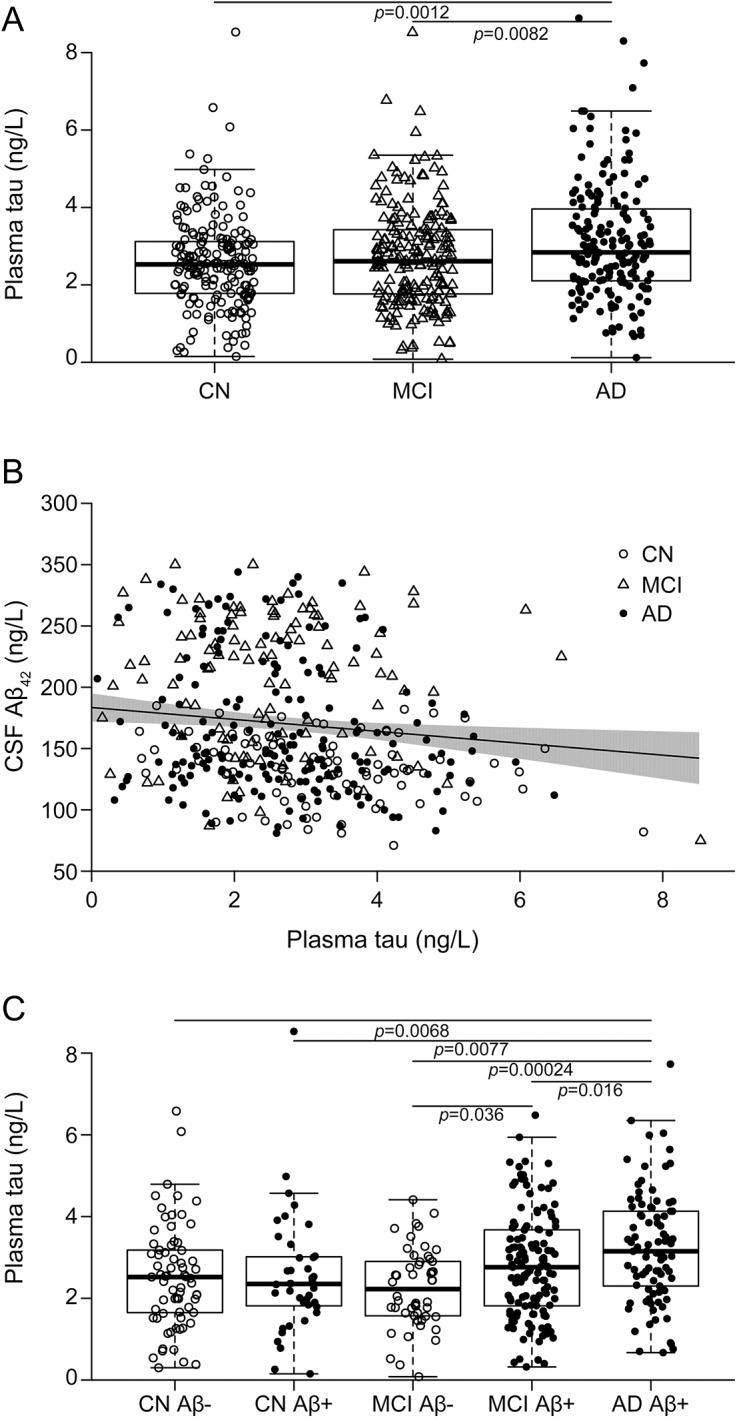
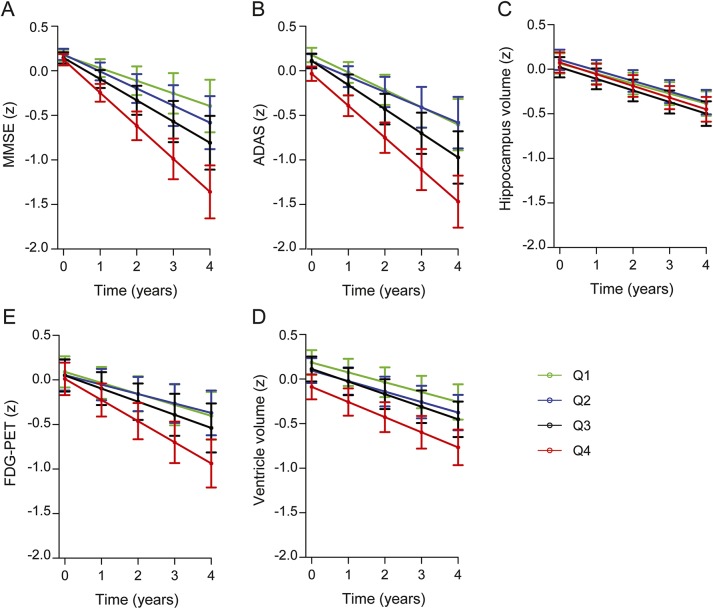
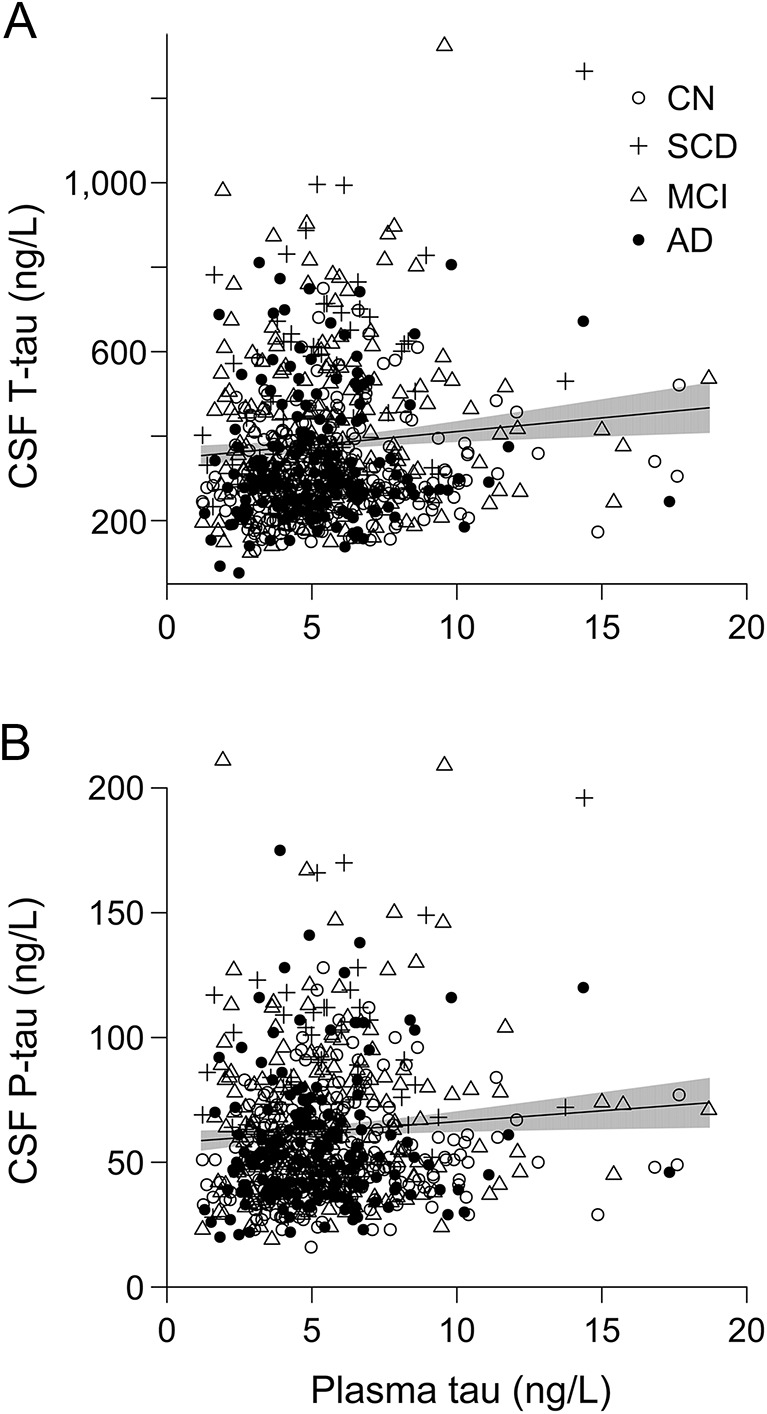
Objective:To test whether plasma tau is altered in Alzheimer disease (AD) and whether it is related to changes in cognition, CSF biomarkers of AD pathology (including β-amyloid [Aβ] and tau), brain atrophy, and brain metabolism. Methods:This was a study of plasma tau in prospectively followed patients with AD (n = 179), patients with mild cognitive impairment (n = 195), and cognitive healthy controls (n = 189) from the Alzheimer's Disease Neuroimaging Initiative (ADNI) and cross-sectionally studied patients with AD (n = 61), mild cognitive impairment (n = 212), and subjective cognitive decline (n = 174) and controls (n = 274) from the Biomarkers for Identifying Neurodegenerative Disorders Early and Reliably (BioFINDER) study at Lund University, Sweden. A total of 1284 participants were studied. Associations were tested between plasma tau and diagnosis, CSF biomarkers, MRI measures, 18fluorodeoxyglucose-PET, and cognition. Results:Higher plasma tau was associated with AD dementia, higher CSF tau, and lower CSF Aβ42, but the correlations were weak and differed between ADNI and BioFINDER. Longitudinal analysis in ADNI showed significant associations between plasma tau and worse cognition, more atrophy, and more hypometabolism during follow-up. Conclusions:Plasma tau partly reflects AD pathology, but the overlap between normal aging and AD is large, especially in patients without dementia. Despite group-level differences, these results do not support plasma tau as an AD biomarker in individual people. Future studies may test longitudinal plasma tau measurements in AD.
Overview
The claims and statistics of this paper haven’t been checked yet.
Free: it reads the open-access text and checks the first 5 claims that cite a source we can check. Create a free account to check every claim.
Integrity signals
Registry
Cites
Statistics
Figures
Verification
Claims the paper makes
The claims and statistics of this paper haven’t been checked yet.
Free: it reads the open-access text and checks the first 5 claims that cite a source we can check. Create a free account to check every claim.
Claims other papers make about this one
Each is checked against this paper’s own text: does it say what the citing paper says it does?
The cited source doesn’t support the claim as written.
In the citing paper
“Studies of plasma t-tau in AD and FTLD, including the present one, have found no relationship between plasma and CSF t-tau.13”
From Plasma Tau and Neurofilament Light in Frontotemporal Lobar Degeneration and Alzheimer Disease (2021) · cites this paper as [13]
Checked by a reasoning model — may be wrong.
Experimental — accuracy not yet measuredThe source backs part of the claim, not all of it — or backs it for a different population, condition or comparison.
In the citing paper
“Also in agreement with the present results are those from 2 large AD cohorts, in which plasma t-tau was associated with faster clinical decline.13”
From Plasma Tau and Neurofilament Light in Frontotemporal Lobar Degeneration and Alzheimer Disease (2021) · cites this paper as [13]
Experimental — accuracy not yet measuredThe source backs part of the claim, not all of it — or backs it for a different population, condition or comparison.
In the citing paper
“Whereas blood t-tau shows no diagnostic potential for AD, 13 NfL in blood shows a clear increase in AD, 4 and also tracks neurofibrillary tangle load and cognitive decline.14,15”
From Plasma Tau and Neurofilament Light in Frontotemporal Lobar Degeneration and Alzheimer Disease (2021) · cites this paper as [13]
Experimental — accuracy not yet measuredThe cited source says what the claim attributes to it.
In the citing paper
“Plasma t-tau was weakly elevated and correlated with more severe longitudinal hypometabolism in patients with AD compared to controls.13”
From Plasma Tau and Neurofilament Light in Frontotemporal Lobar Degeneration and Alzheimer Disease (2021) · cites this paper as [13]
The cited source says what the claim attributes to it.
In the citing paper
“Many candidate blood biomarkers have failed in replication studies,7,8 but somewhat promising results have been seen for plasma tau, neurofilament light chain (NFL), and combinations of Aβ42 and Aβ40.9,10,11,12,13,14,15,16,17”
From Performance of Fully Automated Plasma Assays as Screening Tests for Alzheimer Disease–Related β-Amyloid Status (2019) · cites this paper as [16]
Self-check
Percentages, sums and reported differences re-computed from the paper’s own numbers.
The self-check needs the paper’s full text.
Citations
Cites
McKhann, G., Drachman, D., Folstein, M., Katzman, R., Price, D., & Stadlan, E. M. (1984) · Neurology · doi:10.1212/wnl.34.7.939 · Cited by 27,915
Statistical Analysis With Missing Data
Lahiff, M., Little, R. J. A., & Rubin, D. B. (1989) · Journal of the American Statistical Association · doi:10.2307/2289883 · Cited by 17,265
Statistical Analysis with Missing Data
Little, R. J. A., & Rubin, D. B. (2002) · Wiley Series in Probability and Statistics · doi:10.1002/9781119013563 · Cited by 8,473
The Alzheimer’s disease neuroimaging initiative (ADNI): MRI methods
Jack, C. R., Bernstein, M. A., Fox, N. C., Thompson, P., Alexander, G., Harvey, D., Borowski, B., Britson, P. J., L. Whitwell, J., Ward, C., et al. (2008) · Journal of Magnetic Resonance Imaging · doi:10.1002/jmri.21049 · Cited by 4,347 · cited 2×
“FreeSurfer was used for quantification of volumes.(14) Right and left hippocampi were averaged.”
MethodSelf-citationAlzheimer's Disease Neuroimaging Initiative (ADNI): Clinical characterization
Petersen, R. C., Aisen, P. S., Beckett, L. A., Donohue, M. C., Gamst, A. C., Harvey, D. J., Jack, C. R., Jagust, W. J., Shaw, L. M., Toga, A. W., et al. (2010) · Neurology · doi:10.1212/wnl.0b013e3181cb3e25 · Cited by 3,060
Self-citationCerebrospinal fluid biomarker signature in Alzheimer's disease neuroimaging initiative subjects
Shaw, L. M., Vanderstichele, H., Knapik‐Czajka, M., Clark, C. M., Aisen, P. S., Petersen, R. C., Blennow, K., Soares, H., Simon, A., Lewczuk, P., et al. (2009) · Annals of Neurology · doi:10.1002/ana.21610 · Cited by 2,065 · cited 2×
“Several of the ADNI procedures have been described previously.(12,13) CSF Ab42, T-tau, and P-tau were measured with the multiplex xMAP Luminex platform (Luminex Corp, Austin, TX) with the INNOBIA AlzBio3 kit (Fujirebio, Ghent, Belgium).”
MethodSelf-citationCerebrospinal fluid and plasma biomarkers in Alzheimer disease
Blennow, K., Hampel, H., Weiner, M., & Zetterberg, H. (2010) · Nature Reviews Neurology · doi:10.1038/nrneurol.2010.4 · Cited by 1,863
Self-citationDiagnostic and Statistical Manual of Mental Disorders (DSM-III-R)
Spitzer, R. L., & Williams, J. (1987) · Cited by 1,823
Amyloid deposition, hypometabolism, and longitudinal cognitive decline
Landau, S. M., Mintun, M. A., Joshi, A. D., Koeppe, R. A., Petersen, R. C., Aisen, P. S., Weiner, M. W., Jagust, W. J., & Initiative, F. T. A. D. N. (2012) · Annals of Neurology · doi:10.1002/ana.23650 · Cited by 727 · cited 1×
“(18)Fluorodeoxyglucose (FDG)PET image data were acquired (at screening and 6, 12, 18, 24, 36 and 48 months; n: CNs, 86, 80, 73, 0, 71, 61, and 51; MCI, 96, 90, 88, 80, 72, 57, and 29; AD, 91, 83, 71, 1, 55, 1, and 1) as described previously.(15) For FDG-PET, we averaged counts of the lateral and medial frontal, anteri…”
Self-citationAmyloid biomarkers in Alzheimer's disease
Blennow, K., Mattsson, N., Schöll, M., Hansson, O., & Zetterberg, H. (2015) · Trends in Pharmacological Sciences · doi:10.1016/j.tips.2015.03.002 · Cited by 470 · cited 1×
“Brain accumulation of b-amyloid (Ab) and phosphorylated tau (P-tau) in Alzheimer disease (AD) may be monitored by CSF and PET biomarkers.(1) These technologies have revolutionized clinical research and trials and are rapidly transforming clinical practice.”
BackgroundSelf-citationPlasma tau levels in Alzheimer's disease
Zetterberg, H., Wilson, D., Andreasson, U., Minthon, L., Blennow, K., Randall, J., & Hansson, O. (2013) · Alzheimer's Research & Therapy · doi:10.1186/alzrt163 · Cited by 387
Self-citationDetailed comparison of amyloid PET and CSF biomarkers for identifying early Alzheimer disease
Palmqvist, S., Zetterberg, H., Mattsson, N., Johansson, P., Initiative, F. T. A. D. N., Minthon, L., Blennow, K., Olsson, M., For the Swedish BioFINDER study group, Hansson, O., et al. (2015) · Neurology · doi:10.1212/wnl.0000000000001991 · Cited by 375 · cited 1×
“Inclusion/exclusion criteria have been described elsewhere.(16,17) CNs were originally enrolled from the population-based European Prospective Investigation Into Cancer and Nutrition (EPIC) cohort.”
BackgroundSelf-citationPalmqvist, S., Zetterberg, H., Blennow, K., Vestberg, S., Andreasson, U., Brooks, D. J., Owenius, R., Hägerström, D., Wollmer, P., Minthon, L., et al. (2014) · JAMA Neurology · doi:10.1001/jamaneurol.2014.1358 · Cited by 368
Self-citationReview and Meta-Analysis of Biomarkers and Diagnostic Imaging in Alzheimer's Disease
Bloudek, L. M., Spackman, D. E., Blankenburg, M., & Sullivan, S. D. (2011) · Journal of Alzheimer’s Disease · doi:10.3233/jad-2011-110458 · Cited by 282 · cited 6×
“Patients with a clinical syndrome of AD dementia met the DSM-III-R criteria for dementia19 and the National Institute of Neurologic and Communicative Disorders and Stroke and the Alzheimer’s Disease and Related Disorders Association criteria for AD.11 All participants with plasma tau data were included.”
BackgroundInfluentialCerebrospinal fluid neurogranin: relation to cognition and neurodegeneration in Alzheimer’s disease
Portelius, E., Zetterberg, H., Skillbäck, T., Törnqvist, U., Andreasson, U., Trojanowski, J. Q., Weiner, M. W., Shaw, L. M., & Mattsson, N. (2015) · Brain · doi:10.1093/brain/awv267 · Cited by 279 · cited 1×
“Several of the ADNI procedures have been described previously.(12,13) CSF Ab42, T-tau, and P-tau were measured with the multiplex xMAP Luminex platform (Luminex Corp, Austin, TX) with the INNOBIA AlzBio3 kit (Fujirebio, Ghent, Belgium).”
MethodSelf-citationRandall, J., Mörtberg, E., Provuncher, G. K., Fournier, D. R., Duffy, D. C., Rubertsson, S., Blennow, K., Zetterberg, H., & Wilson, D. H. (2013) · Resuscitation · doi:10.1016/j.resuscitation.2012.07.027 · Cited by 230
Self-citationHaftenberger, M., Schuit, A., Tormo, M., Boeing, H., Wareham, N., Bueno-de-Mesquita, H., Kumle, M., Hjartåker, A., Chirlaque, M., Ardanaz, E., et al. (2002) · Public Health Nutrition · doi:10.1079/phn2002397 · Cited by 150 · cited 1×
“CNs were originally enrolled from the population-based European Prospective Investigation Into Cancer and Nutrition (EPIC) cohort.(18) The inclusion criteria were age $60 years, MMSE score of 28 to 30, and fluent in Swedish.”
MethodChiu, M.-J., Chen, Y.-F., Chen, T.-F., Yang, S.-Y., Yang, F.-P. G., Tseng, T.-W., Chieh, J.-J., Chen, J.-C. R., Tzen, K.-Y., Hua, M.-S., et al. (2014) · Human Brain Mapping · doi:10.1002/hbm.22390 · Cited by 140 · cited 1×
“One study using the immunomagnetic reduction assay found associations between high plasma tau and small volume of gray matter, hippocampus, and amygdala, but it is not clear if those associations were corrected for diagnostic group.(3) This study is the largest published on plasma tau, but it is not without limitation…”
Combined Plasma Biomarkers for Diagnosing Mild Cognition Impairment and Alzheimer’s Disease
Chiu, M.-J., Yang, S.-Y., Horng, H.-E., Yang, C.-C., Chen, T.-F., Chieh, J.-J., Chen, H.-H., Chen, T.-C., Ho, C.-S., Chang, S.-F., et al. (2013) · ACS Chemical Neuroscience · doi:10.1021/cn400129p · Cited by 139
Plasma Aβ but Not Tau is Related to Brain PiB Retention in Early Alzheimer’s Disease
Tzen, K.-Y., Yang, S.-Y., Chen, T.-F., Cheng, T.-W., Horng, H.-E., Wen, H.-P., Huang, Y.-Y., Shiue, C.-Y., & Chiu, M.-J. (2014) · ACS Chemical Neuroscience · doi:10.1021/cn500101j · Cited by 103
Revolutionizing Alzheimer's disease and clinical trials through biomarkers
Mattsson, N., Carrillo, M. C., Dean, R. A., Devous, M. D., Nikolcheva, T., Pesini, P., Salter, H., Potter, W. Z., Sperling, R. S., Bateman, R. J., et al. (2015) · Alzheimer's & Dementia: Diagnosis, Assessment & Disease Monitoring · doi:10.1016/j.dadm.2015.09.001 · Cited by 102
Self-citationKrishnan, S., & Rani, P. U. (2014) · Biological Trace Element Research · doi:10.1007/s12011-014-9930-x · Cited by 75 · cited 7×
“The small increase in patients with AD was similar to that in a previous study on another cohort,(7) while other studies failed to detect differences between CNs, patients with MCI, and patients with AD(9) or found reduced plasma tau in patients with AD compared with CNs, patients with MCI,(4) or those with vascular d…”
MethodResultInfluentialThe efficacy of plasma biomarkers in early diagnosis of Alzheimer's disease
Wang, T., Xiao, S., Liu, Y., Lin, Z., Su, N., Li, X., Li, G., Zhang, M., & Fang, Y. (2014) · International Journal of Geriatric Psychiatry · doi:10.1002/gps.4053 · Cited by 64
Tau is reduced in AD plasma and validation of employed ELISA methods.
Sparks, D. L., Kryscio, R. J., Sabbagh, M. N., Ziolkowski, C. H. J., Lin, Y., Sparks, L. M., Liebsack, C., & Johnson‐Traver, S. (2012) · Europe PMC (PubMed Central) · Cited by 55
Ma, J.-F., Liu, L.-H., Zhang, Y., Wang, Y., Deng, Y.-L., Huang, Y., Wang, G., Xu, W., Cui, P.-J., Fei, Q.-Z., et al. (2011) · American Journal of Alzheimer's Disease & Other Dementias® · doi:10.1177/1533317511432735 · Cited by 45
Cited by
Palmqvist, S., Janelidze, S., Quiroz, Y. T., Zetterberg, H., Lopera, F., Stomrud, E., Su, Y., Chen, Y., Serrano, G. E., Leuzy, A., et al. (2020) · JAMA · doi:10.1001/jama.2020.12134 · Cited by 1,603
Self-citationJanelidze, S., Mattsson, N., Palmqvist, S., Smith, R., Beach, T. G., Serrano, G. E., Chai, X., Proctor, N. K., Eichenlaub, U., Zetterberg, H., et al. (2020) · Nature Medicine · doi:10.1038/s41591-020-0755-1 · Cited by 1,247
Self-citationAssociation of plasma neurofilament light with neurodegeneration in patients with Alzheimer disease
Mattsson, N., Andreasson, U., Zetterberg, H., Blennow, K., & Initiative, F. T. A. D. N. (2017) · JAMA Neurology · doi:10.1001/jamaneurol.2016.6117 · Cited by 1,070
Self-citationBlood-based biomarkers for Alzheimer's disease: towards clinical implementation
Teunissen, C. E., Verberk, I. M. W., Thijssen, E. H., Vermunt, L., Hansson, O., Zetterberg, H., van der Flier, W. M., Mielke, M. M., & del Campo, M. (2022) · The Lancet Neurology · doi:10.1016/s1474-4422(21)00361-6 · Cited by 1,045
“32,33,99 NfL concentration, measured in serum or plasma, and Aβ42/40 have not been found to differ by sex.”
Self-citationBiomarkers for Alzheimer's disease: current status and prospects for the future
Blennow, K., & Zetterberg, H. (2018) · Journal of Internal Medicine · doi:10.1111/joim.12816 · Cited by 1,000
Self-citation
Metadata
- Authors
- Mattsson, N., Zetterberg, H., Janelidze, S., Insel, P. S., Andreasson, U., Stomrud, E., Palmqvist, S., Baker, D., Tan Hehir, C. A., Jeromin, A., Hanlon, D., Song, L., Shaw, L. M., Trojanowski, J. Q., Weiner, M. W., Hansson, O., & Blennow, K.
- Affiliations
- United States Department of Veterans Affairs (US)
- From the Clinical Memory Research Unit (N.M., S.J., P.S.I., E.S., S.P., O.H.), Department of Clinical Sciences, Malmö, Lund University; Department of Neurology (N.M., E.S., O.H., S.P.), Skåne University Hospital, Lund; Clinical Neurochemistry Laboratory (H.Z., U.A., K.B.), Institute of Neuroscience and Physiology, Department of Psychiatry and Neurochemistry, Sahlgrenska Academy at the University of Gothenburg, Mölndal Canpus, Sahlgrenska University Hospital, Mölndal, Sweden; Department of Molecular...
- Corresponding author
- Mattsson, Niklas
- ORCID
- Venue
- Neurology
- Published
- 2016-10-25
- Volume
- 87
- Issue
- 17
- Pages
- 1827-1835
- ISSN
- 0028-3878 (ISSN-L)
- 1526-632X
- PMC
- PMC5089525
- OpenAlex
- W2525940741
- Semantic Scholar
- 613822f1e882f63138a9aab1f85429ac42b1e141
- Cited by
- 502
- References
- 25
- Citations by year
- 2026: 20 · 2025: 46 · 2024: 52 · 2023: 47 · 2022: 56 · 2021: 75 · 2020: 73 · 2019: 60 · 2018: 44 · 2017: 28
- FWCI
- 39.09
- Type
- journal article
- Language
- en
- Open access
- hybrid
- doi.org
- Licence
- cc-by-nc-nd
- Locations
- Neurology (publishedVersion, cc-by-nc-nd)
- PubMed Central (publishedVersion, cc-by-nc-nd)
- PubMed (publishedVersion)
- UCL Discovery (University College London) (submittedVersion)
- eScholarship (California Digital Library) (submittedVersion, cc-by-nc-nd)
- Lund University Publications (Lund University) (submittedVersion)
- Funders
- U.S. Department of Defense (AG024904)
- U.S. Department of Veterans Affairs
- Bristol-Myers Squibb
- Eli Lilly and Company (AG024904)
- Pfizer (AG024904)
- Sanofi
- Biogen (AG024904)
- University of Pennsylvania
- F. Hoffmann-La Roche
- Medpace
- Meso Scale Diagnostics
- Synarc
- Harvard University
- Torsten Söderbergs Stiftelse
- BioClinica
- Danone
- Novartis Pharmaceuticals Corporation
- Australian Government
- Royal Swedish Academy of Sciences
- Lunds Universitet
- Eisai
- Knut och Alice Wallenbergs Stiftelse
- Vetenskapsrådet
- Göteborgs Universitet
- Greta och Johan Kocks stiftelser
- Servier
- IXICO
- National Institutes of Health (5u01ag024904-10, AG024904)
- Genentech
- University of California, Los Angeles
- Canadian Institutes of Health Research
- National Institute on Aging (U01-AG-024904, AG 024904, P30AG010124)
- Topics
- Health Sciences › Medicine › Psychiatry and Mental health › Dementia and Cognitive Impairment Research
- Life Sciences › Neuroscience › Cellular and Molecular Neuroscience › Alzheimer's disease research and treatments
- Health Sciences › Medicine › Oncology › Cancer-related cognitive impairment studies
- Keywords
- plasma tau, Alzheimer's disease, mild cognitive impairment, subjective cognitive decline, cerebrospinal fluid biomarkers, amyloid-beta, CSF tau, brain atrophy, brain hypometabolism, cognitive decline, plasma biomarkers, normal aging
- MeSH terms
- Aged, Aged, 80 and over, Alzheimer Disease, Brain, Cognition Disorders, Female, Humans, Male, Neuropsychological Tests, Psychiatric Status Rating Scales, Cohort Studies, Amyloid beta-Peptides, tau Proteins, Fluorodeoxyglucose F18, Positron-Emission Tomography
About these checks
Registry, retraction, Cites and statistics results are computed, not judged, with one exception: a printed reference that no index lists is read once by a model before it counts as a citation error. Claims are extracted by a model and kept only when their quote appears verbatim in the text; each cited source is then checked, with a model’s help, for whether it says what the claim relies on. Those verdicts can be wrong — read the claim’s quote and the cited source before relying on one.
Statistics and arithmetic are recomputed, not judged.
Confidence bands are shown only for fields calibrated on our annotated test set. None is calibrated yet, so no band is shown.
What counts as a claim ›How we measure confidence ›How we check this ›
Are you an author, or do you see a problem with this page? Request a review
Data sources
Bibliographic data: Semantic Scholar, OpenAlex, Crossref.
Contains information from the Semantic Scholar Academic Graph Datasets, made available under the ODC Attribution License (ODC-BY 1.0).
Semantic Scholar’s data is described in: Kinney, R., et al. (2023). The Semantic Scholar Open Data Platform. arXiv:2301.10140.
