

The DOI matches its Crossref record; 27 of the 27 references it cites were found in a registry or an index.
Alemtuzumab CARE-MS I 5-year follow-up: Durable efficacy in the absence of continuous MS therapy
Open accessAbstract
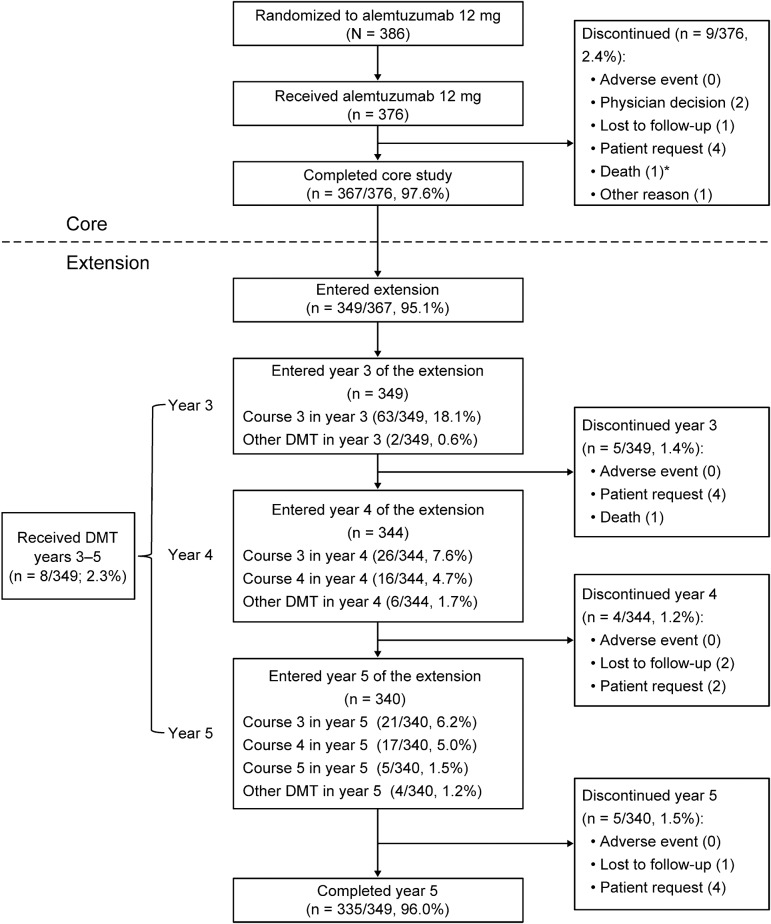
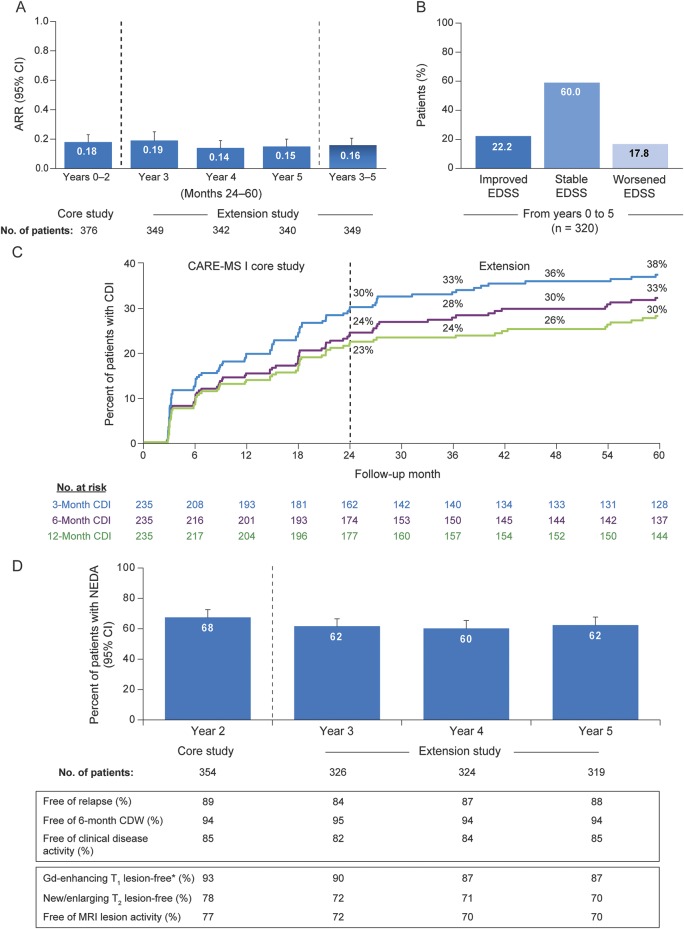
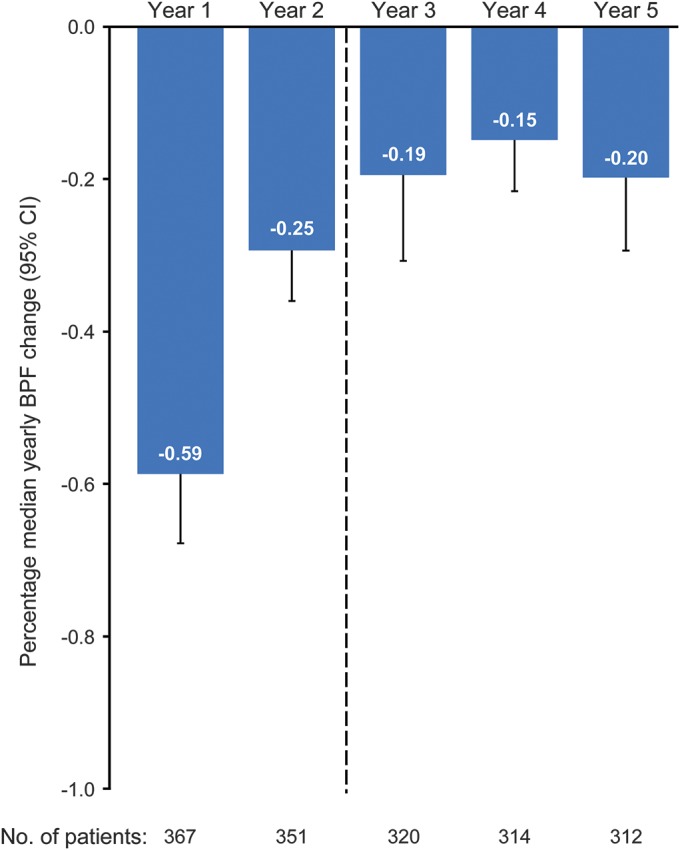
OBJECTIVE: To evaluate 5-year efficacy and safety of alemtuzumab in treatment-naive patients with active relapsing-remitting MS (RRMS) (CARE-MS I; NCT00530348). METHODS: Alemtuzumab-treated patients received treatment courses at baseline and 12 months later; after the core study, they could enter an extension (NCT00930553) with as-needed alemtuzumab retreatment for relapse or MRI activity. Assessments included annualized relapse rate (ARR), 6-month confirmed disability worsening (CDW; ≥1-point Expanded Disability Status Scale [EDSS] score increase [≥1.5 if baseline EDSS = 0]), 6-month confirmed disability improvement (CDI; ≥1-point EDSS decrease [baseline score ≥2.0]), no evidence of disease activity (NEDA), brain volume loss (BVL), and adverse events (AEs). RESULTS: Most alemtuzumab-treated patients (95.1%) completing CARE-MS I enrolled in the extension; 68.5% received no additional alemtuzumab treatment. ARR remained low in years 3, 4, and 5 (0.19, 0.14, and 0.15). Over years 0-5, 79.7% were free of 6-month CDW; 33.4% achieved 6-month CDI. Most patients (61.7%, 60.2%, and 62.4%) had NEDA in years 3, 4, and 5. Median yearly BVL improved over years 2-4, remaining low in year 5 (years 1-5: -0.59%, -0.25%, -0.19%, -0.15%, and -0.20%). Exposure-adjusted incidence rates of most AEs declined in the extension relative to the core study. Thyroid disorder incidences peaked at year 3 and subsequently declined. CONCLUSIONS: Based on these data, alemtuzumab provides durable efficacy through 5 years in the absence of continuous treatment, with most patients not receiving additional courses. CLINICALTRIALSGOV IDENTIFIER: NCT00530348; NCT00930553. CLASSIFICATION OF EVIDENCE: This study provides Class III evidence that alemtuzumab durably improves efficacy outcomes and slows BVL in patients with RRMS.
Overview
The claims and statistics of this paper haven’t been checked yet.
Run the check — free, no account needed. It reads the open-access text and checks the sources it cites.
Integrity signals
Registry
Cites
Statistics
Figures
Verification
Claims the paper makes
The claims and statistics of this paper haven’t been checked yet.
Run the check — free, no account needed. It reads the open-access text and checks the sources it cites.
Claims other papers make about this one
Each is checked against this paper’s own text: does it say what the citing paper says it does?
In the citing paper
“In the extension studies of alemtuzumab for MS (5 years follow-up), TD peaked at year 3, declining thereafter [57, 58].”
From 2019 European Thyroid Association Guidelines on the Management of Thyroid Dysfunction following Immune Reconstitution Therapy (2019) · cites this paper as [57]
In the citing paper
“In the 5-year follow-up extension studies, no increase in thyroid cancer was observed [57, 58].”
From 2019 European Thyroid Association Guidelines on the Management of Thyroid Dysfunction following Immune Reconstitution Therapy (2019) · cites this paper as [57]
Self-check
Percentages, sums and reported differences re-computed from the paper’s own numbers.
The self-check needs the paper’s full text.
Citations
Cites
New Multiple Sclerosis Phenotypic Classification
LUBLIN, F. D. (2014) · European Neurology · doi:10.1159/000367614 · Cited by 4,277
Defining the clinical course of multiple sclerosis: The 2013 revisions
Lublin, F. D., Reingold, S. C., Cohen, J. A., Cutter, G. R., Sørensen, P. S., Thompson, A. J., Wolinsky, J. S., Balcer, L. J., Banwell, B., Barkhof, F., et al. (2014) · Neurology · doi:10.1212/wnl.0000000000000560 · Cited by 3,177
Self-citationRisk of Natalizumab-Associated Progressive Multifocal Leukoencephalopathy
Bloomgren, G., Richman, S., Hotermans, C., Subramanyam, M., Goelz, S. E., Natarajan, A., Lee, S., Plavina, T., Scanlon, J. V., Sandrock, A. W., et al. (2012) · New England Journal of Medicine · doi:10.1056/nejmoa1107829 · Cited by 1,260
Cohen, J. A., Coles, A. J., Arnold, D. L., Confavreux, C., Fox, E. J., Hartung, H.-P., Havrdova, E., Selmaj, K. W., Weiner, H. L., Fisher, E., et al. (2012) · The Lancet · doi:10.1016/s0140-6736(12)61769-3 · Cited by 1,205
Self-citationColes, A. J., Twyman, C. L., Arnold, D. L., Cohen, J. A., Confavreux, C., Fox, E. J., Hartung, H.-P., Havrdova, E., Selmaj, K. W., Weiner, H. L., et al. (2012) · The Lancet · doi:10.1016/s0140-6736(12)61768-1 · Cited by 1,198
Alemtuzumab vs. Interferon Beta-1a in Early Multiple Sclerosis
The CAMMS Trial Investigators (2008) · New England Journal of Medicine · doi:10.1056/nejmoa0802670 · Cited by 1,021
Fisniku, L. K., Brex, P. A., Altmann, D. R., Miszkiel, K. A., Benton, C. E., Lanyon, R., Thompson, A. J., & Miller, D. H. (2008) · Brain · doi:10.1093/brain/awm329 · Cited by 897
Scalfari, A., Neuhaus, A., Degenhardt, A., Rice, G. P., Muraro, P. A., Däumer, M., & Ebers, G. C. (2010) · Brain · doi:10.1093/brain/awq118 · Cited by 737
Investigation of the mechanism of action of alemtuzumab in a human CD52 transgenic mouse model
Hu, Y., Turner, M. J., Shields, J. D., Gale, M. S., Hutto, E. H., Roberts, B., Siders, W., & Kaplan, J. M. (2009) · Immunology · doi:10.1111/j.1365-2567.2009.03115.x · Cited by 336
Brain atrophy and lesion load predict long term disability in multiple sclerosis
Popescu, V., Agosta, F., Hulst, H. E., Sluimer, I. C., Knol, D. L., Sormani, M. P., Enzinger, C., Ropele, S., Alonso, J., Sastre‐Garriga, J., et al. (2013) · Journal of Neurology Neurosurgery & Psychiatry · doi:10.1136/jnnp-2012-304094 · Cited by 330
Research works printed but not linked: 3
- LEMTRADA [Summary of Product Characteristics] [online]. Oxford, United Kingdom: Genzyme Therapeutics, Ltd. Available at: ema.europa.eu/docs/en_GB/document_library/EPAR_-_Product_Information/human/003718/WC500150521.pdf. Accessed May 30, 2014.
- LEMTRADA (Alemtuzumab), for Intravenous Injection [Prescribing Information]. Cambridge, MA: Genzyme Corporation; 2014.
- Fox EJ, Arnold DL, Cohen JA, et al. Durable efficacy of alemtuzumab on clinical outcomes over 5 years in CARE-MS II with most patients free from treatment for 4 years. Mult Scler 2015;21(suppl 11):P1102.
Cited by
Sorted by citations
Filippi, M., Bar-Or, A., Piehl, F., Preziosa, P., Solari, A., Vukusic, S., & Rocca, M. A. (2018) · Nature Reviews Disease Primers · doi:10.1038/s41572-018-0041-4 · Cited by 1,562
Timing of high-efficacy therapy for multiple sclerosis: a retrospective observational cohort study
He, A. H., Merkel, B., Brown, J. W. L., Ryerson, L. Z., Kister, I., Malpas, C. B., Sharmin, S., Horáková, D., Havrdová, E., Spelman, T. D., et al. (2020) · The Lancet Neurology · doi:10.1016/s1474-4422(20)30067-3 · Cited by 491
Treatment of multiple sclerosis — success from bench to bedside
Tintoré, M., Vidal‐Jordana, Á., & Sastre‐Garriga, J. (2018) · Nature Reviews Neurology · doi:10.1038/s41582-018-0082-z · Cited by 357
B cells in multiple sclerosis — from targeted depletion to immune reconstitution therapies
Cencioni, M. T., Mattoscio, M., Magliozzi, R., Bar‐Or, A., & Muraro, P. A. (2021) · Nature Reviews Neurology · doi:10.1038/s41582-021-00498-5 · Cited by 284
Disease-modifying treatments for early and advanced multiple sclerosis: a new treatment paradigm
Giovannoni, G. (2018) · Current Opinion in Neurology · doi:10.1097/wco.0000000000000561 · Cited by 170
Cladribine treatment of multiple sclerosis is associated with depletion of memory B cells
Ceronie, B., Jacobs, B. M., Baker, D., Dubuisson, N., Mao, Z., Ammoscato, F., Lock, H., Longhurst, H. J., Giovannoni, G., & Schmierer, K. (2018) · Journal of Neurology · doi:10.1007/s00415-018-8830-y · Cited by 149
High-Efficacy Therapies for Treatment-Naïve Individuals with Relapsing–Remitting Multiple Sclerosis
Freeman, L. A., Longbrake, E. E., Coyle, P. K., Hendin, B. A., & Vollmer, T. R. (2022) · CNS Drugs · doi:10.1007/s40263-022-00965-7 · Cited by 155
Baker, D., Pryce, G., James, L. K., Marta, M., & Schmierer, K. (2020) · Multiple Sclerosis and Related Disorders · doi:10.1016/j.msard.2020.102279 · Cited by 129
Current and emerging disease‐modulatory therapies and treatment targets for multiple sclerosis
Piehl, F. (2021) · Journal of Internal Medicine · doi:10.1111/joim.13215 · Cited by 125
Immune reconstitution therapies: concepts for durable remission in multiple sclerosis
Lünemann, J. D., Ruck, T., Muraro, P. A., Bar‐Or, A., & Wiendl, H. (2019) · Nature Reviews Neurology · doi:10.1038/s41582-019-0268-z · Cited by 111
Cancer Risk in Patients with Multiple Sclerosis: Potential Impact of Disease-Modifying Drugs
Lebrun‐Frénay, C., & Rocher, F. (2018) · CNS Drugs · doi:10.1007/s40263-018-0564-y · Cited by 100
Alemtuzumab-Induced Thyroid Dysfunction Exhibits Distinctive Clinical and Immunological Features
Pariani, N., Willis, M., Muller, I., Healy, S., Nasser, T., McGowan, A., Lyons, G., Jones, J., Chatterjee, K., Dayan, C., et al. (2018) · The Journal of Clinical Endocrinology & Metabolism · doi:10.1210/jc.2018-00359 · Cited by 84
Self-citationPulsed immune reconstitution therapy in multiple sclerosis
Sørensen, P. S., & Sellebjerg, F. T. (2019) · Therapeutic Advances in Neurological Disorders · doi:10.1177/1756286419836913 · Cited by 82
Muller, I., Moran, C., Lecumberri, B., Decallonne, B., Robertson, N., Jones, J., & Dayan, C. M. (2019) · European Thyroid Journal · doi:10.1159/000500881 · Cited by 78
Multiple Sclerosis and Cancer: The Ying-Yang Effect of Disease Modifying Therapies
Melamed, E., & Lee, M. W. (2020) · Frontiers in Immunology · doi:10.3389/fimmu.2019.02954 · Cited by 80
Baker, D., Amor, S., Kang, A. S., Schmierer, K., & Giovannoni, G. (2020) · Multiple Sclerosis and Related Disorders · doi:10.1016/j.msard.2020.102174 · Cited by 75
Krajnc, N., Bsteh, G., Berger, T., Mareš, J., & Hartung, H. (2022) · Neurotherapeutics · doi:10.1007/s13311-022-01224-9 · Cited by 77
Potential mechanisms of action related to the efficacy and safety of cladribine
Baker, D., Pryce, G., Herrod, S. S., & Schmierer, K. (2019) · Multiple Sclerosis and Related Disorders · doi:10.1016/j.msard.2019.02.018 · Cited by 73
Wray, S. E., Havrdová, E., Snydman, D. R., Arnold, D. L., Cohen, J. A., Coles, A. J., Hartung, H., Selmaj, K. W., Weiner, H. L., Daizadeh, N. S., et al. (2018) · Multiple Sclerosis Journal · doi:10.1177/1352458518796675 · Cited by 71
Alemtuzumab-induced thyroid events in multiple sclerosis: a systematic review and meta-analysis
Scappaticcio, L., Castellana, M., Virili, C., Bellastella, G., Centanni, M., Cannavò, S., Campennì, A., Ruggeri, R. M., Giovanella, L., & Trimboli, P. (2019) · Journal of Endocrinological Investigation · doi:10.1007/s40618-019-01105-7 · Cited by 73
Neurological immunotherapy in the era of COVID-19 — looking for consensus in the literature
Korsukewitz, C., Reddel, S., Bar‐Or, A., & Wiendl, H. (2020) · Nature Reviews Neurology · doi:10.1038/s41582-020-0385-8 · Cited by 67
Update on treatment in multiple sclerosis
Callegari, I., Derfuss, T. J., & Galli, E. (2021) · La Presse Médicale · doi:10.1016/j.lpm.2021.104068 · Cited by 70
Biofilm removal and gingival abrasion with medium and soft toothbrushes.
Zanatta, F. B., Bergoli, A. D., Werle, S. B., & Antoniazzi, R. P. (2011) · PubMed · Cited by 64
Rammohan, K. W., Coyle, P. K., Sylvester, E., Galazka, A. R., Dangond, F., Grosso, M., & Leist, T. P. (2020) · Drugs · doi:10.1007/s40265-020-01422-9 · Cited by 64
Cencioni, M. T., Genchi, A., Brittain, G., de Silva, T. I., Sharrack, B., Snowden, J. A., Alexander, T., Greco, R., & Muraro, P. A. (2022) · Frontiers in Immunology · doi:10.3389/fimmu.2021.813957 · Cited by 61
Ziemssen, T., Bass, A. D.-D., Berkovich, R., Comi, G., Eichau, S., Hobart, J. C., Hunter, S. F., LaGanke, C. C., Limmroth, V., Pelletier, D., et al. (2020) · CNS Drugs · doi:10.1007/s40263-020-00749-x · Cited by 59
Intracerebral haemorrhage during alemtuzumab administration
Azevedo, C. J., Kutz, C. F., Dix, A., Boster, A. L., Sanossian, N., & Kaplan, J. (2019) · The Lancet Neurology · doi:10.1016/s1474-4422(19)30076-6 · Cited by 57
Prosperini, L., Annovazzi, P. O. L., Boffa, L., Buscarinu, M. C., Gallo, A., Matta, M., Moiola, L., Musu, L., Perini, P., Avolio, C., et al. (2018) · Journal of Neurology · doi:10.1007/s00415-018-9070-x · Cited by 55
Long-term efficacy and safety of alemtuzumab in patients with RRMS: 12-year follow-up of CAMMS223
Steingo, B., Malik, Y. M. A., Bass, A. D.-D., Berkovich, R., Carraro, M., Fernández, Ó., Ionete, C., Massacesi, L., Meuth, S. G., Mitsikostas, D. D., et al. (2020) · Journal of Neurology · doi:10.1007/s00415-020-09983-1 · Cited by 54
Safety of Newer Disease Modifying Therapies in Multiple Sclerosis
Jalkh, G., Nahed, R. A., Macaron, G., & Rensel, M. R. (2020) · Vaccines · doi:10.3390/vaccines9010012 · Cited by 55
Immune thrombocytopenia in alemtuzumab-treated MS patients: Incidence, detection, and management
Cuker, A. C., Bass, A. D.-D., Nadj, Č., Agius, M. A., Steingo, B., Selmaj, K. W., Thoits, T., Guerreiro, A., Wijmeersch, B. V., Ziemssen, T., et al. (2019) · Multiple Sclerosis Journal · doi:10.1177/1352458518816612 · Cited by 52
Zimmermann, M. R., Brouwer, E., Tice, J. A., Seidner, M., Loos, A. M., Liu, S., Chapman, R. H., Kumar, V., & Carlson, J. J. (2018) · CNS Drugs · doi:10.1007/s40263-018-0566-9 · Cited by 52
Biolato, M., Bianco, A. D., Lucchini, M., Gasbarrini, A., Massimiliano Mirabella, A., & Grieco, A. (2021) · CNS Drugs · doi:10.1007/s40263-021-00842-9 · Cited by 52
Novakova, L., Axelsson, M., Malmeström, C., Imberg, H., Elias, O., Zetterberg, H., Nerman, O., & Lycke, J. (2018) · PLoS ONE · doi:10.1371/journal.pone.0194828 · Cited by 55
Sellner, J., & Rommer, P. S. (2020) · Autoimmunity Reviews · doi:10.1016/j.autrev.2020.102492 · Cited by 50
Zhukovsky, C., Sandgren, S., Silfverberg, T., Einarsdottir, S., Tolf, A., Landtblom, A., Novakova, L., Axelsson, M., Malmeström, C., Cherif, H., et al. (2020) · Journal of Neurology Neurosurgery & Psychiatry · doi:10.1136/jnnp-2020-323992 · Cited by 48
Immunosenescence and multiple sclerosis: inflammaging for prognosis and therapeutic consideration
Thakolwiboon, S., Mills, E. A., Yang, J., Doty, J., Belkin, M., Cho, T., Schultz, C., & Mao‐Draayer, Y. (2023) · Frontiers in Aging · doi:10.3389/fragi.2023.1234572 · Cited by 48
Efficacy and safety of alemtuzumab in a real-life cohort of patients with multiple sclerosis
Frau, J., Coghe, G., Lorefice, L., Fenu, G., Musu, L., & Cocco, E. E. (2019) · Journal of Neurology · doi:10.1007/s00415-019-09272-6 · Cited by 44
Das, J., Snowden, J. A., Burman, J., Freedman, M., Atkins, H. L., Bowman, M., Burt, R. K., Saccardi, R., Innocenti, C., Mistry, S., et al. (2021) · Multiple Sclerosis Journal · doi:10.1177/1352458520985238 · Cited by 44
Efficacy and safety of alemtuzumab over 6 years: final results of the 4-year CARE-MS extension trial
Coles, A. J., Arnold, D. L., Bass, A. D.-D., Boster, A. L., Compston, D. A. S., Fernández, Ó., Havrdová, E., Nakamura, K., Traboulsee, A. L., Ziemssen, T., et al. (2021) · Therapeutic Advances in Neurological Disorders · doi:10.1177/1756286420982134 · Cited by 44
Lymphocyte pharmacodynamics are not associated with autoimmunity or efficacy after alemtuzumab
Wiendl, H., Carraro, M., Comi, G., Izquierdo, G., Kim, H. J., Sharrack, B., Tornatore, C., Daizadeh, N. S., Chung, L. E., Jacobs, A. K., et al. (2019) · Neurology Neuroimmunology & Neuroinflammation · doi:10.1212/nxi.0000000000000635 · Cited by 43
Rituximab vs placebo induction prior to glatiramer acetate monotherapy in multiple sclerosis
Honce, J. M., Nair, K. V., Sillau, S., Valdez, B., Miravalle, A. A., Álvarez, E., Schreiner, T., Corboy, J. R., & Vollmer, T. R. (2019) · Neurology · doi:10.1212/wnl.0000000000006916 · Cited by 41
Immune reconstitution therapy (IRT) in multiple sclerosis: the rationale
Karussis, D. M., & Petrou, P. (2018) · Immunologic Research · doi:10.1007/s12026-018-9032-5 · Cited by 42
Alemtuzumab: A Review in Relapsing Remitting Multiple Sclerosis
Syed, Y. Y. (2020) · Drugs · doi:10.1007/s40265-020-01437-2 · Cited by 40
Decallonne, B., Bartholome, E. J., Delvaux, V., D’haeseleer, M., Sankari, S. E., Seeldrayers, P., Wijmeersch, B. V., & Daumerie, C. (2018) · Acta Neurologica Belgica · doi:10.1007/s13760-018-0883-2 · Cited by 41
Effects of disease-modifying therapy on peripheral leukocytes in patients with multiple sclerosis
Schweitzer, F., Laurent, S. A., Fink, G. R., Barnett, M. H., Hartung, H., & Warnke, C. (2020) · Journal of Neurology · doi:10.1007/s00415-019-09690-6 · Cited by 40
aHSCT is superior to alemtuzumab in maintaining NEDA and improving cognition in multiple sclerosis
Häußler, V., Ufer, F., Pöttgen, J., Wolschke, C., Friese, M. A., Kröger, N., Heesen, C., & Stellmann, J. (2021) · Annals of Clinical and Translational Neurology · doi:10.1002/acn3.51366 · Cited by 38
Oh, J., Achiron, A., Celius, E. G., Chambers, C., Derwenskus, J., Devonshire, V. A., Hellwig, K., Hutton, G. J., McCombe, P., Moore, M., et al. (2020) · Multiple Sclerosis and Related Disorders · doi:10.1016/j.msard.2020.102146 · Cited by 37
Kühle, J., Daizadeh, N. S., Benkert, P., Maceski, A. M., Barro, C., Michalak, Z., Sormani, M. P., Godin, J., Shankara, S., Samad, T. A., et al. (2021) · Multiple Sclerosis Journal · doi:10.1177/13524585211032348 · Cited by 37
Huhn, K., Bayas, A., Doerck, S., Frank, B., Gerbershagen, K., Hellwig, K., Kallmann, B. A., Kleinschnitz, C., Kleiter, I., Lee, D.-H., et al. (2018) · Journal of Neurology · doi:10.1007/s00415-018-8871-2 · Cited by 35
Das, J., Sharrack, B., & Snowden, J. A. (2019) · Current Hematologic Malignancy Reports · doi:10.1007/s11899-019-00505-z · Cited by 34
Phelps, R. G., Winston, J. A., Wynn, D. R., Habek, M., Hartung, H., Havrdová, E., Markowitz, G. S., Margolin, D. H., Rodriguez, C. E., Baker, D. P., et al. (2019) · Multiple Sclerosis Journal · doi:10.1177/1352458519841829 · Cited by 34
The Meaning of Immune Reconstitution after Alemtuzumab Therapy in Multiple Sclerosis
Rolla, S., Maglione, A., Mercanti, S. F. D., & Clerico, M. (2020) · Cells · doi:10.3390/cells9061396 · Cited by 36
Giovannoni, G., Singer, B. A., Issard, D., Jack, D. L., & Vermersch, P. (2021) · Multiple Sclerosis Journal · doi:10.1177/13524585211049392 · Cited by 34
Baker, D., Ali, L., Saxena, G., Pryce, G., Jones, M., Schmierer, K., Giovannoni, G., Gnanapavan, S., Munger, K. C., Samkoff, L., et al. (2020) · Frontiers in Immunology · doi:10.3389/fimmu.2020.00124 · Cited by 34
Pfeuffer, S., Ruck, T., Pul, R., Rolfes, L., Korsukewitz, C., Pawlitzki, M., Wildemann, B., Klotz, L., Kleinschnitz, C., Scalfari, A., et al. (2021) · Journal of Neurology Neurosurgery & Psychiatry · doi:10.1136/jnnp-2020-325304 · Cited by 32
Chirikov, V., Ma, I., Joshi, N., Patel, D. A., Smith, A. F., Giambrone, C., Cornelio, N., & Hashemi, L. (2018) · Value in Health · doi:10.1016/j.jval.2018.08.011 · Cited by 32
Alcalá, C., Gascón, F., Miralles, F. C. P., Domínguez, J. A., Gil‐Perotín, S., & Casanova, B. (2019) · Journal of Neurology · doi:10.1007/s00415-019-09195-2 · Cited by 31
Keratinocyte growth factor impairs human thymic recovery from lymphopenia
Coles, A. J., Azzopardi, L., Kousin‐Ezewu, O., Mullay, H. K., Thompson, S. A. J., Jarvis, L. B., Davies, J. L., Howlett, S., Rainbow, D. B., Babar, J. L., et al. (2019) · JCI Insight · doi:10.1172/jci.insight.125377 · Cited by 30
A real-world single-centre analysis of alemtuzumab and cladribine for multiple sclerosis
Bose, G., Rush, C., Atkins, H. L., & Freedman, M. S. (2021) · Multiple Sclerosis and Related Disorders · doi:10.1016/j.msard.2021.102945 · Cited by 32
Ocrelizumab for the treatment of multiple sclerosis
Bigaut, K., Seze, J. D., & Collongues, N. (2018) · Expert Review of Neurotherapeutics · doi:10.1080/14737175.2019.1561284 · Cited by 29
Newer Treatment Approaches in Pediatric-Onset Multiple Sclerosis
Macaron, G., Feng, J. J., Moodley, M., & Rensel, M. R. (2019) · Current Treatment Options in Neurology · doi:10.1007/s11940-019-0592-z · Cited by 29
Rocca, M. A., Preziosa, P., & Filippi, M. (2018) · Expert Review of Neurotherapeutics · doi:10.1080/14737175.2019.1555038 · Cited by 28
Wiendl, H., Spelman, T. D., Butzkueven, H., Kappos, L., Trojano, M., Su, R., Campbell, N., Ho, P., & Licata, S. C. (2020) · Multiple Sclerosis Journal · doi:10.1177/1352458520926869 · Cited by 28
Delayed diagnosis of multiple sclerosis in a low prevalence country
Cárdenas‐Robledo, S., López-Reyes, L., Arenas-Vargas, L. E., Carvajal-Parra, M. S., & Guío‐Sánchez, C. (2020) · Neurological Research · doi:10.1080/01616412.2020.1866374 · Cited by 29
Monoclonal Antibodies for Multiple Sclerosis: An Update
Graf, J., Aktaş, O., Rejdak, K., & Hartung, H. (2019) · BioDrugs · doi:10.1007/s40259-018-0327-9 · Cited by 28
Havrdová, E., Cohen, J. A., Horáková, D., Kovářová, I., & Meluzínová, E. (2017) · Therapeutics and Clinical Risk Management · doi:10.2147/tcrm.s143509 · Cited by 28
A real‐world study of alemtuzumab in a cohort of Italian patients
Russo, C. V., Saccà, F., Frau, J., Annovazzi, P. O. L., Signoriello, E., Bonavita, S., Grasso, R., Clerico, M., Cordioli, C., Laroni, A., et al. (2021) · European Journal of Neurology · doi:10.1111/ene.15121 · Cited by 26
Coles, A. J., Achiron, A., Traboulsee, A. L., Singer, B. A., Pozzilli, C., Oreja‐Guevara, C., Giovannoni, G., Comı, G., Freedman, M. S., Ziemssen, T., et al. (2023) · Therapeutic Advances in Neurological Disorders · doi:10.1177/17562864231194823 · Cited by 26
Long-term drug treatment in multiple sclerosis: safety success and concerns
Jakimovski, D., Vaughn, C. B., Eckert, S. P., Zivadinov, R., & Weinstock‐Guttman, B. (2020) · Expert Opinion on Drug Safety · doi:10.1080/14740338.2020.1805430 · Cited by 25
Manouchehri, N., Salinas, V. H., Yeganeh, N. R., Pitt, D., Hussain, R. Z., & Stüve, O. (2022) · Frontiers in Neurology · doi:10.3389/fneur.2022.854390 · Cited by 26
Roos, J. C. P., Moran, C., Chatterjee, K., Jones, J., Coles, A. J., & Murthy, R. (2018) · Eye · doi:10.1038/s41433-018-0282-1 · Cited by 26
Mitigating alemtuzumab-associated autoimmunity in MS
Meltzer, E. I., Campbell, S., Ehrenfeld, B., Cruz, R. A., Steinman, L., Parsons, M. S., Zamvil, S. S., Frohman, E. M., & Frohman, T. C. (2020) · Neurology Neuroimmunology & Neuroinflammation · doi:10.1212/nxi.0000000000000868 · Cited by 25
Barclay, K., Carruthers, R. L., Traboulsee, A. L., Bass, A. D.-D., LaGanke, C. C., Bertolotto, A., Boster, A. L., Celius, E. G., Seze, J. D., Cruz, D. D., et al. (2019) · Frontiers in Neurology · doi:10.3389/fneur.2019.00253 · Cited by 24
Ismail, A., Sharrack, B., Saccardi, R., Moore, J. J., & Snowden, J. A. (2019) · Current Opinion in Supportive and Palliative Care · doi:10.1097/spc.0000000000000466 · Cited by 21
Alemtuzumab outcomes by age: Post hoc analysis from the randomized CARE-MS studies over 8 years
Bass, A. D.-D., Arroyo, R., Boster, A. L., Boyко, A., Eichau, S., Ionete, C., Limmroth, V., Navas, C., Pelletier, D., Pozzilli, C., et al. (2020) · Multiple Sclerosis and Related Disorders · doi:10.1016/j.msard.2020.102717 · Cited by 22
Antibody-mediated cell depletion therapies in multiple sclerosis
Mariottini, A., Muraro, P. A., & Lünemann, J. D. (2022) · Frontiers in Immunology · doi:10.3389/fimmu.2022.953649 · Cited by 22
Simon, M., Ipek, R., Homola, G. A., Rovituso, D. M., Schampel, A., Kleinschnitz, C., & Küerten, S. (2018) · Journal of Neuroinflammation · doi:10.1186/s12974-018-1263-9 · Cited by 21
Acute sarcoidosis in a multiple sclerosis patient after alemtuzumab treatment
Graf, J., Ringelstein, M., Lepka, K., Schaller, J., Quack, H., Hartung, H., Aktaş, O., & Albrecht, P. (2018) · Multiple Sclerosis Journal · doi:10.1177/1352458518771276 · Cited by 21
Das, J., Sharrack, B., & Snowden, J. A. (2019) · Current Hematologic Malignancy Reports · doi:10.1007/s11899-019-00506-y · Cited by 21
Comı, G., Alroughani, R., Boster, A. L., Bass, A. D.-D., Berkovich, R., Fernández, Ó., Kim, H. J., Limmroth, V., Lycke, J., Macdonell, R. A. L., et al. (2019) · Multiple Sclerosis Journal · doi:10.1177/1352458519888610 · Cited by 20
Alemtuzumab treatment in Denmark: A national study based on the Danish Multiple Sclerosis Registry
Theódórsdóttir, Á., Debrabant, B., Magyari, M., Kant, M., Rasmussen, P. V., Malmberg, C.-F., Norberg, I. A., Hansen, V., Bech, D., Schmidt, M. F., et al. (2021) · Multiple Sclerosis Journal · doi:10.1177/13524585211003291 · Cited by 20
Real‐world persistence of multiple sclerosis disease‐modifying therapies
Tallantyre, E. C., Dobson, R., Froud, J. L. J., John, F. A. S., Anderson, V. M., Arun, T., Buckley, L., Evangelou, N., Ford, H. L., Galea, I., et al. (2024) · European Journal of Neurology · doi:10.1111/ene.16289 · Cited by 20
Zarzuelo-Romero, M. J., Pérez-Ramírez, C., Campos, M. I. C., Martín, A. S., Hernández, M. Á. C., Ramírez-Tortosa, M. C., & Morales, A. J. (2021) · Journal of Personalized Medicine · doi:10.3390/jpm11050335 · Cited by 19
Safety of alemtuzumab in a nationwide cohort of Finnish multiple sclerosis patients
Rauma, I., Mustonen, T., Seppä, J. M., Ukkonen, M., Männikkö, M., Verkkoniemi‐Ahola, A., Kartau, M., Saarinen, J. T., Luostarinen, L., Simula, S., et al. (2021) · Journal of Neurology · doi:10.1007/s00415-021-10664-w · Cited by 19
Rotstein, D., Solomon, J. M., Sormani, M. P., Montalbán, X., Ye, X. Y., Dababneh, D., Muccilli, A. D., & Shah, P. S. (2022) · Neurology · doi:10.1212/wnl.0000000000200549 · Cited by 19
Taheri, S., Sahraian, M. A., & Yousefi, N. (2018) · Journal of Medical Economics · doi:10.1080/13696998.2018.1543189 · Cited by 19
Wijmeersch, B. V., Singer, B. A., Boster, A. L., Broadley, S., Fernández, Ó., Freedman, M. S., Izquierdo, G., Lycke, J., Pozzilli, C., Sharrack, B., et al. (2019) · Multiple Sclerosis Journal · doi:10.1177/1352458519881759 · Cited by 19
Marsh‐Wakefield, F., Juillard, P., Ashhurst, T. M., Juillard, A., Shinko, D., Putri, G., Read, M. N., McGuire, H. M., Byrne, S. N., Hawke, S. H., et al. (2022) · Immunology and Cell Biology · doi:10.1111/imcb.12552 · Cited by 19
Papazisis, G., & Stamatellos, V. (2022) · Current Clinical Pharmacology · doi:10.2174/2772432817666220412110720 · Cited by 19
Comment on 2018 American Academy of Neurology guidelines on disease-modifying therapies in MS
Corboy, J. R., Weinshenker, B. G., & Wingerchuk, D. M. (2018) · Neurology · doi:10.1212/wnl.0000000000005574 · Cited by 19
Ruck, T., Schulte‐Mecklenbeck, A., Pfeuffer, S., Heming, M., Klotz, L., Windhagen, S., Kleinschnitz, C., Groß, C. C., Wiendl, H., & Meuth, S. G. (2019) · EBioMedicine · doi:10.1016/j.ebiom.2019.07.062 · Cited by 18
Das, J., Sharrack, B., & Snowden, J. A. (2020) · Expert Review of Neurotherapeutics · doi:10.1080/14737175.2020.1820325 · Cited by 17
A real-world cohort analysis of alemtuzumab outcomes in relapsing multiple sclerosis
Herman, J. A., Khalighinejad, F., York, K., Radu, I., Morales, I. B., Ionete, C., & Hemond, C. C. (2020) · Multiple Sclerosis and Related Disorders · doi:10.1016/j.msard.2020.102619 · Cited by 18
New Algorithms Improving PML Risk Stratification in MS Patients Treated With Natalizumab
Toboso, I., Velarde, A. T., Álvarez‐Lafuente, R., Arroyo, R., Hegen, H., Deisenhammer, F., de la Maza, S. S., Alvarez-Cermeño, J. C., Izquierdo, G., Páramo, D., et al. (2020) · Frontiers in Neurology · doi:10.3389/fneur.2020.579438 · Cited by 17
Defining response profiles after alemtuzumab
Wiendl, H., Calabresi, P. A., & Meuth, S. G. (2018) · Neurology · doi:10.1212/wnl.0000000000004969 · Cited by 17
Sandgren, S., Novakova, L., Nordin, A., Axelsson, M., Malmeström, C., Zetterberg, H., & Lycke, J. (2023) · Frontiers in Neurology · doi:10.3389/fneur.2023.1265354 · Cited by 16
Soleimani, B., Murray, K., & Hunt, D. P. J. (2019) · Drug Safety · doi:10.1007/s40264-019-00799-1 · Cited by 16
Capra, R., Morra, V. B., Massimiliano Mirabella, A., Gasperini, C., Scandellari, C., Totaro, R., Rossi, N. D., Masera, S., Zipoli, V., Patti, F., et al. (2020) · Neurological Sciences · doi:10.1007/s10072-020-04838-z · Cited by 16
Horáková, D., Boster, A. L., Bertolotto, A., Freedman, M. S., Firmino, I., Cavalier, S., Jacobs*, A. K., Thangavelu, K., Daizadeh, N. S., Poole, E. M., et al. (2020) · Multiple Sclerosis Journal - Experimental Translational and Clinical · doi:10.1177/2055217320972137 · Cited by 16
Metadata
- Authors
- Havrdova, E., Arnold, D. L., Cohen, J. A., Hartung, H.-P., Fox, E. J., Giovannoni, G., Schippling, S., Selmaj, K. W., Traboulsee, A., Compston, D. A. S., Margolin, D. H., Thangavelu, K., Rodriguez, C. E., Jody, D., Hogan, R. J., Xenopoulos, P., Panzara, M. A., & Coles, A. J.
- Affiliations
- From the Department of Neurology and Center for Clinical Neuroscience (E.H.), First Faculty of Medicine, Charles University and General University Hospital in Prague, Czech Republic; NeuroRx Research (D.L.A.), Montréal; Department of Neurology and Neurosurgery (D.L.A.), Montréal Neurological Institute, McGill University, Québec, Canada; Mellen Center (J.A.C.), Cleveland Clinic, OH; Department of Neurology and Center for Neuropsychiatry (H.-P.H.), Medical Faculty, Heinrich-Heine University,...
- Cleveland Clinic (US)
- ORCID
- Venue
- Neurology
- Published
- 2017-09-12
- Volume
- 89
- Issue
- 11
- Pages
- 1107-1116
- ISSN
- 0028-3878 (ISSN-L)
- 1526-632X
- PMC
- PMC5595278
- OpenAlex
- W2626225244
- Cited by
- 221
- References
- 27
- Citations by year
- 2026: 3 · 2025: 12 · 2024: 19 · 2023: 18 · 2022: 17 · 2021: 37 · 2020: 41 · 2019: 38 · 2018: 33 · 2017: 2
- FWCI
- 24.48
- Type
- journal article
- Language
- en
- Update notices
- correction (2018-04-16)
- Open access
- hybrid
- doi.org
- Licence
- cc-by-nc-nd
- Locations
- Neurology (publishedVersion, cc-by-nc-nd)
- PubMed Central (publishedVersion, cc-by-nc-nd)
- PubMed (publishedVersion)
- Research Publications (Maastricht University) (publishedVersion, cc-by-nc-nd)
- Zurich Open Repository and Archive (University of Zurich) (acceptedVersion, other-oa)
- Queen Mary Research Online (Queen Mary University of London) (submittedVersion, cc-by-nc-nd)
- Research Publications (Maastricht University) (submittedVersion, other-oa)
- Zurich Open Repository and Archive (University of Zurich)
- Funders
- Eli Lilly and Company
- GlaxoSmithKline
- Sanofi
- Biogen
- Teva Pharmaceutical Industries
- CSL Behring
- GW Pharmaceuticals
- Acorda Therapeutics
- Five Prime Therapeutics
- Multiple Sclerosis Society of Canada
- Multiple Sclerosis Society
- University of Cambridge
- Bayer HealthCare
- Grifols
- Genentech
- EMD Serono
- Sanofi Genzyme
- Canadian Institutes of Health Research
- Topics
- Health Sciences › Medicine › Clinical Neurology › Multiple Sclerosis Research Studies
- Health Sciences › Medicine › Oncology › Polyomavirus and related diseases
- Health Sciences › Medicine › Hematology › Chronic Lymphocytic Leukemia Research
- Keywords
- alemtuzumab, relapsing-remitting multiple sclerosis, long-term efficacy, treatment-naive patients, annualized relapse rate, disability progression, no evidence of disease activity, brain atrophy, adverse events, thyroid dysfunction, retreatment, Expanded Disability Status Scale, MRI activity, treatment extension
- MeSH terms
- Alemtuzumab, Brain, Disability Evaluation, Follow-Up Studies, Humans, Immunologic Factors, Organ Size, Time Factors, Treatment Outcome, Multiple Sclerosis, Relapsing-Remitting, Antibodies, Monoclonal, Humanized
About these checks
Registry, retraction, Cites and statistics results are computed, not judged, with one exception: a printed reference that no index lists is read once by a model before it counts as a citation error. Claims are extracted by a model and kept only when their quote appears verbatim in the text; each cited source is then checked, with a model’s help, for whether it says what the claim relies on. Those verdicts can be wrong — read the claim’s quote and the cited source before relying on one.
Statistics and arithmetic are recomputed, not judged.
Confidence bands are shown only for fields calibrated on our annotated test set. None is calibrated yet, so no band is shown.
What counts as a claim ›How we measure confidence ›How we check this ›
Are you an author, or do you see a problem with this page? Request a review
