

SYNGAP1 encephalopathy: A distinctive generalized developmental and epileptic encephalopathy
Open accessThe DOI matches its Crossref record; 50 of the 50 references it cites were found in a registry or an index.
Abstract
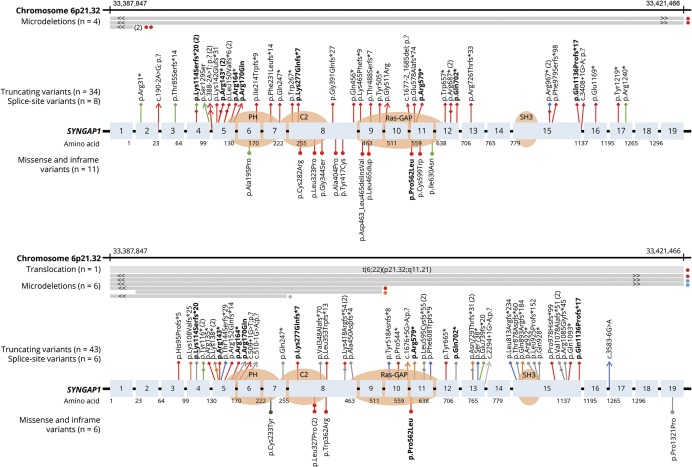
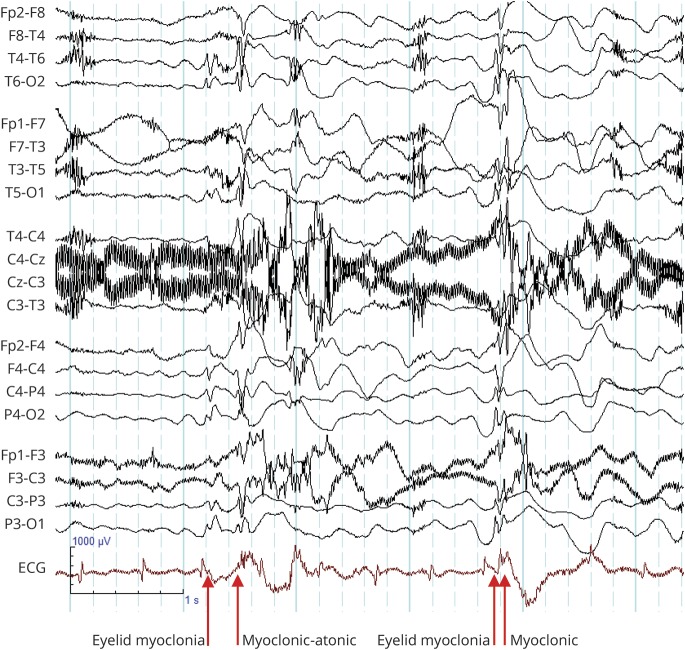
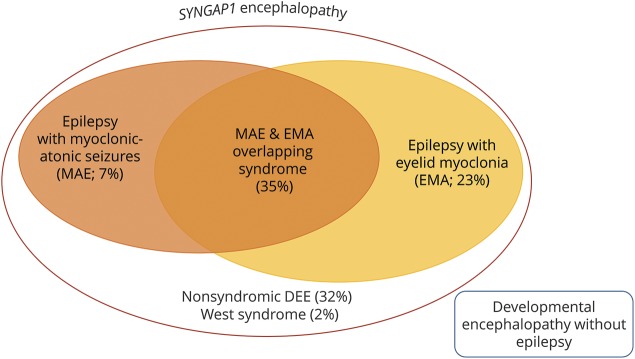
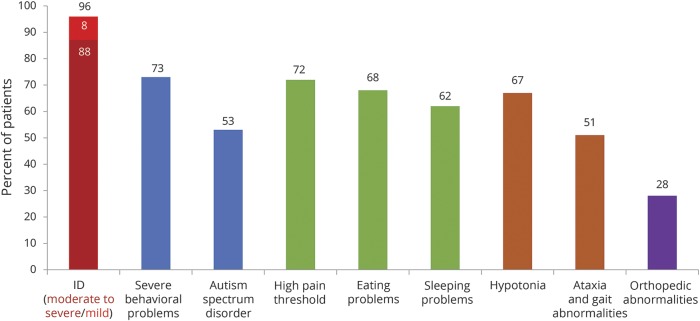
Objective To delineate the epileptology, a key part of the SYNGAP1 phenotypic spectrum, in a large patient cohort. Methods Patients were recruited via investigators9 practices or social media. We included patients with (likely) pathogenic SYNGAP1 variants or chromosome 6p21.32 microdeletions incorporating SYNGAP1. We analyzed patients9 phenotypes using a standardized epilepsy questionnaire, medical records, EEG, MRI, and seizure videos. Results We included 57 patients (53% male, median age 8 years) with SYNGAP1 mutations (n = 53) or microdeletions (n = 4). Of the 57 patients, 56 had epilepsy: generalized in 55, with focal seizures in 7 and infantile spasms in 1. Median seizure onset age was 2 years. A novel type of drop attack was identified comprising eyelid myoclonia evolving to a myoclonic-atonic (n = 5) or atonic (n = 8) seizure. Seizure types included eyelid myoclonia with absences (65%), myoclonic seizures (34%), atypical (20%) and typical (18%) absences, and atonic seizures (14%), triggered by eating in 25%. Developmental delay preceded seizure onset in 54 of 56 (96%) patients for whom early developmental history was available. Developmental plateauing or regression occurred with seizures in 56 in the context of a developmental and epileptic encephalopathy (DEE). Fifty-five of 57 patients had intellectual disability, which was moderate to severe in 50. Other common features included behavioral problems (73%); high pain threshold (72%); eating problems, including oral aversion (68%); hypotonia (67%); sleeping problems (62%); autism spectrum disorder (54%); and ataxia or gait abnormalities (51%). Conclusions SYNGAP1 mutations cause a generalized DEE with a distinctive syndrome combining epilepsy with eyelid myoclonia with absences and myoclonic-atonic seizures, as well as a predilection to seizures triggered by eating.
Overview
The claims and statistics of this paper haven’t been checked yet.
Free: it reads the open-access text and checks the first 5 claims that cite a source we can check. Create a free account to check every claim.
Integrity signals
Registry
Cites
Statistics
Figures
Verification
Claims the paper makes
The claims and statistics of this paper haven’t been checked yet.
Free: it reads the open-access text and checks the first 5 claims that cite a source we can check. Create a free account to check every claim.
Claims other papers make about this one
Each is checked against this paper’s own text: does it say what the citing paper says it does?
The source backs part of the claim, not all of it — or backs it for a different population, condition or comparison.
In the citing paper
“The severity of epilepsy in patients with DEEs should not reduce the focus on comorbidities as cognitive, psychiatric (such as ASD, anxiety, mood and behavioural disorders, psychosis), motor and medical disorders occur frequently 110,152,153,156,215 .”
From Developmental and epileptic encephalopathies (2024) · cites this paper as [110]
Experimental — accuracy not yet measuredThe source backs part of the claim, not all of it — or backs it for a different population, condition or comparison.
In the citing paper
“Patients with DEEs are at high risk of the typical medical complications associated with severe neurodevelopmental impairment, including aspiration pneumonia, feeding problems, constipation, sleep disorders and orthopaedic deformities 110,152,215 .”
From Developmental and epileptic encephalopathies (2024) · cites this paper as [110]
Experimental — accuracy not yet measuredThe cited source says what the claim attributes to it.
In the citing paper
“Pathogenic variants in SYNGAP1 cause a generalised DEE with myoclonic-atonic seizures, absence with eyelid myoclonia, eating-induced reflex seizures and photosensitivity [108][109][110] .”
From Developmental and epileptic encephalopathies (2024) · cites this paper as [110]
The cited source says what the claim attributes to it.
In the citing paper
“psychiatric features such as ASD 110 , behavioural problems 152 , mood disorders, psychosis 153 ;”
From Developmental and epileptic encephalopathies (2024) · cites this paper as [110]
Self-check
Percentages, sums and reported differences re-computed from the paper’s own numbers.
The self-check needs the paper’s full text.
Citations
Cites
Diagnostic and Statistical Manual of Mental Disorders
American Psychiatric Association (2013) · doi:10.1176/appi.books.9780890425596 · Cited by 116,369
Richards, S., Aziz, N., Bale, S., Bick, D., Das, S., Gastier-Foster, J., Grody, W. W., Hegde, M., Lyon, E., Spector, E., et al. (2015) · Genetics in Medicine · doi:10.1038/gim.2015.30 · Cited by 32,594 · cited 1×
“ck70sj0).(29) We included 57 (86%) patients with (likely) pathogenic SYNGAP1 variants (n = 53) or chromosome 6p21.”
BackgroundAnalysis of protein-coding genetic variation in 60,706 humans
Exome Aggregation Consortium, Lek, M., Karczewski, K. J., Minikel, E. V., Samocha, K. E., Banks, E., Fennell, T., O’Donnell-Luria, A. H., Ware, J. S., Hill, A. J., et al. (2016) · Nature · doi:10.1038/nature19057 · Cited by 9,587 · cited 1×
“Three patients who had variants reported in gnomAD or ExAC and for whom inheritance of their SYNGAP1 variant was unavailable had phenotypes that were consistent with our large cohort.(38) Two had generalized DEE and 1 had mild ID with EM.”
ResultUniProt: a hub for protein information
The UniProt Consortium (2015) · Nucleic Acids Research · doi:10.1093/nar/gku989 · Cited by 5,106
Scheffer, I. E., Berkovic, S., Capovilla, G., Connolly, M. B., French, J., Guilhoto, L., Hirsch, E., Jain, S., Mathern, G. W., Moshé, S. L., et al. (2017) · Epilepsia · doi:10.1111/epi.13709 · Cited by 5,054
Self-citationFisher, R. S., Cross, J. H., French, J. A., Higurashi, N., Hirsch, E., Jansen, F. E., Lagae, L., Moshé, S. L., Peltola, J., Roulet Perez, E., et al. (2017) · Epilepsia · doi:10.1111/epi.13670 · Cited by 3,483
Self-citationFunctional impact of global rare copy number variation in autism spectrum disorders
Pinto, D., Pagnamenta, A. T., Klei, L., Anney, R., Merico, D., Regan, R., Conroy, J., Magalhaes, T. R., Correia, C., Abrahams, B. S., et al. (2010) · Nature · doi:10.1038/nature09146 · Cited by 2,013
Diagnostic exome sequencing in persons with severe intellectual disability
de Ligt, J., Willemsen, M. H., van Bon, B. W. M., Kleefstra, T., Yntema, H. G., Kroes, T., Vulto-van Silfhout, A. T., Koolen, D. A., de Vries, P., Gilissen, C., et al. (2012) · New England Journal of Medicine · doi:10.1056/nejmoa1206524 · Cited by 1,546
Prevalence and architecture of de novo mutations in developmental disorders
Study, D. D. D. (2017) · Nature · doi:10.1038/nature21062 · Cited by 1,480
Krawczak, M., Reiss, J., & Cooper, D. (1992) · Human Genetics · doi:10.1007/bf00210743 · Cited by 1,324 · cited 1×
“Splice-site mutations were considered separately because their effects on the protein are variable.(35)”
Background
Cited by
Items 101–200 of 238
Jadhav, V., Carreño-Muñoz, M. I., Chehrazi, P., Michaud, J. L., Chattopadhyaya, B., & Cristo, G. D. (2024) · Journal of Neuroscience · doi:10.1523/jneurosci.0946-24.2024 · Cited by 10
Sleep disturbances in SCN8A ‐related disorders
Furia, F., Johannesen, K. M., Bonardi, C. M., Previtali, R., Aledo‐Serrano, Á., Mastrangelo, M., Favaro, J., Masnada, S., Micco, V. D., Proietti, J., et al. (2024) · Epilepsia Open · doi:10.1002/epi4.13042 · Cited by 9
Behavioural phenotype of SYNGAP1‐related intellectual disability
Kranak, M. P., Rooker, G. W., & Smith‐Hicks, C. L. (2024) · Journal of Intellectual Disability Research · doi:10.1111/jir.13145 · Cited by 9
Syngap1 Regulates Cortical Circuit Assembly by Controlling Membrane ExcitabilityPreprint
Arora, V., Michaelson, S. D., Aceti, M., Kilinic, M., Miller, C. A., & Rumbaugh, G. (2022) · bioRxiv (Cold Spring Harbor Laboratory) · doi:10.1101/2022.12.06.519295 · Cited by 9
Murthy, M. C., Banerjee, B., Shetty, M., Mariappan, M., & Sekhsaria, A. (2024) · Epileptic Disorders · doi:10.1002/epd2.20254 · Cited by 8
Alternative splicing in autism spectrum disorder: Recent insights from mechanisms to therapy
Zheng, M., Bao, N., Wang, Z., Song, C., & Jin, Y. (2025) · Asian Journal of Psychiatry · doi:10.1016/j.ajp.2025.104501 · Cited by 8
Aryal, S., Geng, C., Yin, M. A., Kwon, M. J., Farsi, Z., Goble, N., Asan, A. S., Brenner, K. S., Shepard, N., Geller, A., et al. (2026) · Cell Reports · doi:10.1016/j.celrep.2026.117436 · Cited by 8
Gokce‐Samar, Z., de Bellescize, J., Arzimanoglou, A. A., Putoux, A., Chatron, N., Lesca, G., & Portes, V. D. (2022) · European Journal of Medical Genetics · doi:10.1016/j.ejmg.2022.104636 · Cited by 8
No more nonsense: evaluating poison exons as therapeutic targets in neurodevelopmental disorders
Bakshi, S., & Isom, L. L. (2025) · Current Opinion in Genetics & Development · doi:10.1016/j.gde.2025.102346 · Cited by 8
Sumathipala, S. H., Khan, S., Kozol, R. A., Araki, Y., Syed, S., Huganir, R. L., & Dallman, J. E. (2024) · Frontiers in Molecular Neuroscience · doi:10.3389/fnmol.2024.1401746 · Cited by 7
Clinical and genetic landscape of epilepsies with absence seizures and single‐gene etiology
Balestrini, S., Galli, I. C., Ricci, M. L., Parrini, E., Mei, D., Mastrangelo, M., Pisani, F., Filippi, C., Giordano, L., Cesaroni, E., et al. (2025) · Epilepsia · doi:10.1111/epi.18655 · Cited by 7
Self-citationSyngap1 and the development of murine neocortical progenitor cells
Barão, S., Xu, Y., Hong, I., Mueller, U. W., & Huganir, R. L. (2025) · Nature Communications · doi:10.1038/s41467-025-66069-0 · Cited by 7
Gastrointestinal Dysfunction in Genetically Defined Neurodevelopmental Disorders
Davidson, E. A., Holingue, C., Jiménez-Gómez, A., Dallman, J. E., & Moshiree, B. (2023) · Seminars in Neurology · doi:10.1055/s-0043-1771460 · Cited by 7
Félix, A. J., Brown, B. L., Marotta, N., Gessner, M. J., Houserova, M., Huerta-Ocampo, I., Wilson, T., Randell, R., Dawicki-McKenna, J. M., Reinhardt, D., et al. (2026) · Molecular Psychiatry · doi:10.1038/s41380-026-03698-x · Cited by 7
Bolbocean, C., Rhidenour, K. B., McCormack, M., Suter, B., & Holder, J. L. (2022) · Journal of Autism and Developmental Disorders · doi:10.1007/s10803-022-05619-7 · Cited by 7
A synaptic protein defect associated with reflex seizure disorder
Striano, P., & Huppke, P. (2018) · Neurology · doi:10.1212/wnl.0000000000006720 · Cited by 7
Zhang, J., xue, G., Wang, X., Rao, X., Chen, J., Fan, L., Liu, L., & Gan, J. Y. (2026) · Frontiers in Neurology · doi:10.3389/fneur.2026.1773363 · Cited by 6
Atomistic simulations reveal impacts of missense mutations on the structure and function of SynGAP1
Ali, A. A., Li, L., Courtney, M. J., Pentikäinen, O. T., & Postila, P. A. (2024) · Briefings in Bioinformatics · doi:10.1093/bib/bbae458 · Cited by 6
Cunnane, K. A., Miskimen, A. C. C., Arnesen, R. A., & Grinspan, Z. M. (2025) · Pediatric Neurology · doi:10.1016/j.pediatrneurol.2025.05.017 · Cited by 6
The Behavioral Profile of SYNGAP1-Related Intellectual Disability
Wright, D., Kenny, A., Mizen, L. A. M., McKechanie, A. G., & Stanfield, A. C. (2024) · American Journal on Intellectual and Developmental Disabilities · doi:10.1352/1944-7558-129.3.199 · Cited by 6
Bonnycastle, K., Nawaz, M. S., Kind, P. C., & Cousin, M. A. (2025) · Molecular Autism · doi:10.1186/s13229-025-00660-6 · Cited by 6
A reappraisal of atypical absence seizures in children and adults: therapeutic implications
Brigo, F., Striano, P., & Belcastro, V. (2019) · Expert Opinion on Pharmacotherapy · doi:10.1080/14656566.2019.1656716 · Cited by 6
Genetic causes of rare and common epilepsies: What should the epileptologist know?
Lesca, G., Baumgartner, T. R., Monin, P., Dominicis, A. D., Kunz, W. S., & Specchio, N. (2022) · European Journal of Medical Genetics · doi:10.1016/j.ejmg.2022.104570 · Cited by 6
Social behavioral impairments in SYNGAP1-related intellectual disability
Naveed, H., McCormack, M., & Holder, J. L. (2023) · Frontiers in Pediatrics · doi:10.3389/fped.2023.1188117 · Cited by 6
Genetic and clinical variations in a Norwegian sample diagnosed with Rett syndrome
Henriksen, M. W., Breck, H., Sejersted, Y., Diseth, T. H., von Tetzchner, S., Paus, B., & Skjeldal, O. H. (2020) · Brain and Development · doi:10.1016/j.braindev.2020.03.008 · Cited by 6
Katsanevaki, D., Till, S., Buller‐Peralta, I., Watson, T., Nawaz, M., Arkell, D., Tiwari, S., Kapgal, V., Biswal, S. S., Smith, J., et al. (2020) · bioRxiv (Cold Spring Harbor Laboratory) · doi:10.1101/2020.10.14.339192 · Cited by 6
“…rats that can be suppressed by ETX In addition to cognitive and behavioural symptoms, more than 85% of individuals with pathogenic SYNGAP1 mutations exhibit epilepsy (Berryer et al., 2013; Hamdan et al., 2009; Klitten et al., 2011; Mignot et al., 2016; Pinto et al., 2010; Vlaskamp et al., 2019).”
BackgroundInfluentialFrazier, T. W., Busch, R. M., Klaas, P., Lachlan, K. L., Jeste, S., Kolevzon, A., Loth, E., Harris, J., Pepper, T., Anthony, K., et al. (2024) · Autism Research · doi:10.1002/aur.3290 · Cited by 5
Harrison, A., Magielski, J. H., McSalley, I., Ganesan, S., Prentice, A. J., Cunningham, K. G., Pierce, S. R., Boland, M. J., Prosser, B. L., Helbig, I., et al. (2025) · Epilepsia · doi:10.1111/epi.18469 · Cited by 5
Samanta, D. (2026) · Epilepsy & Behavior · doi:10.1016/j.yebeh.2026.111098 · Cited by 6
Douglas, C. J., Samowitz, P. N., Tong, F., Long, A., Bradley, C., Radnai, L., MacMillan, D. W. C., Miller, C. A., Rumbaugh, G., & Seath, C. P. (2026) · Nature Communications · doi:10.1038/s41467-026-77118-7 · Cited by 5
Wong, N. R., Klomhaus, A. M., Adams, D. J., Schneider, B. N., Mehta, S., DiStefano, C., Wilson, R. B., Martínez-Agosto, J. A., Jeste, S., & Besterman, A. D. (2024) · Genetics in Medicine · doi:10.1016/j.gim.2024.101252 · Cited by 5
Salom, R., Aras, L. M., Piñero, J., & Duñabeitia, J. A. (2022) · Journal of Clinical Medicine · doi:10.3390/jcm11226720 · Cited by 5
Salcedo‐Pérez‐Juana, M., Florêncio, L. L., San-Martín-Gómez, A., Pérez‐Corrales, J., García‐Bravo, C., Aledo‐Serrano, Á., & Palacios‐Ceña, D. (2025) · Child Care Health and Development · doi:10.1111/cch.70215 · Cited by 4
Perilli, L., Ferretti, A., Riva, A., Grosso, S., Verrotti, A., & Striano, P. (2026) · Expert Review of Clinical Pharmacology · doi:10.1080/17512433.2026.2652967 · Cited by 4
“Seizures, often myoclonic-atonic or atonic, or eyelid myo-clonia with absences, may be reflex (e.g. eating-or photo-sensitive-induced) and are pharmacoresistant in up to half of cases [157].”
Specchio, N., Auvin, S., Brunklaus, A., Giorgis, V. D., Micco, V. D., Gardella, E., Jansen, F. E., Nabbout, R., Pepi, C., Rubboli, G., et al. (2026) · Epilepsia · doi:10.1002/epi.70271 · Cited by 5
A prospective natural history study protocol for clinical trial readiness in synaptic disorders
McKee, J. L., Ruggiero, S. M., Cunningham, K. G., Coyne, J., McSalley, I., Kaufman, M. C., Bane, B., Chisari, T., Toib, J., Glatts, C., et al. (2026) · Epilepsia · doi:10.1002/epi.70374 · Cited by 4
Genotype–Phenotype Correlations in SYNGAP1 ‐Related Mental Retardation Type 5
Hong, L., & Yuan, Q. (2024) · Clinical Genetics · doi:10.1111/cge.14661 · Cited by 5
Wang, X., Tian, Y.-N., Chen, C., & Peng, J. (2023) · PubMed Central · doi:10.7499/j.issn.1008-8830.2301054 · Cited by 4
Visual social attention in SYNGAP1 ‐related intellectual disability
Wright, D., Kenny, A., Eley, S. E. A., McKechanie, A. G., & Stanfield, A. C. (2024) · Autism Research · doi:10.1002/aur.3148 · Cited by 4
Genetic epilepsies with myoclonic seizures: Mechanisms and syndromes
Coppola, A., Rubino, M., Riva, A., & Striano, P. (2025) · Epilepsia Open · doi:10.1002/epi4.70039 · Cited by 4
Ko, A., & Kang, H. (2019) · Annals of Child Neurology · doi:10.26815/acn.2019.00066 · Cited by 4
Vlaskamp, D. R. M., & Scheffer, I. E. (2020) · Neurology · doi:10.1212/wnl.0000000000009010 · Cited by 4
“The observation of reflex seizures triggered by eating in 25% of our cohort of 57 patients is intriguing and reflects their series of 8 cases from a larger group.(1,2) Their study of the phenomenology showed that biting and chewing triggered seizures, whichmay distinguish SYNGAP1 pathophysiology from other eating-indu…”
InfluentialSelf-citationSichlinger, L., Reilly, M. B., Arora, S., Zhang, S., Marotta, N., Rodríguez-Acevedo, K. L., Hooks, M., Czarnecki, K. S., Winter, J. J., Waxman, E. A., et al. (2025) · bioRxiv (Cold Spring Harbor Laboratory) · doi:10.1101/2025.10.28.685100 · Cited by 4
Stamenkovic, V., Harsh, F., Kniffen, B., Rumbaugh, G., & Smith, S. E. P. (2026) · Molecular & Cellular Proteomics · doi:10.1016/j.mcpro.2026.101614 · Cited by 1
“…variants in SYNGAP1 leading to genetic haploinsufficiency cause a neurodevelopmental disorder characterized by intellectual disability, epilepsy and autism (11, 24–27), demonstrating that that reduced SynGAP protein disrupts human cognition, neural network excitability, and adaptive behavior.”
SYNGAP1 mutation in a pediatric patient with autism spectrum disorder and intellectual disability
Çetin, F. H. (2020) · Dusunen Adam The Journal of Psychiatry and Neurological Sciences · doi:10.14744/dajpns.2020.00112 · Cited by 3
Eating‐induced seizures: A semiological sign of the right temporal pole
Tena‐Cucala, R., Sala, J., Jaraba, S., Hernández, G., Coello, A. F., Rosselló, A., Camins, À., Naval‐Baudin, P., Fernández‐Viñas, M., Rodríguez-Bel, L., et al. (2023) · Epileptic Disorders · doi:10.1002/epd2.20035 · Cited by 3
Prognostic factors in epilepsy with eyelid myoclonia (Jeavons syndrome)
Nilo, A., Crespel, A., Genton, P., Macorig, G., Gigli, G. L., & Gélisse, P. (2023) · Revue Neurologique · doi:10.1016/j.neurol.2023.04.005 · Cited by 3
Sulaiman, S. A., Khalaf, I. M. B., Saeed, A. E., Hoshan, W., Hageen, A. W., Motwani, J., & Goyal, A. (2024) · Pediatric Neurology · doi:10.1016/j.pediatrneurol.2024.09.018 · Cited by 3
SYNGAP1 encephalopathy: A distinctive generalized developmental and epileptic encephalopathy
(2019) · Neurology · doi:10.1212/wnl.0000000000008352 · Cited by 3
Daquin, G., & Bonini, F. (2024) · Revue Neurologique · doi:10.1016/j.neurol.2023.11.010 · Cited by 3
Subjective sleep assessment in individuals with SYNGAP1 -associated syndrome
Mosini, A. C., Moysés‐Oliveira, M., Adami, L. N. G., Xavier, S. D., Marquezini, B. P., Kloster, A. K., Balbueno, B., de Mello, C. B., Moreira, G. A., Andersen, M. L., et al. (2024) · Journal of Clinical Sleep Medicine · doi:10.5664/jcsm.11246 · Cited by 3
von Stülpnagel, C., & Kluger, G. J. (2021) · Monatsschrift Kinderheilkunde · doi:10.1007/s00112-021-01253-2 · Cited by 3
Reporting existing datasets for automatic epilepsy diagnosis and seizure detectionPreprint
Handa, P., Tiwari, S., & Goel, N. (2023) · arXiv (Cornell University) · doi:10.48550/arxiv.2306.12292 · Cited by 3
Zeng, X., Chen, Y., Yu, X., Che, Y., Chen, H., Yi, Z., Qin, J., & Zhong, J. (2023) · Acta Epileptologica · doi:10.1186/s42494-022-00114-z · Cited by 2
“It is said that the clinical manifestations of SYNGAP1 encephalopathy patients with mutations in exons 5 to 19 are heavier than those in exons 1–4, and the prognosis of drug treatment is worse [2, 5].”
BackgroundInfluentialSleep complaints in individuals with SYNGAP1-associated syndrome
Mosini, A. C., Moysés‐Oliveira, M., de Araujo, J. N. G., Guerreiro, P., Cunha, L., Zamariolli, M., Xavier, S. D., Balbueno, B., de Mello, C. B., Moreira, G. A., et al. (2024) · Sleep Medicine · doi:10.1016/j.sleep.2024.12.026 · Cited by 2
DeGasperis, S. M., RamachandranNair, R., Jones, K., & Whitney, R. (2025) · Epilepsy Research · doi:10.1016/j.eplepsyres.2025.107641 · Cited by 2
Kobayashi, Y., Sakuma, S., Morimoto, E., Fujii, H., Yamada, K., Hojo, M., Miura, M., Tohyama, J., Miya, F., Kato, M., et al. (2025) · Brain and Development · doi:10.1016/j.braindev.2025.104478 · Cited by 2
D’ardhuy, X. L., Partners, C., Cimms, T., Lindsten, K., Rizzo, M., Skrinar, A. M., Wecker, P. S., Mingorance, A., & Devinsky, O. (2026) · Epilepsia · doi:10.1002/epi.70095 · Cited by 2
Biphasic sleep is a feature of sleep disturbance in SYNGAP1-RD
Doucoure, A., Patel, H., Abboud, M. A., Sperry, A. D., Wanigatunga, S., Crocetti, D., Volk, H. E., Spira, A. P., Mostofsky, S. H., Krishnan, V., et al. (2026) · Sleep Medicine · doi:10.1016/j.sleep.2026.108908 · Cited by 2
Epilepsy‐Dyskinesia Syndromes: The Venn Diagram of Genetic Epilepsy and Movement Disorders
Bernardi, K., Alecu, J. E., Achkar, C. M. E., Tochen, L. S., Pearl, P. L., & Ebrahimi‐Fakhari, D. (2026) · Movement Disorders · doi:10.1002/mds.70403 · Cited by 2
Characterizing Key Correlates of Sleep Problems Across Rare Neurodevelopmental Genetic Disorders
Baker, E. K., Frazier, T. W., Phillips, J. M., Hardan, A. Y., & Uljarević, M. (2025) · Journal of Autism and Developmental Disorders · doi:10.1007/s10803-025-07069-3 · Cited by 2
How We Got to Where We're Going
Poduri, A., George, A. L., Heinzen, E. L., Lowenstein, D. H., & James, S. (2021) · Cambridge University Press eBooks · doi:10.1017/9781009000420 · Cited by 2
Wolf, P., von Stülpnagel, C., Hartlieb, T., Møller, R. S., & Kluger, G. J. (2020) · Neurology · doi:10.1212/wnl.0000000000009007 · Cited by 2
Fung, E. L. W. (2020) · Neurology · doi:10.1212/wnl.0000000000009009 · Cited by 2
Katsanevaki, D., Dupuy, N., Booker, S. A., Wright, D., Kenny, A., Chen, Z., Kudryashova, N., Howitt, P., Stanfield, A. C., Kind, P. C., et al. (2025) · bioRxiv (Cold Spring Harbor Laboratory) · doi:10.1101/2025.04.09.647923 · Cited by 2
Waters, M., Teasdale, L., Byars, S., Mattei, C., Roseno, N. E., Ovchinnikov, D. A., Scheffer, I. E., Pardoe, H., Petrou, S., & Maljevic, S. (2026) · bioRxiv (Cold Spring Harbor Laboratory) · doi:10.64898/2026.07.15.738667 · Cited by 2
Self-citationScott, M. R., Misko, A. L., Liu, Y., & Sverdlov, O. (2025) · Orphanet Journal of Rare Diseases · doi:10.1186/s13023-025-03918-7 · Cited by 1
Samowitz, P. N., Radnai, L., Vaissière, T., Michaelson, S. D., Rojas, C. J., Mitchell, R., Kılınç, M., Edwards, A. W., Shumate, J., Hawkins, R., et al. (2025) · Nature Communications · doi:10.1038/s41467-025-65971-x · Cited by 1
Zhang, W., Wang, Y., Xu, K., Wang, L., Wang, Y., Chen, G., & Ma, Y. (2026) · Frontiers in Pediatrics · doi:10.3389/fped.2026.1789561 · Cited by 1
Mir, A., Song, Y., Lee, H., Nadeali, Z., Akbarian, F., & Tabatabaiefar, M. A. (2023) · Laboratory Medicine · doi:10.1093/labmed/lmad064 · Cited by 1
Treatment of Challenging Behavior in a Young Adult with SYNGAP1-Related Disorder
Thomas, B. R. (2024) · Advances in Neurodevelopmental Disorders · doi:10.1007/s41252-024-00418-w · Cited by 1
Ojeda, N. E. D. L., Vargas, F. V. V., Mortola, F. A., de León, J. C. B., Sánchez-Murguía, T., Cisneros-Orozco, J. A., & Guerrero‐Aranda, A. (2024) · SAGE Open Medical Case Reports · doi:10.1177/2050313x241302964 · Cited by 1
Reina, M. C., Díaz, A. J. Z., & Méndez, M. S. (2025) · Revista de Logopedia Foniatría y Audiología · doi:10.1016/j.rlfa.2024.100512 · Cited by 1
Genetic medicines for epilepsy: unlocking new avenues for seizure control
Wee, I. C., Przybyla, M., Touma, J., Ittner, L. M., & van Eersel, J. (2026) · Frontiers in Bioengineering and Biotechnology · doi:10.3389/fbioe.2026.1768550 · Cited by 1
Yokokura, M., Tamayama, T., Kameno, Y., Iwabuchi, T., Goto, T., Murata, I., Harada, T., Ichinohe, N., Ouchi, Y., & Yamasue, H. (2026) · Molecular Psychiatry · doi:10.1038/s41380-026-03812-z · Cited by 1
Demystifying neuroscience laboratory techniques used to investigate single-gene disorders
Mizen, L. A. M., & Stanfield, A. C. (2020) · BJPsych Advances · doi:10.1192/bja.2020.30 · Cited by 1
How to Interpret Photoparoxysmal EEG Results?
Barba, C., & Guerrini, R. (2020) · Springer eBooks · doi:10.1007/978-3-319-05080-5_14 · Cited by 1
Self-citationChildhood Epileptic Encephalopathy in Sokoto, Northwestern Nigeria
Mm, A., & Ahmed, H. (2021) · Journal of Pediatric Neurology and Neuroscience · doi:10.36959/595/430 · Cited by 1
Whither social media and clinical genetics?
Gunter, C., & Solomon, B. D. (2023) · American Journal of Medical Genetics Part A · doi:10.1002/ajmg.a.63166 · Cited by 1
Lee, S., & Yeom, J. S. (2023) · Epilia Epilepsy and Community · doi:10.35615/epilia.2023.00403 · Cited by 1
Yépez, I., Landívar, X., Paucar, L. V., & Egüez-Martinez, S. (2024) · Revista Ecuatoriana de Neurologia · doi:10.46997/revecuatneurol33200084 · Cited by 1
SYNGAP1: The Gene and Syndrome
Witzig, D., Patel, H., Hong, I., Gupta, S. D., Huganir, R. L., & Smith‐Hicks, C. L. (2024) · Springer eBooks · doi:10.1007/978-3-031-62945-7_9 · Cited by 1
Characterizing Genomic Duplication in Autism Spectrum Disorder
Higginbotham, E. J. (2020) · TSpace (University of Toronto) · Cited by 1
GABAergic signaling promotes early-life seizures in epileptic SYNGAP1 +/- micePreprint
Sullivan, B. J., Kipnis, P. A., Ammanuel, S. G., & Kadam, S. D. (2020) · bioRxiv (Cold Spring Harbor Laboratory) · doi:10.1101/2020.11.14.381749 · Cited by 1
SLC32A1: One More Gene Contributing to the Solution of the Genetic Generalized Epilepsies Mystery
Guerrini, R., & Marini, C. (2021) · Neurology · doi:10.1212/wnl.0000000000011854 · Cited by 1
Self-citationHolder, J. L., Pang, K., Weïwer, M., Han, K., Wang, W., Estiphan, T., Vuocolo, B., Jaunarajs, K. L. E., Holson, E. B., Lewis, M., et al. (2021) · Research Square · doi:10.21203/rs.3.rs-646721/v1 · Cited by 1
Golovin, R. M., Garcia-Gonzalez, B., Michaelson, S. D., Aceti, M., Butz, S., Rojas, C., Miller, C. A., Vaissière, T., & Rumbaugh, G. (2026) · bioRxiv (Cold Spring Harbor Laboratory) · doi:10.64898/2026.03.27.714839 · Cited by 1
Missense mutations on SynGAP C2 domain impair membrane diffusion
Miotto, M., Bo', L., Ruocco, G., Di Angelantonio, S., & Basilico, B. (2026) · Protein Science · doi:10.1002/pro.70574
Editors' note: Magnesium, hemostasis, and outcomes in patients with intracerebral hemorrhage
Alcauskas, M., & Galetta, S. L. (2018) · Neurology · doi:10.1212/wnl.0000000000005246
Kılınç, M., Creson, T. K., Rojas, C., Maity, S., Le, A. A., Lauterborn, J. C., Wilkinson, B., Hartel, N. G., Graham, N. A., Reich, A. M., et al. (2020) · bioRxiv (Cold Spring Harbor Laboratory) · doi:10.1101/2020.01.18.911487
“humans cause a relatively homogenous neurodevelopmental disorder defined by epileptic encephalopathy, intellectual disability, and autistic features (Deciphering Developmental Disorders, 2015, 2017; Hamdan et al., 2009; Mignot et al., 2016; O'Roak et al., 2014; Parker et al., 2015; Satterstrom et al., 2019; Vlaskamp e…”
BackgroundInfluentialTran, H. T. T. (2020) · Memorial University Research Repository (Memorial University) · doi:10.48336/ayja-nr83
Medicine, P. N. S. (2021) · International Journal of Case Reports · doi:10.28933/ijcr-2021-03-3007
SYNGAP1 and Its Related Epileptic Syndromes
Garozzo, M. T., Caruso, D., Mendola, F., Nora, A. D., Romano, K., Leonardi, R., Falsaperla, R., Zanghì, A., & Praticò, A. D. (2021) · Journal of Pediatric Neurology · doi:10.1055/s-0041-1727144
Genotyperen en fenotyperen van epilepsie bij kinderen
Callenbach, P. M. C., & Rump, P. (2019) · Epilepsie periodiek voor professionals · doi:10.54160/epilepsie.11230
Novel de novo heterozygous mutation on SYNGAP1 from the Indian populationPreprint
Verma, V., Mandora, A., Botre, A. V., & Clement, J. P. (2020) · doi:10.21203/rs.2.22020/v1
“ID and ASD are common debilitating neurodevelopmental disorders defined by the presence 27 of significant limitations in cognitive and emotional behaviours, and global delay in 28 development associated with epilepsy (1-4).”
BackgroundHess, V., Miguel, J., Bonnemains, C., & Bilbault, C. (2021) · Journal of Pediatric Neurology · doi:10.1055/s-0041-1740114
Baajour, W., & Sirsi, D. (2023) · Journal of Pediatric Epilepsy · doi:10.1055/s-0043-1762908
Dissecting the Role of Cortical Inhibitory Neurons in the SYNGAP1 Neurodevelopmental Disorder
Zhao, M. (2023) · Deep Blue (University of Michigan) · doi:10.7302/8209
Metadata
- Authors
- Vlaskamp, D. R. M., Shaw, B. J., Burgess, R., Mei, D., Montomoli, M., Xie, H., Myers, C. T., Bennett, M. F., XiangWei, W., Williams, D., Maas, S. M., Brooks, A. S., Mancini, G. M. S., van de Laar, I. M. B. H., van Hagen, J. M., Ware, T. L., Webster, R. I., Malone, S., Berkovic, S. F., Kalnins, R. M., Sicca, F., Korenke, G. C., van Ravenswaaij-Arts, C. M. A., Hildebrand, M. S., Mefford, H. C., Jiang, Y., Guerrini, R., & Scheffer, I. E.
- Affiliations
- University Medical Center Groningen (NL)
- From the Epilepsy Research Centre (D.R.M.V., B.J.S., R.B., M.F.B., S.F.B., M.S.H., I.E.S.), Department of Medicine, University of Melbourne, Austin Health, Australia; Departments of Genetics (D.R.M.V., C.M.A.v.R.-A.) and Neurology (D.R.M.V.), University Medical Center Groningen, University of Groningen, the Netherlands; Pediatric Neurology Unit and Laboratories (D.M., M.M.) and Pediatric Neurology (R.G.), Neurogenetics and Neurobiology Unit and Laboratories, A. Meyer Children's Hospital, University...
- Corresponding author
- Scheffer, Ingrid E.
- ORCID
- Vlaskamp, Danique R.M.
- Burgess, Rosemary
- Mei, Davide
- Montomoli, Martino
- Xie, Han
- Myers, Candace T.
- Bennett, Mark F.
- XiangWei, Wenshu
- Maas, Saskia M.
- Brooks, Alice S.
- Mancini, Grazia M.S.
- van de Laar, Ingrid M.B.H.
- Ware, Tyson L.
- Webster, Richard I.
- Malone, Stephen
- Berkovic, Samuel F.
- Kalnins, Renate M.
- Sicca, Federico
- Korenke, G. Christoph
- van Ravenswaaij-Arts, Conny M.A.
- Hildebrand, Michael S.
- Mefford, Heather C.
- Jiang, Yuwu
- Guerrini, Renzo
- Scheffer, Ingrid E.
- Venue
- Neurology
- Published
- 2019-01-08
- Volume
- 92
- Issue
- 2
- Pages
- e96-e107
- ISSN
- 0028-3878 (ISSN-L)
- 1526-632X
- PMC
- PMC6340340
- OpenAlex
- W2904696555
- Semantic Scholar
- 947f117d0dd579c62045f5f2c2c4004008f77149
- Cited by
- 206
- References
- 50
- Citations by year
- 2026: 20 · 2025: 32 · 2024: 39 · 2023: 27 · 2022: 21 · 2021: 30 · 2020: 27 · 2019: 7
- FWCI
- 12.89
- Type
- journal article
- Language
- en
- Open access
- hybrid
- doi.org
- Licence
- cc-by-nc-nd
- Locations
- Neurology (publishedVersion, cc-by-nc-nd)
- Europe PMC (PubMed Central) (publishedVersion, cc-by-nc-nd)
- PubMed Central (publishedVersion, cc-by-nc-nd)
- PubMed (publishedVersion)
- EUR Research Repository (Erasmus University Rotterdam) (publishedVersion)
- University of Groningen research database (University of Groningen / Centre for Information Technology) (publishedVersion, cc-by-nc-nd)
- Minerva Access (University of Melbourne) (submittedVersion, cc-by-nc-nd)
- Pure Amsterdam UMC (submittedVersion, cc-by)
- Data Archiving and Networked Services (DANS) (submittedVersion, other-oa)
- EUR Research Repository (Erasmus University Rotterdam) (submittedVersion)
- University of Groningen research database (University of Groningen / Centre for Information Technology) (submittedVersion, other-oa)
- University of Groningen research database (University of Groningen / Centre for Information Technology) (submittedVersion, cc-by-nc-nd)
- Funders
- U.S. Department of Defense
- March of Dimes Foundation
- Citizens United for Research in Epilepsy
- Fondazione Pisa
- Zogenix
- GW Pharmaceuticals
- Australian Government
- European Commission (602531)
- National Natural Science Foundation of China (2016‐2020, 81501123)
- Ministero della Salute
- Eisai
- Fondazione Pierfranco e Luisa Mariani
- Regione Toscana
- National Institutes of Health
- Medical Research Council
- National Health and Medical Research Council (1091593, 1104831)
- Health Research Council of New Zealand
- National Institute of Neurological Disorders and Stroke (R01NS069605)
- UCB Pharma
- Topics
- Health Sciences › Medicine › Clinical Neurology › Epilepsy research and treatment
- Life Sciences › Biochemistry, Genetics and Molecular Biology › Genetics › Genetics and Neurodevelopmental Disorders
- Health Sciences › Medicine › Pediatrics, Perinatology and Child Health › Pharmacological Effects and Toxicity Studies
- Keywords
- SYNGAP1, developmental and epileptic encephalopathy, epileptology, eyelid myoclonia with absences, myoclonic-atonic seizures, atonic seizures, intellectual disability, autism spectrum disorder, developmental delay, behavioral problems
- MeSH terms
- Adolescent, Adult, Anticonvulsants, Brain, Brain Diseases, Child, Developmental Disabilities, Child, Preschool, Electroencephalography, Female, Humans, Infant, Male, Mutation, Spasms, Infantile, Cohort Studies, ras GTPase-Activating Proteins, Young Adult, Genetic Association Studies
About these checks
Registry, retraction, Cites and statistics results are computed, not judged, with one exception: a printed reference that no index lists is read once by a model before it counts as a citation error. Claims are extracted by a model and kept only when their quote appears verbatim in the text; each cited source is then checked, with a model’s help, for whether it says what the claim relies on. Those verdicts can be wrong — read the claim’s quote and the cited source before relying on one.
Statistics and arithmetic are recomputed, not judged.
Confidence bands are shown only for fields calibrated on our annotated test set. None is calibrated yet, so no band is shown.
What counts as a claim ›How we measure confidence ›How we check this ›
Are you an author, or do you see a problem with this page? Request a review
Data sources
Bibliographic data: Semantic Scholar, OpenAlex, Crossref.
Contains information from the Semantic Scholar Academic Graph Datasets, made available under the ODC Attribution License (ODC-BY 1.0).
Semantic Scholar’s data is described in: Kinney, R., et al. (2023). The Semantic Scholar Open Data Platform. arXiv:2301.10140.
