

Associations of the Lifestyle for Brain Health Index With Structural Brain Changes and Cognition: Results From the Maastricht Study
Open accessThe DOI matches its Crossref record; 52 of the 53 references it cites were found in a registry or an index.
Abstract
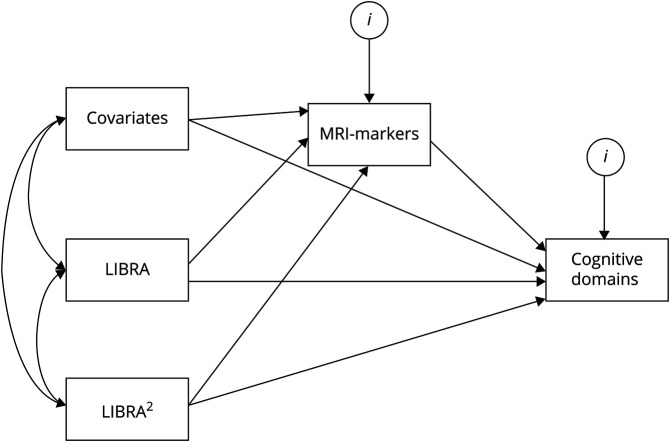
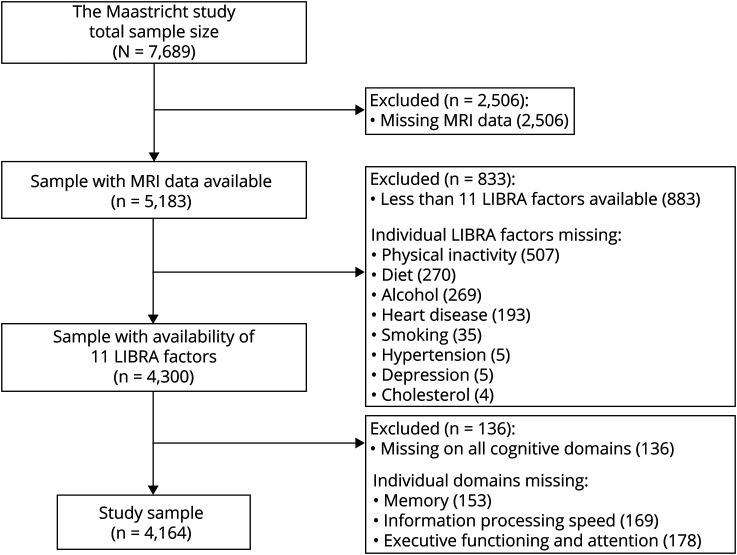
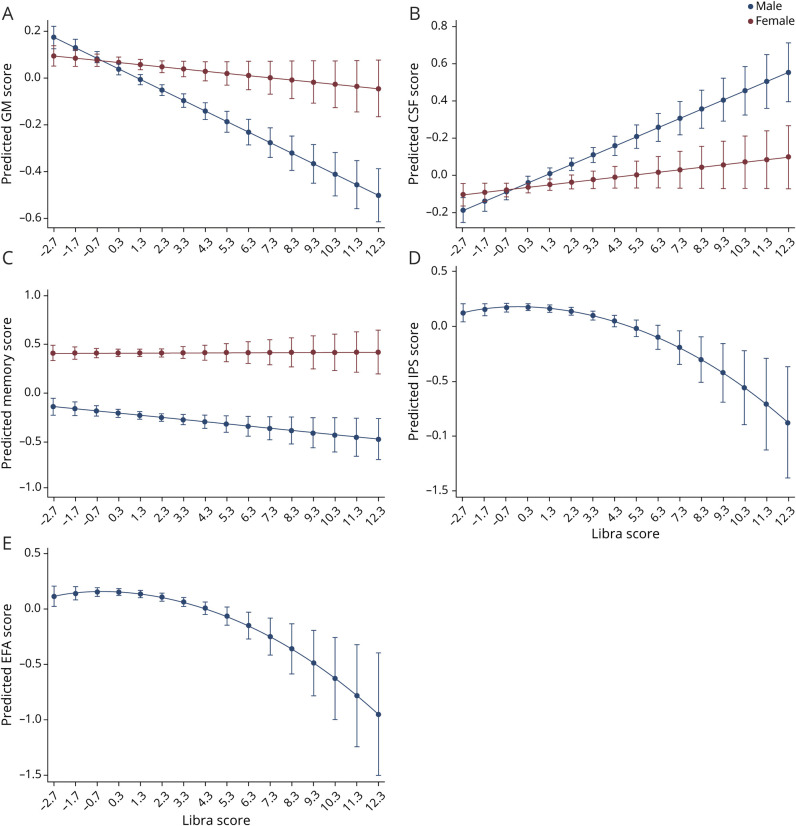
Background and Objectives Observational research has shown that a substantial proportion of all dementia cases worldwide are attributable to modifiable risk factors. Dementia risk scores might be useful to identify high-risk individuals and monitor treatment adherence. The objective of this study was to investigate whether a dementia risk score, the Lifestyle for Brain Health (LIBRA) index, is associated with MRI markers and cognitive functioning/impairment in the general population. Methods Cross-sectional data were used from the observational population-based cohort of The Maastricht Study. The weighted compound score of LIBRA (including 12 dementia risk and protective factors, e.g., hypertension, physical inactivity) was calculated, with higher scores indicating higher dementia risk. Standardized volumes of white matter, gray matter, and CSF (as proxy for general brain atrophy), white matter hyperintensities, and presence of cerebral small vessel disease were derived from 3T MRI. Cognitive functioning was tested in 3 domains: memory, information processing speed, and executive function and attention. Values ≤1.5 SDs below the average were defined as cognitive impairment. Multiple regression analyses and structural equation modeling were used, adjusted for age, sex, education, intracranial volume, and type 2 diabetes. Results Participants (n = 4,164; mean age 59 years; 49.7% men) with higher LIBRA scores (mean 1.19, range −2.7 to 9.2), denoting higher dementia risk, had higher volumes of white matter hyperintensities (β = 0.051, p = 0.002) and lower scores on information processing speed (β = −0.067, p = 0.001) and executive function and attention (β = −0.065, p = 0.004). Only in men, associations between LIBRA score and volumes of gray matter (β = −0.093, p < 0.001) and CSF (β = 0.104, p < 0.001) and memory (β = −0.054, p = 0.026) were found. White matter hyperintensities and CSF volume partly mediated the association between LIBRA score and cognition. Discussion Higher health- and lifestyle-based dementia risk is associated with markers of general brain atrophy, cerebrovascular pathology, and worse cognition, suggesting that LIBRA meaningfully summarizes individual lifestyle-related brain health. Improving LIBRA factors on an individual level might improve population brain health. Sex differences in lifestyle-related pathology and cognition need to be further explored. Classification of Evidence This study provides Class II evidence that higher LIBRA scores are significantly associated with lower scores in some cognitive domains and a higher risk of cognitive impairment.
Overview
The claims and statistics of this paper haven’t been checked yet.
Free: it reads the open-access text and checks the first 5 claims that cite a source we can check. Create a free account to check every claim.
Integrity signals
Registry
Cites
Statistics
Figures
Verification
Claims the paper makes
The claims and statistics of this paper haven’t been checked yet.
Free: it reads the open-access text and checks the first 5 claims that cite a source we can check. Create a free account to check every claim.
Claims other papers make about this one
Each is checked against this paper’s own text: does it say what the citing paper says it does?
The source backs part of the claim, not all of it — or backs it for a different population, condition or comparison.
In the citing paper
“LIBRA is a comprehensive modifiable dementia risk score summarizing the presence or absence of 12 modifiable risk and protective factors into one numeric value and has been extensively validated to predict cognitive decline, incident dementia, and biomarkers of brain damage [21–26].”
From Multidomain Dementia Risk Reduction in Primary Care is Feasible: A Proof-of-concept study (2024) · cites this paper as [25]
Experimental — accuracy not yet measured
Self-check
Percentages, sums and reported differences re-computed from the paper’s own numbers.
The self-check needs the paper’s full text.
Citations
Cites
1 retracted
Dementia prevention, intervention, and care: 2020 report of the Lancet Commission
Livingston, G., Huntley, J., Sommerlad, A., Ames, D., Ballard, C., Banerjee, S., Brayne, C., Burns, A., Cohen-Mansfield, J., Cooper, C., et al. (2020) · The Lancet · doi:10.1016/s0140-6736(20)30367-6 · Cited by 10,430 · cited 1×
“A substantial proportion of dementia cases might be attributable to modifiable risk factors.(1,2) Early detection of individuals at risk, allowing timely management, has great public health implications,(1) as echoed by recent reports of the Lancet Commission on Dementia Prevention, Intervention and Care(2) and the Wo…”
BackgroundRetractedThe PHQ-9: Validity of a brief depression severity measure
Kroenke, K., Spitzer, R. L., & Williams, J. B. W. (2001) · Journal of General Internal Medicine · doi:10.1046/j.1525-1497.2001.016009606.x · Cited by 44,910
(1998) · The Journal of Clinical Psychiatry · Cited by 19,139
(1998) · PubMed · Cited by 10,216
The mini international neuropsychiatric interview
Lecrubier, Y., Sheehan, D., Hergueta, T., & Weiller, E. (1998) · European Psychiatry · doi:10.1016/s0924-9338(99)80239-9 · Cited by 5,872
MR signal abnormalities at 1.5 T in Alzheimer's dementia and normal aging
Fazekas, F., Chawluk, J., Alavi, A., Hurtig, H., & Zimmerman, R. (1987) · American Journal of Roentgenology · doi:10.2214/ajr.149.2.351 · Cited by 5,334 · cited 1×
“In addition, WMHs were visually rated with the Fazekas scale.(37) Lacunar infarcts and cerebral microbleeds were counted manually by 3 neuroradiologists in accordance with the Microbleed Anatomical Rating Scale.”
MethodEstimating glomerular filtration rate from serum creatinine and cystatin C
Inker, L. A., Schmid, C. H., Tighiouart, H., Eckfeldt, J. H., Feldman, H. I., Greene, T., Kusek, J. W., Manzi, J., Van Lente, F., Zhang, Y. L., et al. (2012) · New England Journal of Medicine · doi:10.1056/nejmoa1114248 · Cited by 4,102 · cited 1×
“Chronic kidney disease was derived from Chronic Kidney Disease Epidemiology Collaboration equation–estimated glomerular filtration rate using serum cystatin C (serum cystatin C of <60) or average urinary albumin excretion (both microalbuminuria and macroalbuminuria defined as risk).(30)”
MethodLane, C. A., Hardy, J., & Schott, J. M. (2018) · European Journal of Neurology · doi:10.1111/ene.13439 · Cited by 2,616
Potential for primary prevention of Alzheimer's disease: an analysis of population-based data
Norton, S., Matthews, F. E., Barnes, D. E., Yaffe, K., & Brayne, C. (2014) · The Lancet Neurology · doi:10.1016/s1474-4422(14)70136-x · Cited by 2,466 · cited 1×
“A substantial proportion of dementia cases might be attributable to modifiable risk factors.(1,2) Early detection of individuals at risk, allowing timely management, has great public health implications,(1) as echoed by recent reports of the Lancet Commission on Dementia Prevention, Intervention and Care(2) and the Wo…”
BackgroundQualitative Assessment of Verbal Fluency Performance in Frontotemporal Dementia
van den Berg, E., Jiskoot, L. C., Grosveld, M. J. H., van Swieten, J. C., & Papma, J. M. (2017) · Dementia and Geriatric Cognitive Disorders · doi:10.1159/000477538 · Cited by 2,046
Research works printed but not linked: 2
- Risk Reduction of Cognitive Decline and Dementia: WHO Guidelines. World Health Organization; 2019. 31219687
- World Health Organization. Obesity. 2019. Accessed February 27, 2019. who.int/topics/obesity/en/.
Cited by
Sex and gender differences in cognitive resilience to aging and Alzheimer's disease
Arenaza‐Urquijo, E. M., Boyle, R., Casaletto, K., Anstey, K. J., Vila‐Castelar, C., Colverson, A., Palpatzis, E., Eissman, J. M., Kheng Siang Ng, T., Raghavan, S., et al. (2024) · Alzheimer's & Dementia · doi:10.1002/alz.13844 · Cited by 223
“171 Finally,consideringsex-relatedfactors,itisknownthatpregnancyis associated with reductions in cerebral GM volume, lasting for at least 2 years post partum 172 and it has been reported that hypertensive pregnancy disorders are associated with smaller brain volumes and worse performance on…”
Gut microbiome, cognitive function and brain structure: a multi-omics integration analysis
Liang, X., Fu, Y., Cao, W.-T., Wang, Z., Zhang, K., Jiang, Z., Jia, X., Liu, C.-Y., Lin, H.-R., Zhong, H., et al. (2022) · Translational Neurodegeneration · doi:10.1186/s40035-022-00323-z · Cited by 173
“In comparison to normal controls, AD patients are found with smaller white matter volume [41], while a larger volume of CSF tends to be associated with higher dementia risk [42].”
BackgroundUmbrella review and Delphi study on modifiable factors for dementia risk reduction
Rosenau, C., Köhler, S., Soons, L. M., Anstey, K. J., Brayne, C., Brodaty, H., Engedal, K., Farina, F. R., Ganguli, M., Livingston, G., et al. (2024) · Alzheimer's & Dementia · doi:10.1002/alz.13577 · Cited by 74
Self-citationBrain health in diverse settings: How age, demographics and cognition shape brain function
Hernandez, H., Baez, S., Medel, V., Moguilner, S., Cuadros, J., Santamaria-Garcia, H., Tagliazucchi, E., Valdes-Sosa, P. A., Lopera, F., OchoaGómez, J. F., et al. (2024) · NeuroImage · doi:10.1016/j.neuroimage.2024.120636 · Cited by 45
“…sex, education, and cognition modulate electrophysiological brain dynamics • Age and cognition are the most robust predictors of EEG signals • Education and sex have a lesser influence as predictors of EEG signals • Periodic spectral and graph-theoretic measures best captured individual differences”
BackgroundCognitive impairment in cerebral small vessel disease induced by hypertension
Wei, W., Ma, D., Li, L., & Zhang, L. (2023) · Neural Regeneration Research · doi:10.4103/1673-5374.385841 · Cited by 42
“Importantly, the imaging manifestations associated with hypertension-induced CSVD (including WMH and LI) are dynamic, and Review because the lesions are interrelated and share a common pathogenesis, acute subcortical small infarcts can disappear and remain as WMH or form LI (Heger et al., 2021).”
Rosenau, C., Köhler, S., van Boxtel, M., Tange, H., & Deckers, K. (2024) · Journal of Alzheimer's Disease · doi:10.3233/jad-240666 · Cited by 28
Self-citationLifestyle and incident dementia: A COSMIC individual participant data meta‐analysis
Asbroeck, S. V., Köhler, S., van Boxtel, M. P. J., Lipnicki, D. M., Crawford, J. D., Costa, E., Lima‐Costa, M. F., Blay, S. L., Shifu, X., Wang, T., et al. (2024) · Alzheimer s & Dementia · doi:10.1002/alz.13846 · Cited by 30
Self-citationAdherence to a healthy lifestyle and brain structural imaging markers
Pan, Y., Shen, J., Cai, X., Chen, H., Zong, G., Zhu, W., Jing, J., Liu, T., Jin, A., Wang, Y., et al. (2023) · European Journal of Epidemiology · doi:10.1007/s10654-023-00992-8 · Cited by 28
Siette, J., Dodds, L., Deckers, K., Köhler, S., & Armitage, C. J. (2023) · BMC Public Health · doi:10.1186/s12889-023-15843-0 · Cited by 28
Self-citationNeighborhood disadvantage reduces cognitive reserve independent of neuropathologic change
Kim, B.-R., Yannatos, I., Blam, K., Wiebe, D. J., Xie, S. X., McMillan, C. T., Mechanic-Hamilton, D. J., Wolk, D. A., & Lee, E. B. (2024) · Alzheimer s & Dementia · doi:10.1002/alz.13736 · Cited by 26
Cody, K. A., Koscik, R. L., Erickson, C. M., Berman, S. E., Jonaitis, E. M., Williams, V. J., Mueller, K. D., Christian, B. T., Chin, N. A., Clark, L. R., et al. (2022) · Alzheimer s & Dementia Diagnosis Assessment & Disease Monitoring · doi:10.1002/dad2.12351 · Cited by 26
Umarova, R. M., Gallucci, L., Hakim, A., Wiest, R., Fischer, U., & Arnold, M. (2024) · Brain Sciences · doi:10.3390/brainsci14010077 · Cited by 25
“This was undertaken in research on normal aging [50] and cognitive performance [51,52] with analyses of cortical thickness, brain atrophy, and white matter hyperintensities in one model.”
Multidomain Dementia Risk Reduction in Primary Care is Feasible: A Proof-of-concept study
Van Asbroeck, S., Köhler, S., Wimmers, S. C. P. M., Muris, J. W. M., van Boxtel, M. P. J., & Deckers, K. (2024) · Journal of Alzheimer’s Disease · doi:10.3233/jad-240229 · Cited by 17
Self-citationBrett, B. L., Aggarwal, N. T., Chandran, A. S., Kerr, Z. Y., Walton, S. R., DeFreese, J. D., Guskiewicz, K. M., Echemendía, R. J., Meehan, W. P., III, McCrea, M., et al. (2023) · Alzheimer s & Dementia · doi:10.1002/alz.12929 · Cited by 15
Vascular cognitive impairment: Advances in clinical research and management
You, T., Wang, Y., Chen, S., Dong, Q., Yu, J., & Cui, M. (2024) · Chinese Medical Journal · doi:10.1097/cm9.0000000000003220 · Cited by 23
DeJong, N. R., Jansen, J. F. A., van Boxtel, M. P. J., Schram, M. T., Stehouwer, C. D. A., van Greevenbroek, M. M. J., Kallen, C., Koster, A., Eussen, S. J. P. M., de Galan, B. E., et al. (2024) · Brain Communications · doi:10.1093/braincomms/fcae171 · Cited by 13
Self-citationSiette, J., Dodds, L., Deckers, K., Köhler, S., Heger, I., Strutt, P. A., Johnco, C. J., Wuthrich, V. M., & Armitage, C. J. (2024) · The Journal of Prevention of Alzheimer s Disease · doi:10.14283/jpad.2024.104 · Cited by 15
“All statistical analyses were conducted using SPSS version 27 and were carried out in accordance with an analysis plan developed prior to data extraction (21).”
MethodSelf-citationCognitive change in prevalent and incident hearing loss: The Maastricht Aging Study
Soons, L. M., Deckers, K., Tange, H. J., van Boxtel, M. P. J., & Köhler, S. (2024) · Alzheimer s & Dementia · doi:10.1002/alz.13606 · Cited by 15
Self-citationDemnitz, N., Hulme, O. J., Siebner, H. R., Kjær, M., Ebmeier, K. P., Boraxbekk, C., & Gillan, C. M. (2023) · Neurobiology of Aging · doi:10.1016/j.neurobiolaging.2023.07.023 · Cited by 11
Röhr, S., Stephens, C. V., & Alpass, F. (2024) · International Journal of Geriatric Psychiatry · doi:10.1002/gps.6091 · Cited by 9
“15,32 The weights were summed to yield the LIBRA score.”
MethodAssociation Between Lifestyle at Different Life Periods and Brain Integrity in Older Adults
Turpin, A., Felisatti, F., Chauveau, L., Haudry, S., Mézenge, F., Landeau, B., Vivien, D., Sayette, V. D. L., Chételat, G., Gonneaud, J., et al. (2025) · Neurology · doi:10.1212/wnl.0000000000213347 · Cited by 8
Complement C4b as a key mediator of synaptic loss and cognitive decline in brain aging
Zheng, Y., Liu, T., Luo, L., Li, F., Tang, C. W., Xu, C., Chen, C., Yang, L., Xiao, Y., Wang, Z., et al. (2025) · Molecular Therapy · doi:10.1016/j.ymthe.2025.09.005 · Cited by 13
Bransby, L., Yassi, N., Rosenich, E., Buckley, R. F., Li, Q., Maruff, P. T., Pase, M. P., & Lim, Y. Y. (2024) · Neurobiology of Aging · doi:10.1016/j.neurobiolaging.2024.02.015 · Cited by 7
“For example, higher scores on the Lifestyle for Brain Health (LIBRA) index were associated with greater cognitive impairment and greater decline across multiple tests in middle-aged and older adults (Cody et al., 2022; Deckers et al., 2019; Heger et al., 2021).”
Soeterboek, J., Deckers, K., van Boxtel, M. P. J., Backes, W. H., Eussen, S. J. P. M., van Greevenbroek, M. M. J., Jansen, J. F. A., Koster, A., Schram, M. T., Stehouwer, C. D. A., et al. (2024) · Environment International · doi:10.1016/j.envint.2024.109048 · Cited by 7
Self-citationRöhr, S., Gibson, R. H., & Alpass, F. (2024) · Scientific Reports · doi:10.1038/s41598-024-79583-w · Cited by 8
Pace, T., Levenstein, J. M., Anijärv, T. E., Campbell, A. J., Treacy, C., Hermens, D. F., & Andrews, S. C. (2024) · Age and Ageing · doi:10.1093/ageing/afae243 · Cited by 7
“Similar cross-sectional findings have been found using LIBRA, with higher risk scores associated with larger volumes of white matter hyperintensities and, specifically in men, lower grey matter and higher ventricular volume [19].”
ResultVanderhasselt, M.-A., Vergauwe, R., Baeken, C., Pulopulos, M. M., & Raedt, R. D. (2025) · Clinical Psychology Review · doi:10.1016/j.cpr.2025.102611 · Cited by 6
Dingle, S. E., Bujtor, M., Milte, C. M., Bowe, S. J., Daly, R. M., & Torres, S. J. (2023) · Journal of Alzheimer s Disease · doi:10.3233/jad-221034 · Cited by 6
Asbroeck, S. V., Wimmers, S. C. P. M., van Boxtel, M. P. J., Zwaaftink, R. B. M. G., Otten, V., Bekkenkamp, D., Köhler, S., & Deckers, K. (2025) · Journal of Alzheimer s Disease · doi:10.1177/13872877241309112 · Cited by 6
Self-citationRosenau, C., Neuffer, J., Köhler, S., Helmer, C., Grand, Q. L., Mishra, A., Debette, S., Trégouët, D., Deckers, K., & Samieri, C. (2025) · Neurology · doi:10.1212/wnl.0000000000214312 · Cited by 4
Self-citationXia, L., Wu, N., Wang, D., Zhou, H., & Zhang, X. (2025) · Translational Psychiatry · doi:10.1038/s41398-025-03784-8 · Cited by 5
The enigma of vascular dementia: current state and emerging perspectives
Jellinger, K. A. (2026) · Journal of Neural Transmission · doi:10.1007/s00702-026-03104-4 · Cited by 4
“In order to better evaluate the effects of VRFs, several prospective studies relating lifestyle for brain health (LIBRA) scores to cognitive decline in later life have been evaluated, reinforcing the validity of this score in identifying a high risk of cognitive decline (Heger et al. 2021).”
Fuzzy Clustering to Asses BALI and LIBRA Factors for Estimation of DTI Measures
Akbarifar, A., Maghsoudpour, A., Mohammadian, F., Mohammadzaheri, M., & Ghaemi, O. (2023) · International Conference on Automation and Computing (ICAC) · doi:10.1109/icac57885.2023.10275298 · Cited by 3
“These factors are comprised of 42 life style brain health (LIBRA) risk factors [15, 16], listed in Appendix 1 and 7 brain atrophy and lesion indices (BALI) [17], listed in Appendix 2.”
BackgroundAsbroeck, S. V., Huque, M. H., Kootar, S., Peters, R., Cherbuin, N., Mortby, M. E., Köhler, S., van Boxtel, M. P. J., Deckers, K., & Anstey, K. J. (2025) · The Journal of Prevention of Alzheimer s Disease · doi:10.1016/j.tjpad.2024.100014 · Cited by 3
Self-citationSaunders, T. S., Protsiv, M., Jenkins, N. D., Solomon, A., Blennow, K., Ritchie, C. W., & Terrera, G. M. (2023) · The Journal of Prevention of Alzheimer s Disease · doi:10.14283/jpad.2023.31 · Cited by 6
Oomens, J. E., Cody, K. A., Du, L., Jonaitis, E. M., Studer, R. L., Chin, N. A., Köhler, S., Visser, P. J., Vos, S. J. B., Langhough, R. E., et al. (2025) · Alzheimer s & Dementia Diagnosis Assessment & Disease Monitoring · doi:10.1002/dad2.70101 · Cited by 3
Self-citationSystematic Review of Dementia Risk Screening Tools in Primary Care Settings
Matovic, D., Lei, X., Picard, G. K., Ahern, M., Maurice, O. R., Willcock, S., & Wuthrich, V. M. (2025) · American Journal of Preventive Medicine · doi:10.1016/j.amepre.2025.108124 · Cited by 4
Sewell, K. R., Doecke, J. D., Gardener, S. L., Stephan, B. C. M., Erickson, K. I., & Brown, B. M. (2026) · GeroScience · doi:10.1007/s11357-025-02056-z · Cited by 2
“Consistent with prior work [4, 5, 10, 11], our cross-sectional findings demonstrate that poorer health and lifestyle relate to worse brain structure and cognitive function.”
Influentialvan Gils, V., Waterink, L., Wimmers, S. C. P. M., Jelsma, J. G. M., de Vugt, M. E., Handels, R. L. H., Sikkes, S. A. M., van der Flier, W. M., Deckers, K., Zwan, M. D., et al. (2026) · Alzheimer s Research & Therapy · doi:10.1186/s13195-025-01947-9 · Cited by 2
“The LIBRA index has been extensively validated to predict brain damage, cognitive decline, incident cognitive impairment and dementia in various population-based studies [28–30] and clinical studies in people with SCD or MCI [31, 32].”
Self-citationZülke, A. E., Luppa, M., Lammer, L., Röhr, S., Baber, R., Biemann, R., Wirkner, K., Zeynalova, S., Yahiaoui‐Doktor, M., Zachariae, S., et al. (2026) · Alzheimer s Research & Therapy · doi:10.1186/s13195-026-02017-4 · Cited by 4
“Linear and quadratic effects of change in LIBRA were explored to investigate potential non-linear or threshold effects of lifestyle changes on cognitive performance and neuro-imaging markers, following the approach of Heger and colleagues [25].”
Ma, Y., Wang, N., Zhang, H., Liang, X., Fa, W., Liu, K., Liu, C., Zhu, M., Tian, N., Tian, X., et al. (2024) · Archives of Gerontology and Geriatrics · doi:10.1016/j.archger.2024.105479 · Cited by 5
Aguilar-Navarro, S. G., Yeverino-Castro, S. G., Mejía-Arango, S., Moctezuma‐Gallegos, R., Juárez‐Cedillo, T., & Mimenza-Alvarado, A. J. (2024) · PLoS ONE · doi:10.1371/journal.pone.0304234 · Cited by 3
Tajimi, T., Hirabayashi, N., Furuta, Y., Nakazawa, T., Honda, T., Hata, J., Ohara, T., Shibata, M., Kitazono, T., Nakashima, Y., et al. (2024) · GeroScience · doi:10.1007/s11357-024-01289-8 · Cited by 4
“These biological changes can induce muscle wasting through protein degradation and anabolic resistance [24, 25], while also triggering neurodegeneration and neuronal cell death [20, 26].”
Predicting dementia progression with fully connected cascade neural networksPreprint
Akbarifar, A., Maghsoudpour, A., Mohammadian, F., Mohammadzaheri, M., & Ghaemi, O. (2024) · Research Square · doi:10.21203/rs.3.rs-4115962/v1 · Cited by 2
Siette, J., Dodds, L., Brooks, C., Deckers, K., Köhler, S., & Armitage, C. J. (2025) · BMC Public Health · doi:10.1186/s12889-025-21641-7 · Cited by 1
Self-citationKorkki, S. M., Narbutas, J., Salami, A., Rydén, L., Kalpouzos, G., Andersson, M., Kern, S., Skoog, J., Westman, E., Skoog, I. G., et al. (2026) · Neurobiology of Aging · doi:10.1016/j.neurobiolaging.2026.06.002 · Cited by 1
Ding, Z., Pang, T. W.-Y., & Chan, A. S.-Y. (2025) · Journal of Alzheimer s Disease · doi:10.1177/13872877251360209 · Cited by 1
Lifestyle, genetic risk, plasma pTau217, and incident cognitive impairment in WRAP
Studer, R. L., Cody, K. A., Oomens, J. E., Reyes, R. E. R., Chin, N. A., Mueller, K. D., Hermann, B. P., Wilson, R. E., Langhough, R. E., Jonaitis, E. M., et al. (2025) · Alzheimer s & Dementia · doi:10.1002/alz.70573 · Cited by 2
Soeterboek, J., Deckers, K., Backes, W. H., Jansen, J. F. A., Schram, M. T., Bosma, H., Lakerveld, J., & Köhler, S. (2025) · Environment International · doi:10.1016/j.envint.2025.109932 · Cited by 3
Self-citationLevenstein, J. M., Treacy, C., & Andrews, S. C. (2025) · Cerebral Cortex · doi:10.1093/cercor/bhaf179 · Cited by 1
“…structural magnetic resonance imaging (MRI) have highlighted significant relationships with increased accumulation of deep white matter lesions,decreased cortical thickness,decreased white matter,gray matter, and hippocampal volumes (Stephen et al. 2017; 2021; Heger et al. 2021; Pace et al. 2024).”
Li, H., Zhou, Q. G., Cai, X., Wang, Y., Yang, Y., Wang, S., Meng, X., Jing, J., Liu, D., Zhang, Y., et al. (2023) · medRxiv · doi:10.1101/2023.10.29.23297739 · Cited by 1
How should clinicians interpret these results?
Longrois, D., Kubis, N., & Holcman, D. (2025) · European Journal of Anaesthesiology · doi:10.1097/eja.0000000000002165 · Cited by 1
Heger, I. (2022) · Research Publications (Maastricht University) · doi:10.26481/dis.20220324ih · Cited by 1
Self-citationAsbroeck, S. V. (2024) · Research Publications (Maastricht University) · doi:10.26481/dis.20240618sa
Akbarifar, A., Maghsoudpour, A., Mohammadian, F., Mohammadzaheri, M., & Ghaemi, O. (2024) · SSRN Electronic Journal · doi:10.2139/ssrn.4879419
Modifiable risk factor profiles moderate the effect of β-amyloid pathology on cognition in aging
Bhade, M., Pezzoli, S., Giorgio, J., Ward, T. J., Winer, J. R., Harrison, T. M., Landau, S. M., & Jagust, W. J. (2025) · Neurobiology of Aging · doi:10.1016/j.neurobiolaging.2025.05.001
“The Lifestyle for Brain Health (LIBRA) score, a multidimensional lifestyle-based dementia risk score, has also been associated with greater cognitive impairment and decline across different tests (Cody et al., 2022; Heger et al., 2021).”
Zhang, Y., Gülöksüz, S., Stehouwer, C. D. A., van Greevenbroek, M. M. J., Köhler, S., Eussen, S. J. P. M., Bosma, H., van Boxtel, M. P. J., Schram, M. T., Linden, D. E. J., et al. (2025) · Research Square · doi:10.1101/2025.06.16.25329671
Self-citationde Rijke, T. J., Visser, L. N. C., Kaijser, K. K. M., Bruinsma, J., Oudbier, S. J., Heger, I., van der Flier, W. M., Smets, E. M. A., & Engelsma, T. (2025) · BMC Public Health · doi:10.1186/s12889-025-23777-y · Cited by 1
“, with a score above 1 being associated with higher scores reflecting a higher risk of dementia (and lower scores reflecting better brain health) [56, 57].”
Self-citationWang, Y., Jacobsen, E. P., Hughes, T. F., Snitz, B. E., Chang, C. H., & Ganguli, M. (2025) · AJE Advances Research in Epidemiology · doi:10.1093/ajeadv/uuaf018
Siette, J., Dodds, L., Deckers, K., Köhler, S., & Armitage, C. J. (2023) · Figshare · doi:10.6084/m9.figshare.23265032
Self-citationZülke, A. E., Beyer, F., Luppa, M., Mildner, T., Frese, T., Gensichen, J. S., Kaduszkiewicz, H., Czock, D., König, H., Wiese, B., et al. (2026) · Journal of Alzheimer s Disease · doi:10.1177/13872877251414423 · Cited by 1
“…cognitive performance/decline, mild cognitive impairment (MCI), structural changes in neuroimaging markers and incident dementia in population-based cohort studies, 32,50 – 52 and has been used as a (surrogate) outcome in lifestyle interventions targeting cognitive decline and dementia risk.”
Applications and implicit assumptions in dementia risk scores: A scoping review of the LIBRA score
Kant, W. M. R., de Swart, W., Smit, J. M., Loog, M., & Krijthe, J. H. (2026) · Journal of Alzheimer s Disease Reports · doi:10.1177/25424823261416457 · Cited by 1
“Some studies de fi ned groups based on markers for (mild) cognitive impairment (MCI) 10,26,44 or cognitive decline.”
Drenthen, G. S., Backes, W. H., Köhler, S., Deckers, K., Schram, M. T., Eussen, S. J. P. M., Jansen, W. J., & Jansen, J. F. A. (2026) · GeroScience · doi:10.1007/s11357-026-02206-x
Self-citationCo‐Designing a Digital Brain Health Intervention for Chinese Older Adults: A User‐Centred Approach
Siette, J., Cheng, S., Montayre, J., & Dodds, L. (2026) · Australian Journal on Ageing · doi:10.1111/ajag.70164
“…of physical health as a foundation for cognitive health aligns with gerontological perspectives on holistic ageing [55] and further supports the inclusion of multidomain health content that integrates lifestyle behaviours in digital interventions for dementia risk reduction [41–48, 50, 51, 56].”
Röhr, S., Wittmann, F., Luppa, M., Köhler, S., Deckers, K., Rosenau, C., Betker, P., Bohmann, P., Brenner, H., Flöel, A., et al. (2026) · Alzheimer s & Dementia · doi:10.1002/alz.71477
Self-citationAPOE ε4, modifiable risk factors, and dementia in community‐based older Japanese adults
Kumamoto, M., Ninomiya, T., Furuta, Y., Shibata, M., Ohara, T., Hata, J., Ago, T., Taki, Y., Mikami, T., Maeda, T., et al. (2026) · Alzheimer s & Dementia Diagnosis Assessment & Disease Monitoring · doi:10.1002/dad2.70371
Feasibility and preliminary validation of the LIBRA model among those with mild TBI
Mingils, S. M., Stamper, C. E., Penzenik, M. E., Gibbons, J. B., Igo, M. J., Stearns‐Yoder, K. A., Beck, K., Lowry, C. A., Hoisington, A. J., & Brenner, L. A. (2026) · Brain Injury · doi:10.1080/02699052.2026.2728032
“LIBRA scores in the two datasets were comparable to previous studies (10,38).”
Metadata
- Authors
- Heger, I. S., Deckers, K., Schram, M. T., Stehouwer, C. D. A., Dagnelie, P. C., van der Kallen, C. J. H., Koster, A., Eussen, S. J. P. M., Jansen, J. F. A., Verhey, F. R. J., van Boxtel, M. P. J., & Köhler, S.
- Affiliations
- Maastricht University Medical Centre (NL)
- From the School for Mental Health and Neuroscience (I.S.H., K.D., M.T.S., J.F.A.J., F.R.J.V., M.P.J.v.B., S.K.), Department of Psychiatry and Neuropsychology (I.S.H., K.D., F.R.J.V., M.P.J.v.B., S.K.), School for Cardiovascular Diseases (M.T.S., C.D.A.S., P.C.D., C.J.H.v.d.K., S.J.P.M.E.), Care and Public Health Research Institute (A.K.), Department of Social Medicine (A.K.), and Department of Epidemiology (S.J.P.M.E.), Maastricht University; and Heart and Vascular Center (M.T.S.), Department of...
- Corresponding author
- Heger, Irene S.
- ORCID
- Venue
- Neurology
- Published
- 2021-09-28
- Volume
- 97
- Issue
- 13
- Pages
- e1300-e1312
- ISSN
- 0028-3878 (ISSN-L)
- 1526-632X
- PMC
- PMC8480401
- OpenAlex
- W3194625565
- Cited by
- 67
- References
- 53
- Citations by year
- 2026: 12 · 2025: 19 · 2024: 22 · 2023: 11 · 2022: 3
- FWCI
- 6.46
- Type
- journal article
- Language
- en
- Open access
- hybrid
- doi.org
- Licence
- cc-by
- Locations
- Neurology (publishedVersion, cc-by)
- Europe PMC (PubMed Central) (publishedVersion, other-oa)
- PubMed Central (publishedVersion, cc-by)
- PubMed (publishedVersion)
- Research Publications (Maastricht University) (submittedVersion, cc-by)
- Research Publications (Maastricht University) (submittedVersion, other-oa)
- Topics
- Health Sciences › Medicine › Psychiatry and Mental health › Dementia and Cognitive Impairment Research
- Health Sciences › Medicine › Clinical Neurology › Cerebrovascular and genetic disorders
- Life Sciences › Neuroscience › Neurology › Neurological Disease Mechanisms and Treatments
- Keywords
- dementia risk, dementia risk factors, white matter hyperintensities, cerebral small vessel disease, brain atrophy, cognitive impairment, processing speed, executive function, gray matter volume, cerebrospinal fluid volume, lifestyle intervention, Maastricht Study, modifiable risk factors, sex differences in cognition, hypertension, physical inactivity
- MeSH terms
- Aged, Aged, 80 and over, Brain, Cognition, Cross-Sectional Studies, Dementia, Female, Humans, Life Style, Male, Middle Aged, Risk Factors
About these checks
Registry, retraction, Cites and statistics results are computed, not judged, with one exception: a printed reference that no index lists is read once by a model before it counts as a citation error. Claims are extracted by a model and kept only when their quote appears verbatim in the text; each cited source is then checked, with a model’s help, for whether it says what the claim relies on. Those verdicts can be wrong — read the claim’s quote and the cited source before relying on one.
Statistics and arithmetic are recomputed, not judged.
Confidence bands are shown only for fields calibrated on our annotated test set. None is calibrated yet, so no band is shown.
What counts as a claim ›How we measure confidence ›How we check this ›
Are you an author, or do you see a problem with this page? Request a review
Data sources
Bibliographic data: Semantic Scholar, OpenAlex, Crossref.
Contains information from the Semantic Scholar Academic Graph Datasets, made available under the ODC Attribution License (ODC-BY 1.0).
Semantic Scholar’s data is described in: Kinney, R., et al. (2023). The Semantic Scholar Open Data Platform. arXiv:2301.10140.
