

The DOI matches its Crossref record; 64 of the 82 references it cites were found in a registry or an index.
What is open peer review? A systematic review
Open accessAbstract
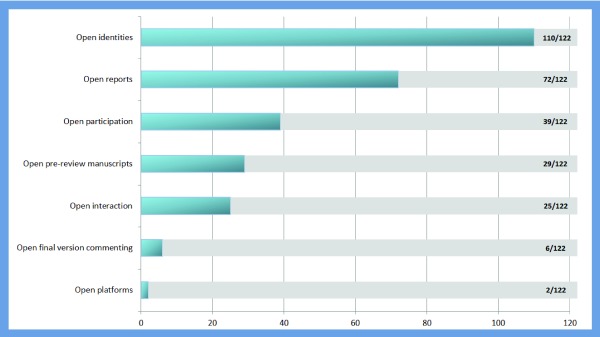
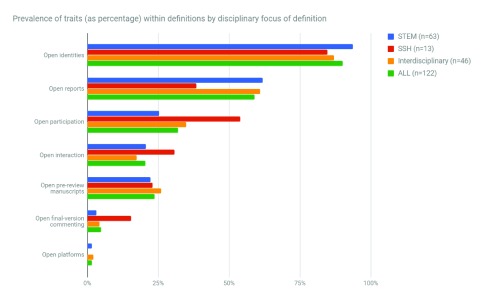
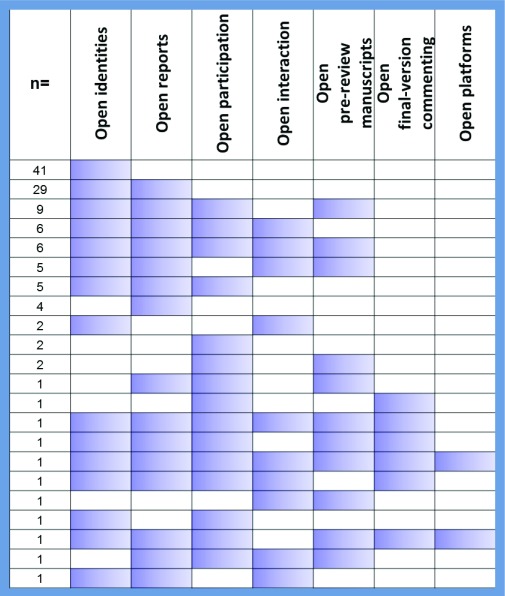
Background: “Open peer review” (OPR), despite being a major pillar of Open Science, has neither a standardized definition nor an agreed schema of its features and implementations. The literature reflects this, with a myriad of overlapping and often contradictory definitions. While the term is used by some to refer to peer review where the identities of both author and reviewer are disclosed to each other, for others it signifies systems where reviewer reports are published alongside articles. For others it signifies both of these conditions, and for yet others it describes systems where not only “invited experts” are able to comment. For still others, it includes a variety of combinations of these and other novel methods. Methods: Recognising the absence of a consensus view on what open peer review is, this article undertakes a systematic review of definitions of “open peer review” or “open review”, to create a corpus of 122 definitions. These definitions are then systematically analysed to build a coherent typology of the many different innovations in peer review signified by the term, and hence provide the precise technical definition currently lacking. Results: This quantifiable data yields rich information on the range and extent of differing definitions over time and by broad subject area. Quantifying definitions in this way allows us to accurately portray exactly how ambiguously the phrase “open peer review” has been used thus far, for the literature offers a total of 22 distinct configurations of seven traits, effectively meaning that there are 22 different definitions of OPR in the literature. Conclusions: Based on this work, I propose a pragmatic definition of open peer review as an umbrella term for a number of overlapping ways that peer review models can be adapted in line with the ethos of Open Science, including making reviewer and author identities open, publishing review reports and enabling greater participation in the peer review process.
Overview
The claims and statistics of this paper haven’t been checked yet.
Run the check — free, no account needed. It reads the open-access text and checks the sources it cites.
Integrity signals
Registry
Cites
Statistics
Figures
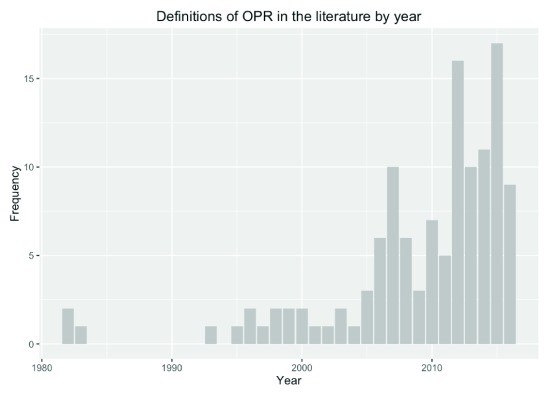
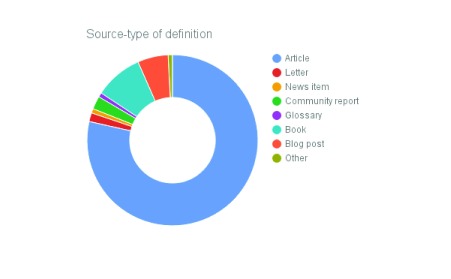
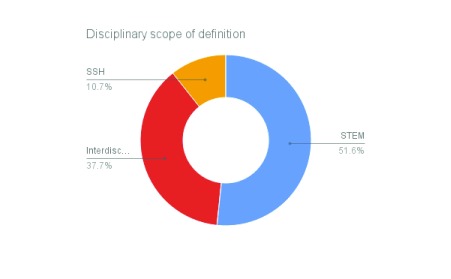
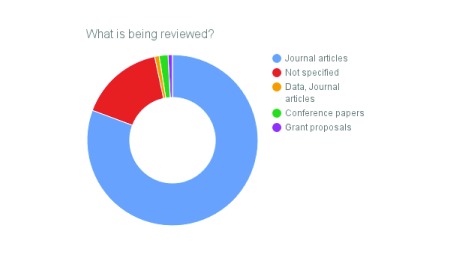
Verification
Claims the paper makes
The claims and statistics of this paper haven’t been checked yet.
Run the check — free, no account needed. It reads the open-access text and checks the sources it cites.
Claims other papers make about this one
Each is checked against this paper’s own text: does it say what the citing paper says it does?
The source backs part of the claim, not all of it — or backs it for a different population, condition or comparison.
In the citing paper
“Besides serving as a high-quality filter, it provides explanations and constructive feedback to authors to improve their scientific contribution (Jefferson et al., 2002; Ross-Hellauer, 2017).”
From The Good, the Bad and the Constructive: Automatically Measuring Peer Review's Utility for Authors (2025) · cites this paper as Ross-Hellauer, 2017
Experimental — accuracy not yet measured
Self-check
Percentages, sums and reported differences re-computed from the paper’s own numbers.
The self-check needs the paper’s full text.
Citations
Cites
1 retracted
Retracted Science and the Retraction Index
Fang, F. C., & Casadevall, A. (2011) · Infection and Immunity · doi:10.1128/iai.05661-11 · Cited by 405 · cited 1×
“Page 3 of 32 (Fang & Casadevall, 2011).”
RetractedFranck, G. (2012) · Cell Cycle · doi:10.4161/cc.22151 · Cited by 1,329 · cited 1×
“” (Suber, 2012) Page 4 of 32 Within just these two examples, there are already a multitude of factors at play, including the removal of anonymity, the publishing of review reports, interaction between participants, crowdsourcing of reviews, and making manuscripts public pre-review, amongst others.”
BackgroundMisconduct accounts for the majority of retracted scientific publications
Fang, F. C., Steen, R. G., & Casadevall, A. (2012) · Proceedings of the National Academy of Sciences · doi:10.1073/pnas.1212247109 · Cited by 1,232 · cited 1×
“Reviewers often fail to detect major methodological failings (Schroter et al., 2004), with eminent journals (whose higher rejection rates might suggest more stringent peer review processes) seeming to perform no better than others (Fang et al., 2012).”
BackgroundA method for taxonomy development and its application in information systems
Nickerson, R. C., Varshney, U., & Muntermann, J. (2013) · European Journal of Information Systems · doi:10.1057/ejis.2012.26 · Cited by 1,143 · cited 1×
“Nickerson et al. (2013) advise that the development of a taxonomy should begin by identifying the appropriate meta-characteristic – in this case distinct individual innovations to the traditional peer review system.”
BackgroundPeer-review practices of psychological journals: The fate of published articles, submitted again
Peters, D. P., & Ceci, S. J. (1982) · Behavioral and Brain Sciences · doi:10.1017/s0140525x00011183 · Cited by 1,079 · cited 3×
“Published reports can enable readers to consider these criticisms themselves, and “have a chance to examine and appraise this process of ”creative disagreement” and form their own opinions” (Peters & Ceci, 1982).”
BackgroundPublication prejudices: An experimental study of confirmatory bias in the peer review system
Mahoney, M. J. (1977) · Cognitive Therapy and Research · doi:10.1007/bf01173636 · Cited by 1,013 · cited 2×
“Next, “confirmatory bias” is theorized to lead to conservatism, biasing reviewers against innovative methods or results contrary to dominant theoretical perspectives (Chubin & Hackett, 1990; Garcia et al., 2016; Mahoney, 1977).”
BackgroundFactors Influencing Publication of Research Results
Dickersin, K. (1992) · JAMA · doi:10.1001/jama.1992.03480030052036 · Cited by 931 · cited 1×
“, 2017) mean that editors and reviewers seem primed to prefer positive results over negative or neutral ones (Bardy, 1998; Dickersin et al., 1992; Fanelli, 2010; Ioannidis, 1998), and to disfavour replication studies (Campanario, 1998; Kerr et al.”
BackgroundPeer Review: A Flawed Process at the Heart of Science and Journals
Smith, R. (2006) · Journal of the Royal Society of Medicine · doi:10.1177/014107680609900414 · Cited by 880 · cited 3×
“Smith, an experienced editor, for example, reports reviewers stealing ideas and passing them off as their own, or intentional blocking or delaying publication of competitors’ ideas through harsh reviews (Smith, 2006).”
BackgroundDo Pressures to Publish Increase Scientists' Bias? An Empirical Support from US States Data
Fanelli, D. (2010) · PLoS ONE · doi:10.1371/journal.pone.0010271 · Cited by 805 · cited 2×
“, 2017) mean that editors and reviewers seem primed to prefer positive results over negative or neutral ones (Bardy, 1998; Dickersin et al., 1992; Fanelli, 2010; Ioannidis, 1998), and to disfavour replication studies (Campanario, 1998; Kerr et al.”
Ioannidis, J. P. A. (1998) · JAMA · doi:10.1001/jama.279.4.281 · Cited by 632 · cited 1×
“…of “impact” and “excellence” (Moore et al., 2017) mean that editors and reviewers seem primed to prefer positive results over negative or neutral ones (Bardy, 1998; Dickersin et al., 1992; Fanelli, 2010; Ioannidis, 1998), and to disfavour replication studies (Campanario, 1998; Kerr et al., 1977).”
BackgroundOpen Science: One Term, Five Schools of Thought
Fecher, B., & Friesike, S. (2013) · doi:10.2139/ssrn.2272036 · Cited by 596
Double-blind review favours increased representation of female authors
BUDDEN, A., TREGENZA, T., AARSSEN, L., KORICHEVA, J., LEIMU, R., & LORTIE, C. (2008) · Trends in Ecology & Evolution · doi:10.1016/j.tree.2007.07.008 · Cited by 552 · cited 2×
“A main reason for maintaining author anonymity is that it is assumed to tackle possible publication biases against authors with traditionally feminine names, from less prestigious institutions or non-English speaking regions (Budden et al., 2008; Ross et al., 2006).”
BackgroundWhy has the number of scientific retractions increased?
Steen, R. G., Casadevall, A., & Fang, F. C. (2013) · PLoS ONE · doi:10.1371/journal.pone.0068397 · Cited by 415 · cited 1×
“Whatever the cause, recent sharp rises in the number of retracted scientific publications (Steen et al., 2013) testify that peer review sometimes fails in its role as the gatekeeper of science, allowing errors to enter the literature.”
Backgroundvan Rooyen, S., Godlee, F., Evans, S., Black, N., & Smith, R. (1999) · BMJ · doi:10.1136/bmj.318.7175.23 · Cited by 415
Peer review in a changing world: An international study measuring the attitudes of researchers
Mulligan, A., Hall, L., & Raphael, E. (2013) · Journal of the American Society for Information Science and Technology · doi:10.1002/asi.22798 · Cited by 393
The history of the peer-review process.
Spier, R. (2002) · Trends in Biotechnology · doi:10.1016/s0167-7799(02)01985-6 · Cited by 368 · cited 1×
“This system is perhaps more recent than one might expect, with its main formal elements only in general use since the mid-twentieth century in scientific publishing (Spier, 2002).”
BackgroundGodlee, F., Gale, C. R., & Martyn, C. N. (1998) · JAMA · doi:10.1001/jama.280.3.237 · Cited by 333 · cited 2×
“Moreover, factors such as close disciplinary communities and internet search capabilities, mean that author anonymity is only partially effective, with reviewers shown to be able to identify authors in between 26 and 46 percent of cases (Fisher et al., 1994; Godlee et al., 1998).”
BackgroundUS and non-US submissions: an analysis of reviewer bias.
Link, A. (1998) · Journal of the American Medical Association (JAMA) · doi:10.1001/jama.280.3.246 · Cited by 333 · cited 1×
“…to social biases on the grounds of gender (Budden et al., 2008; Lloyd, 1990; Tregenza, 2002), nationality (Daniel, 1993; Ernst & Kienbacher, 1991; Link, 1998), institutional affiliation (Dall’Aglio, 2006; Gillespie et al., 1985; Peters & Ceci, 1982), language (Cronin, 2009; Ross et al., 2006;…”
Background“Excellence R Us”: university research and the fetishisation of excellence
Moore, S., Neylon, C., Eve, M. P., O’Donnell, D. P., & Pattinson, D. (2017) · Humanities and Social Sciences Communications · doi:10.1057/palcomms.2016.105 · Cited by 292 · cited 1×
“Finally, factors like the pursuit of “impact” and “excellence” (Moore et al., 2017) mean that editors and reviewers seem primed to prefer positive results over negative or neutral ones (Bardy, 1998; Dickersin et al., 1992; Fanelli, 2010; Ioannidis, 1998), and to disfavour replication studies…”
BackgroundDoes Masking Author Identity Improve Peer Review Quality?: A Randomized Controlled Trial
Justice, A. C., Cho, M. K., Winker, M. A., Berlin, J. A., Rennie, D., & and the PEER Investigators (1998) · JAMA · doi:10.1001/jama.280.3.240 · Cited by 278
Effects of training on quality of peer review: randomised controlled trial
Schroter, S., Black, N. A., Evans, S. J. W., Carpenter, J. R., Godlee, F., & Smith, R. W. (2004) · BMJ · doi:10.1136/bmj.38023.700775.ae · Cited by 268 · cited 1×
“Reviewers often fail to detect major methodological failings (Schroter et al., 2004), with eminent journals (whose higher rejection rates might suggest more stringent peer review processes) seeming to perform no better than others (Fang et al., 2012).”
BackgroundPeer review for journals: Evidence on quality control, fairness, and innovation
Armstrong, J. S. (1997) · Science and Engineering Ethics · doi:10.1007/s11948-997-0017-3 · Cited by 263 · cited 2×
“• Lack of incentives: Traditional peer review provides little in the way of incentives for reviewers, whose work is almost exclusively unpaid and whose anonymous contributions cannot be recognised and hence rewarded (Armstrong, 1997; Ware, 2008).”
BackgroundThe Effects of Blinding on the Quality of Peer Review: A Randomized Trial
McNutt, R. A. (1990) · JAMA · doi:10.1001/jama.1990.03440100079012 · Cited by 261 · cited 2×
“To date, studies have failed to show any great effect in either direction (McNutt et al., 1990; van Rooyen et al., 1999; van Rooyen et al., 2010).”
BackgroundManuscript Characteristics Which Influence Acceptance for Management and Social Science Journals
Kerr, S., Tolliver, J., & Petree, D. (1977) · Academy of Management Journal · doi:10.5465/255467 · Cited by 252 · cited 1×
“…of “impact” and “excellence” (Moore et al., 2017) mean that editors and reviewers seem primed to prefer positive results over negative or neutral ones (Bardy, 1998; Dickersin et al., 1992; Fanelli, 2010; Ioannidis, 1998), and to disfavour replication studies (Campanario, 1998; Kerr et al., 1977).”
BackgroundEffect of Blinded Peer Review on Abstract Acceptance
Ross, J. S., Gross, C. P., Desai, M. M., Hong, Y., Grant, A. O., Daniels, S. R., Hachinski, V. C., Gibbons, R. J., Gardner, T. J., & Krumholz, H. M. (2006) · JAMA · doi:10.1001/jama.295.14.1675 · Cited by 250 · cited 2×
“A main reason for maintaining author anonymity is that it is assumed to tackle possible publication biases against authors with traditionally feminine names, from less prestigious institutions or non-English speaking regions (Budden et al., 2008; Ross et al., 2006).”
BackgroundNew Light on Old Boys: Cognitive and Institutional Particularism in the Peer Review System
Travis, G., & Collins, H. M. (1991) · Science Technology & Human Values · doi:10.1177/016224399101600303 · Cited by 247 · cited 3×
“First is a preference for complexity over simplicity in methodology (even if inappropriate, c.f. Travis & Collins, 1991) and language (Armstrong, 1997).”
BackgroundEmerging trends in peer review—a survey
Walker, R. D., & da Silva, P. R. (2015) · Frontiers in Neuroscience · doi:10.3389/fnins.2015.00169 · Cited by 209
Peer Review for Journals as it Stands Today—Part 1
Campanario, J. M. (1998) · Science Communication · doi:10.1177/1075547098019003002 · Cited by 200 · cited 1×
“…of “impact” and “excellence” (Moore et al., 2017) mean that editors and reviewers seem primed to prefer positive results over negative or neutral ones (Bardy, 1998; Dickersin et al., 1992; Fanelli, 2010; Ioannidis, 1998), and to disfavour replication studies (Campanario, 1998; Kerr et al., 1977).”
BackgroundKravitz, R. L., Franks, P., Feldman, M. D., Gerrity, M., Byrne, C., & Tierney, W. M. (2010) · PLoS ONE · doi:10.1371/journal.pone.0010072 · Cited by 178 · cited 1×
“Studies show reviewers’ views tend to show very weak levels of agreement (Kravitz et al., 2010; Mahoney, 1977), at levels only slightly better than chance (Herron, 2012; Smith, 2006).”
BackgroundThe Effects of Blinding on Acceptance of Research Papers by Peer Review
Fisher, M. (1994) · JAMA: The Journal of the American Medical Association · doi:10.1001/jama.1994.03520020069019 · Cited by 164 · cited 1×
“Moreover, factors such as close disciplinary communities and internet search capabilities, mean that author anonymity is only partially effective, with reviewers shown to be able to identify authors in between 26 and 46 percent of cases (Fisher et al., 1994; Godlee et al., 1998).”
Backgroundvan Rooyen, S., Delamothe, T., & Evans, S. J. W. (2010) · BMJ · doi:10.1136/bmj.c5729 · Cited by 162 · cited 1×
“Van Rooyen and her colleagues found that open reports correlate with higher refusal rates amongst potential reviewers, as well as an increase in time taken to write review but no concomitant effect on review quality (van Rooyen et al., 2010).”
BackgroundBarriers to scientific contributions: The author's formula
Armstrong, J. S. (1982) · Behavioral and Brain Sciences · doi:10.1017/s0140525x00011201 · Cited by 151 · cited 3×
“…disclosure of identities aims usually at increasing accountability and minimizing bias, c.f. “referees should be more highly motivated to do a competent and fair review if they may have to defend their views to the authors and if they will be identified with the published papers” (Armstrong, 1982).”
BackgroundInfluentialGender bias in the refereeing process
Tregenza, T. (2002) · Trends in Ecology & Evolution · doi:10.1016/s0169-5347(02)02545-4 · Cited by 147 · cited 2×
“• Social and publication biases: Although often idealized as impartial, objective assessors, in reality studies suggest that peer reviewers may be subject to social biases on the grounds of gender (Budden et al., 2008; Lloyd, 1990; Tregenza, 2002), nationality (Daniel, 1993; Ernst & Kienbacher, 1991; Link, 1998), inst…”
BackgroundDefining and Characterizing Open Peer Review: A Review of the Literature
Ford, E. (2013) · Journal of Scholarly Publishing · doi:10.3138/jsp.44-4-001 · Cited by 133 · cited 6×
“Open identity peer review, also known as signed peer review (Ford, 2013; Nobarany & Booth, 2015) and “unblinded review” (Monsen & Horn, 2007), is review where authors and reviewers are aware of each other’s identities.”
BackgroundInfluentialFostering open science to research using a taxonomy and an eLearning portal
Pontika, N., Knoth, P., Cancellieri, M., & Pearce, S. (2015) · International Conference on Knowledge Management and Knowledge Technologies · doi:10.1145/2809563.2809571 · Cited by 118 · cited 3×
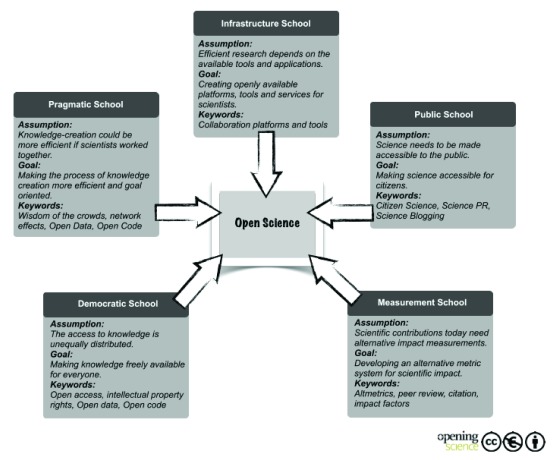
“Open Science encompasses a variety of practices, usually including areas like open access to publications, open research data, open source software/tools, open workflows, citizen science, open educational resources, and alternative methods for research evaluation including open peer review (Pontika et al., 2015).”
BackgroundInfluentialPeer Review: Recent Experience and Future Directions
Ware, M. (2011) · New Review of Information Networking · doi:10.1080/13614576.2011.566812 · Cited by 101 · cited 4×
“Reviewers can come from the wider research community, as well as those traditionally under-represented in scientific assessment, including representatives from industry or members of special-interest groups, for example patients in the case of medical journals (Ware, 2011).”
BackgroundInfluentialCooper, T. (2014) · doi:10.4135/9781412994248.n408 · Cited by 100 · cited 1×
“Nature judged the trial to have been unsuccessful due to the small number of authors wishing to take part (just 5% of submitting authors), the small number of overall comments (almost half of articles received no comments) and the insubstantial nature of most of the comments that were received (Fitzpatrick, 2011).”
BackgroundPöschl, U. (2012) · Frontiers in Computational Neuroscience · doi:10.3389/fncom.2012.00033 · Cited by 96 · cited 3×
“Moreover, getting research out earlier increases its visibility, enables open participation in peer review (where commentary is open to all), and perhaps even, according to (Pöschl, 2012), increases the quality of initial manuscript submissions.”
BackgroundMethodInfluentialGender factors in reviewer recommendations for manuscript publication.
Lloyd, M. E. (1990) · Journal of Applied Behavior Analysis · doi:10.1901/jaba.1990.23-539 · Cited by 90 · cited 1×
“…objective assessors, in reality studies suggest that peer reviewers may be subject to social biases on the grounds of gender (Budden et al., 2008; Lloyd, 1990; Tregenza, 2002), nationality (Daniel, 1993; Ernst & Kienbacher, 1991; Link, 1998), institutional affiliation (Dall’Aglio, 2006;…”
BackgroundKriegeskorte, N. (2012) · Frontiers in Computational Neuroscience · doi:10.3389/fncom.2012.00079 · Cited by 85 · cited 1×
“It could even be argued that this inability to define terms is to blame for the fact that, as Nicholas Kriegskorte has pointed out, “we have yet to develop a coherent shared vision for “open evaluation” (OE), and an OE movement comparable to the OA movement” (Kriegeskorte, 2012).”
BackgroundPeerless Science: Peer Review and U.S. Science Policy
Hackerman, N. (1992) · doi:10.1080/00221546.1992.11778367 · Cited by 75
Bias in reporting clinical trials.
Bardy, A. (1998) · British Journal of Clinical Pharmacology · doi:10.1046/j.1365-2125.1998.00759.x · Cited by 70 · cited 1×
“, 2017) mean that editors and reviewers seem primed to prefer positive results over negative or neutral ones (Bardy, 1998; Dickersin et al., 1992; Fanelli, 2010; Ioannidis, 1998), and to disfavour replication studies (Campanario, 1998; Kerr et al.”
BackgroundPeer review: The current landscape and future trends
Jubb, M. (2016) · Learned Publishing · doi:10.1002/leap.1008 · Cited by 70 · cited 2×
“Many articles in top journals remain poorly cited, while many of the most highly-cited articles in their fields are published in lower-tier journals (Jubb, 2016).”
BackgroundHerron, D. (2012) · Surgical Endoscopy · doi:10.1007/s00464-012-2171-1 · Cited by 67 · cited 2×
“For example, Herron (2012) produced a mathematical model of the peer review process which showed that “the accuracy of public reader-reviewers can surpass that of a small group of expert reviewers if the group of public reviewers is of sufficient size”, although only if the numbers of…”
BackgroundMethodDaniel, H.-D., & Bederson, B. (1993) · Physics Today · doi:10.1063/1.2808608 · Cited by 49 · cited 1×
“…suggest that peer reviewers may be subject to social biases on the grounds of gender (Budden et al., 2008; Lloyd, 1990; Tregenza, 2002), nationality (Daniel, 1993; Ernst & Kienbacher, 1991; Link, 1998), institutional affiliation (Dall’Aglio, 2006; Gillespie et al., 1985; Peters & Ceci, 1982),…”
BackgroundExperience with NIH Peer Review: Researchers' Cynicism and Desire for Change
Gillespie, G. W., Chubin, D., & Kurzon, G. M. (1985) · Science Technology & Human Values · doi:10.1177/016224398501000306 · Cited by 40 · cited 1×
“…al., 2008; Lloyd, 1990; Tregenza, 2002), nationality (Daniel, 1993; Ernst & Kienbacher, 1991; Link, 1998), institutional affiliation (Dall’Aglio, 2006; Gillespie et al., 1985; Peters & Ceci, 1982), language (Cronin, 2009; Ross et al., 2006; Tregenza, 2002) and discipline (Travis & Collins, 1991).”
New journal models and publishing perspectives in the evolving digital environment
Cassella, M., & Calvi, L. (2010) · doi:10.1177/0340035209359559 · Cited by 38
Cooperation between Referees and Authors Increases Peer Review Accuracy
Leek, J. T., Taub, M. A., & Pineda, F. J. (2011) · PLoS ONE · doi:10.1371/journal.pone.0026895 · Cited by 34 · cited 1×
“These results suggest that in this era of increasing competition for publication and grants, cooperation is vital for accurate evaluation of scientific research” (Leek et al., 2011).”
Research: Successful Approaches
Murphy, S. P. (1993) · American Journal of Clinical Nutrition · doi:10.1093/ajcn/57.6.950a · Cited by 34
Open peer review at four STEM journals: an observational overview
Ford, E. (2015) · F1000Research · doi:10.12688/f1000research.6005.2 · Cited by 31 · cited 2×
“Summing up her argument elsewhere, she says: “my previous definition … broadly understands OPR as any scholarly review mechanism providing disclosure of author and referee identities to one another” (Ford, 2015).”
BackgroundExtending ArXiv.org to Achieve Open Peer Review and Publishing
Boldt, A. (2010) · arXiv.org · doi:10.1353/scp.2011.0001 · Cited by 30
Ernst, E., & Kienbacher, T. (1991) · Nature · doi:10.1038/352560b0 · Cited by 26 · cited 1×
“…reviewers may be subject to social biases on the grounds of gender (Budden et al., 2008; Lloyd, 1990; Tregenza, 2002), nationality (Daniel, 1993; Ernst & Kienbacher, 1991; Link, 1998), institutional affiliation (Dall’Aglio, 2006; Gillespie et al., 1985; Peters & Ceci, 1982), language (Cronin,…”
BackgroundUse of politeness strategies in signed open peer review
Nobarany, S., & Booth, K. S. (2014) · Journal of the Association for Information Science and Technology · doi:10.1002/asi.23229 · Cited by 26 · cited 1×
“Open identity peer review, also known as signed peer review (Ford, 2013; Nobarany & Booth, 2015) and “unblinded review” (Monsen & Horn, 2007), is review where authors and reviewers are aware of each other’s identities.”
BackgroundThe changing face of peer review
Hames, I. (2014) · Science Editing · doi:10.6087/kcse.2014.1.9 · Cited by 25 · cited 3×
“Some journals enable pre-publication interaction between reviewers as standard (Hames, 2014).”
BackgroundThe eLife approach to peer review
Schekman, R., Watt, F., & Weigel, D. (2013) · eLife · doi:10.7554/elife.00799 · Cited by 25 · cited 1×
“At eLife, reviewers and editor engage in an “online consultation session” where they come to a mutual decision before the editor compiles a single peer review summary letter for the author to give them a single, non-contradictory roadmap for revisions (Schekman et al., 2013).”
BackgroundBornmann, L., Herich, H., Joos, H., & Daniel, H. (2012) · Scientometrics · doi:10.1007/s11192-012-0731-8 · Cited by 25 · cited 3×
“It aims to resolve possible conflicts associated with editorial selection of reviewers (e.g. biases, closednetworks, elitism) and possibly improve the reliability of peer review by increasing the number of reviewers (Bornmann et al., 2012).”
BackgroundOpen and transparent: the review process of the Semantic Web journal
Janowicz, K., & Hitzler, P. (2012) · Learned Publishing · doi:10.1087/20120107 · Cited by 24
Maintaining Live Discussion in Two-Stage Open Peer Review
Sandewall, E. (2011) · Frontiers in Computational Neuroscience · doi:10.3389/fncom.2012.00009 · Cited by 22 · cited 2×
“The journal stopped publishing in 2002 (Sandewall, 2012).”
BackgroundNatural selection of academic papers
Perakakis, P., Taylor, M., Mazza, M., & Trachana, V. (2010) · Scientometrics · doi:10.1007/s11192-010-0253-1 · Cited by 22 · cited 1×
“Alternatively, services which overlay peer-review functionalities on repositories can produce functional publication platforms at reduced cost (Boldt, 2011; Perakakis et al., 2010).”
BackgroundAuthors and reviewers who suffer from confirmatory bias
García, J. A., Sánchez, R. M. R., & Fdez-Valdivia, J. (2016) · Scientometrics · doi:10.1007/s11192-016-2079-y · Cited by 18 · cited 2×
“Next, “confirmatory bias” is theorized to lead to conservatism, biasing reviewers against innovative methods or results contrary to dominant theoretical perspectives (Chubin & Hackett, 1990; Garcia et al., 2016; Mahoney, 1977).”
Vernacular and vehicular language
Cronin, B. (2009) · J. Assoc. Inf. Sci. Technol. · doi:10.1002/asi.21010 · Cited by 13 · cited 1×
“, 1985; Peters & Ceci, 1982), language (Cronin, 2009; Ross et al., 2006; Tregenza, 2002) and discipline (Travis & Collins, 1991).”
Early adopters of ORCID functionality enabling recognition of peer review: Two brief case studies
Hanson, B., Lawrence, R., Meadows, A., & Paglione, L. (2016) · Learned Publishing · doi:10.1002/leap.1004 · Cited by 12 · cited 2×
“It may be that comments are open to anybody (anonymous or registered), or some credentials might first be required (e.g., Science Open requires an ORCID profile with at least five published articles).”
BackgroundPeer review and journal modelsPreprint
Dall'Aglio, P. (2006) · arXiv (Cornell University) · doi:10.48550/arxiv.physics/0608307 · Cited by 9 · cited 1×
“…(Budden et al., 2008; Lloyd, 1990; Tregenza, 2002), nationality (Daniel, 1993; Ernst & Kienbacher, 1991; Link, 1998), institutional affiliation (Dall’Aglio, 2006; Gillespie et al., 1985; Peters & Ceci, 1982), language (Cronin, 2009; Ross et al., 2006; Tregenza, 2002) and discipline (Travis &…”
Day, C. (2015) · doi:10.1063/pt.5.010330 · Cited by 3 · cited 1×
“The mathematics journal Discrete Analysis, for example, is an overlay journal whose primary content is hosted on arXiv (Day, 2015).”
Background
Research works printed but not linked: 7
- D Chubin, 1990, Peerless Science: Peer Review and US Science Policy.
- 2016, About | The EMBO Journal [WWW Document]
- S Harnad, 2000, The Invisible Hand of Peer Review.
- S Kaplan, 2015, Major Publisher Retracts 64 Scientific Papers in Fake Peer Review Outbreak.
- J Nicholson, 2016, A Brief Survey on Peer Review in Scholarly Communication
- M Ware, Peer Review: Benefits, Perceptions and Alternatives, 2008
- M Ware, 2016, Peer Review Survey 2015
Cited by
Sorted by citations
Ferguson, C. L. (2016) · Serials review · doi:10.6084/m9.figshare.2066868.v1 · Cited by 564
“Ross-Hellauer (2017) apresenta uma sistematização dessas modalidades que podem ser adotadas de forma isolada ou combinada: Identidades abertas - autores e revisores conhecem a identidade uns dos outros; Relatórios abertos - os pareceres são publicados junto ao artigo avaliado; Participação aberta -…”
BackgroundThe limitations to our understanding of peer review
Tennant, J. P., & Ross-Hellauer, T. (2020) · Research Integrity and Peer Review · doi:10.1186/s41073-020-00092-1 · Cited by 384
Self-citationThe evaluation of scholarship in academic promotion and tenure processes: Past, present, and future
Schimanski, L., & Alperin, J. P. (2018) · F1000Research · doi:10.12688/f1000research.16493.1 · Cited by 302
“…common complaints about academia, including those focused on lack of reproducibility (Open Science Collaboration, 2015), problems with peer review (Ross-Hellauer, 2017; Smith, 2006; Tennant et al., 2017), and the lack of access to research, could conceivably be reduced by building mechanisms that…”
BackgroundChecco, A., Bracciale, L., Loreti, P., Pinfield, S., & Bianchi, G. (2021) · Humanities and Social Sciences Communications · doi:10.1057/s41599-020-00703-8 · Cited by 286
“Most notably, open peer review is being more widely introduced as an alternative paradigm of interaction between authors and reviewers (Ford, 2013; Ross-Hellauer, 2017).”
BackgroundA multi-disciplinary perspective on emergent and future innovations in peer review
Tennant, J., Dugan, J. M., Graziotin, D., Jacques, D., Waldner, F., Mietchen, D., Elkhatib, Y., Collister, L., Pikas, C. K., Crick, T., et al. (2017) · F1000Research · doi:10.12688/f1000research.12037.1 · Cited by 299
Self-citation
Metadata
- Authors
- Ross-Hellauer, T.
- ORCID
- Ross-Hellauer, Tony
- Venue
- F1000Research
- Publisher
- F1000 Research Ltd
- Published
- 2017-04-27
- Volume
- 6
- Pages
- 588
- ISSN
- 2046-1402 (ISSN-L)
- PMC
- PMC5437951
- OpenAlex
- W4235332646
- Cited by
- 232
- References
- 82
- Citations by year
- 2026: 8 · 2025: 9 · 2024: 36 · 2023: 21 · 2022: 25 · 2021: 30 · 2020: 43 · 2019: 35 · 2018: 15 · 2017: 10
- FWCI
- 7.46
- Type
- journal article
- Language
- en
- Update notices
- new_version (2017-08-31)
- Open access
- gold
- doi.org
- Locations
- F1000Research (publishedVersion, cc-by)
- DOAJ (DOAJ: Directory of Open Access Journals) (submittedVersion, cc-by-sa)
- Funders
- European Commission (643410)
- Topics
- Social Sciences › Library and Information Sciences › Academic Publishing and Open Access
- Social Sciences › Library and Information Sciences › Publishing and Scholarly Communication
- Social Sciences › Library and Information Sciences › scientometrics and bibliometrics research
- Keywords
- open peer review, peer review models, open science, author identity disclosure
About these checks
Registry, retraction, Cites and statistics results are computed, not judged, with one exception: a printed reference that no index lists is read once by a model before it counts as a citation error. Claims are extracted by a model and kept only when their quote appears verbatim in the text; each cited source is then checked, with a model’s help, for whether it says what the claim relies on. Those verdicts can be wrong — read the claim’s quote and the cited source before relying on one.
Statistics and arithmetic are recomputed, not judged.
Confidence bands are shown only for fields calibrated on our annotated test set. None is calibrated yet, so no band is shown.
What counts as a claim ›How we measure confidence ›How we check this ›
Are you an author, or do you see a problem with this page? Request a review
