

The DOI matches its Crossref record; 64 of the 82 references it cites were found in a registry or an index.
What is open peer review? A systematic review
Open accessAbstract
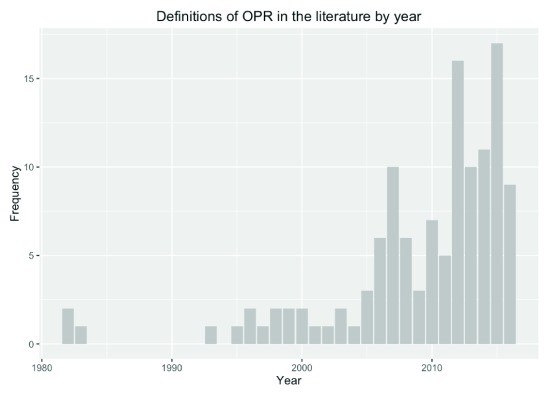
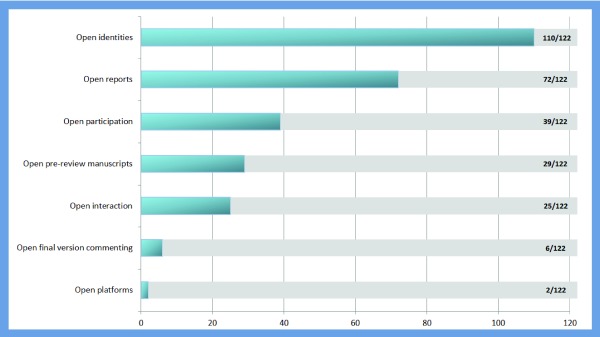
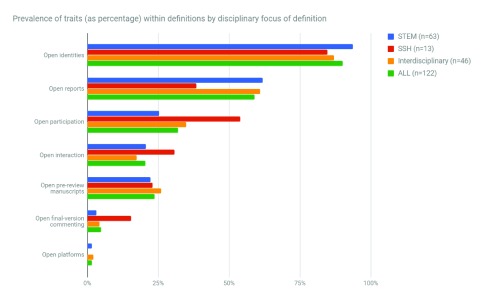
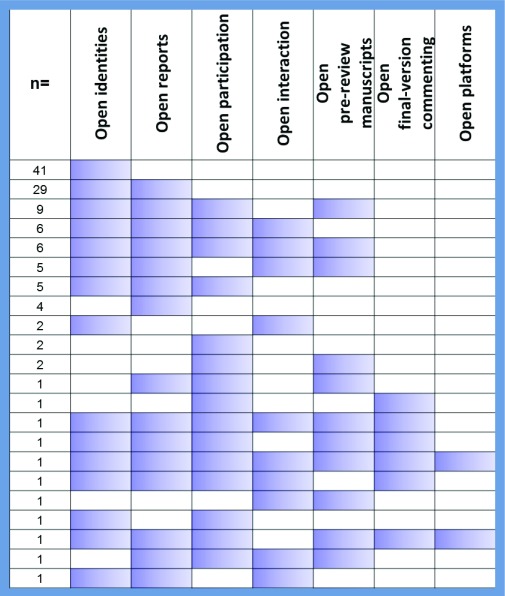
Background: “Open peer review” (OPR), despite being a major pillar of Open Science, has neither a standardized definition nor an agreed schema of its features and implementations. The literature reflects this, with a myriad of overlapping and often contradictory definitions. While the term is used by some to refer to peer review where the identities of both author and reviewer are disclosed to each other, for others it signifies systems where reviewer reports are published alongside articles. For others it signifies both of these conditions, and for yet others it describes systems where not only “invited experts” are able to comment. For still others, it includes a variety of combinations of these and other novel methods. Methods: Recognising the absence of a consensus view on what open peer review is, this article undertakes a systematic review of definitions of “open peer review” or “open review”, to create a corpus of 122 definitions. These definitions are then systematically analysed to build a coherent typology of the many different innovations in peer review signified by the term, and hence provide the precise technical definition currently lacking. Results: This quantifiable data yields rich information on the range and extent of differing definitions over time and by broad subject area. Quantifying definitions in this way allows us to accurately portray exactly how ambiguously the phrase “open peer review” has been used thus far, for the literature offers a total of 22 distinct configurations of seven traits, effectively meaning that there are 22 different definitions of OPR in the literature. Conclusions: Based on this work, I propose a pragmatic definition of open peer review as an umbrella term for a number of overlapping ways that peer review models can be adapted in line with the ethos of Open Science, including making reviewer and author identities open, publishing review reports and enabling greater participation in the peer review process.
Overview
The claims and statistics of this paper haven’t been checked yet.
Run the check — free, no account needed. It reads the open-access text and checks the sources it cites.
Integrity signals
Registry
Cites
Statistics
Figures
Verification
Claims the paper makes
The claims and statistics of this paper haven’t been checked yet.
Run the check — free, no account needed. It reads the open-access text and checks the sources it cites.
Claims other papers make about this one
Each is checked against this paper’s own text: does it say what the citing paper says it does?
The source backs part of the claim, not all of it — or backs it for a different population, condition or comparison.
In the citing paper
“Besides serving as a high-quality filter, it provides explanations and constructive feedback to authors to improve their scientific contribution (Jefferson et al., 2002; Ross-Hellauer, 2017).”
From The Good, the Bad and the Constructive: Automatically Measuring Peer Review's Utility for Authors (2025) · cites this paper as Ross-Hellauer, 2017
Experimental — accuracy not yet measured
Self-check
Percentages, sums and reported differences re-computed from the paper’s own numbers.
The self-check needs the paper’s full text.
Citations
Cites
1 retracted
Retracted Science and the Retraction Index
Fang, F. C., & Casadevall, A. (2011) · Infection and Immunity · doi:10.1128/iai.05661-11 · Cited by 405 · cited 1×
“Page 3 of 32 (Fang & Casadevall, 2011).”
RetractedFranck, G. (2012) · Cell Cycle · doi:10.4161/cc.22151 · Cited by 1,329 · cited 1×
“” (Suber, 2012) Page 4 of 32 Within just these two examples, there are already a multitude of factors at play, including the removal of anonymity, the publishing of review reports, interaction between participants, crowdsourcing of reviews, and making manuscripts public pre-review, amongst others.”
BackgroundMisconduct accounts for the majority of retracted scientific publications
Fang, F. C., Steen, R. G., & Casadevall, A. (2012) · Proceedings of the National Academy of Sciences · doi:10.1073/pnas.1212247109 · Cited by 1,232 · cited 1×
“Reviewers often fail to detect major methodological failings (Schroter et al., 2004), with eminent journals (whose higher rejection rates might suggest more stringent peer review processes) seeming to perform no better than others (Fang et al., 2012).”
BackgroundA method for taxonomy development and its application in information systems
Nickerson, R. C., Varshney, U., & Muntermann, J. (2013) · European Journal of Information Systems · doi:10.1057/ejis.2012.26 · Cited by 1,143 · cited 1×
“Nickerson et al. (2013) advise that the development of a taxonomy should begin by identifying the appropriate meta-characteristic – in this case distinct individual innovations to the traditional peer review system.”
BackgroundPeer-review practices of psychological journals: The fate of published articles, submitted again
Peters, D. P., & Ceci, S. J. (1982) · Behavioral and Brain Sciences · doi:10.1017/s0140525x00011183 · Cited by 1,079 · cited 3×
“Published reports can enable readers to consider these criticisms themselves, and “have a chance to examine and appraise this process of ”creative disagreement” and form their own opinions” (Peters & Ceci, 1982).”
BackgroundPublication prejudices: An experimental study of confirmatory bias in the peer review system
Mahoney, M. J. (1977) · Cognitive Therapy and Research · doi:10.1007/bf01173636 · Cited by 1,013 · cited 2×
“Next, “confirmatory bias” is theorized to lead to conservatism, biasing reviewers against innovative methods or results contrary to dominant theoretical perspectives (Chubin & Hackett, 1990; Garcia et al., 2016; Mahoney, 1977).”
BackgroundFactors Influencing Publication of Research Results
Dickersin, K. (1992) · JAMA · doi:10.1001/jama.1992.03480030052036 · Cited by 931 · cited 1×
“, 2017) mean that editors and reviewers seem primed to prefer positive results over negative or neutral ones (Bardy, 1998; Dickersin et al., 1992; Fanelli, 2010; Ioannidis, 1998), and to disfavour replication studies (Campanario, 1998; Kerr et al.”
BackgroundPeer Review: A Flawed Process at the Heart of Science and Journals
Smith, R. (2006) · Journal of the Royal Society of Medicine · doi:10.1177/014107680609900414 · Cited by 880 · cited 3×
“Smith, an experienced editor, for example, reports reviewers stealing ideas and passing them off as their own, or intentional blocking or delaying publication of competitors’ ideas through harsh reviews (Smith, 2006).”
BackgroundDo Pressures to Publish Increase Scientists' Bias? An Empirical Support from US States Data
Fanelli, D. (2010) · PLoS ONE · doi:10.1371/journal.pone.0010271 · Cited by 805 · cited 2×
“, 2017) mean that editors and reviewers seem primed to prefer positive results over negative or neutral ones (Bardy, 1998; Dickersin et al., 1992; Fanelli, 2010; Ioannidis, 1998), and to disfavour replication studies (Campanario, 1998; Kerr et al.”
Ioannidis, J. P. A. (1998) · JAMA · doi:10.1001/jama.279.4.281 · Cited by 632 · cited 1×
“…of “impact” and “excellence” (Moore et al., 2017) mean that editors and reviewers seem primed to prefer positive results over negative or neutral ones (Bardy, 1998; Dickersin et al., 1992; Fanelli, 2010; Ioannidis, 1998), and to disfavour replication studies (Campanario, 1998; Kerr et al., 1977).”
Background
Research works printed but not linked: 7
- D Chubin, 1990, Peerless Science: Peer Review and US Science Policy.
- 2016, About | The EMBO Journal [WWW Document]
- S Harnad, 2000, The Invisible Hand of Peer Review.
- S Kaplan, 2015, Major Publisher Retracts 64 Scientific Papers in Fake Peer Review Outbreak.
- J Nicholson, 2016, A Brief Survey on Peer Review in Scholarly Communication
- M Ware, Peer Review: Benefits, Perceptions and Alternatives, 2008
- M Ware, 2016, Peer Review Survey 2015
Cited by
Sorted by citations
Ferguson, C. L. (2016) · Serials review · doi:10.6084/m9.figshare.2066868.v1 · Cited by 564
“Ross-Hellauer (2017) apresenta uma sistematização dessas modalidades que podem ser adotadas de forma isolada ou combinada: Identidades abertas - autores e revisores conhecem a identidade uns dos outros; Relatórios abertos - os pareceres são publicados junto ao artigo avaliado; Participação aberta -…”
BackgroundThe limitations to our understanding of peer review
Tennant, J. P., & Ross-Hellauer, T. (2020) · Research Integrity and Peer Review · doi:10.1186/s41073-020-00092-1 · Cited by 384
Self-citationThe evaluation of scholarship in academic promotion and tenure processes: Past, present, and future
Schimanski, L., & Alperin, J. P. (2018) · F1000Research · doi:10.12688/f1000research.16493.1 · Cited by 302
“…common complaints about academia, including those focused on lack of reproducibility (Open Science Collaboration, 2015), problems with peer review (Ross-Hellauer, 2017; Smith, 2006; Tennant et al., 2017), and the lack of access to research, could conceivably be reduced by building mechanisms that…”
BackgroundChecco, A., Bracciale, L., Loreti, P., Pinfield, S., & Bianchi, G. (2021) · Humanities and Social Sciences Communications · doi:10.1057/s41599-020-00703-8 · Cited by 286
“Most notably, open peer review is being more widely introduced as an alternative paradigm of interaction between authors and reviewers (Ford, 2013; Ross-Hellauer, 2017).”
BackgroundA multi-disciplinary perspective on emergent and future innovations in peer review
Tennant, J., Dugan, J. M., Graziotin, D., Jacques, D., Waldner, F., Mietchen, D., Elkhatib, Y., Collister, L., Pikas, C. K., Crick, T., et al. (2017) · F1000Research · doi:10.12688/f1000research.12037.1 · Cited by 299
Self-citationOpen science saves lives: lessons from the COVID-19 pandemic
Besançon, L., Peiffer‐Smadja, N., Ségalas, C., Jiang, H., Masuzzo, P., Smout, C., Billy, E., Déforet, M., & Leyrat, C. (2021) · BMC Medical Research Methodology · doi:10.1186/s12874-021-01304-y · Cited by 326
The Open Innovation in Science research field: a collaborative conceptualisation approach
Beck, S., Bergenholtz, C., Bogers, M. L. A. M., Brasseur, T.-M., Conradsen, M. L., Marco, D. D., Distel, A. P., Dobusch, L., Dörler, D., Effert, A., et al. (2020) · Industry and Innovation · doi:10.1080/13662716.2020.1792274 · Cited by 284
The changing forms and expectations of peer review
Horbach, S. P. J. M., & Halffman, W. (. W. (2018) · Research Integrity and Peer Review · doi:10.1186/s41073-018-0051-5 · Cited by 179
Open peer review: promoting transparency in open science
Wolfram, D., Wang, P., Hembree, A., & Park, H. (2020) · Scientometrics · doi:10.1007/s11192-020-03488-4 · Cited by 167
“This study did not include journals that implemented only one of the following OPR elements in Ross-Hellauer (2017): open participation, open interaction, open pre-review manuscripts, open final-version commenting and open platforms/decoupled review.”
BackgroundThe effect of publishing peer review reports on referee behavior in five scholarly journals
Bravo, G., Grimaldo, F., López-Iñesta, E., Mehmani, B., & Squazzoni, F. (2019) · Nature Communications · doi:10.1038/s41467-018-08250-2 · Cited by 301
Survey on open peer review: Attitudes and experience amongst editors, authors and reviewers
Ross‐Hellauer, T., Deppe, A., & Schmidt, B. (2017) · PLoS ONE · doi:10.1371/journal.pone.0189311 · Cited by 276
“Following [16], we can summarise these proposed benefits and drawbacks thus: • Unreliability and inconsistency: Open identities and open reports are theorized to lead to better reviews, as the thought of having their name publicly connected to a work or seeing their review published encourages…”
InfluentialSelf-citationThe state of the art in peer review
Tennant, J. (2018) · FEMS Microbiology Letters · doi:10.1093/femsle/fny204 · Cited by 197
Dynamics of cumulative advantage and threats to equity in open science: a scoping review
Ross‐Hellauer, T., Reichmann, S., Cole, N. L., Fessl, A., Klebel, T., & Pontika, N. (2022) · Royal Society Open Science · doi:10.1098/rsos.211032 · Cited by 180
“Greater transparency in processes of evaluation might eliminate bias in selection procedures [50,51].”
BackgroundSelf-citationThe Peer Review Process: Past, Present, and Future
Drozdz, J. A., & Ladomery, M. (2024) · British Journal of Biomedical Science · doi:10.3389/bjbs.2024.12054 · Cited by 115
“This is sometimes referred to as “ open identities ” peer review, or “ no-blinding ” [30, 31].”
BackgroundTen Hot Topics around Scholarly Publishing
Tennant, J., Crane, H., Crick, T., Dávila, J. A., Enkhbayar, A., Havemann, J., Kramer, B. M. R., Martin, R., Masuzzo, P., Nobes, A., et al. (2019) · Publications · doi:10.3390/publications7020034 · Cited by 178
“Published and OA review reports are one of a few simple solutions to allow any reader or potential author to directly assess both quality and efficiency of the review system of any given journal, and the value for money of the requested APCs; thus evaluating whether a journal has ‘deceptive’ or predatory practices [42…”
Self-citationGlonti, K., Cauchi, D., Cobo, E., Boutron, I., Moher, D., & Hren, D. (2019) · BMC Medicine · doi:10.1186/s12916-019-1347-0 · Cited by 80
Can editors save peer review from peer reviewers?
D’Andrea, R., & O’Dwyer, J. P. (2017) · PLOS ONE · doi:10.1371/journal.pone.0186111 · Cited by 80
“Equally long as the litany of debated issues is the list of proposed solutions, including alternatives to traditional peer review such as preprint repositories [11], double-blind peer review [12], and open peer review [13, 14, 15].”
BackgroundOpen Science in Software Engineering
Fernández, D., Graziotin, D., Wagner, S., & Seibold, H. (2019) · Contemporary Empirical Methods in Software Engineering · doi:10.1007/978-3-030-32489-6_17 · Cited by 78
“One of these is open peer review, for which there is, however, yet no commonly accepted and clear definition nor an agreed schema as elaborated in a secondary study by Ross-Hellauer (2017).”
Overburdening of peer reviewers: a multi-stakeholder perspective on causes and effects
Severin, A., & Chataway, J. (2021) · Learned Publishing · doi:10.1002/leap.1392 · Cited by 73
“A further strand of innovation is described as ‘open peer review’, which encompasses different ways in which peer review can be opened (Ross-Hellauer, 2017).”
BackgroundThe ability of different peer review procedures to flag problematic publications
Horbach, S. P. J. M., & Halffman, W. (2019) · Scientometrics · doi:10.1007/s11192-018-2969-2 · Cited by 73
“Similar to the anonymity of the author, some discussions regarding peer review procedures have centred around the anonymity of the reviewer (Amsen 2014; Ross-Hellauer 2017).”
BackgroundHow to improve scientific peer review: four schools of thought
Waltman, L., Kaltenbrunner, W., Pinfield, S., & Woods, H. B. (2023) · Learned Publishing · doi:10.1002/leap.1544 · Cited by 71
“Open peer review, in which reviewer identities and review reports are published, is a clear example (Ross-Hellauer, 2017).”
BackgroundA proposal for the future of scientific publishing in the life sciences
Stern, B. M., & O’Shea, E. K. (2019) · PLoS Biology · doi:10.1371/journal.pbio.3000116 · Cited by 124
Guidelines for open peer review implementation
Ross-Hellauer, T., & Görögh, E. (2019) · Research Integrity and Peer Review · doi:10.1186/s41073-019-0063-9 · Cited by 66
Self-citationPolka, J. K., Kiley, R., Konforti, B., Stern, B. M., & Vale, R. D. (2018) · Nature · doi:10.1038/d41586-018-06032-w · Cited by 66
The crisis of peer review: Part of the evolution of science
Horta, H., & Jung, J. (2024) · Higher Education Quarterly · doi:10.1111/hequ.12511 · Cited by 77
No time for that now! Qualitative changes in manuscript peer review during the Covid-19 pandemic
Horbach, S. P. J. M. (2020) · Research Evaluation · doi:10.1093/reseval/rvaa037 · Cited by 85
“Most notably, these models include diversity in the level of anonymity of both authors and reviewers (Pontille and Torny 2014), leading to systems ranging from doubleor even triple-blind review to radically open peer-review models (Ross-Hellauer 2017).”
BackgroundPeer review and preprint policies are unclear at most major journals
Klebel, T., Reichmann, S., Polka, J., McDowell, G. S., Penfold, N., Hindle, S. J., & Ross‐Hellauer, T. (2020) · PLoS ONE · doi:10.1371/journal.pone.0239518 · Cited by 95
Self-citationTen considerations for open peer review
Schmidt, B., Ross-Hellauer, T., van Edig, X., & Moylan, E. (2018) · F1000Research · doi:10.12688/f1000research.15334.1 · Cited by 57
Self-citationContemporary Empirical Methods in Software Engineering
Felderer, M., & Travassos, G. (2020) · Springer eBooks · doi:10.1007/978-3-030-32489-6 · Cited by 57
“One of these is open peer review, for which there is, however, yet no commonly accepted and clear definition nor an agreed schema as elaborated in a secondary study by Ross-Hellauer (2017).”
BackgroundO ecossistema da Ciência Aberta
da Silva, F. C. C., & da Silveira, L. (2019) · Transinformação · doi:10.1590/2318-0889201931e190001 · Cited by 107
Barriers to Full Participation in the Open Science Life Cycle among Early Career Researchers
Gownaris, N. J., Vermeir, K., Bittner, M.-I., Gunawardena, L., Kaur‐Ghumaan, S., Lepenies, R., Ntsomboh-Ntsefong, G., & Zakari, I. S. (2022) · Data Science Journal · doi:10.5334/dsj-2022-002 · Cited by 76
“Open Peer-Review (OPR) mainly refers to ‘open identities’ of authors and reviewers (Ford 2013), but can also refer to ‘open reports’ (making peer-review reports publicly available), ‘open participation’ (crowdsourced peer-review) and other open review practices (Ross-Hellauer 2017).”
BackgroundJournal policies and editors’ opinions on peer review
Hamilton, D. G., Fraser, H. S., Hoekstra, R., & Fidler, F. M. (2020) · eLife · doi:10.7554/elife.62529 · Cited by 77
Dondio, P., Casnici, N., Grimaldo, F., Gilbert, N., & Squazzoni, F. (2019) · Journal of Informetrics · doi:10.1016/j.joi.2019.03.018 · Cited by 48
Co-reviewing and ghostwriting by early-career researchers in the peer review of manuscripts
Mcdowell, G., Knutsen, J. D., Graham, J. M., Oelker, S. K., & Lijek, R. S. (2019) · bioRxiv · doi:10.1101/617373 · Cited by 48
Bianchi, F., Grimaldo, F., Bravo, G., & Squazzoni, F. (2018) · Scientometrics · doi:10.1007/s11192-018-2825-4 · Cited by 53
Promoting Open Science: A Holistic Approach to Changing Behaviour
Robson, S. G., Baum, M. A., Beaudry, J. L., Beitner, J., Brohmer, H., Chin, J. M., Jaśko, K., Kouros, C. D., Laukkonen, R., Moreau, D., et al. (2021) · Collabra Psychology · doi:10.1525/collabra.30137 · Cited by 79
“For example, they could implement open peer review (pre- and post-publication), which tends to encourage more respectful and constructive feedback as well as clearer communication between reviewers, editors, and authors (Ross-Hellauer, 2017).”
BackgroundThelwall, M. A., Allen, L., Papas, E.-R., Nyakoojo, Z., & Weigert, V. (2020) · Journal of Information Science · doi:10.1177/0165551520938678 · Cited by 42
Allen, H., Cury, A., Gaston, T., Graf, C., Wakley, H., & Willis, M. (2019) · Learned Publishing · doi:10.1002/leap.1222 · Cited by 58
“It might be argued that open and/or transparent peer review provides an alternative mechanism for reducing reviewer bias (Ross-Hellauer, 2017).”
BackgroundOn the use of blockchain-based mechanisms to tackle academic misconduct
Mohan, V. (2019) · Research Policy · doi:10.1016/j.respol.2019.103805 · Cited by 53
Predatory publishing in management research: A call for open peer review
Dobusch, L., & Heimstädt, M. (2019) · Management Learning · doi:10.1177/1350507619878820 · Cited by 41
“This variant addresses the problems many authors face when receiving contradictory reviews of their manuscripts and has already been implemented by the journal eLife (Schekman et al., 2013).”
BackgroundInnovative Strategies for Peer Review
Barroga, E. (2020) · Journal of Korean medical science · doi:10.3346/jkms.2020.35.e138 · Cited by 40
Zong, Q., Xie, Y., & Liang, J. (2020) · Scientometrics · doi:10.1007/s11192-020-03545-y · Cited by 46
“2017), the common characteristics of OPR are as follows (Ross-Hellauer 2017): open identities (both reviewers and authors are known to each other), open peer reports, open participation, open interaction, open prereview manuscripts, open final-version commenting and open platforms.”
BackgroundBougioukas, K. I., Bouras, E., Avgerinos, K. I., Dardavessis, T., & Haidich, A. (2020) · Health Information & Libraries Journal · doi:10.1111/hir.12318 · Cited by 50
Segado-Boj, F., Martín-Quevedo, J., & Prieto-Gutiérrez, J. (2018) · Journal of Scholarly Publishing · doi:10.3138/jsp.50.1.08 · Cited by 39
Open Science in the Humanities, or: Open Humanities?
Knöchelmann, M. (2019) · Publications · doi:10.3390/publications7040065 · Cited by 55
“Ross-Hellauer [82] discusses a variety of problems with peer review, most of which affect the realms of quality and credibility fundamentally.”
BackgroundCommunity consensus on core open science practices to monitor in biomedicine
Cobey, K. D., Haustein, S., Brehaut, J., Dirnagl, U., Franzen, D., Hemkens, L. G., Presseau, J., Riedel, N., Strech, D., Alperín, J. P., et al. (2023) · PLoS Biology · doi:10.1371/journal.pbio.3001949 · Cited by 54
Classification and analysis of PubPeer comments: How a web journal club is used
Ortega, J. L. (2021) · Journal of the Association for Information Science and Technology · doi:10.1002/asi.24568 · Cited by 40
Honest signaling in academic publishing
Tiokhin, L., Panchanathan, K., Lakens, D., Vazire, S., Morgan, T. J. H., & Zollman, K. (2021) · PLoS ONE · doi:10.1371/journal.pone.0246675 · Cited by 43
“The space of possibilities for such reforms is large, and includes outsourcing peer-review to highly-trained experts [70], harnessing the wisdom of crowds via various forms of open peer-review [71], allowing scientists to evaluate each other’s peer-review quality [72], and supplementing peer review with "red teams" of…”
Open up: a survey on open and non-anonymized peer reviewing
Besançon, L., Rönnberg, N., Löwgren, J., Tennant, J., & Cooper, M. D. (2020) · Research Integrity and Peer Review · doi:10.1186/s41073-020-00094-z · Cited by 42
“, [6, 7]), we will use “open review” to refer to all reviews that are publicly available, whether anonymous or signed.”
MethodPeer review in academic publishing: Challenges in achieving the gold standard
Gonzalez, P., Wilson, G., & Purvis, A. (2022) · Journal of University Teaching and Learning Practice · doi:10.53761/1.19.5.1 · Cited by 32
Transparent, Open, and Reproducible Prevention Science
Grant, S., Wendt, K. E., Leadbeater, B. J. R., Supplee, L. H., Mayo‐Wilson, E., Gardner, F. E. M., & Bradshaw, C. P. (2022) · Prevention Science · doi:10.1007/s11121-022-01336-w · Cited by 42
“Lastly, to increase the transparency of the review process itself, journals and publishers are increasingly trialing “open peer review models,” including making reviewer and author identities known, publishing review reports alongside articles, and crowdsourcing participation in the peer review process (Ross-Hellauer,…”
BackgroundThe Role of Publons in the Context of Open Peer Review
da Silva, J. A. T., & Nazarovets, S. (2022) · Publishing research quarterly · doi:10.1007/s12109-022-09914-0 · Cited by 31
“Of note, Ross-Hellauer [69], who conducted an assessment of definitions of OPR in the literature, found as many as 22 separate definitions, although ultimately, “optimal” OPR involved the following seven characteristics: (1) open identities in which “authors and reviewers are aware of each other’s…”
BackgroundMessing with Merton: The intersection between Open Science practices and Mertonian values
Hosseini, M., Senabre Hidalgo, E., Horbach, S. P. J. M., Guttinger, S., & Penders, B. (2022) · doi:10.31235/osf.io/9nyh8 · Cited by 30
Messing with Merton: The intersection between open science practices and Mertonian values
Hosseini, M., Hidalgo, E. S., Horbach, S. P. J. M., Güttinger, S., & Penders, B. (2022) · Accountability in Research · doi:10.1080/08989621.2022.2141625 · Cited by 39
“8 Many definitions and understandings of the notion of open peer review have been offered (Ross-Hellauer 2017).”
BackgroundHerman, E., Akeroyd, J., Béquet, G., Nicholas, D., & Watkinson, A. (2020) · Learned Publishing · doi:10.1002/leap.1288 · Cited by 30
“Indeed, as Ross-Hellauer (2017) notes, as reviewer comments often add context to the scholarly article, point to areas for future work, and even expose areas of tension in a theory or argument, they are considered potentially useful and re-usable scholarly information.”
BackgroundThe academic impact of Open Science: a scoping review
Klebel, T., Traag, V., Grypari, I., Stoy, L., & Ross‐Hellauer, T. (2025) · Royal Society Open Science · doi:10.1098/rsos.241248 · Cited by 46
“…accessible, interoperable and re-usable) sharing of data and code [5–8], transparency of processes and methods [9–12], transparent models of peer review [13,14] and engaging publics and others beyond academia (e.g. civil society, policymakers, industry) in participatory research processes [15–17].”
Self-citationThe cichlid–Cichlidogyrus network: a blueprint for a model system of parasite evolution
Cruz‐Laufer, A. J., Artois, T., Smeets, K., Pariselle, A., & Vanhove, M. P. M. (2020) · Hydrobiologia · doi:10.1007/s10750-020-04426-4 · Cited by 28
Facing the Unknown Unknowns of Data Analysis
Wagenmakers, E., Sarafoglou, A., & Aczél, B. (2023) · Current Directions in Psychological Science · doi:10.1177/09637214231168565 · Cited by 7
“Current reform initiatives concern open review (in which the reviews are publicly accessible; Ross-Hellauer, 2017), double-blind review (in which the reviewers do not know the identity of the authors; Snodgrass, 2006), or noncommercial peer review that is independent from journals.”
Kaltenbrunner, W., Pinfield, S., Waltman, L., Woods, H., & Brumberg, J. (2022) · J. Documentation · doi:10.31235/osf.io/8hdxu · Cited by 27
A tale of two 'opens': intersections between Free and Open Source Software and Open ScholarshipPreprint
Tennant, J., Agarwal, R., Baždarić, K., Brassard, D., Crick, T., Dunleavy, D. J., Evans, T. R., Gardner, N., González-Márquez, M., Graziotin, D., et al. (2020) · SocArXiv (OSF Preprints) · doi:10.31235/osf.io/2kxq8 · Cited by 54
Preprint paper platforms in the academic scholarly communication environment
Chaleplioglou, A., & Koulouris, A. (2021) · Journal of Librarianship and Information Science · doi:10.1177/09610006211058908 · Cited by 36
“The open peer review is based on the open participation of the wider scientific community (Ross-Hellauer, 2017).”
BackgroundMotivations for performing scholarly prepublication peer review: A scoping review
Mahmić-Kaknjo, M., Utrobičić, A., & Marušić, A. (2020) · Accountability in Research · doi:10.1080/08989621.2020.1822170 · Cited by 52
Feedback practices in journal peer-review: a systematic literature review
Chong, S. W., & Lin, T. J. (2023) · Assessment & Evaluation in Higher Education · doi:10.1080/02602938.2022.2164757 · Cited by 22
“In some cases, open peer-review is used to denote the practice of publishing peer-review reports alongside a publication (Ross-Hellauer 2017).”
MethodAutomatically detecting open academic review praise and criticism
Thelwall, M., Papas, E.-R., Nyakoojo, Z., Allen, L., & Weigert, V. (2020) · Online information review (Print) · doi:10.1108/oir-11-2019-0347/v2/response1 · Cited by 25
Open science at the science–policy interface: bringing in the evidence?
Reichmann, S., & Wieser, B. (2022) · Health Research Policy and Systems · doi:10.1186/s12961-022-00867-6 · Cited by 32
Emerging plagiarism in peer-review evaluation reports: a tip of the iceberg?
Piniewski, M., Jarić, I., Koutsoyiannis, D., & Kundzewicz, Z. W. (2024) · Scientometrics · doi:10.1007/s11192-024-04960-1 · Cited by 18
“It is important to note that the adoption of the practice of publishing the peer-review reports is a positive development (Ross-Hellauer, 2017), leading to more openness and transparency, without which the detection of peer-review plagiarism reported here would not be possible.”
Heck, T., Peters, I., Mazarakis, A., Scherp, A., & Blümel, I. (2020) · Education for Information · doi:10.3233/efi-190272 · Cited by 23
“open peer review (Ross-Hellauer, 2017), open grant writing and open evaluation.”
Towards theorizing peer review
Hug, S. E. (2022) · Quantitative Science Studies · doi:10.1162/qss_a_00195 · Cited by 37
“In addition to biases, many other supposed, corroborated, or obvious phenomena can be found in the literature, such as overburdening (Kovanis, Porcher et al., 2016) or lack of transparency (Horbach, Hepkema, & Halffman, 2020; Ross-Hellauer, 2017).”
BackgroundHerber, O. R., Bradbury‐Jones, C., Böling, S., Combes, S., Hirt, J., Koop, Y., Nyhagen, R., Veldhuizen, J., & Taylor, J. S. (2020) · BMC Medical Research Methodology · doi:10.1186/s12874-020-01005-y · Cited by 33
“Although the term ‘open peer review’ has no standardised definition, scholars use the term to indicate that the identities of the authors and reviewers are disclosed and that reviewer reports are openly available [13].”
BackgroundO’Brien, B. C., Artino, A. R., Costello, J. A., Driessen, E., & Maggio, L. A. (2021) · PLOS ONE · doi:10.1371/journal.pone.0260558 · Cited by 22
“A number of journals have shifted to processes that unmask reviewers’ identity as either an optional or required part of peer review [19].”
BackgroundPaying reviewers and regulating the number of papers may help fix the peer-review process
Seghier, M. L. (2025) · F1000Research · doi:10.12688/f1000research.148985.4 · Cited by 9
“There is already a rich literature about this model, 67 and it has been tested experimentally by different initiatives (e.g. F1000Research, ScienceOpen, The Winnower).”
Ross‐Hellauer, T., & Horbach, S. P. J. M. (2024) · Research Evaluation · doi:10.1093/reseval/rvae004 · Cited by 23
Self-citationAre Funder Open Access Platforms a Good Idea?Preprint
Ross-Hellauer, T., Schmidt, B., & Kramer, B. (2018) · PeerJ Preprints · doi:10.7287/peerj.preprints.26954v1 · Cited by 21
Self-citationIs Biomedical Research Protected from Predatory Reviewers?
Al-Khatib, A., & da Silva, J. A. T. (2017) · Science and Engineering Ethics · doi:10.1007/s11948-017-9964-5 · Cited by 21
Publication practice in Taxonomy: Global inequalities and potential bias against negative results
Salvador, R. B., Cavallari, D. C., Rands, D., & Tomotani, B. M. (2022) · PLOS ONE · doi:10.1371/journal.pone.0269246 · Cited by 21
“The lack of accountability for reviewers (and the possibility of biased reviews) in the current peer-review system remains a major problem in academia [43–47] and taxonomy is no exception.”
On the evaluation of research software: the CDUR procedure
Gomez-Diaz, T., & Recio, T. (2019) · F1000Research · doi:10.12688/f1000research.19994.2 · Cited by 21
Has the Time Come for Preprints in Chemistry?
Carà, P. D., Ciriminna, R., & Pagliaro, M. (2017) · ACS Omega · doi:10.1021/acsomega.7b01190 · Cited by 20
An Overview of Post-Publication Peer Review
O’Sullivan, L., Ma, L., & Doran, P. (2021) · Scholarly Assessment Reports · doi:10.29024/sar.26 · Cited by 28
The influence of opening up peer review on the citations of journal articles
Ni, J., Zhao, Z.-Y., Shao, Y., Liu, S., Li, W., Zhuang, Y., Qu, J.-M., Cao, Y., Lian, N., & Li, J. (2021) · Scientometrics · doi:10.1007/s11192-021-04182-9 · Cited by 19
“According to Ross-Hellauer (2017), OPR refers to the openness in one or several of the elements in the peer review process, including authors’ or reviewers’ identities, review content, participation of other actors, preview manuscripts, final-version commenting, the interaction between authors and…”
Peer-Review Guidelines Promoting Replicability and Transparency in Psychological Science
Davis, W. E., Giner‐Sorolla, R., Lindsay, D. S., Lougheed, J. P., Makel, M. C., Meier, M. E., Sun, J., Vaughn, L. A., & Zelenski, J. M. (2018) · Advances in Methods and Practices in Psychological Science · doi:10.1177/2515245918806489 · Cited by 24
“…to accept requests to review for journals that have adopted open review practices, such as unblinded review, publication of reviews alongside the final article, or direct interaction between authors and reviewers during the review process (see Ross-Hellauer, 2017; Walker & Rocha da Silva, 2015).”
BackgroundA importância da Ciência Aberta (Open Science) na pesquisa em Administração
Martins, H. C. (2020) · doi:10.1590/1982-7849rac2020190380 · Cited by 18
Perceptions regarding open science appraised by editors of scholarly publications published in Spain
Melero, R., Bóte-Vericad, J.-J., & López‐Borrull, A. (2022) · Learned Publishing · doi:10.1002/leap.1511 · Cited by 24
“…identities of reviewers and authors in the review of a scientific article, but it can also mean open sharing of reviewer comments and even allowing the public to participate in the review process (Ross-Hellauer, 2017; Ross-Hellauer & Görögh, 2019; Teixeira da Silva, 2018; Thelwall et al., 2021).”
BackgroundBaždarić, K., Vrkić, I., Arh, E., Mavrinac, M., Marković, M. G., Bilić-Zulle, L., Stojanovski, J., & Malički, M. (2020) · bioRxiv · doi:10.1371/journal.pone.0244529 · Cited by 17
A Community of Practice Around Peer Review for Long-Term Research Software Sustainability
Ram, K., Boettiger, C., Chamberlain, S., Ross, N., Salmon, M., & Butland, S. (2019) · Computing in science & engineering (Print) · doi:10.1109/mcse.2018.2882753 · Cited by 17
Open peer review urgently requires evidence: A call to action
Ross-Hellauer, T., Bouter, L., & Horbach, S. (2023) · PLoS Biology · doi:10.1371/journal.pbio.3002255 · Cited by 16
Self-citationHoughton, F. T. (2022) · Journal of the Medical Library Association JMLA · doi:10.5195/jmla.2022.1441 · Cited by 19
Journal hijacking: Challenges and potential solutions
Moussa, S. (2021) · Learned Publishing · doi:10.1002/leap.1412 · Cited by 20
Common Struggles: Policy-based vs. scholar-led approaches to open access in the humanities
Moore, S. A. (2019) · doi:10.17613/st5m-cx33 · Cited by 16
Personal experience with AI-generated peer reviews: a case study
Lo Vecchio, N. (2025) · Research Integrity and Peer Review · doi:10.1186/s41073-025-00161-3 · Cited by 15
Fox, C. W. (2021) · Proceedings of the Royal Society B Biological Sciences · doi:10.1098/rspb.2021.1399 · Cited by 21
“Open-identities peer review is not currently widespread [47], but is commonly promoted as a means to increase transparency and accountability in the peer-review process.”
BackgroundOpen Science in regulatory environmental risk assessment
Brock, T. C. M., Elliott, K. C., Gladbach, A., Moermond, C., Romeis, J., Seiler, T., Solomon, K. R., & Dohmen, G. P. (2021) · Integrated Environmental Assessment and Management · doi:10.1002/ieam.4433 · Cited by 17
“Besides a blind peer‐review policy (in which reviewers do not know the authors and their affiliation), journals are also experimenting with more open approaches to peer reviews, such as making the identity of peer reviewers and even the content of reviews openly available (Ross‐Hellauer, 2017).”
BackgroundA “Trojan Horse” in the peer-review process of fee-charging economic journals
Dell’Anno, R., Caferra, R., & Morone, A. (2020) · Journal of Informetrics · doi:10.1016/j.joi.2020.101052 · Cited by 21
Doyle, C., Luczak-Roesch, M., & Mittal, A. (2019) · International Conference on Design Science Research in Information Systems and Technology · doi:10.1007/978-3-030-19504-5_4 · Cited by 15
A validation study on the factors affecting the practice modes of open peer review
He, Y., Tian, K., & Xu, X. (2022) · Scientometrics · doi:10.1007/s11192-022-04552-x · Cited by 14
“Ross-Hellauer (2017) considered open peer review as an inclusive academic keyword.”
BackgroundInfluentialArroyo-Machado, W., Torres-Salinas, D., & Costas, R. (2022) · Quantitative Science Studies · doi:10.1162/qss_a_00226 · Cited by 14
“…discrepancies and differences about what open peer review means and the different Quantitative Science Studies 939 Wikinformetrics models proposed (Ross-Hellauer, 2017), the three basic principles (open identities, reports, and participation) are clearly recognizable in Wikipedia (Table S2 in the…”
BackgroundMotivating and Maintaining Ethics, Equity, Effectiveness, Efficiency, and Expertise in Peer Review
Brain Health Alliance, Craig, A., Lee, C., Bala, N., & Taswell, C. (2022) · Brainiacs Journal of Brain Imaging And Computing Sciences · doi:10.48085/i5b147d9d · Cited by 13
“Thus, the development of the different interpretations of what has been called ‘openness’ with varying levels of ‘transparency’ (Ross-Hellauer, 2017).”
BackgroundInfluentialIsrael, M., & Amer, A. (2022) · AI and Ethics · doi:10.1007/s43681-022-00169-1 · Cited by 14
“…today, approaches to author identification can run the gamut, from overtly emphasizing anonymity of authors (as in the “ Journal of Controversial Ideas ”) [70, 77],valuing the traditional double blind review process [64],to models of more radical transparency (such as Open Peer Review 12 ) [71].”
BackgroundA Guide and Toolbox to Replicability and Open Science in Entomology
Wittman, J. T., & Aukema, B. H. (2020) · Journal of Insect Science · doi:10.1093/jisesa/ieaa036 · Cited by 27
“Preprint servers facilitate more public discussion and criticism of works, and allow findings to become immediately available to other researchers (Ross-Hellauer 2017, Elmore 2018).”
BackgroundNabavi, A., Safari, F., Shmoury, A. H., Tabet, S., Perdomo-Luna, C., & Celi, L. A. (2026) · International Journal of Medical Informatics · doi:10.1016/j.ijmedinf.2026.106418 · Cited by 20
Chuan-Peng, H., Xu, Z., Lazić, A., Bhattacharya, P., Seda, L., Hossain, S., Jeftić, A., Özdoğru, A. A., Amaral, O. B., Miljković, N., et al. (2025) · Advances in Methods and Practices in Psychological Science · doi:10.1177/25152459251357565 · Cited by 11
“Supervisors can reinforce these principles by training graduate students and postdocs in practices such as contributorship (Holcombe, 2019) and encouraging publications in RRs or diamond/green OA journals with transparent peer review (Ross-Hellauer, 2017).”
Metadata
- Authors
- Ross-Hellauer, T.
- ORCID
- Ross-Hellauer, Tony
- Venue
- F1000Research
- Publisher
- F1000 Research Ltd
- Published
- 2017-04-27
- Volume
- 6
- Pages
- 588
- ISSN
- 2046-1402 (ISSN-L)
- PMC
- PMC5437951
- OpenAlex
- W4235332646
- Cited by
- 232
- References
- 82
- Citations by year
- 2026: 8 · 2025: 9 · 2024: 36 · 2023: 21 · 2022: 25 · 2021: 30 · 2020: 43 · 2019: 35 · 2018: 15 · 2017: 10
- FWCI
- 7.46
- Type
- journal article
- Language
- en
- Update notices
- new_version (2017-08-31)
- Open access
- gold
- doi.org
- Locations
- F1000Research (publishedVersion, cc-by)
- DOAJ (DOAJ: Directory of Open Access Journals) (submittedVersion, cc-by-sa)
- Funders
- European Commission (643410)
- Topics
- Social Sciences › Library and Information Sciences › Academic Publishing and Open Access
- Social Sciences › Library and Information Sciences › Publishing and Scholarly Communication
- Social Sciences › Library and Information Sciences › scientometrics and bibliometrics research
- Keywords
- open peer review, peer review models, open science, author identity disclosure
About these checks
Registry, retraction, Cites and statistics results are computed, not judged, with one exception: a printed reference that no index lists is read once by a model before it counts as a citation error. Claims are extracted by a model and kept only when their quote appears verbatim in the text; each cited source is then checked, with a model’s help, for whether it says what the claim relies on. Those verdicts can be wrong — read the claim’s quote and the cited source before relying on one.
Statistics and arithmetic are recomputed, not judged.
Confidence bands are shown only for fields calibrated on our annotated test set. None is calibrated yet, so no band is shown.
What counts as a claim ›How we measure confidence ›How we check this ›
Are you an author, or do you see a problem with this page? Request a review
