

The DOI matches its Crossref record; 280 of the 284 references it cites were found in a registry or an index.
Zika virus infection as a cause of congenital brain abnormalities and Guillain-Barre syndrome: a living systematic review
Open accessAbstract
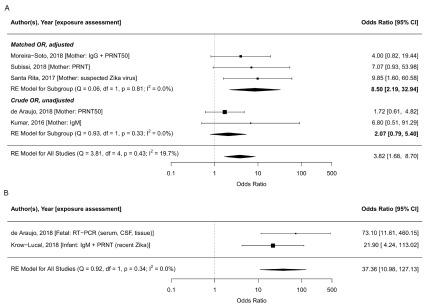
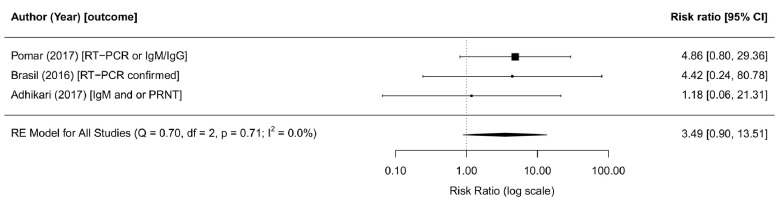
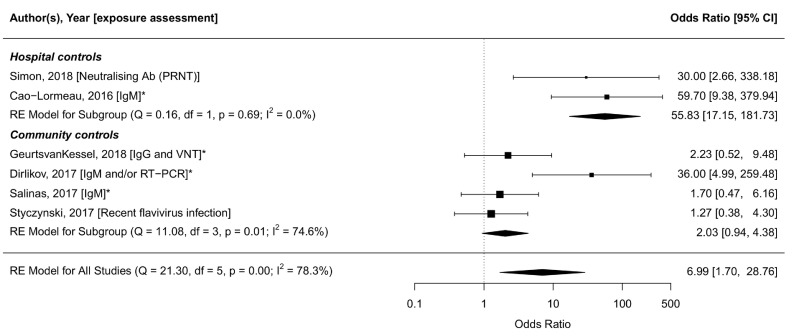
Background: The Zika virus (ZIKV) caused a large outbreak in the Americas leading to the declaration of a Public Health Emergency of International Concern in February 2016. A causal relation between infection and adverse congenital outcomes such as microcephaly was declared by the World Health Organization (WHO) informed by a systematic review structured according to a framework of ten dimensions of causality, based on the work of Bradford Hill. Subsequently, the evidence has continued to accumulate, which we incorporate in regular updates of the original work, rendering it a living systematic review. Methods: We present an update of our living systematic review on the causal relation between ZIKV infection and adverse congenital outcomes and between ZIKV and GBS for four dimensions of causality: strength of association, dose-response, specificity, and consistency. We assess the evidence published between January 18, 2017 and July 1, 2019. Results: We found that the strength of association between ZIKV infection and adverse outcomes from case-control studies differs according to whether exposure to ZIKV is assessed in the mother (OR 3.8, 95% CI: 1.7-8.7, I 2 =19.8%) or the foetus/infant (OR 37.4, 95% CI: 11.0-127.1, I 2 =0%). In cohort studies, the risk of congenital abnormalities was 3.5 times higher after ZIKV infection (95% CI: 0.9-13.5, I 2 =0%). The strength of association between ZIKV infection and GBS was higher in studies that enrolled controls from hospital (OR: 55.8, 95% CI: 17.2-181.7, I 2 =0%) than in studies that enrolled controls at random from the same community or household (OR: 2.0, 95% CI: 0.8-5.4, I 2 =74.6%). In case-control studies, selection of controls from hospitals could have biased results. Conclusions: The conclusions that ZIKV infection causes adverse congenital outcomes and GBS are reinforced with the evidence published between January 18, 2017 and July 1, 2019.
Overview
The claims and statistics of this paper haven’t been checked yet.
Run the check — free, no account needed. It reads the open-access text and checks the sources it cites.
Integrity signals
Registry
Cites
Statistics
Figures
Verification
Claims the paper makes
The claims and statistics of this paper haven’t been checked yet.
Run the check — free, no account needed. It reads the open-access text and checks the sources it cites.
Claims other papers make about this one
Each is checked against this paper’s own text: does it say what the citing paper says it does?
The source backs part of the claim, not all of it — or backs it for a different population, condition or comparison.
In the citing paper
“Viral infections such as Zika and SARS-CoV-2 have also been associated with neurologic syndromes that include dysautonomia and GI complaints in some patients (Counotte et al., 2019; Ghannam et al., 2020).”
From Autonomic nervous system and gastrointestinal manifestations with an emphasis on gastric dysfunction (2026) · cites this paper as Counotte et al., 2019
Experimental — accuracy not yet measured
Self-check
Percentages, sums and reported differences re-computed from the paper’s own numbers.
The self-check needs the paper’s full text.
Citations
Cites
R: A Language and Environment for Statistical Computing
R Core Team (2000) · doi:10.32614/r.manuals · Cited by 355,893
Preferred Reporting Items for Systematic Reviews and Meta-Analyses: the PRISMA statement
Moher, D., Liberati, A., Tetzlaff, J., Altman, D. G., & for the PRISMA Group (2009) · BMJ · doi:10.1136/bmj.b2535 · Cited by 83,823
Preferred Reporting Items for Systematic Reviews and Meta-Analyses: The PRISMA Statement
Moher, D., Liberati, A., Tetzlaff, J., Altman, D. G., & The PRISMA Group (2009) · PLoS Medicine · doi:10.1371/journal.pmed.1000097 · Cited by 64,042
Harris, P. A., Taylor, R., Thielke, R., Payne, J., Gonzalez, N., & Conde, J. G. (2009) · Journal of Biomedical Informatics · doi:10.1016/j.jbi.2008.08.010 · Cited by 51,384
Quantifying heterogeneity in a meta‐analysis
Higgins, J. P. T., & Thompson, S. G. (2002) · Statistics in Medicine · doi:10.1002/sim.1186 · Cited by 36,763
Conducting Meta-Analyses in R with the metafor Package
Viechtbauer, W. (2010) · Journal of Statistical Software · doi:10.18637/jss.v036.i03 · Cited by 20,464
Wang, G., Ma, R., Qiao, G., Wada, K., Aizawa, Y., & Satoh, T. (2015) · Integrative Medicine International · doi:10.1159/000368408 · Cited by 18,762
Smithburn, K. C. (1952) · The Journal of Immunology · doi:10.4049/jimmunol.69.2.223 · Cited by 3,553
A structural approach to selection bias
Hernán, M. A., Hernández-Díaz, S., & Robins, J. M. (2004) · Epidemiology · doi:10.1097/01.ede.0000135174.63482.43 · Cited by 2,844
Inference to the Best Explanation
Lipton, P. (2003) · Routledge eBooks · doi:10.4324/9780203470855 · Cited by 2,293
Research works printed but not linked: 8
- D Saulino, 2017, The first zika-related infant mortality in the United States: An autopsy case report., Laboratory Investigation., 97, 10A
- M De Fatima Viana Vasco Aragao, 2018, Congenital Zika Syndrome: Comparison of brain CT scan with postmortem histological sections from the same subjects., Neuroradiology., 60, 367-8
- M Cano, 2018, Zika virus infection in Hospital del Niño 'Dr José Renán Esquivel' (Panamá): Case Review since the introduction in Latin America., Pediátr Panamá., 47, 15-9
- A Collier, 2018, Maternal Immune Response to Zika Virus., Reproductive Sciences., 25, 163a-4a
- R Caixeta, 2018, Vertical transmission of zika virus and perinatal microcephaly., Int J Gynaecol Obstet., 143, 725, 10.1002/ijgo.12583 · DOI
- M Jones, 2018, Multidisciplinary approach to Guillain-Barre Syndrome and neurologic injuries after zika virus., J Spinal Cord Med., 41, 588
- A Ali, 2017, Zik-V outbreak and Guillain-Barre syndrome in Jamaica., Neurology., 88
- M Dourado, 2017, High Incidence of Guillain-Barre Syndrome after Zika Virus Infection in the State Rio Grande Do Norte, in Northeast Brazil., J Peripher Nerv Syst., 22, 275-6
Cited by
Sorted by citations
Guillain Barre Syndrome as a Complication of COVID-19: A Systematic Review
Aladawi, M., Elfil, M., Abu-Esheh, B., Jazar, D. A., Armouti, A. O., Bayoumi, A., & Piccione, E. A. (2021) · Canadian Journal of Neurological Sciences / Journal Canadien des Sciences Neurologiques · doi:10.1017/cjn.2021.102 · Cited by 81
Silva, R. N., Goulart, C. D. L., Oliveira, M. R., Tacao, G. Y., Back, G. D., Severin, R. S., Faghy, M. A., Arena, R. A., & Borghi‐Silva, A. (2021) · Expert Review of Respiratory Medicine · doi:10.1080/17476348.2021.1893169 · Cited by 47
Kharwadkar, S., & Herath, N. (2024) · Reviews in Medical Virology · doi:10.1002/rmv.2521 · Cited by 43
He, J., Yang, L., Chang, P., Yang, S., Lin, S., Tang, Q., Wang, X., & Zhang, Y. (2020) · Autophagy · doi:10.1080/15548627.2020.1823122 · Cited by 30
Zika virus-like particle vaccine protects AG129 mice and rhesus macaques against Zika virus
Vang, L., Morello, C. S., Mendy, J., Thompson, D., Manayani, D. J., Guenther, B., Julander, J. G., Sanford, D., Jain, A., Patel, A., et al. (2021) · PLoS neglected tropical diseases · doi:10.1371/journal.pntd.0009195 · Cited by 29
Zika virus: advancing a priority research agenda for preparedness and response
Lackritz, E., Ng, L.-C., Marques, E. T. A., Rabe, I. B., Bourne, N., Staples, J. E., Méndez‐Rico, J., Harris, E., Brault, A. C., Ko, A. I., et al. (2025) · The Lancet Infectious Diseases · doi:10.1016/s1473-3099(24)00794-1 · Cited by 27
Living systematic review: new inputs and challenges
Vergara-Merino, L., Verdejo, C., Carrasco, C., & Vargas-Peirano, M. (2020) · Medwave · doi:10.5867/medwave.2020.11.8092 · Cited by 18
Cytomegalovirus Infection and Guillain-Barré Syndrome: The First Case-Control Study in Iran.
Mamishi, S., Ashrafi, M. R., Mohammadi, M., Zamani, G., Pourakbari, B., Mahmoudi, S., & Aziz-Ahari, S. (2021) · Iranian journal of child neurology. · doi:10.22037/ijcn.v15i4.31285 · Cited by 9
Thompson, D., Guenther, B., Manayani, D. J., Mendy, J., Smith, J. D., Espinosa, D. A., Harris, E., Alexander, J., Vang, L., & Morello, C. S. (2022) · PLoS neglected tropical diseases · doi:10.1371/journal.pntd.0010588 · Cited by 8
Siddharthan, V., Wang, H., de Oliveira, A. L. R., Dai, X., & Morrey, J. D. (2020) · Antiviral chemistry & chemotherapy · doi:10.1177/2040206620950143 · Cited by 7
Rampini, D., Prieto, D. C., Colzi, A. L., de Araújo, R. V., & Giarolla, J. (2020) · Mini-Reviews in Medicinal Chemistry · doi:10.2174/1389557520666200711174007 · Cited by 6
Puerta-Guardo, H. N., Biering, S. B., Harris, E., Pavía‐Ruz, N., Vazquez‐Prokopec, G. M., Ayora‐Talavera, G., & Manrique-Saide, P. C. (2020) · IntechOpen eBooks · doi:10.5772/intechopen.93551 · Cited by 5
Dengue Fever in a One Health Perspective
Sperança, M. A. (2020) · IntechOpen eBooks · doi:10.5772/intechopen.87409 · Cited by 5
Neil, J. A. (2025) · Reproduction · doi:10.1530/rep-25-0043 · Cited by 3
Building a growing genomic repository for maternal and fetal health through the PING Consortium
Abdelmalek, C. M., Singh, S., Fasil, B., Horvath, A. R., Mulkey, S. B., Curé, C., Campos, M., Cavalcanti, D. P., Tong, V. T., Mercado, M., et al. (2025) · Pediatric Research · doi:10.1038/s41390-024-03793-1 · Cited by 3
Chikungunya, Dengue, Zika, and Other Emerging Mosquito-Borne Viruses
Vu, D. M., & LaBeaud, A. D. (2021) · Neglected tropical diseases · doi:10.1007/978-3-030-63384-4_9 · Cited by 2
Emergence of evidence during disease outbreaks: lessons learnt from the Zika virus outbreakPreprint
Counotte, M. J., Meili, K. W., & Low, N. N. (2020) · medRxiv · doi:10.1101/2020.03.16.20036806 · Cited by 2
Self-citationEmerging and Zoonotic Diseases
Juhas, M. (2023) · Springer eBooks · doi:10.1007/978-3-031-29544-7_9 · Cited by 1
Identification of candidate genes involved in Zika virus-induced reversible paralysis of mice
Morrey, J. D., Siddharthan, V., Hong, W., de Oliveira, A. L. R., Susuki, K., Kaundal, R., Freeman, S. M., Thomas, A. J., Duhan, N., & Corry, N. G. (2025) · Scientific Reports · doi:10.1038/s41598-025-86475-0 · Cited by 1
Zika virus infections and associated risk factors among pregnant women in Gombe, Nigeria
Oderinde, B. S., Bakoji, A., Yaga, S. J., Ijaya, K., Mohammed, B., Yuguda, I. Y., & Baba, M. (2024) · Virologica Sinica · doi:10.1016/j.virs.2024.12.008 · Cited by 1
Peralta, E. M., Alonso-Valle, A., Huertas-Pérez, G., Marrero-Domínguez, F., Besil, B. S., & Teruel, B. M. (2023) · Salud Ciencia y Tecnología · doi:10.56294/saludcyt2023300 · Cited by 1
Autonomic nervous system and gastrointestinal manifestations with an emphasis on gastric dysfunction
Shouman, K., Camilleri, M., & Singer, W. (2026) · Autonomic Neuroscience · doi:10.1016/j.autneu.2026.103474
Prenatal Diagnosis of Fetal Infection
Ville, Y. G., & Leruez‐Ville, M. (2015) · doi:10.1002/9781118981559.ch26
Top ten discoveries of the year: Neuroinflammation
Lassmann, H. (2019) · Free Neuropathology · doi:10.17879/fnp-2020-2612
Prenatal Diagnosis of Fetal Infection
Leruez‐Ville, M., Faure‐Bardon, V., & Ville, Y. G. (2021) · doi:10.1002/9781119676980.ch34
Building a growing genomic data repository for maternal and fetal health through the PING ConsortiumPreprint
Abdelmalek, C. M., Singh, S., Fasil, B., Horvath, A. R., Mulkey, S. B., Curé, C., Campos, M., Cavalcanti, D. P., Tong, V. T., Mercado, M., et al. (2024) · medRxiv · doi:10.1101/2024.05.24.24307899
Czekalska, M., Jędrzejewska-Rzezak, P., Knutelska, K., Kulicka, N., Winsyk, A., Gajniak, P., Karwat, M., Tyralik, T., Bilińska, K., & Węgrzecka, J. (2025) · International Journal of Innovative Technologies in Social Science · doi:10.31435/ijitss.3(47).2025.3594
Leal, A. S. D. L. T., Morán‐Ávila, T., Muné, M., GUZMÁN, M. G., & Bartutis, R. R. (2026) · Protein Expression and Purification · doi:10.1016/j.pep.2026.106984
Vaz, L. B. A., Majevski, M. L. A., Reis, A. C. C., Scalon, V. R., Magalhães, C. L. D. B., Silva, B. D. M., & Brandão, G. C. (2026) · Journal of Phytomedicine · doi:10.3390/jphytomed1030012
Metadata
- Authors
- Counotte, M. J., Meili, K. W., Taghavi, K., Calvet, G., Sejvar, J., & Low, N.
- Affiliations
- University of Bern (CH)
- Instituto Nacional de Infectologia Evandro Chagas (BR)
- Centers for Disease Control and Prevention (US)
- Corresponding author
- Counotte, Michel Jacques
- Low, Nicola
- ORCID
- Venue
- F1000Research
- Publisher
- F1000 Research Ltd
- Published
- 2019-08-14
- Volume
- 8
- Pages
- 1433
- ISSN
- 2046-1402 (ISSN-L)
- PMC
- PMC6852328
- OpenAlex
- W3033655606
- Cited by
- 29
- References
- 284
- Citations by year
- 2026: 3 · 2025: 5 · 2024: 3 · 2023: 2 · 2022: 1 · 2021: 6 · 2020: 7 · 2019: 1
- FWCI
- 0.61
- Type
- journal article
- Language
- en
- Open access
- gold
- doi.org
- Licence
- Locations
- F1000Research (publishedVersion, cc-by)
- Americanae (AECID Library) (publishedVersion, other-oa)
- Arca - Repositório Institucional da Fiocruz (publishedVersion, other-oa)
- Bern Open Repository and Information System (University of Bern) (submittedVersion, cc-by)
- DOAJ (DOAJ: Directory of Open Access Journals) (submittedVersion, cc-by-sa)
- LA Referencia (Red Federada de Repositorios Institucionales de Publicaciones Científicas) (submittedVersion, other-oa)
- Open Access CRIS of the University of Bern
- Funders
- Schweizerischer Nationalfonds zur Förderung der Wissenschaftlichen Forschung (320030_170069)
- Topics
- Health Sciences › Medicine › Public Health, Environmental and Occupational Health › Mosquito-borne diseases and control
- Health Sciences › Medicine › Epidemiology › Virology and Viral Diseases
- Health Sciences › Medicine › Infectious Diseases › Infectious Encephalopathies and Encephalitis
- Keywords
- Zika virus infection, congenital brain malformation, Guillain-Barré syndrome, microcephaly, causal inference, Bradford Hill criteria, associative strength, dose-response relationship, specificity, consistency, maternal infection, fetal infection, control selection bias
About these checks
Registry, retraction, Cites and statistics results are computed, not judged, with one exception: a printed reference that no index lists is read once by a model before it counts as a citation error. Claims are extracted by a model and kept only when their quote appears verbatim in the text; each cited source is then checked, with a model’s help, for whether it says what the claim relies on. Those verdicts can be wrong — read the claim’s quote and the cited source before relying on one.
Statistics and arithmetic are recomputed, not judged.
Confidence bands are shown only for fields calibrated on our annotated test set. None is calibrated yet, so no band is shown.
What counts as a claim ›How we measure confidence ›How we check this ›
Are you an author, or do you see a problem with this page? Request a review
