

The DOI matches its Crossref record; 120 of the 121 references it cites were found in a registry or an index.
The Navigation Guide—Evidence-Based Medicine Meets Environmental Health: Systematic Review of Nonhuman Evidence for PFOA Effects on Fetal Growth
Open accessAbstract
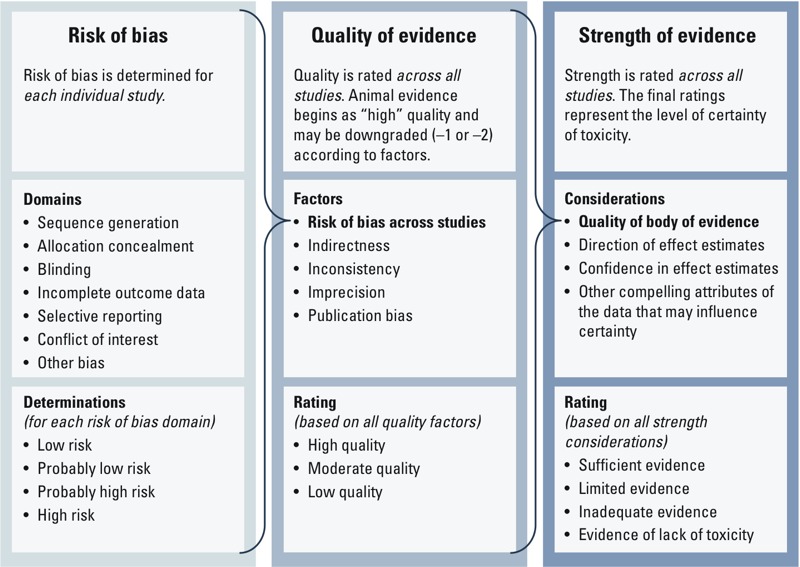
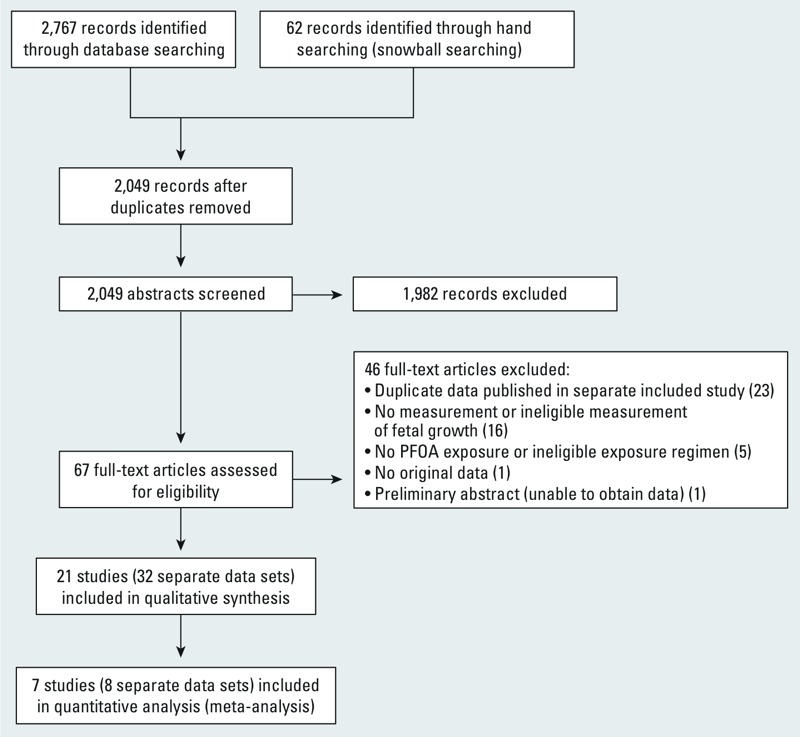
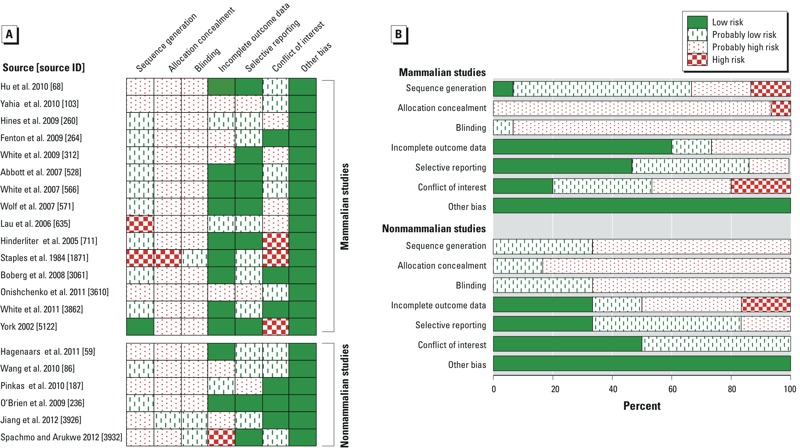
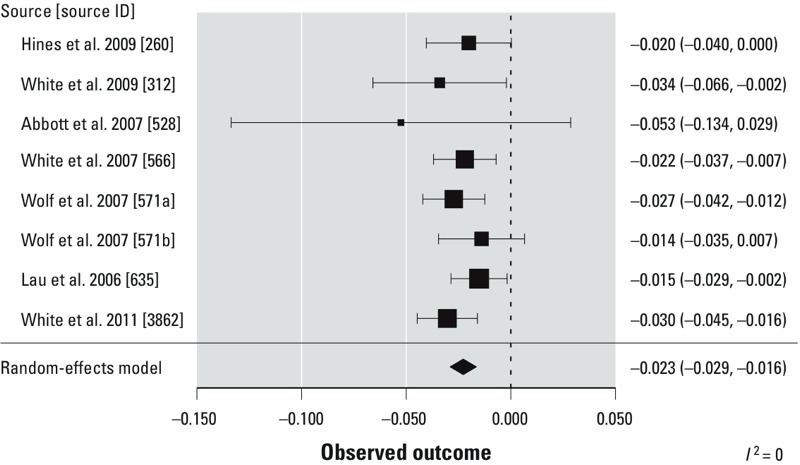
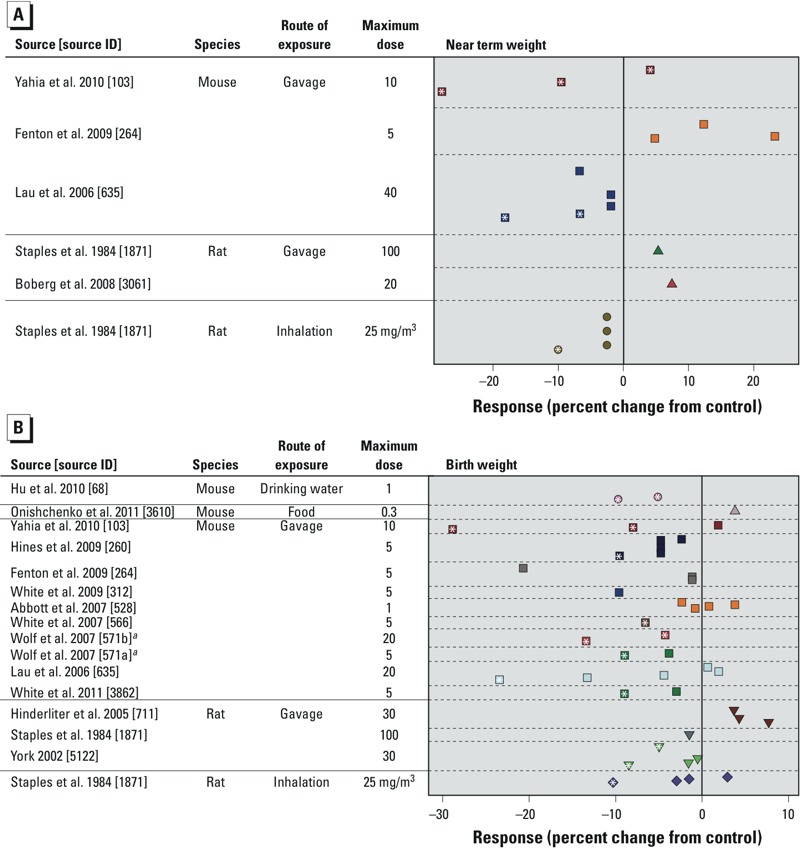
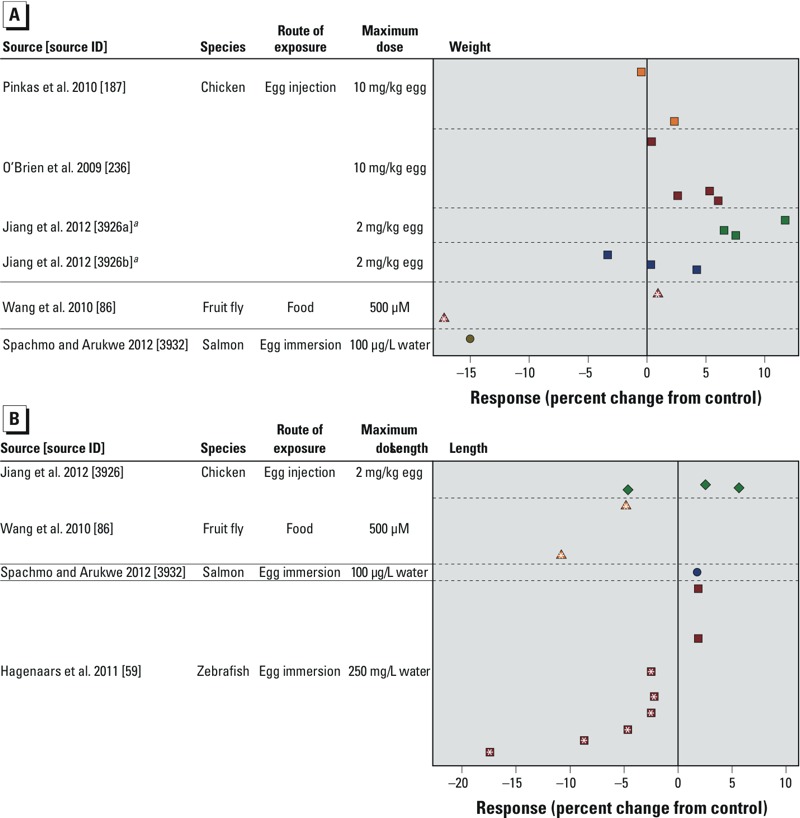
Abstract Background: In contrast to current methods of expert-based narrative review, the Navigation Guide is a systematic and transparent method for synthesizing environmental health research from multiple evidence streams. The Navigation Guide was developed to effectively and efficiently translate the available scientific evidence into timely prevention-oriented action. Objectives: We applied the Navigation Guide systematic review method to answer the question “Does fetal developmental exposure to perfluorooctanoic acid (PFOA) or its salts affect fetal growth in animals ?” and to rate the strength of the experimental animal evidence. Methods: We conducted a comprehensive search of the literature, applied prespecified criteria to the search results to identify relevant studies, extracted data from studies, obtained additional information from study authors, conducted meta-analyses, and rated the overall quality and strength of the evidence. Results: Twenty-one studies met the inclusion criteria. From the meta-analysis of eight mouse gavage data sets, we estimated that exposure of pregnant mice to increasing concentrations of PFOA was associated with a change in mean pup birth weight of –0.023 g (95% CI: –0.029, –0.016) per 1-unit increase in dose (milligrams per kilogram body weight per day). The evidence, consisting of 15 mammalian and 6 nonmammalian studies, was rated as “moderate” and “low” quality, respectively. Conclusion: Based on this first application of the Navigation Guide methodology, we found sufficient evidence that fetal developmental exposure to PFOA reduces fetal growth in animals. Citation: Koustas E, Lam J, Sutton P, Johnson PI, Atchley DS, Sen S, Robinson KA, Axelrad DA, Woodruff TJ. 2014. The Navigation Guide—evidence-based medicine meets environmental health: systematic review of nonhuman evidence for PFOA effects on fetal growth. Environ Health Perspect 122:1015–1027; http://dx.doi.org/10.1289/ehp.1307177
Overview
The claims and statistics of this paper haven’t been checked yet.
Run the check — free, no account needed. It reads the open-access text and checks the sources it cites.
Integrity signals
Registry
Cites
Statistics
Figures
Verification
Claims the paper makes
The claims and statistics of this paper haven’t been checked yet.
Run the check — free, no account needed. It reads the open-access text and checks the sources it cites.
Claims other papers make about this one
Each is checked against this paper’s own text: does it say what the citing paper says it does?
The source backs part of the claim, not all of it — or backs it for a different population, condition or comparison.
In the citing paper
“In utero exposure to per- and polyfluoroalkyl substances (PFAS), which are recognized developmental toxicants, potentially leads to decreased anthropometric measures in infants at birth.”
From Associations between in utero exposure of per- and polyfluoroalkyl substances (PFAS) mixture and anthropometry measures at birth (2025) · cites this paper as Koustas et al., 2014
Experimental — accuracy not yet measuredThe cited source says what the claim attributes to it.
In the citing paper
“such methods have only recently been developed and utilized in environmental health sciences [23–30].”
From A Systematic Review and Meta-Analysis of Multiple Airborne Pollutants and Autism Spectrum Disorder (2016) · cites this paper as [24]
In the citing paper
“This observation is consistent with our previous systematic reviews, [24, 27, 28, 30]”
From A Systematic Review and Meta-Analysis of Multiple Airborne Pollutants and Autism Spectrum Disorder (2016) · cites this paper as [24]
Self-check
Percentages, sums and reported differences re-computed from the paper’s own numbers.
The self-check needs the paper’s full text.
Citations
Cites
Measuring inconsistency in meta-analyses
Higgins, J. P. T., Thompson, S. G., Deeks, J. J., & Altman, D. G. (2003) · BMJ · doi:10.1136/bmj.327.7414.557 · Cited by 63,139
Meta-analysis in clinical trials
DerSimonian, R., & Laird, N. (1986) · Controlled Clinical Trials · doi:10.1016/0197-2456(86)90046-2 · Cited by 39,552
Cochrane Handbook for Systematic Reviews of Interventions: Cochrane Book Series
(2008) · doi:10.1002/9780470712184 · Cited by 25,048
von Elm, E., Altman, D. G., Egger, M., Pocock, S. J., Gøtzsche, P. C., Vandenbroucke, J. P., & Initiative, F. T. S. (2007) · PLoS Medicine · doi:10.1371/journal.pmed.0040296 · Cited by 23,020
Conducting Meta-Analyses in R with the metafor Package
Viechtbauer, W. (2010) · Journal of Statistical Software · doi:10.18637/jss.v036.i03 · Cited by 20,464
von Elm, E., Altman, D. G., Egger, M., Pocock, S. J., Gøtzsche, P. C., Vandenbroucke, J. P., & Initiative, F. T. S. (2007) · Annals of Internal Medicine · doi:10.7326/0003-4819-147-8-200710160-00010 · Cited by 17,796
(2014) · Medical Entomology and Zoology · Cited by 17,633
GRADE guidelines: 3. Rating the quality of evidence
Balshem, H., Helfand, M., Schünemann, H. J., Oxman, A. D., Kunz, R., Brozek, J., Vist, G. E., Falck-Ytter, Y., Meerpohl, J., & Norris, S. (2011) · Journal of Clinical Epidemiology · doi:10.1016/j.jclinepi.2010.07.015 · Cited by 8,285
Sterne, J. A. C., Sutton, A. J., Ioannidis, J. P. A., Terrin, N., Jones, D. R., Lau, J., Carpenter, J., Rucker, G., Harbord, R. M., Schmid, C. H., et al. (2011) · BMJ · doi:10.1136/bmj.d4002 · Cited by 7,709
(2008) · Cited by 3,790
Research works printed but not linked: 1
- Higgins JPT, Deeks JJ, eds. 2011. Chapter 7: Selecting studies and collecting data. In: Cochrane Handbook for Systematic Reviews of Interventions, Version 5.1.0 (Higgins JPT, Green S, eds).Available: http://www.cochrane-handbook.org [accessed 7 February 2013].
Cited by
Sorted by citations
Fenton, S. E., Ducatman, A., Boobis, A., DeWitt, J. C., Lau, C., Ng, C., Smith, J. S., & Roberts, S. M. (2020) · Environmental Toxicology and Chemistry · doi:10.1002/etc.4890 · Cited by 2,445
EDC-2: the endocrine society's second scientific statement on endocrine-disrupting chemicals
Gore, A. C., Chappell, V. A., Fenton, S. E., Flaws, J. A., Nadal, A., Prins, G. S., Toppari, J., & Zoeller, R. T. (2015) · Endocrine Reviews · doi:10.1210/er.2015-1010 · Cited by 2,407
Morgan, R. L., Whaley, P., Thayer, K. A., & Schünemann, H. J. (2018) · Environment International · doi:10.1016/j.envint.2018.07.015 · Cited by 1,435
Risk to human health related to the presence of perfluoroalkyl substances in food
Panel), E. P. O. C. I. T. F. C. (. C., Schrenk, D., Bignami, M., Bodin, L., Chipman, J. K., del Mazo, J., Grasl‐Kraupp, B., Hogstrand, C., Hoogenboom, L. (., Leblanc, J., et al. (2020) · EFSA Journal · doi:10.2903/j.efsa.2020.6223 · Cited by 989
Early-life exposure to EDCs: role in childhood obesity and neurodevelopment
Braun, J. M. (2016) · Nature Reviews Endocrinology · doi:10.1038/nrendo.2016.186 · Cited by 965
Metadata
- Authors
- Koustas, E., Lam, J., Sutton, P., Johnson, P. I., Atchley, D. S., Sen, S., Robinson, K. A., Axelrad, D. A., & Woodruff, T. J.
- Affiliations
- Environmental Protection Agency (US)
- University of California, San Francisco (US)
- Department of Epidemiology and Biostatistics, University of California, San Francisco, San Francisco, California, USA
- Johns Hopkins University (US)
- Corresponding author
- Koustas, Erica
- Venue
- Environmental Health Perspectives
- Publisher
- American Chemical Society (ACS)
- Published
- 2014-06-25
- Volume
- 122
- Issue
- 10
- Pages
- 1015-1027
- ISSN
- 0091-6765 (ISSN-L)
- 1552-9924
- PMC
- PMC4181920
- OpenAlex
- W1969835924
- Cited by
- 349
- References
- 121
- Citations by year
- 2026: 5 · 2025: 14 · 2024: 14 · 2023: 30 · 2022: 25 · 2021: 41 · 2020: 60 · 2019: 31 · 2018: 30 · 2017: 42 · 2016: 24 · 2015: 22 · 2014: 10
- FWCI
- 3.08
- Type
- journal article
- Language
- en
- Open access
- gold
- doi.org
- Licence
- public-domain
- creativecommons.org/licenses/by/4.0/ (vor, 1283 d)
- Locations
- Environmental Health Perspectives (publishedVersion, public-domain)
- PubMed Central (publishedVersion, public-domain)
- PubMed (publishedVersion)
- eScholarship (California Digital Library) (submittedVersion)
- Funders
- National Institute of Environmental Health Sciences (ES018135, P01ES022841, ES022841, P20ES018135)
- Topics
- Physical Sciences › Environmental Science › Environmental Chemistry › Per- and polyfluoroalkyl substances research
- Physical Sciences › Environmental Science › Health, Toxicology and Mutagenesis › Toxic Organic Pollutants Impact
- Physical Sciences › Environmental Science › Health, Toxicology and Mutagenesis › Effects and risks of endocrine disrupting chemicals
- Keywords
- perfluorooctanoic acid, fetal growth, prenatal exposure, animal studies, birth weight, evidence synthesis, perfluorinated compounds, developmental toxicity
- MeSH terms
- Animals, Birth Weight, Caprylates, Environmental Health, Environmental Pollutants, Female, Fluorocarbons, Pregnancy, Evidence-Based Medicine, Fetal Development, Mice
About these checks
Registry, retraction, Cites and statistics results are computed, not judged, with one exception: a printed reference that no index lists is read once by a model before it counts as a citation error. Claims are extracted by a model and kept only when their quote appears verbatim in the text; each cited source is then checked, with a model’s help, for whether it says what the claim relies on. Those verdicts can be wrong — read the claim’s quote and the cited source before relying on one.
Statistics and arithmetic are recomputed, not judged.
Confidence bands are shown only for fields calibrated on our annotated test set. None is calibrated yet, so no band is shown.
What counts as a claim ›How we measure confidence ›How we check this ›
Are you an author, or do you see a problem with this page? Request a review
